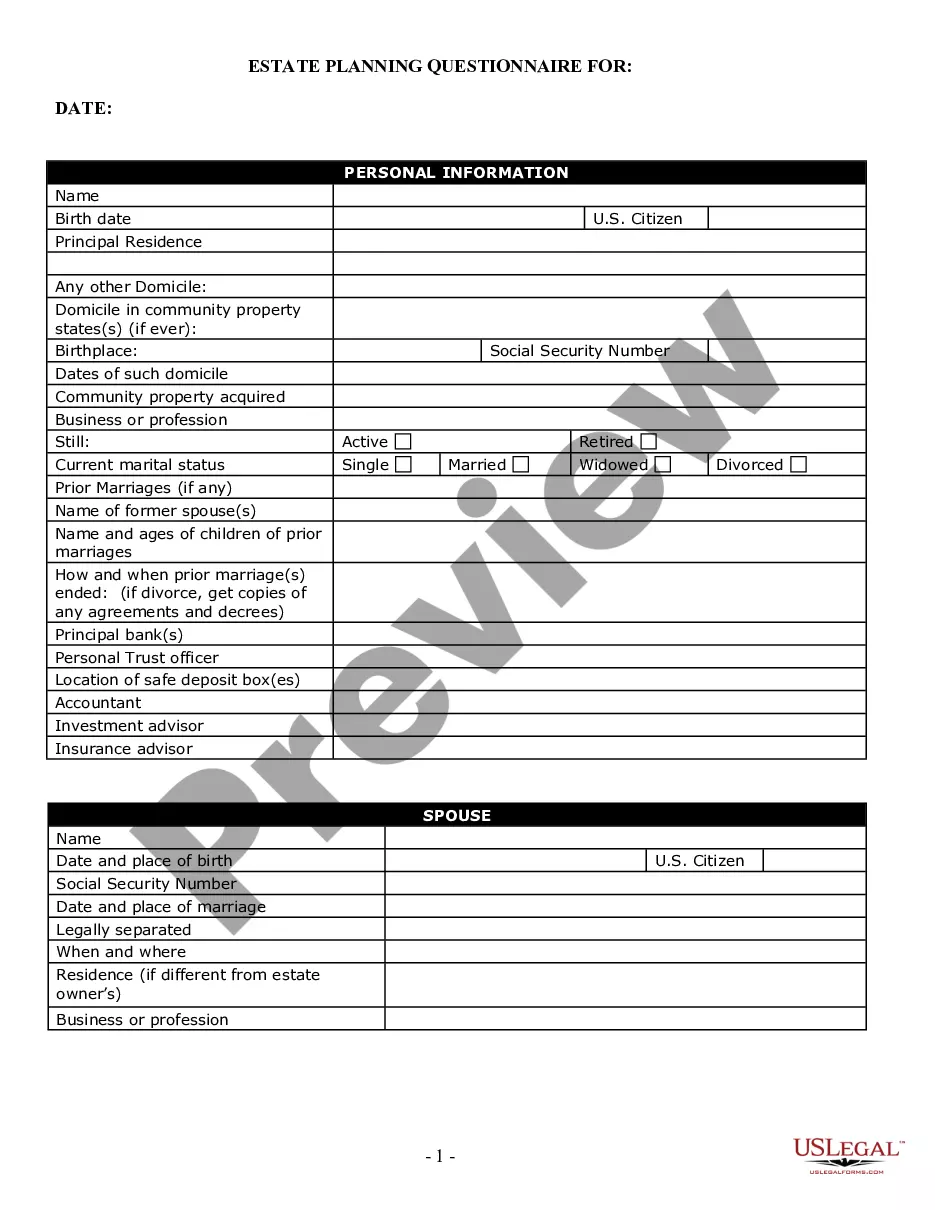
Stock Tender Agreement between EMC Corp., Eagle Merger Corp., Computer Concepts Corp., et al.
About this form
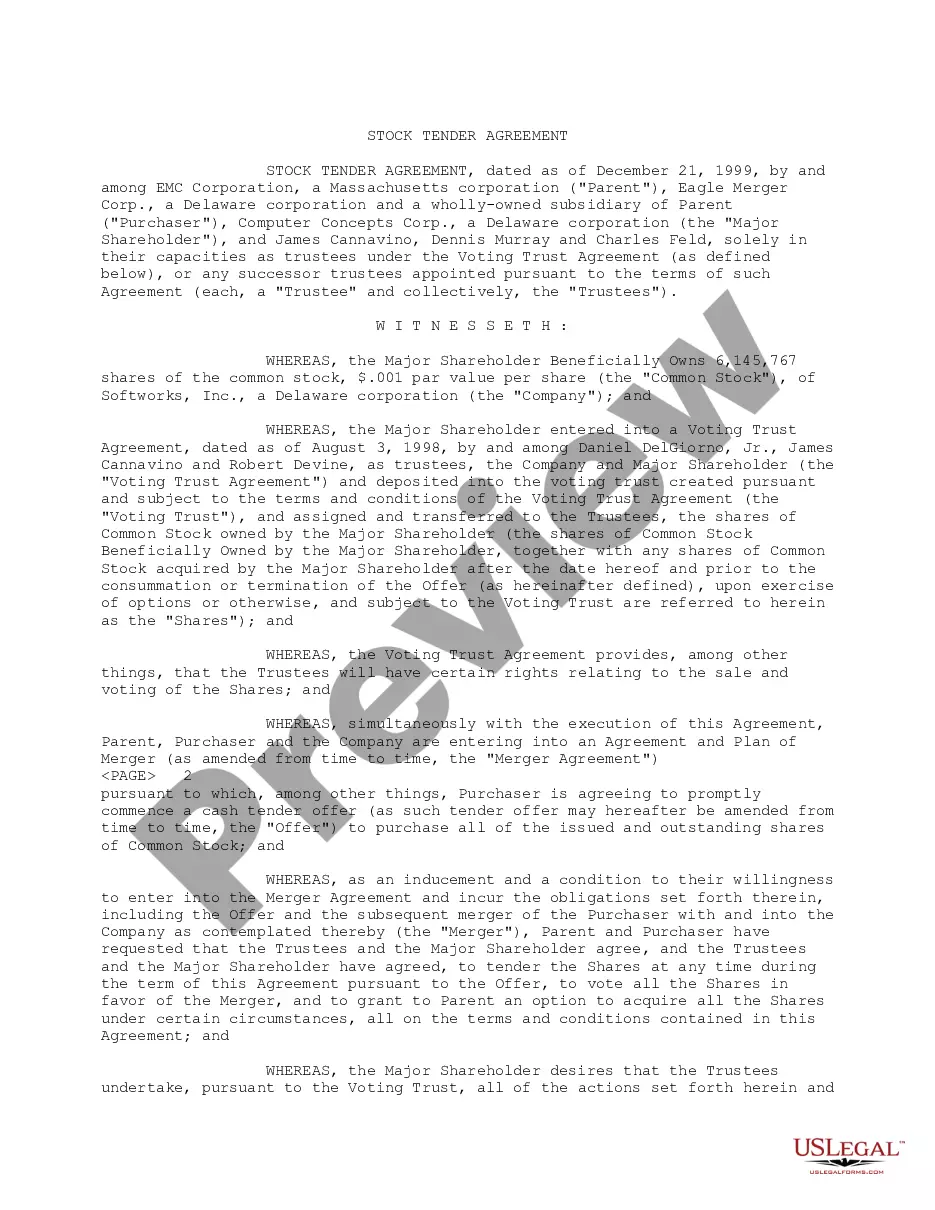
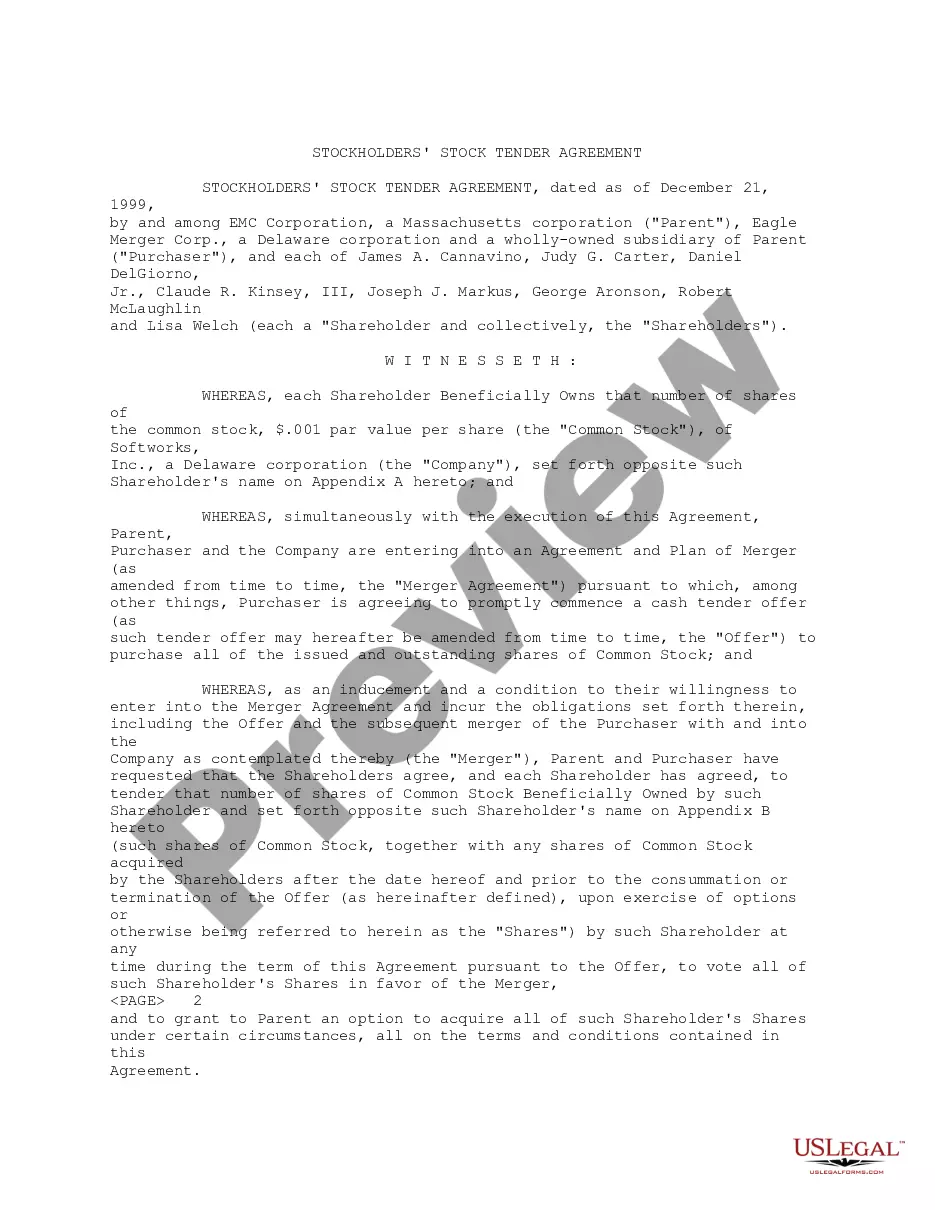
The Stock Tender Agreement is a legally binding document used primarily in corporate mergers and acquisitions. It outlines the terms under which a major shareholder agrees to sell their shares back to a purchasing entity as part of a larger transaction. This agreement differentiates itself from similar forms by specifically addressing the obligations related to the tender of shares in a merger scenario, ensuring compliance with applicable corporate law.
What’s included in this form
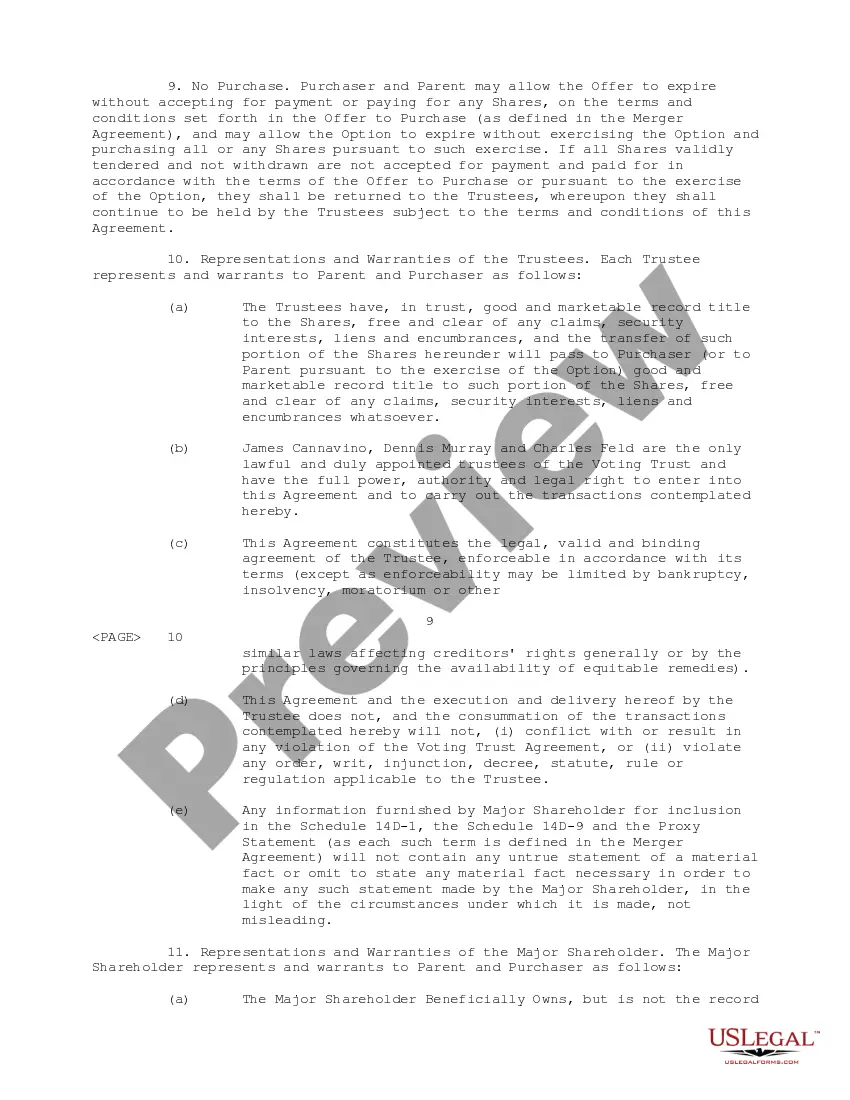
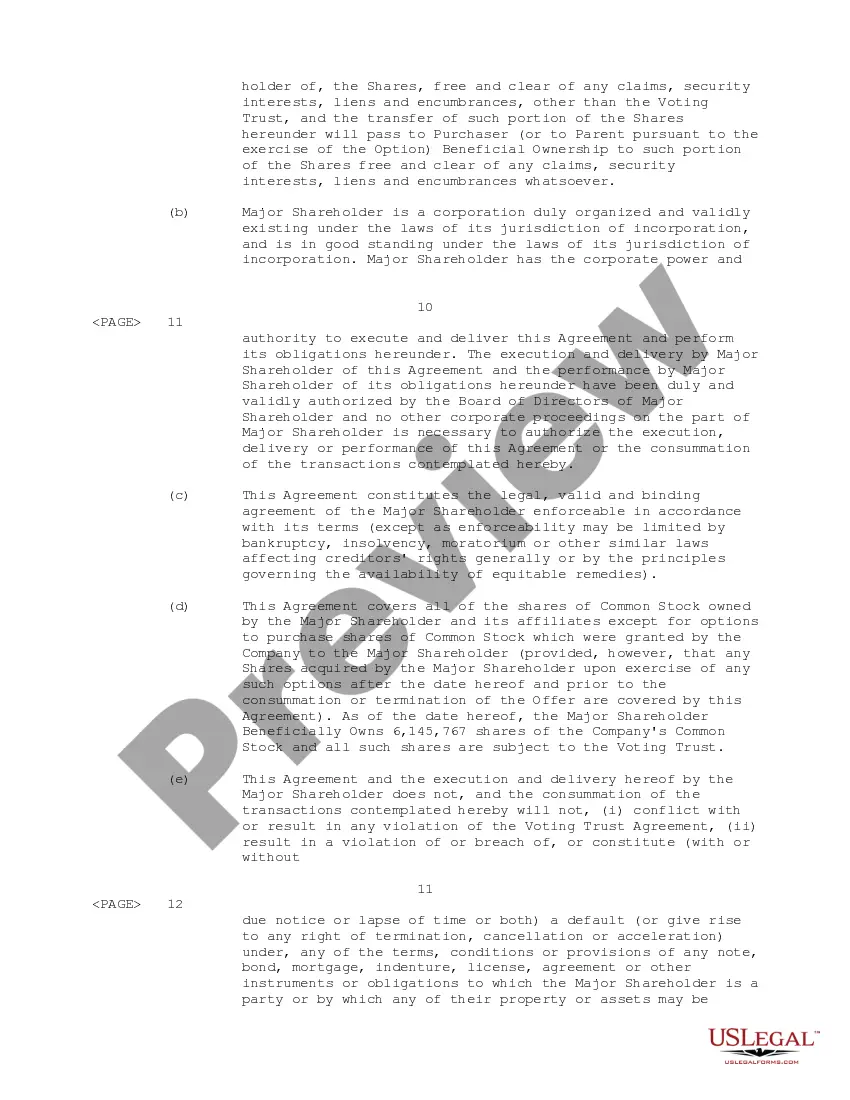
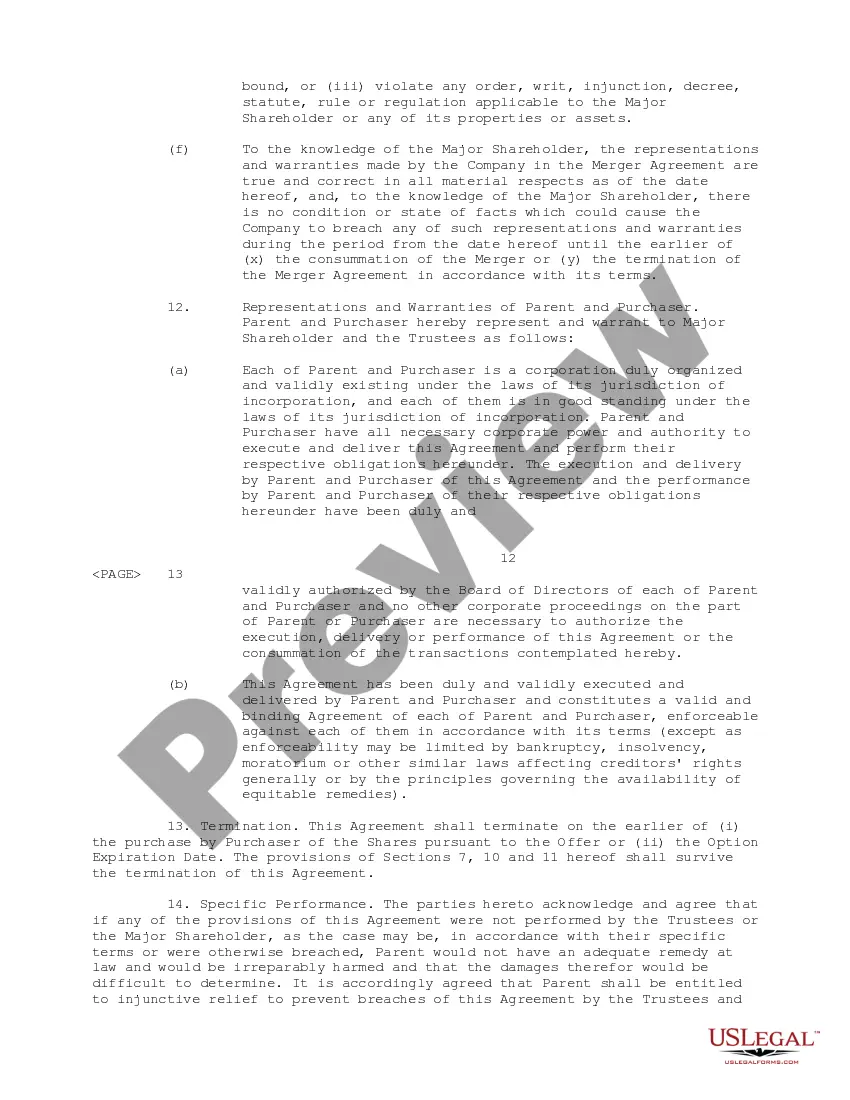
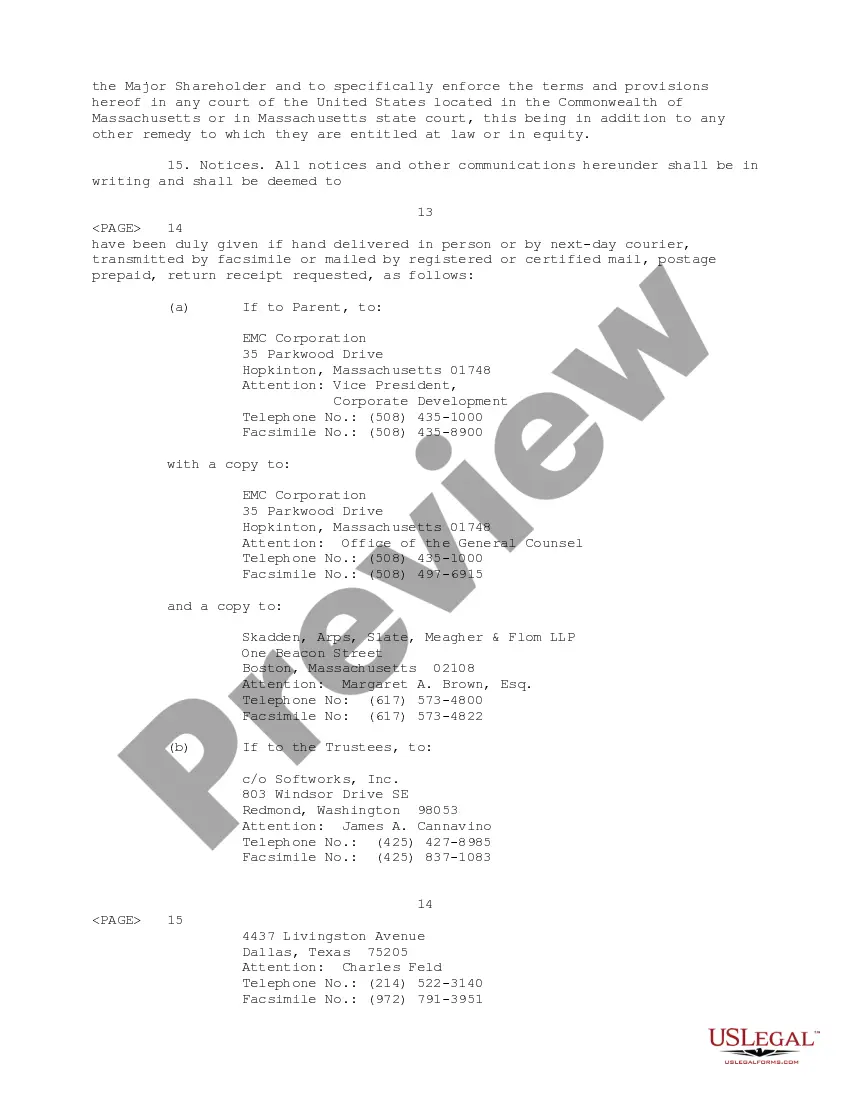
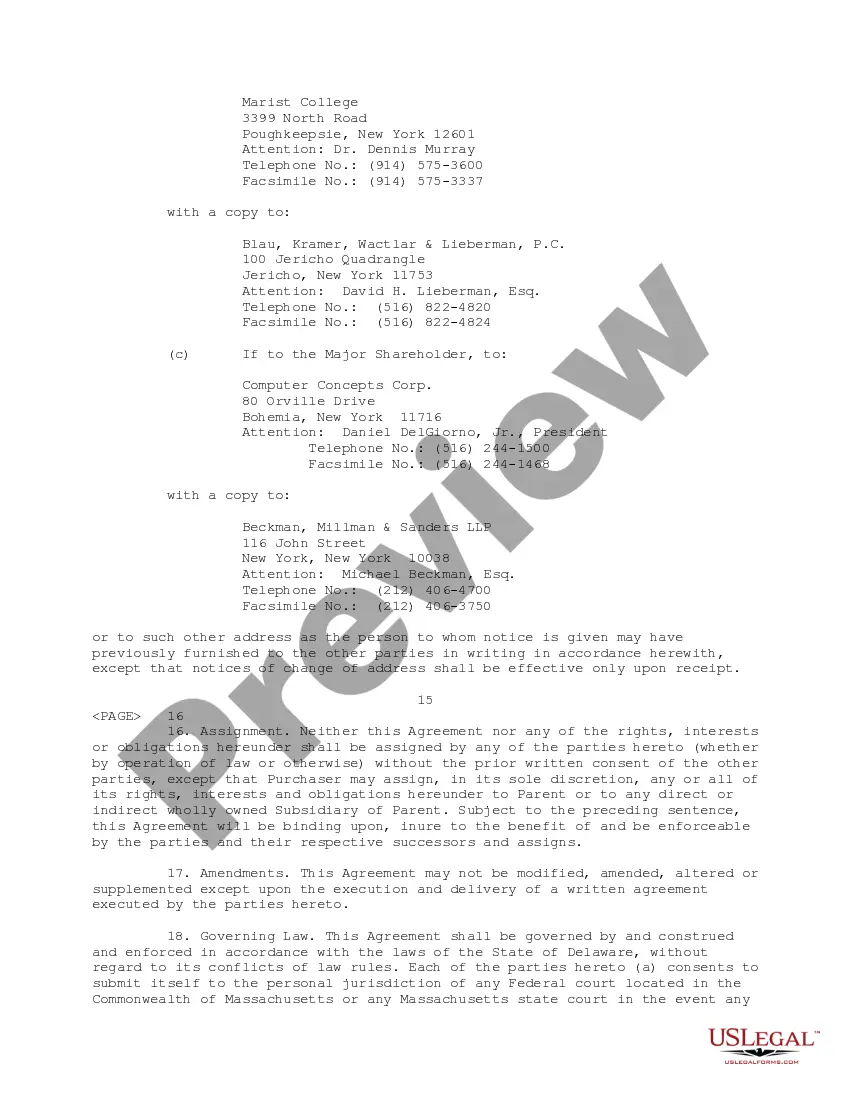
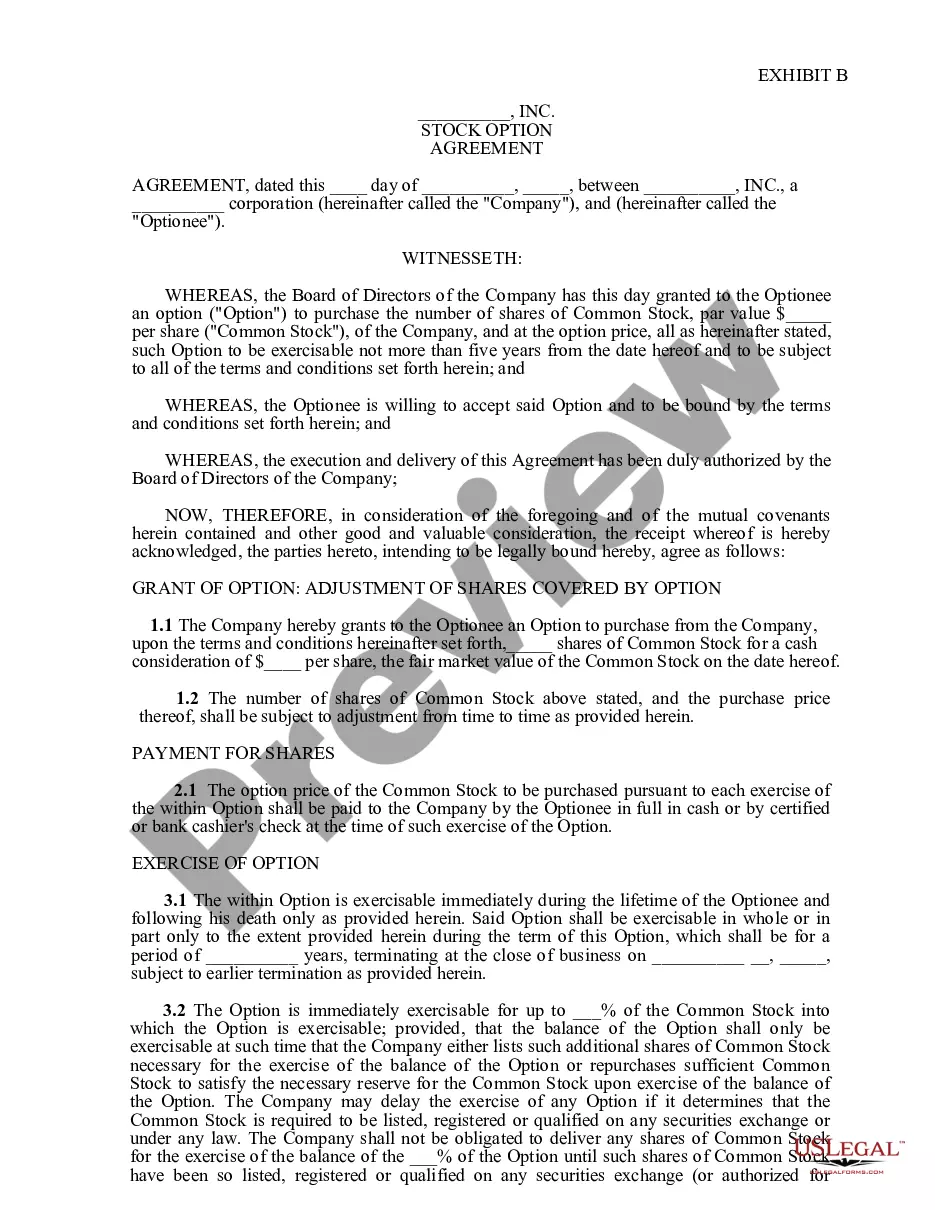
- Identification of parties involved: specifies Parent company, Purchaser, Major Shareholder, and Trustees.
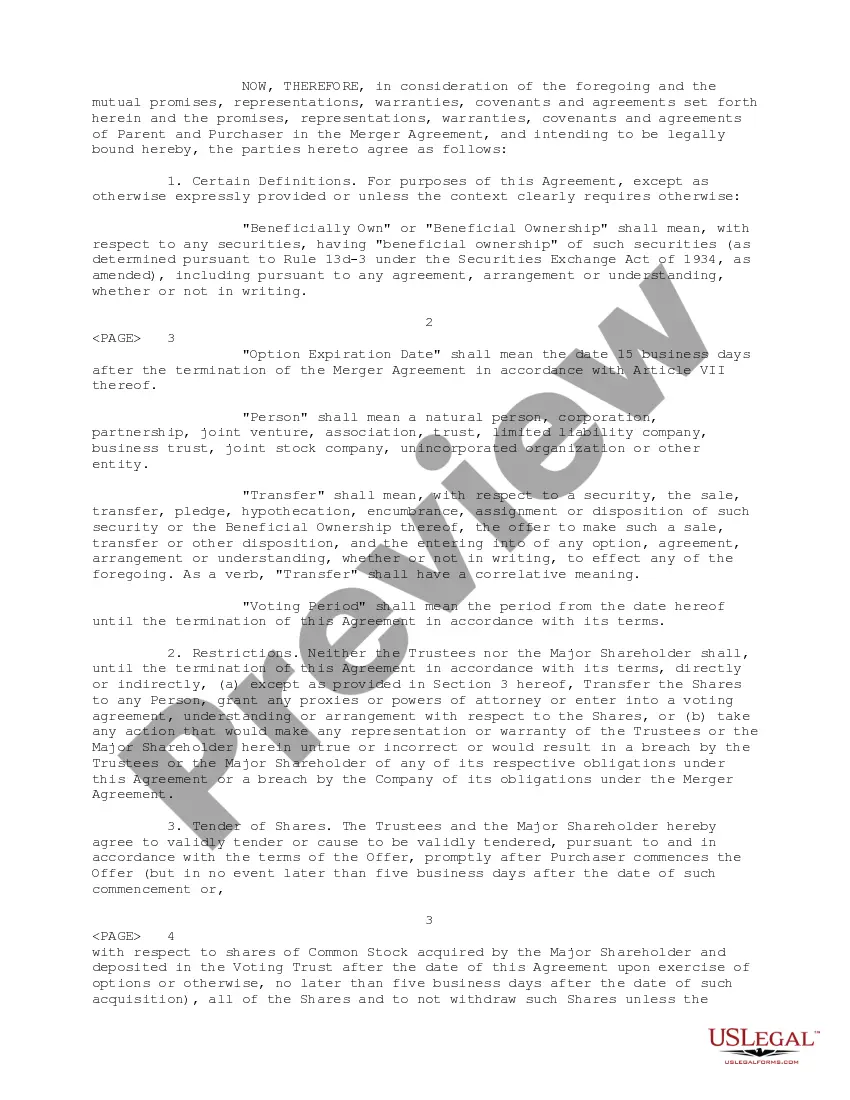
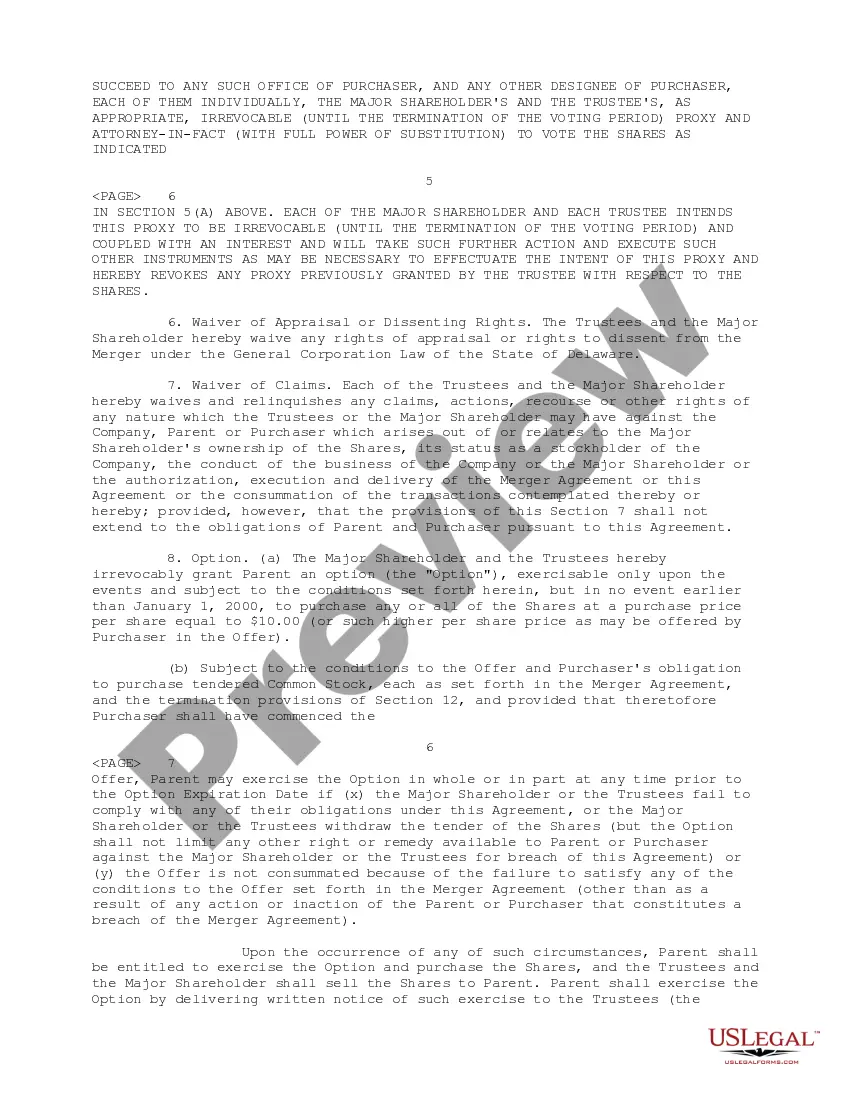
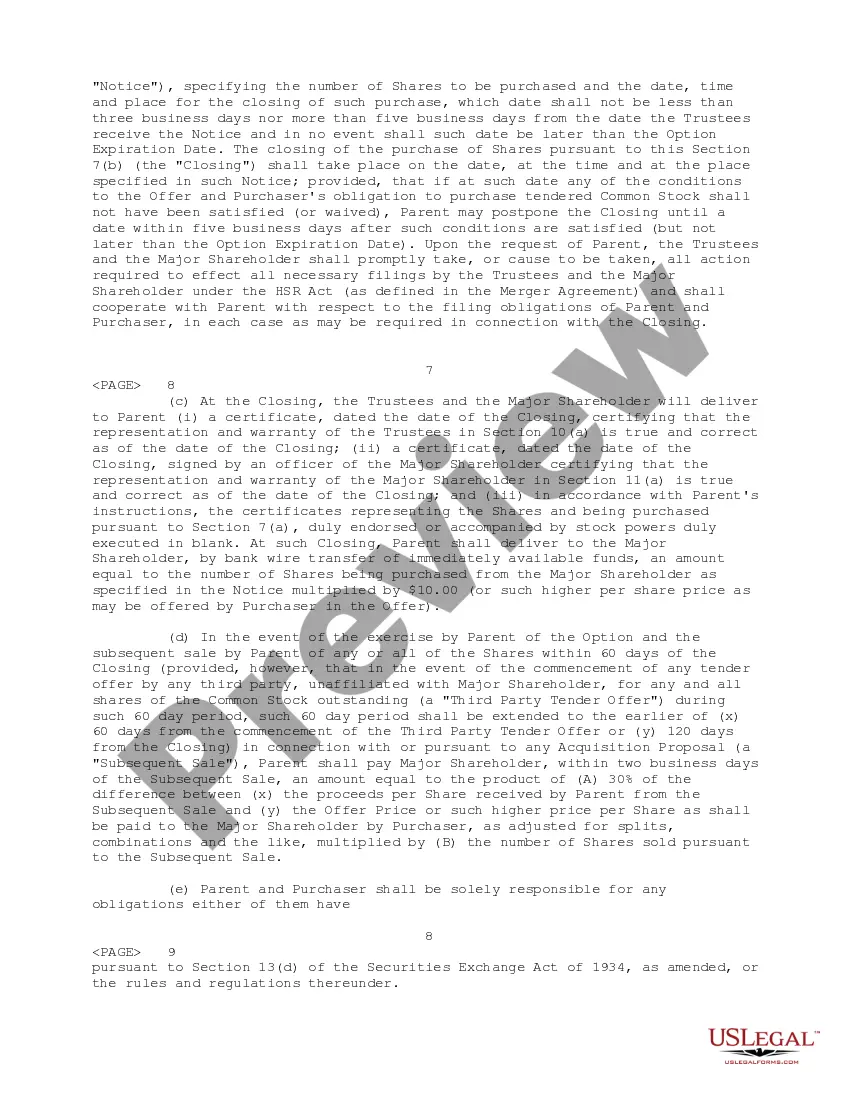
- Tender of Shares Clause: outlines obligations of the Major Shareholder and Trustees in tendering shares.
- Restrictions Clause: details limitations on transferring shares during the agreement's term.
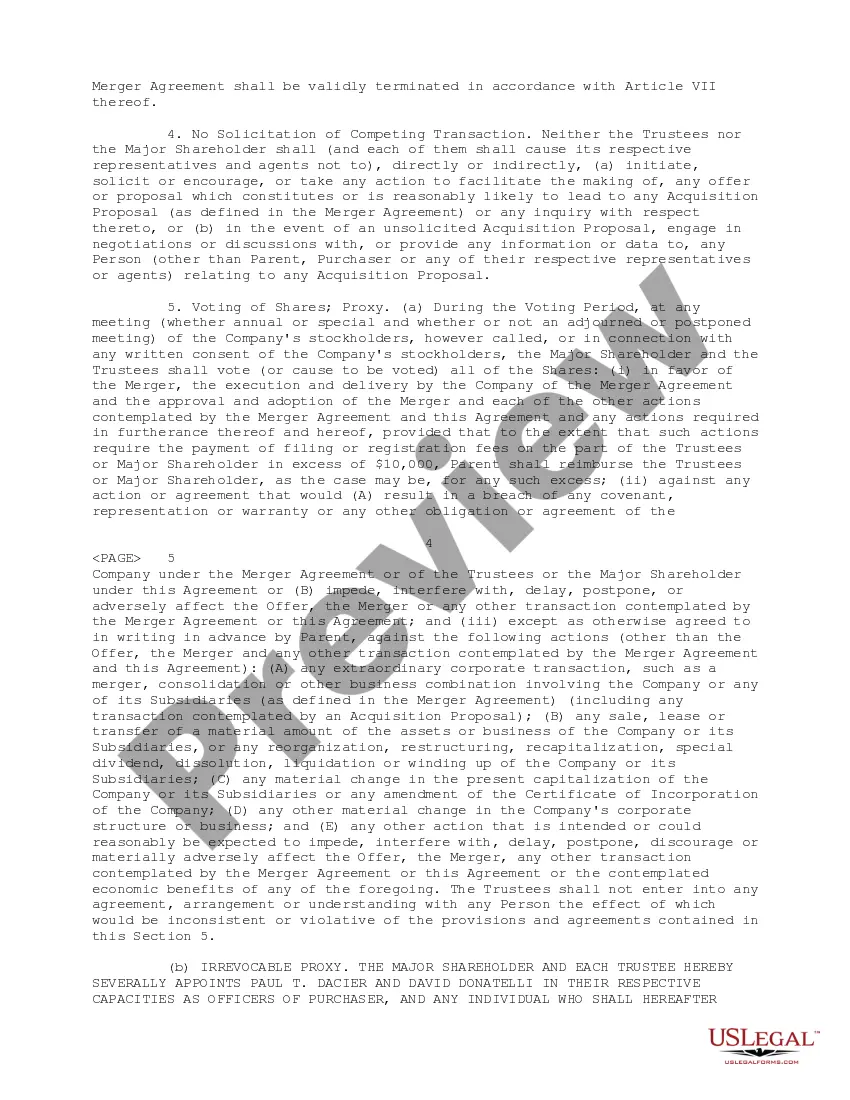
- Voting Proxy: grants authority to vote shares in favor of the merger.
- Waivers and Representation: includes waivers of appraisal and dissenting rights concerning the merger.

Situations where this form applies
This form should be used when a major shareholder intends to participate in a tender offer during a corporate merger. It is applicable when an agreement is in place for a corporate buyout or acquisition, and the shareholder must formally agree to tender shares. This document is crucial for securing shareholder consent in compliance with relevant corporate governance standards.
Who needs this form
- Major shareholders of a corporation involved in a merger or acquisition.
- Corporate attorneys seeking to formalize the terms of share tendering.
- Trustees representing the interests of shareholders under a Voting Trust Agreement.
- Corporate boards considering shareholder approval for significant transactions.
Completing this form step by step
- Identify all parties: Clearly fill in names of the Parent, Purchaser, Major Shareholder, and Trustees.
- Outline the tender terms: Specify the number of shares to be tendered and agree on the purchase price.
- Include voting rights information: Ensure the proxy section is filled out to allow voting on merger matters.
- Review restrictions: Make sure all restrictions on share transfers are understood and documented.
- Sign and date the agreement: Have all involved parties sign the document on the designated lines to ensure legality.
Is notarization required?
Notarization is generally not required for this form. However, certain states or situations might demand it. You can complete notarization online through US Legal Forms, powered by Notarize, using a verified video call available anytime.
Get your form ready online
Our built-in tools help you complete, sign, share, and store your documents in one place.
Make edits, fill in missing information, and update formatting in US Legal Forms—just like you would in MS Word.
Download a copy, print it, send it by email, or mail it via USPS—whatever works best for your next step.
Sign and collect signatures with our SignNow integration. Send to multiple recipients, set reminders, and more. Go Premium to unlock E-Sign.
If this form requires notarization, complete it online through a secure video call—no need to meet a notary in person or wait for an appointment.
We protect your documents and personal data by following strict security and privacy standards.

Make edits, fill in missing information, and update formatting in US Legal Forms—just like you would in MS Word.

Download a copy, print it, send it by email, or mail it via USPS—whatever works best for your next step.

Sign and collect signatures with our SignNow integration. Send to multiple recipients, set reminders, and more. Go Premium to unlock E-Sign.

If this form requires notarization, complete it online through a secure video call—no need to meet a notary in person or wait for an appointment.

We protect your documents and personal data by following strict security and privacy standards.
Common mistakes
- Failing to properly identify all parties involved in the agreement.
- Neglecting to include or incorrectly stating the number of shares being tendered.
- Overlooking the specific voting rights or proxy assignments provided to the Purchaser.
- Not thoroughly reviewing the entirety of the agreement for clarity and compliance.
Why complete this form online
- Convenient access to the form from anywhere, allowing timely completion and submission.
- Editability to ensure customization for specific needs and detailed accuracy.
- Reliability of professionally drafted content, ensuring adherence to legal standards.
Looking for another form?
Form popularity
FAQ
Companies merge to expand their market share, diversify products, reduce risk and competition, and increase profits. Common types of company mergers include conglomerates, horizontal mergers, vertical mergers, market extensions and product extensions.
A merger occurs when two separate entities combine forces to create a new, joint organization. Meanwhile, an acquisition refers to the takeover of one entity by another. Mergers and acquisitions may be completed to expand a company's reach or gain market share in an attempt to create shareholder value.
Types of Mergers. The three main types of mergers are horizontal, vertical, and conglomerate. In a horizontal merger, companies at the same stage in the same industry merge to reduce costs, expand product offerings, or reduce competition.
In 2007, the Walt Disney Company acquired Pixar Entertainment for a price of $7.4 billion. This is a merger that makes sense at every level. Disney has been the biggest name in family entertainment for decades, creating classics such as Cinderella, Mary Poppins, and The Lion King.
The terms "mergers" and "acquisitions" are often used interchangeably, although, in fact, they hold slightly different meanings. When one company takes over another and establishes itself as the new owner, the purchase is called an acquisition.
When you merge your business with another business or businesses, you consolidate two or more companies into one. You can compare a merger to a marriage. The companies involved in the merger join their assets, staff and other resources together, forming a new legal entity.
During a merger, essentially other corporate entities become a part of an existing entity. This can be useful for smaller companies merging into larger companies that have greater brand recognition and market traction. Conversely, a consolidation is when multiple companies join to form a new entity.
A merger is an agreement that unites two existing companies into one new company. There are several types of mergers and also several reasons why companies complete mergers. Mergers and acquisitions are commonly done to expand a company's reach, expand into new segments, or gain market share.
A merger is a statutory and contractual combination of two or more entities or companies into one while consolidation is the contractual and statutory process where two or more entities, usually companies join hands to form a completely new, more solid, and stronger entity.