Stock Option Agreement by Telocity, Inc.
Overview of this form
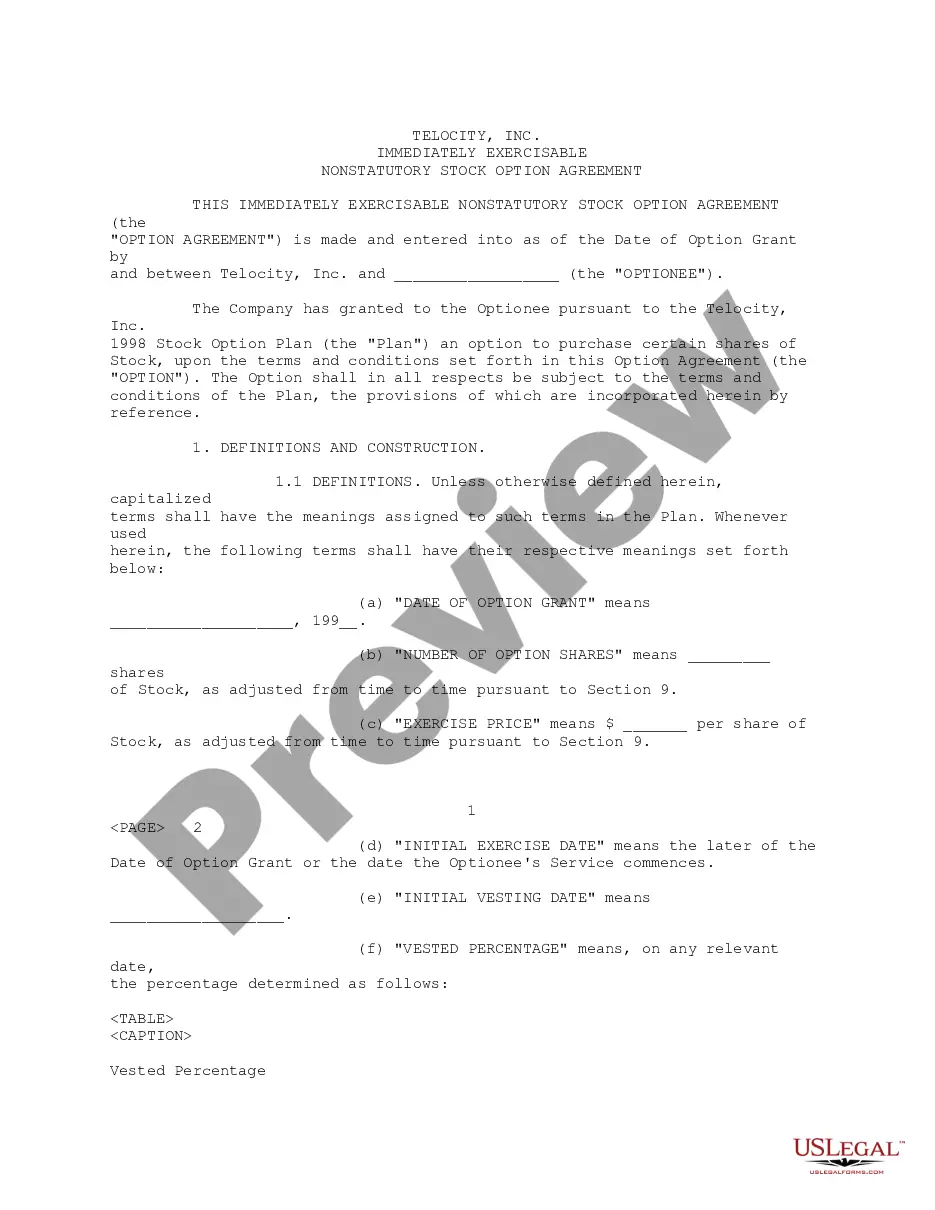
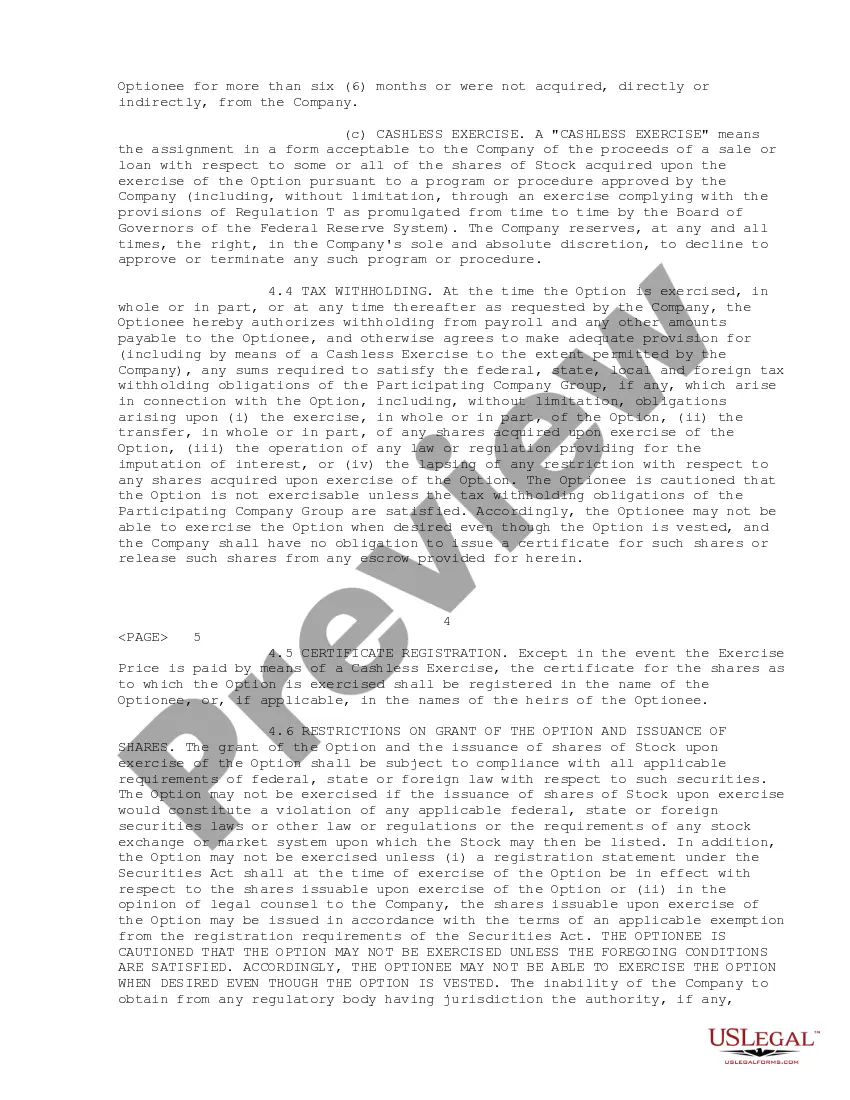
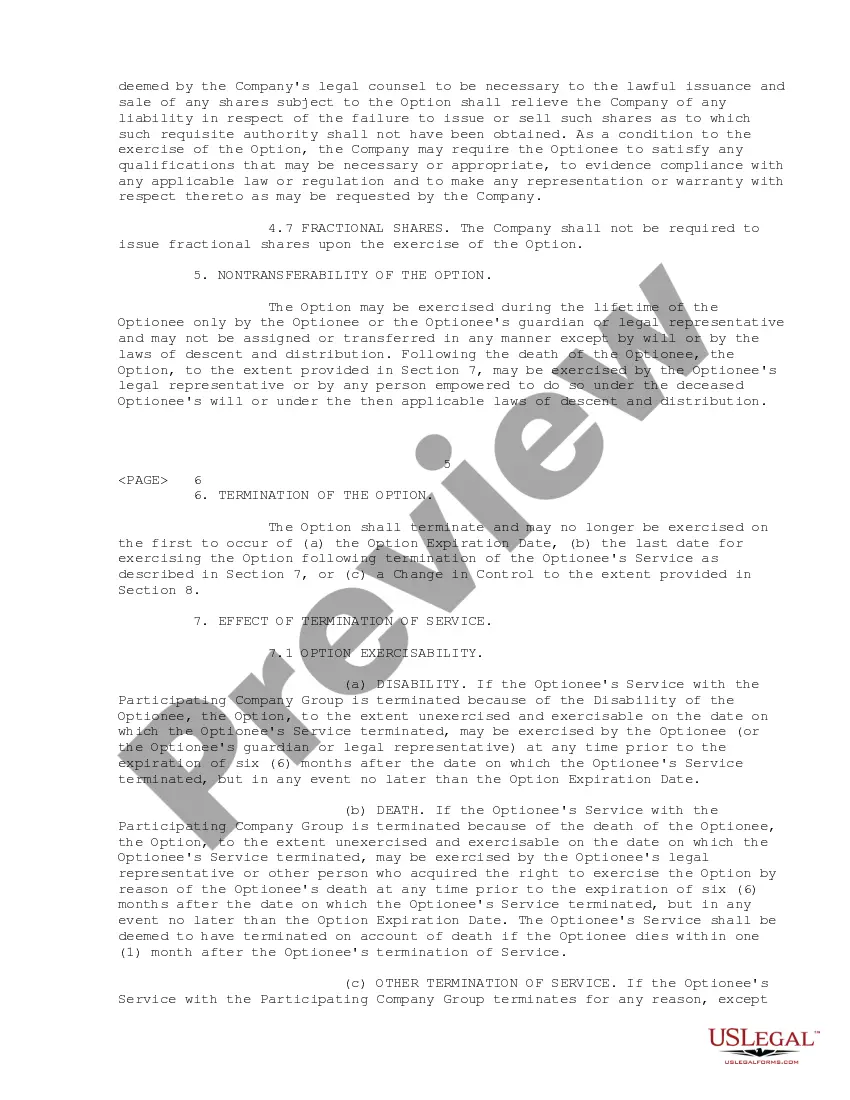
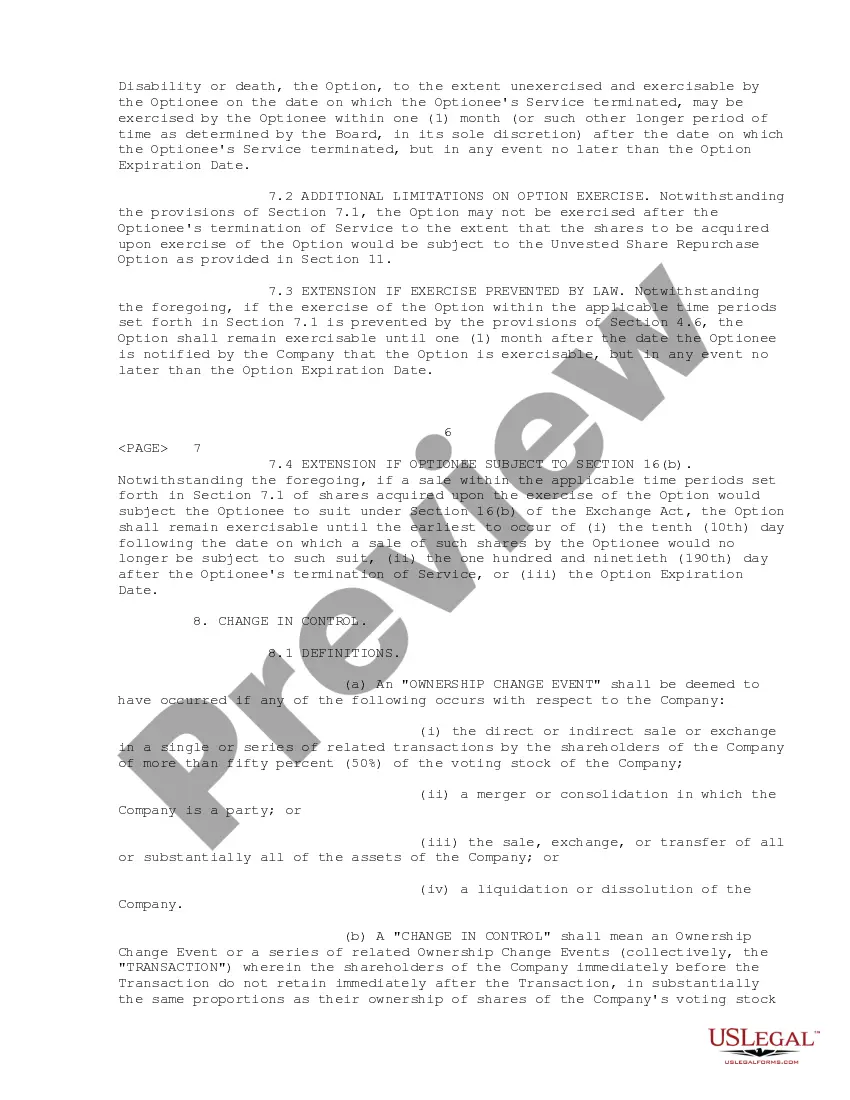
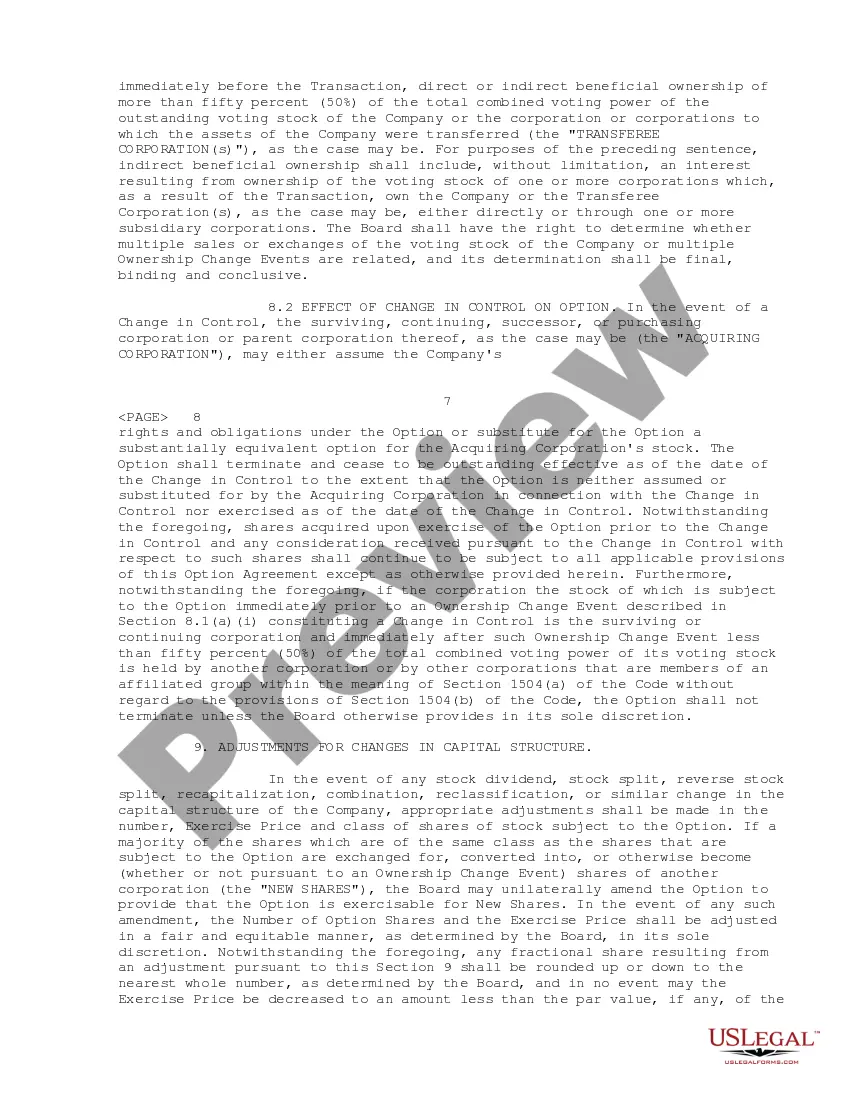
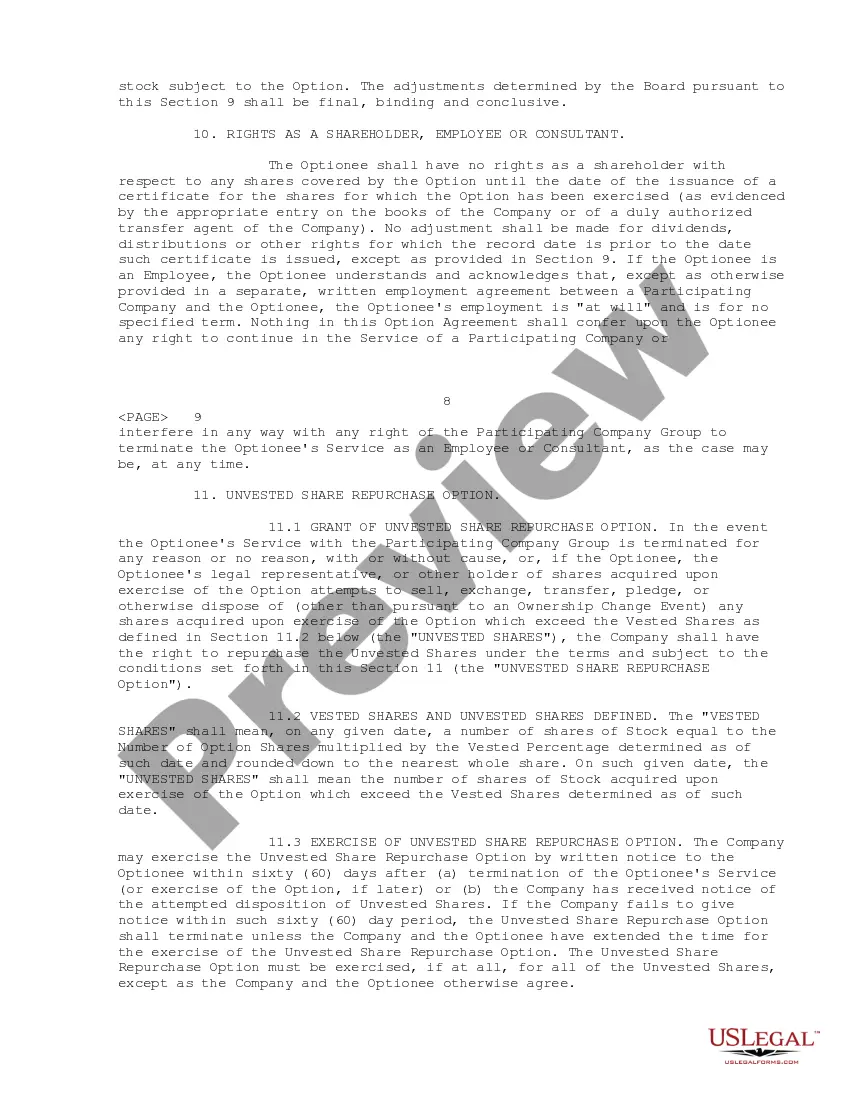
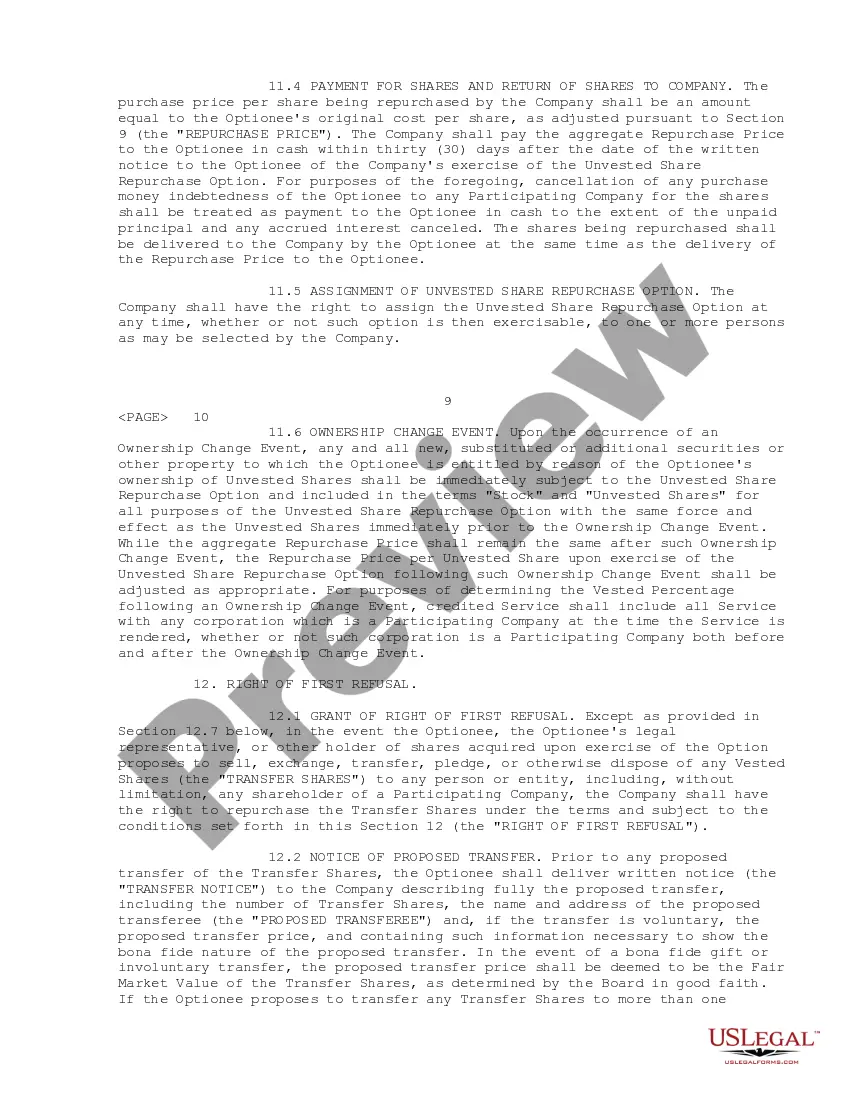
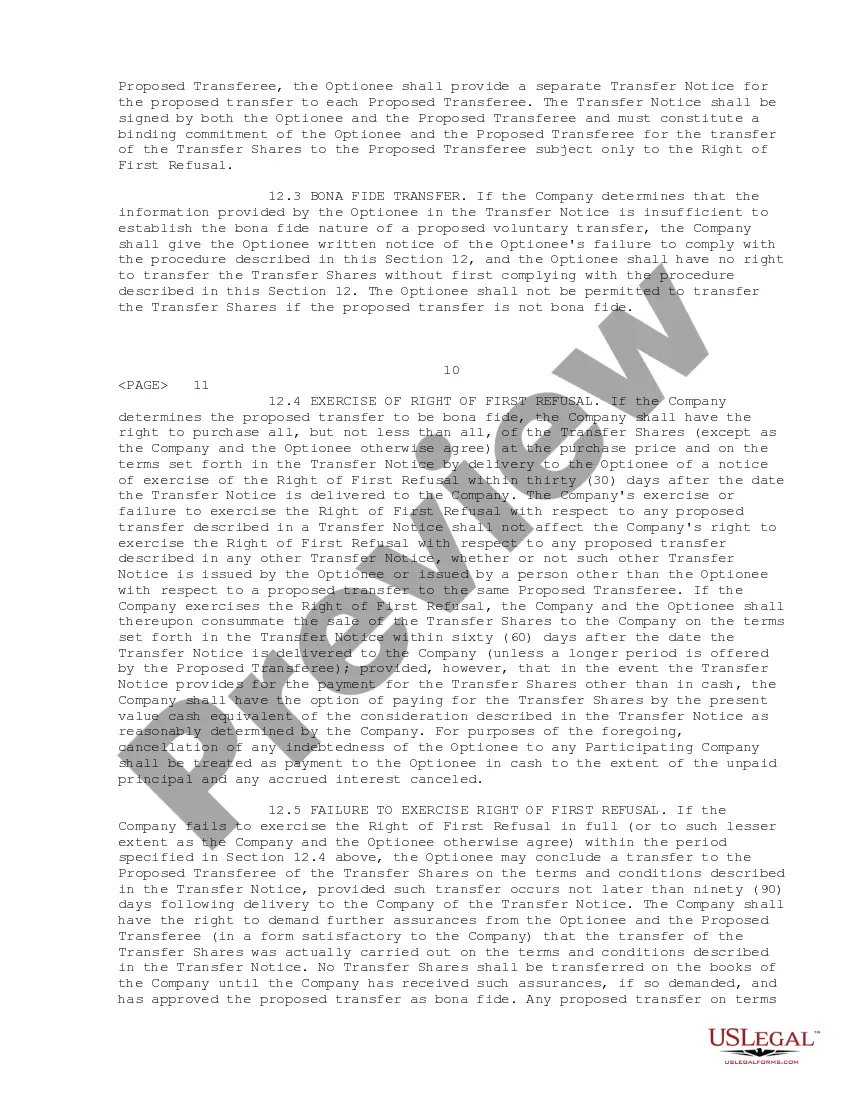
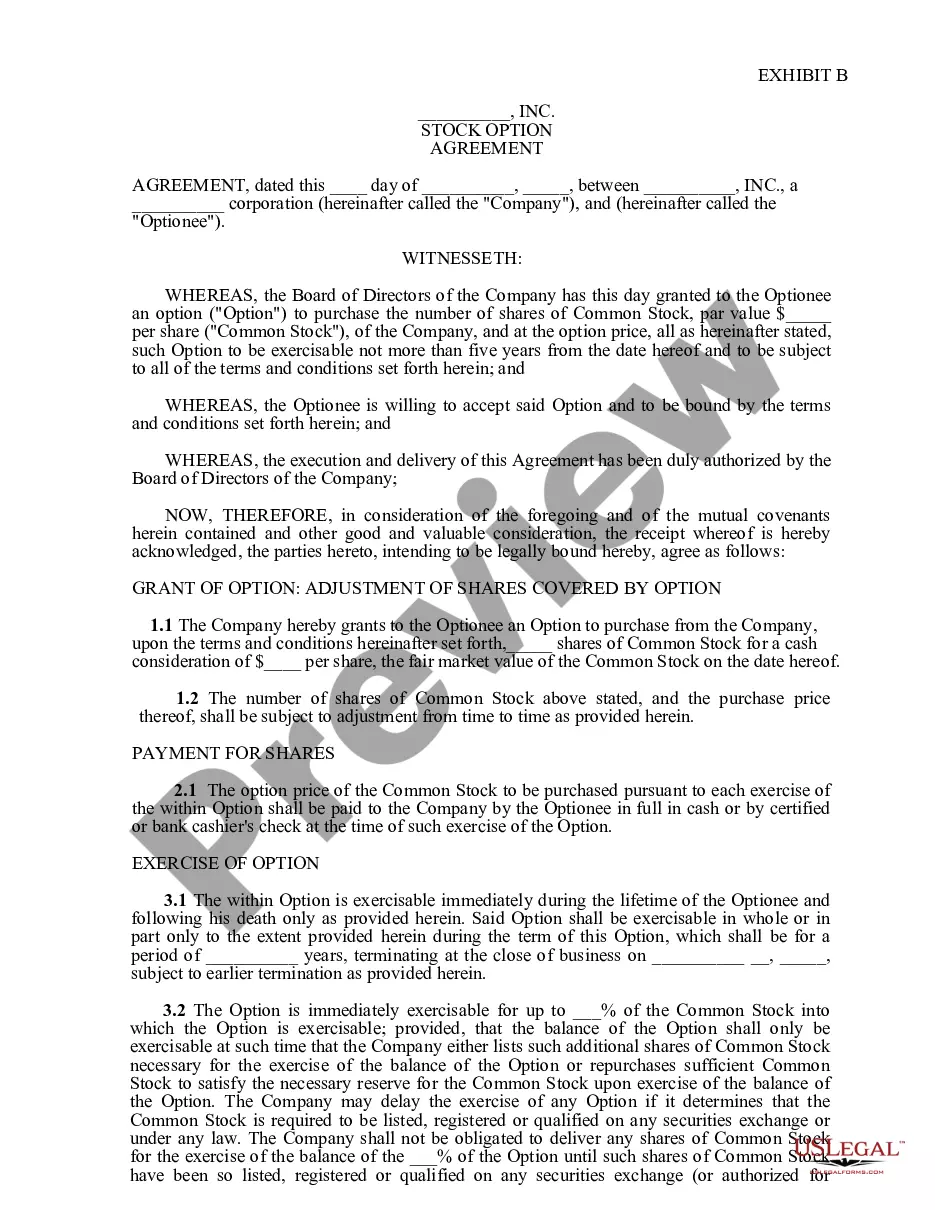
The Stock Option Agreement by Telocity, Inc. is a legal document that establishes the terms under which an employee can purchase company stock at a predetermined price. This type of agreement is classified as a nonstatutory stock option, meaning it does not meet the requirements for special tax treatment under the Internal Revenue Code. Unlike incentive stock options, nonstatutory stock options allow for greater flexibility and can be more favorable in specific employment contexts.
Form components explained
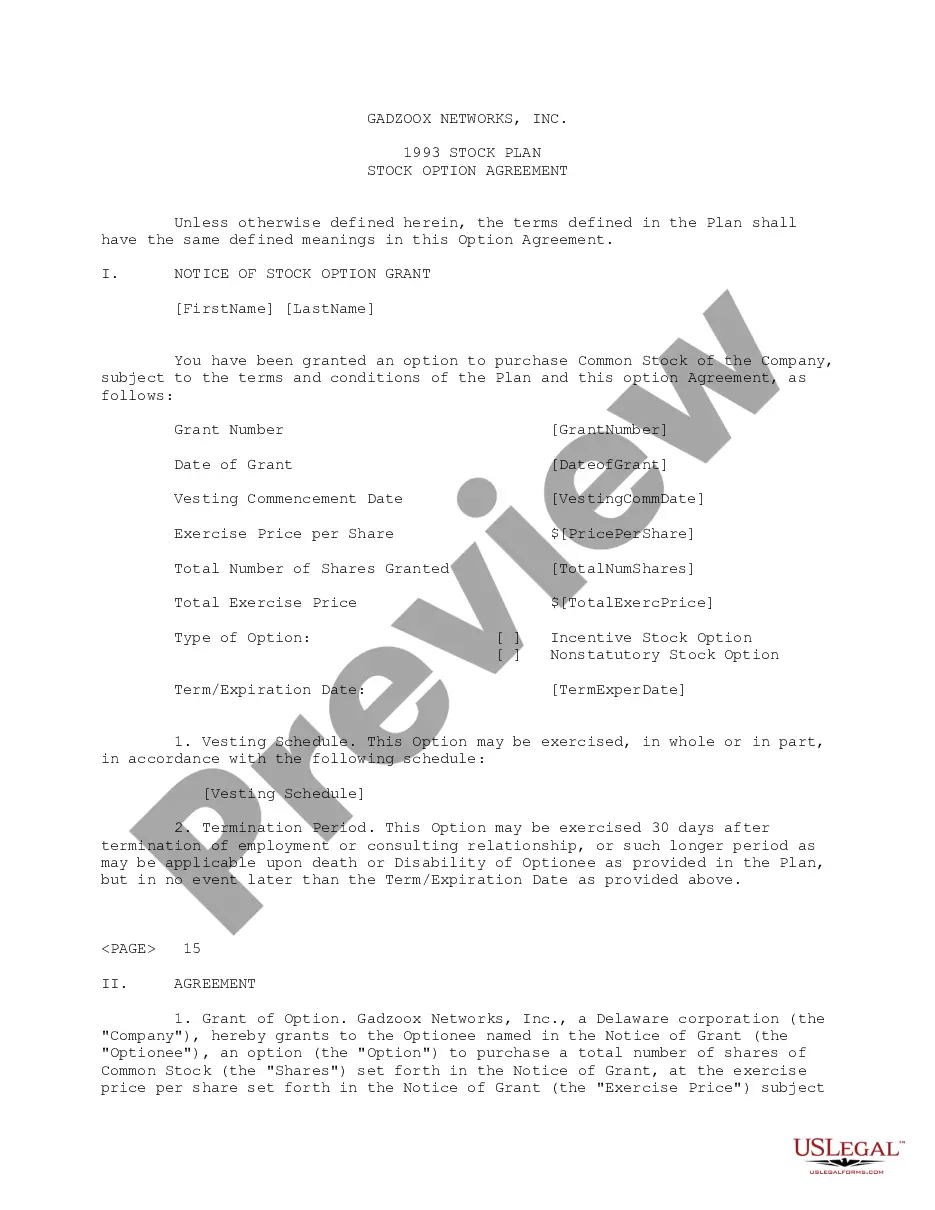
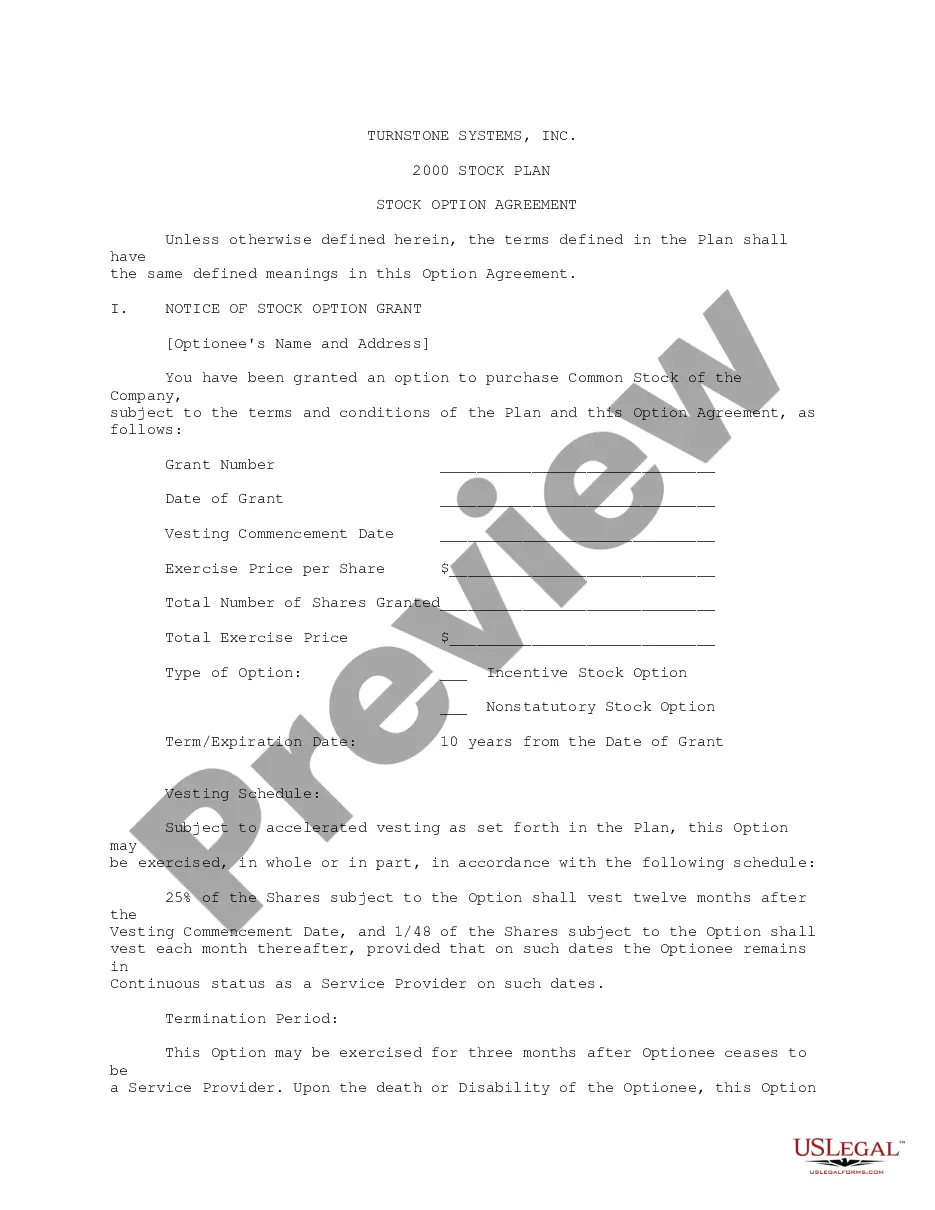
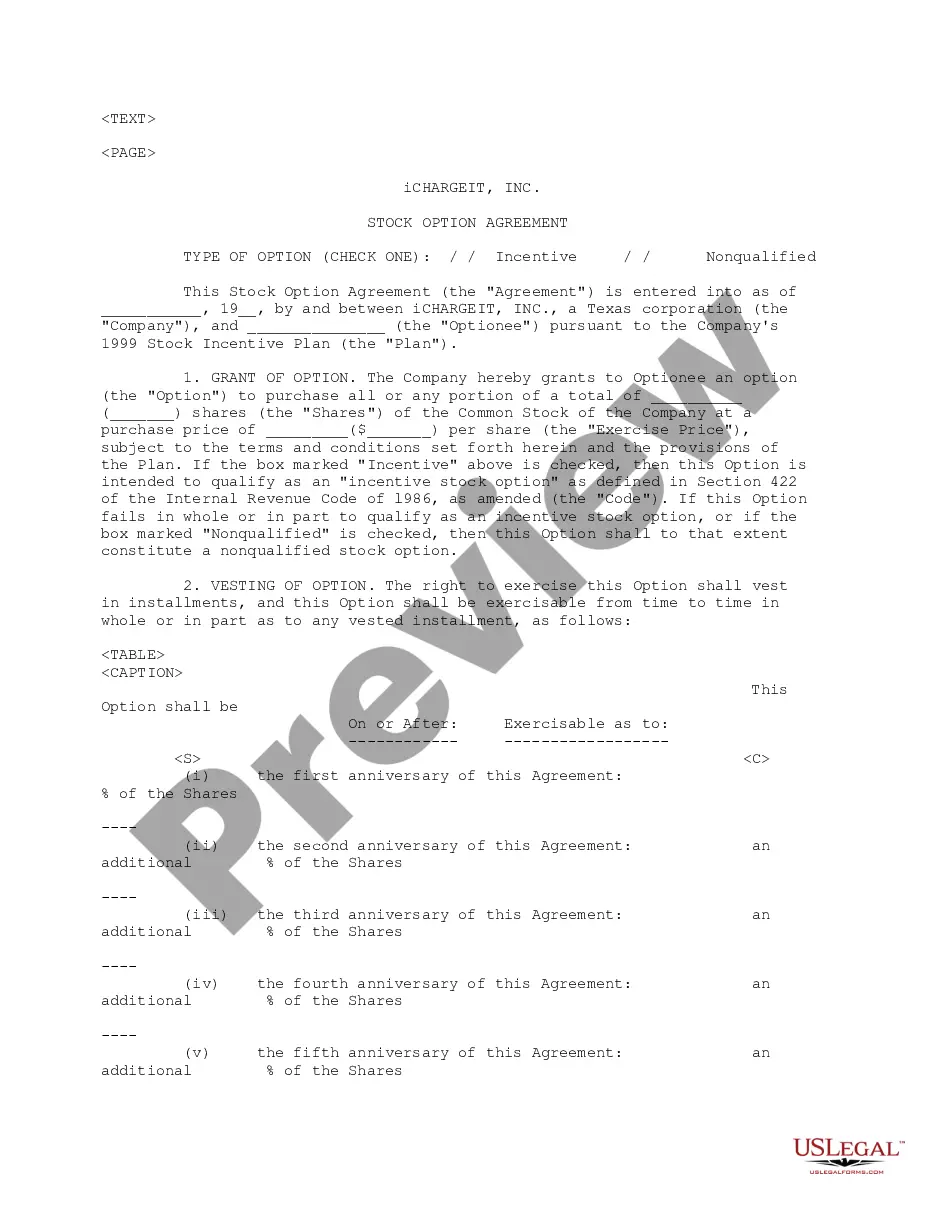
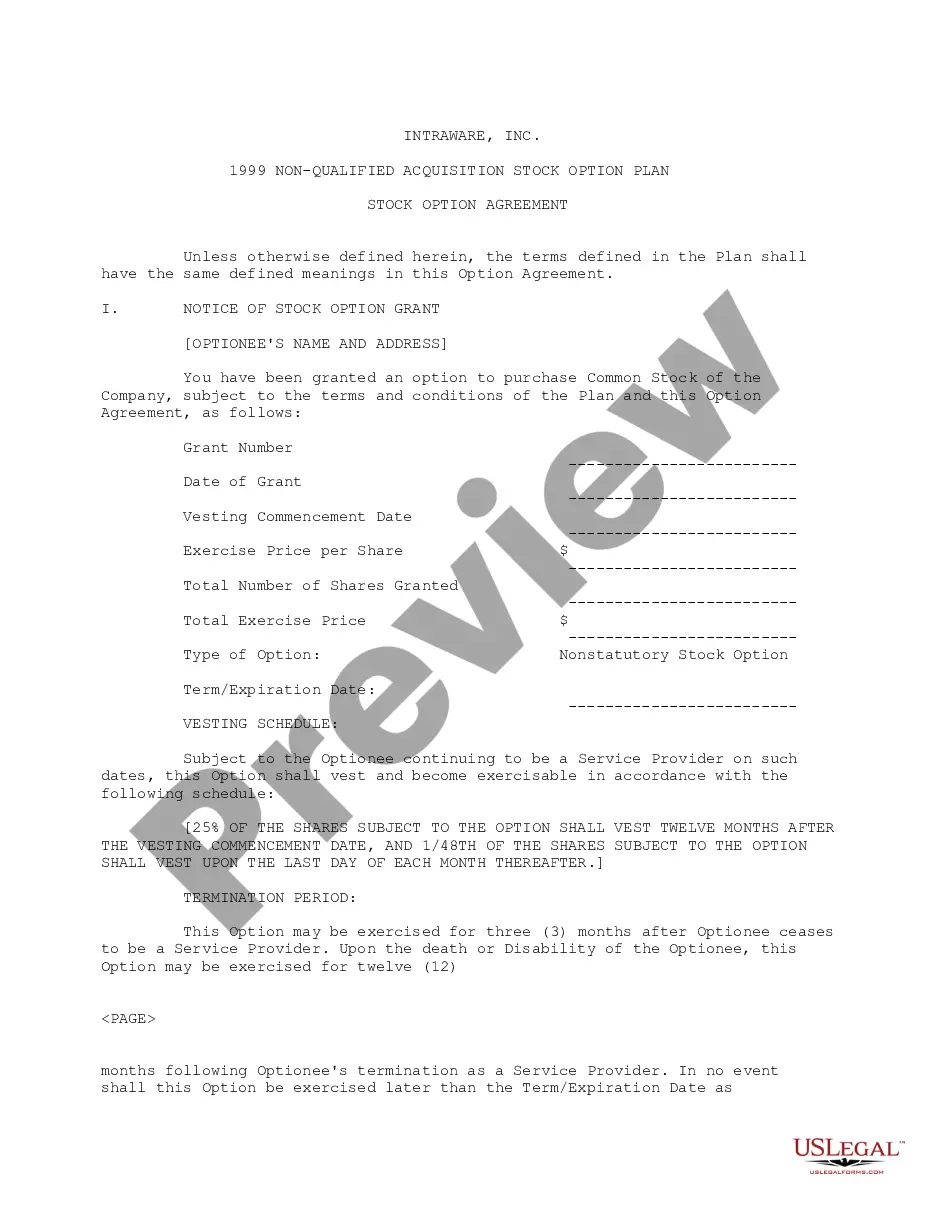
- Date of Option Grant: The date when the option is officially granted to the optionee.
- Number of Option Shares: The total number of shares the optionee can purchase under the agreement.
- Exercise Price: The price per share that the optionee must pay to exercise the option.
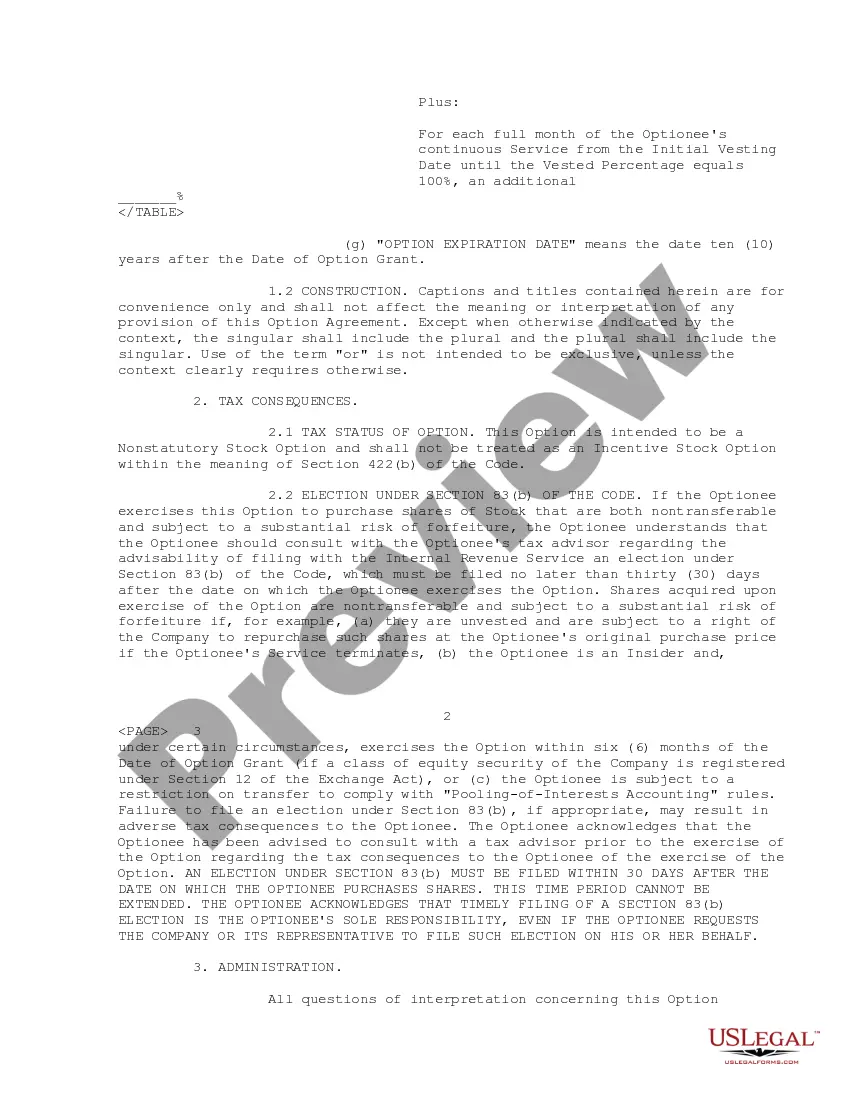
- Vesting Schedule: Outlines how shares become vested over time based on the optionee's continued service.
- Tax Consequences: Clarifies the tax obligations of the optionee regarding the exercise of the option, including potential elections under tax law.
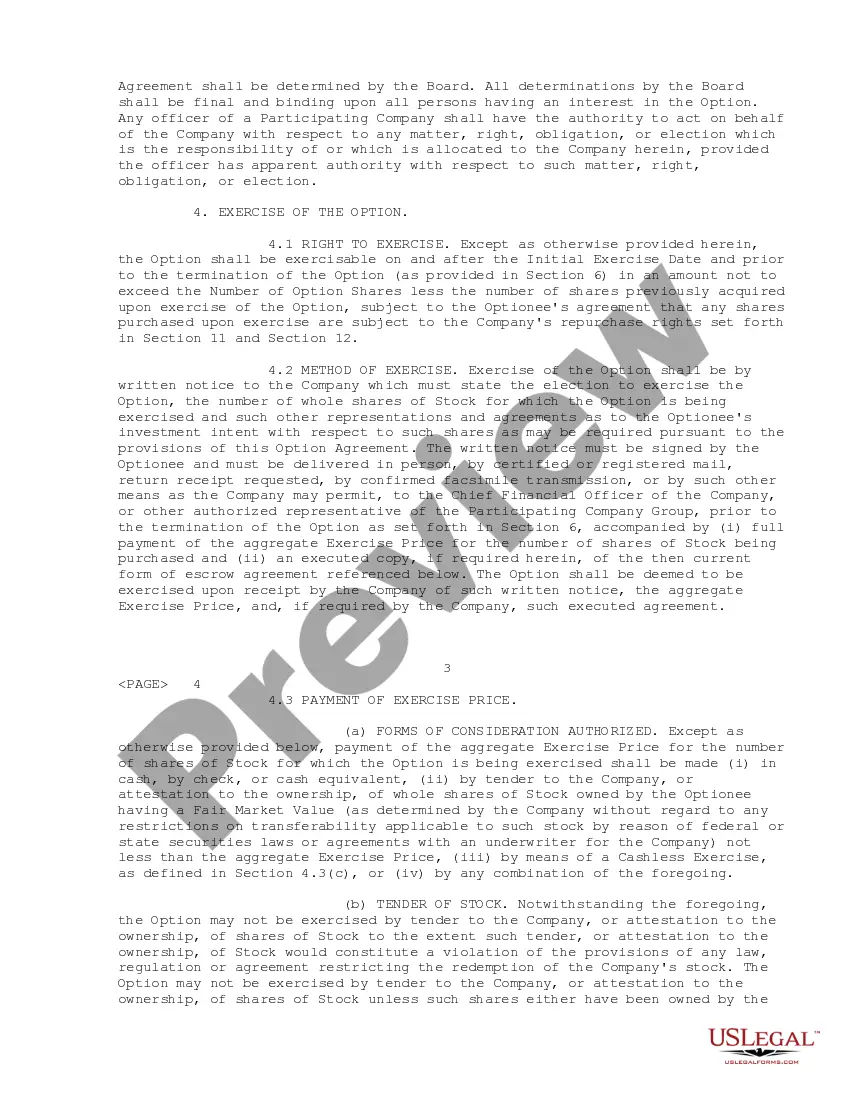
- Right of First Refusal: Gives the company the right to buy back shares if the optionee intends to sell them.

When this form is needed
This form is typically used when a company grants stock options to an employee, allowing them to purchase shares at a specific price as part of an incentive package. It is appropriate in situations where an employer wants to encourage long-term employment and align employee interests with the performance of the company. It is also relevant during restructurings or as part of a compensation package for key hires.
Who can use this document
- Employees of Telocity, Inc. who have been granted stock options.
- Corporate executives looking to structure equity compensation.
- Human resources professionals involved in creating employee incentive programs.
- Legal professionals advising clients on stock option agreements.
Steps to complete this form
- Enter the date of option grant where indicated.
- Specify the number of option shares being granted.
- Set the exercise price per share of stock.
- Define the vesting schedule detailing how and when shares vest.
- Review and acknowledge any tax implications and rights associated with the agreement.
- Ensure that both the company representative and the optionee sign the document to make it valid.
Notarization requirements for this form
This form does not typically require notarization unless specified by local law. Always check your local requirements to ensure compliance.
Get your form ready online
Our built-in tools help you complete, sign, share, and store your documents in one place.
Make edits, fill in missing information, and update formatting in US Legal Forms—just like you would in MS Word.
Download a copy, print it, send it by email, or mail it via USPS—whatever works best for your next step.
Sign and collect signatures with our SignNow integration. Send to multiple recipients, set reminders, and more. Go Premium to unlock E-Sign.
If this form requires notarization, complete it online through a secure video call—no need to meet a notary in person or wait for an appointment.
We protect your documents and personal data by following strict security and privacy standards.

Make edits, fill in missing information, and update formatting in US Legal Forms—just like you would in MS Word.

Download a copy, print it, send it by email, or mail it via USPS—whatever works best for your next step.

Sign and collect signatures with our SignNow integration. Send to multiple recipients, set reminders, and more. Go Premium to unlock E-Sign.

If this form requires notarization, complete it online through a secure video call—no need to meet a notary in person or wait for an appointment.

We protect your documents and personal data by following strict security and privacy standards.
Common mistakes to avoid
- Failing to specify the exercise price clearly.
- Not defining the vesting schedule properly.
- Overlooking tax implications and not consulting a tax advisor.
- Neglecting to have both parties sign the agreement, which invalidates it.
Benefits of completing this form online
- Convenience of access and the ability to download and print the form easily.
- Editability allows users to customize the form for specific situations.
- Reliability, as the forms are drafted by licensed attorneys to ensure legal compliance.
- The Stock Option Agreement is legally binding once signed by both parties.
- It is subject to local and federal securities laws regarding stock issuance.
- Failure to comply with vesting schedules or tax regulations can affect the legality of the agreementâs terms.
Main things to remember
- The Stock Option Agreement is intended for employees receiving stock options that are nonstatutory.
- It outlines critical elements such as the exercise price, vesting schedule, and tax implications.
- Amendments and compliance with state-specific regulations are essential for enforceability.
- Nonstatutory Stock Option: A type of stock option that does not qualify for special tax treatment under the Internal Revenue Code.
- Vesting: The process by which an employee earns the right to stock options over time based on their service to the company.
- Exercise Price: The price at which the optionee can purchase the underlying shares.
Looking for another form?

Form popularity
FAQ
Stock options may be offered both by private companies like startups, as well as publicly traded companies like Google and Walmart. For private companies, equity is typically a percentage of ownership in a company when that company goes public.
If investors fail to consider this dilution, then stock prices can be inflated. Employee options give their owners the right to buy shares at a set price anytime over a given period.The employee could exercise the right to buy the shares for $25, then immediately sell them on the open market for $100.
A stock option is the right to buy a specific number of shares of company stock at a pre-set price, known as the exercise or strike price, for a fixed period of time, usually following a predetermined waiting period, called the vesting period. Most vesting periods span follow three to five years, with a certain
You Could Make a Lot of Money with Stock Options (But There's No Guarantee) Think of a start-up company that gives you 100,000 company stock options with a strike price of $1 per share. At issue, they probably won't be worth much.If that happened, the value of the stock options would go from nothing to $9,900,000.
Stock options are a form of compensation. Companies can grant them to employees, contractors, consultants and investors. These options, which are contracts, give an employee the right to buy or exercise a set number of shares of the company stock at a pre-set price, also known as the grant price.
Private company stock options are call options, giving the holder the right to purchase shares of the company's stock at a specified price. This right to purchase or exercise stock options is often subject to a vesting schedule that defines when the options can be exercised.
About Stock Option Agreements When a company offers employees stock options, they do so through a special contract called a stock option agreement.The option agreement dictates all the terms of the offer -- including vesting schedule, time limits for exercise once vested and any other special conditions.
Companies may also rescind or cancel outstanding stock options as part of an overall approach to the problems of underwater options or backdated options.
Stock options are a common way for privately-held start-up companies to incentivize employees. They are awarded to employees, granting them the right to purchase shares, usually over a period of time according to a vesting schedule.