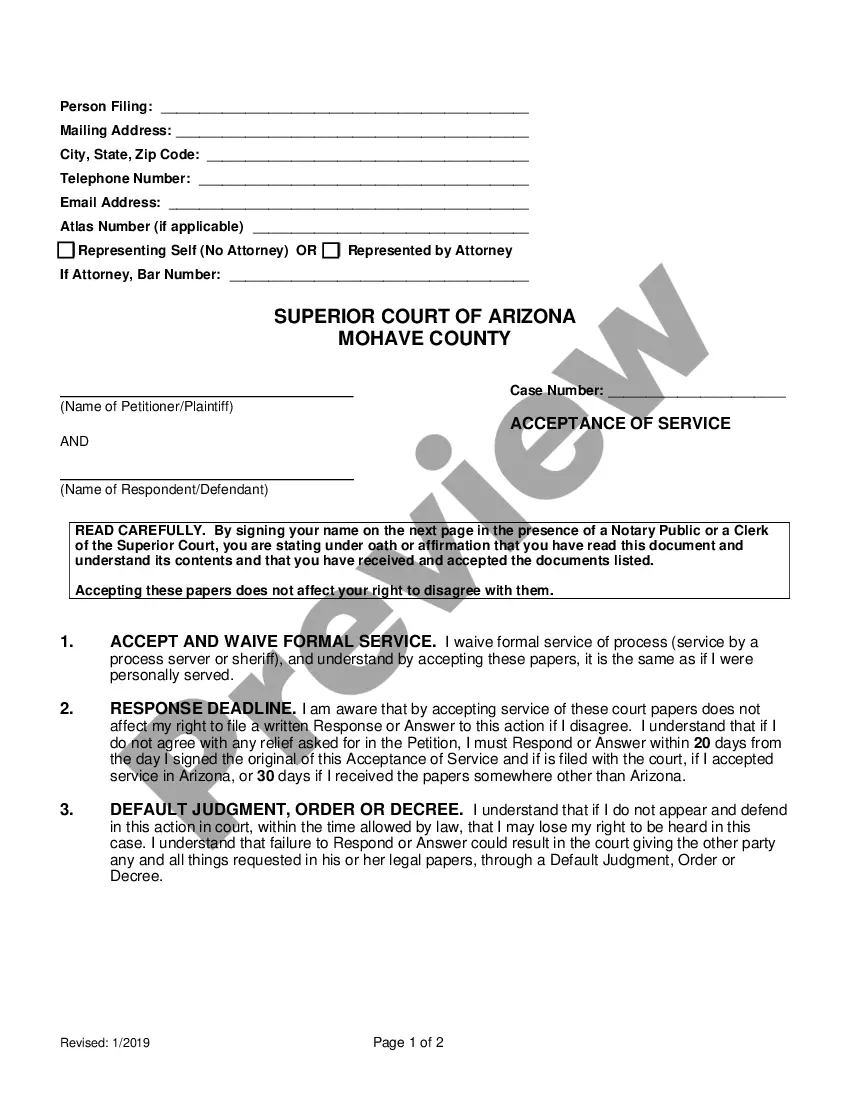
Consignment Agreement Regarding Retail Sales through Internet Website
What is this form?
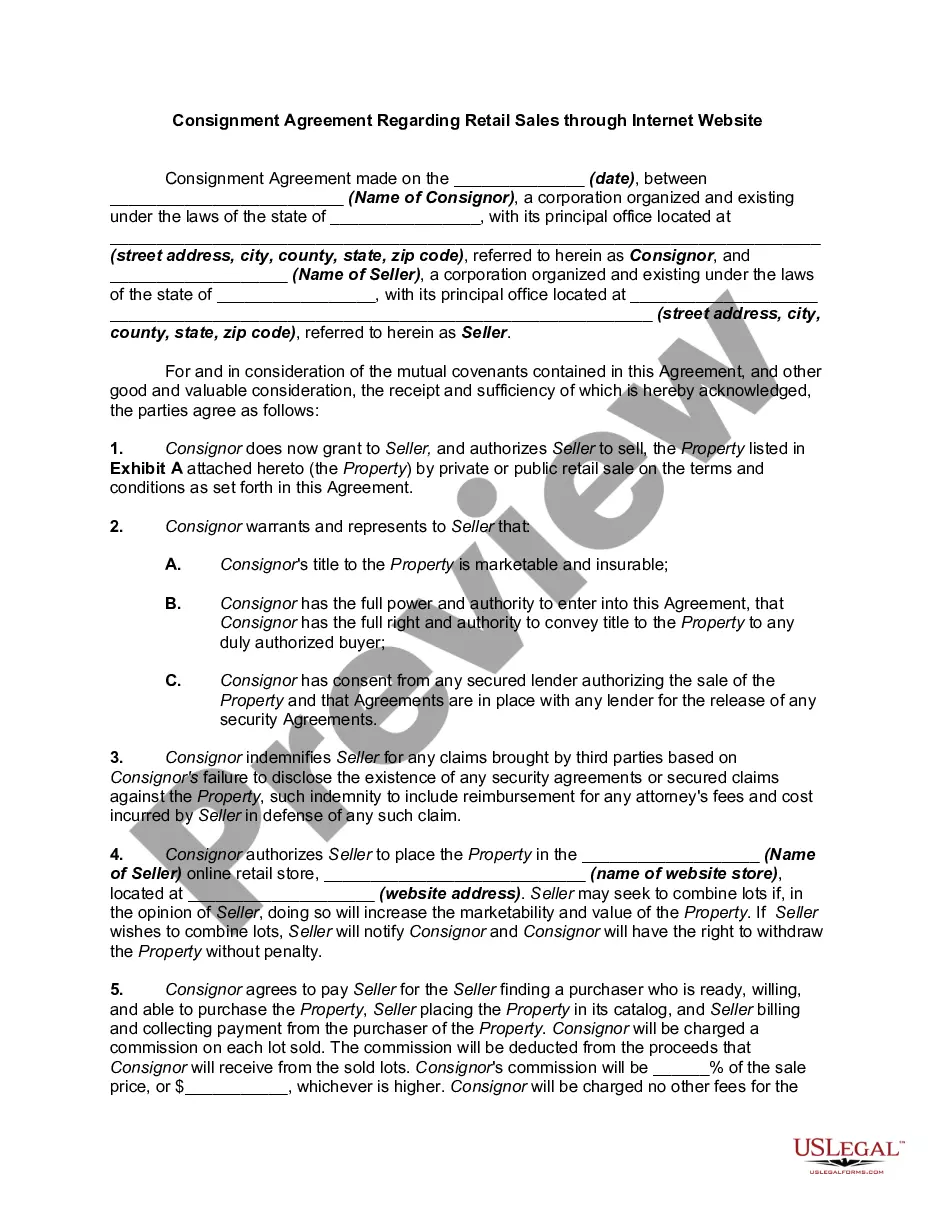
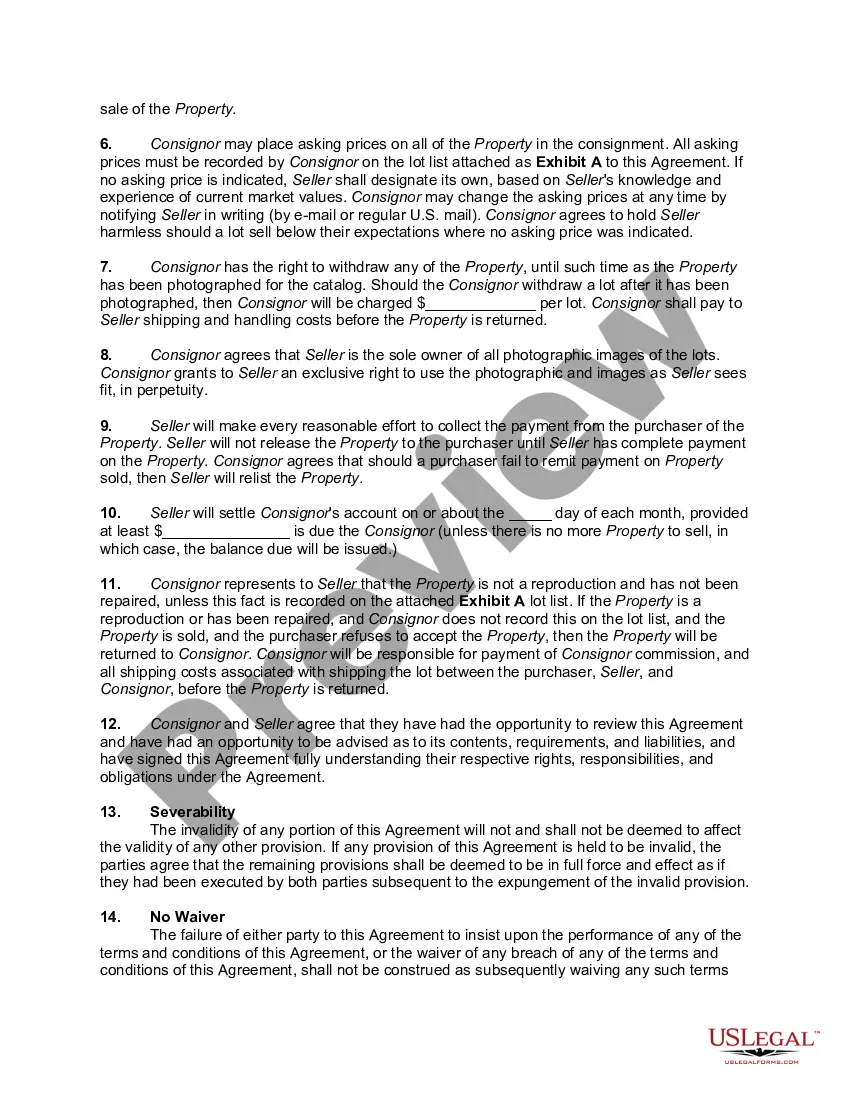
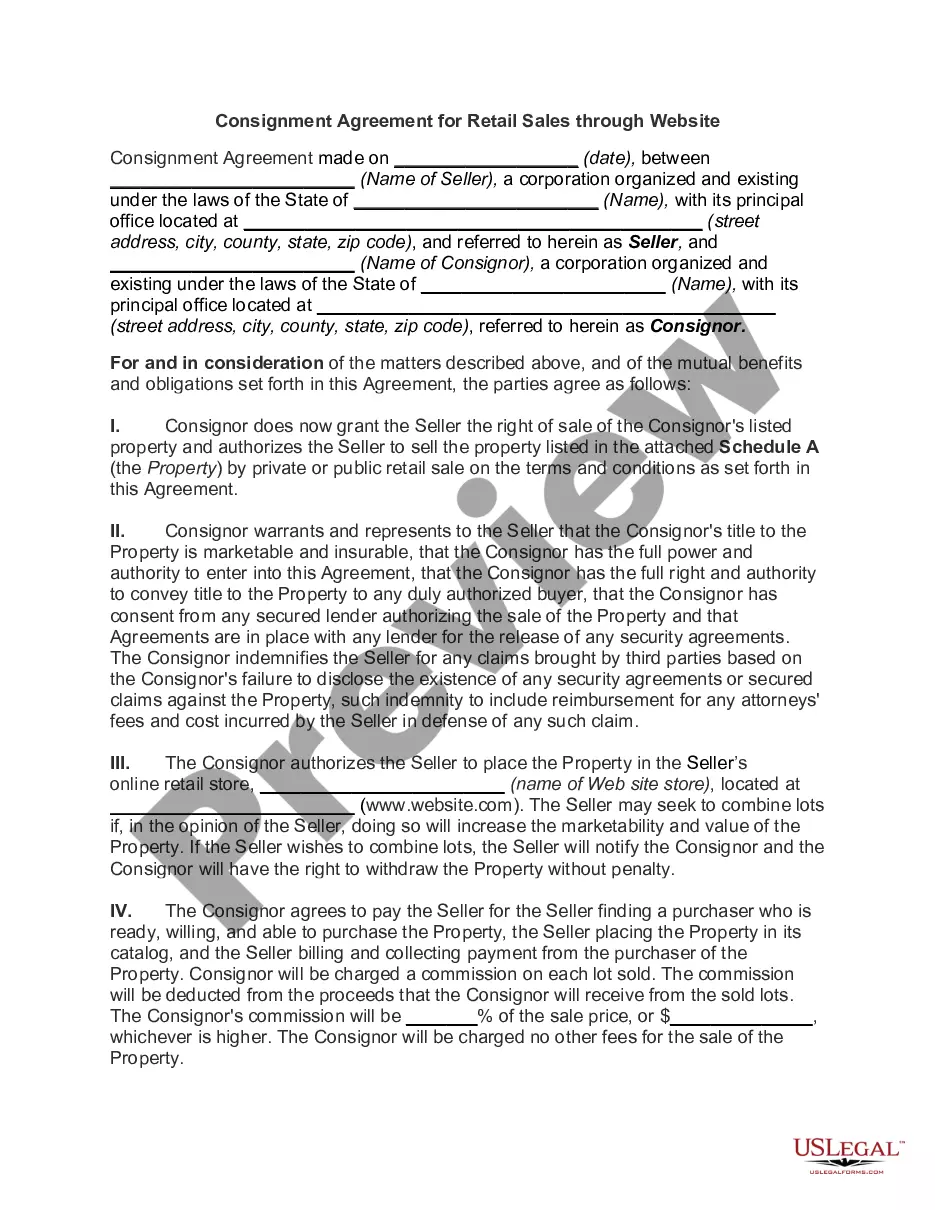
A consignment agreement regarding retail sales through an internet website is a legal document that outlines the arrangement between a consignor, who provides goods for sale, and a seller, who sells these goods on behalf of the consignor. This form specifies the terms of the sale, the responsibilities of both parties, and the commission structure. Unlike traditional sales contracts, this agreement allows for sellers to market goods without owning them outright until a sale occurs.
Main sections of this form
- Date of the agreement
- Details of the consignor and seller, including legal status and contact information
- Authorization for the seller to sell specific items listed in an attached exhibit
- Commission structure for the seller's services
- Warranties and representations regarding the goods
- Indemnification provisions for claims related to the goods
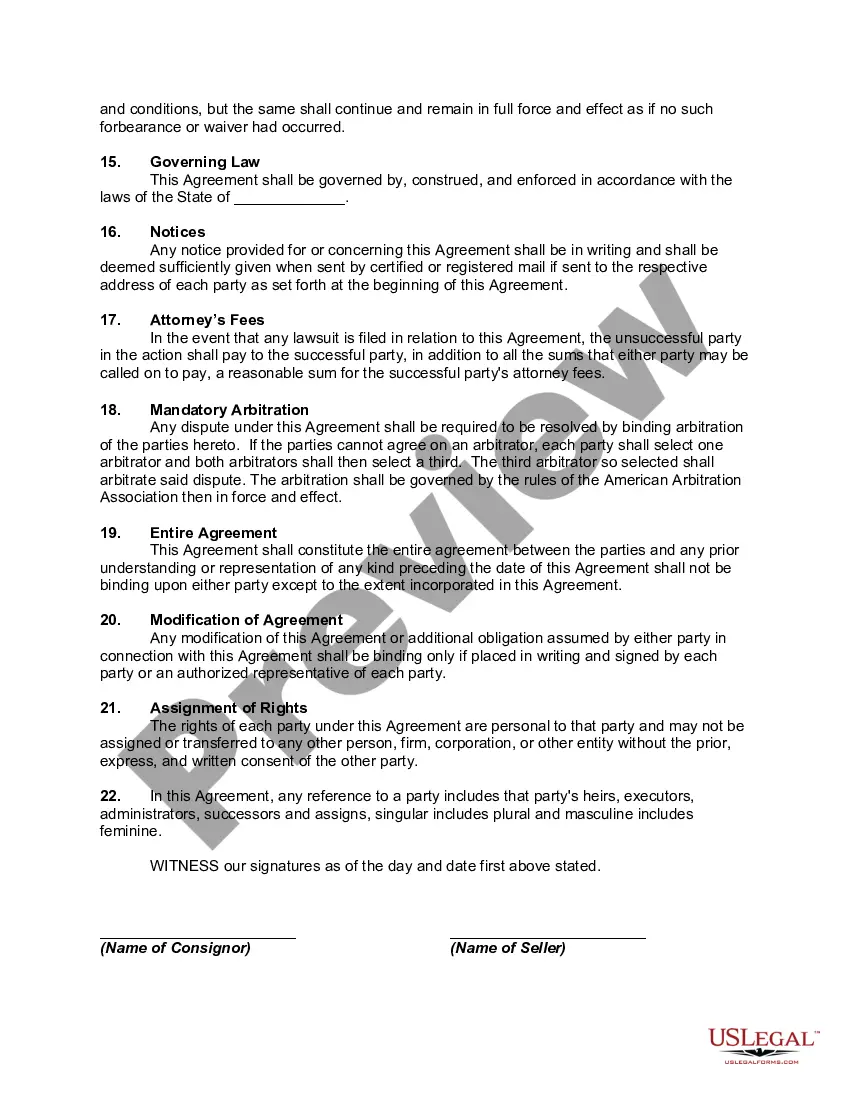
- Governing law and dispute resolution terms

When to use this document
This form should be used when a consignor wishes to sell goods through a seller's online platform without transferring ownership of the goods until they are sold. It is ideal for individuals or businesses looking to reach a broader audience while minimizing upfront costs associated with inventory ownership. Use this agreement when you want to clearly define the terms of the consignment arrangement, including pricing, commission rates, and responsibilities regarding the goods.
Who should use this form
- Business owners who want to sell their products online without taking on inventory costs
- Artists or craftspeople who wish to showcase and sell their work through established retailers
- Individuals looking to sell personal items like antiques or collectibles via an online seller
- Retailers who provide consignment sales as part of their business model
How to prepare this document
- Identify and enter the date of the agreement.
- Fill in the names and addresses of the consignor and the seller.
- Specify the goods being consigned in Exhibit A.
- Determine and record the commission rate or amount for the seller.
- Both parties should review and sign the agreement, acknowledging their understanding of the terms.
Does this document require notarization?
Notarization is generally not required for this form. However, certain states or situations might demand it. You can complete notarization online through US Legal Forms, powered by Notarize, using a verified video call available anytime.
Get your form ready online
Our built-in tools help you complete, sign, share, and store your documents in one place.
Make edits, fill in missing information, and update formatting in US Legal Forms—just like you would in MS Word.
Download a copy, print it, send it by email, or mail it via USPS—whatever works best for your next step.
Sign and collect signatures with our SignNow integration. Send to multiple recipients, set reminders, and more. Go Premium to unlock E-Sign.
If this form requires notarization, complete it online through a secure video call—no need to meet a notary in person or wait for an appointment.
We protect your documents and personal data by following strict security and privacy standards.

Make edits, fill in missing information, and update formatting in US Legal Forms—just like you would in MS Word.

Download a copy, print it, send it by email, or mail it via USPS—whatever works best for your next step.

Sign and collect signatures with our SignNow integration. Send to multiple recipients, set reminders, and more. Go Premium to unlock E-Sign.

If this form requires notarization, complete it online through a secure video call—no need to meet a notary in person or wait for an appointment.

We protect your documents and personal data by following strict security and privacy standards.
Avoid these common issues
- Failing to accurately list all goods included in the consignment.
- Not specifying the commission structure clearly, leading to misunderstandings.
- Neglecting to review the terms thoroughly before signing.
- Overlooking local legal requirements that may impact the agreement.
Benefits of completing this form online
- Instant access to a downloadable template tailored for your needs.
- Easy customization to reflect specific terms and conditions.
- Convenient storage and retrieval of legal documents.
- Ensures that the agreement is drafted in compliance with applicable laws.
Looking for another form?


Form popularity
FAQ
An online thrift store, or consignment shop, is a website or app where people can buy or sell used items.When one of the items sells, you, as the consignment store owner, receive a portion of the proceeds in return for listing the item and handling the transaction. The consignor gets the remaining funds.
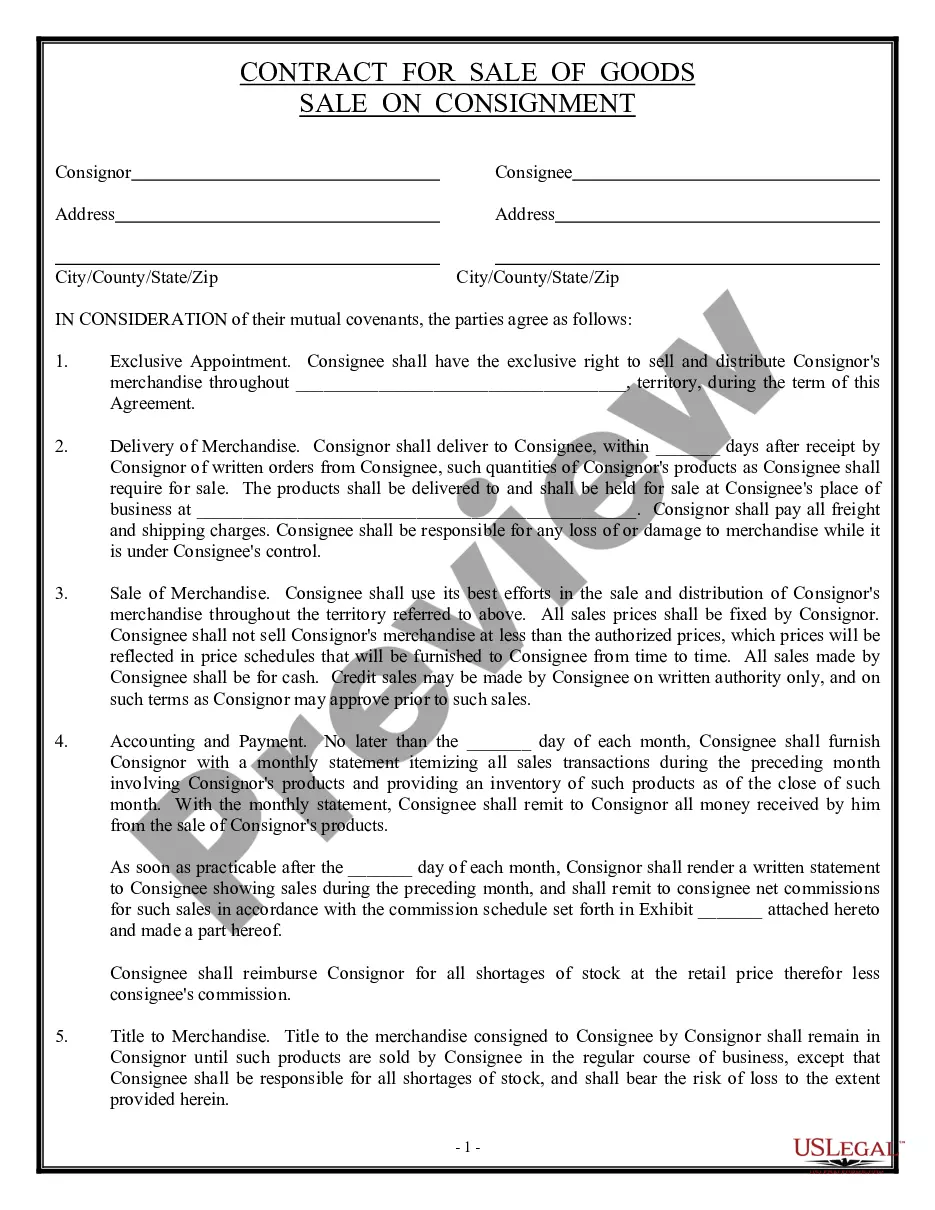
Parties. Provide the names and addresses of the consignor and the consignee. Item(s) for sale. Pricing. Payment. Expenses. Record-keeping. Ownership. Insurance.
Specifically, the contract should include details about payment and what happens if the consignee does not fulfill their duties. The Consignment Contract should outline all of the parties expectations for their working relationship. It should be created, printed, and signed by both parties before the work begins.
Parties. Provide the names and addresses of the consignor and the consignee. Item(s) for sale. Pricing. Payment. Expenses. Record-keeping. Ownership. Insurance.
Introduction of Parties. Identifies the parties and the date of the agreement. Recitals. Section 1: Consigned Property. Section 2: Delivery of Goods. Section 3: Consignment Period. Section 4: Efforts to Sell. Section 5: Title to Products. Section 6: Payment; Commission.
A consignment agreement is an agreement between a consignee and consignor for the storage, transfer, sale or resale and use of the commodity. The consignee may take goods from the consignment stock for use or resale subject to payment to the consignor agreeably to the terms bargained in the consignment agreement.
Depending on the consignment shop and the item being sold, the seller may concede 25% to 60% of the sales price in consignment fees. Consignment arrangements typically are in effect for a set period of time. After this time, if a sale is not made, the goods are returned to their owner.
Consignment Accounting - Sale of Goods by Consignee The consignor records this prearranged amount with a debit to cash and a credit to sales. It also purges the related amount of inventory from its records with a debit to cost of goods sold and a credit to inventory.
Identify the Type of Merchandise to Sell. Identify the type of merchandise to sell. Create a Website. Create a website or use an online company like Shopify to build one on their platform. Name and Register Your Business. Decide on a legal structure and name.