Complaint - Trade Secrets - Misappropriation by Former Employee and Prospective Purchaser - Breach of fiduciary duty
About this form
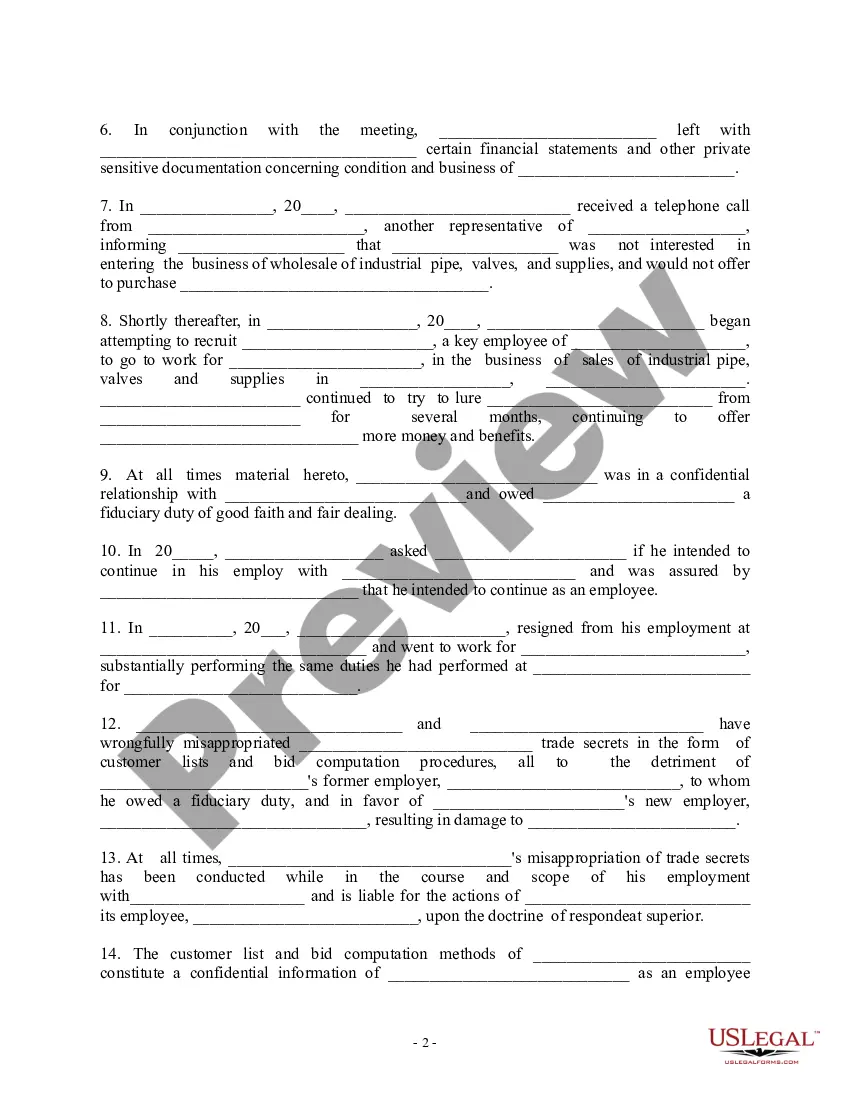
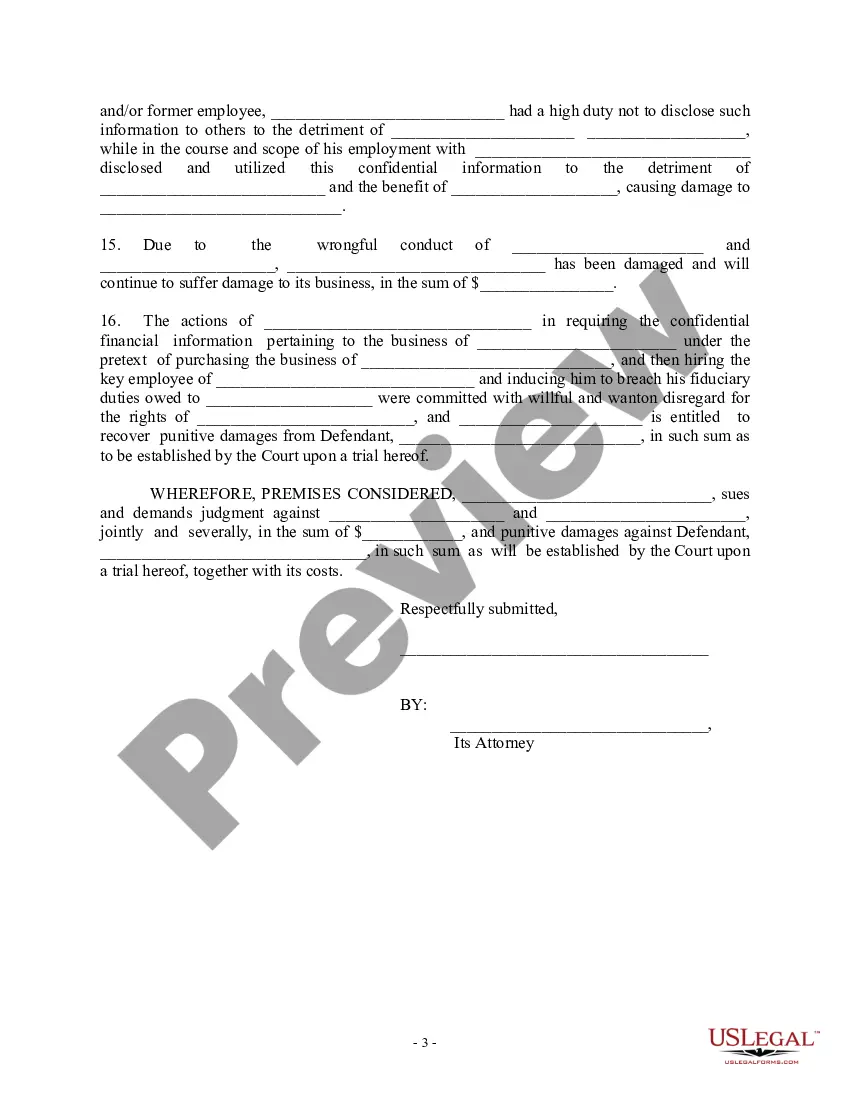
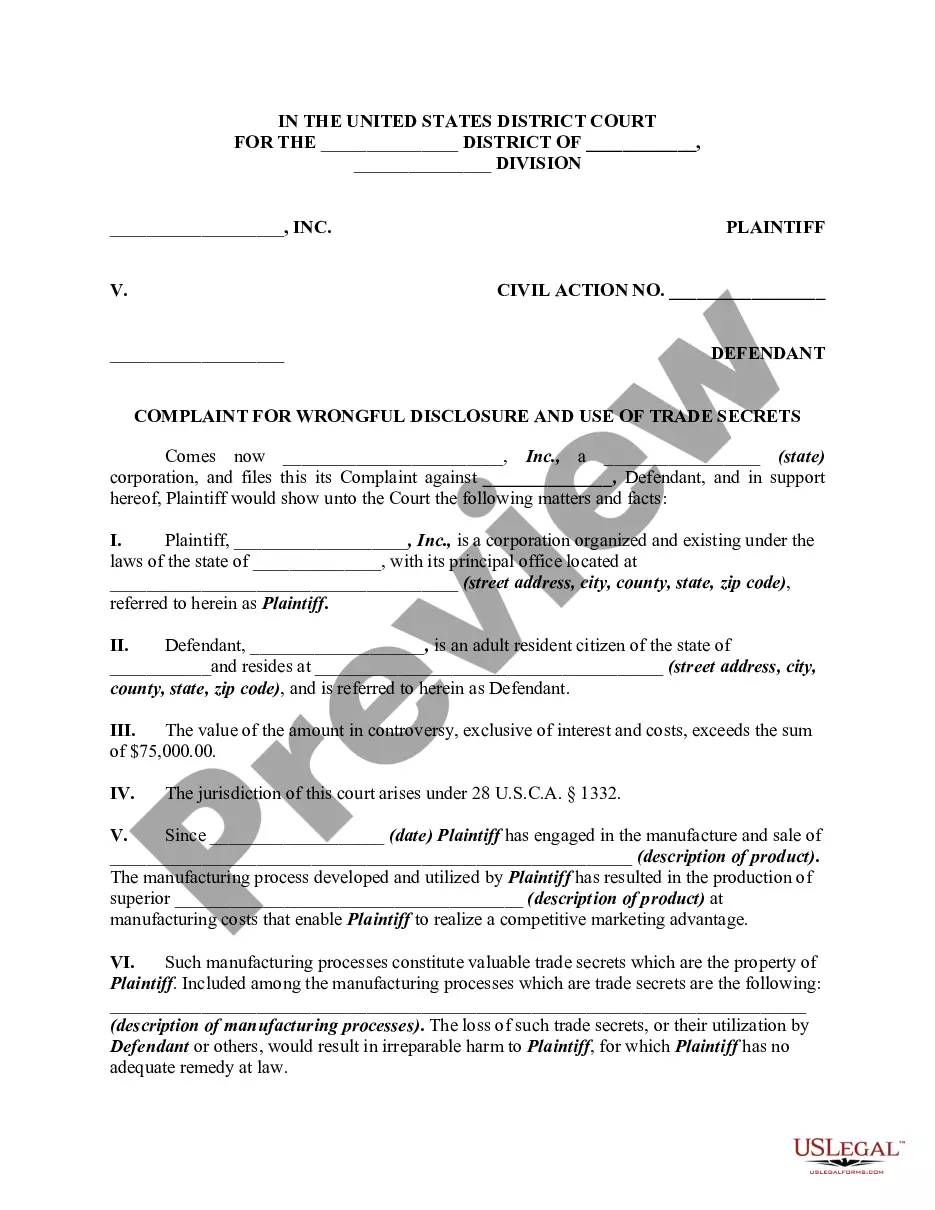
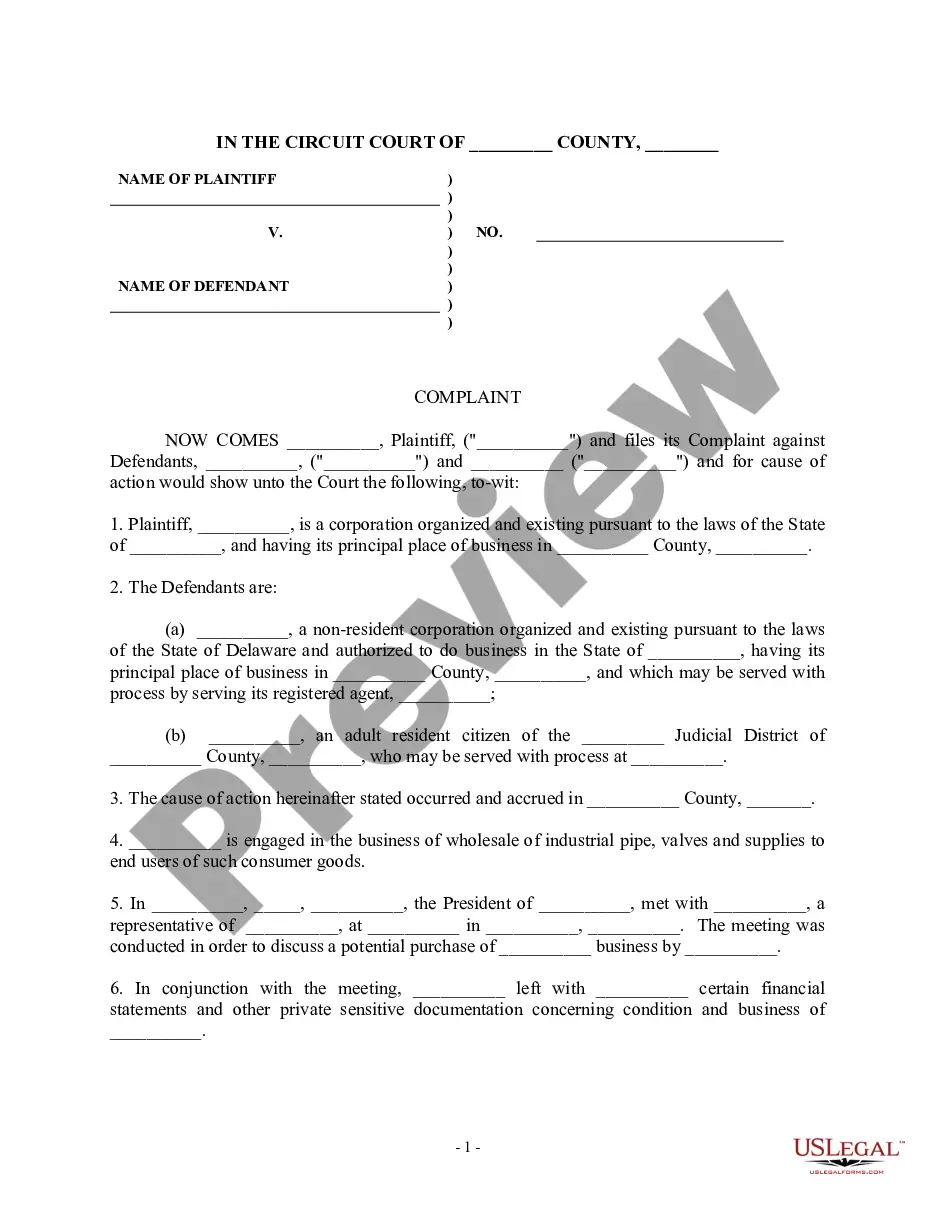
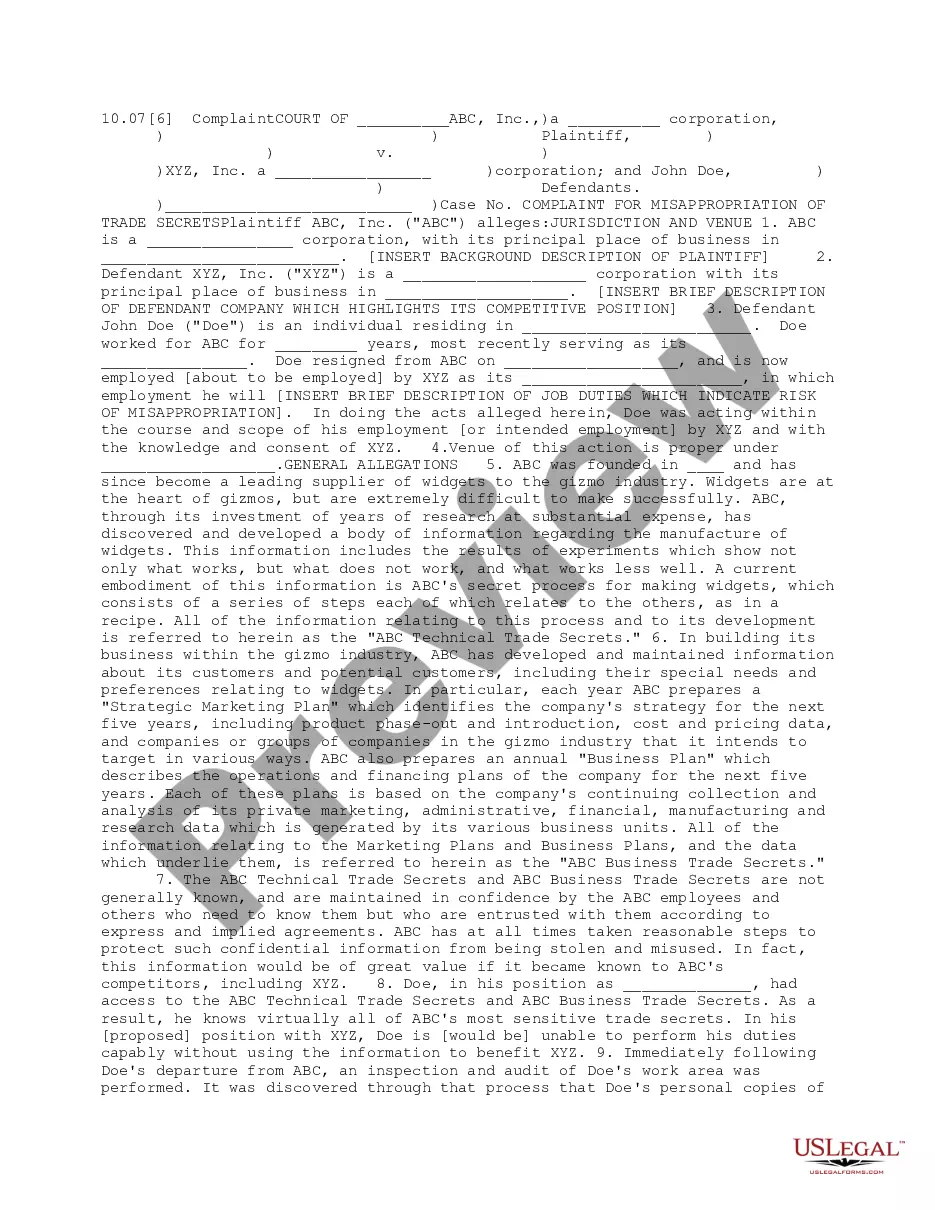
The Complaint for Trade Secrets Misappropriation by Former Employee and Prospective Purchaser is a legal document used to initiate a lawsuit when a company believes its trade secrets have been wrongfully misappropriated. This form provides a structure for outlining the key facts of the case, including breaches of fiduciary duty and the illicit acquisition of confidential information. It differs from similar forms by focusing specifically on trade secrets and the relationships between employees and employers, making it a crucial instrument for businesses seeking legal recourse in such situations.
Main sections of this form
- Plaintiff identification, including corporation details and jurisdiction.
- Defendant identification, including both corporations and individual residents.
- Statement of the facts leading to the cause of action.
- Description of the confidential information purportedly misappropriated.
- Assertion of breaches of fiduciary duty and details of damages incurred.
- Request for punitive damages and the legal basis for the claims.



When to use this form
This form should be used when a business needs to take legal action against a former employee or another party that has allegedly misappropriated trade secrets. Scenarios may include when a former employee leaves to join a competitor and takes proprietary information with them, or when an individual or entity unlawfully solicits key staff to breach their confidentiality agreements. It's also applicable when trade secrets have been disclosed without consent, harming the original business's competitive edge.
Who needs this form
- Business owners who believe their trade secrets have been compromised.
- Corporate legal teams preparing to file a suit for misappropriation of trade secrets.
- Attorneys representing clients involved in disputes over confidential business information.
- Companies wishing to protect their intellectual property rights against former employees or business partners.
Completing this form step by step
- Identify and enter the names and details of the plaintiff corporation.
- List the defendants with full corporate and individual details.
- Provide a narrative of the facts surrounding the trade secret misappropriation.
- Detail the specific trade secrets and information at issue.
- Quantify the damages and specify any punitive damages sought.
- Include attorney's contact information and signature at the end of the form.
Does this form need to be notarized?
This form usually doesn’t need to be notarized. However, local laws or specific transactions may require it. Our online notarization service, powered by Notarize, lets you complete it remotely through a secure video session, available 24/7.
Get your form ready online
Our built-in tools help you complete, sign, share, and store your documents in one place.
Make edits, fill in missing information, and update formatting in US Legal Forms—just like you would in MS Word.
Download a copy, print it, send it by email, or mail it via USPS—whatever works best for your next step.
Sign and collect signatures with our SignNow integration. Send to multiple recipients, set reminders, and more. Go Premium to unlock E-Sign.
If this form requires notarization, complete it online through a secure video call—no need to meet a notary in person or wait for an appointment.
We protect your documents and personal data by following strict security and privacy standards.

Make edits, fill in missing information, and update formatting in US Legal Forms—just like you would in MS Word.

Download a copy, print it, send it by email, or mail it via USPS—whatever works best for your next step.

Sign and collect signatures with our SignNow integration. Send to multiple recipients, set reminders, and more. Go Premium to unlock E-Sign.

If this form requires notarization, complete it online through a secure video call—no need to meet a notary in person or wait for an appointment.

We protect your documents and personal data by following strict security and privacy standards.
Typical mistakes to avoid
- Failing to clearly identify all parties involved.
- Not providing sufficient details about the trade secrets in question.
- Overlooking required signatures or attorney identification.
- Leaving out specific damages and explanations for losses incurred.
Advantages of online completion
- Convenience of immediate download and access to legal forms.
- Editability to customize the form according to specific case details.
- Reliability from forms drafted by licensed attorneys, ensuring legal compliance.
Looking for another form?



Form popularity
FAQ
This standard civil action form is filed to start a lawsuit when a business believes its trade secrets have been misappropriated. It focuses on misappropriation by a former employee or prospective purchaser and potential breaches of fiduciary duty, guiding the plaintiff to identify parties, describe confidential information, and state damages and punitive relief.
The form provides space to describe damages incurred from the misappropriation and to request punitive damages. In the 'Assertion of breaches of fiduciary duty and damages' and related sections, the plaintiff explains how the misappropriation harmed the business and the legal basis for any damages claimed.
The form does not prescribe a fixed damages figure. It requires the plaintiff to describe the damages incurred in the 'Statement of the facts' and 'Damages' portions and to justify any punitive damages under the claims’ basis, with calculations guided by applicable law.
This form targets misappropriation arising from a former employee or prospective purchaser and breaches of fiduciary duty, with a section to describe the confidential information misappropriated. It captures use or disclosure of trade secrets in a corporate context and requires detailing the facts and damages.
An example is a former employee taking confidential information and using it at a new employer or assisting a prospective purchaser to exploit the trade secret. In this form, such facts would be set out in the 'Statement of the facts' and 'Description of the confidential information' sections.
The form specifically addresses misappropriation by a former employee and a prospective purchaser and includes breaches of fiduciary duty as a core theory. It requires identifying the relationship, describing confidential information, and asserting damages and punitive relief, distinguishing it from more general trade secrets complaints.