Complaint regarding Misappropriation by Former Employee and Prospective Purchaser
What this document covers
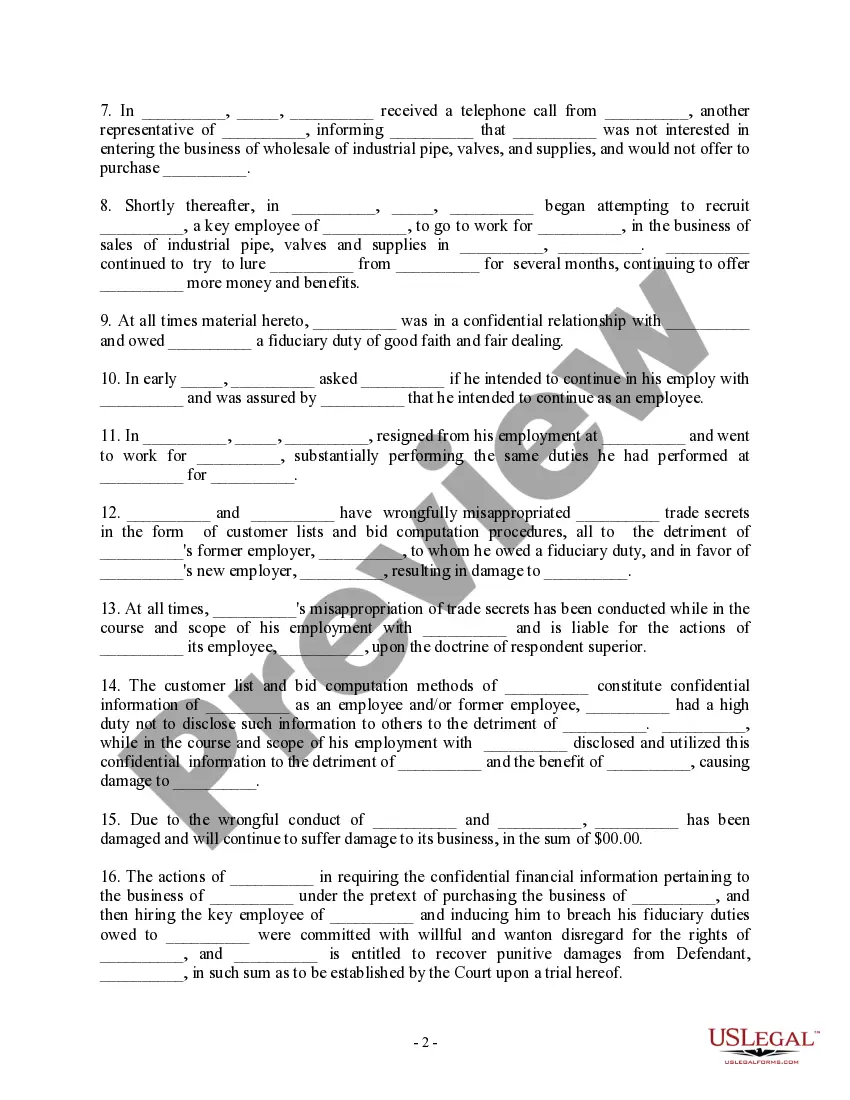
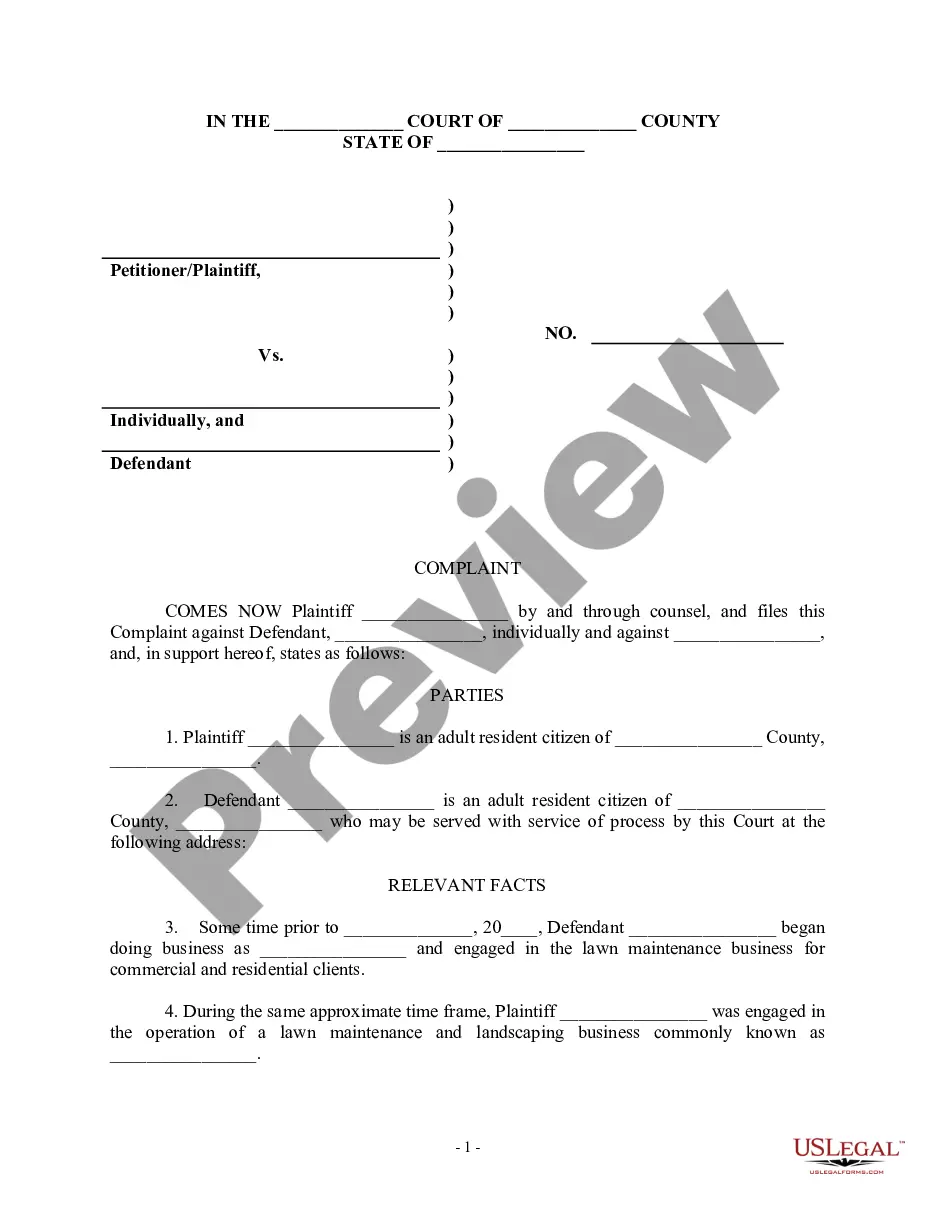
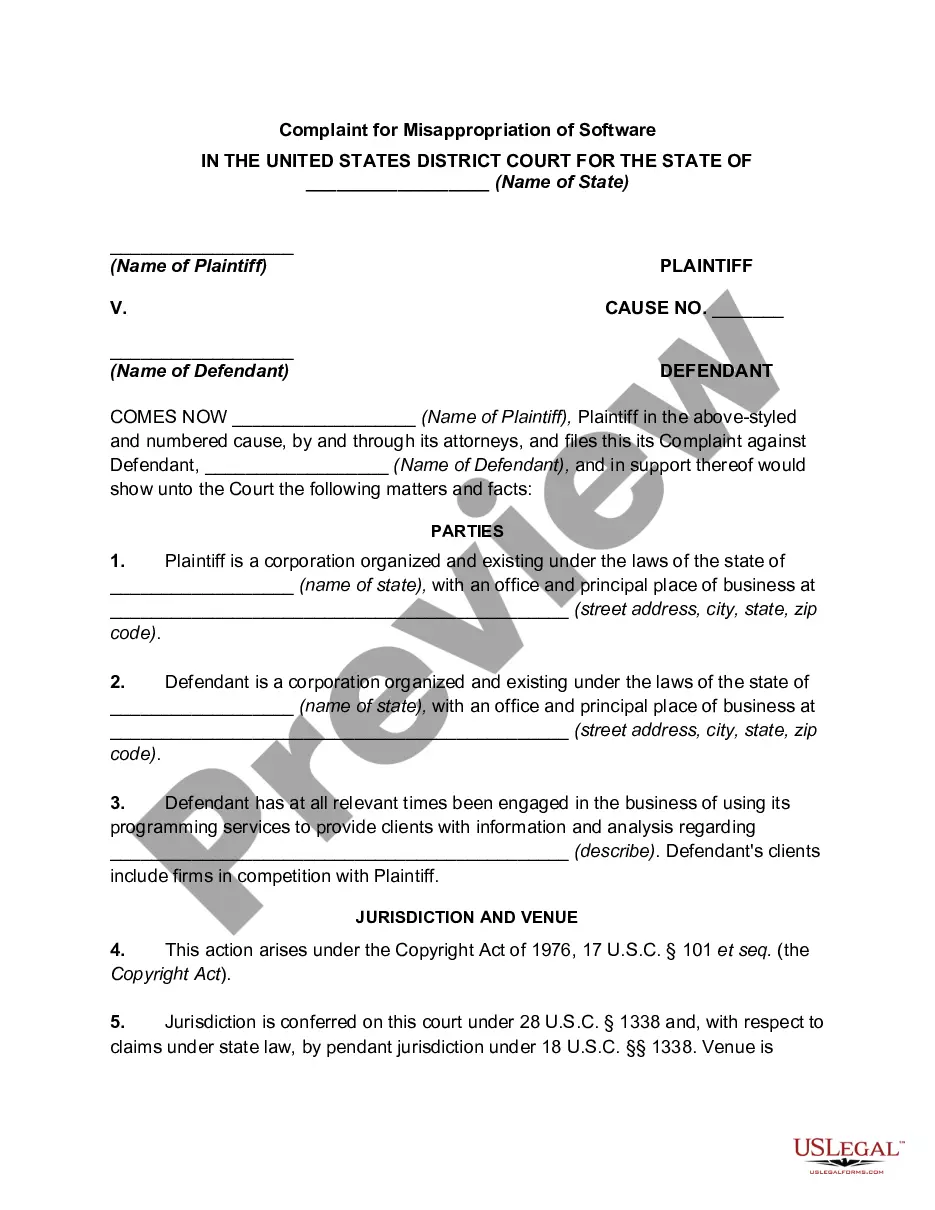
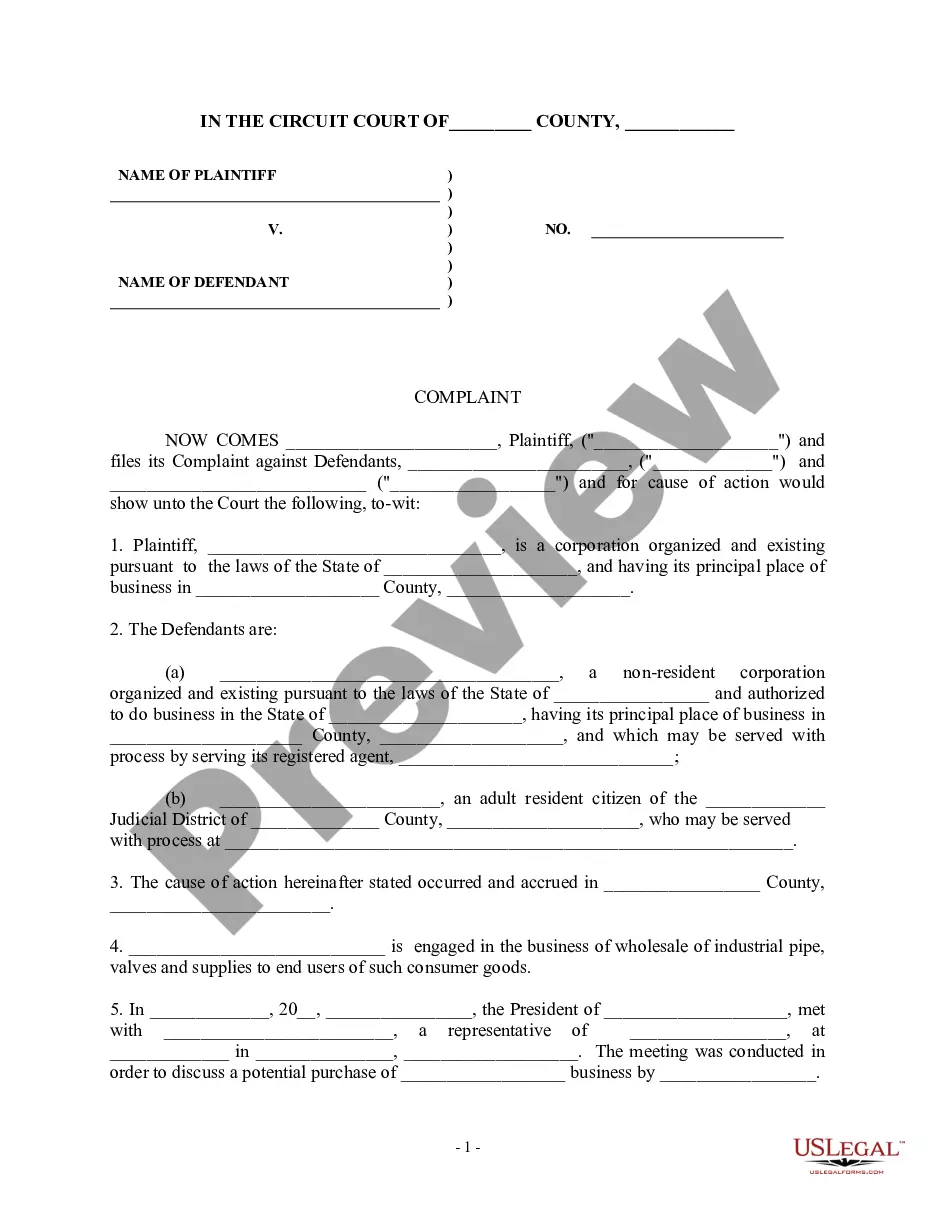
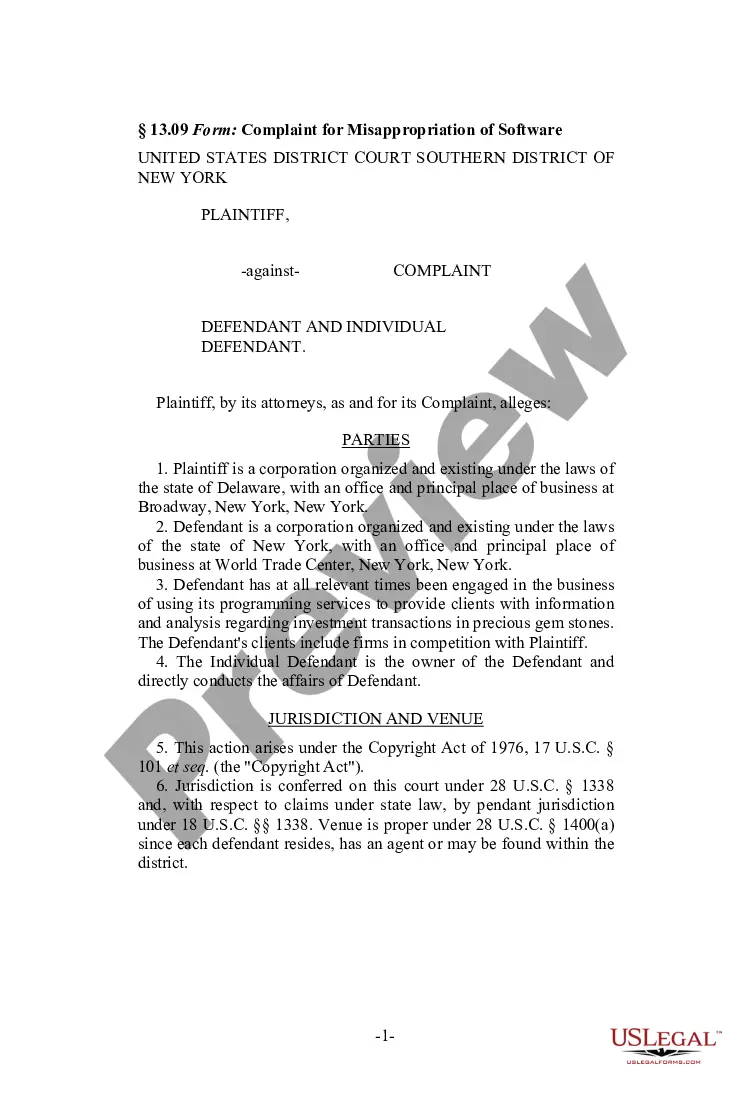
The Complaint regarding Misappropriation by Former Employee and Prospective Purchaser is a legal document used when a company seeks recourse against another party for hiring its key employee, who had access to confidential information during failed negotiations. This form helps plaintiffs assert claims related to the misappropriation of trade secrets and breaches of fiduciary duties, distinguishing it from other general employment or contract complaints.
Form components explained
- Identification of the Plaintiff and Defendants
- Statement of the cause of action, including the nature of misappropriation
- Details surrounding negotiations and the confidentiality of information
- Claims of fiduciary duty and breaches thereof
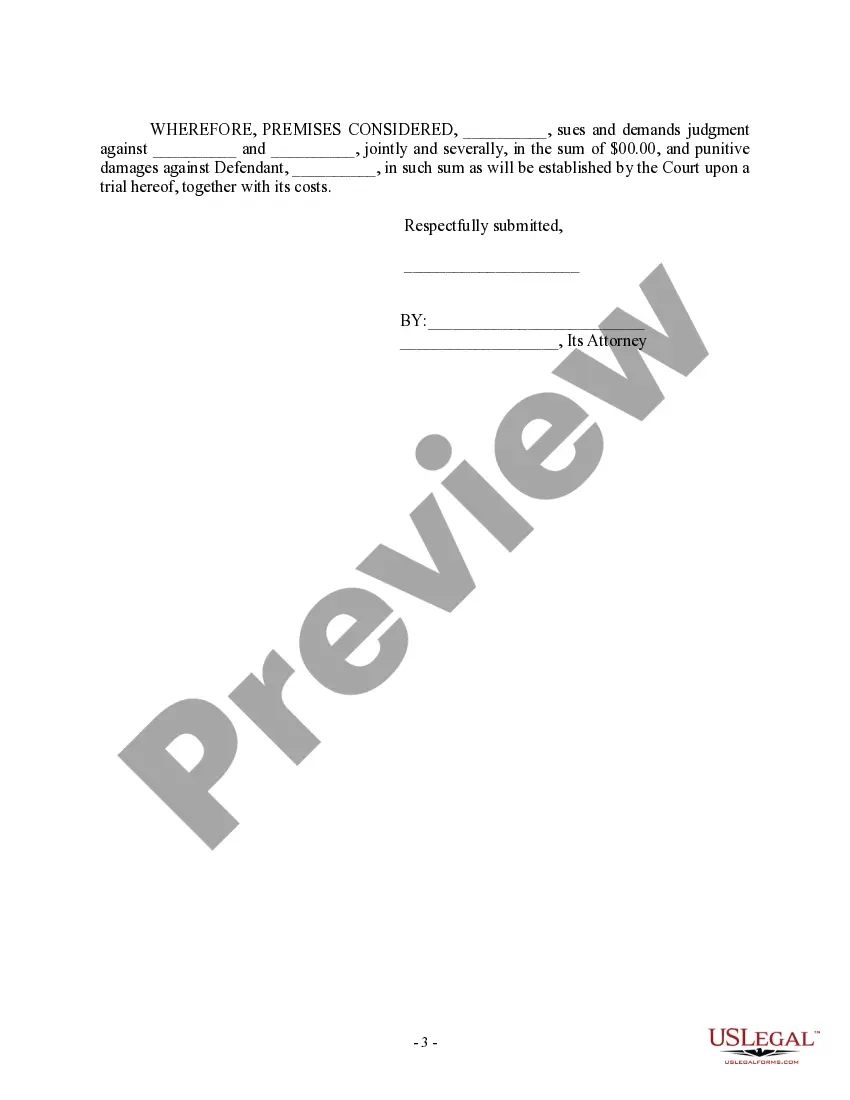
- Specification of damages sought, including punitive damages

When this form is needed
This complaint form is used when a business suspects or has evidence that a former employee has wrongfully disclosed trade secrets to a competitor or prospective employer. It is particularly relevant in situations where confidential information was shared during negotiations that did not culminate in a sale, and the former employee is recruited to a rival firm shortly thereafter, potentially harming the original employer's interests.
Who should use this form
Eligible users of this form include:
- Business owners who have experienced poaching of key employees
- Legal representatives handling cases of trade secret misappropriation
- Companies that have engaged in negotiations regarding the sale of their business
Instructions for completing this form
- Identify and fill in the names of the Plaintiff and Defendants, including relevant business details.
- Describe the factual background of the negotiations and the confidential information shared.
- Detail the actions taken by the Defendants that constitute misappropriation.
- Claim the damages you seek, including any punitive damages.
- Sign the form as the Plaintiff or their legal representative, ensuring it is dated appropriately.
Is notarization required?
Notarization is generally not required for this form. However, certain states or situations might demand it. You can complete notarization online through US Legal Forms, powered by Notarize, using a verified video call available anytime.
Get your form ready online
Our built-in tools help you complete, sign, share, and store your documents in one place.
Make edits, fill in missing information, and update formatting in US Legal Forms—just like you would in MS Word.
Download a copy, print it, send it by email, or mail it via USPS—whatever works best for your next step.
Sign and collect signatures with our SignNow integration. Send to multiple recipients, set reminders, and more. Go Premium to unlock E-Sign.
If this form requires notarization, complete it online through a secure video call—no need to meet a notary in person or wait for an appointment.
We protect your documents and personal data by following strict security and privacy standards.

Make edits, fill in missing information, and update formatting in US Legal Forms—just like you would in MS Word.

Download a copy, print it, send it by email, or mail it via USPS—whatever works best for your next step.

Sign and collect signatures with our SignNow integration. Send to multiple recipients, set reminders, and more. Go Premium to unlock E-Sign.

If this form requires notarization, complete it online through a secure video call—no need to meet a notary in person or wait for an appointment.

We protect your documents and personal data by following strict security and privacy standards.
Avoid these common issues
- Failing to clearly outline the nature of the confidential information.
- Incomplete identification of parties involved, leading to jurisdictional issues.
- Not specifying the amount of damages adequately.
- Neglecting to review state-specific procedural rules before submission.
Advantages of online completion
- Convenience of accessing and completing the form at your own pace.
- Editable format allows users to customize the document based on specific circumstances.
- Reduction of errors through guided input fields.
- Access to reliable legal templates drafted by licensed attorneys.
Legal use & context
- This form is used in legal proceedings related to trade secret misappropriation and breach of fiduciary duty claims.
- It is enforceable in court if properly completed and submitted according to legal standards.
- Documenting harm and specific details of misconduct strengthens the legal argument.
What to keep in mind
- The Complaint regarding Misappropriation addresses unauthorized use of confidential business information.
- Properly identifying all parties and detailing claims is crucial for the form's effectiveness.
- Consider adapting the form to meet specific state laws for better compliance and enforceability.
Looking for another form?

Form popularity
FAQ
Good proof might consist of catching an employee on a security camera stealing money. However, most of the time the evidence won't be that clear. You may have to gather documents, get cancelled checks from your bank, or examine accounting records.
Ask the employee to explain. Ask the employee to take a polygraph test. Decide whether to: press criminal charges. seek restitution. discipline the employee. fire the employee.
Recognize the Signs. Don't Assume Guilt. Keep It Confidential. The Crime Determines What the Embezzlement Investigation Looks Like. Create an Investigation Plan. Collect Documents ASAP. Seek Expert Help. Interview (and Interview Again)
The alleged embezzler had a fiduciary obligation to the victim. The defendant acquired the money or property at issue via his or her fiduciary relationship with the victim. The defendant took ownership of the property that was transferred and/or stolen. The defendant intentionally took the property at issue.
To prove embezzlement, a prosecutor must prove beyond a reasonable doubt to a moral certainty that the defendant had a specific intent to defraud the victim of property entrusted to the defendant through the fiduciary relationship. The defendant must have actually intended to deprive the victim of the property.
Asset misappropriation fraud involves third parties or employees in an organisation who abuse their position to steal from it through fraudulent activity. It can also be known as insider fraud.Typically, the assets stolen are cash or cash equivalents, such as credit notes or vouchers.
It may be the only way to get restitution. Your other employees need to know you take stealing seriously. If you have insurance to make a claim against, or plan to try to hold another party such as a bank responsible, you will need to press charges.
Do Call Your Lawyer. Do Not Alert Your Staff. Do Bring in Outside Advisors. Do Not Bring in Those Advisors During the Workday. Do Communicate Carefully. Do Not Contact Law Enforcement2026 Do Keep Your Emotions In Check.
The short answer is yes, and these are the most common reasons an employer can sue an employee successfully. While it is more difficult for an employer to sue an employee than vice versa, there are many valid legal reasons that an employer may bring a cause of action against an employee (or ex-employee) and win.