Insurance Clause
About this form
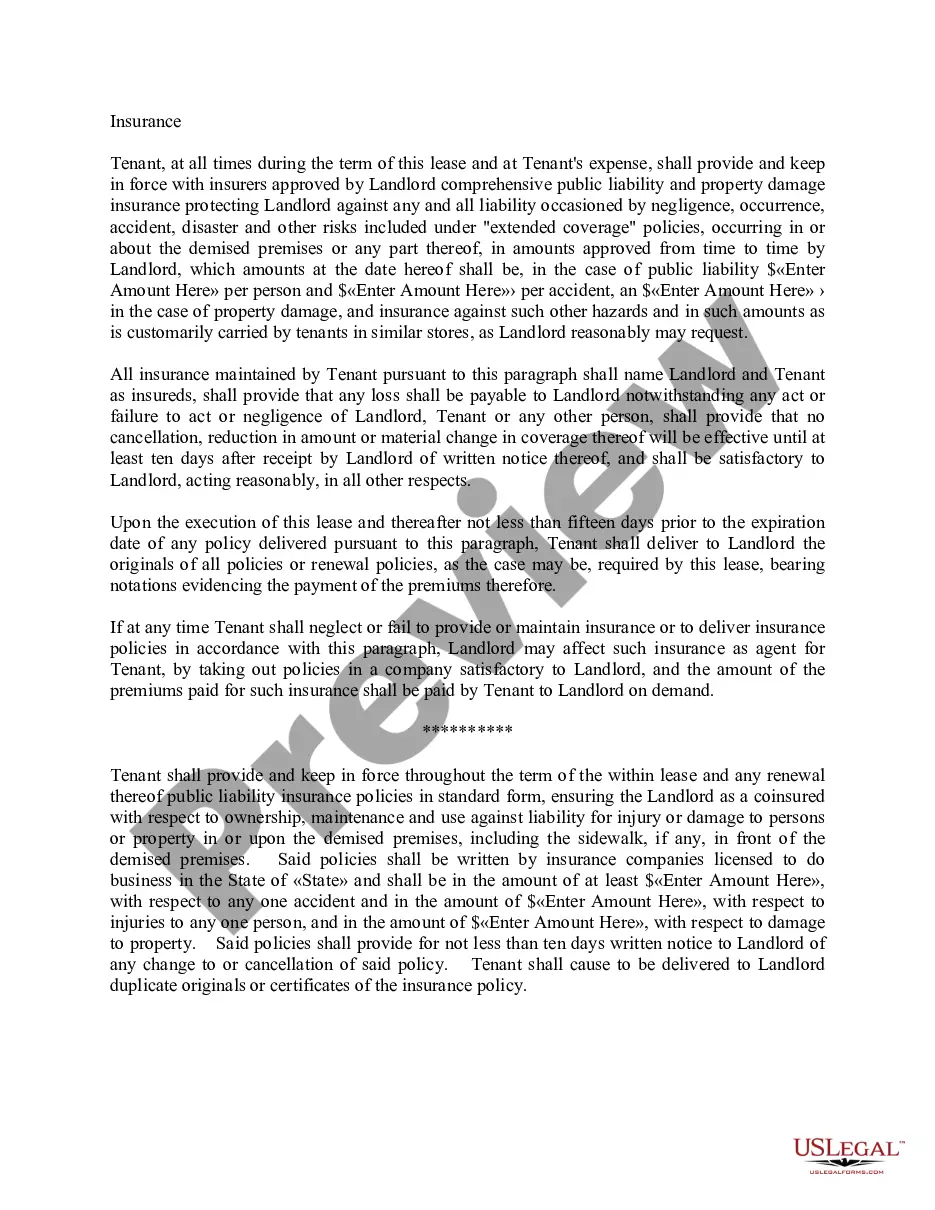
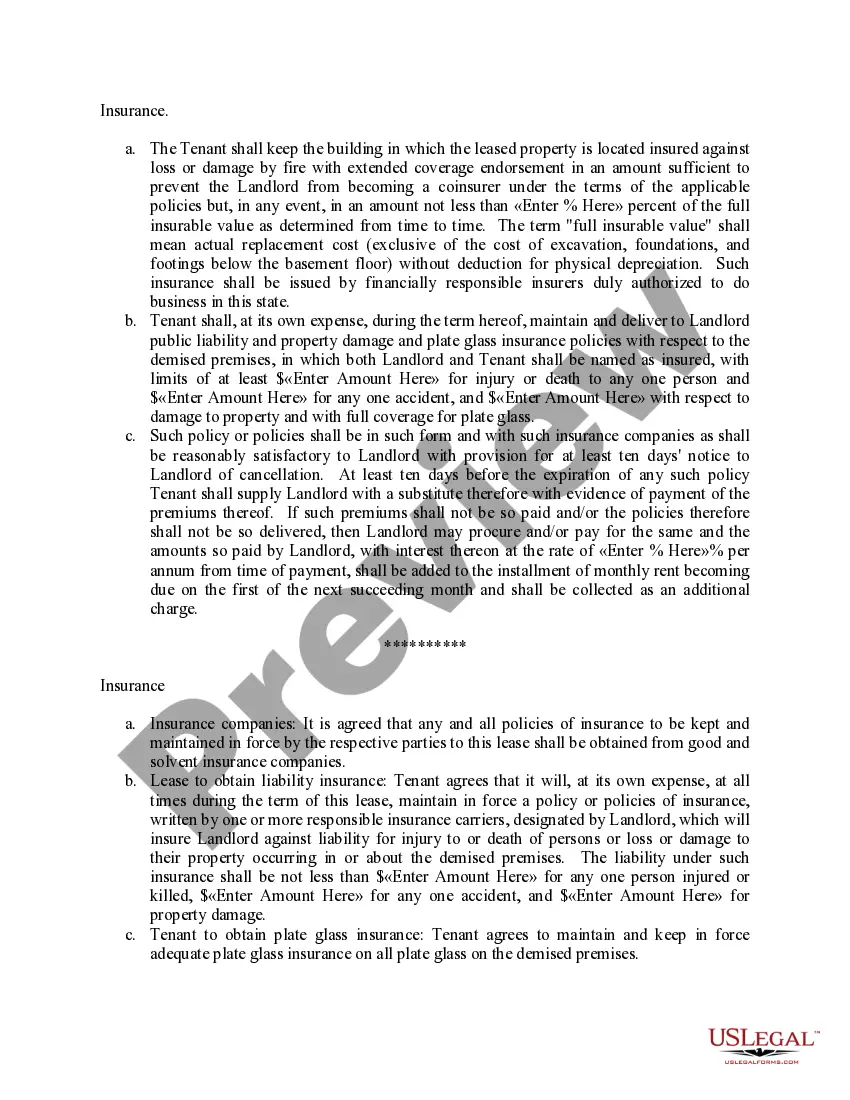
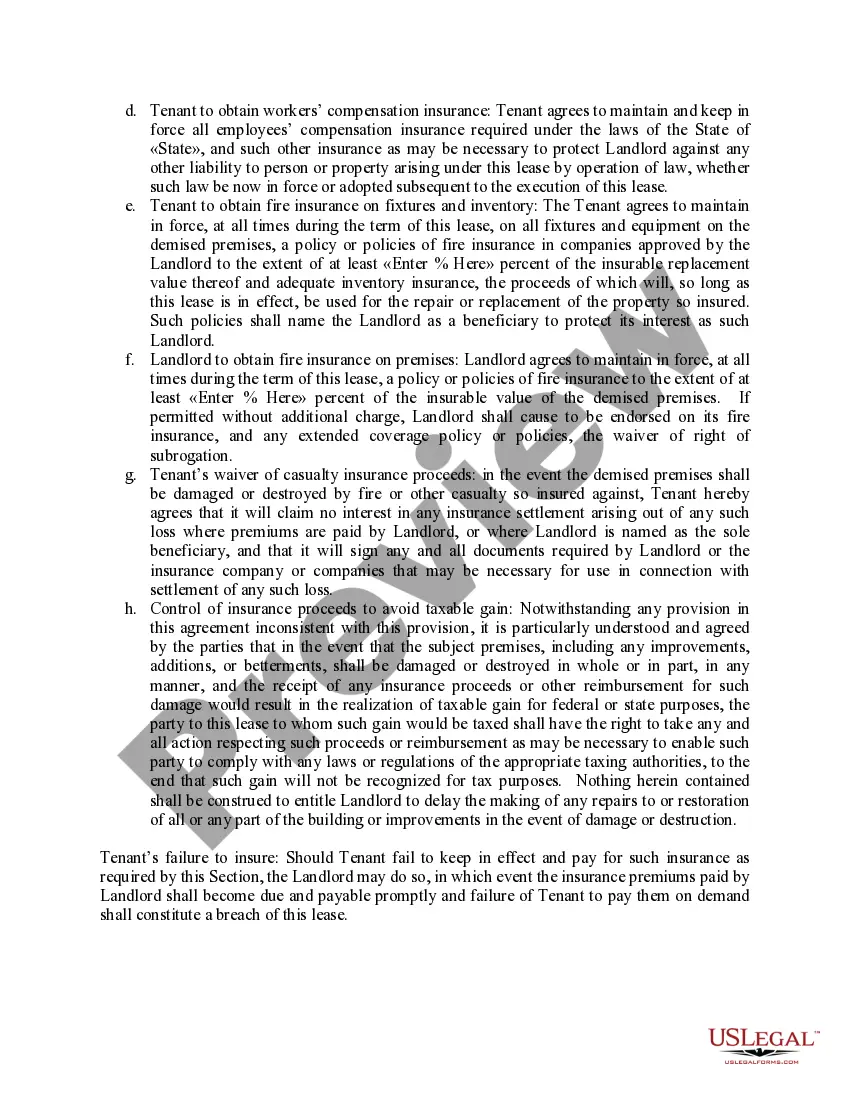
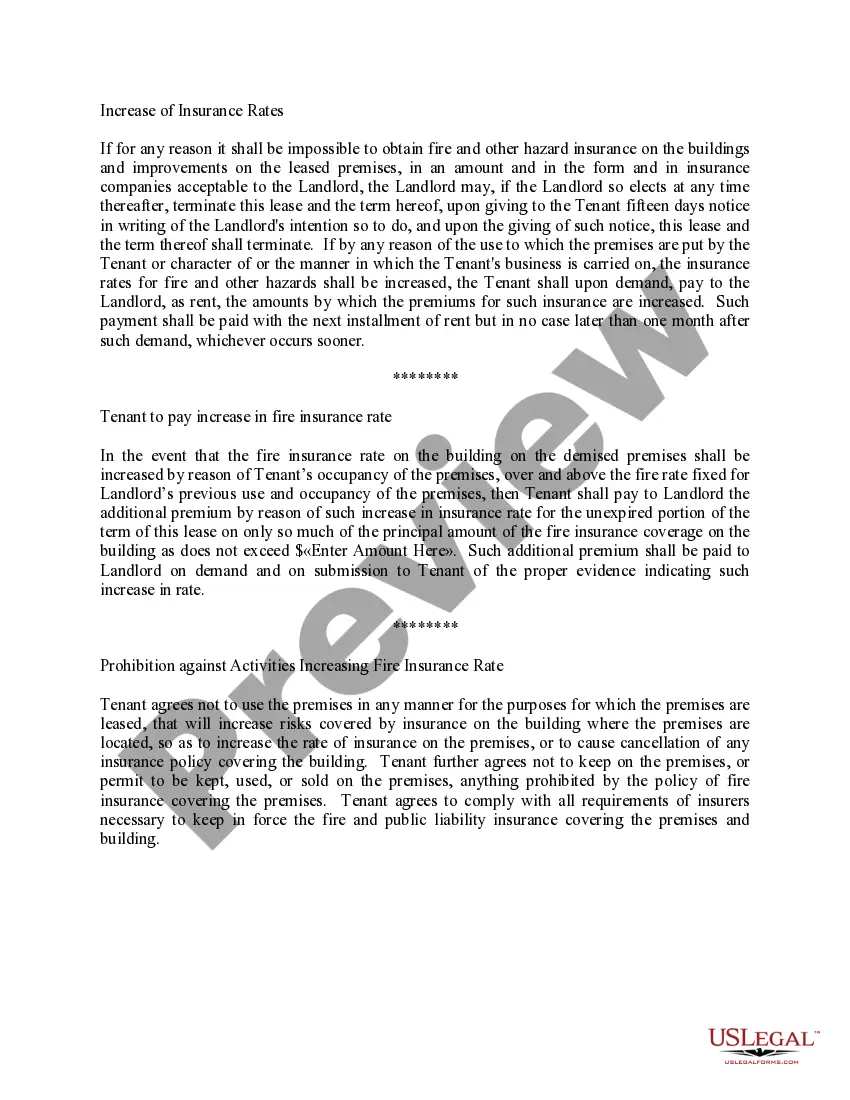
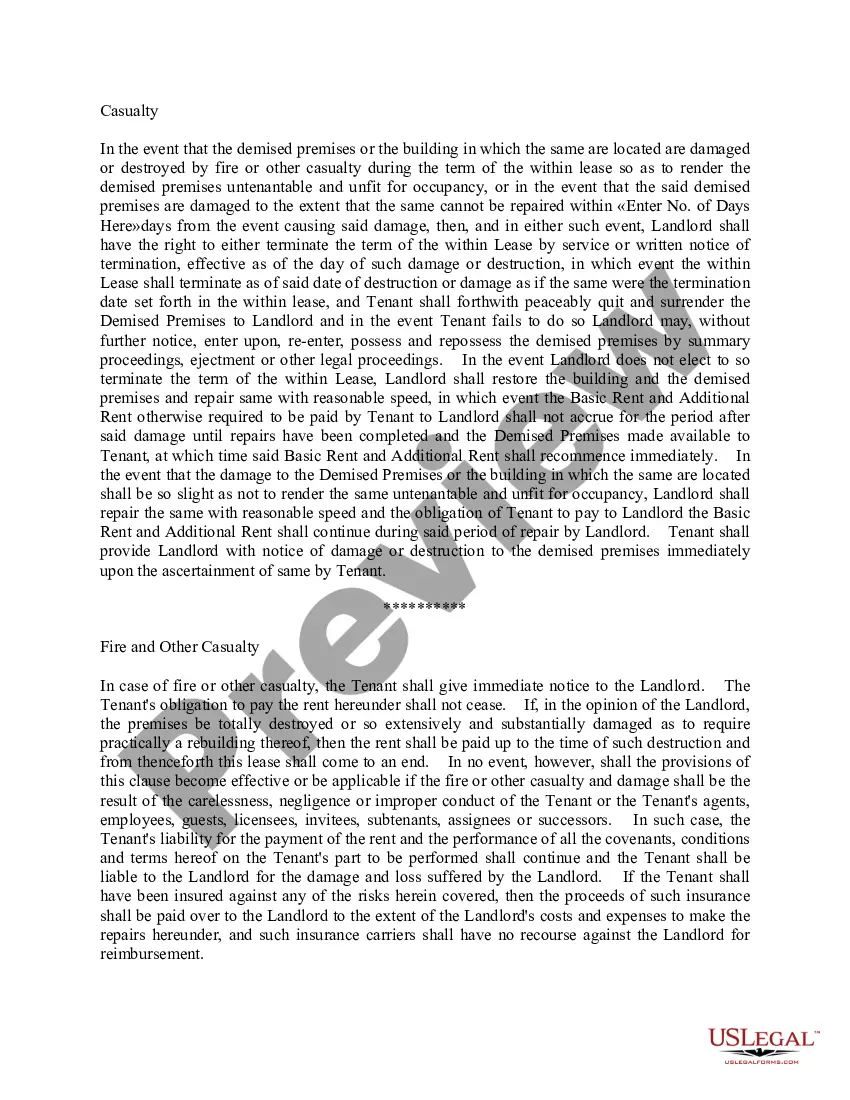
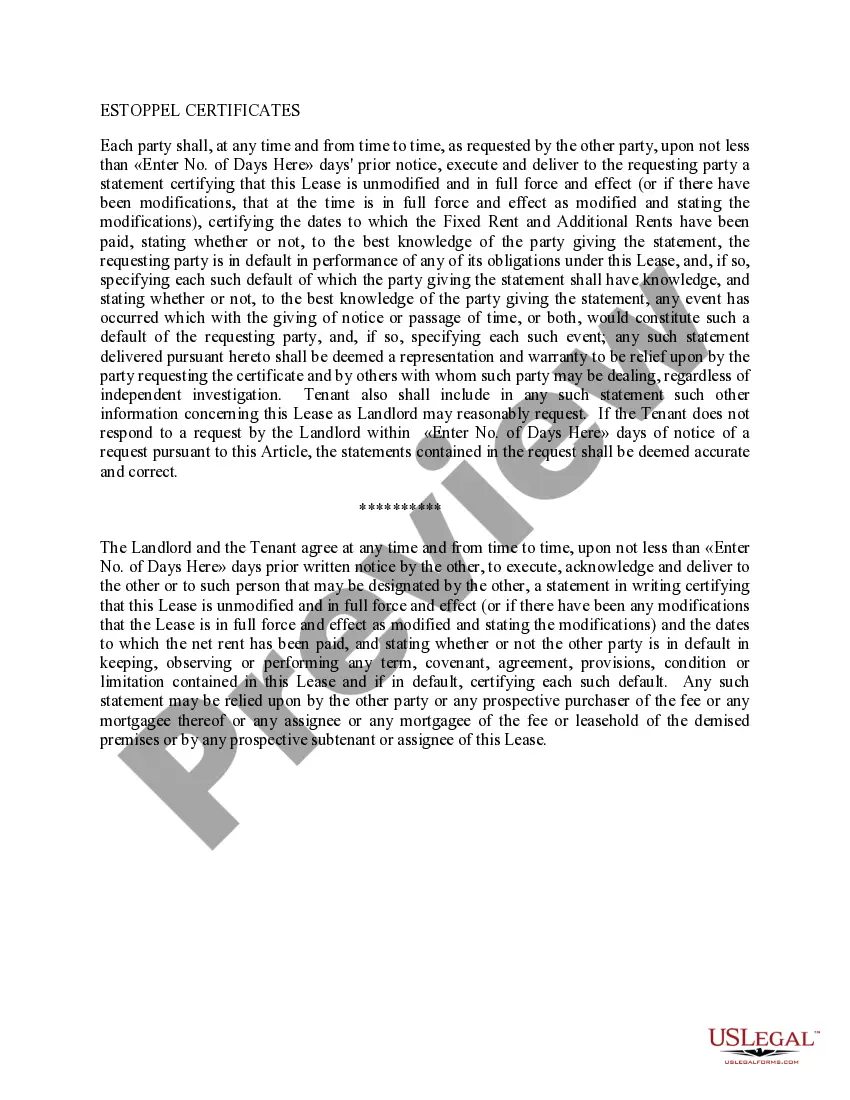
The Insurance Clause is a key component of commercial lease agreements that outlines the insurance obligations of the tenant. This form helps landlords ensure that tenants maintain adequate insurance coverage, protecting both parties from liabilities related to property damage or bodily injury. Unlike simple rental agreements, this clause includes specific requirements for liability and property insurance, making it essential for creating a secure leasing arrangement.
What’s included in this form
- Tenant responsibilities for maintaining insurance coverage.
- Requirements for naming the landlord as an additional insured party.
- Specific amounts of coverage needed for liability and property damage.
- Provisions for handling policy changes and cancellations.
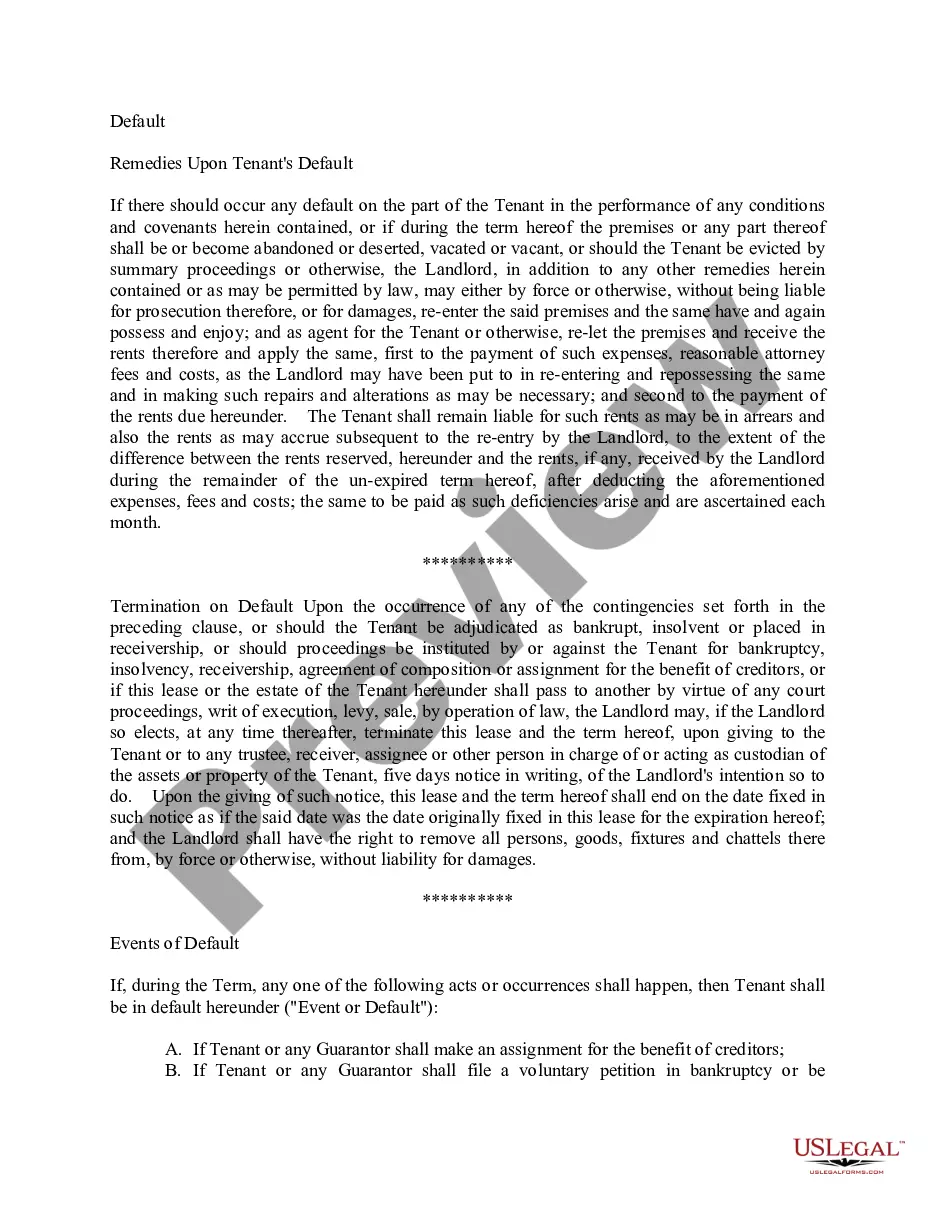
- Consequences for failing to obtain or maintain insurance.
Common use cases
Use the Insurance Clause when drafting a commercial lease agreement. This clause is critical when the landlord wants to protect their investment from potential damages that may occur in the leased property. It is particularly relevant for businesses that inherently carry risks, such as retail stores or service providers, where accidents can lead to significant financial liabilities.
Who needs this form
- Landlords seeking to protect their property investments.
- Commercial tenants who want to understand their insurance obligations.
- Real estate professionals drafting lease agreements.
- Legal advisors involved in property management or leasing.
Steps to complete this form
- Identify the parties involved: Tenant and Landlord.
- Specify the types of insurance required, such as public liability and property damage insurance.
- Enter the required coverage amounts for each type of insurance.
- Outline the procedures for providing proof of insurance to the landlord.
- Detail the consequences if the tenant fails to maintain the required insurance.
Is notarization required?
This form does not typically require notarization unless specified by local law. Ensure to check local regulations to confirm any additional notarization needs.
Get your form ready online
Our built-in tools help you complete, sign, share, and store your documents in one place.
Make edits, fill in missing information, and update formatting in US Legal Forms—just like you would in MS Word.
Download a copy, print it, send it by email, or mail it via USPS—whatever works best for your next step.
Sign and collect signatures with our SignNow integration. Send to multiple recipients, set reminders, and more. Go Premium to unlock E-Sign.
If this form requires notarization, complete it online through a secure video call—no need to meet a notary in person or wait for an appointment.
We protect your documents and personal data by following strict security and privacy standards.

Make edits, fill in missing information, and update formatting in US Legal Forms—just like you would in MS Word.

Download a copy, print it, send it by email, or mail it via USPS—whatever works best for your next step.

Sign and collect signatures with our SignNow integration. Send to multiple recipients, set reminders, and more. Go Premium to unlock E-Sign.

If this form requires notarization, complete it online through a secure video call—no need to meet a notary in person or wait for an appointment.

We protect your documents and personal data by following strict security and privacy standards.
Avoid these common issues
- Failing to specify the amounts of coverage can lead to gaps in protection.
- Not naming the landlord as an additional insured can result in disputes over liability.
- Overlooking state-specific insurance requirements may cause the lease to be unenforceable.
- Neglecting to provide timely notice of policy changes can lead to penalties.
Why use this form online
- Convenient access to downloadable templates created by licensed attorneys.
- Editability allows landlords and tenants to customize the form to fit their specific needs.
- Reliable legal protections are embedded in the clause to ensure compliance.
Legal use & context
- The Insurance Clause is enforceable as long as it is clear and agreed upon by both parties.
- It protects the landlord from financial losses due to tenant activities.
- Properly drafted clauses can significantly reduce the potential for legal disputes related to insurance coverage issues.
What to keep in mind
- The Insurance Clause is crucial for protecting both landlords and tenants in commercial leases.
- Clear stipulations regarding insurance coverage can prevent legal complications.
- Using this form simplifies the process of establishing insurance obligations in lease agreements.
Looking for another form?
Form popularity
FAQ
Examples include paying for certain losses arising from insured risks, providing certain agreed-upon services, providing defense for a lawsuit subject to certain conditions, and other agreements that form part of the insurance policy protections you are paying for.
Insurance Clause Examples Example 1: Requiring tenants to hold renter's insurance. Example 2: Financial services firms assigning loss payable clauses. Example 3: Insurance policies specifying covered losses. Example 4: Business partners protecting their assets from legal mistakes.
Clauses are sections of the insurance policy. They define the insurer's responsibilities to the policyholder, circumstances under which claims will and maybe won't be paid out, as well as the policyholder's responsibilities. Sometimes called exclusions, these are designed to help the customer and the company.
Life insurance policies generally include two types of clauses, or exclusions: clauses designed to protect you as the policyholder and ones that set forth the life insurance company's obligations.
Clauses are sections of the insurance policy. They define the insurer's responsibilities to the policyholder, circumstances under which claims will and maybe won't be paid out, as well as the policyholder's responsibilities. Sometimes called exclusions, these are designed to help the customer and the company.