Basic Debt Instrument Workform
What this document covers
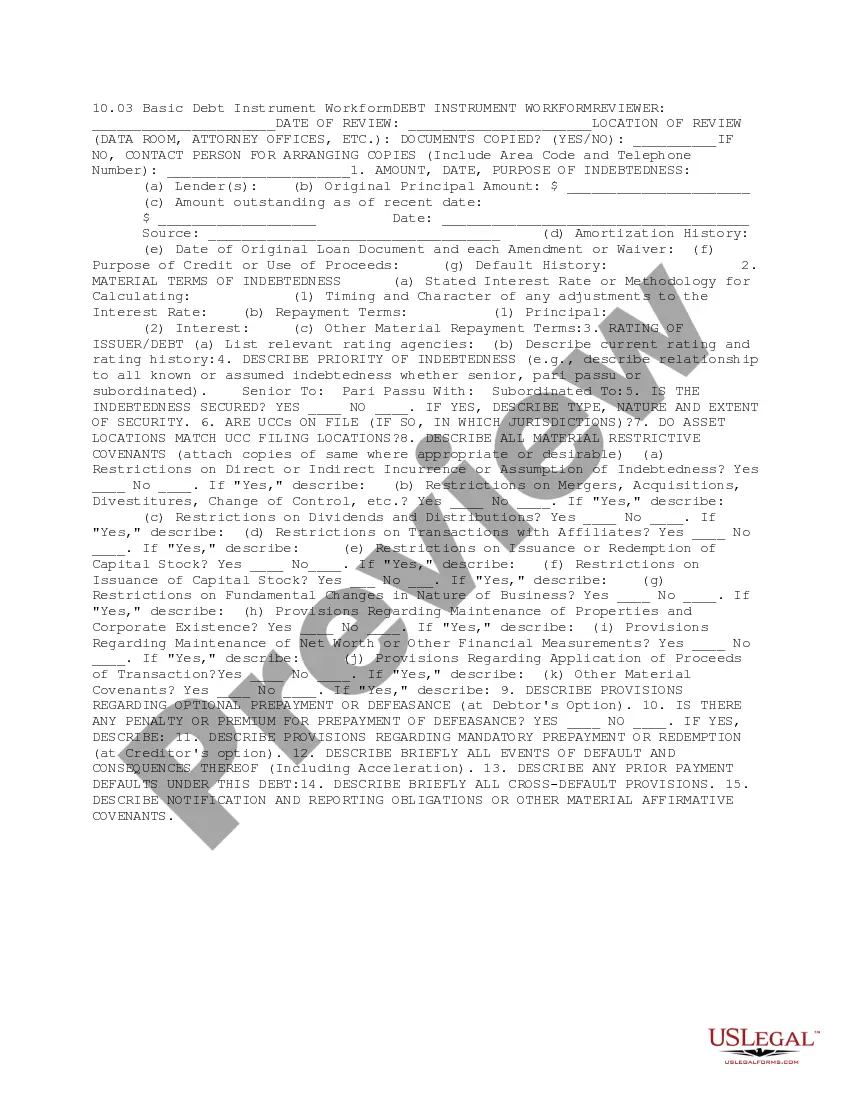
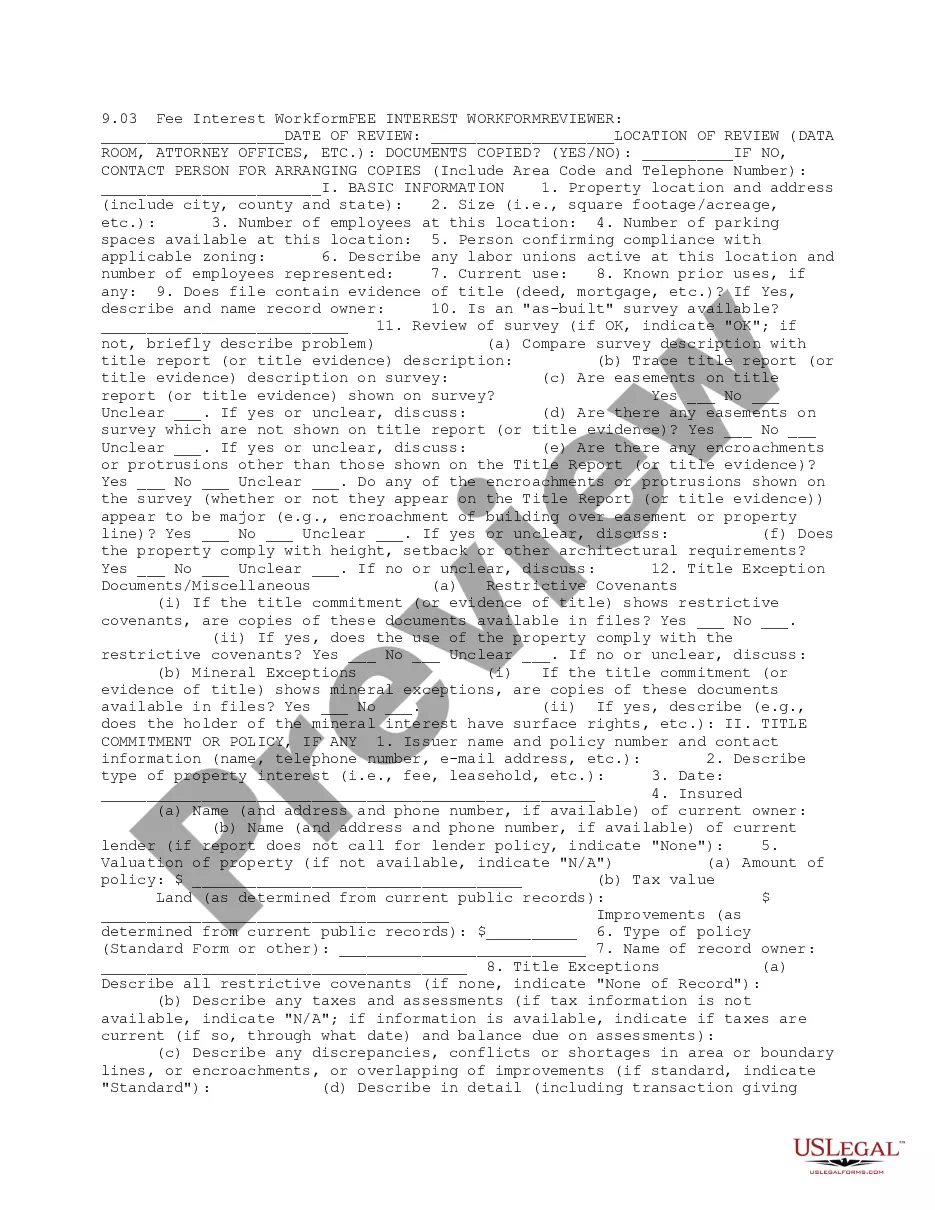
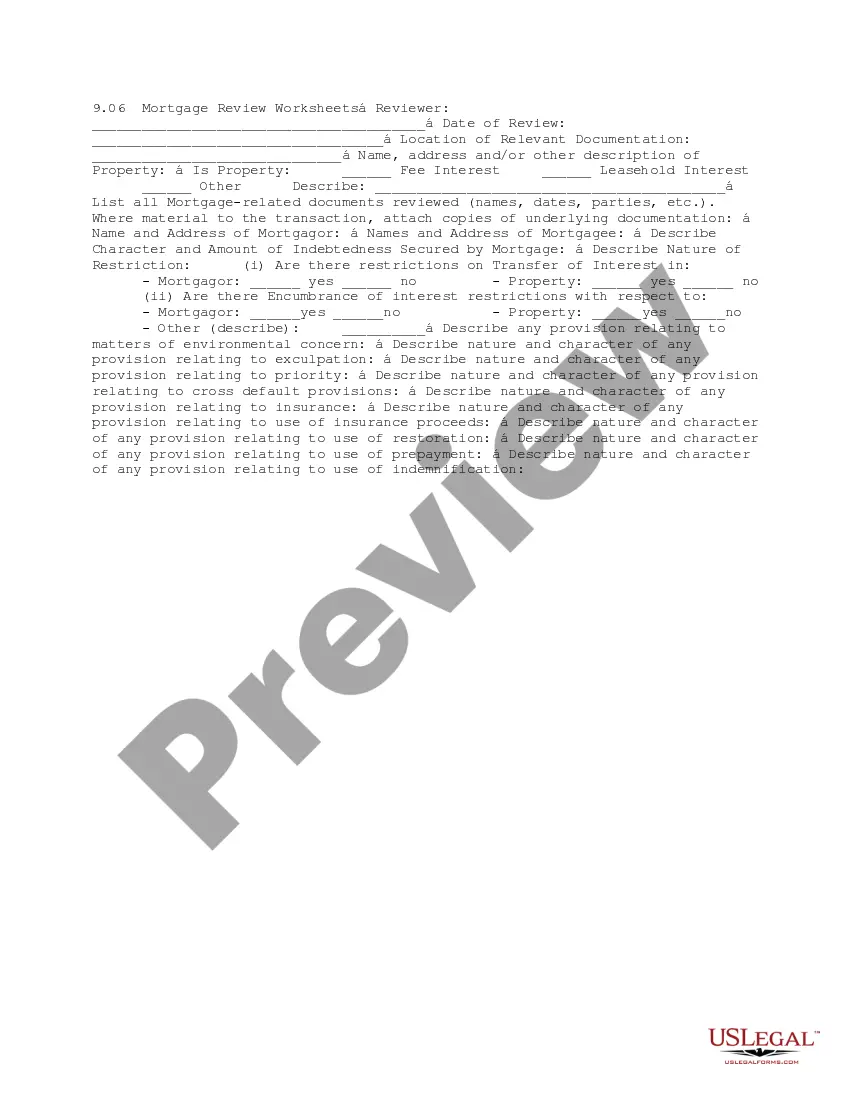
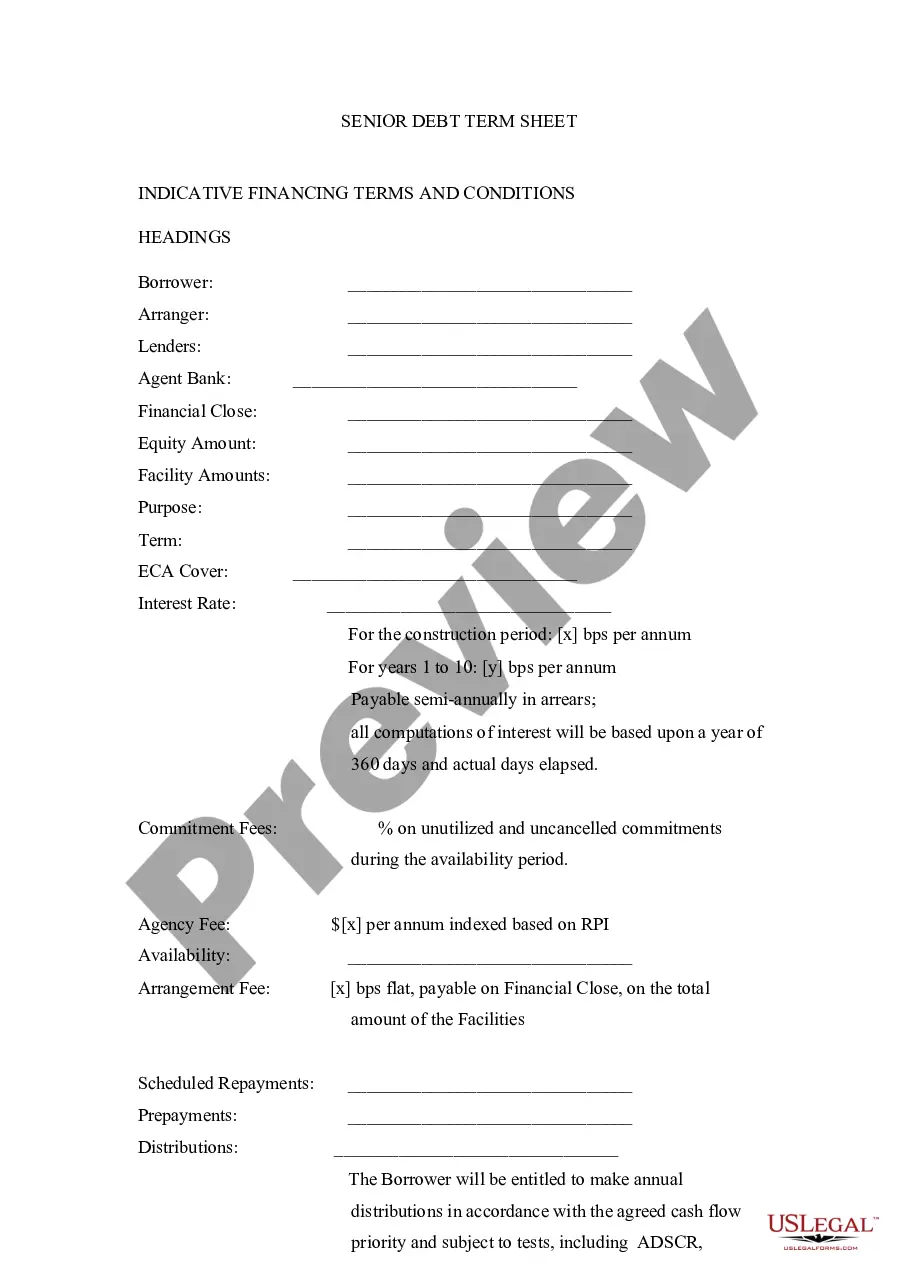
The Basic Debt Instrument Workform is a comprehensive document used to outline and evaluate the details surrounding a loan or debt obligation, including terms, payment schedules, default clauses, and security agreements. This form is distinct from standard promissory notes as it provides a structured approach for analyzing debt terms in greater detail, making it useful for lenders and borrowers alike.
Key components of this form
- Amount, date, and purpose of indebtedness.
- Material terms, including interest rate and repayment details.
- Rating of the issuer and debt history.
- Priority of indebtedness relative to other debts.
- Security provisions and UCC filing details.
- Material restrictive covenants affecting the indebtedness.
When to use this document
This form should be used when engaging in new debt transactions, assessing loan agreements, or reviewing existing debts. It is particularly useful in situations where detailed documentation of loan terms is necessary for both parties, such as during negotiations for financing, refinancing, or business acquisitions.
Who this form is for
This form is suitable for:
- Borrowers seeking to understand their debt obligations.
- Lenders evaluating loan agreements.
- Financial analysts conducting assessments of debt instruments.
- Legal professionals drafting or reviewing debt agreements.
Steps to complete this form
- Identify the lender(s) and provide documentation of the original principal amount.
- Detail the terms of the loan, including interest rate and repayment schedule.
- Indicate whether the debt is secured, and describe the types of security in detail.
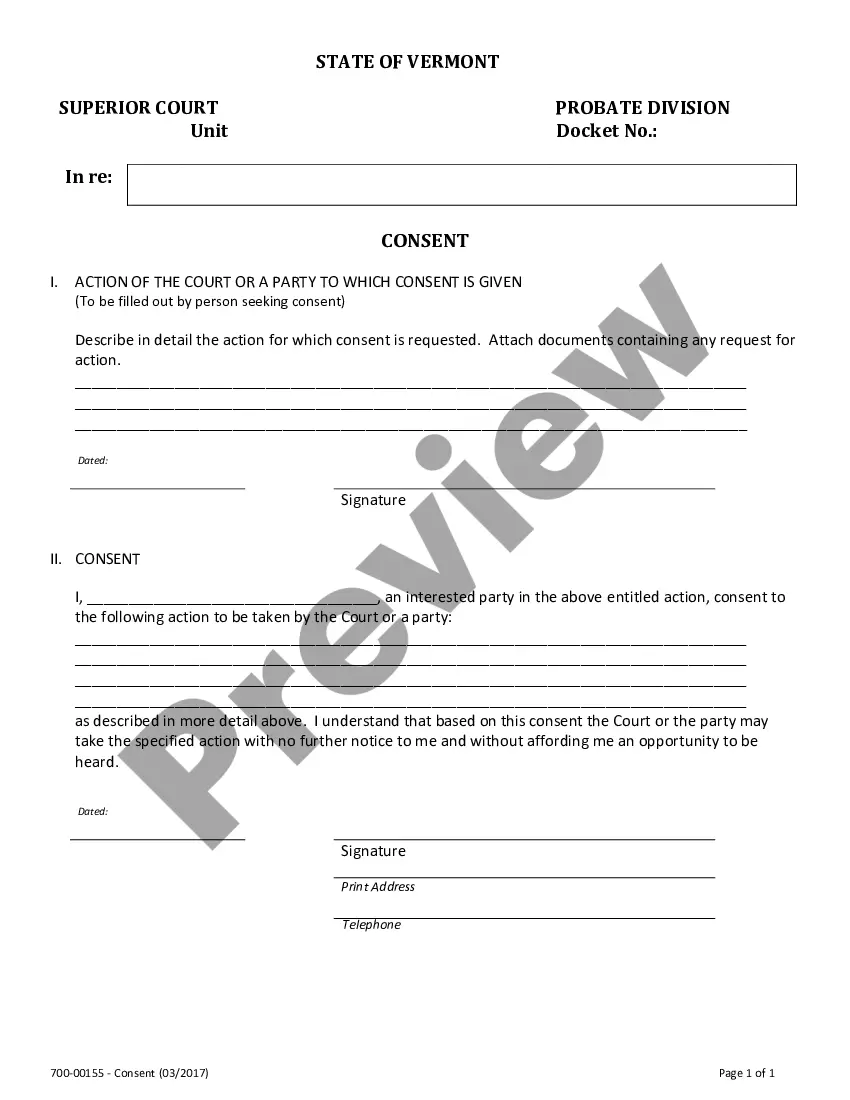
- Outline any material restrictive covenants and report any events of default.
- Compile necessary documentation, including UCC filings and credit ratings.
Notarization requirements for this form
This form does not typically require notarization to be legally valid. However, some jurisdictions or document types may still require it. US Legal Forms provides secure online notarization powered by Notarize, available 24/7 for added convenience.
Get your form ready online
Our built-in tools help you complete, sign, share, and store your documents in one place.
Make edits, fill in missing information, and update formatting in US Legal Forms—just like you would in MS Word.
Download a copy, print it, send it by email, or mail it via USPS—whatever works best for your next step.
Sign and collect signatures with our SignNow integration. Send to multiple recipients, set reminders, and more. Go Premium to unlock E-Sign.
If this form requires notarization, complete it online through a secure video call—no need to meet a notary in person or wait for an appointment.
We protect your documents and personal data by following strict security and privacy standards.

Make edits, fill in missing information, and update formatting in US Legal Forms—just like you would in MS Word.

Download a copy, print it, send it by email, or mail it via USPS—whatever works best for your next step.

Sign and collect signatures with our SignNow integration. Send to multiple recipients, set reminders, and more. Go Premium to unlock E-Sign.

If this form requires notarization, complete it online through a secure video call—no need to meet a notary in person or wait for an appointment.

We protect your documents and personal data by following strict security and privacy standards.
Typical mistakes to avoid
- Failing to provide accurate information on the amount outstanding.
- Neglecting to include all material terms and conditions.
- Omitting required signatures or documentation.
- Not updating or reviewing UCC filings.
Benefits of completing this form online
- Convenient access to a legally vetted template suitable for various debt transactions.
- Editable fields allow for customization to fit specific agreements.
- Fast and reliable download ensures you can get started immediately.
Looking for another form?


Form popularity
FAQ
Bonds, debentures, leases, certificates, bills of exchange and promissory notes are examples of debt instruments. These instruments also give market participants the option to transfer the ownership of debt obligation from one party to another.
Bonds. Certificates of Deposit. Commercial Papers. Debentures. Fixed Deposit (FD) G - Secs (Government Securities) National savings Certificate (NSC)
To calculate the cost of debt, a company must determine the total amount of interest it is paying on each of its debts for the year. Then it divides this number by the total of all of its debt. The result is the cost of debt. The cost of debt formula is the effective interest rate multiplied by (1 - tax rate).
Debt instruments provide capital to an entity that promises to repay the capital over time. Credit cards, credit lines, loans, and bonds can all be types of debt instruments. Typically, the term debt instrument primarily focuses on debt capital raised by institutional entities.
Debt instruments are assets that require a fixed payment to the holder, usually with interest. Examples of debt instruments include bonds (government or corporate) and mortgages. The equity market (often referred to as the stock market) is the market for trading equity instruments.
Issue date and issue price. Coupon rate. Maturity date. Yield-to-Maturity (YTM) Return on capital. Regular stream of income from interest payments. Means for diversification.
A debt fund invests in fixed-interest generating securities such as corporate bonds, government securities, treasury bills, commercial paper, and other money market instruments. The fundamental reason for investing in debt funds is to earn a steady interest income and capital appreciation.
When a traded price as of the measurement date is not available or is deemed not to be determinative of fair value, the typical valuation technique to estimate the fair value of the debt is to use a discounted cash flow analysis, estimating the expected cash flows for the debt instrument (including any expected