California Fictitious Business Name Statement
What this document covers
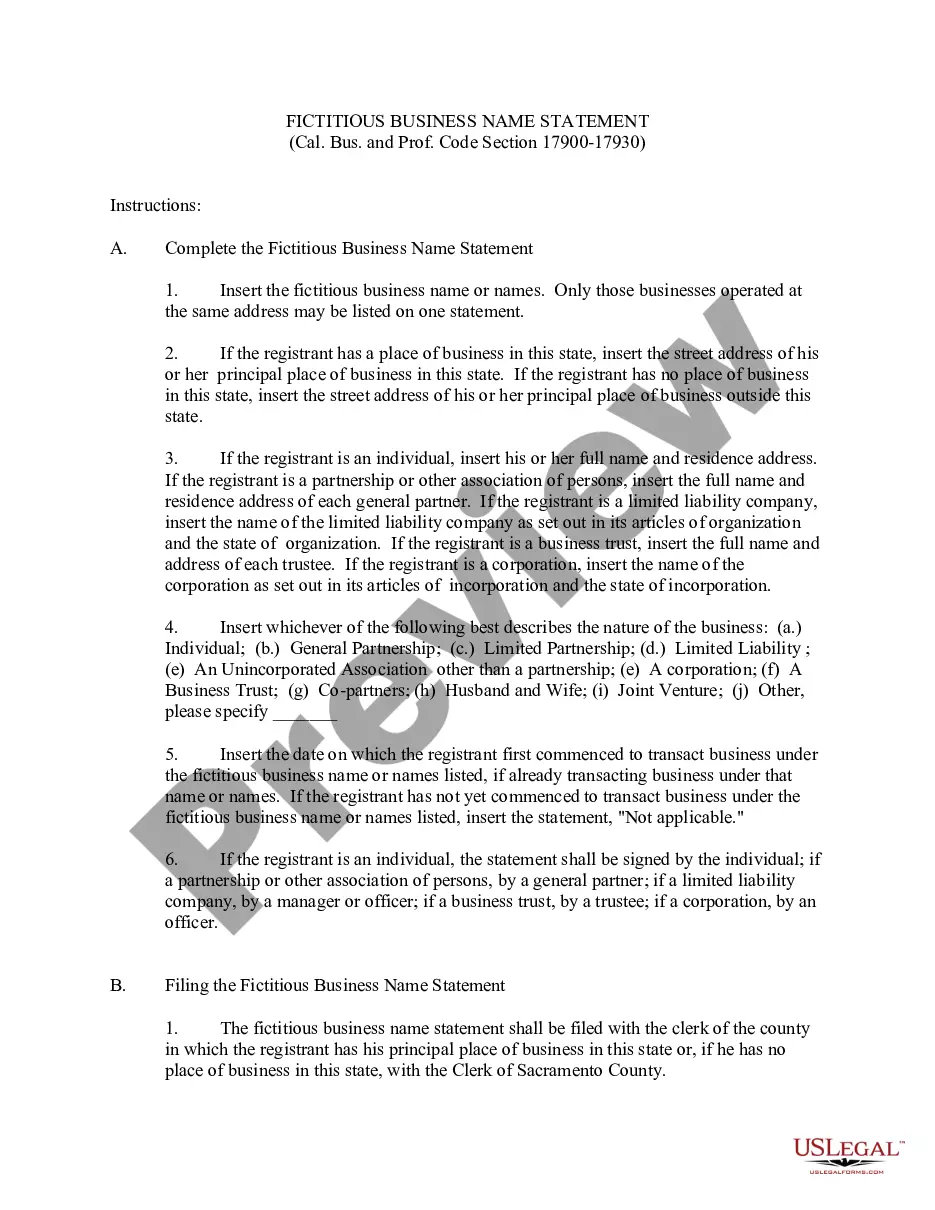
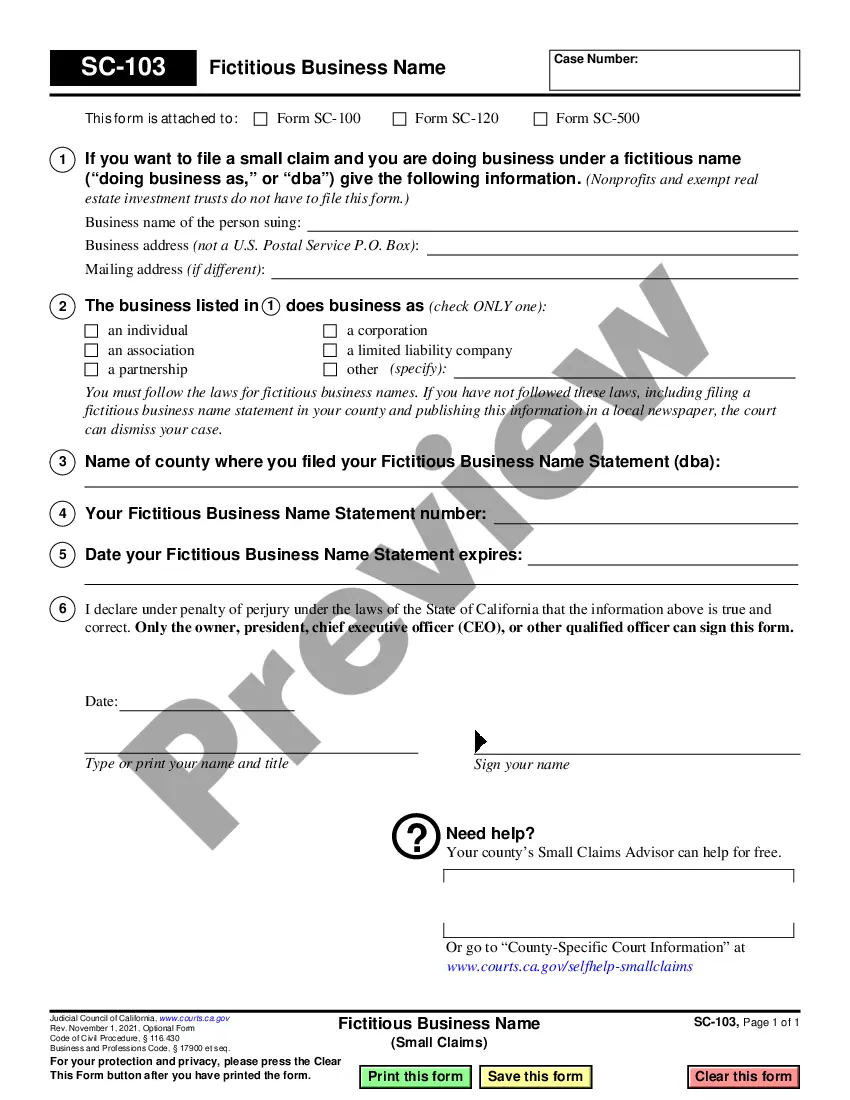
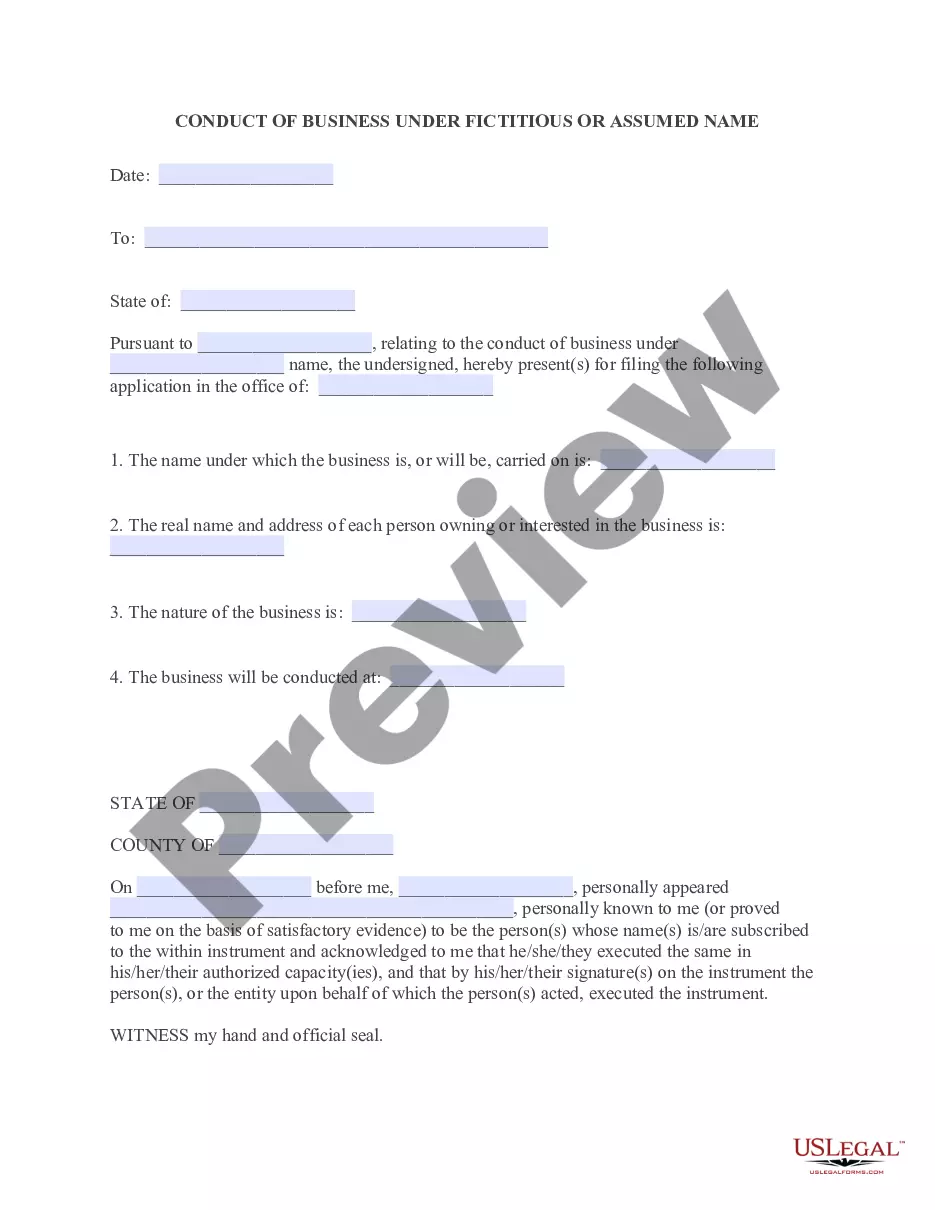
The Fictitious Business Name Statement is a legal document that notifies the state of California about a business operated under a name that is not the owner's legal name. This statement includes details such as the fictitious name, the business owners, the nature of the business, and its address. It differs from other business registration forms in that it specifically addresses the use of alternative business names, ensuring compliance with state law.
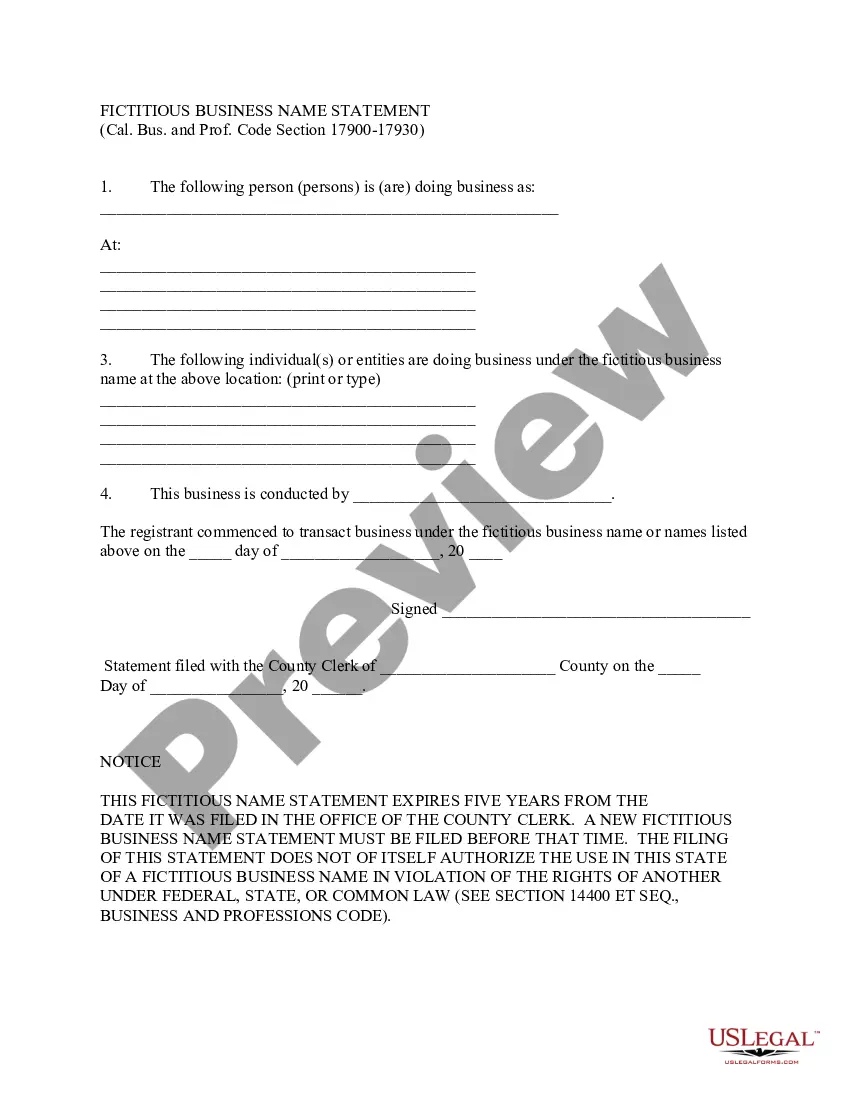
Key components of this form
- Fictitious business name or names
- Principal place of business address
- Owner(s) information including name and residence address
- Description of the type of business
- Date business commenced under the fictitious name
- Signature of registrant or authorized signatory

When this form is needed
This form should be used when an individual or a business entity wishes to operate under a name that is different from their legal name. It is necessary to complete and file this statement when starting a new business or if an existing business changes its name to a fictitious name.
Intended users of this form
- Individual business owners operating under a fictitious name
- Partnerships and corporations wanting to advertise a business name
- Limited liability companies (LLCs) operating under a name other than their registered name
- Any entity seeking to comply with the California Business and Professions Code
How to prepare this document
- Insert the fictitious business name being registered.
- Provide the address of the principal place of business.
- Fill in the names and addresses of all owners or partners.
- Select the appropriate description for the nature of the business.
- Enter the date when the business began operating under the fictitious name.
- Sign the form as required based on the type of registrant.
Does this form need to be notarized?
This form does not typically require notarization unless specified by local law. Always check with the local county clerk for specific requirements.
Get your form ready online
Our built-in tools help you complete, sign, share, and store your documents in one place.
Make edits, fill in missing information, and update formatting in US Legal Forms—just like you would in MS Word.
Download a copy, print it, send it by email, or mail it via USPS—whatever works best for your next step.
Sign and collect signatures with our SignNow integration. Send to multiple recipients, set reminders, and more. Go Premium to unlock E-Sign.
If this form requires notarization, complete it online through a secure video call—no need to meet a notary in person or wait for an appointment.
We protect your documents and personal data by following strict security and privacy standards.

Make edits, fill in missing information, and update formatting in US Legal Forms—just like you would in MS Word.

Download a copy, print it, send it by email, or mail it via USPS—whatever works best for your next step.

Sign and collect signatures with our SignNow integration. Send to multiple recipients, set reminders, and more. Go Premium to unlock E-Sign.

If this form requires notarization, complete it online through a secure video call—no need to meet a notary in person or wait for an appointment.

We protect your documents and personal data by following strict security and privacy standards.
Mistakes to watch out for
- Failing to include all owners' names and addresses.
- Using multiple fictitious names on a single statement when they operate at different addresses.
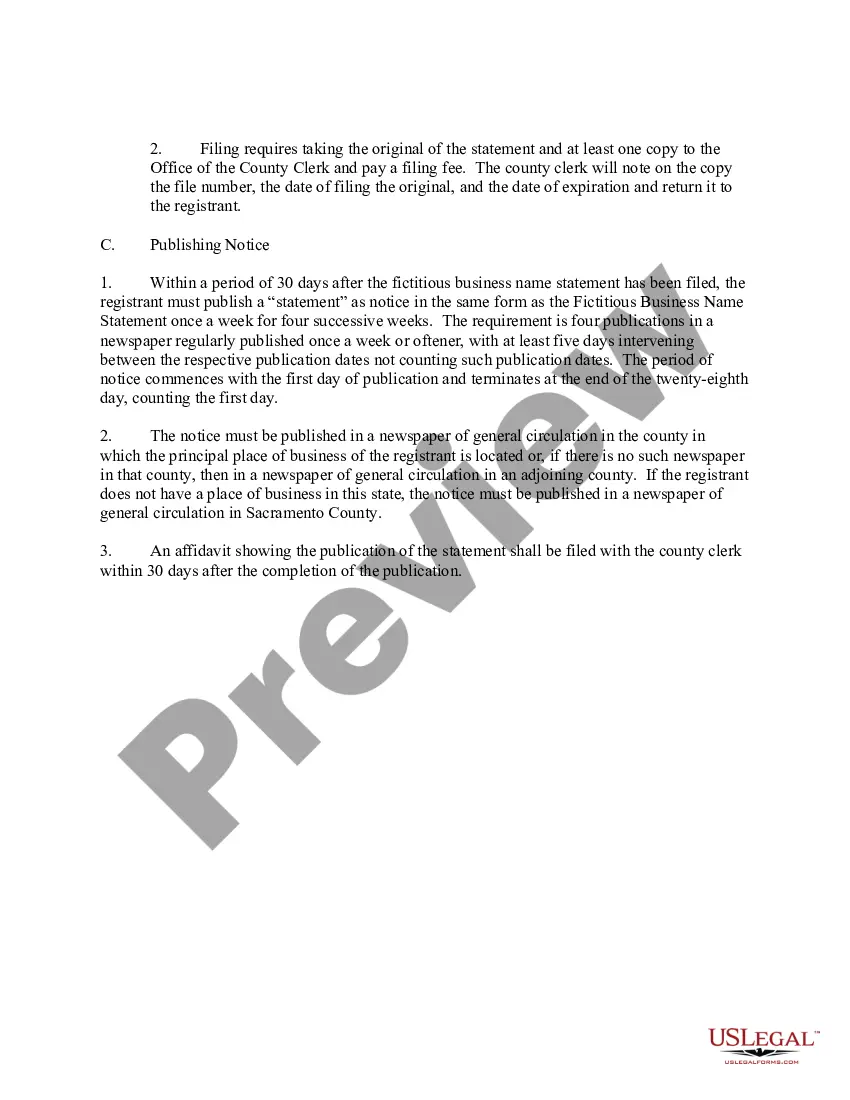
- Not publishing the required notice within 30 days of filing.
- Inaccurately describing the type of business entity.
- Missing the filing deadline resulting in the statement becoming invalid.
Why use this form online
- Convenience of downloading and completing the form at your own pace.
- Editable format allows for easy corrections and updates.
- Reliable templates drafted by licensed attorneys ensure compliance with state laws.
Quick recap
- The Fictitious Business Name Statement is essential for operating under a non-legal name in California.
- Filing and publication requirements must be strictly followed to comply with local laws.
- Using the form online offers convenience, ensuring that you have a correct and complete statement ready for submission.
Looking for another form?


Form popularity
FAQ
A fictitious name statement in California is a formal declaration that allows a business to operate under a name that is not its legal name. This statement must be filed with the county clerk's office where the business operates. The California Fictitious Business Name Statement is an essential document for anyone looking to promote a brand distinct from their personal or business entity's name. It provides legal backing and supports brand recognition in the marketplace.
Yes, an LLC does need to file a fictitious name in California if it intends to conduct business under a name that differs from its official registered name. This is part of maintaining compliance with state regulations. By filing a California Fictitious Business Name Statement, LLCs clarify their business identity, which helps establish credibility and trust with customers. You can rely on platforms like US Legal Forms to guide you through this process easily.
If you do not file a DBA in California, you risk facing legal consequences, including fines or penalties. You also miss out on the opportunity to build brand recognition under your chosen business name. Additionally, without a filed California Fictitious Business Name Statement, it becomes difficult to enforce your rights over that name, leading to potential conflicts with others using similar titles. Filing this statement is a crucial step in safeguarding your business identity.
A California Fictitious Business Name Statement, often called a DBA (Doing Business As), is a legal document that allows individuals or businesses to operate under a name different from their legal name. This statement serves to inform the public about the true ownership of a business. It ensures transparency in market operations, allowing customers to identify the responsible entity behind a business. Filing this statement is crucial for compliance and helps protect your brand.
In California, you file your Fictitious Business Name Statement with the county clerk's office in the county where your business operates. Each county may have specific forms and processes, so it's beneficial to check the requirements for your location. After filing, ensure you follow up with publication requirements to keep your business compliant. Using US Legal Forms can simplify this process by providing the necessary forms and guidance.
A California Fictitious Business Name Statement is valid for five years from the date of filing. After that period, you must renew your statement to continue using your fictitious name legally. It's important to stay on top of these renewals to avoid any business interruptions. Keeping your filing current also enhances your business's credibility.
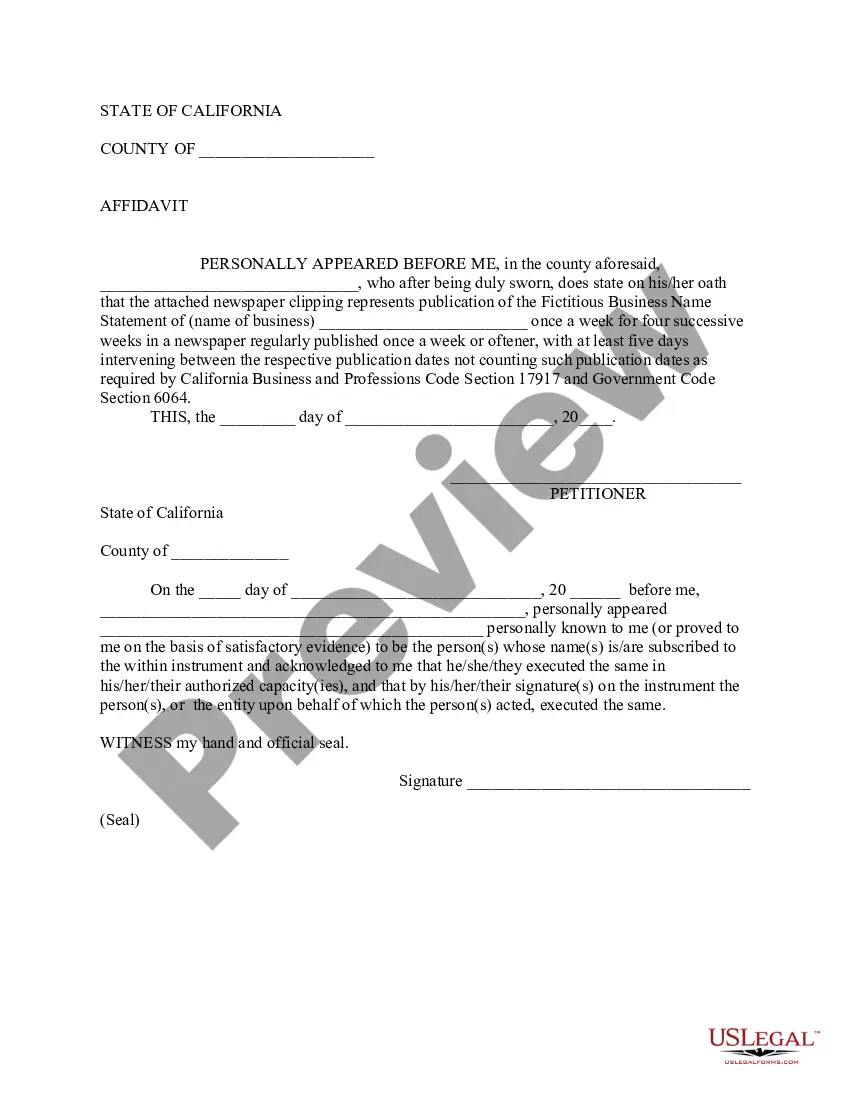
Yes, you need to publish your California Fictitious Business Name Statement in a local newspaper for four consecutive weeks. This requirement ensures that the public is aware of your business’s identity. After publication, you'll receive an affidavit from the newspaper, which you should keep for your records. Additionally, this process helps protect your business name from being used by others.
If you do not publish your Fictitious Business Name (FBN) in California, you could face penalties and may not be able to enforce contracts under that business name. Publication is a legal requirement that helps maintain transparency about business ownership. To avoid complications and ensure compliance, it is advisable to use platforms like US Legal Forms, which guide you efficiently through the FBN process, including publishing your statement.
An example of a fictitious business could be a landscaping service called 'Green Thumb Landscaping,' while the owner’s legal name is John Smith. With the California Fictitious Business Name Statement, John can operate under this name, which helps attract clients who may connect better with that brand. This registration is essential to ensure John’s business is legally recognized and compliant with state requirements.
A fictitious business statement is a formal document that declares the use of a fictitious name for a business. This statement must be filed with the county clerk’s office in California to ensure legal recognition and compliance. It acts as a public record, offering transparency about who is operating under that name, which reinforces consumer trust in the marketplace.