Mortgage Modification Agreement
What is this form?
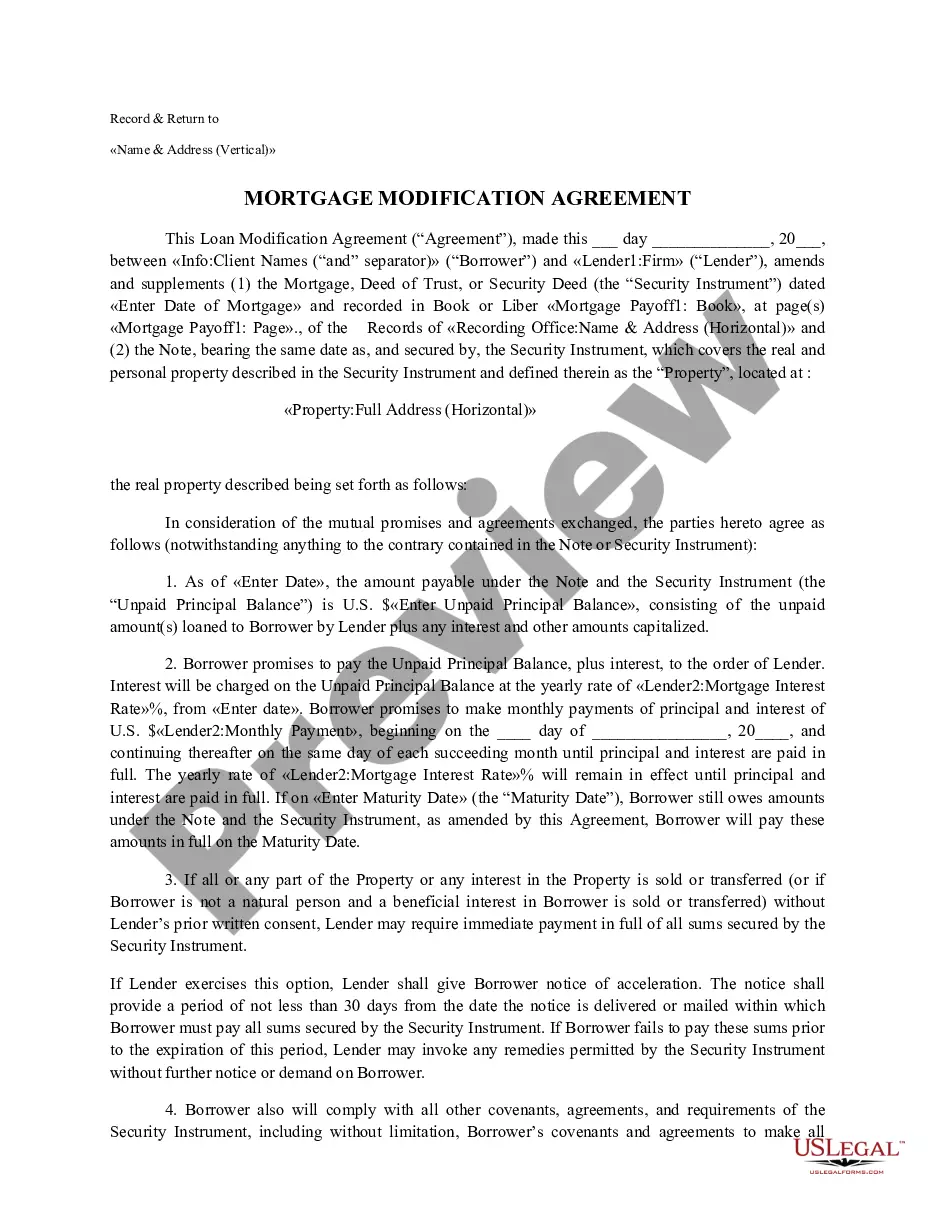
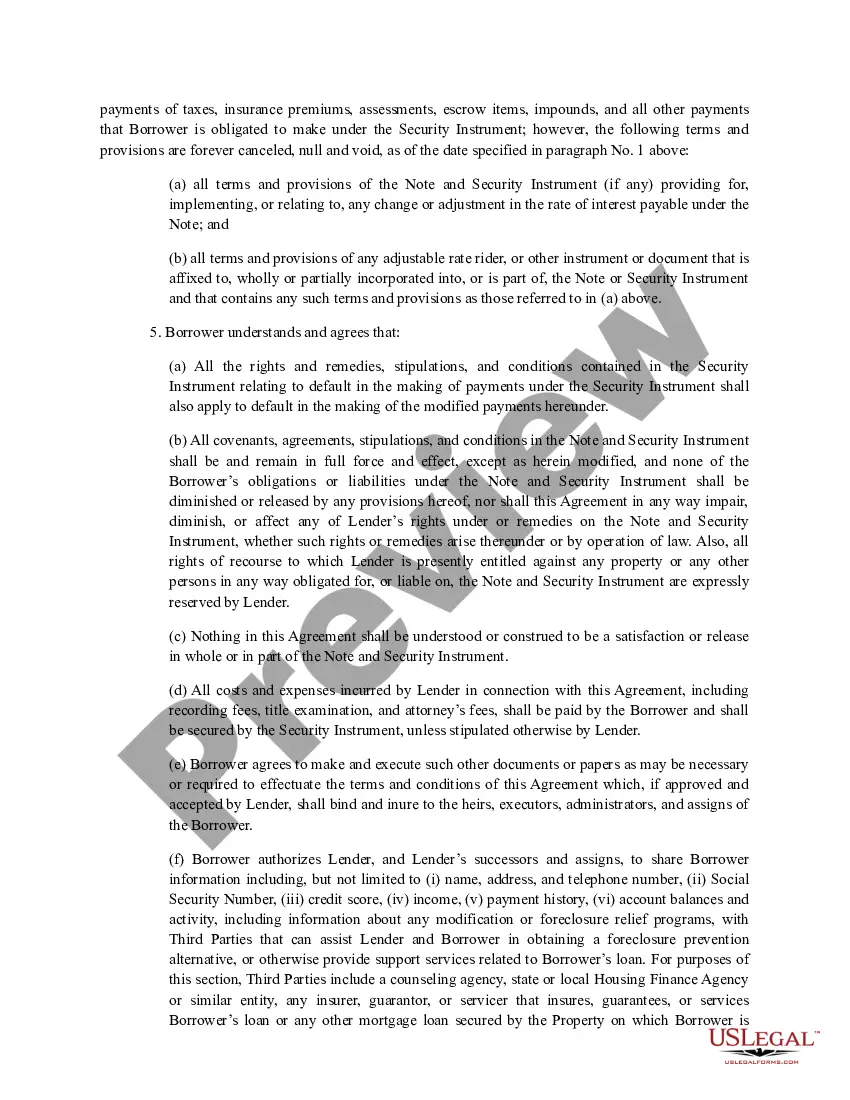
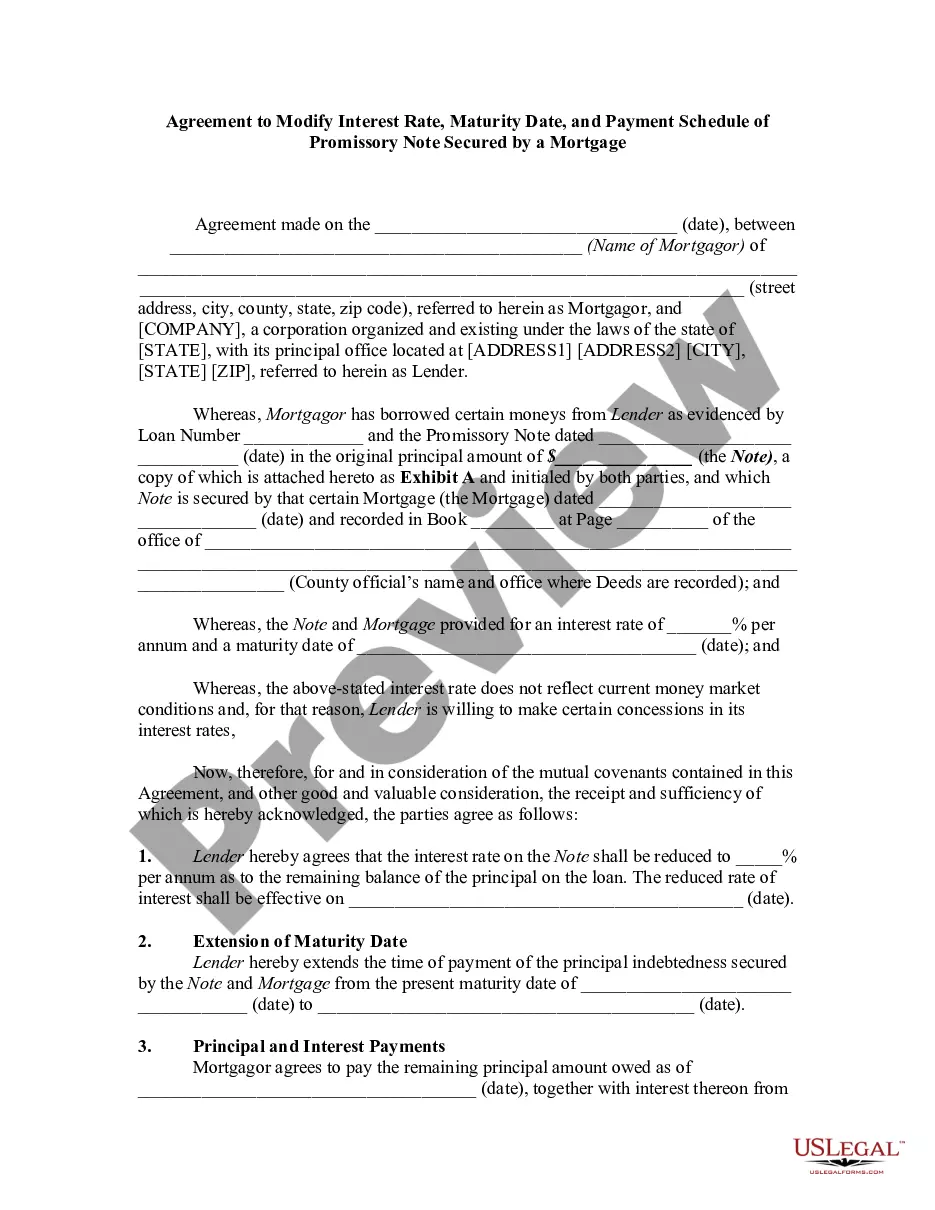
The Mortgage Modification Agreement is a legal document that allows borrowers and lenders to amend the terms of an existing mortgage. This form serves to alter the original loan agreement, specifically enabling changes in interest rates, payment amounts, or loan terms. It is important to understand that this agreement modifies existing obligations rather than creating a new loan. Unlike a full refinancing, this form allows borrowers to maintain their original loan while seeking more favorable terms.
Key components of this form
- Parties involved: Names and addresses of the borrower and lender.
- Loan details: Information regarding the original mortgage and the unpaid principal balance.
- Payment structure: Details about new payment amounts and interest rates.
- Terms of acceleration: Conditions under which the lender can demand full repayment.
- Covenants and agreements: Responsibilities of the borrower, including taxes and insurance payments.


Common use cases
This form is essential when a borrower faces financial difficulties and needs to restructure their mortgage to avoid default. If you want to lower your monthly mortgage payments, reduce the interest rate, or change the payment due date, this agreement is suitable. It is also applicable when the borrower is seeking to make financial adjustments without losing their property.
Who needs this form
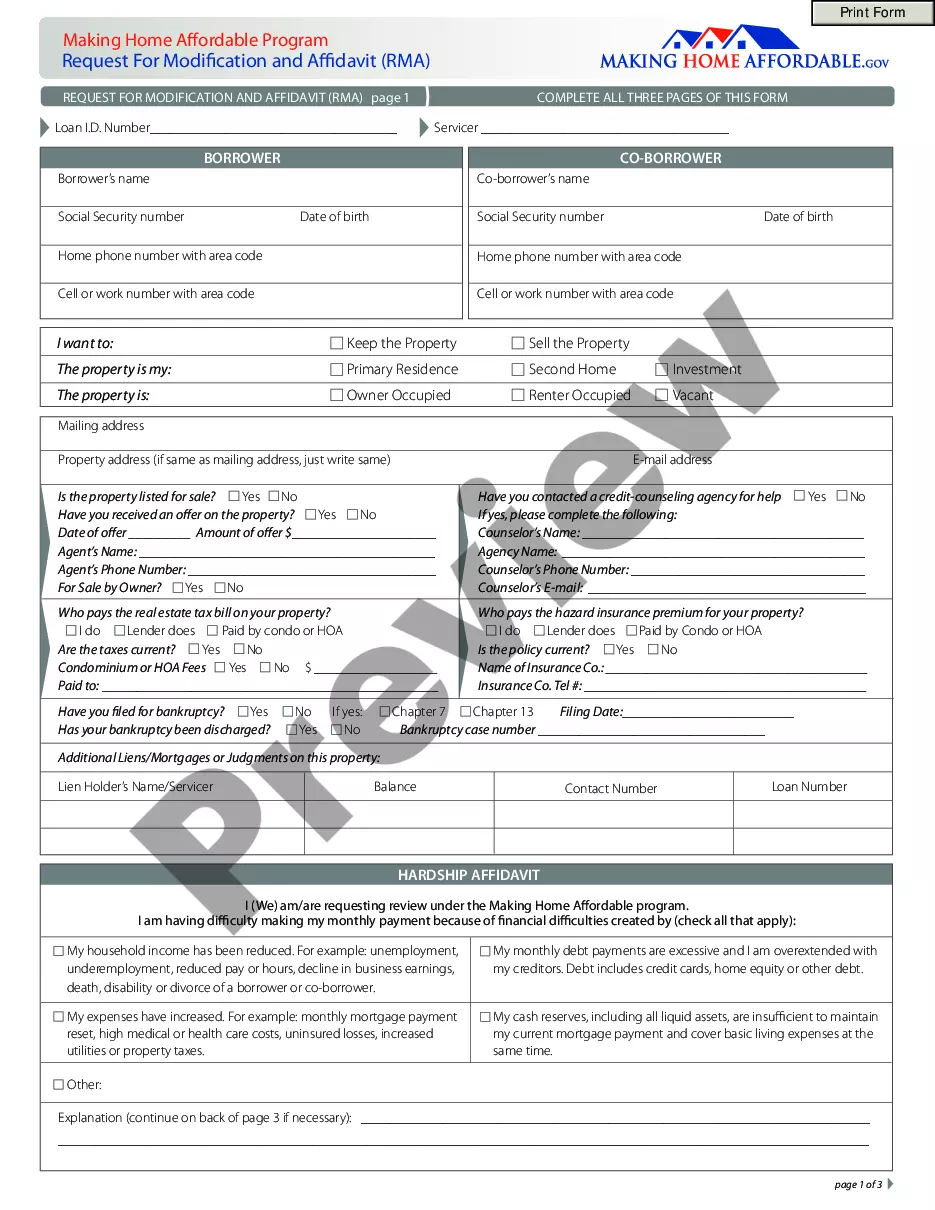
- Borrowers experiencing financial hardship who wish to modify their mortgage terms.
- Lenders who need to formalize changes in the mortgage agreement with their borrowers.
- Homeowners looking to adjust their mortgage for better financial management.
- Individuals who want to maintain their current mortgage while seeking more favorable loan terms.
How to complete this form
- Identify the parties: Enter the names and addresses of the borrower and lender.
- Specify the mortgage details: Fill in the date of the original mortgage and the unpaid principal balance.
- Detail the new payment terms: Include updated interest rates and payment amounts.
- Enter the effective date: Specify when the modified terms will take effect.
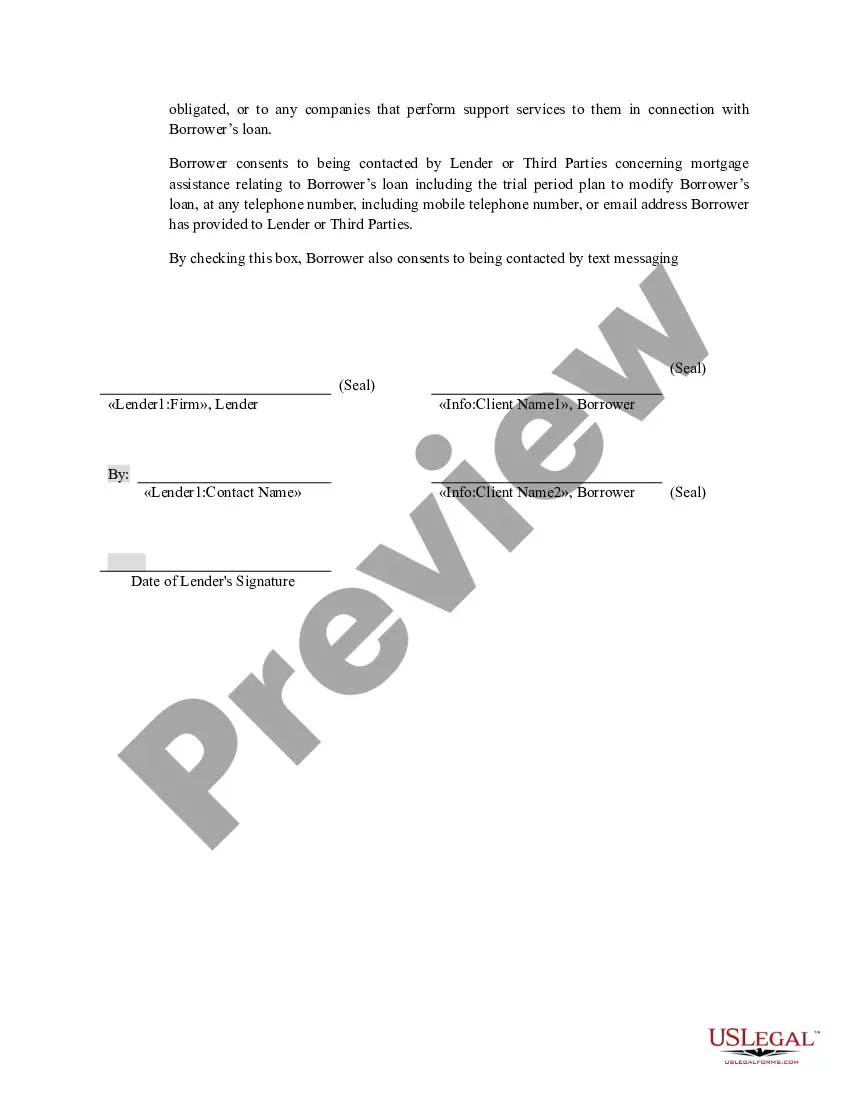
- Gather signatures: Ensure all parties sign and date the agreement.
Is notarization required?
This form does not typically require notarization unless specified by local law. However, checking with the lender or legal counsel ensures compliance with all applicable requirements.
Get your form ready online
Our built-in tools help you complete, sign, share, and store your documents in one place.
Make edits, fill in missing information, and update formatting in US Legal Forms—just like you would in MS Word.
Download a copy, print it, send it by email, or mail it via USPS—whatever works best for your next step.
Sign and collect signatures with our SignNow integration. Send to multiple recipients, set reminders, and more. Go Premium to unlock E-Sign.
If this form requires notarization, complete it online through a secure video call—no need to meet a notary in person or wait for an appointment.
We protect your documents and personal data by following strict security and privacy standards.

Make edits, fill in missing information, and update formatting in US Legal Forms—just like you would in MS Word.

Download a copy, print it, send it by email, or mail it via USPS—whatever works best for your next step.

Sign and collect signatures with our SignNow integration. Send to multiple recipients, set reminders, and more. Go Premium to unlock E-Sign.

If this form requires notarization, complete it online through a secure video call—no need to meet a notary in person or wait for an appointment.

We protect your documents and personal data by following strict security and privacy standards.
Common mistakes to avoid
- Failing to include accurate loan details like the unpaid principal balance.
- Not having all parties sign the agreement before submitting it.
- Leaving out important terms related to payment schedules or interest rates.
- Neglecting state-specific legal requirements that might apply.
Benefits of using this form online
- Convenience of accessing forms anytime and from anywhere.
- Ability to easily edit and customize the agreement as needed.
- Guaranteed reliability of attorney-drafted legal documents.
- Streamlined process for obtaining necessary approvals and signatures.
Looking for another form?
Form popularity
FAQ
Loan modifications are a long-term mortgage relief option for borrowers experiencing financial hardship, such as loss of income due to illness. A modification typically changes the loan's rate or term (or both) to make monthly payments more affordable.
Cons of Mortgage Loan Modification Taking longer to pay off your debt. If you are paying off the same amount of principal with smaller monthly payments, it will take longer for you to pay off your home.Paying more interest over time.The foreclosure process won't stop while you're negotiating.
The disadvantages of a loan modification include the possibility that you will end up paying more over time to repay the loan. The total you owe may even be more than your house is worth in some cases. In addition, you may pay extra fees to modify a loan or incur tax liability.
Technically, a loan modification should not have any negative impact on your credit score. That's because you and the lender have agreed to new terms for paying off your loan, so if you continue to meet those terms, there shouldn't be anything negative to report.
Extending the length of your loan is another strategy lenders use to make the monthly payments more affordable. For example, if you have a $100,000 mortgage at an interest rate of 4% with 15 years left, you would pay $740 per month. If you extend that loan by 10 years, you end up paying $528 per month.
The mortgage modification agreement is a legal document between a lender and borrower to change an existing loan's terms. A typical modification may include reducing the interest rate, extending the repayment term, lowering monthly payments, or even forgiving part of the debt.
Obtaining a loan modification can also hurt your credit. It will show up on your credit report, and it may lower your credit score, which can affect your ability to get another loan in the future. Loan modifications are also complex, time-consuming, and carry the risk of scams.
The success rate for streamlined modifications was 64.1 percent in the first 36 months after modification, compared with a 68.9 percent success rate for standard modifications, a 4.8 percentage-point difference.