Oil and Gas Lease with Pooling Rights
What is this form?
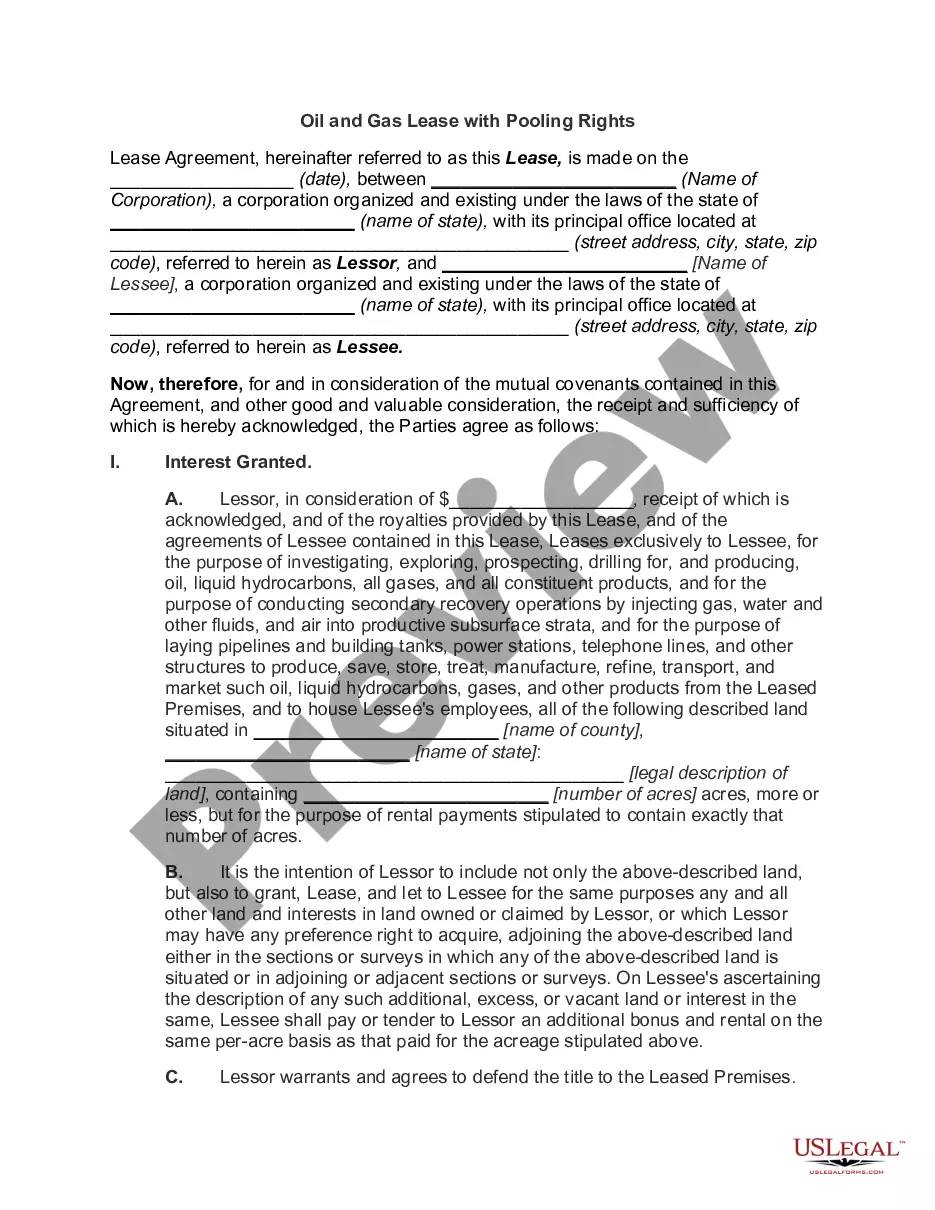
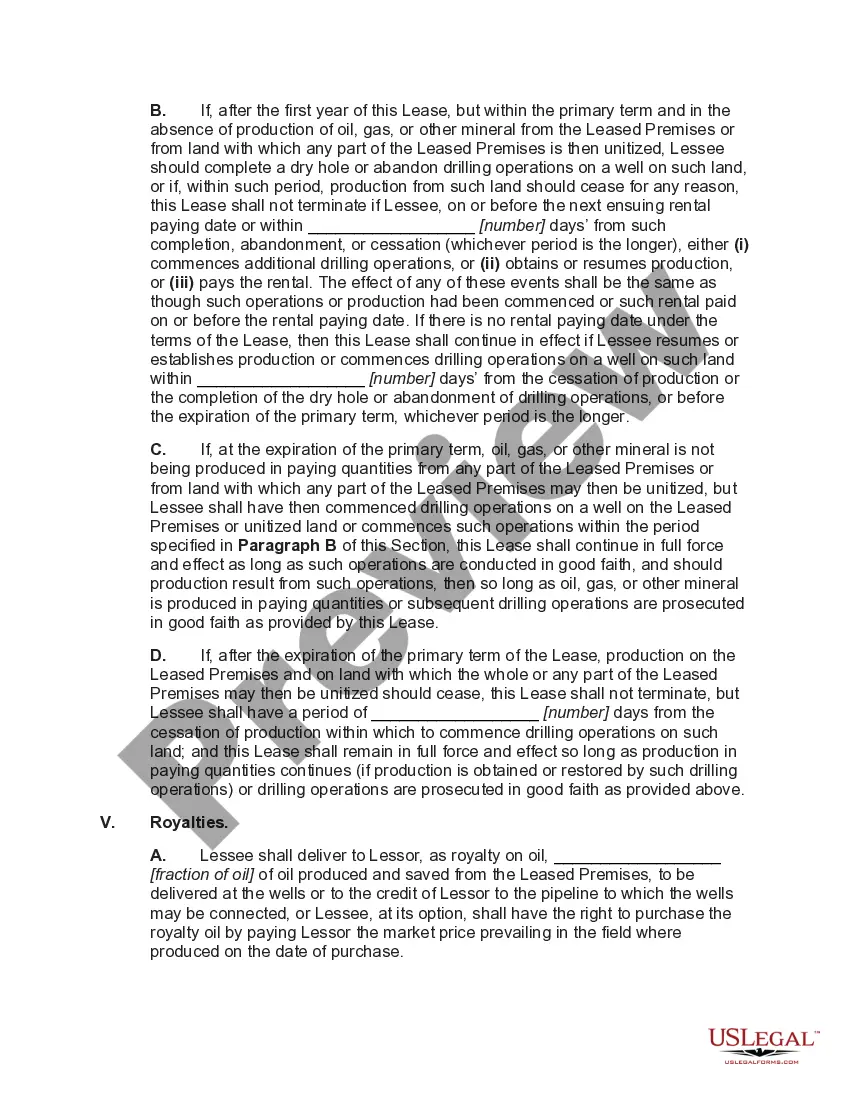
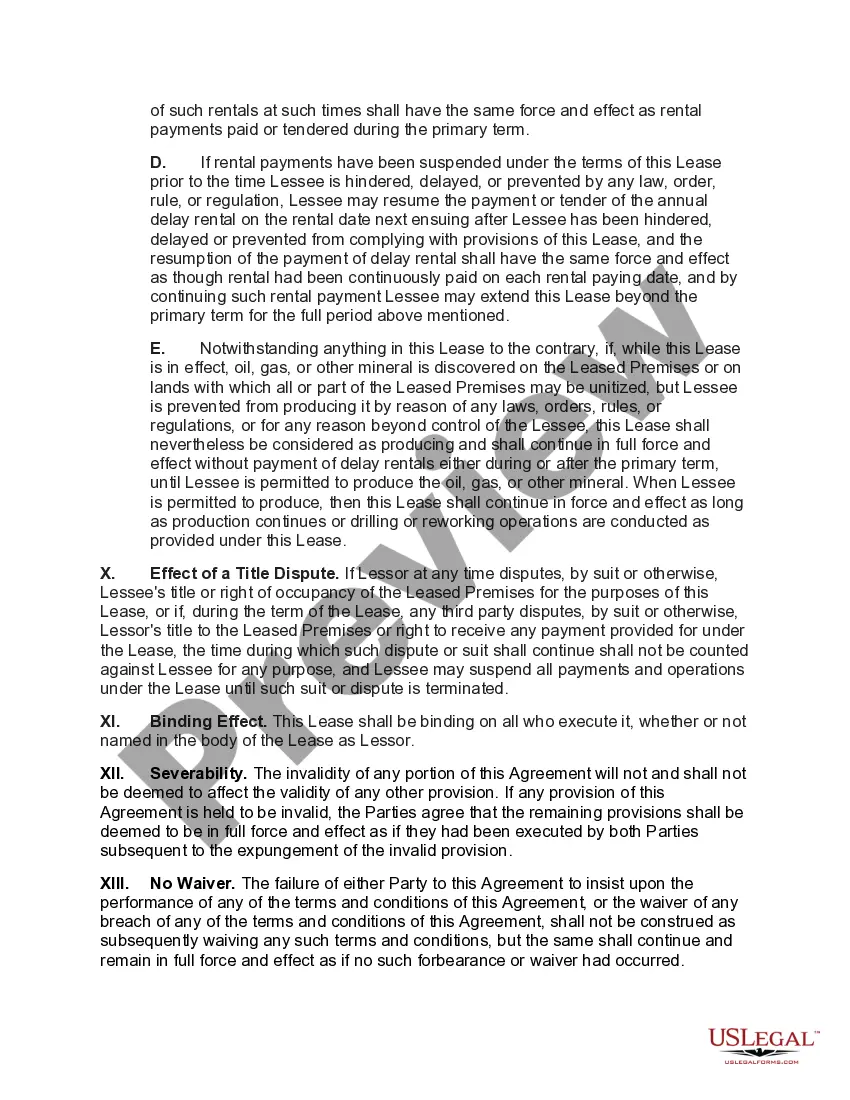
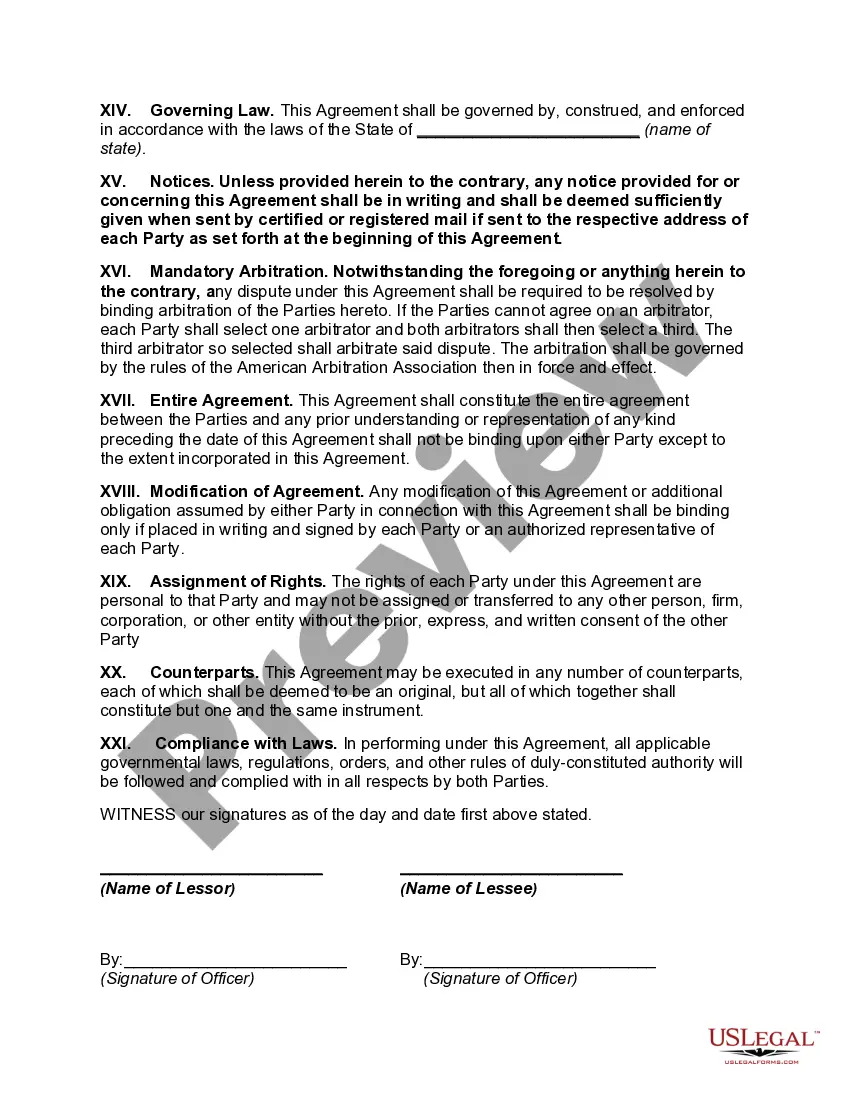
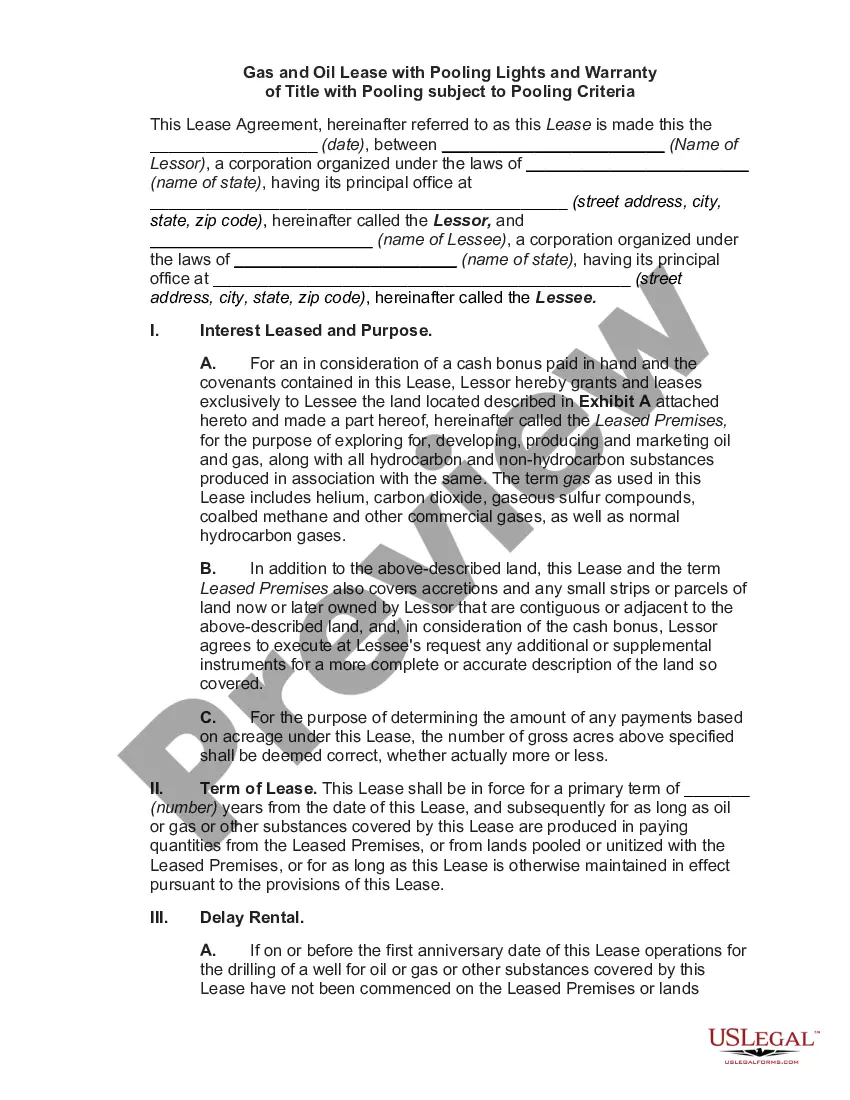
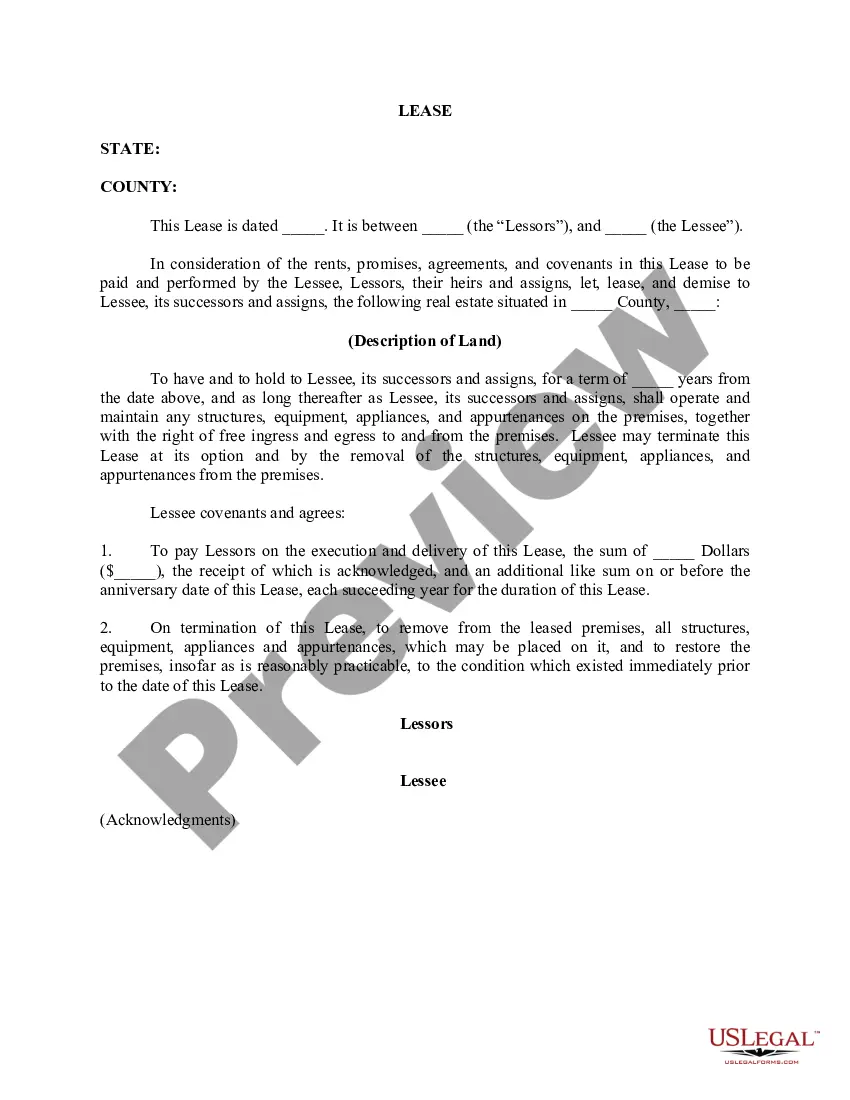
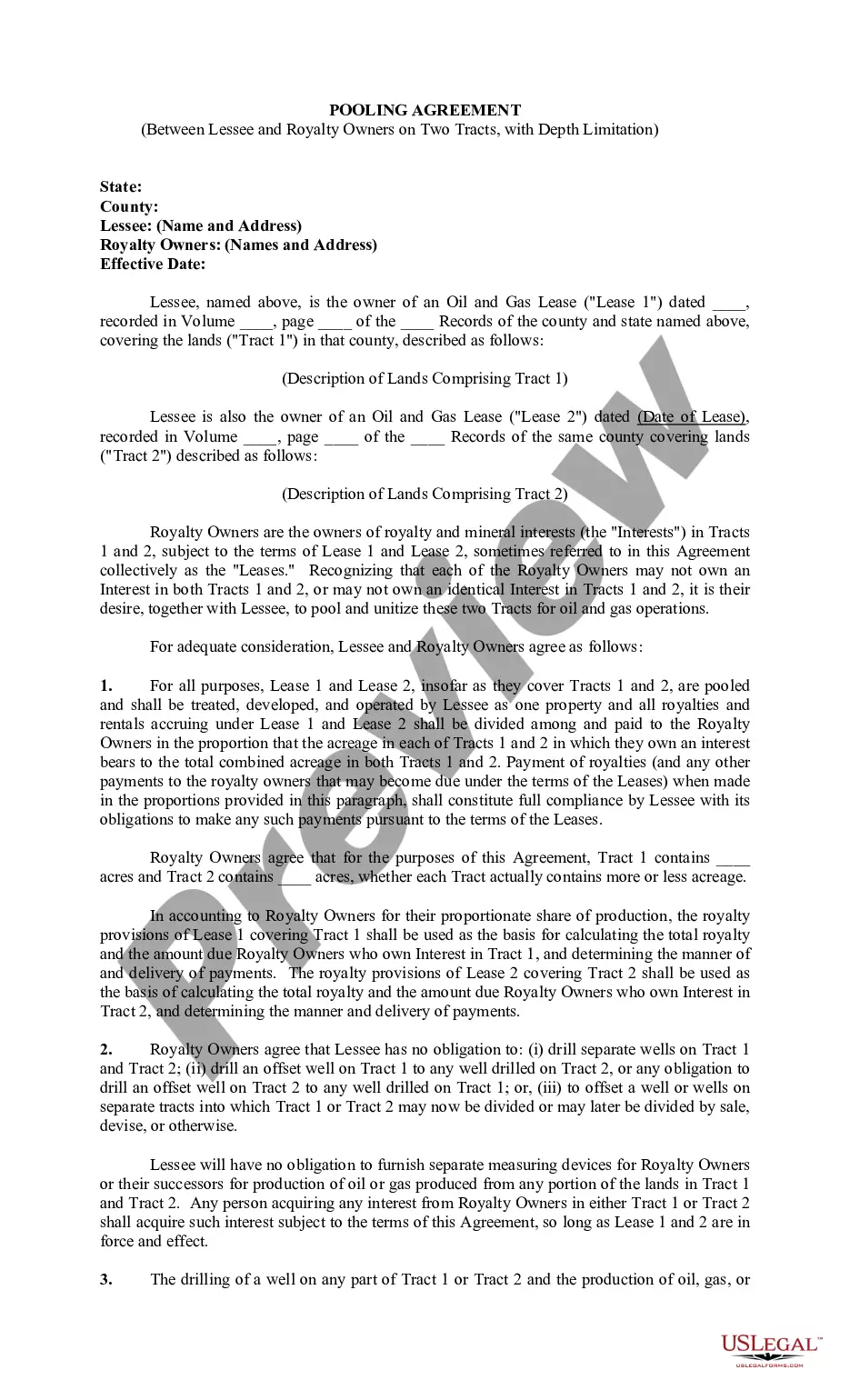
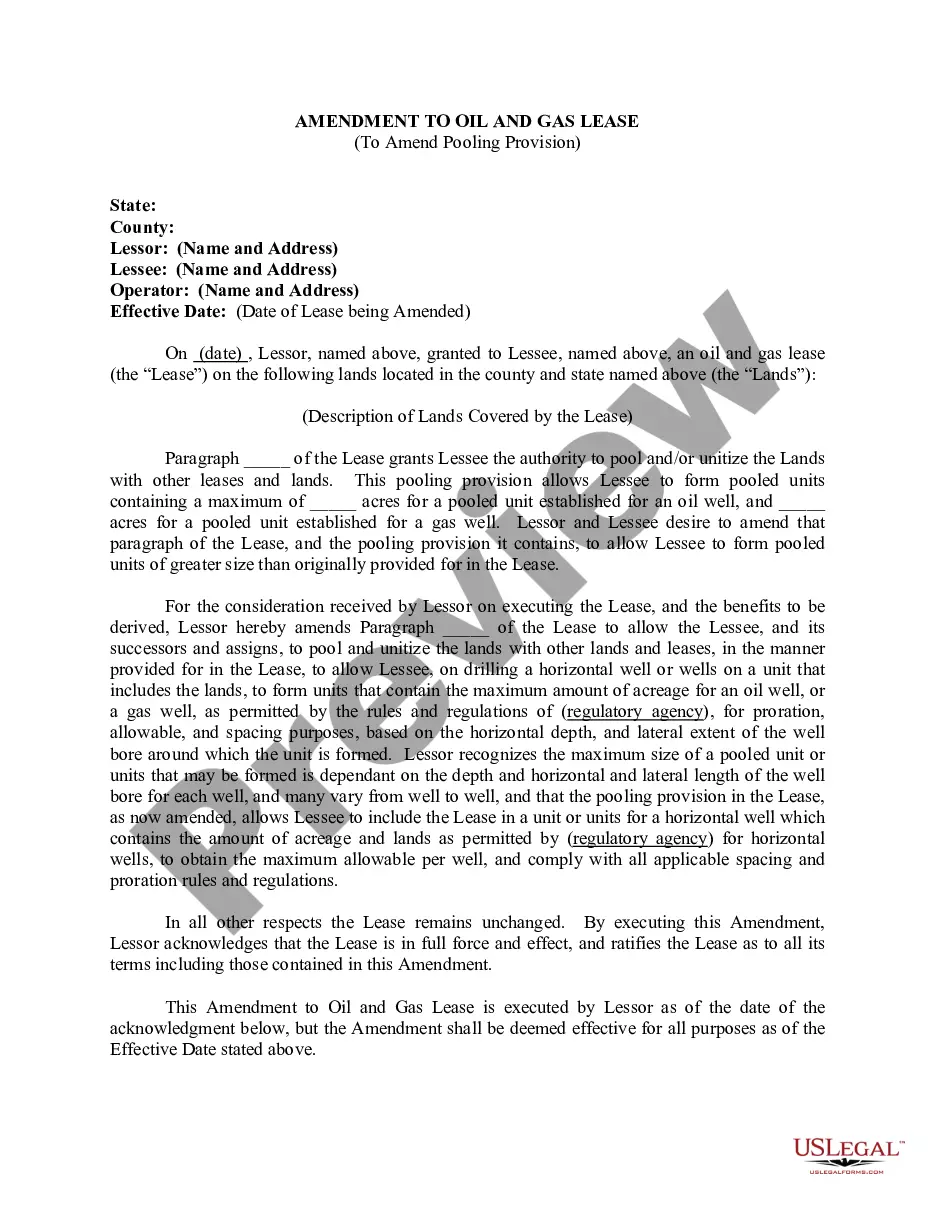
The Oil and Gas Lease with Pooling Rights is a legal document that grants an oil and gas company (lessee) the right to lease land for the exploration and extraction of oil, gas, and other minerals. This lease includes provisions for pooling rights, allowing the lessee to combine several leased properties into a single operating unit. This pooling can be essential when meeting state drilling permit requirements and facilitates the management of underground reservoirs across multiple land parcels. Unlike standard lease agreements, this form specifically addresses consolidation and operational strategies in oil and gas production.
Key components of this form
- Parties involved: Identifies the lessor (landowner) and lessee (oil and gas company).
- Interest granted: Specifies the rights granted to the lessee for exploration and production.
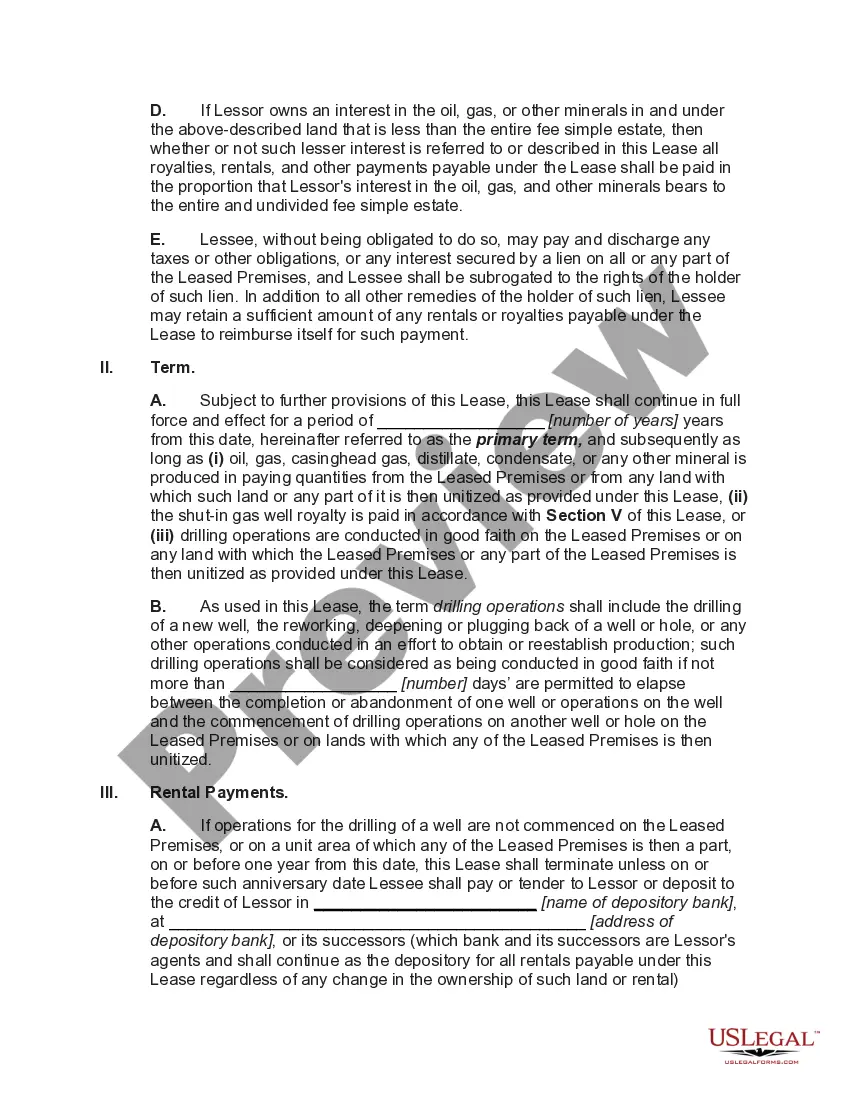
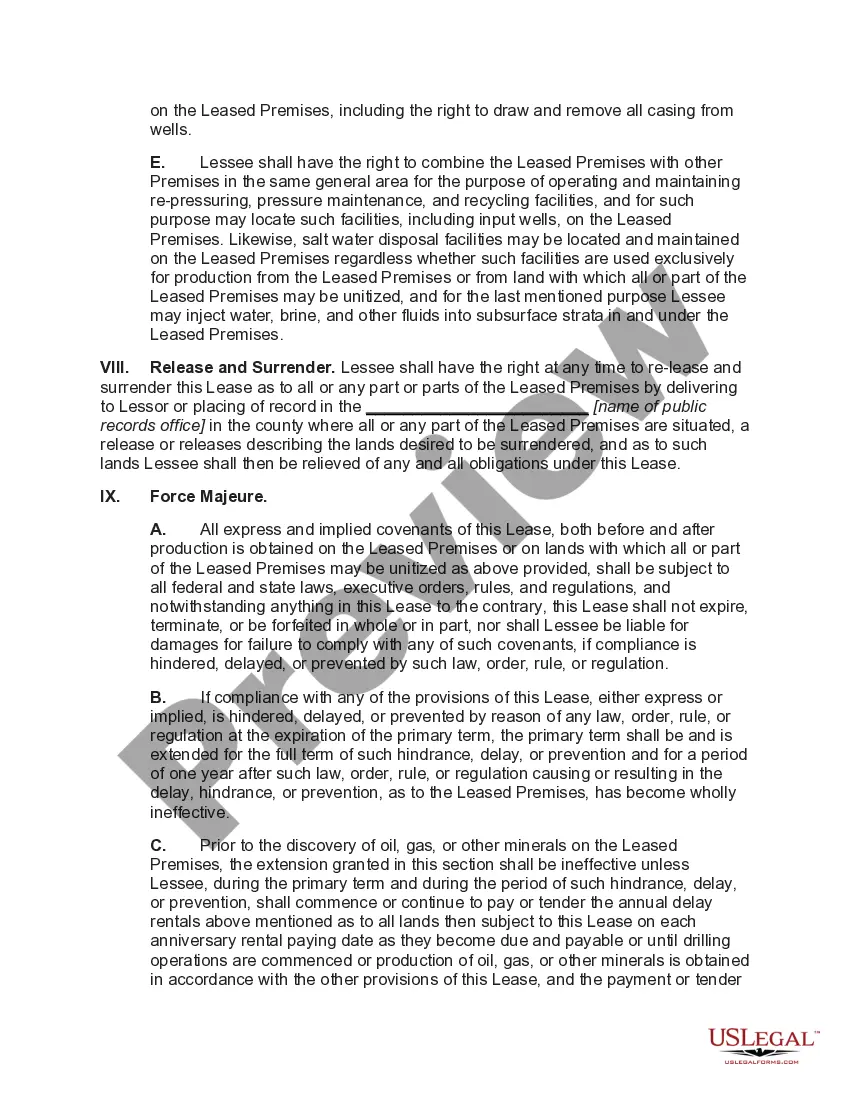
- Term: Outlines the duration of the lease and conditions for extension.
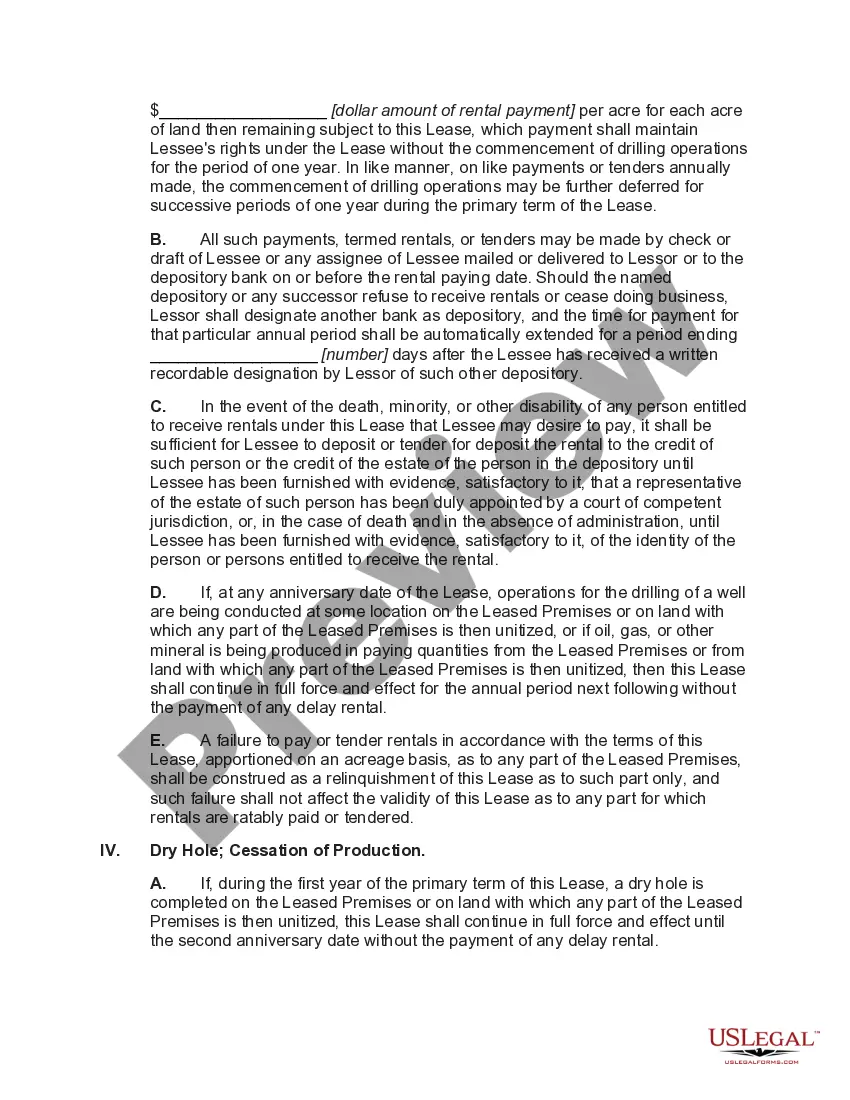
- Rental payments: Details the rental fees and conditions for maintaining the lease.
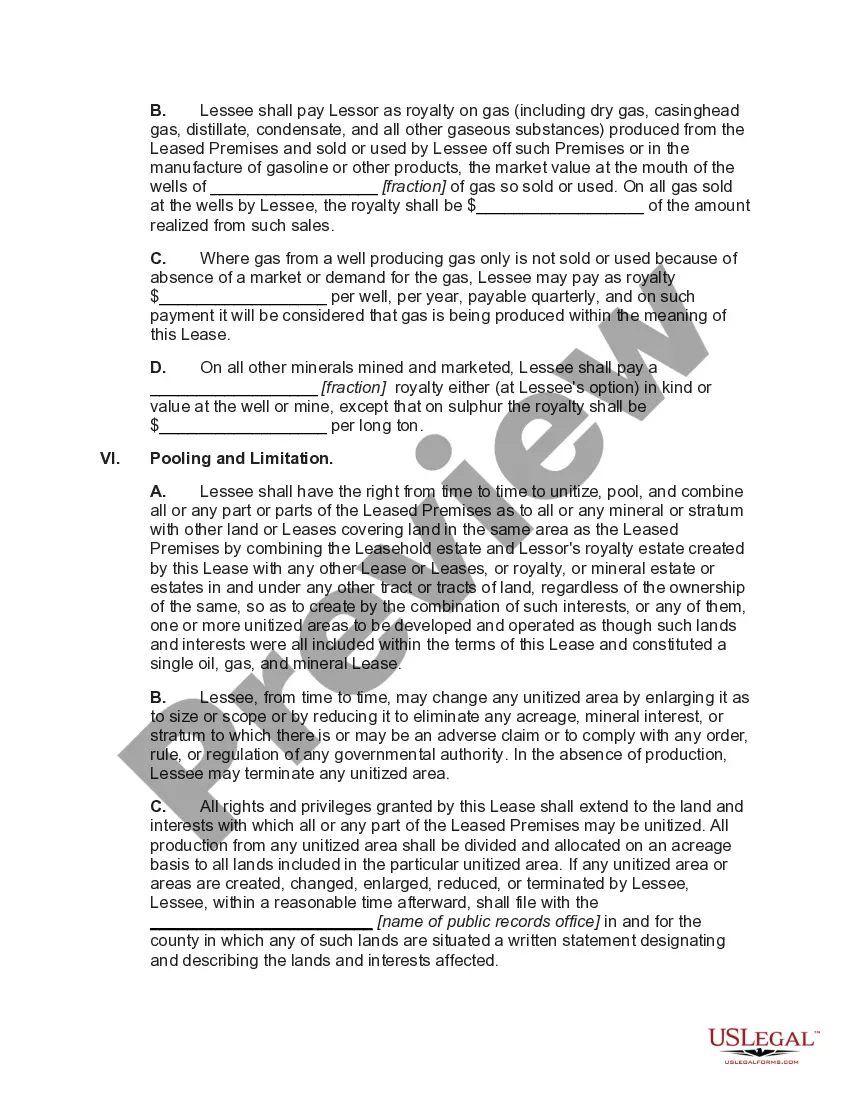
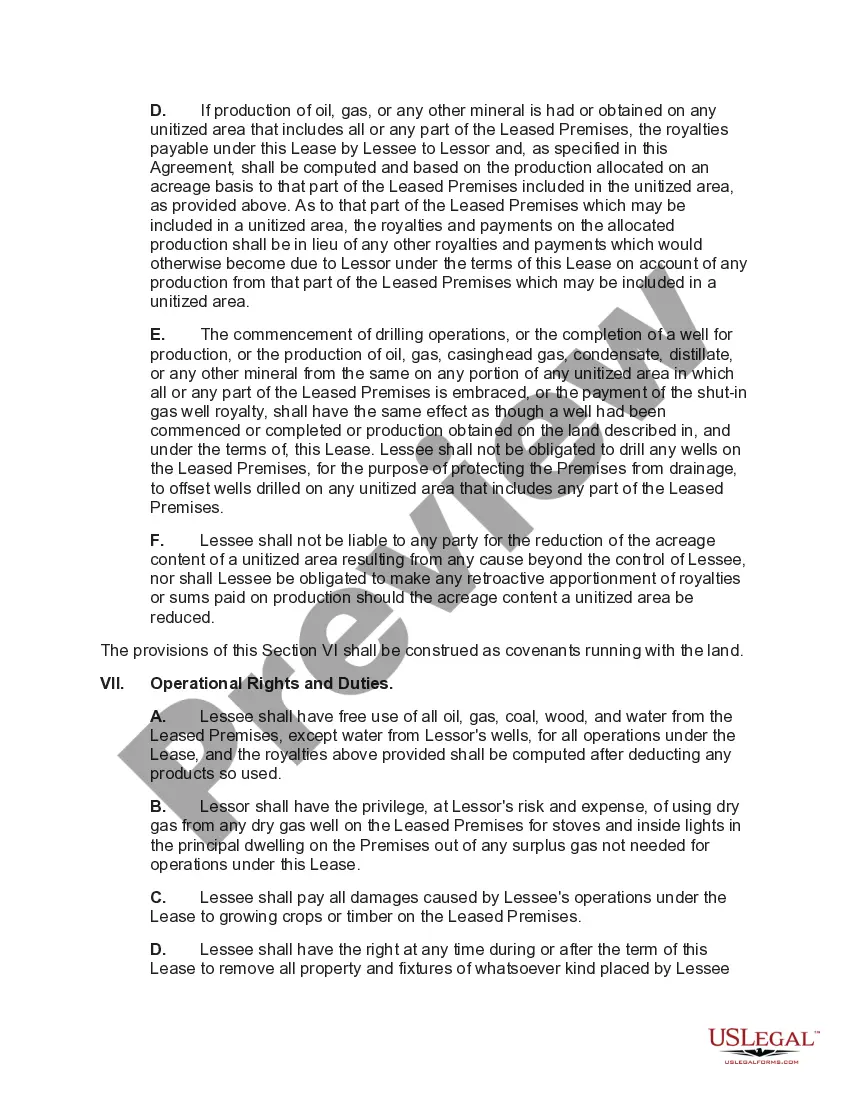
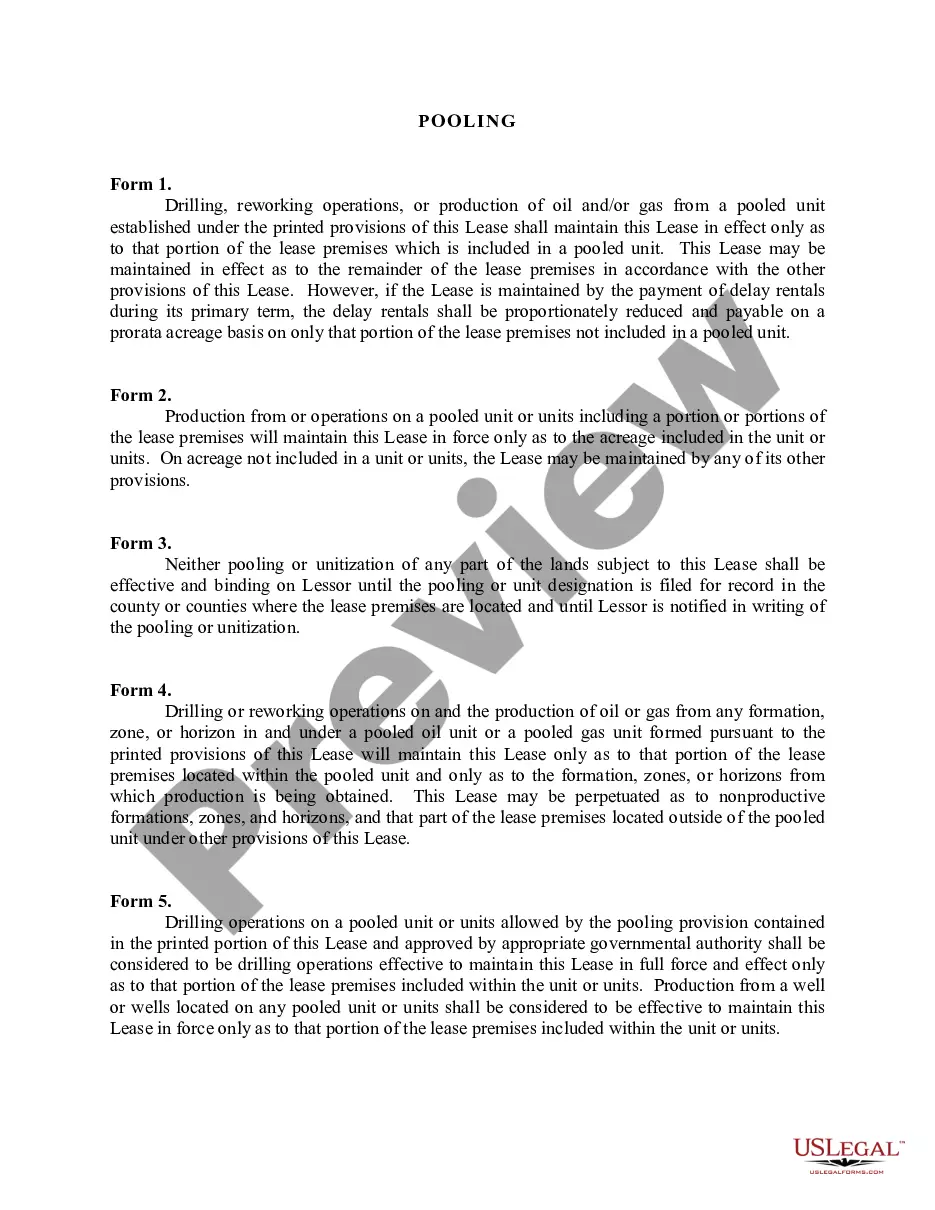
- Pooling rights: Allows the lessee to combine multiple leases for efficient resource extraction.
- Royalties: Defines the royalty payments for oil, gas, and other minerals produced.

Common use cases
This form is necessary in situations where a landowner wishes to lease their property for oil and gas exploration, particularly when the lessee needs to consolidate multiple leases to optimize drilling operations. It is applicable when property owners are approached by oil and gas companies seeking to develop resources, especially in areas with proven mineral deposits. The lease allows for formalizing the relationship between landowners and energy companies while ensuring both parties understand their rights and responsibilities.
Who should use this form
- Landowners looking to lease their land for oil and gas exploration.
- Oil and gas companies seeking to secure rights to explore and produce resources.
- Legal professionals assisting clients in drafting or reviewing lease agreements.
- Individuals or corporations entering negotiations with energy companies regarding mineral rights.
Steps to complete this form
- Identify the parties: Fill in the names and details of the lessor and lessee, including addresses.
- Specify the property: Provide a detailed legal description of the land being leased.
- Enter dates: Include the effective date of the lease and duration in years.
- Detail rental payments: Specify the amount of rental payment per acre and deposit details.
- Complete pooling provisions: Indicate any additional land to be included under pooling rights.
- Sign the document: Ensure both parties sign the lease to validate the agreement.
Is notarization required?
This form does not typically require notarization unless specified by local law. However, certain jurisdictions may have specific requirements regarding the execution and filing of oil and gas leases, so it is recommended to consult local regulations or a legal professional.
Get your form ready online
Our built-in tools help you complete, sign, share, and store your documents in one place.
Make edits, fill in missing information, and update formatting in US Legal Forms—just like you would in MS Word.
Download a copy, print it, send it by email, or mail it via USPS—whatever works best for your next step.
Sign and collect signatures with our SignNow integration. Send to multiple recipients, set reminders, and more. Go Premium to unlock E-Sign.
If this form requires notarization, complete it online through a secure video call—no need to meet a notary in person or wait for an appointment.
We protect your documents and personal data by following strict security and privacy standards.

Make edits, fill in missing information, and update formatting in US Legal Forms—just like you would in MS Word.

Download a copy, print it, send it by email, or mail it via USPS—whatever works best for your next step.

Sign and collect signatures with our SignNow integration. Send to multiple recipients, set reminders, and more. Go Premium to unlock E-Sign.

If this form requires notarization, complete it online through a secure video call—no need to meet a notary in person or wait for an appointment.

We protect your documents and personal data by following strict security and privacy standards.
Common mistakes
- Failing to provide a complete legal description of the property, which may lead to disputes.
- Not specifying the correct rental payment amounts or timelines.
- Neglecting to address pooling provisions, which can affect production rights.
- Missing signatures or dates, making the lease invalid.
Why complete this form online
- Convenience of downloading and customizing the form according to specific needs.
- Easy accessibility for multiple stakeholders involved in the lease process.
- Reliability of using attorney-drafted templates ensuring legal compliance.
Looking for another form?

Form popularity
FAQ
The Mineral Interest Pooling Act (MIPA) is the Texas version of compulsory or mine that is the legislative response to the Normanna court decision. In brief, MIPA: Was enacted to encourage voluntary pooling. Allowed the RRC to compel pooling for separately owned tracts in the same field reservoir.
In its essence, forced pooling is the taking of private property (also known as private eminent domain) that also forces the impacts of drilling onto landowners. Pooled landowners face toxic air emissions, risks of water pollution and other environmental impacts related to drilling.
Pooling is the combining of all oil and gas interests in a drilling unit. In most cases, the owners of oil and gas rights in a unit sign a lease with a developer that allows for pooling. If there is more than one developer in a unit, they voluntarily agree on a development plan.
Generally, a pooling clause will allow the leased premises to be combined with other lands to form a drilling unit, wherein proceeds from production anywhere on the drilling unit are allocated ing to the percentage of the acreage of each tract divided by the total acreage of the drilling unit.
Pooling language speaks more to drilling or spacing units in compliance with state drilling or spacing regulations. Unitization speaks to the cooperative development or operation of one or more mineral reservoirs or parts of reservoirs.
Compulsory pooling is used by oil and gas companies to force unleased or non-consenting landowners into oil and gas leases. It is used when oil and gas operators are unable, through voluntary agreement, to meet the acreage requirements for forming a drilling unit.
In general terms, the Pugh Clause provides that production from a unitized or pooled area located on or including a portion of the leased lands will not be sufficient to extend the primary term for the entire leasehold.
What is pooling? Pooling is the combining of all oil and gas interests in a drilling unit. In most cases, the owners of oil and gas rights in a unit sign a lease with a developer that allows for pooling. If there is more than one developer in a unit, they voluntarily agree on a development plan.