Assignment Clause
Understanding this form
The Assignment Clause form outlines the terms under which a tenant can assign or sublease their lease. This form includes various types of assignment clauses, including those allowing for assignment with or without landlord consent and provisions for assigning to related corporate entities. Understanding this form is essential for tenants to navigate their rights and obligations when they wish to transfer their lease to another party.
Key components of this form
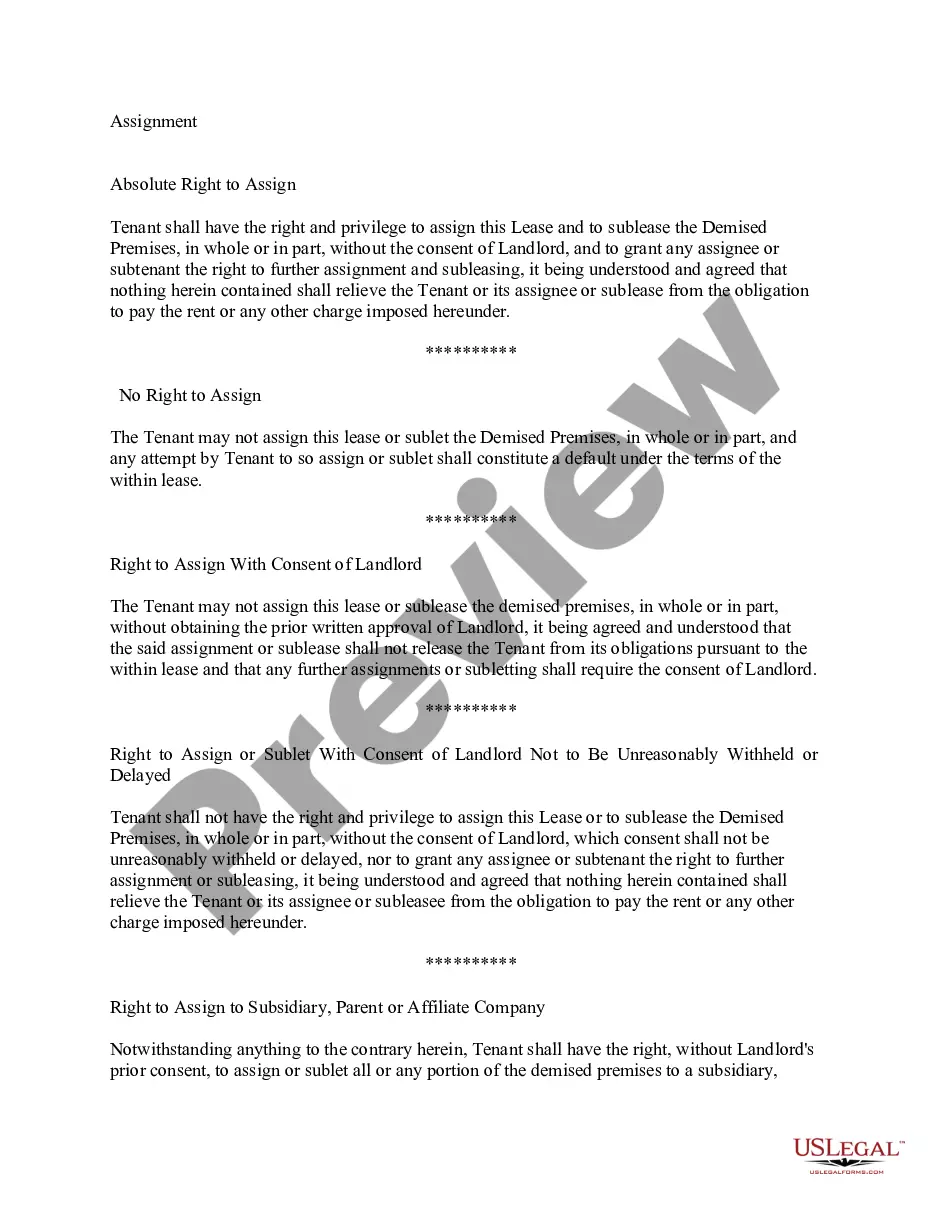
- Absolute Right to Assign: Allows the tenant to assign the lease without landlord consent.
- No Right to Assign: Prohibits any assignment or subleasing, which can lead to a default.
- Right to Assign With Consent: Requires written approval from the landlord for any assignment or sublease.
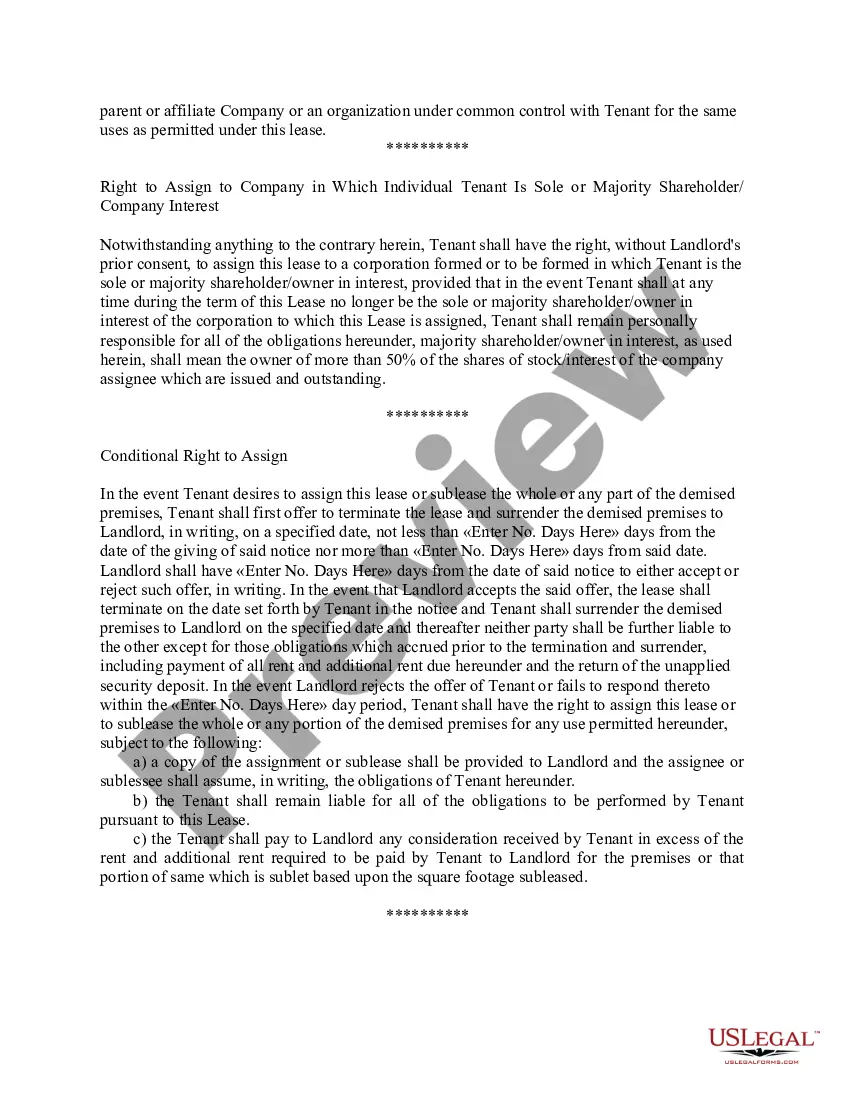
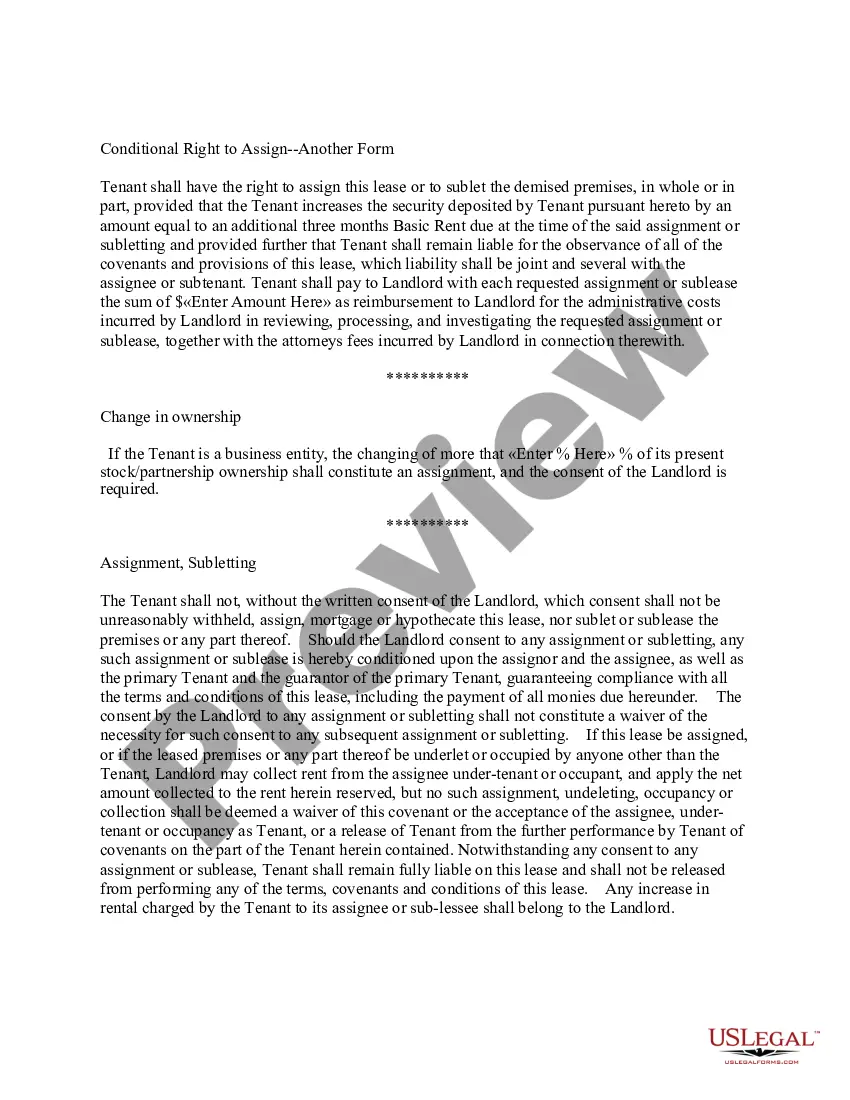
- Conditional Right to Assign: Involves offering to terminate the lease before assigning it.
- Special Rights for Corporations: Allows assignment to subsidiaries or related entities without consent.
- Change in Ownership Clause: Triggers consent requirement if the ownership structure of the tenant changes significantly.


When to use this document
This form is commonly used when a tenant needs to assign their lease or sublet the property to another party. Situations may include relocation for job opportunities, changes in business structure, or financial difficulties that require a tenant to transfer their lease to someone else. Using the Assignment Clause ensures that both parties understand their rights and obligations during the transfer process.
Who needs this form
- Tenants seeking to assign their lease.
- Landlords wanting a clear agreement on lease transfers.
- Business entities that may require flexible leasing options.
- Individuals informed about their leasing rights and seeking to negotiate terms with landlords.
Instructions for completing this form
- Identify the parties involved: Ensure both tenant and landlord details are correct.
- Choose the type of assignment clause that applies: Review options such as absolute rights and conditional rights.
- Specify property details: Indicate the demised premises accurately.
- Complete necessary fields: Fill in any highlighted fields concerning terms of assignment or subletting.
- Obtain necessary signatures: Ensure all parties sign to validate the agreement.
Does this document require notarization?
This form does not typically require notarization unless specified by local law. It is advisable to check the specific requirements in your jurisdiction to ensure compliance.
Get your form ready online
Our built-in tools help you complete, sign, share, and store your documents in one place.
Make edits, fill in missing information, and update formatting in US Legal Forms—just like you would in MS Word.
Download a copy, print it, send it by email, or mail it via USPS—whatever works best for your next step.
Sign and collect signatures with our SignNow integration. Send to multiple recipients, set reminders, and more. Go Premium to unlock E-Sign.
If this form requires notarization, complete it online through a secure video call—no need to meet a notary in person or wait for an appointment.
We protect your documents and personal data by following strict security and privacy standards.

Make edits, fill in missing information, and update formatting in US Legal Forms—just like you would in MS Word.

Download a copy, print it, send it by email, or mail it via USPS—whatever works best for your next step.

Sign and collect signatures with our SignNow integration. Send to multiple recipients, set reminders, and more. Go Premium to unlock E-Sign.

If this form requires notarization, complete it online through a secure video call—no need to meet a notary in person or wait for an appointment.

We protect your documents and personal data by following strict security and privacy standards.
Typical mistakes to avoid
- Failing to obtain landlord consent when required.
- Not clearly defining sublease terms or tenant obligations.
- Assuming all assignments are allowed without understanding the lease terms.
Benefits of using this form online
- Convenient access to legal forms for quick downloads.
- Editability allows tenants to customize terms according to their situation.
- Reliability with templates reviewed by licensed attorneys to ensure legal soundness.
Looking for another form?
Form popularity
FAQ
Assignment Clause Example ?The Buyer reserves the right to assign this contract in whole or in part to any third party without further notice to the Seller; said assignment not to relieve the Buyer from his or her obligation to complete the terms and conditions of this contract should be assigning default.?
For example, if you are looking to get a $20,000 wholesale fee for a house, then you may take a 50% deposit of $10,000 when the contract is assigned. Then, receive the remaining 50% of $10,000 when the property closes.
From and after the Contract Date, Seller shall not, without the prior written consent of Buyer, which consent Buyer may withhold in its sole discretion, assign, transfer, convey, hypothecate or otherwise dispose of all or any part of its right, title and interest in the Property.
An assignment clause spells out which contractual obligations, rights, and duties may be transferred from one of the contractual parties to another party. The assignment may be in whole or in part, and the clause also details the conditions under which a party can assign these duties.
What Is an Assignment of Contract in Real Estate? Assignment of contract takes place when one party to a contract (the assignor) transfers the legal obligations of the contract to another party. The recipient of the assignment (the assignee) then assumes responsibility for the terms of the contract.