South Carolina Instructions for Expungement of Criminal Records
Overview of this form
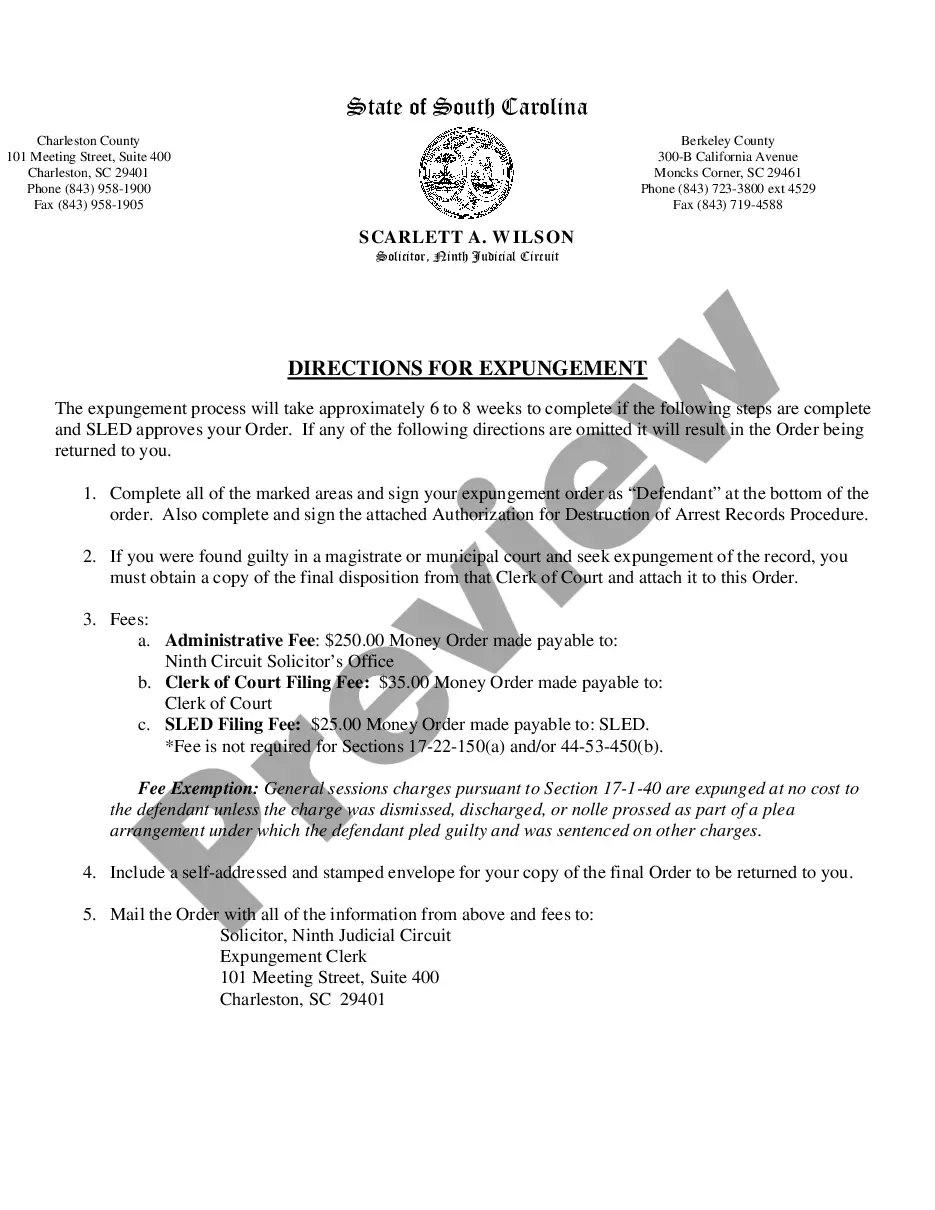
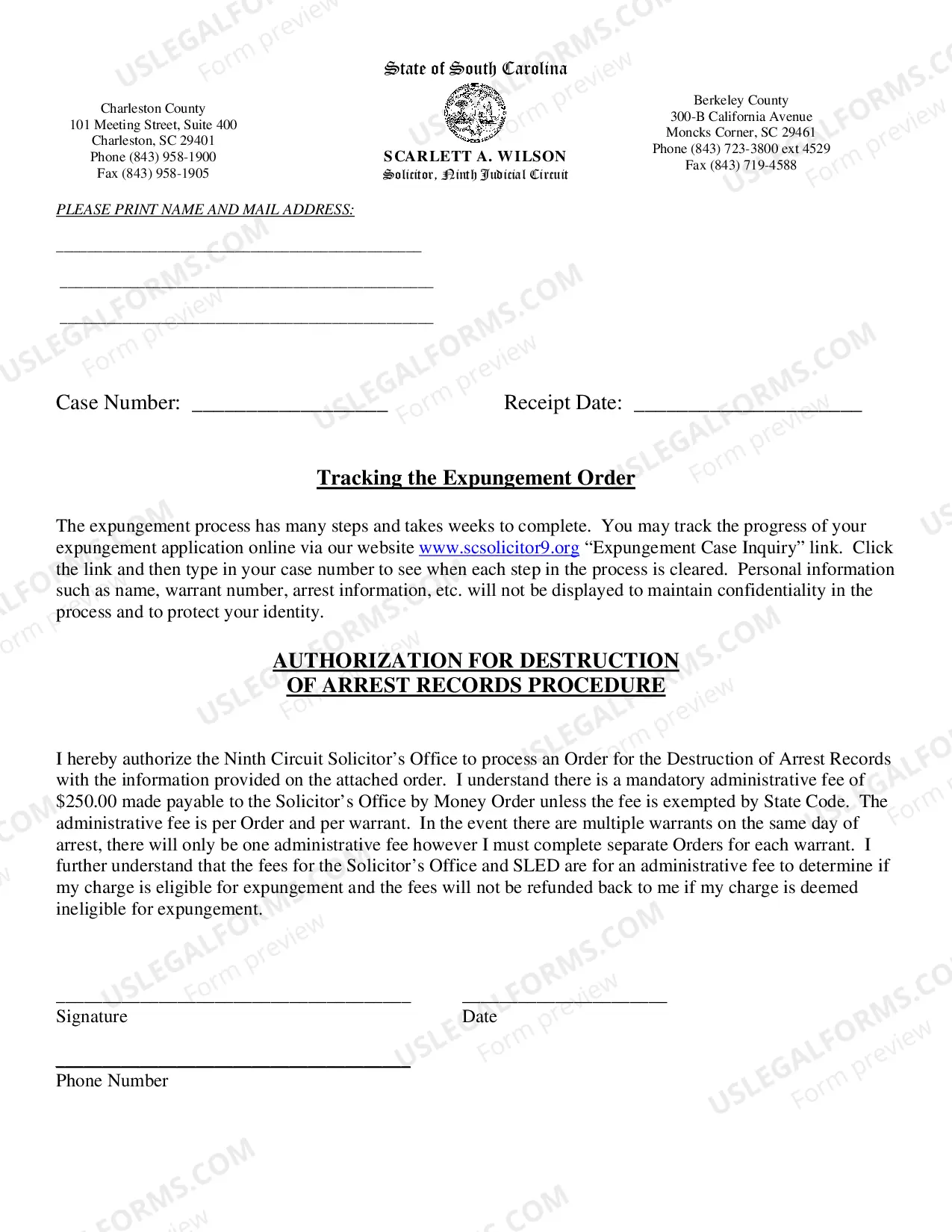
The Instructions for Expungement of Criminal Records is a legal document that outlines the process for expunging criminal records in South Carolina. This form provides detailed steps for individuals seeking to remove arrest records from public view. Its purpose is to assist users in navigating the expungement process efficiently, ensuring compliance with legal requirements specific to South Carolina, unlike similar forms that may not be tailored for this jurisdiction.
What’s included in this form
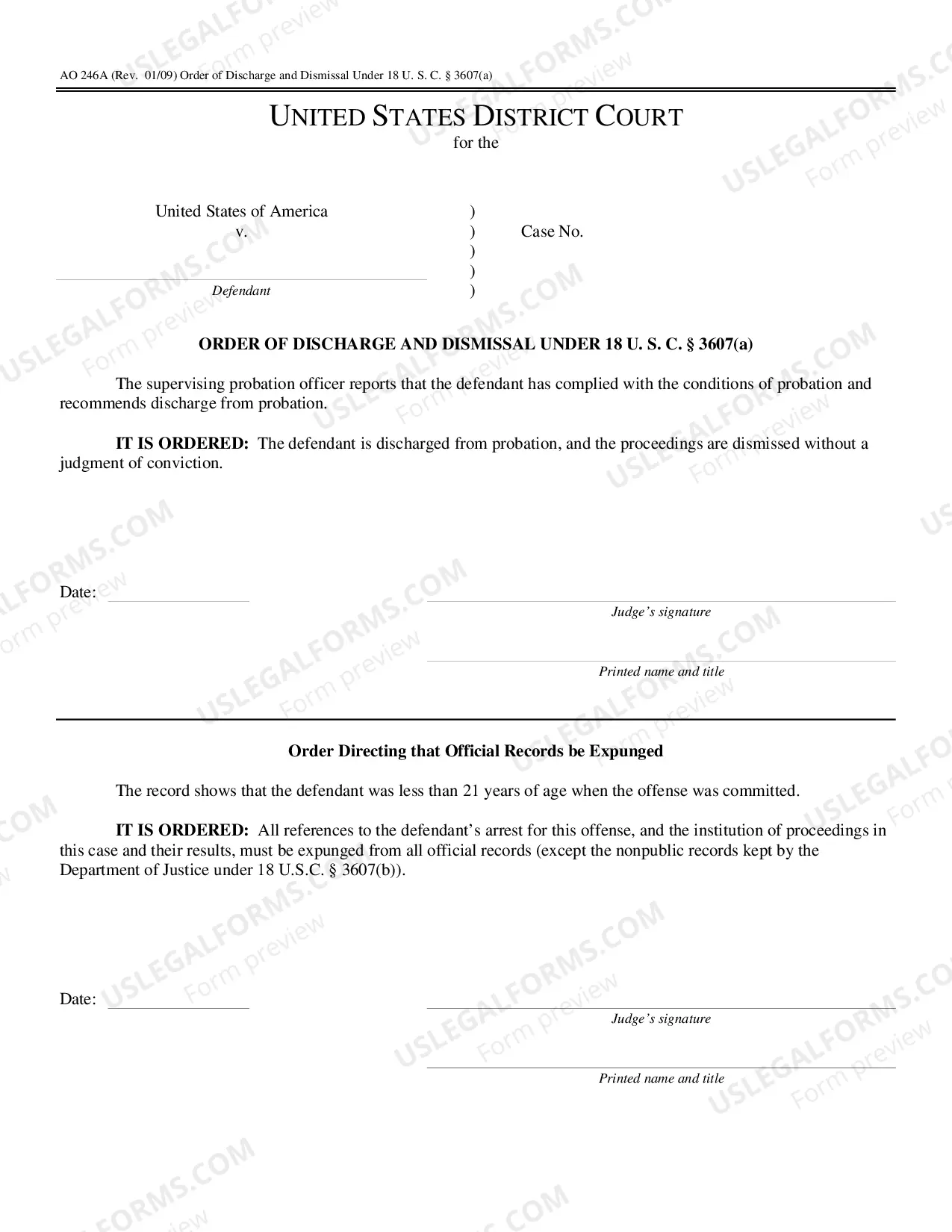
- Instructions on completing the expungement order.
- Authorization for the destruction of arrest records.
- Details on required fees and payment methods.
- Instructions for submitting the expungement order.
- Contact information for the Solicitorâs Office.
- Guidelines for tracking the application status online.

Situations where this form applies
This form should be used when an individual in South Carolina wishes to expunge their criminal records. Scenarios include being found not guilty of a charge, having charges dismissed, or completing a sentence without further legal issues. Individuals should ensure they meet the eligibility criteria before filing for expungement.
Who this form is for
The following individuals should consider using this form:
- Anyone in South Carolina seeking to clear their criminal records.
- Individuals previously charged with offenses that meet state eligibility for expungement.
- People who have successfully completed court-ordered programs associated with their charges.
How to complete this form
- Complete all marked areas in the expungement order.
- Sign as âDefendantâ at the bottom of the order.
- Attach a copy of the final disposition from the court if applicable.
- Prepare the necessary monetary orders for applicable fees.
- Include a self-addressed stamped envelope for the return of your final Order.
- Mail the completed order and fees to the specified address.
Does this form need to be notarized?
This form does not typically require notarization unless specified by local law. However, it is important to check the state requirements during the expungement process to ensure all legal steps are properly followed.
Get your form ready online
Our built-in tools help you complete, sign, share, and store your documents in one place.
Make edits, fill in missing information, and update formatting in US Legal Forms—just like you would in MS Word.
Download a copy, print it, send it by email, or mail it via USPS—whatever works best for your next step.
Sign and collect signatures with our SignNow integration. Send to multiple recipients, set reminders, and more. Go Premium to unlock E-Sign.
If this form requires notarization, complete it online through a secure video call—no need to meet a notary in person or wait for an appointment.
We protect your documents and personal data by following strict security and privacy standards.

Make edits, fill in missing information, and update formatting in US Legal Forms—just like you would in MS Word.

Download a copy, print it, send it by email, or mail it via USPS—whatever works best for your next step.

Sign and collect signatures with our SignNow integration. Send to multiple recipients, set reminders, and more. Go Premium to unlock E-Sign.

If this form requires notarization, complete it online through a secure video call—no need to meet a notary in person or wait for an appointment.

We protect your documents and personal data by following strict security and privacy standards.
Typical mistakes to avoid
- Omitting required signatures or information on the expungement order.
- Failing to attach necessary documentation like final dispositions.
- Not including the correct fees or using incorrect payment methods.
- Neglecting to include a self-addressed stamped envelope for the return of the final Order.
- Submitting the application without meeting eligibility criteria for expungement.
Benefits of using this form online
- Convenient access to legal forms without the need for an in-person visit.
- Editability allows users to fill out the form at their own pace.
- Reliable access to information tailored to South Carolinaâs legal requirements.
- Reduces the risk of errors by providing step-by-step instructions.
Looking for another form?
Form popularity
FAQ
How long does a California Expungement take? Generally speaking, you can count on your expungement taking in the neighborhood of 90 to 120 days, but certain courts or older cases can take longer. Several factors impact the length of time an expungement takes to go through the court system.
How long does expungement take? From the time you apply for the expungement at the Solicitor's Office until you receive the expungement order, it can take up to six months.
If you were a first offender and there are no other criminal proceedings against you, you may apply to have your record expunged after waiting one year from the date of your conviction. You are allowed only one expungement under this law. Felony check offenses are not eligible. (South Carolina Code § 34-11-90 (2018).)
What fees do I pay for an expungement? You must pay a $250.00 administrative fee to the Solicitor's office, a $25.00 fee to the South Carolina Law Enforcement Division (SLED), and $35.00 filing fee to the Clerk of Court.
If there are no additional convictions within three (3) years from the date of the conviction; For a 1st offense criminal domestic violence conviction, the individual must have no other convictions within five (5) years from the date of the conviction;
Any charge that was dismissed or where the defendant was found not guilty is eligible for expungement. First offense convictions for fraudulent check (bad check) charges are eligible for expungement.
A person seeking to have an arrest or criminal conviction expunged from their record must usually fill out an application or petition, and submit the paperwork to the proper criminal court for a judge's review and decision. In most jurisdictions, a fee must be paid in conjunction with the filing of the application.
Generally, sealed and expunged records will never appear on a background check.
To get your record expunged: You must have successfully completed a pretrial intervention program. Upon completion of the program, the solicitor should have marked your charge as not prosecuted (nolle prossed). The PTI Director must confirm that you have completed your program and are eligible.