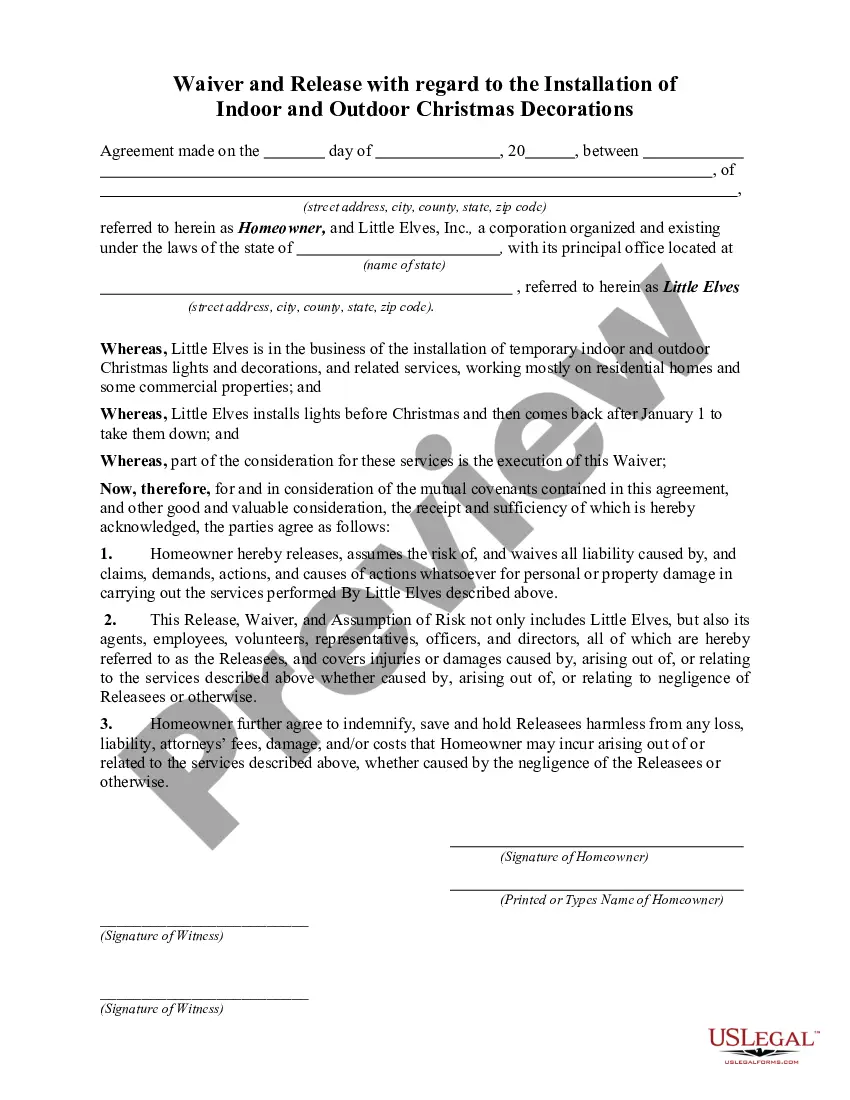
Waiver and Release with Regard to Installation of Indoor and Ourdoor Christmas Decorations
Understanding this form
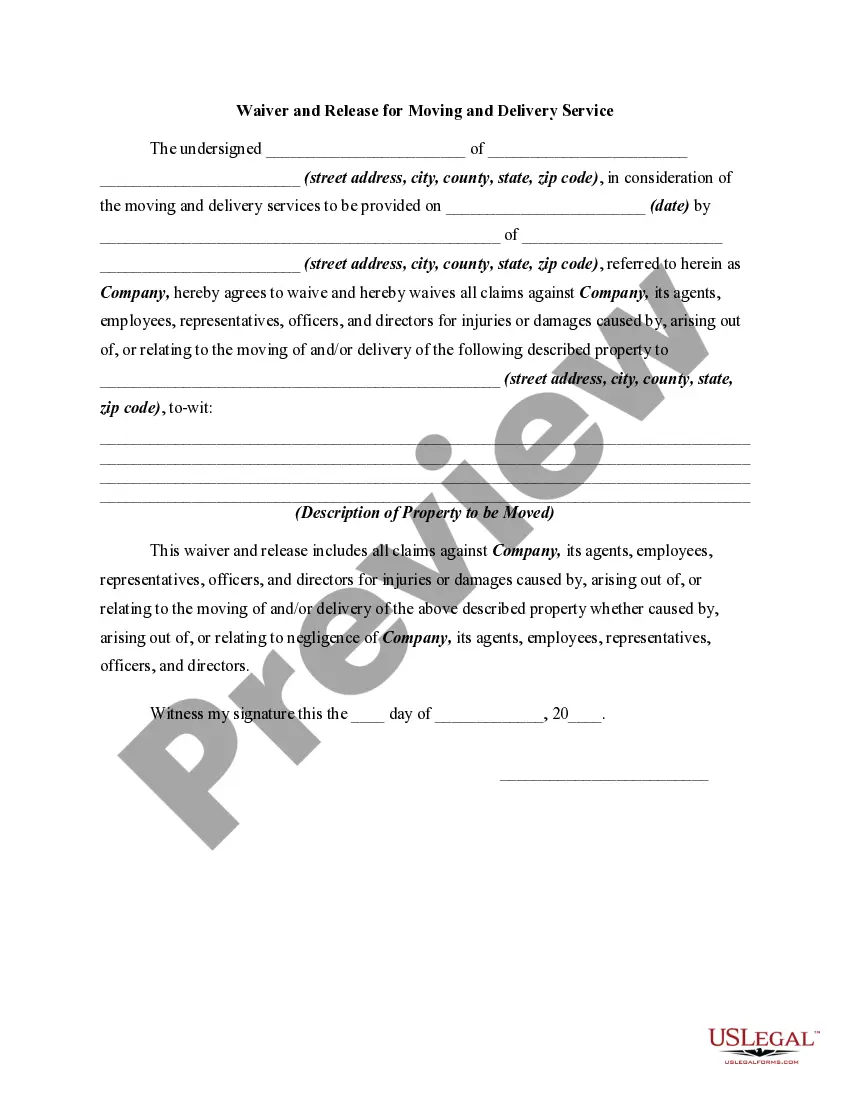
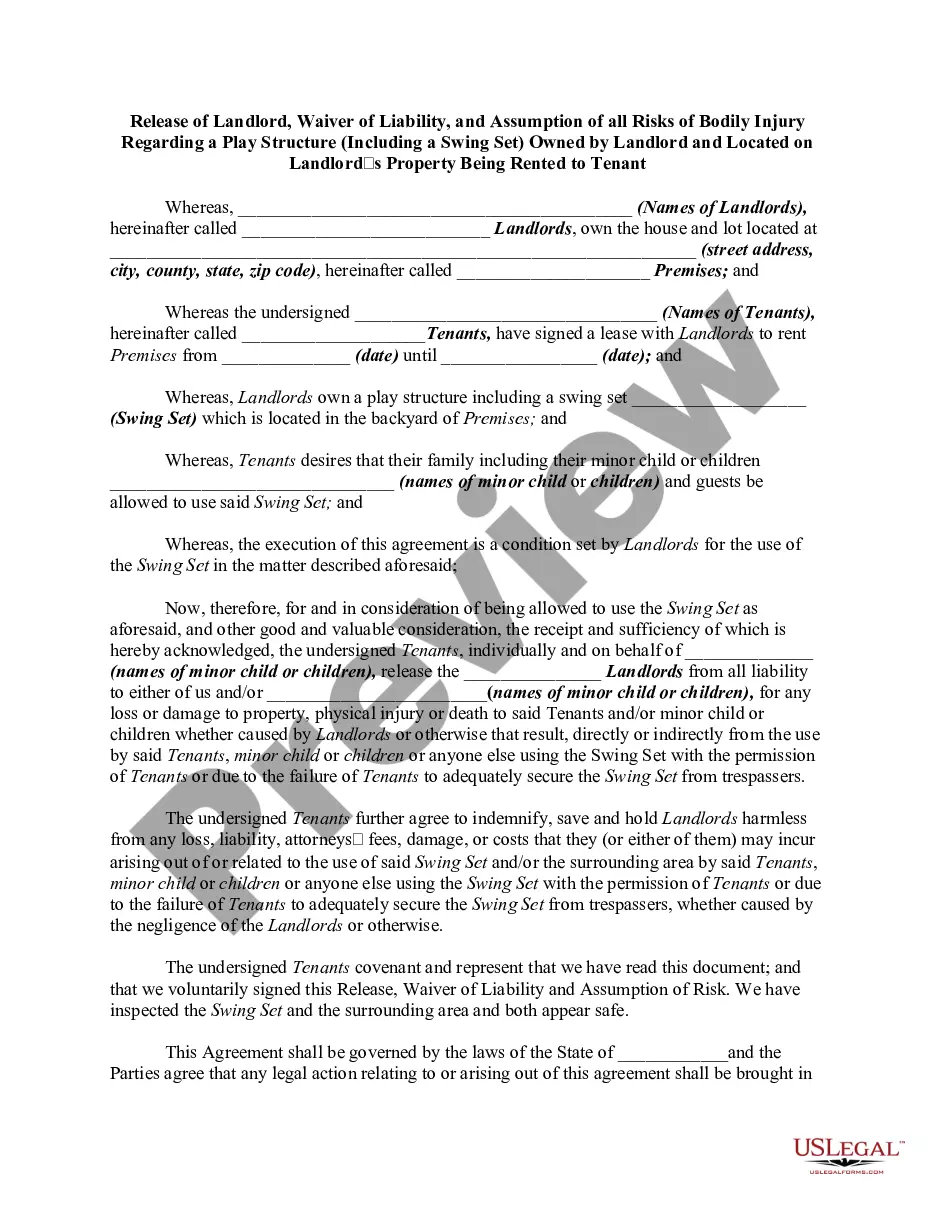
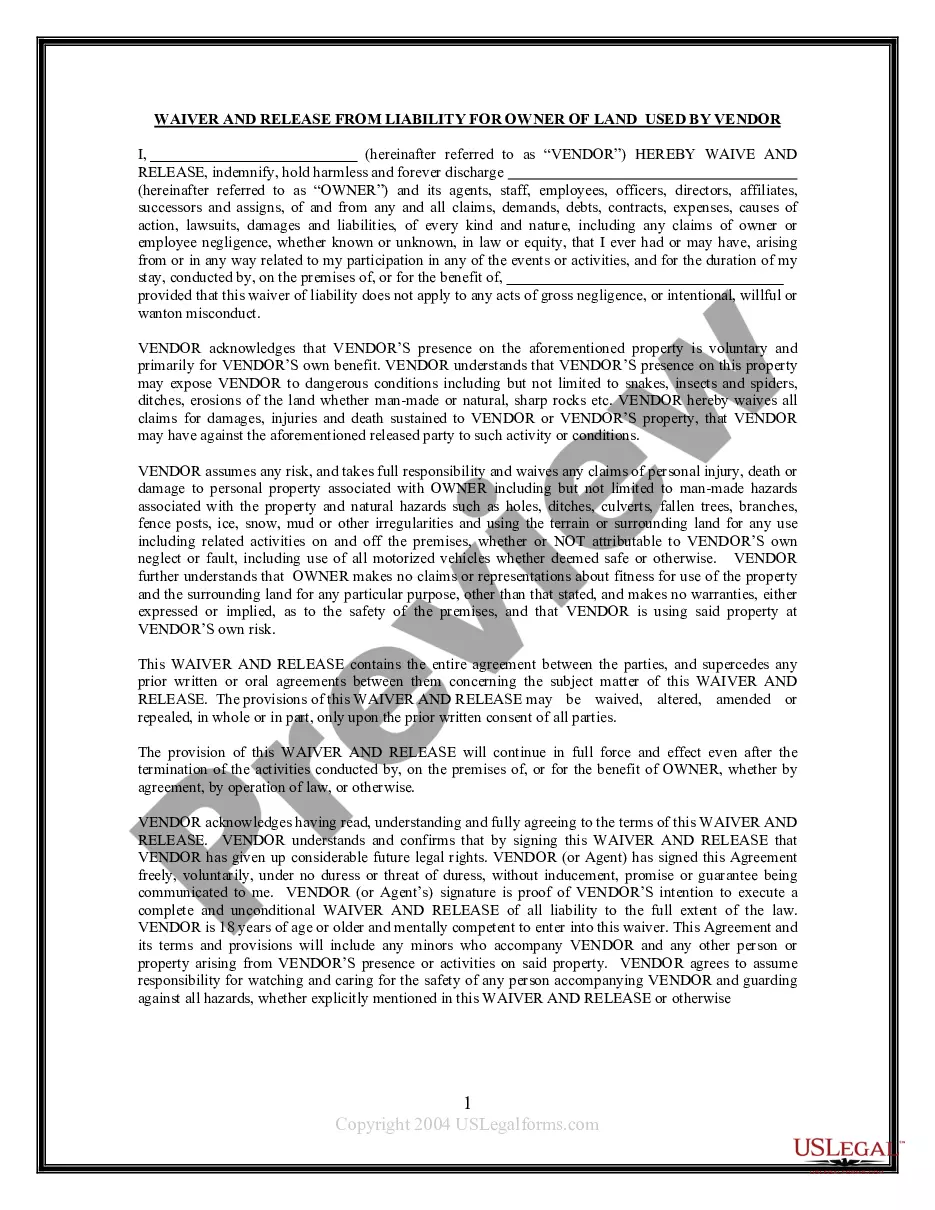
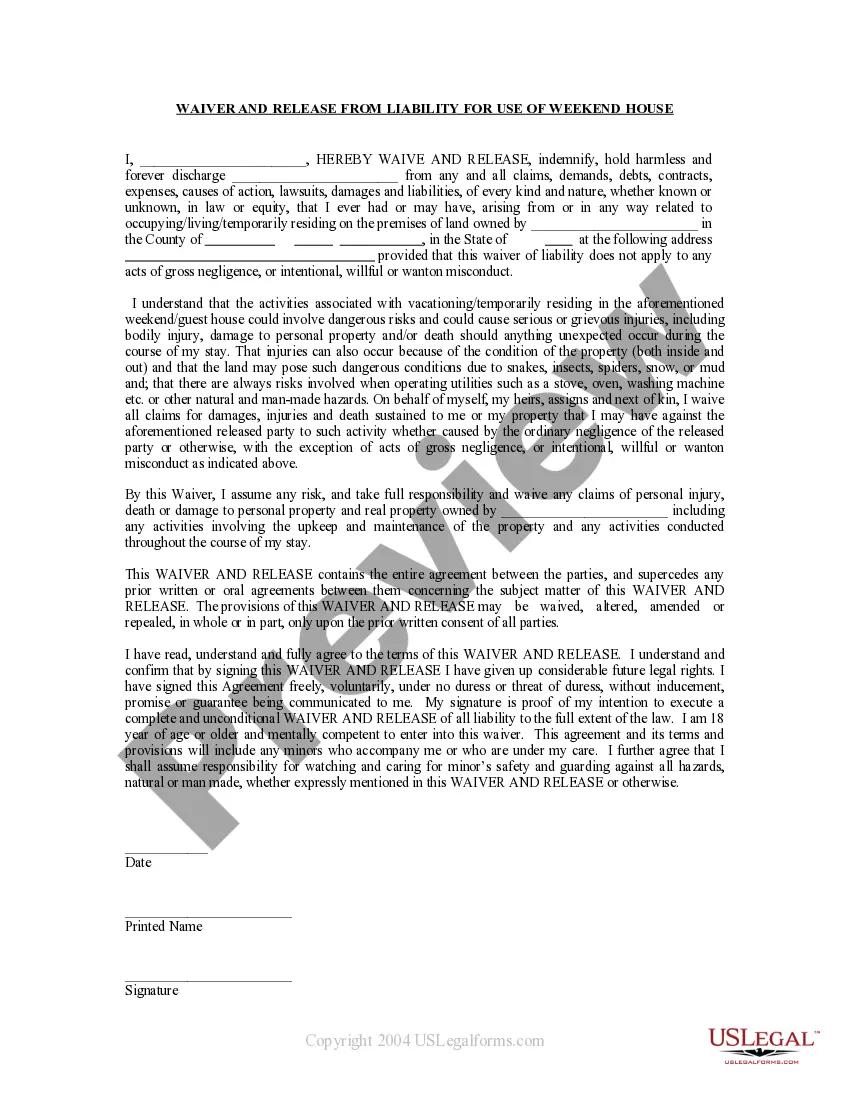
This Waiver and Release with regard to the installation of indoor and outdoor Christmas decorations is a legal document that releases the service provider, Little Elves, from liability during the installation process. This form is essential for homeowners who want to protect themselves from potential claims related to property damage or personal injury that could occur while the decorators are setting up or taking down holiday decorations.
Main sections of this form
- Release of liability: Homeowner acknowledges and waives rights to claims against the service provider.
- Assumption of risk: Homeowner agrees to assume all risks associated with the installation of decorations.
- Services provided: Clearly outlines the services offered by Little Elves, including installation and removal dates.
- Mutual covenants: Acknowledgment of the mutual agreements between the homeowner and the service provider.
When to use this document
This Waiver is used when homeowners engage a service provider to install or remove Christmas decorations, ensuring that both parties are protected. It is especially relevant during the holiday season when installation and removal activities are common. Using this form helps to clarify responsibilities and mitigate liability for any unforeseen incidents during the decoration process.
Who should use this form
This form is intended for:
- Homeowners who plan to hire a service for Christmas decoration installation.
- Service providers, such as decorators, looking to safeguard against potential claims.
- Anyone involved in seasonal decoration services who needs a written recognition of risk and liability.
How to complete this form
- Identify the parties involved: Include the names and contact information of both the homeowner and the service provider.
- Specify the services: Clearly outline the services to be performed, including installation and removal dates.
- Complete the waiver clause: Ensure the homeowner reviews and acknowledges the release of liability section.
- Sign and date the document: Both parties should sign and date the waiver to validate the agreement.
- Retain copies: Make copies of the completed waiver for both the homeowner and service provider to keep on record.
Notarization guidance
This form does not typically require notarization unless specified by local law. However, having a notarized form can enhance its legal validity and may be preferred in certain cases for added assurance.
Get your form ready online
Our built-in tools help you complete, sign, share, and store your documents in one place.
Make edits, fill in missing information, and update formatting in US Legal Forms—just like you would in MS Word.
Download a copy, print it, send it by email, or mail it via USPS—whatever works best for your next step.
Sign and collect signatures with our SignNow integration. Send to multiple recipients, set reminders, and more. Go Premium to unlock E-Sign.
If this form requires notarization, complete it online through a secure video call—no need to meet a notary in person or wait for an appointment.
We protect your documents and personal data by following strict security and privacy standards.

Make edits, fill in missing information, and update formatting in US Legal Forms—just like you would in MS Word.

Download a copy, print it, send it by email, or mail it via USPS—whatever works best for your next step.

Sign and collect signatures with our SignNow integration. Send to multiple recipients, set reminders, and more. Go Premium to unlock E-Sign.

If this form requires notarization, complete it online through a secure video call—no need to meet a notary in person or wait for an appointment.

We protect your documents and personal data by following strict security and privacy standards.
Mistakes to watch out for
- Failing to read the terms before signing, leading to misunderstandings about liability.
- Not specifying the exact dates of installation and removal.
- Leaving out signatures or dates, which can render the form invalid.
Why use this form online
- Convenience: Downloadable forms save time and allow for immediate access.
- Editability: Users can fill in specific details as needed before printing.
- Reliability: This form is drafted by licensed attorneys to ensure legal compliance.
Legal use & context
- This waiver may help protect service providers from claims resulting from accidents or injuries during decoration installation.
- Homeowners may be less inclined to pursue legal actions if they have acknowledged and signed this waiver.
- It is advisable to keep a copy of the signed waiver for your records in case of future disputes.
Quick recap
- The form protects service providers from liability during holiday decoration installations.
- Homeowners should use this waiver to clarify terms and acknowledge associated risks.
- Proper completion of the form is essential to ensure legal protection.
Looking for another form?
Form popularity
FAQ
Release Versus Waiver The main difference between releases and waivers is the transferring of ownership. When rights are released, they are transferred to another party. When rights are waived, they are gone altogether.In the case of the skydiver, they might be asked to sign a release form rather than a waiver.
A waiver is a legally binding provision where either party in a contract agrees to voluntarily forfeit a claim without the other party being liable. Waivers can either be in written form or some form of action.
1a : to relinquish (something, such as a legal right) voluntarily waive a jury trial. b : to refrain from pressing or enforcing (something, such as a claim or rule) : forgo waive the fee. 2 : to put off from immediate consideration : postpone.
Essentially, a waiver removes a real or potential liability for the other party in the agreement. For example, in a settlement between two parties, one party might, by means of a waiver, relinquish its right to pursue any further legal action once the settlement is finalized.
The definition of a waiver is the act of voluntarily giving up rights or privileges, usually through a written statement. An example of waiver is a person signing a form releasing the owners of an event location from liability if the person signing the waiver was injured while at the event.
A waiver explained A release form or a waiver is simply a legal document containing an agreement between two parties. The first party is the releasor (person promising not to sue) and the releasee (the party that is reliable).
Many people believe the myth that if you sign a waiver, you're not allowed to sue. However, that is simply not true. Waivers are intended to inform the participant of possible harm. Upon signing, the participant is surrendering a known right or acknowledging that harm may occur.
A liability waiver, or release of liability, is a legal document that a company or organization has you sign in order to protect them from being sued in the event that you are injured.
A waiver is a legal agreement the primary purpose of which is to let you or another party modify or relinquish a right, privilege, or claim. The agreement can be a separate document on its own, such as if you sign a waiver form, or added to a contract as a waiver clause.