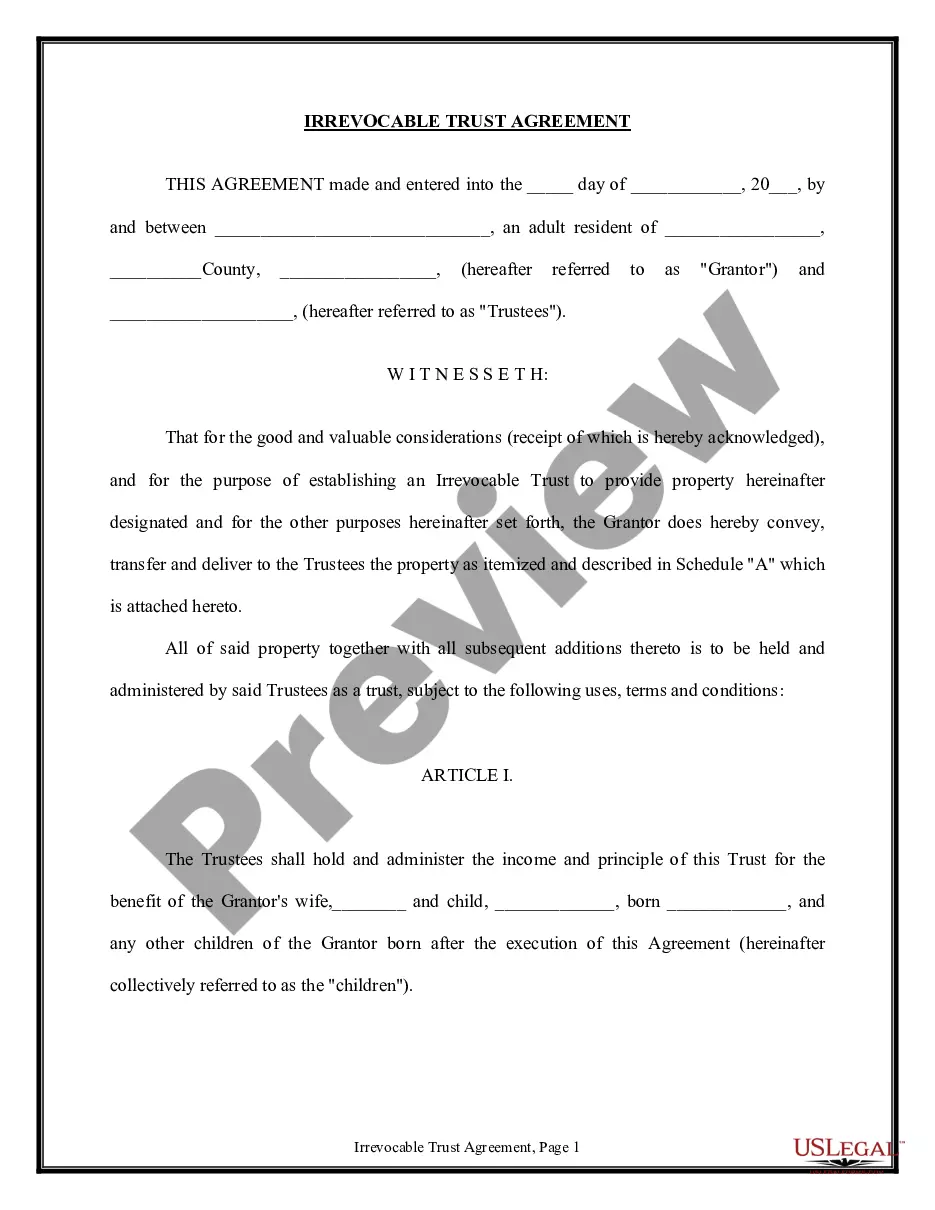
Florida Easement and Easement Deed for Sewer Lines
Understanding this form
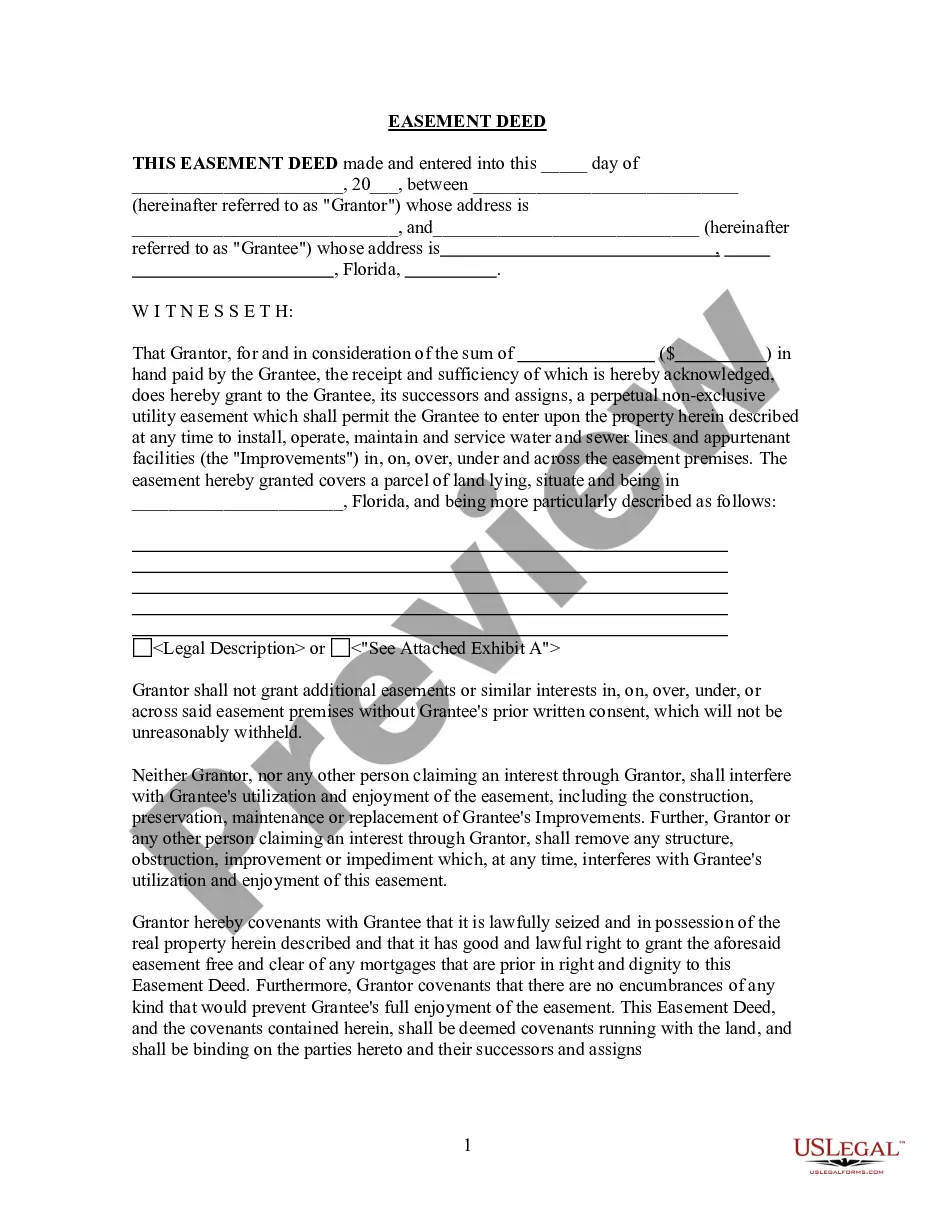
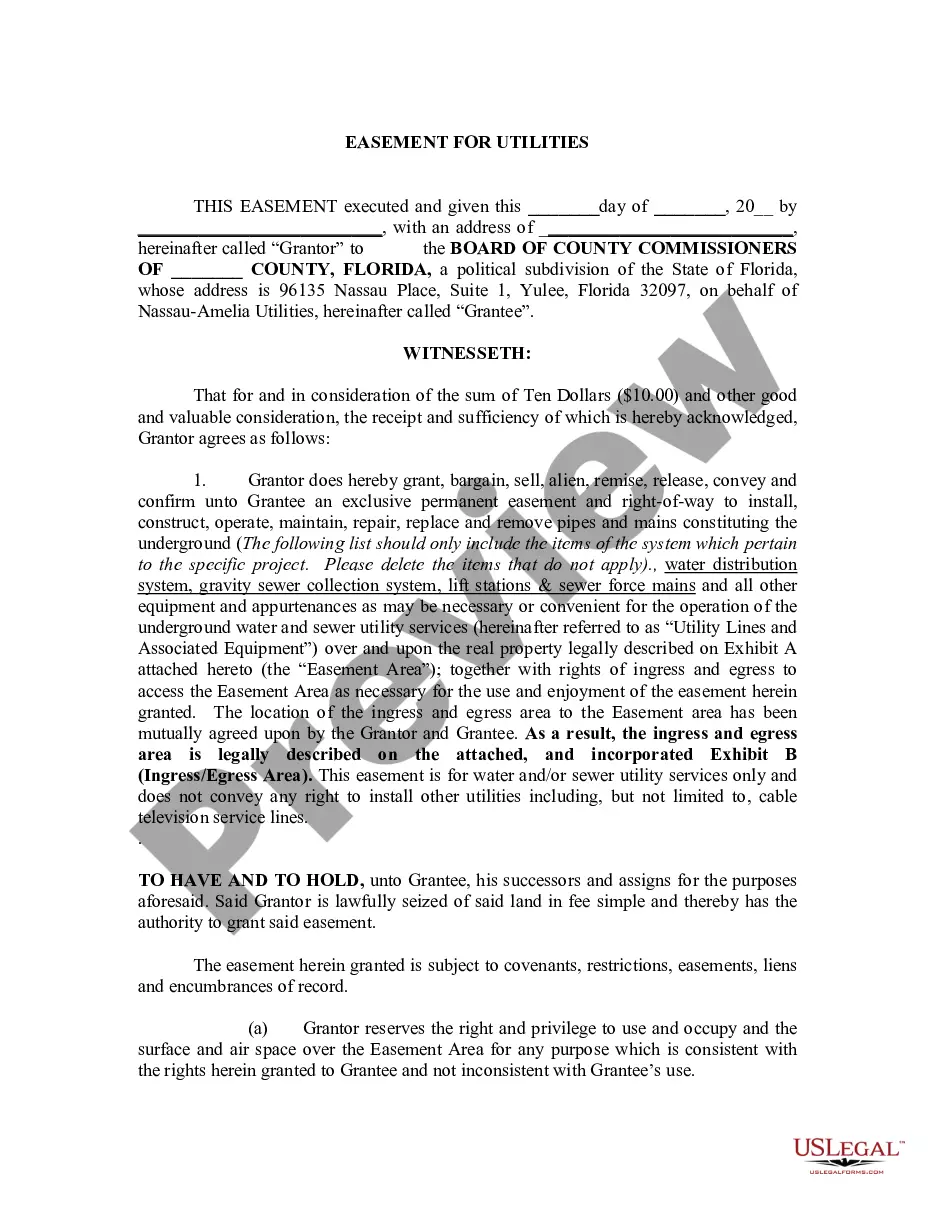
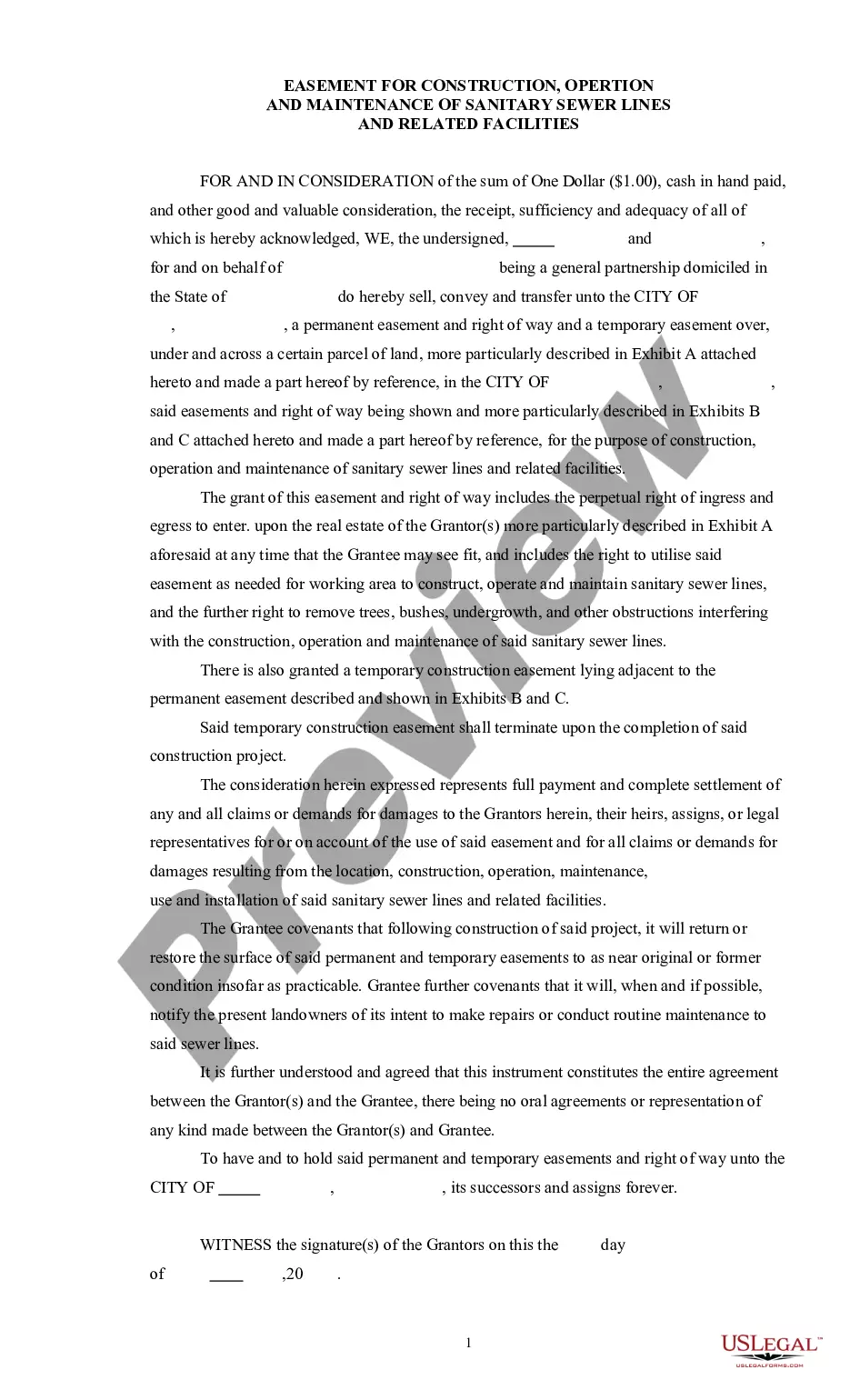
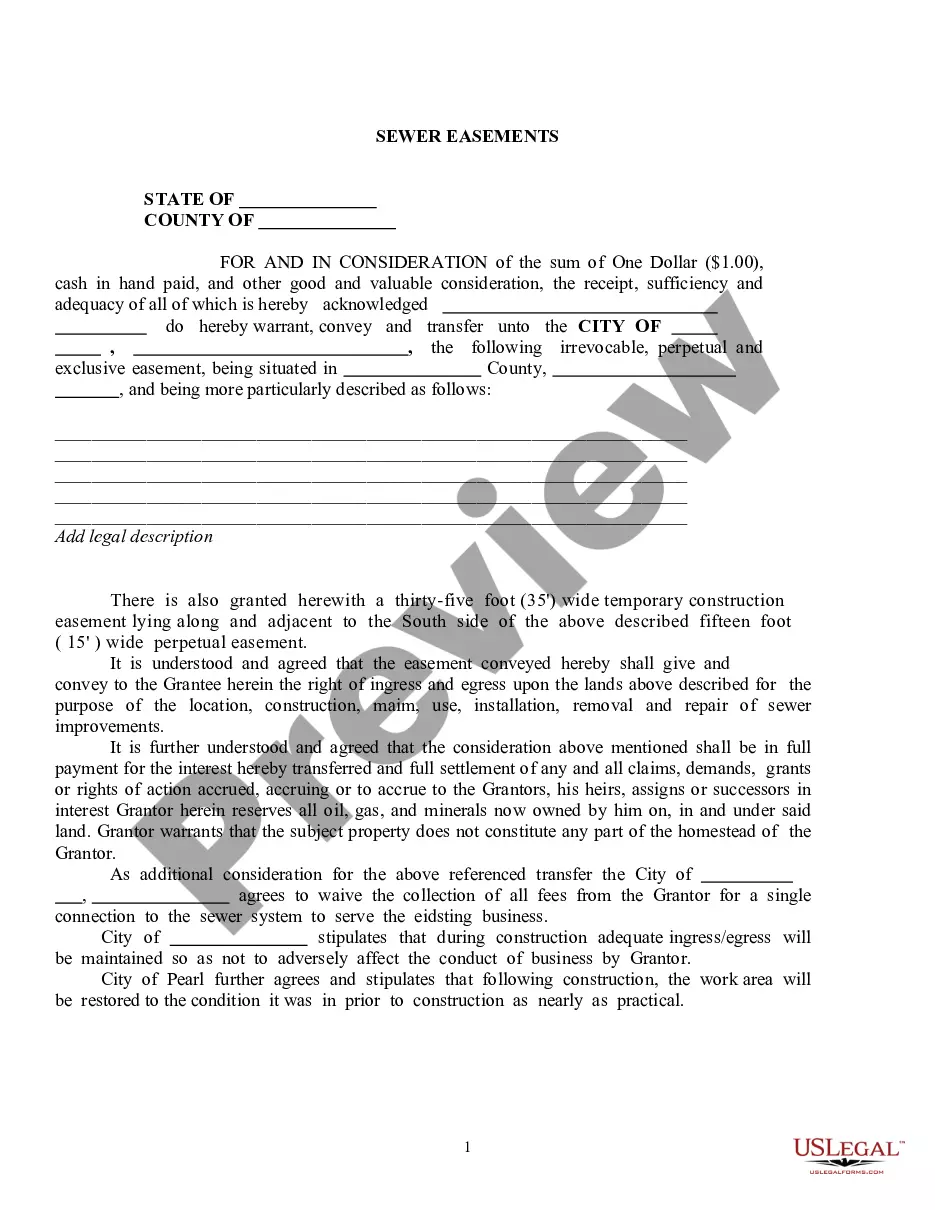
The Easement and Easement Deed for Sewer Lines is a legal document that allows one party to install and maintain sewer lines and related facilities on another party's property. This form grants the rights necessary for utility companies to operate beneath private lands, distinguishing it from other easements such as those for access or water use. It ensures that the Grantee can utilize the easement without interference from the Grantor or any interested parties.
Key parts of this document
- Identification of the Grantor and Grantee, outlining the parties involved in the easement.
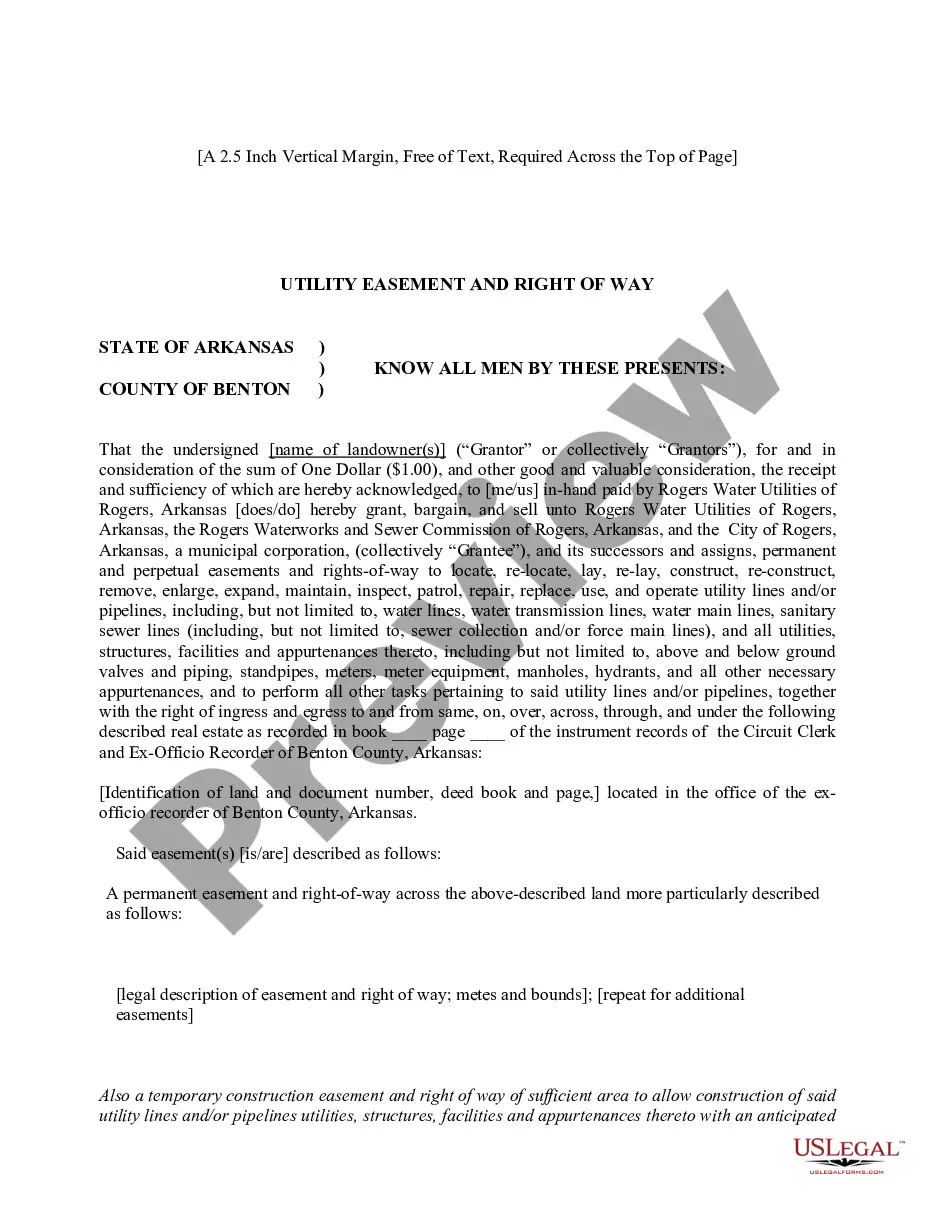
- Description of the property where the easement will be exercised.
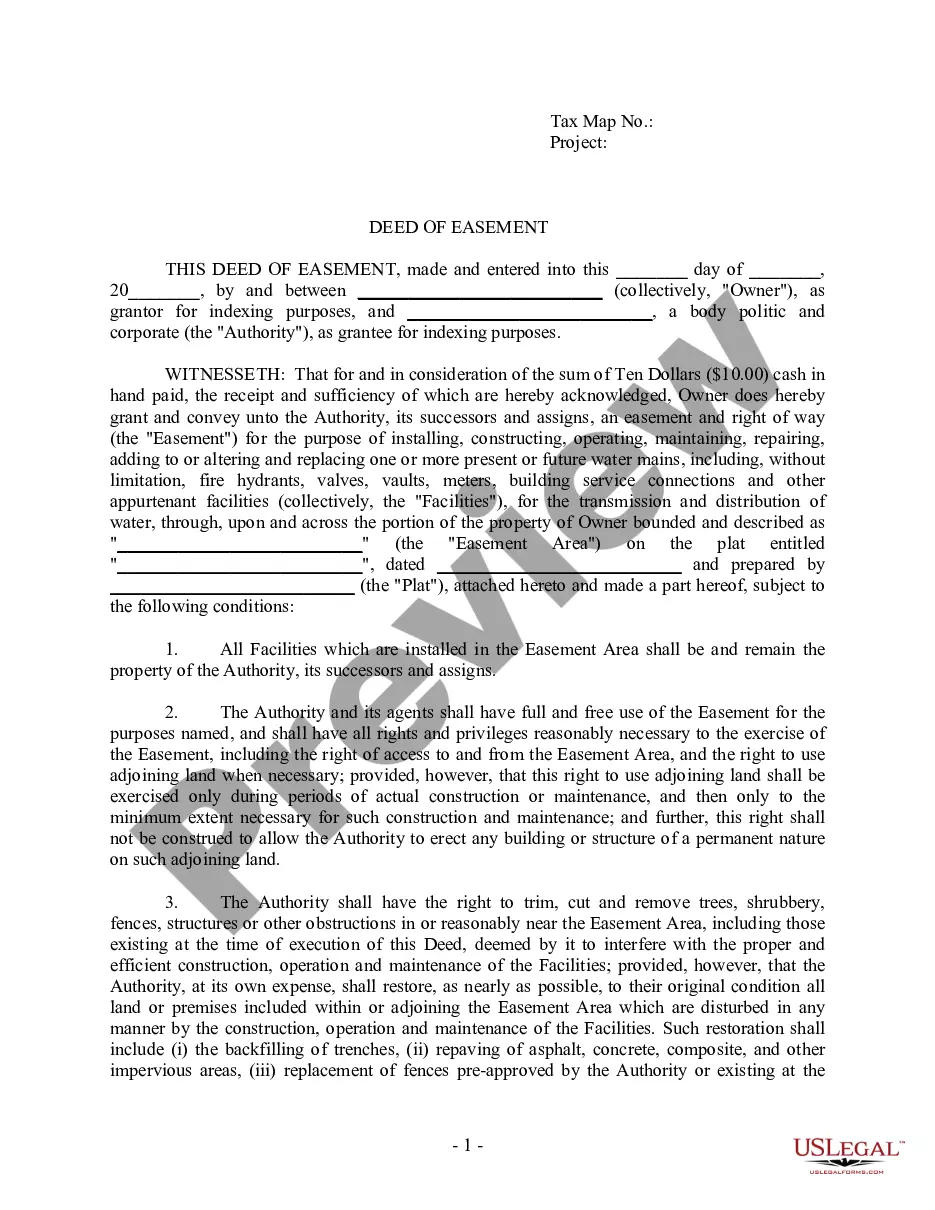
- Specific rights granted to the Grantee for construction, maintenance, and operation of sewer lines.
- Covenants from the Grantor ensuring no interference with the Grantee's use of the easement.
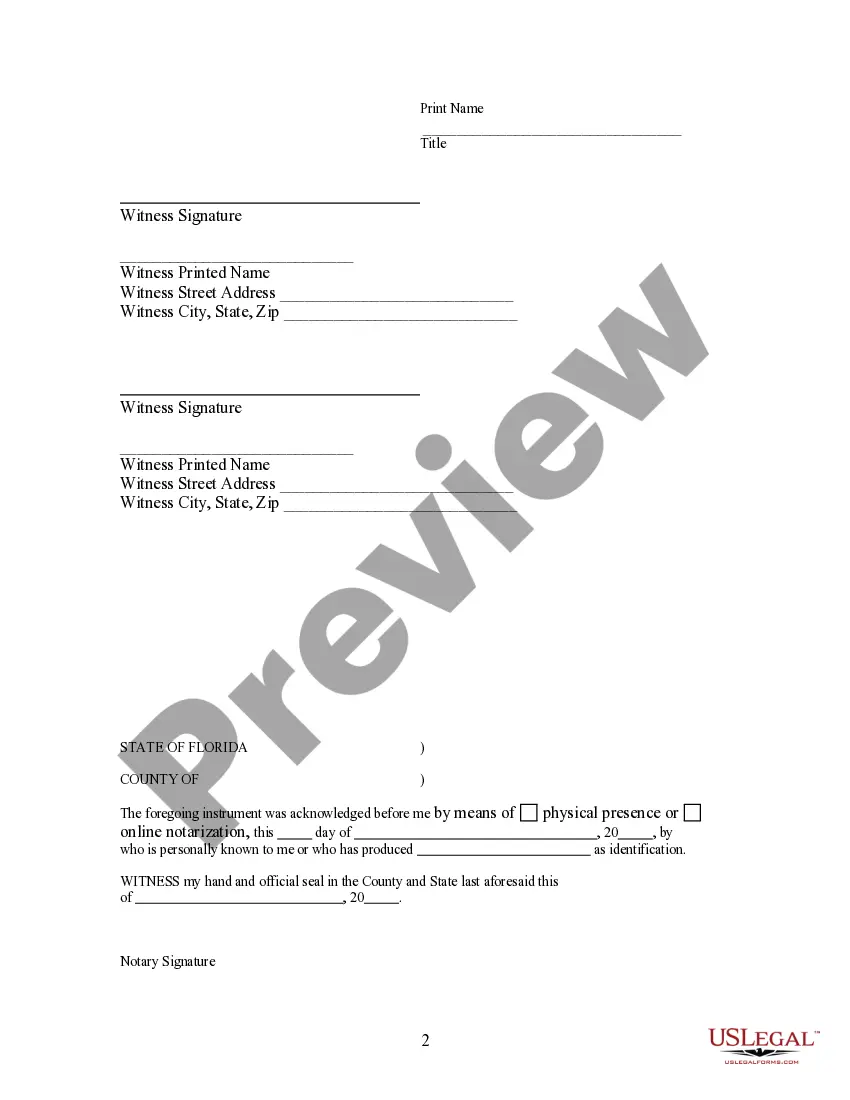
- Signatures of witnesses and the Grantor to validate the easement agreement.
Common use cases
This form is typically used when a property owner allows a utility company or another party to access their land for the purpose of installing or maintaining sewer lines. Situations may include new construction projects, necessary repairs, or upgrades to existing sewer infrastructure that require legal permission to access private property.
Intended users of this form
- Property owners granting access for utility installations.
- Utility companies seeking permission to access and maintain sewer lines.
- Developers involved in construction projects that require sewer line installation on private property.
- Landowners needing to formalize agreements with neighbors regarding sewer access.
Completing this form step by step
- Identify the parties involved by entering the names of the Grantor and Grantee.
- Specify the property location where the easement will be granted.
- Detail the rights being granted, particularly regarding sewer line installation and maintenance.
- Include any relevant covenants or agreements between the parties.
- Obtain signatures from the Grantor and witnesses to finalize the document.
Notarization guidance
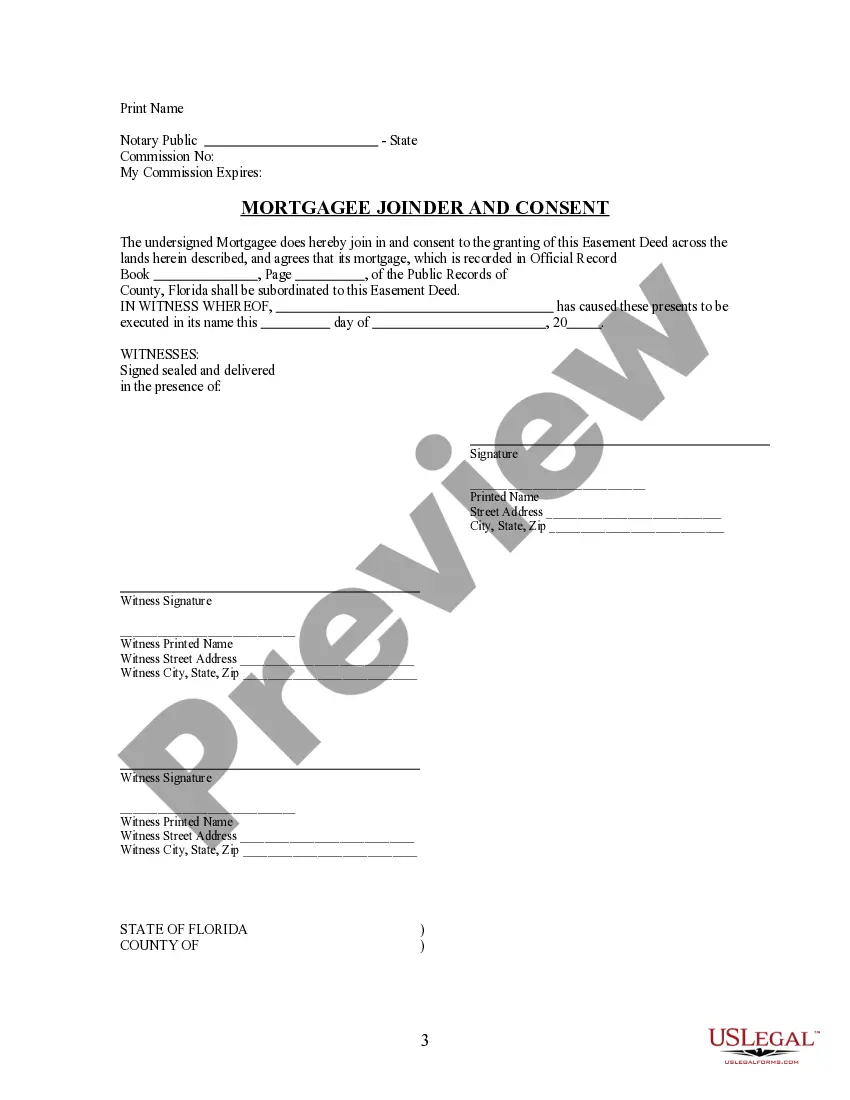
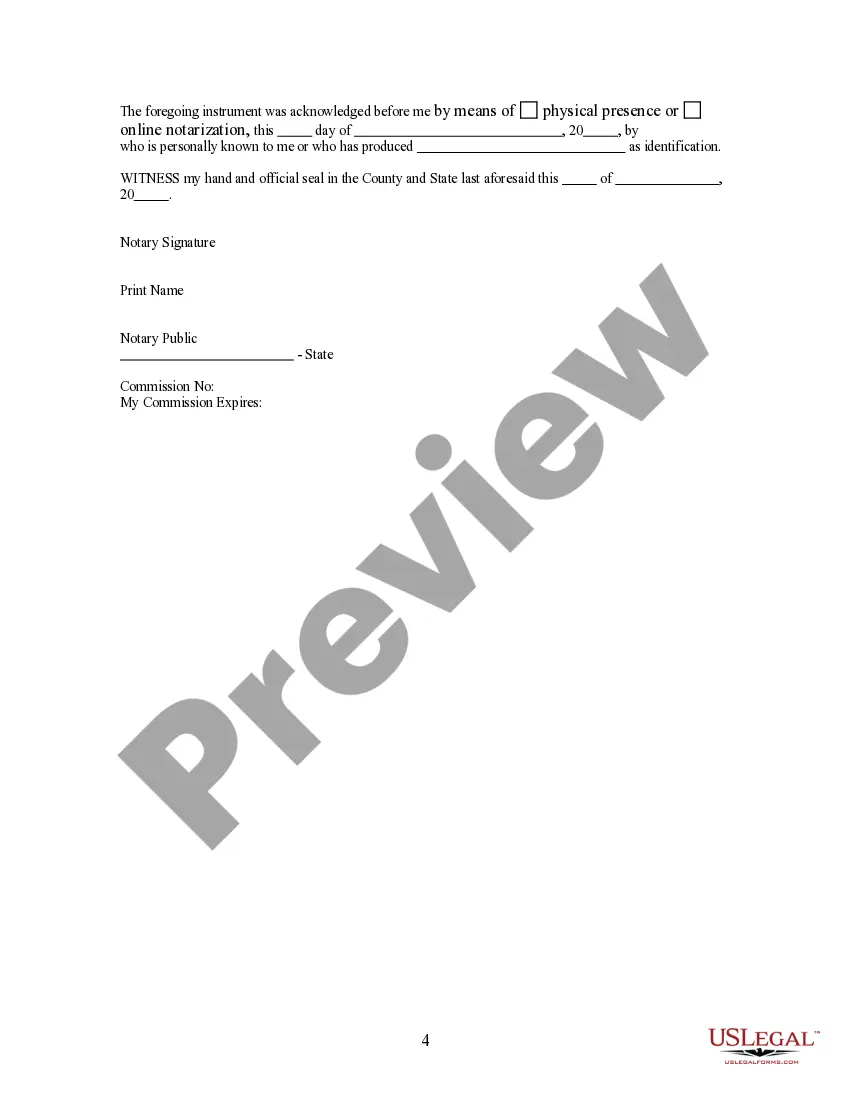
This document requires notarization to meet legal standards. US Legal Forms provides secure online notarization powered by Notarize, allowing you to complete the process through a verified video call, available 24/7.
Get your form ready online
Our built-in tools help you complete, sign, share, and store your documents in one place.
Make edits, fill in missing information, and update formatting in US Legal Forms—just like you would in MS Word.
Download a copy, print it, send it by email, or mail it via USPS—whatever works best for your next step.
Sign and collect signatures with our SignNow integration. Send to multiple recipients, set reminders, and more. Go Premium to unlock E-Sign.
If this form requires notarization, complete it online through a secure video call—no need to meet a notary in person or wait for an appointment.
We protect your documents and personal data by following strict security and privacy standards.

Make edits, fill in missing information, and update formatting in US Legal Forms—just like you would in MS Word.

Download a copy, print it, send it by email, or mail it via USPS—whatever works best for your next step.

Sign and collect signatures with our SignNow integration. Send to multiple recipients, set reminders, and more. Go Premium to unlock E-Sign.

If this form requires notarization, complete it online through a secure video call—no need to meet a notary in person or wait for an appointment.

We protect your documents and personal data by following strict security and privacy standards.
Typical mistakes to avoid
- Failing to clearly identify all parties involved in the easement.
- Not properly describing the exact location and extent of the easement.
- Omitting necessary witness signatures can invalidate the form.
- Neglecting to review and comply with state-specific easement laws and requirements.
Advantages of online completion
- Convenience of easily downloading the form at any time.
- Editability allows for customization based on specific needs.
- Access to reliable templates drafted by licensed attorneys ensures legal accuracy.
Main things to remember
- The Easement and Easement Deed for Sewer Lines allows legal access for sewer line installations.
- Clear identification and description of property and parties involved are crucial to the document's validity.
- Adherence to state-specific requirements can prevent future legal complications.
Looking for another form?

Form popularity
FAQ
Maintaining a drainage easement involves regular inspections and upkeep. It's crucial to remove any debris that may obstruct water flow, as this ensures the easement functions correctly. You should also be aware of any changes in the landscape that could affect drainage. Using our platform, you can access resources and templates for a Florida Easement and Easement Deed for Sewer Lines to assist in managing and documenting this process effectively.
Yes, recording an easement is important in Florida. A Florida Easement and Easement Deed for Sewer Lines must be filed with the county clerk's office to establish legal rights over the property. This process provides public notice, which can prevent future disputes. By formally recording the easement, you protect your interests and ensure the legality of access for sewer lines.
The value of a sewer easement can vary depending on several factors, including location, size, and impact on the property value. Generally, this valuation is determined during property negotiations or assessments. Understanding the implications of the Florida Easement and Easement Deed for Sewer Lines can help you engage with real estate professionals to determine a fair value and impact on your property.
In Florida, the responsibility for maintaining a drainage easement usually falls on the entity that holds the easement. This often includes municipalities or utility companies that manage the sewer lines. Property owners should familiarize themselves with the Florida Easement and Easement Deed for Sewer Lines to understand their rights and responsibilities clearly in these situations.
Ownership of a drainage easement typically depends on the specific legal agreements in place. Generally, easements are granted to specific entities, such as local municipalities or utility companies, allowing them to use your property for drainage purposes. However, as the property owner, you still retain ownership of the land, but with certain restrictions due to the Florida Easement and Easement Deed for Sewer Lines.
A sewer line easement is a legal right that allows utility companies or property owners to access a specific part of your property for the installation and maintenance of sewer lines. This easement ensures that sewer lines remain clear and operational, which benefits both the property owner and the surrounding community. Understanding the Florida Easement and Easement Deed for Sewer Lines can help you navigate these rights effectively.
Writing an easement agreement involves several key steps. First, clearly define the parties involved, the property affected, and the specific rights granted for the use of sewer lines. Next, outline the terms of the easement, including restrictions and maintenance responsibilities. For a well-structured Florida Easement and Easement Deed for Sewer Lines, consider using a reliable platform like US Legal Forms to ensure your document meets legal standards and protects your interests.
To obtain an easement in Florida, you typically need to negotiate the terms with the property owner and create a formal easement deed. This process involves drafting a clear agreement outlining the rights and responsibilities of both parties. Utilizing platforms like US Legal Forms can streamline this process by providing customizable templates and legal guidance. A well-prepared easement protects your interests and ensures compliance with local regulations regarding Florida easement and easement deed for sewer lines.
A sewer easement agreement is a legal document that grants a utility company or another party the right to construct and maintain sewer lines on your property. This agreement is essential for ensuring that waste disposal systems function properly and safely. By having a sewer easement, you help facilitate necessary public services while protecting your property rights. Consider reviewing your terms carefully, especially regarding access and maintenance responsibilities.
A drainage easement in Florida allows one property owner to manage water flow across another owner's land. This legal agreement ensures that surface water can move freely, preventing flooding and other issues. Understanding this easement is crucial for homeowners and developers. It can greatly impact property use, especially in areas prone to water accumulation.