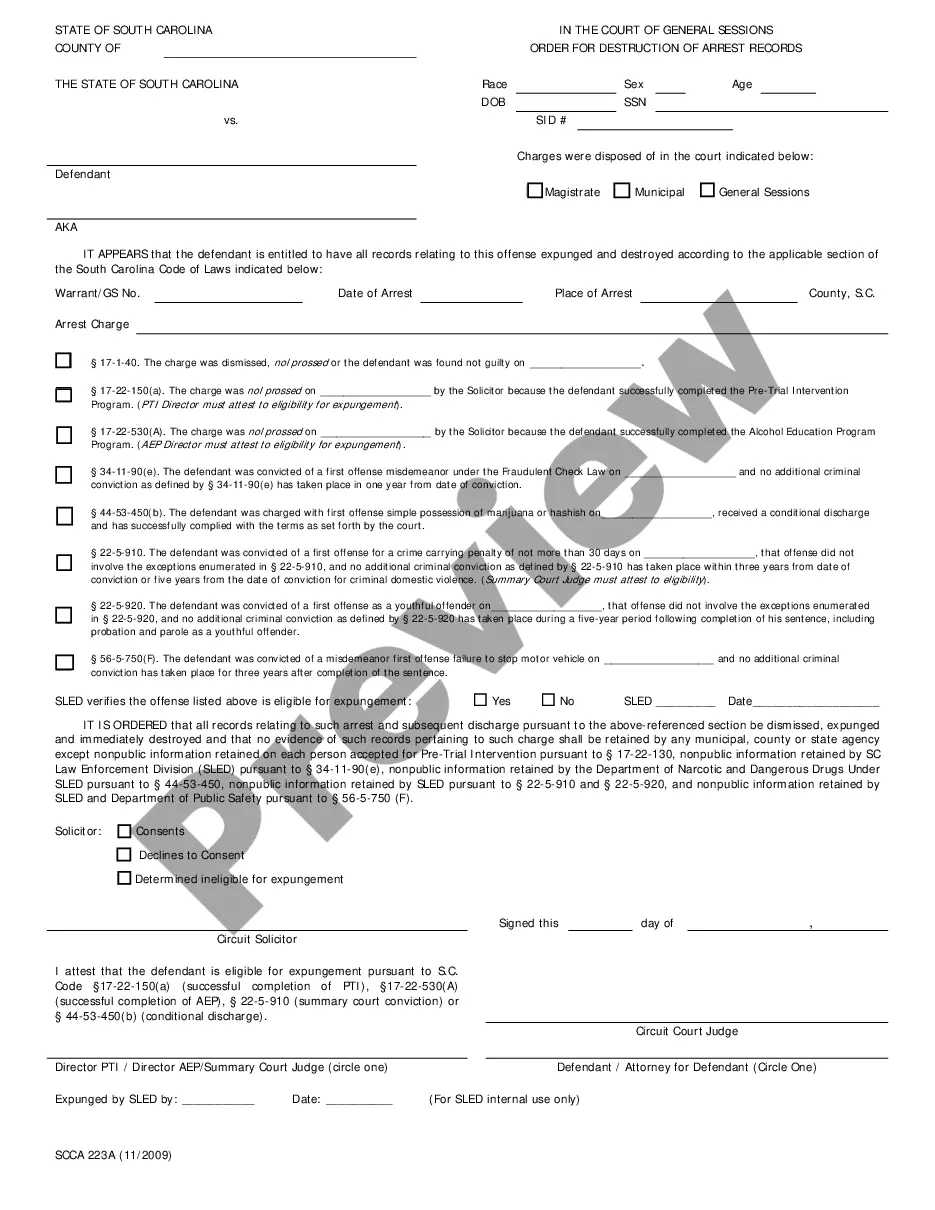
South Carolina Order for Destruction of Arrest Records
What is this form?
The Order for Destruction of Arrest Records is a legal document used to request the expungement and destruction of arrest records in South Carolina. This form specifically applies when a defendant has had charges dismissed, been found not guilty, or completed certain court programs. By using this form, individuals can ensure that their arrests are removed from public records, thereby protecting their privacy and future opportunities.
Main sections of this form
- Defendantâs information: Includes race, sex, age, DOB, SSN, and SID number.
- Charges disposed of: Specifies the court where the charges were managed and relevant details regarding the arrest.
- Eligibility criteria: Outlines the specific South Carolina Code sections that allow for expungement based on the outcome of the charges.
- Verification process: Involves confirmation from the South Carolina Law Enforcement Division (SLED) about the expungement eligibility.
- Consent of the solicitor: Indicates approval for the expungement by the circuit solicitor.
- Signatures: Required signatures from the circuit court judge and relevant officials to finalize the order.


Situations where this form applies
This form should be used when an individual in South Carolina has experienced an arrest that led to charges being dismissed, found not guilty, or where they have successfully completed court-mandated programs, such as Pre-Trial Intervention or an Alcohol Education Program. Using this form helps individuals clear their criminal records, which can be vital when applying for jobs, housing, or other opportunities.
Who needs this form
- Individuals who have been arrested but not convicted.
- Defendants whose charges were dismissed or nol prossed.
- People who have completed a Pre-Trial Intervention Program or an Alcohol Education Program.
- Individuals eligible under the specific South Carolina Code provisions for expungement.
How to prepare this document
- Enter the defendant's personal information, including race, sex, age, date of birth, and social security number.
- Provide details regarding the arrest, such as the date, place, and nature of the charges.
- Identify the legal basis for expungement by checking the applicable sections of the South Carolina Code.
- Obtain verification from SLED confirming the eligibility of the offense for expungement.
- Secure the necessary signatures from the circuit solicitor and circuit court judge.
- File the completed order with the county clerk of court and distribute copies to relevant agencies.
Notarization requirements for this form
This form does not typically require notarization unless specified by local law. It is important to check for any additional requirements specific to your situation during the expungement process.
Get your form ready online
Our built-in tools help you complete, sign, share, and store your documents in one place.
Make edits, fill in missing information, and update formatting in US Legal Forms—just like you would in MS Word.
Download a copy, print it, send it by email, or mail it via USPS—whatever works best for your next step.
Sign and collect signatures with our SignNow integration. Send to multiple recipients, set reminders, and more. Go Premium to unlock E-Sign.
If this form requires notarization, complete it online through a secure video call—no need to meet a notary in person or wait for an appointment.
We protect your documents and personal data by following strict security and privacy standards.

Make edits, fill in missing information, and update formatting in US Legal Forms—just like you would in MS Word.

Download a copy, print it, send it by email, or mail it via USPS—whatever works best for your next step.

Sign and collect signatures with our SignNow integration. Send to multiple recipients, set reminders, and more. Go Premium to unlock E-Sign.

If this form requires notarization, complete it online through a secure video call—no need to meet a notary in person or wait for an appointment.

We protect your documents and personal data by following strict security and privacy standards.
Common mistakes
- Failing to include all required personal information, leading to processing delays.
- Not checking the appropriate eligibility criteria for expungement under South Carolina law.
- Omitting necessary signatures, which can invalidate the order.
- Submitting the form without the required fees or payment confirmations.
Why complete this form online
- Convenient access allows you to complete the form from home at any time.
- Editable templates ensure that all necessary fields can be filled out accurately.
- Reliable guidance ensures compliance with legal requirements specific to South Carolina.
Summary of main points
- The Order for Destruction of Arrest Records is essential for individuals seeking to clear their criminal history.
- Eligibility for expungement is governed by specific sections of South Carolina law.
- Accurate completion and submission of the form can significantly aid in protecting your future prospects.
Looking for another form?
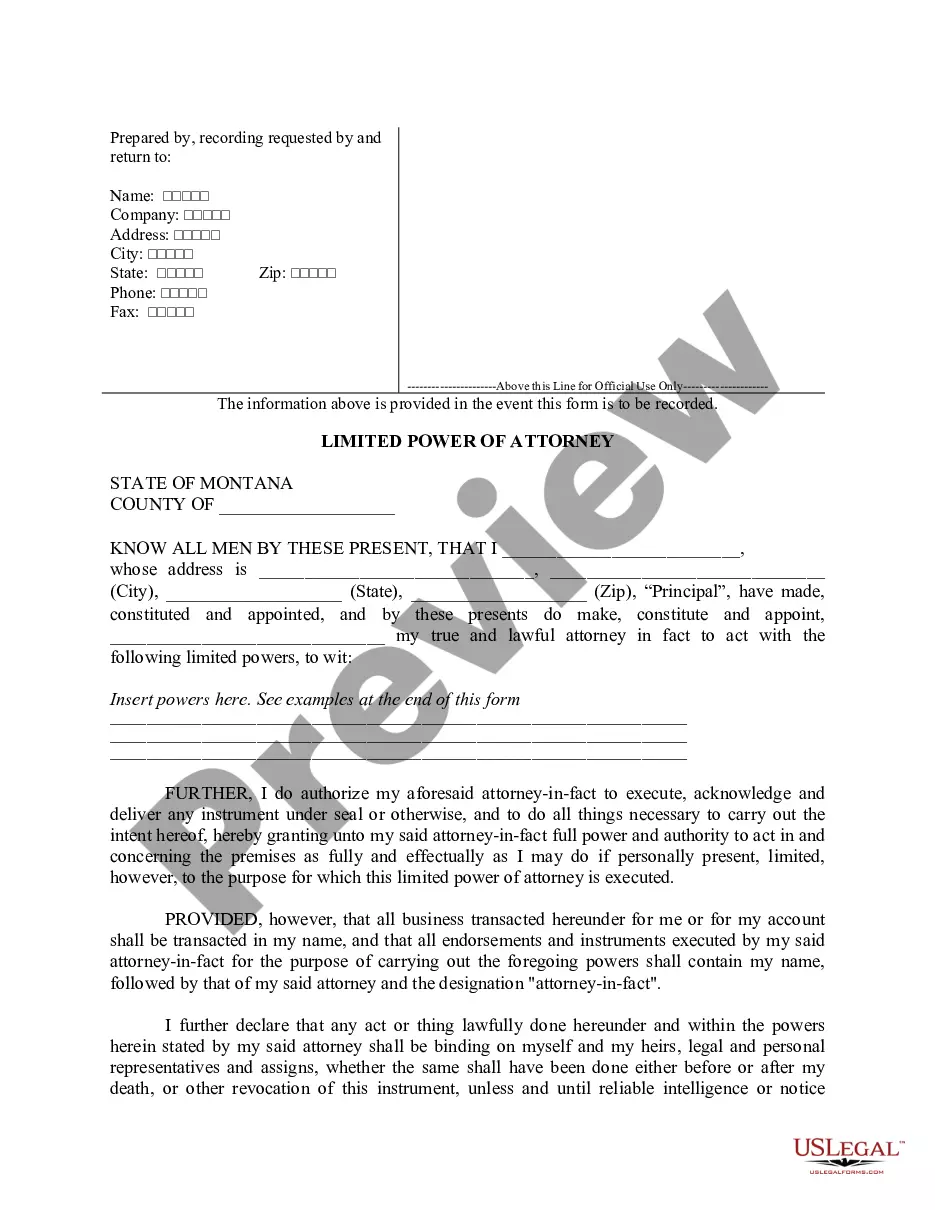
Form popularity
FAQ
Misdemeanor Offenses: Convictions for misdemeanors that carry a maximum sentence of 30 days and/or $1000 fine may be eligible for an expungement. You must wait three years and have no other convictions in those three years before applying for the expungement/five years if the conviction is for Domestic Violence.
In the United States, certain types of criminal records can be expunged or sealed by a judge or court. An expungement removes arrests and/or convictions from a person's criminal record entirely as if they never happened. Even a court or prosecutor cannot view a person's expunged record.
You may contact the private website to request that it remove the out-of-date information about your criminal history. Be prepared to provide a copy of the court order showing that your record has been officially expunged or sealed.
This period is known as the 'waiting period' or 'crime-free period' and is generally 10 years where a person was dealt with as an adult and 5 years otherwise (3 years in NSW). This legislation is commonly referred to as 'spent convictions' legislation.
The only way to get your conviction removed from police records is to appeal against the conviction through the courts. You will need to seek legal advice if this is something you wish to pursue. I was told my conviction would be removed after five years.
A period of 10 years has passed after the date of the conviction for that offence. you have not been convicted and sentenced to a period of imprisonment without the option of a fine during those 10 years. the sentence was corporal punishment.
Any charge that was dismissed or where the defendant was found not guilty is eligible for expungement.First offense convictions for fraudulent check (bad check) charges are eligible for expungement.How to Expunge Your Criminal Record in SC Futeral & Nelson\nwww.charlestonlaw.net >> Criminal Defense in Charleston, South Carolina
The disposition on a criminal record is the current status or final outcome of an arrest or prosecution. Common dispositions are: Convicted: means you have plead or been found guilty by a court of law.No charges filed/Charges dropped: means the prosecutor has declined to pursue the case.
To get your record expunged: The conviction you want to expunge must be a first offense of a misdemeanor. The misdemeanor must have a maximum possible sentence of $1000 and/or 30 days. Three years has to have passed since your conviction or five years if it was for first offense domestic violence in the third degree.