Trial License Agreement to Allow Evaluation of Software Product
What this document covers
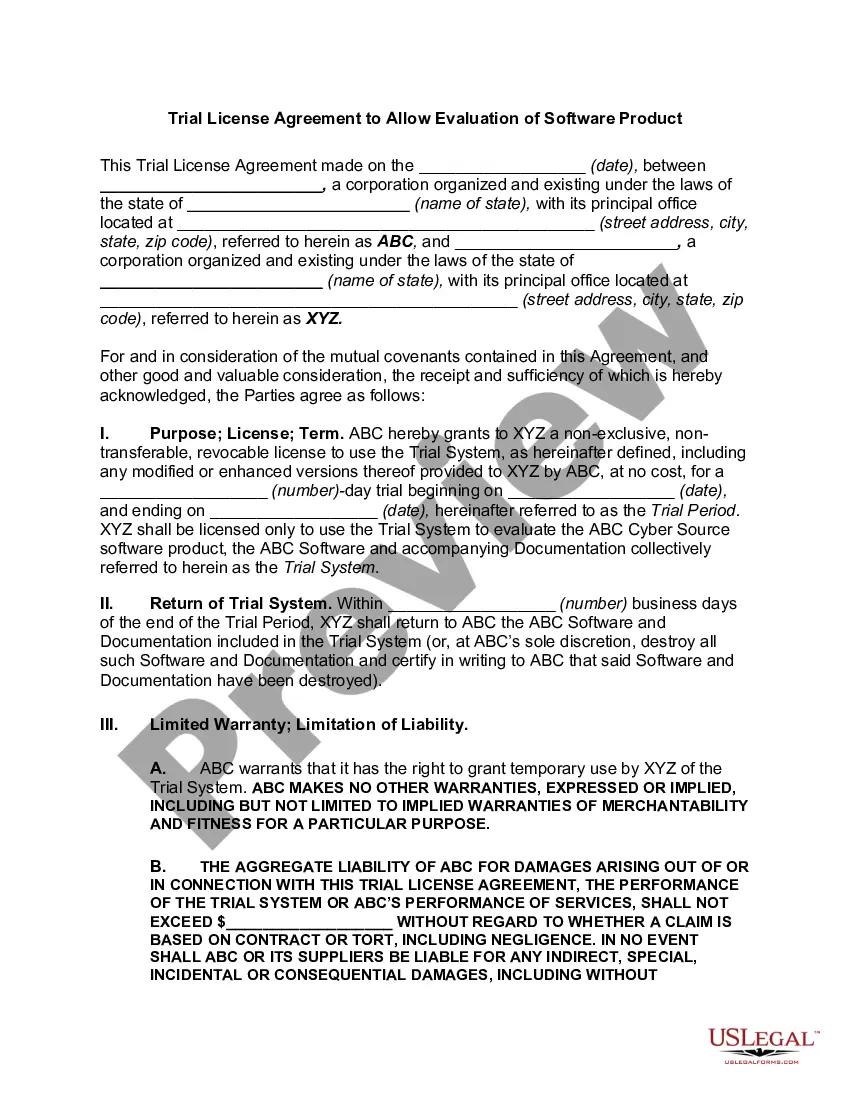
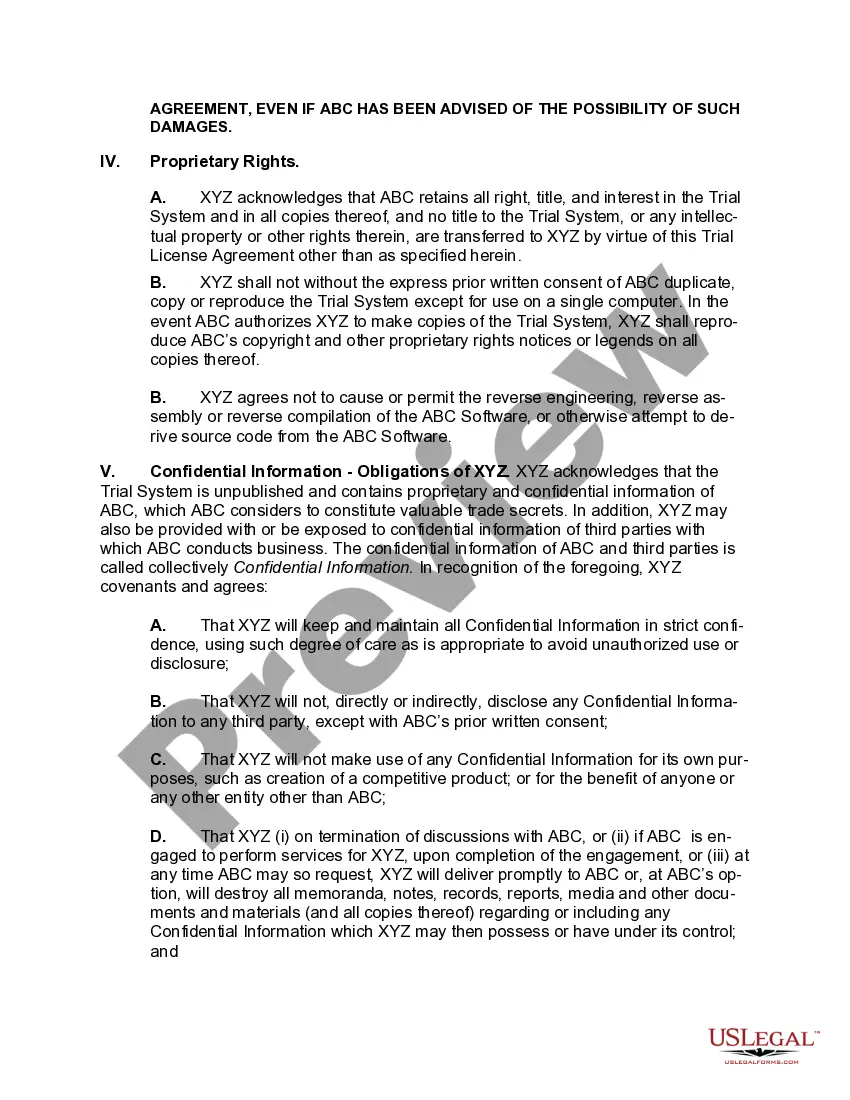
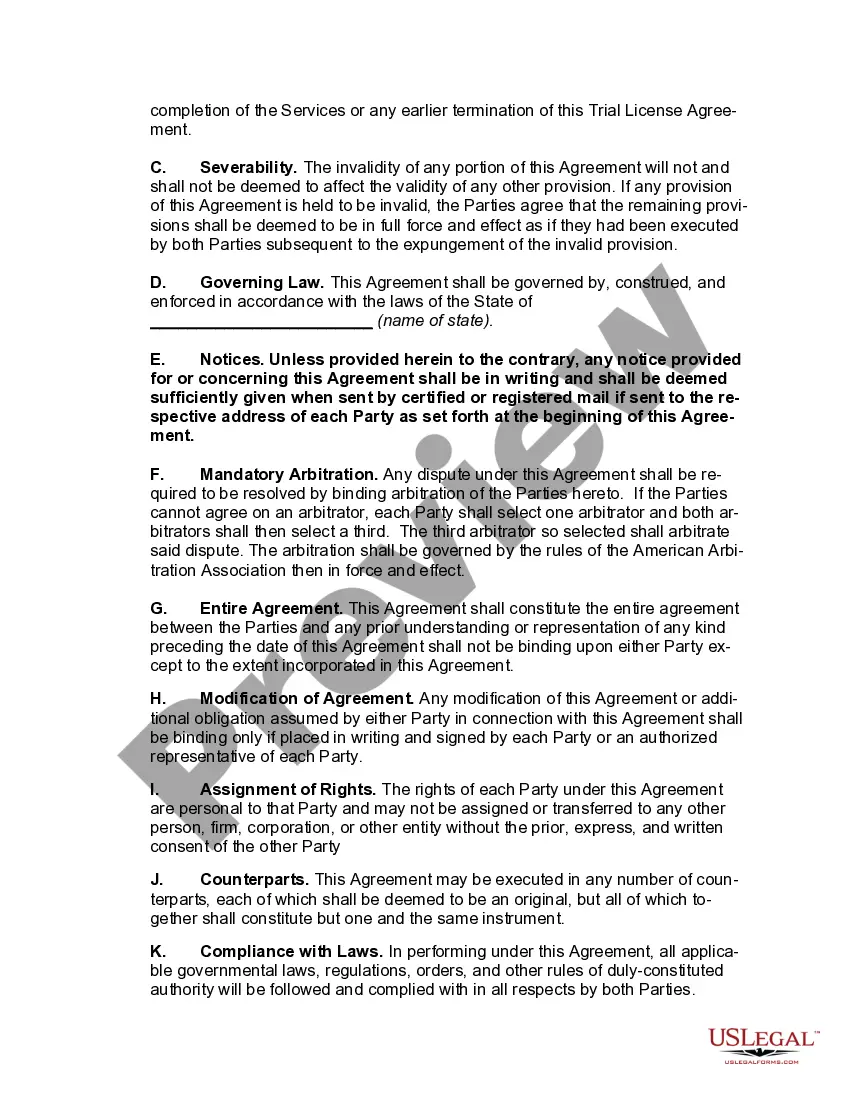
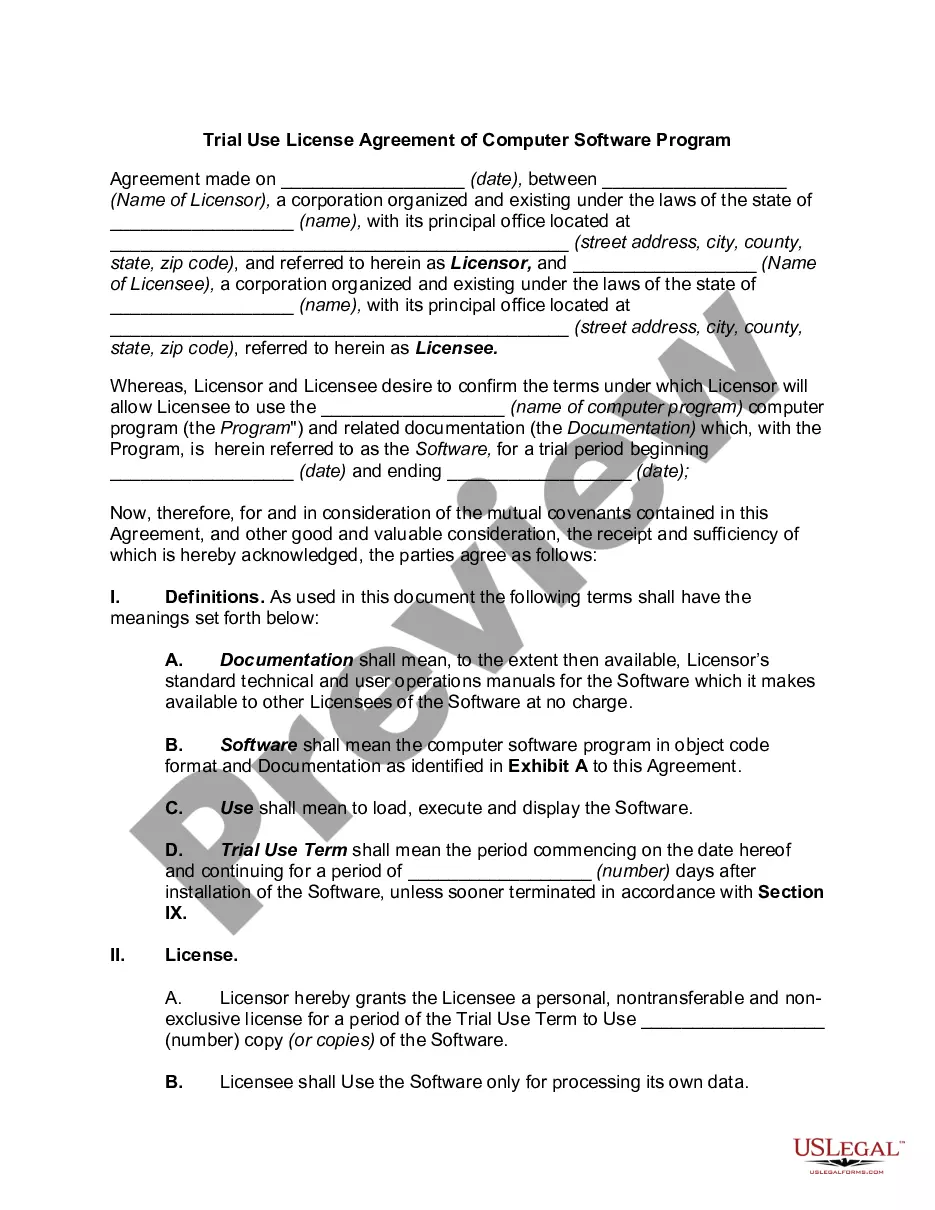
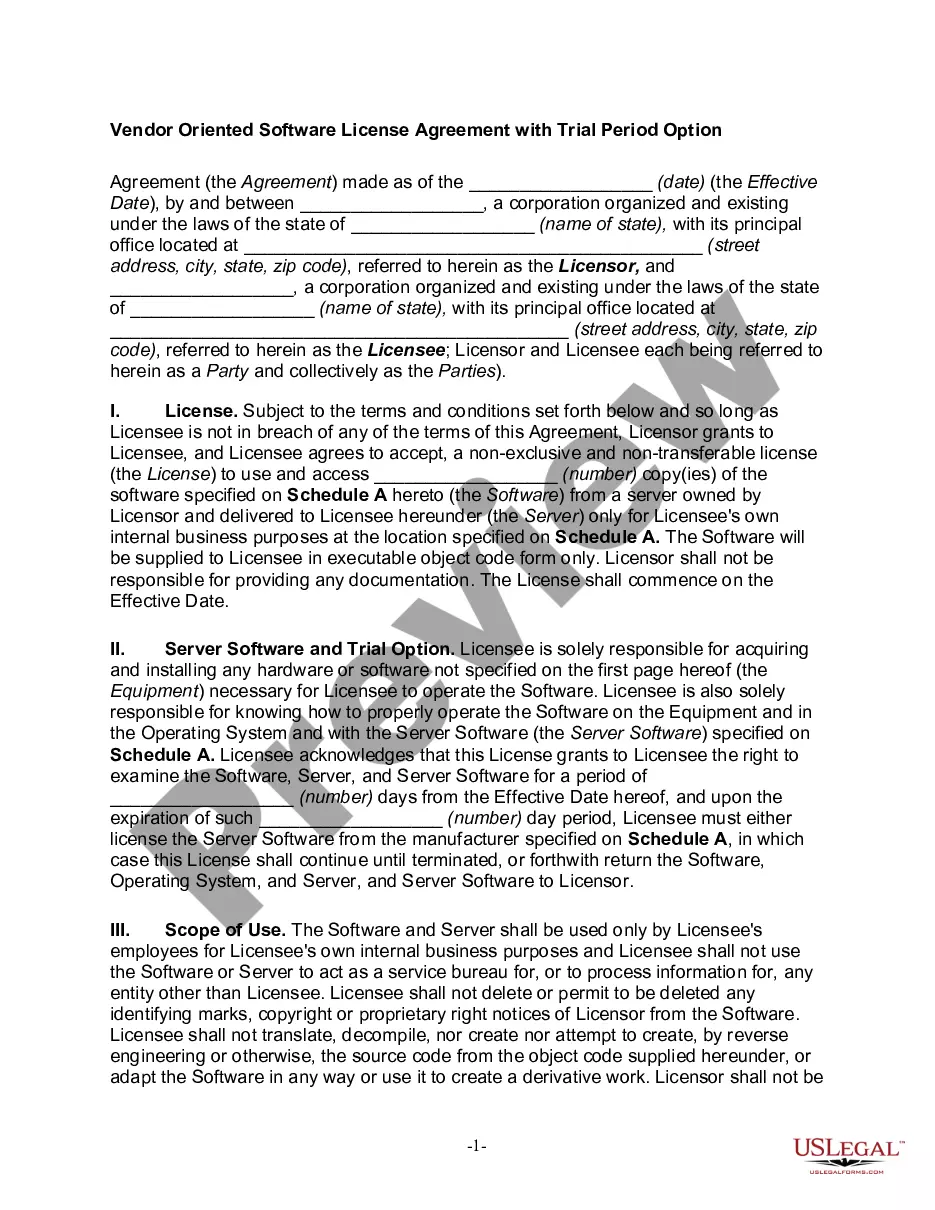
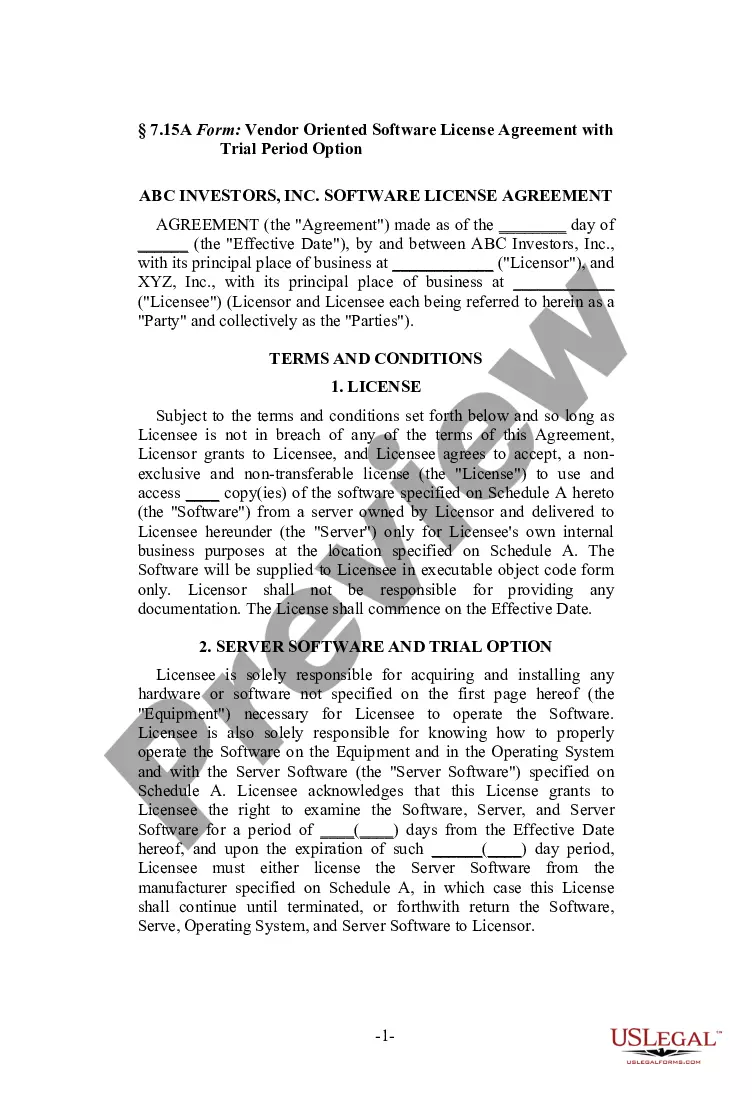
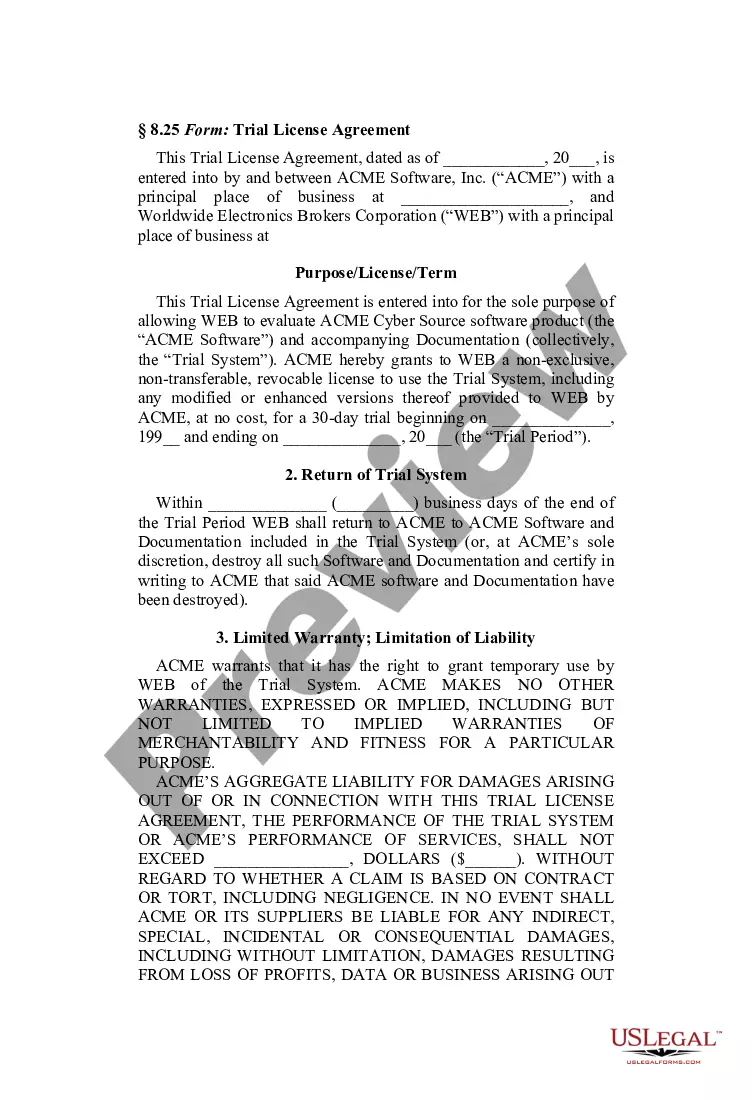
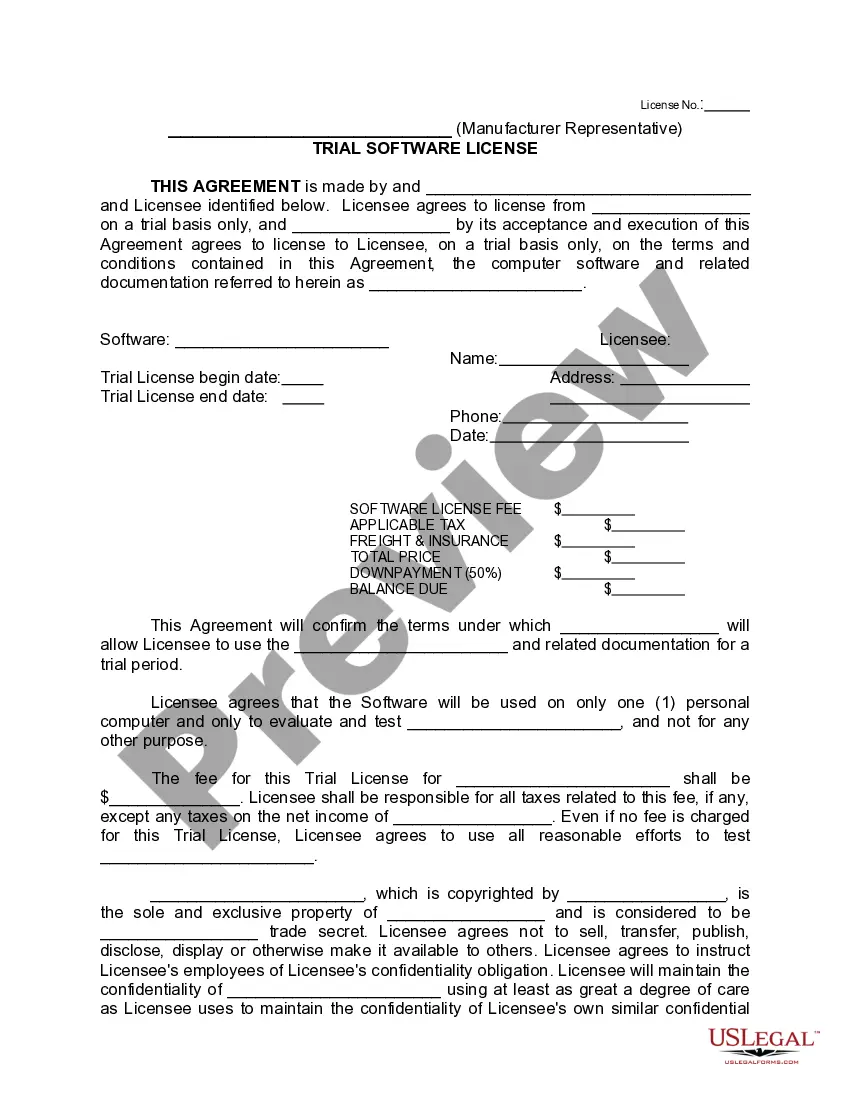
The Trial License Agreement to Allow Evaluation of Software Product is a legal document that grants a company (the licensee) the temporary right to evaluate specific software developed by another company (the licensor). This agreement outlines the terms under which the software can be used, ensuring both parties understand their rights and responsibilities during the evaluation period. It differs from standard software licensing agreements by allowing for a free evaluation period instead of a full purchase.
What’s included in this form
- Identification of the parties involved, including their legal names and addresses.
- Details about the license granted, including its duration and the scope of use.
- Provisions regarding the return or destruction of the software after the trial period.
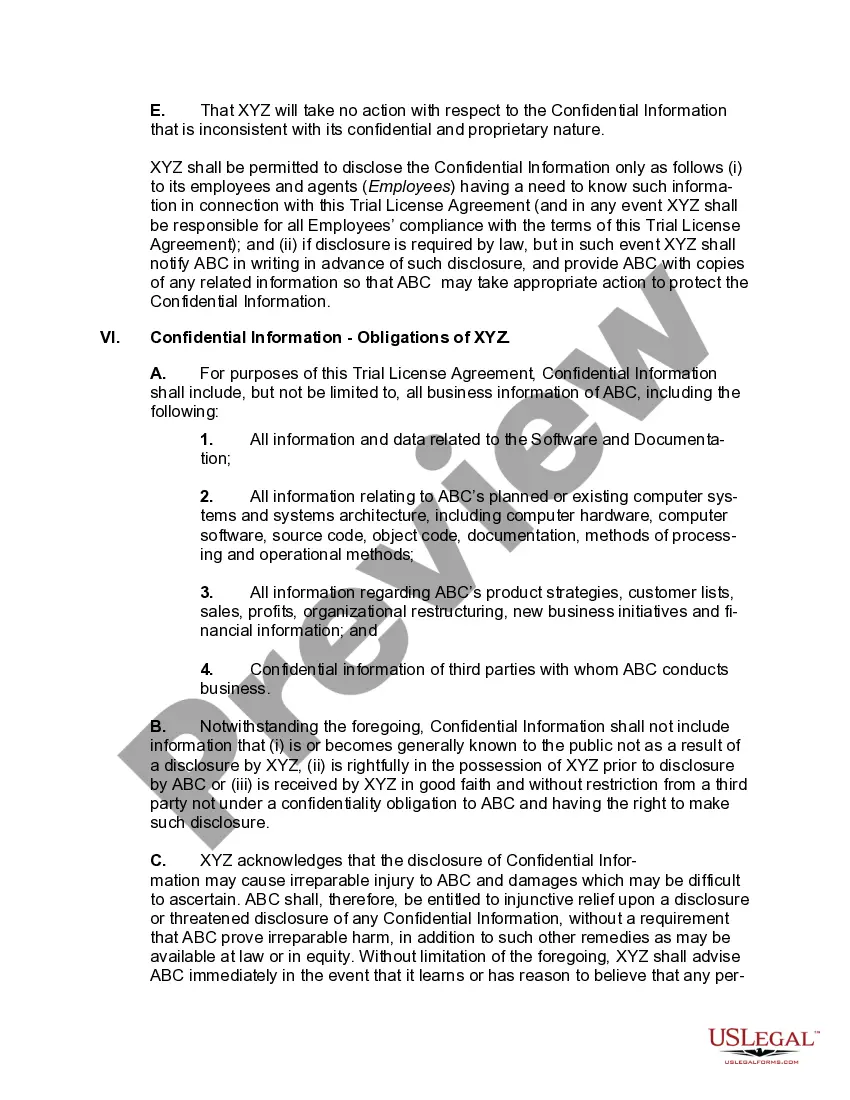
- Warranties and limitations of liability by the licensor.
- Confidentiality obligations of the licensee regarding the software and related information.
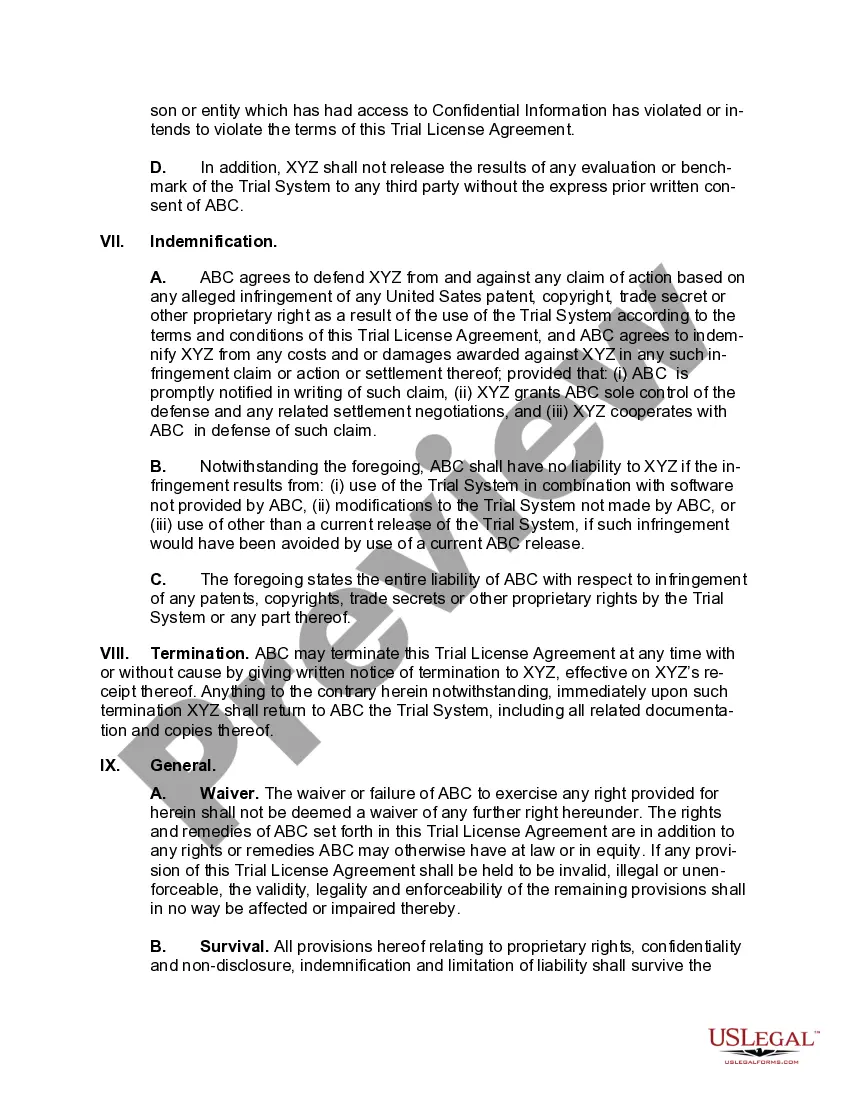
- Indemnification of the licensee against certain claims arising from the use of the software.
- Terms for termination and the governing law applicable to the agreement.
When to use this form
This agreement should be used when a software developer or company wants to allow potential clients or partners to evaluate their software product for a limited time. It is particularly useful when introducing new software solutions, helping potential users understand the softwareâs functionality and suitability for their needs before committing to a purchase.
Who should use this form
- Software developers or companies seeking to provide free trials of their products.
- Businesses that wish to evaluate a software product before making a purchasing decision.
- Legal professionals who need to formalize trial agreements between software providers and users.
Instructions for completing this form
- Identify and enter the full legal names and addresses of both parties (ABC and XYZ).
- Specify the duration of the trial period, including start and end dates.
- Detail the number of days the trial lasts in the appropriate section.
- Indicate how the trial system will be returned or certified as destroyed after the trial period.
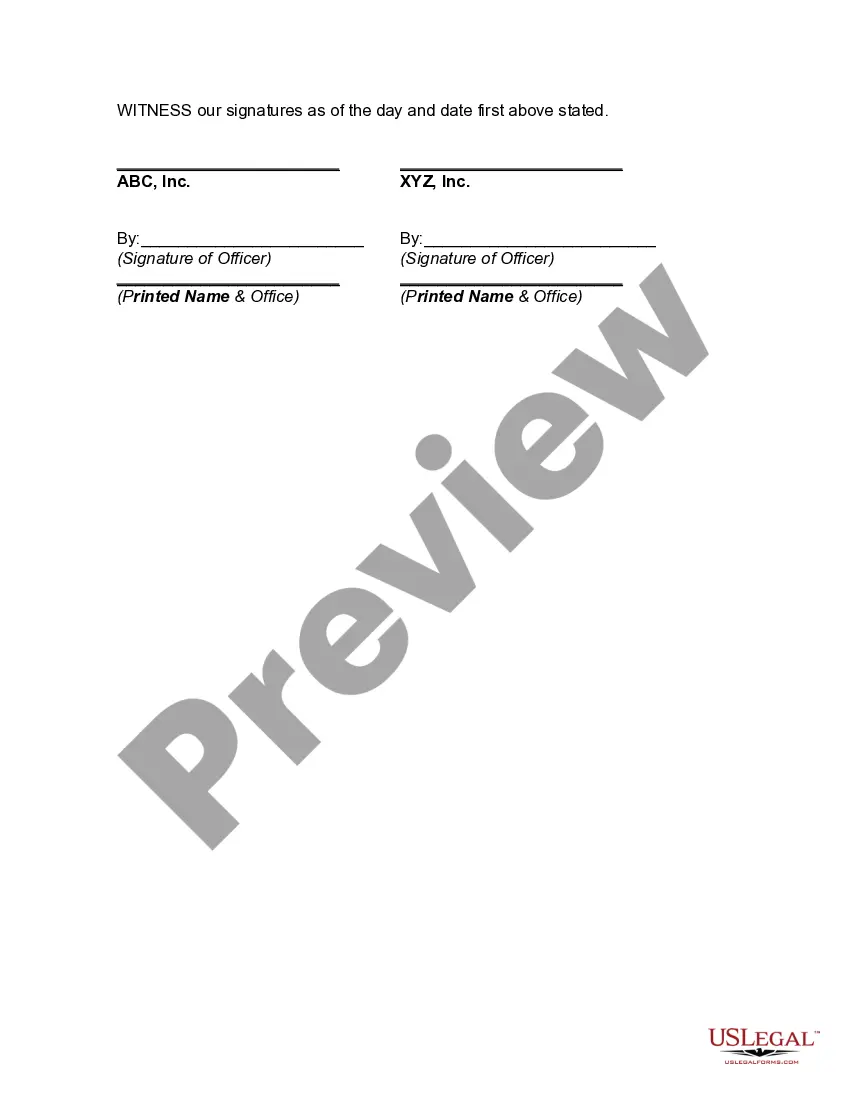
- Ensure all required signatures and printed names of the signing officers are completed at the end of the agreement.
Notarization guidance
This form does not typically require notarization unless specified by local law. However, it is always a good practice to consult legal advice or local state regulations to ensure compliance.
Get your form ready online
Our built-in tools help you complete, sign, share, and store your documents in one place.
Make edits, fill in missing information, and update formatting in US Legal Forms—just like you would in MS Word.
Download a copy, print it, send it by email, or mail it via USPS—whatever works best for your next step.
Sign and collect signatures with our SignNow integration. Send to multiple recipients, set reminders, and more. Go Premium to unlock E-Sign.
If this form requires notarization, complete it online through a secure video call—no need to meet a notary in person or wait for an appointment.
We protect your documents and personal data by following strict security and privacy standards.

Make edits, fill in missing information, and update formatting in US Legal Forms—just like you would in MS Word.

Download a copy, print it, send it by email, or mail it via USPS—whatever works best for your next step.

Sign and collect signatures with our SignNow integration. Send to multiple recipients, set reminders, and more. Go Premium to unlock E-Sign.

If this form requires notarization, complete it online through a secure video call—no need to meet a notary in person or wait for an appointment.

We protect your documents and personal data by following strict security and privacy standards.
Mistakes to watch out for
- Failing to accurately identify all parties involved in the agreement.
- Not clearly defining the trial period or duration.
- Ignoring the confidentiality obligations and not addressing how confidential information will be handled.
- Neglecting to have authorized signatories complete the agreement.
Why use this form online
- Easy access to a professionally drafted agreement that saves time and legal fees.
- Editable fields allow users to tailor the agreement to specific circumstances.
- Convenient downloading options ensure users can quickly print or distribute the agreement as needed.
Looking for another form?



Form popularity
FAQ
User agreements like EULAs are legally binding contracts between the software author and the end-user. End User License Agreements are enforceable as long as it is clear that it is a contract and both parties can understand the terms.
What is a Licensing Agreement? A licensing agreement is a contract between two parties (the licensor and licensee) in which the licensor grants the licensee the right to use the brand name, trademark, patented technology, or ability to produce and sell goods owned by the licensor.
A software license agreement typically has broad-form confidentiality provisions that also provide that certain items fall into the bucket of one or the other party (e.g., the software for a licensor, certain data for a licensee, etc.).
In general, it is the most restrictive type of licensing agreement wherein the original code was written by the programmers are not available to the users. Thus they can use the software but they cannot modify it or redistribute it.
A licensing agreement is a legal contract between two parties, known as the licensor and the licensee. In a typical licensing agreement, the licensor grants the licensee the right to produce and sell goods, apply a brand name or trademark, or use patented technology owned by the licensor.
Software licenses can generally be fit into the following categories: proprietary licenses, free software license, open source licenses. The features that distinguish them are significant in terms of the effect they have on the end-user's rights.
Public domain. This is the most permissive type of software license. Permissive. LGPL. Copyleft. Proprietary.