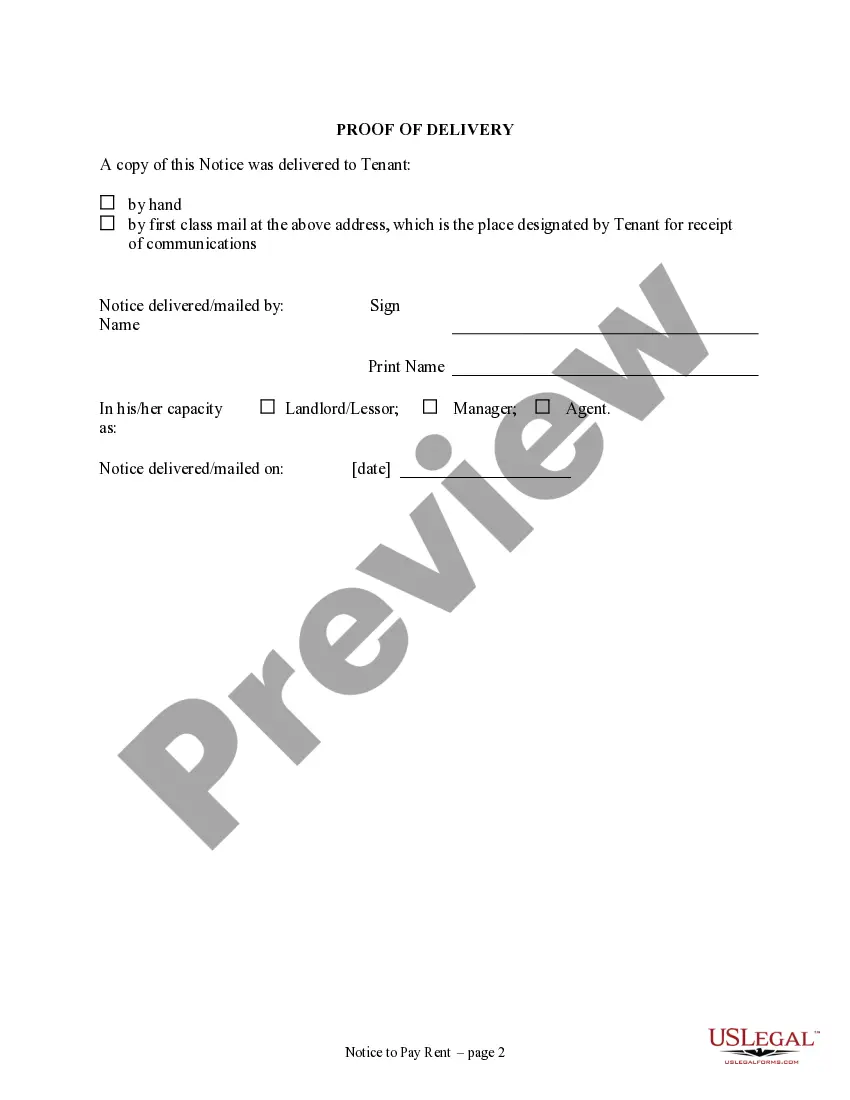
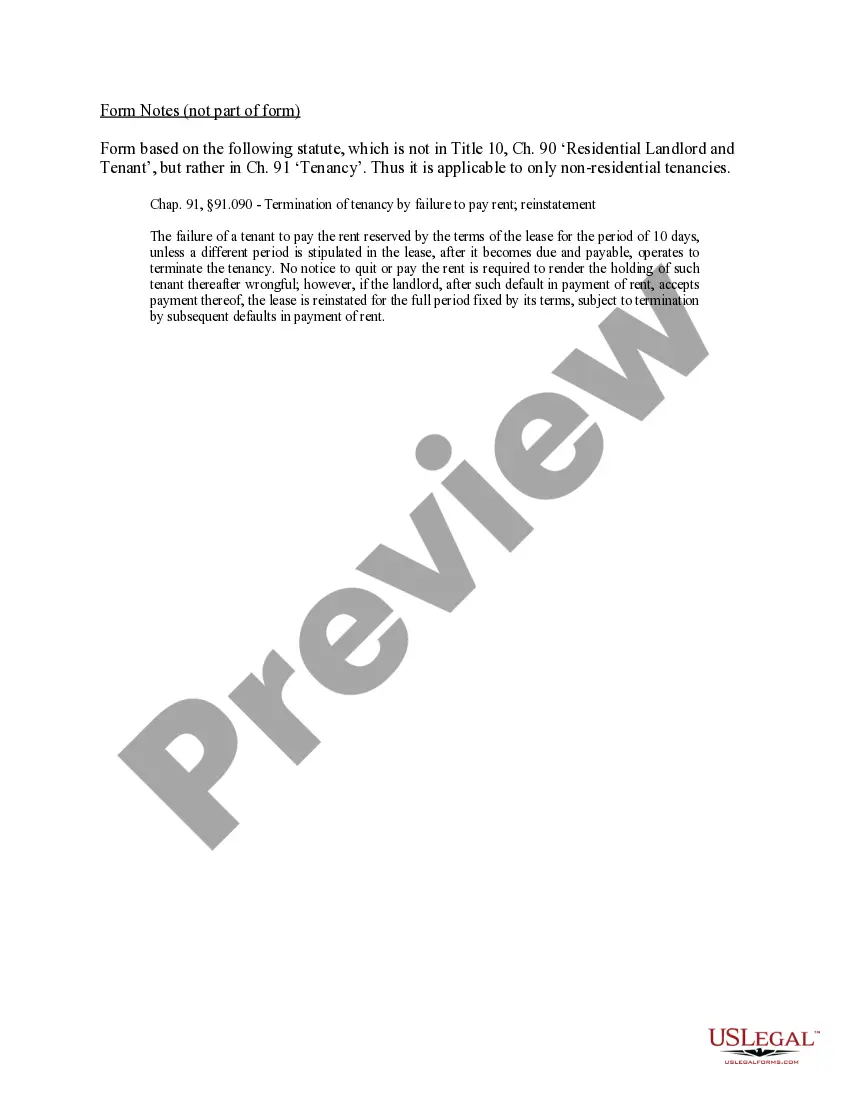
This form is used by a Landlord to demand payment of overdue rent from a non-residential tenant within 10 days from giving the Notice, in accordance with the laws of your state. (Note: If a written agreement provides for a longer notice, use the notice length stated in the agreement). "Non-Residential" includes commercial, industrial, etc. property. If the Tenant fails to pay within 10 days, the lease may be considered terminated by the Landlord. The Tenant is informed that the Tenant must either pay the rent or suffer possible termination. If he does not pay, the Landlord may begin eviction proceedings. If the Landlord does not elect to proceed with termination or eviction, but instead agrees to accept rent after the termination date stated in the Notice, the lease is generally reinstated.
Eviction Notice Oregon
Description Oregon Eviction Process
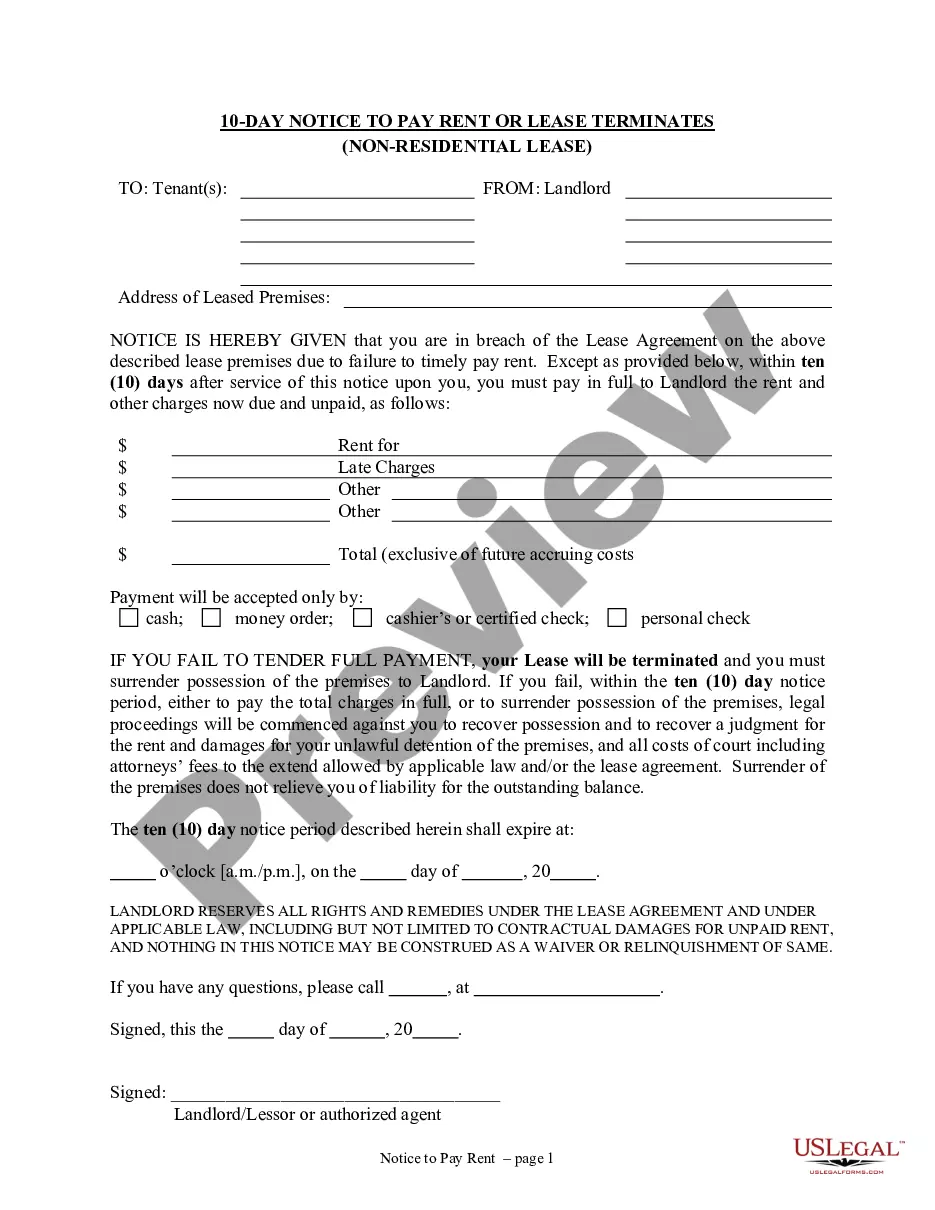
How to fill out Oregon 10 Day Notice To Pay Rent Or Lease Terminated For NonResidential Property?
In terms of completing Oregon 10 Day Notice to Pay Rent or Lease Terminated for NonResidential Property, you probably think about an extensive process that involves choosing a appropriate form among a huge selection of very similar ones and after that needing to pay legal counsel to fill it out to suit your needs. In general, that’s a slow and expensive option. Use US Legal Forms and select the state-specific template within just clicks.
For those who have a subscription, just log in and click on Download button to have the Oregon 10 Day Notice to Pay Rent or Lease Terminated for NonResidential Property form.
In the event you don’t have an account yet but want one, keep to the step-by-step manual listed below:
- Make sure the document you’re downloading is valid in your state (or the state it’s needed in).
- Do so by reading through the form’s description and through clicking the Preview option (if readily available) to see the form’s information.
- Simply click Buy Now.
- Choose the suitable plan for your budget.
- Join an account and choose how you want to pay: by PayPal or by credit card.
- Download the document in .pdf or .docx format.
- Get the file on your device or in your My Forms folder.
Skilled lawyers work on drawing up our templates to ensure that after saving, you don't have to bother about enhancing content outside of your individual details or your business’s info. Be a part of US Legal Forms and get your Oregon 10 Day Notice to Pay Rent or Lease Terminated for NonResidential Property document now.