Jury Instruction - Identification Testimony
Overview of this form
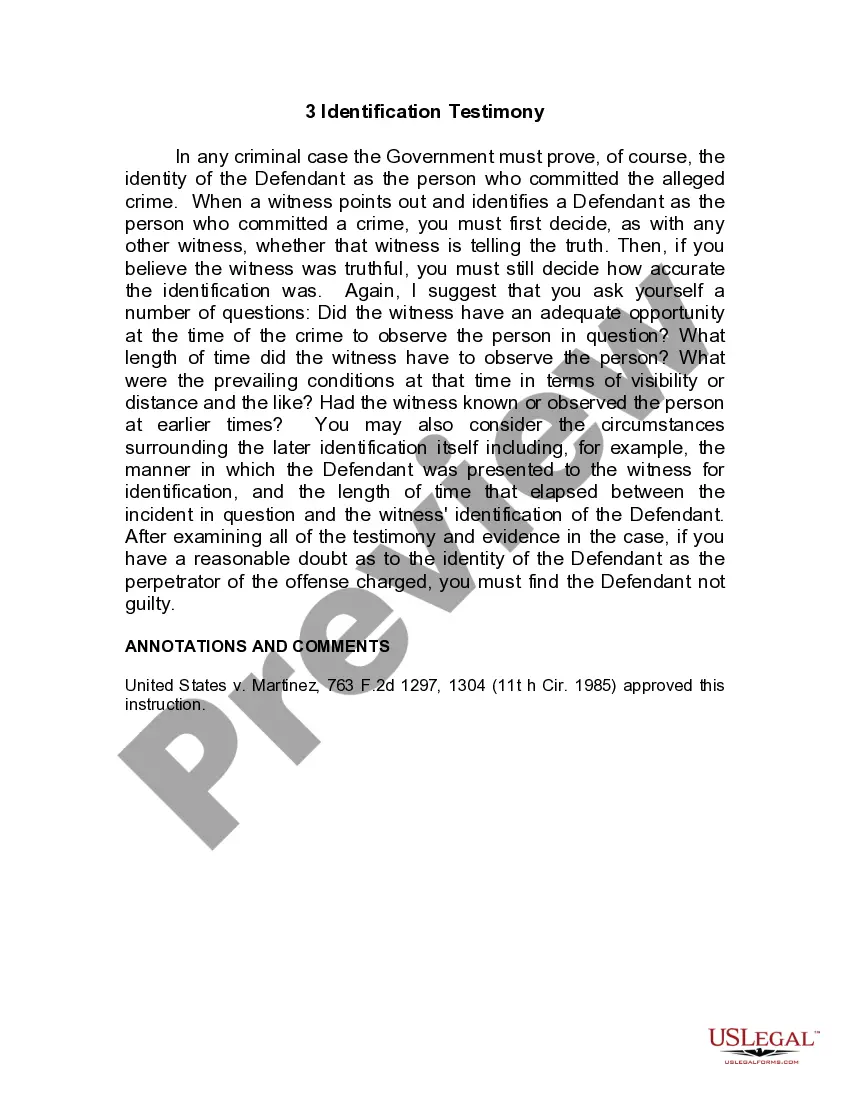
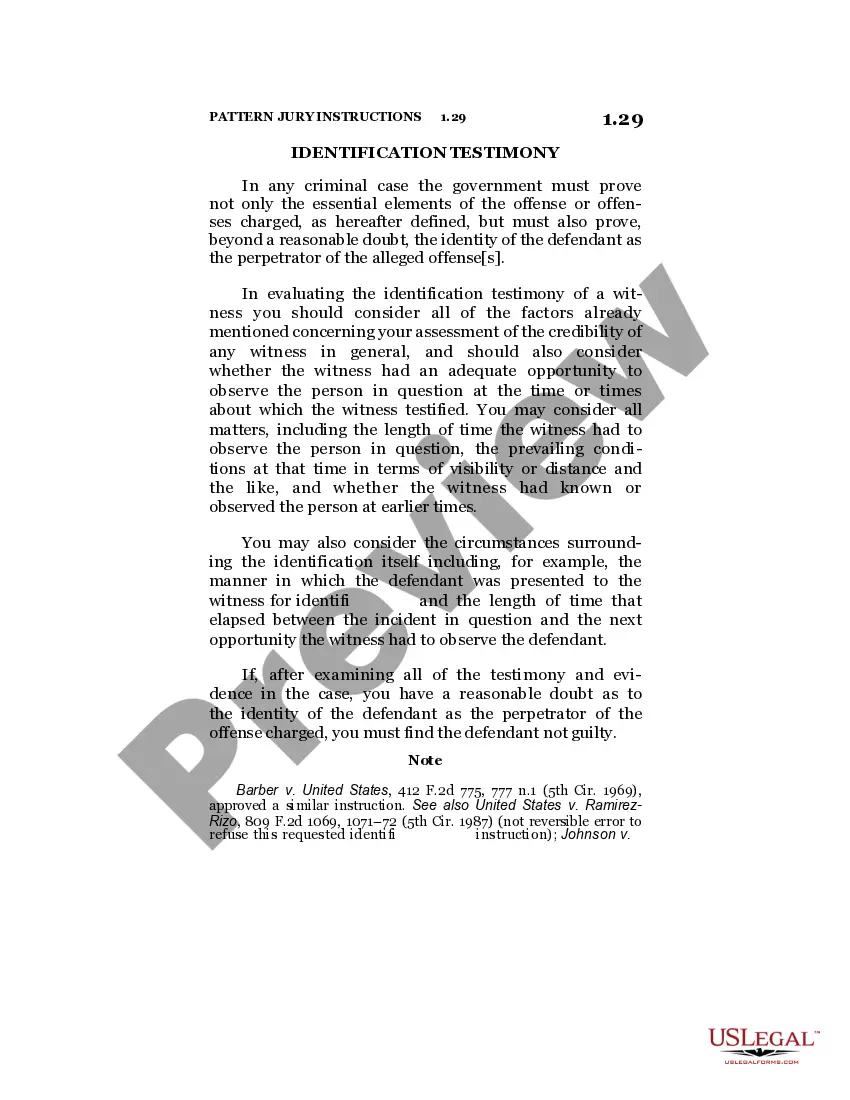
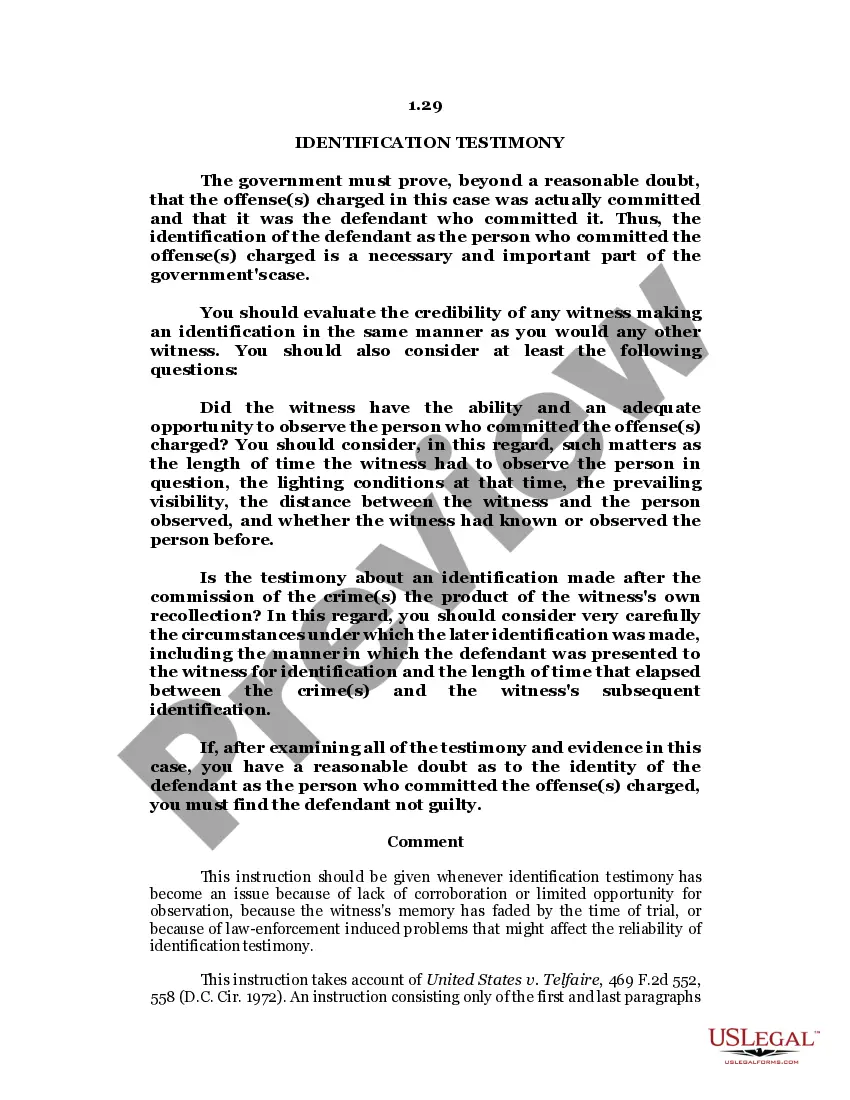
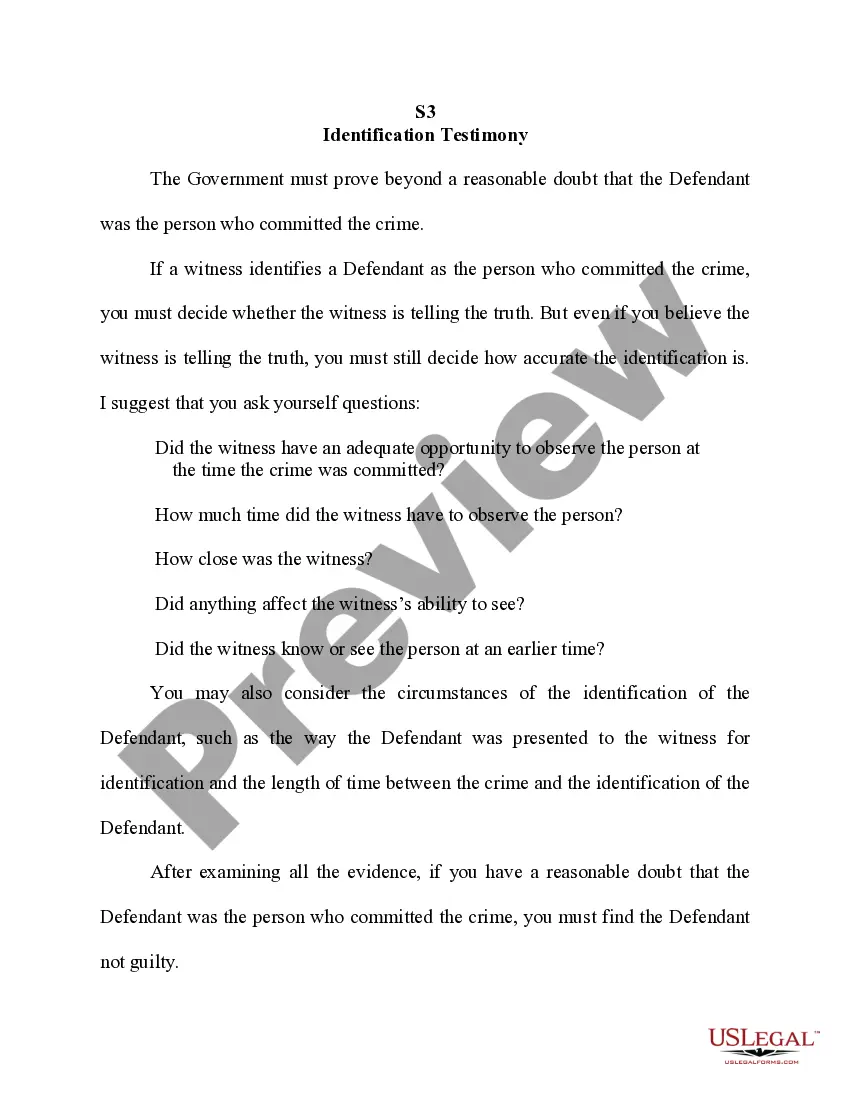
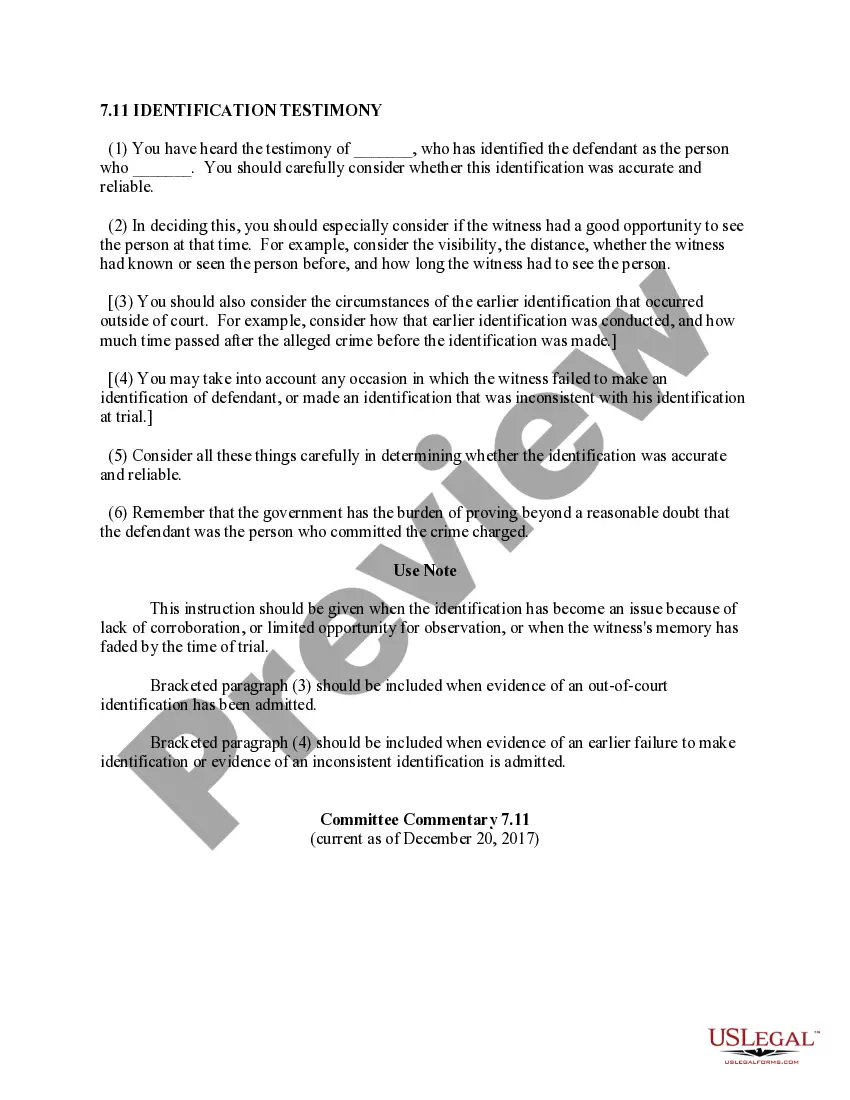
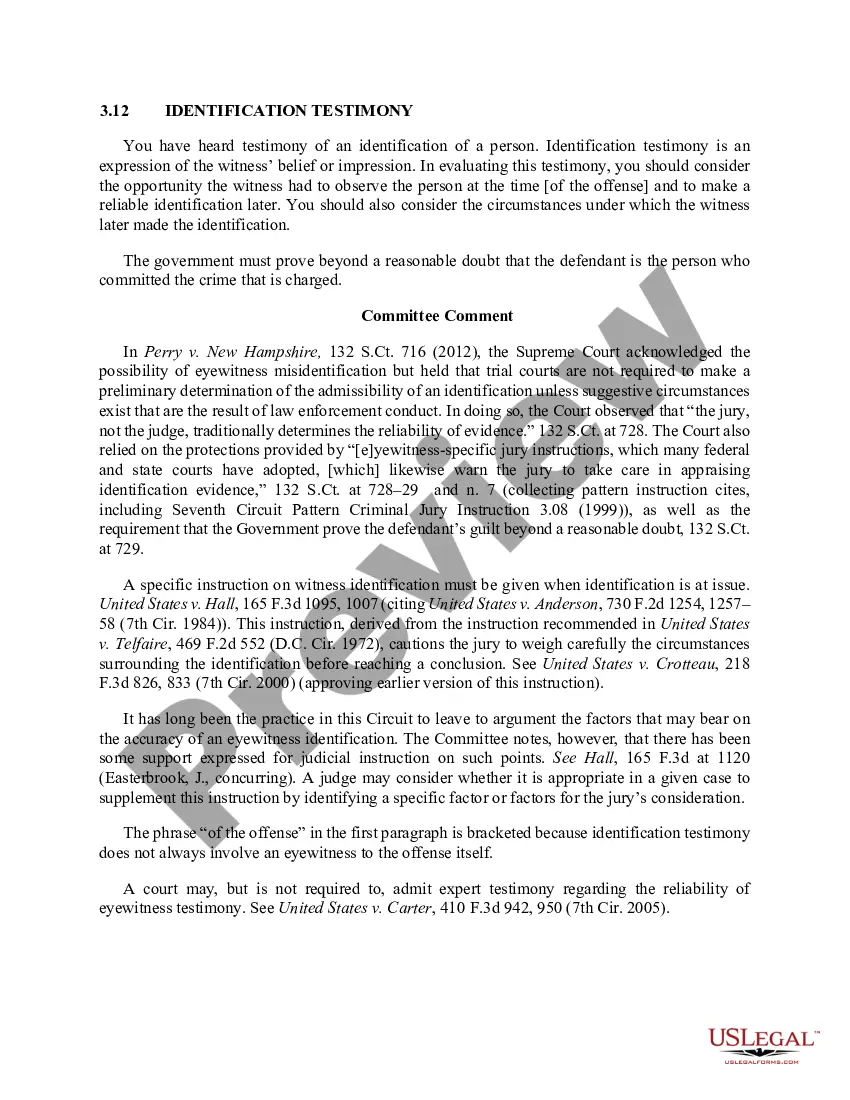
The Jury Instruction - Identification Testimony form provides a framework for guiding jurors on how to evaluate a witness's identification of a defendant in a criminal case. This form differs from other jury instructions by focusing specifically on the reliability of identification testimony, outlining the factors jurors should consider in determining the accuracy of such testimony.
What’s included in this form
- Instructions for jurors on assessing witness credibility.
- Guidelines for evaluating the accuracy of the identification.
- Questions to consider regarding the witness's opportunity to observe the defendant.
- Consideration of conditions during the crime affecting visibility.
- Factors surrounding the identification process itself.
Situations where this form applies
This form is used during criminal trials when a witness identifies the defendant as the perpetrator of an alleged crime. It is crucial in helping jurors understand the reliability of identification evidence, especially in cases where witness identification is a key factor in determining guilt or innocence.
Who should use this form
- Judges who need clear jury instructions for criminal trials.
- Attorneys representing defendants in cases involving eyewitness testimony.
- Jurors who require guidance on how to assess identification evidence.
Steps to complete this form
- Gather all relevant case details, including witness statements and evidence.
- Review the suggested instructions for jurors provided in the form.
- Modify the instructions to suit the specific circumstances of your case.
- Ensure clarity and relevance of questions regarding identification.
- Distribute the completed instructions to jurors at trial.
Notarization guidance
This form does not typically require notarization unless specified by local law. However, it is important to ensure all legal procedures are followed appropriately during the trial process.
Get your form ready online
Our built-in tools help you complete, sign, share, and store your documents in one place.
Make edits, fill in missing information, and update formatting in US Legal Forms—just like you would in MS Word.
Download a copy, print it, send it by email, or mail it via USPS—whatever works best for your next step.
Sign and collect signatures with our SignNow integration. Send to multiple recipients, set reminders, and more. Go Premium to unlock E-Sign.
If this form requires notarization, complete it online through a secure video call—no need to meet a notary in person or wait for an appointment.
We protect your documents and personal data by following strict security and privacy standards.

Make edits, fill in missing information, and update formatting in US Legal Forms—just like you would in MS Word.

Download a copy, print it, send it by email, or mail it via USPS—whatever works best for your next step.

Sign and collect signatures with our SignNow integration. Send to multiple recipients, set reminders, and more. Go Premium to unlock E-Sign.

If this form requires notarization, complete it online through a secure video call—no need to meet a notary in person or wait for an appointment.

We protect your documents and personal data by following strict security and privacy standards.
Avoid these common issues
- Not tailoring the instructions to fit the specific case.
- Overlooking the impact of external conditions on the witness's observation.
- Failing to clearly explain the importance of witness credibility.
Why use this form online
- Instant access to professionally drafted jury instructions.
- Customizable templates to meet specific legal needs.
- Convenient downloading for immediate use in court proceedings.
Legal use & context
- The form serves as an essential guide for jurors evaluating identification testimony in criminal cases.
- Proper use of the form can aid in the fair administration of justice by ensuring jurors understand their responsibilities.
- Always consult with legal professionals regarding the applicability of these instructions in specific cases.
Main things to remember
- The Jury Instruction - Identification Testimony form is essential for guiding jurors in criminal trials.
- It helps assess the credibility and accuracy of witness identification.
- Customizing the instructions for specific cases is crucial for appropriate legal application.
- Understanding the local legal context is vital for effective use.
Looking for another form?

Form popularity
FAQ
Wrongful Convictions During a criminal investigation, eyewitnesses might be asked to identify a suspect in a photographic or live lineup or give a physical description of the suspect to a sketch artist creating a composite drawing. If a case goes to trial, witnesses are often asked to appear in court.
A jury instruction is given by the judge to the jury to explain what is happening in the court, to explain the points of law relevant to the case, to explain certain aspects of the evidence presented and to assist the jurors in understanding their duties in reaching a verdict.
These are civil or criminal jury instructions approved by a state court, bench committee, or bar association. They are commonly used by courts in the relevant jurisdiction, as they ease the process of drafting fair jury instructions and theoretically do not have errors.
The judge instructs the jury about the relevant laws that should guide its deliberations. (In some jurisdictions, the court may instruct the jury at any time after the close of evidence.The judge reads the instructions to the jury. This is commonly referred to as the judge's charge to the jury.
Testimony is a kind of evidence, and it is often the only evidence that a judge has when deciding a case. When you are under oath in court and you are testifying to the judge, what you say is considered to be truthful unless it is somehow challenged (rebutted) by the other party.
Instructions to the Jury The judge instructs the jury about the relevant laws that should guide its deliberations. (In some jurisdictions, the court may instruct the jury at any time after the close of evidence. This sometimes occurs before closing arguments.) The judge reads the instructions to the jury.
A curative instruction is given to a jury by the judge in a case to negate the prejudicial effect of an erroneous instruction or tainted evidence.
Jury instructions, directions to the jury, or judge's charge are legal rules that jurors should follow when deciding a case.
Jury Instructions. instructions that are given by the trial judge that specifically state what the defendant can be found guilty of and what the prosecution or plaintiff has to prove in order for a guilty verdict.