IDENTIFICATION TESTIMONY
Overview of this form
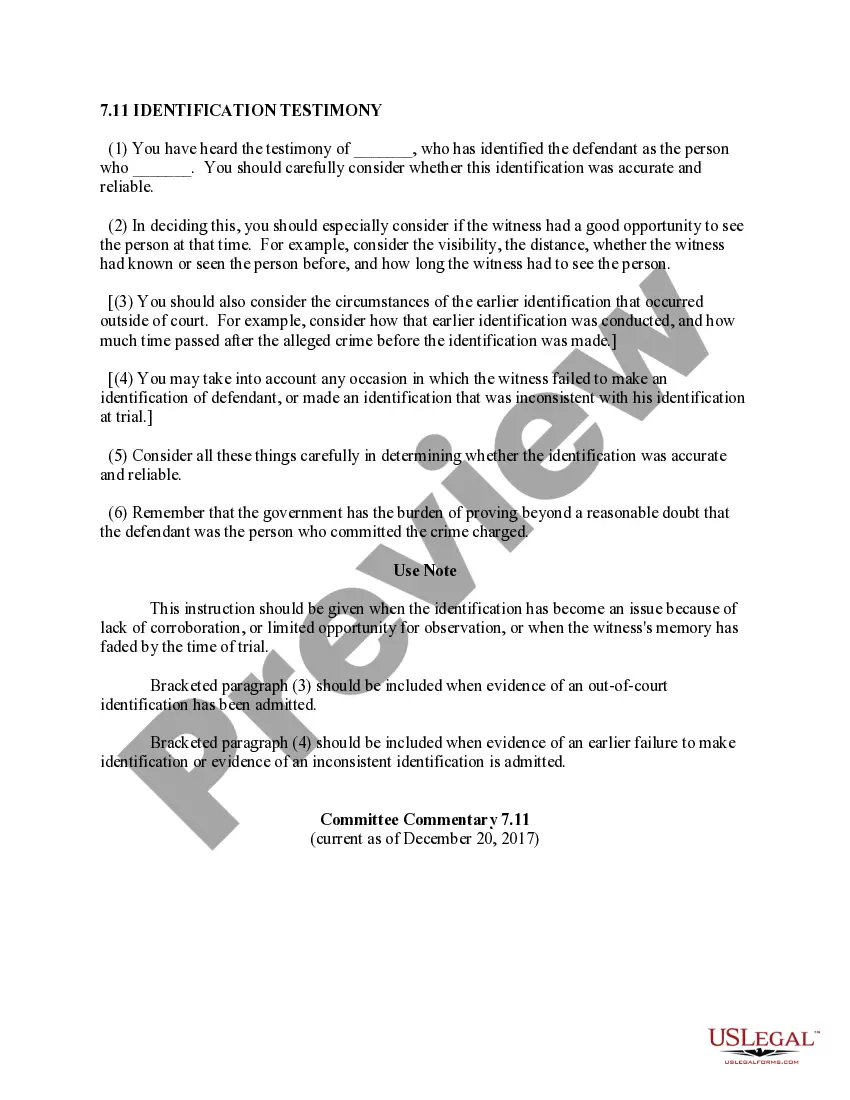
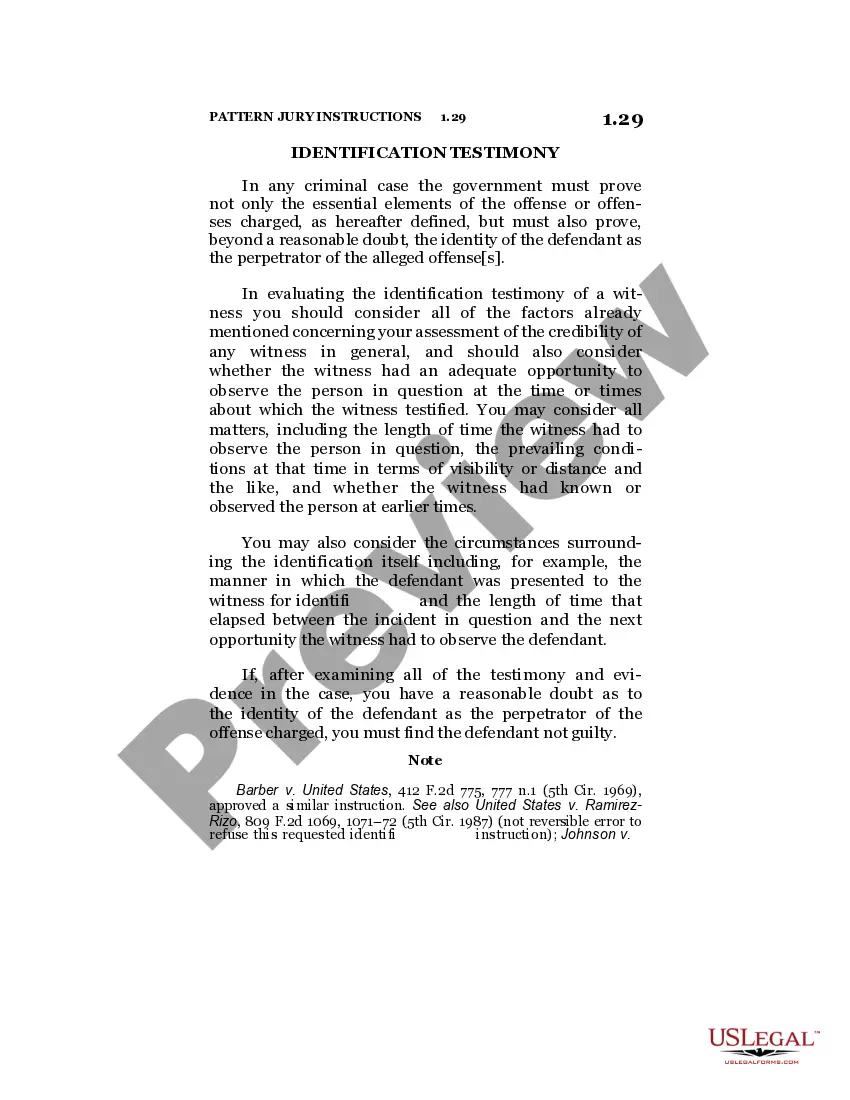
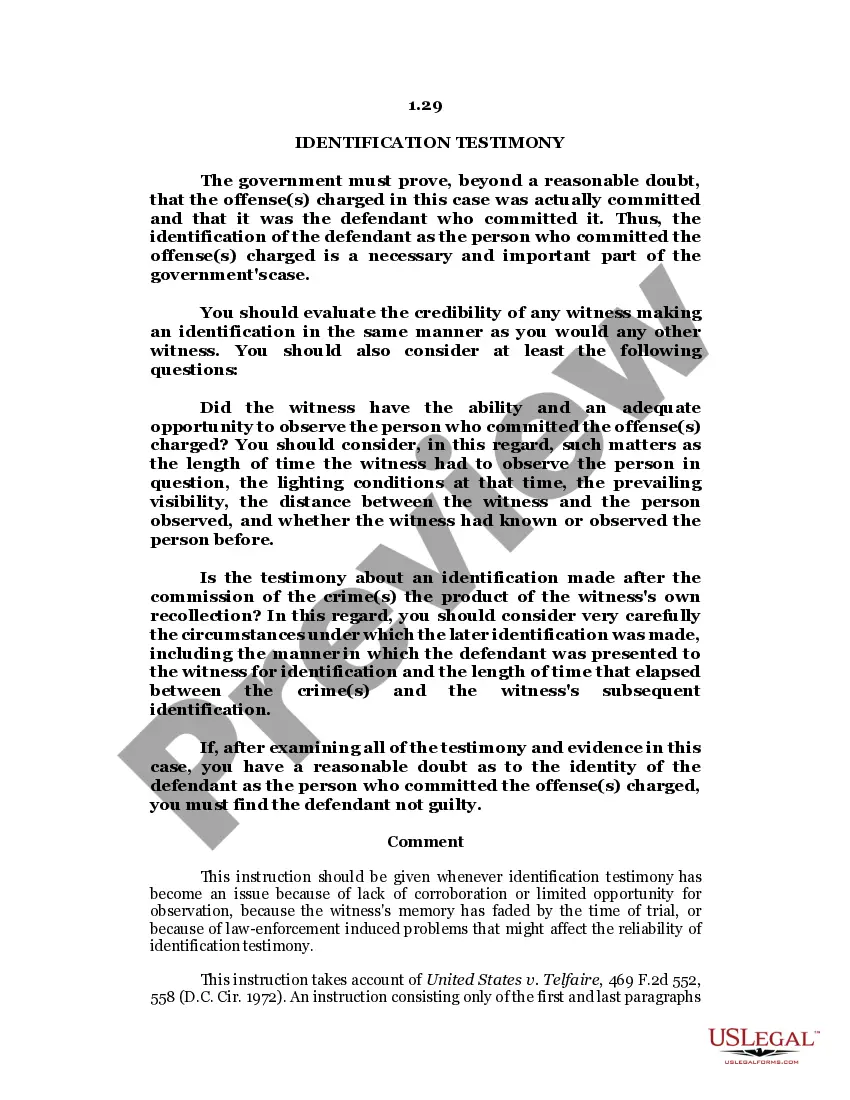
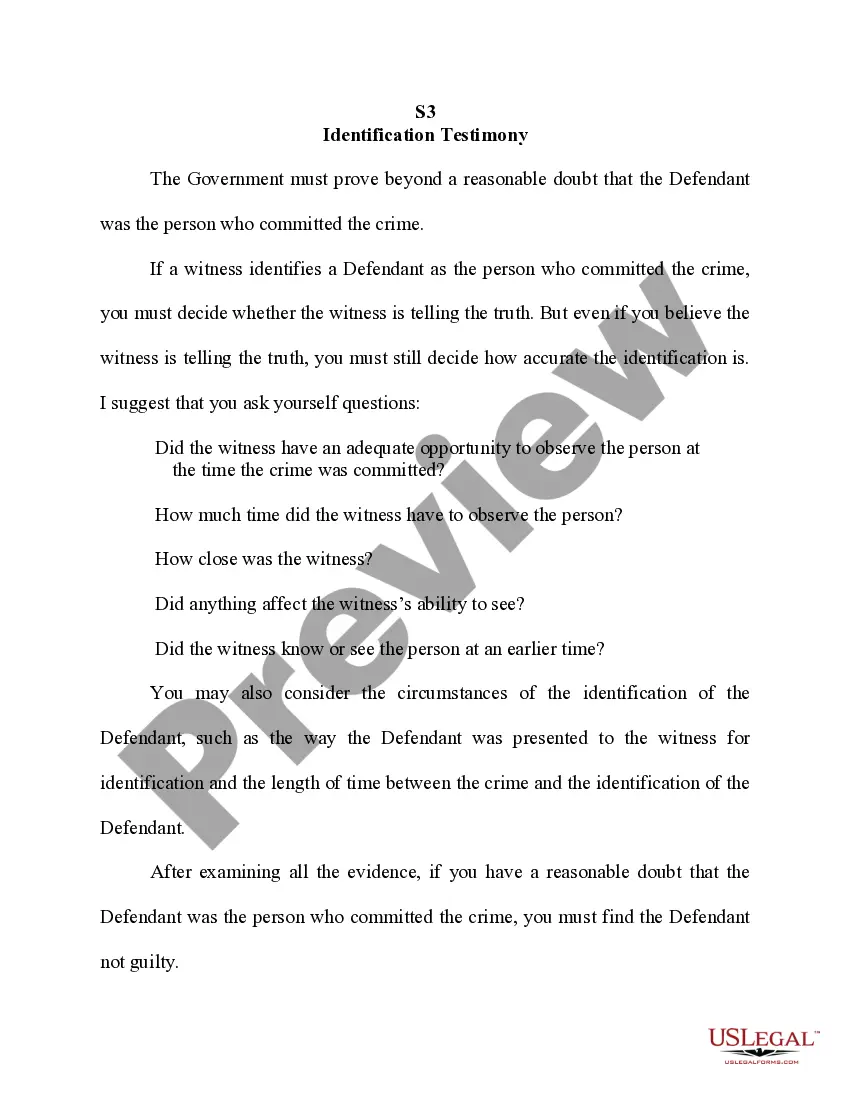
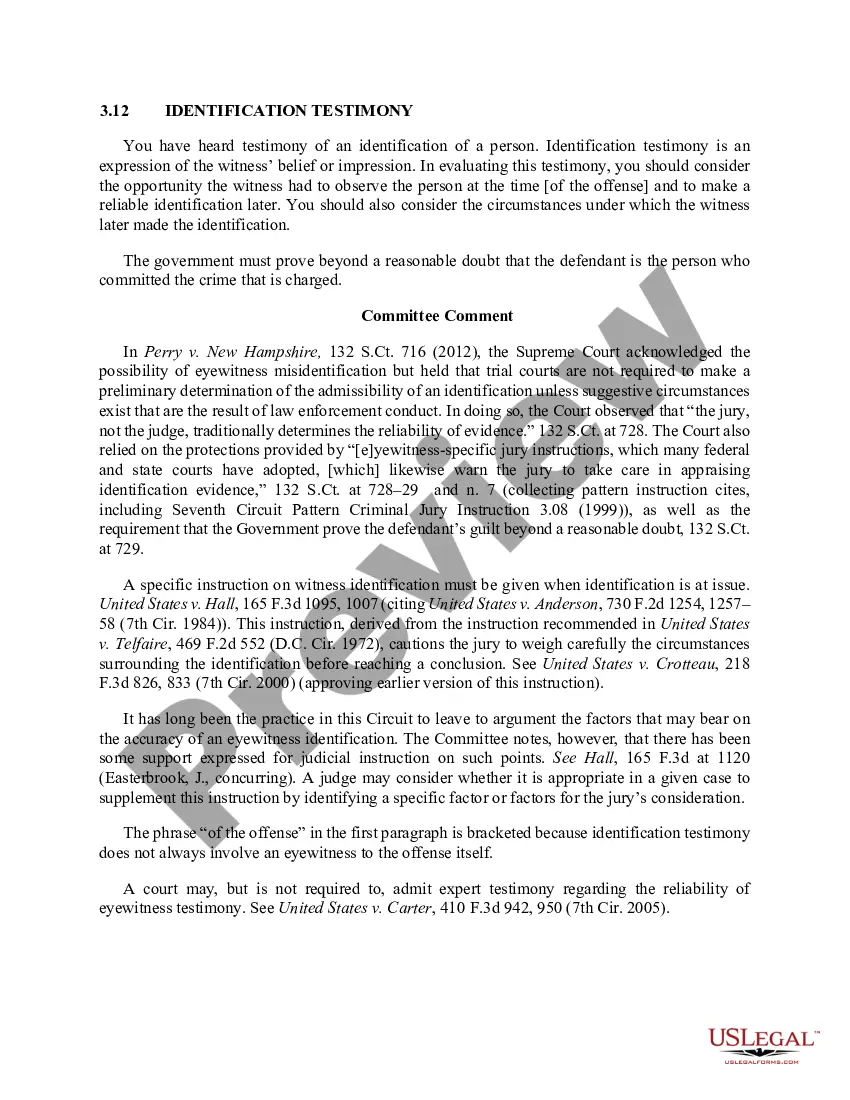
The Identification Testimony form is a legal document used in criminal cases where a witness identifies the defendant as the person who committed a crime. This form outlines how to evaluate the reliability and accuracy of the eyewitness identification, distinguishing it from other legal forms that may not specifically address the factors surrounding eyewitness testimony.
Key components of this form
- Witness identification statement: The form captures the witness's assertion that the defendant is the perpetrator.
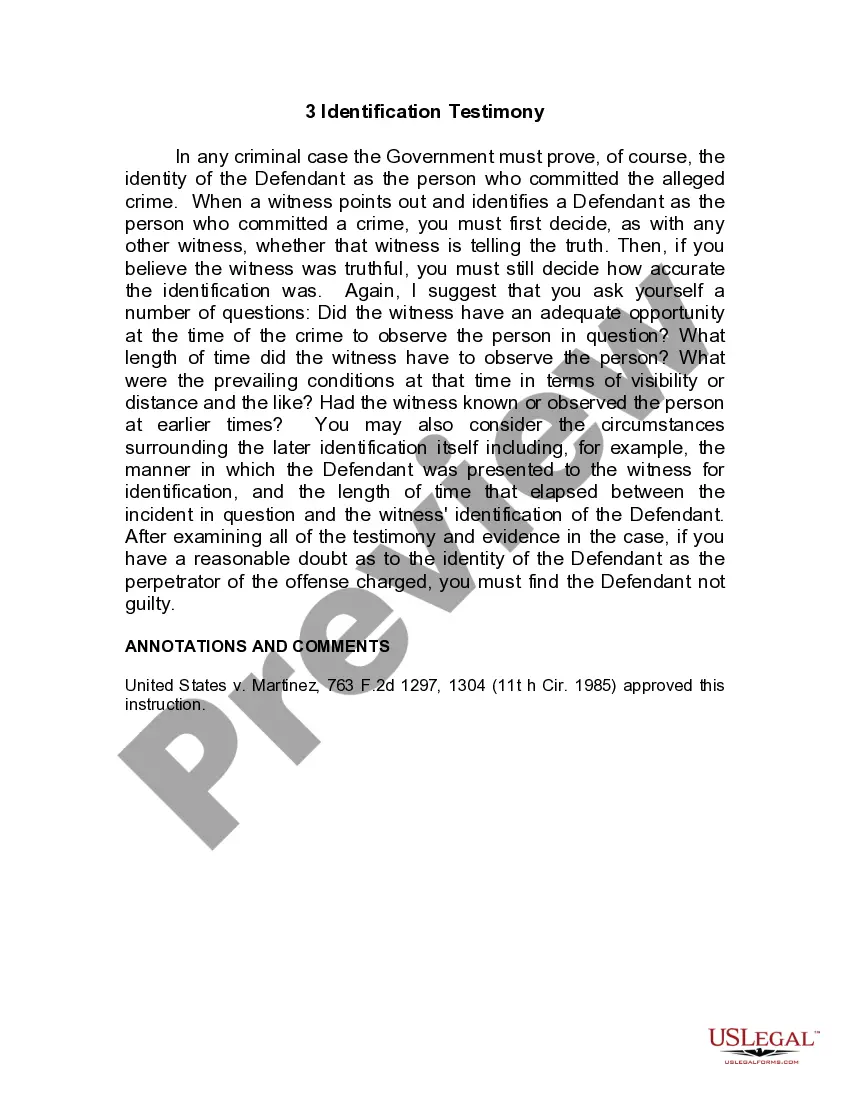
- Factors for reliability: It instructs jurors to consider circumstances such as visibility, distance, and prior knowledge of the defendant.
- Out-of-court identification: Details how earlier identifications should be evaluated if admitted as evidence.
- Inconsistent identifications: Addresses any occasions where the witness may not have identified the defendant or provided conflicting statements.
- Burden of proof: Reminds jurors that the government must prove the defendant's identity beyond a reasonable doubt.
When to use this document
This form is typically used in criminal trials where witness identification is a critical issue. You should use it when there are concerns regarding the reliability of the witness's memory, the circumstances of the identification, or if there have been any inconsistencies reported in prior identifications. The form is essential in ensuring that the jury carefully evaluates the identification process to avoid wrongful convictions.
Who this form is for
- Judges overseeing criminal cases requiring jury instructions on eyewitness identifications.
- Prosecutors wishing to reinforce the importance of proper evaluation of eyewitness testimony.
- Defense attorneys aiming to challenge the validity of identification and ensure that the jury is informed about potential issues with testimony.
- Legal professionals engaged in criminal litigation where eyewitness accounts are significant.
How to prepare this document
- Identify the witness: Clearly state the name of the witness making the identification.
- Describe the identification: Specify what the witness claims to have seen in relation to the defendant.
- Evaluate circumstances: Include details regarding the visibility, distance, and conditions during the identification.
- Document prior identifications: If applicable, note any out-of-court identifications made by the witness.
- Summarize inconsistencies: Record any instances of prior inconsistent identifications by the witness.
Notarization guidance
This form does not typically require notarization unless specified by local law. Always check local regulations to confirm any notarization requirements for legal documents in your jurisdiction.
Get your form ready online
Our built-in tools help you complete, sign, share, and store your documents in one place.
Make edits, fill in missing information, and update formatting in US Legal Forms—just like you would in MS Word.
Download a copy, print it, send it by email, or mail it via USPS—whatever works best for your next step.
Sign and collect signatures with our SignNow integration. Send to multiple recipients, set reminders, and more. Go Premium to unlock E-Sign.
If this form requires notarization, complete it online through a secure video call—no need to meet a notary in person or wait for an appointment.
We protect your documents and personal data by following strict security and privacy standards.

Make edits, fill in missing information, and update formatting in US Legal Forms—just like you would in MS Word.

Download a copy, print it, send it by email, or mail it via USPS—whatever works best for your next step.

Sign and collect signatures with our SignNow integration. Send to multiple recipients, set reminders, and more. Go Premium to unlock E-Sign.

If this form requires notarization, complete it online through a secure video call—no need to meet a notary in person or wait for an appointment.

We protect your documents and personal data by following strict security and privacy standards.
Typical mistakes to avoid
- Failing to provide all necessary details about the identification circumstances.
- Omitting prior inconsistent identifications or out-of-court identifications.
- Not emphasizing the burden of proof required for identification.
- Neglecting to instruct jurors on evaluating the reliability of the witness's testimony.
Benefits of completing this form online
- Convenience: Quickly access and download the form from anywhere.
- Editability: Customize the form to meet specific case details.
- Legal reliability: Use forms drafted by licensed attorneys, ensuring compliance with current legal standards.
- Efficiency: Save time by having a ready template to work from when preparing for court.
Looking for another form?

Form popularity
FAQ
There are three primary forms of eyewitness identification: lineup, showup, and photographic identification.
Survey findings indicate that prosecutors generally feel that eyewitness identification is relatively accurate and is given the appropriate emphasis by judges and juries. Defense attorneys, on the other hand, tend to view eyewitness evidence as often inaccurate and as having too much weight in courtroom deliberations.
Eyewitness testimony is a legal term that refers to an account given by people of an event they have witnessed. For example, they may be required to describe a trial of a robbery or a road accident someone has seen. This includes the identification of perpetrators, details of the crime scene, etc.
Eyewitnesses can provide very compelling legal testimony, but rather than recording experiences flawlessly, their memories are susceptible to a variety of errors and biases. They (like the rest of us) can make errors in remembering specific details and can even remember whole events that did not actually happen.
Despite a high rate of error (as many as 1 in 4 stranger eyewitness identifications are wrong), eyewitness identifications are considered some of the most powerful evidence against a suspect.
Time Sensitive. Lastly, our Miami criminal defense attorney wants to highlight that eyewitness testimony is time-sensitive. Memories can change over time, and so can the details they recall when they speak to the police. This often leads to an improper identification of a suspect.
(a) Definitions. (1) ?Eyewitness Identification? means witness testimony or conduct in a criminal trial that identifies the defendant as the person who committed a charged crime.
A common method for authorities to identify the perpetrator of a crime is the use of a photo lineup. In a photo lineup a witness is shown many photos of people, including the person accused of committing the crime.