Michigan Heirship Affidavit - Descent
What this document covers
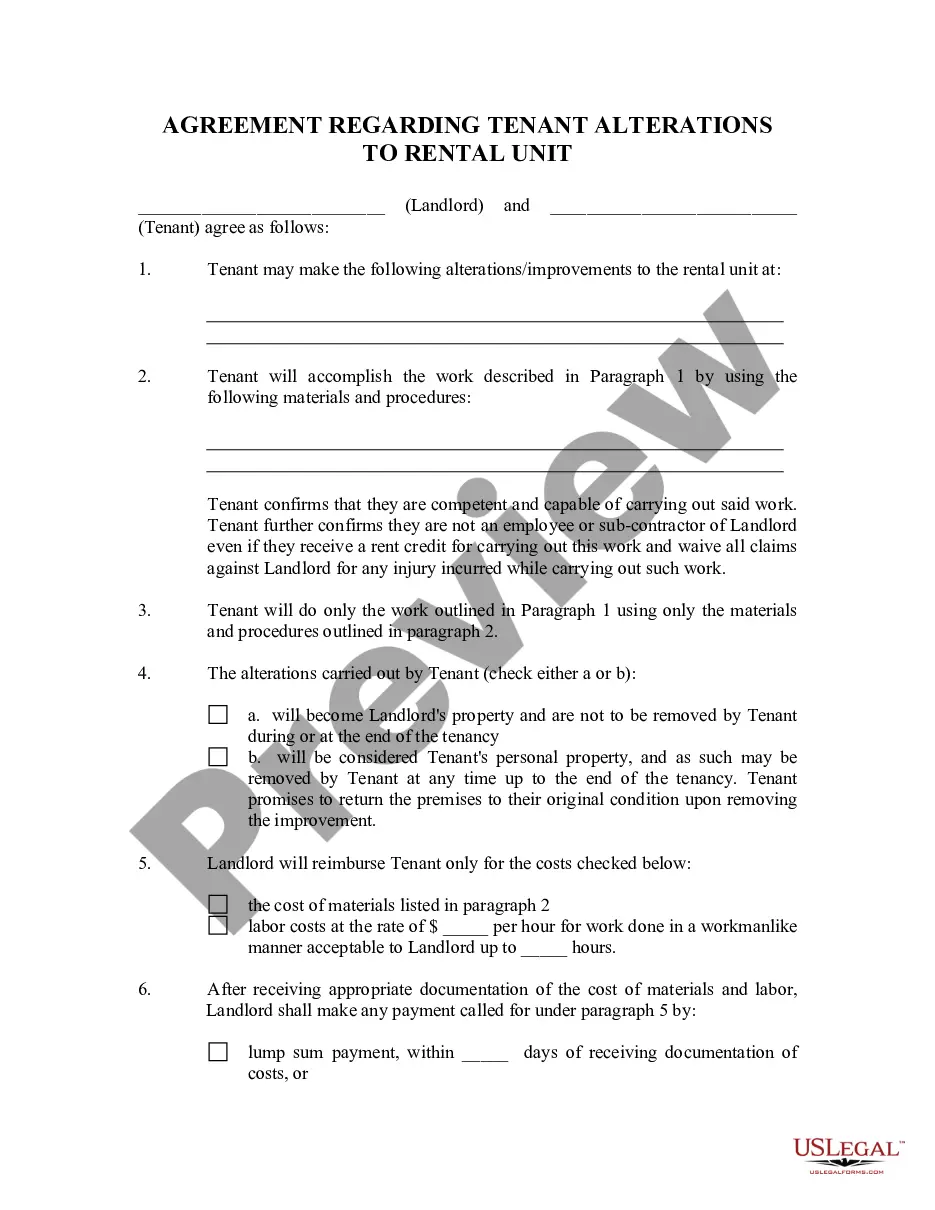
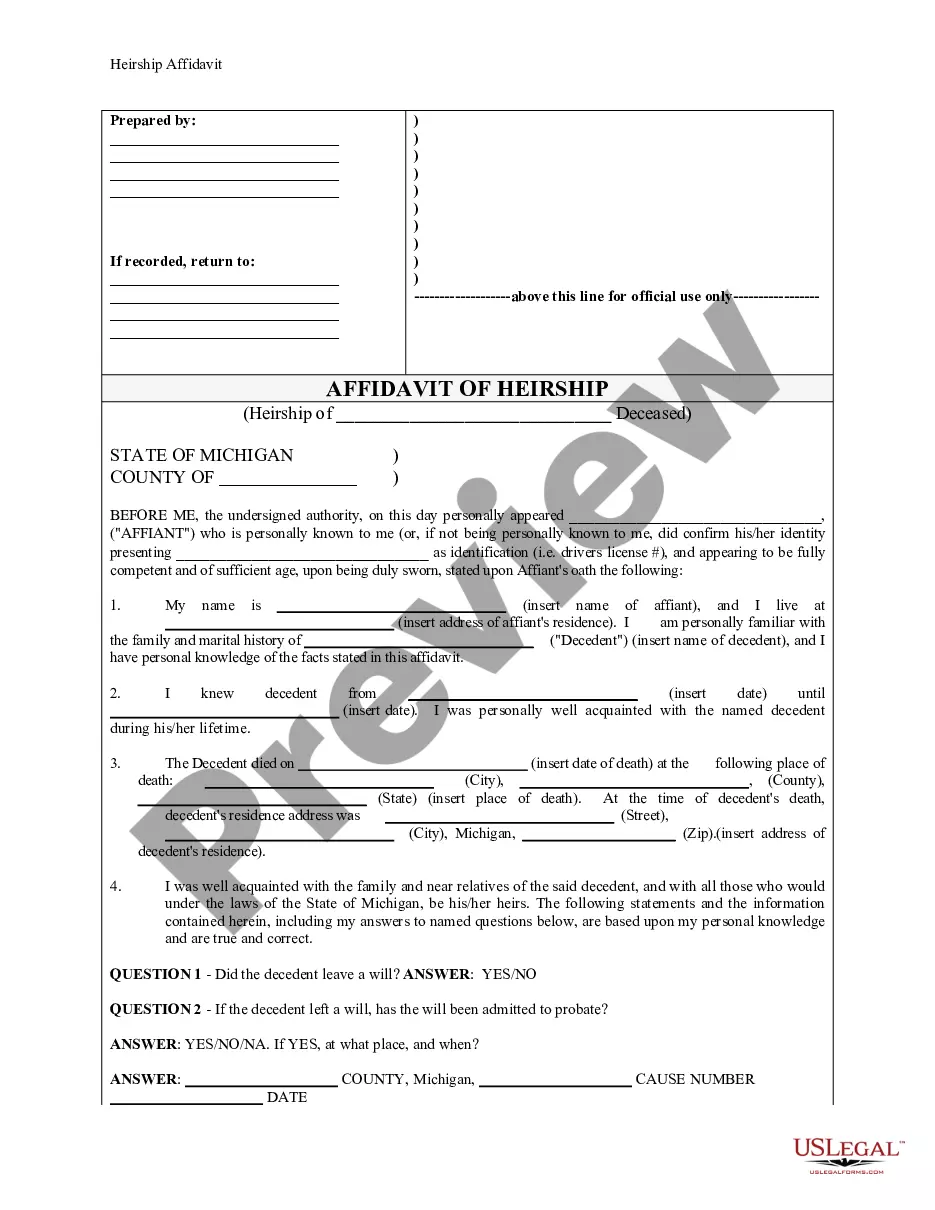
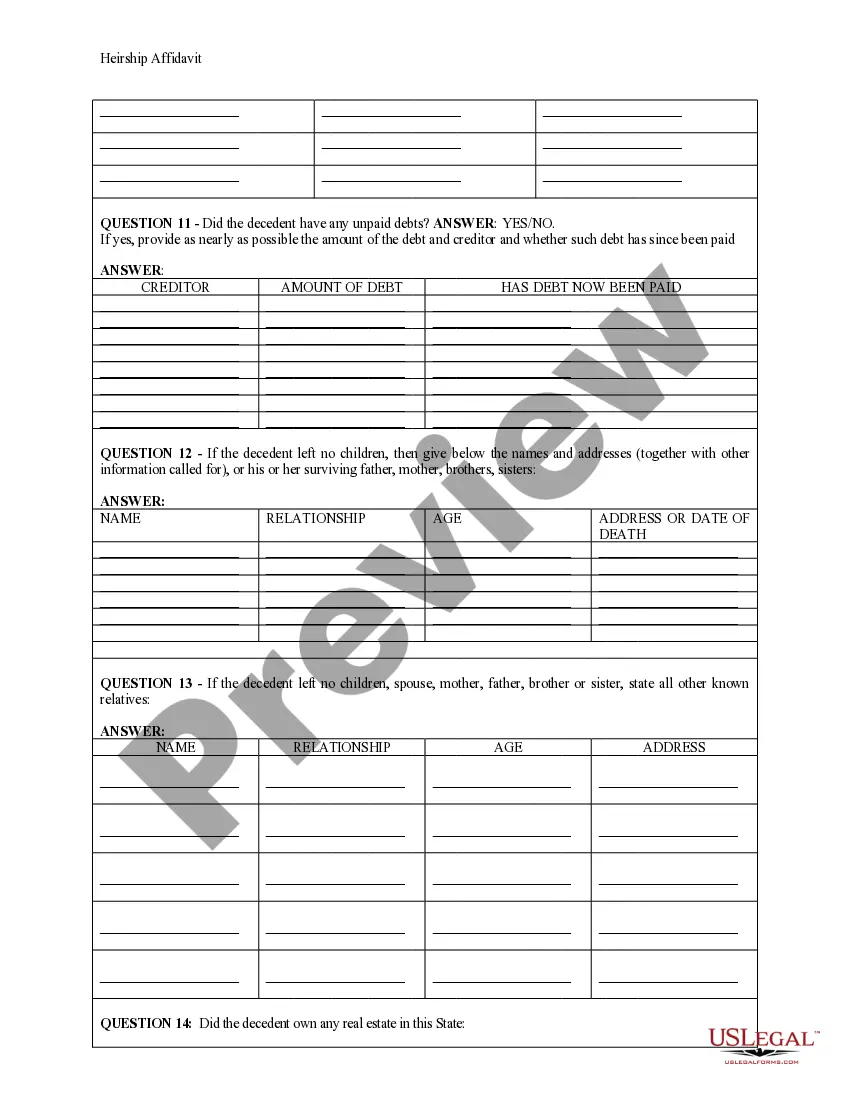
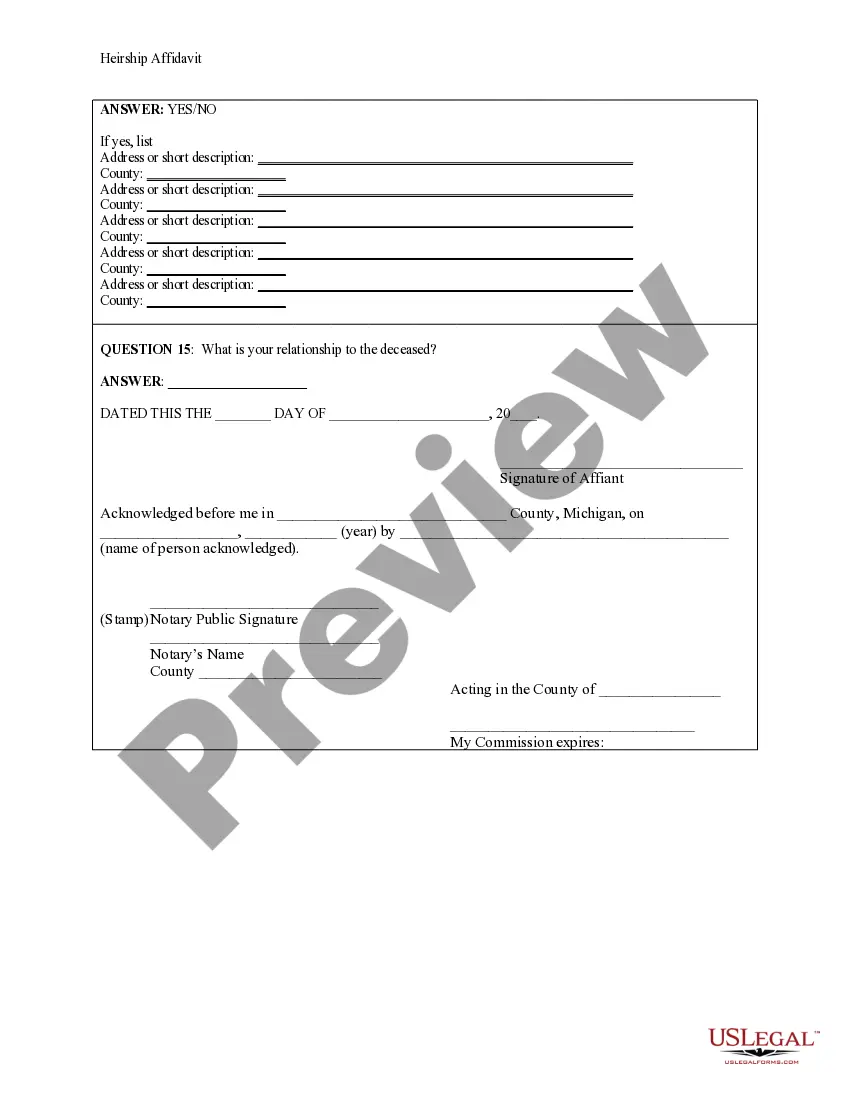
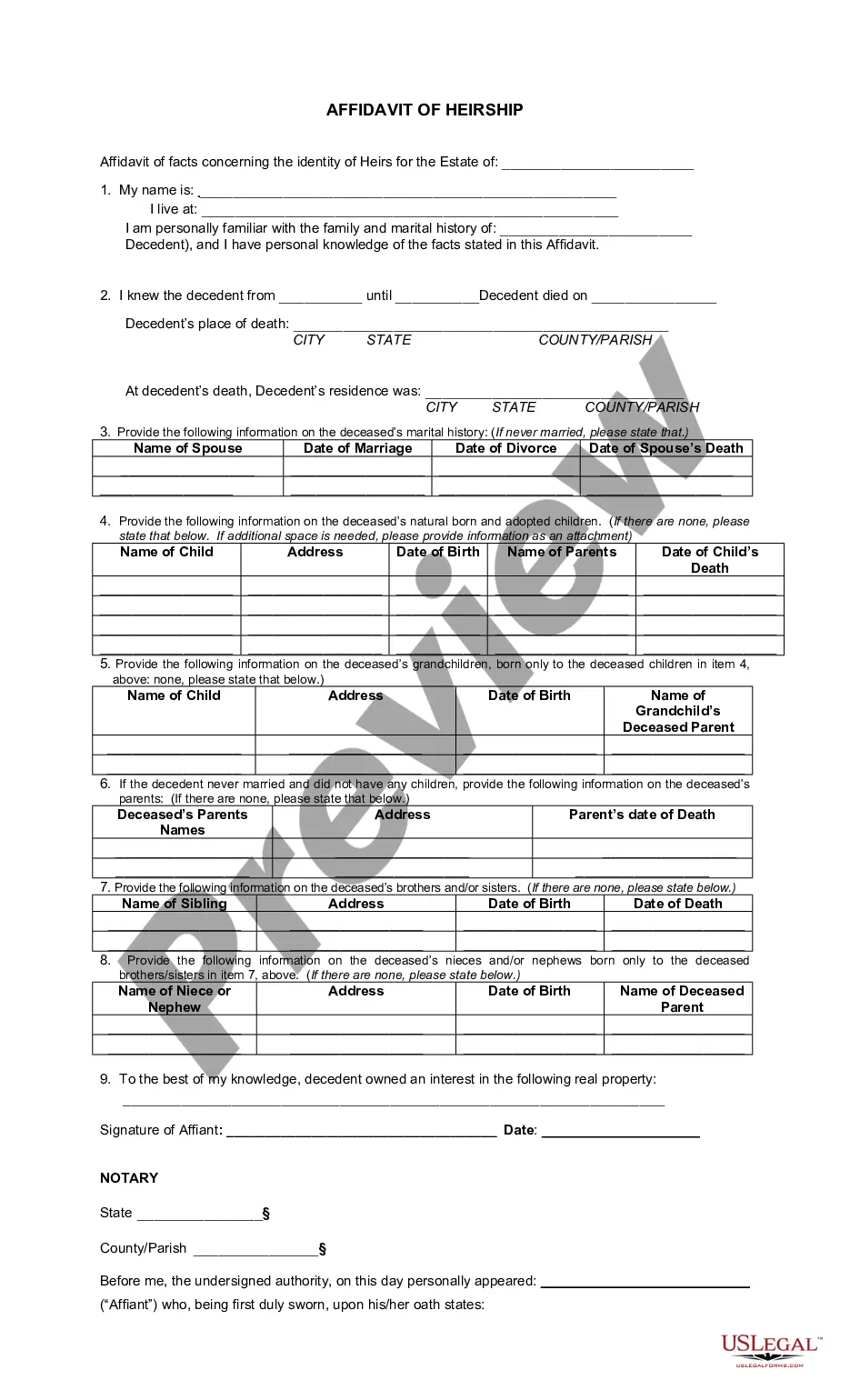
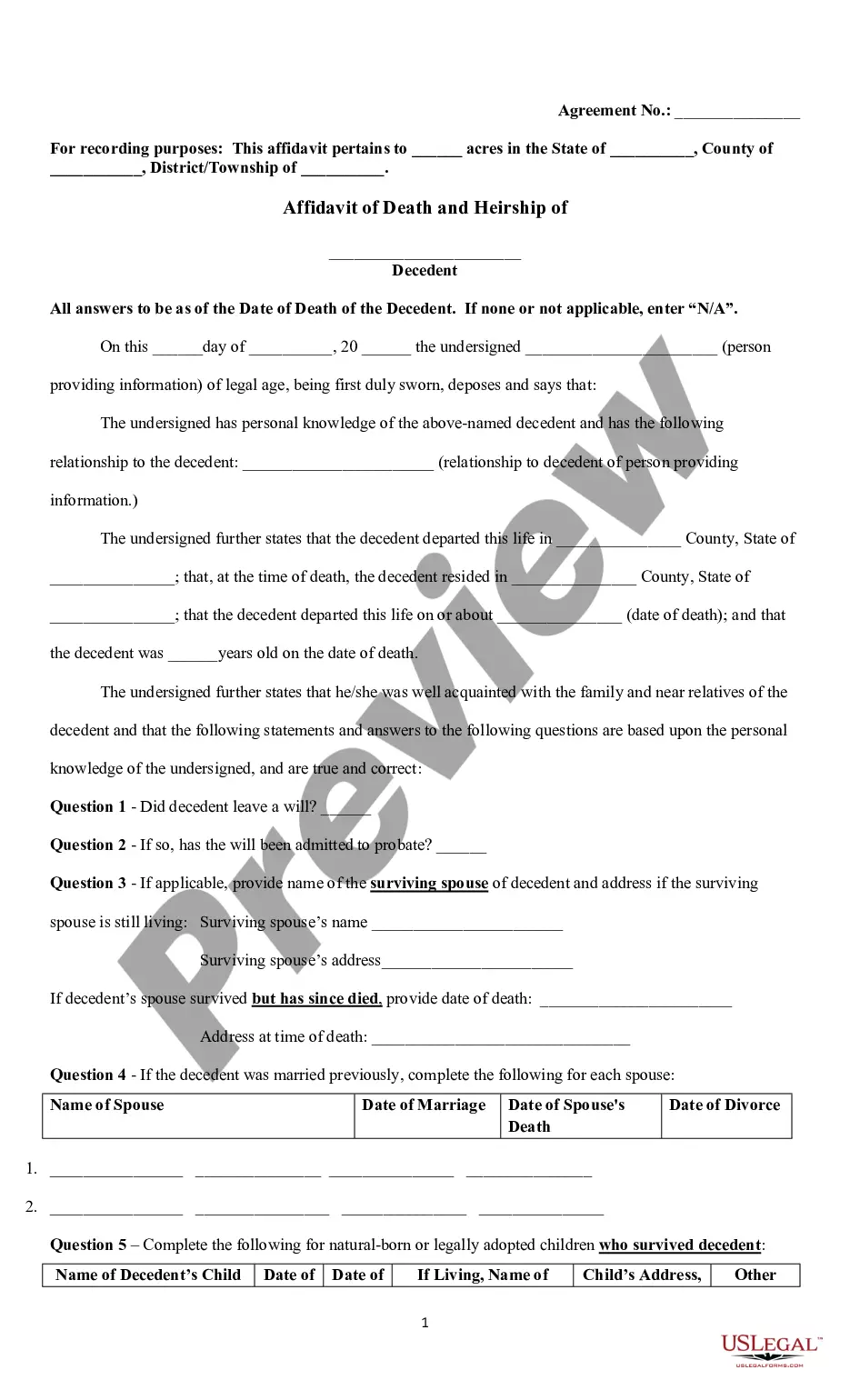
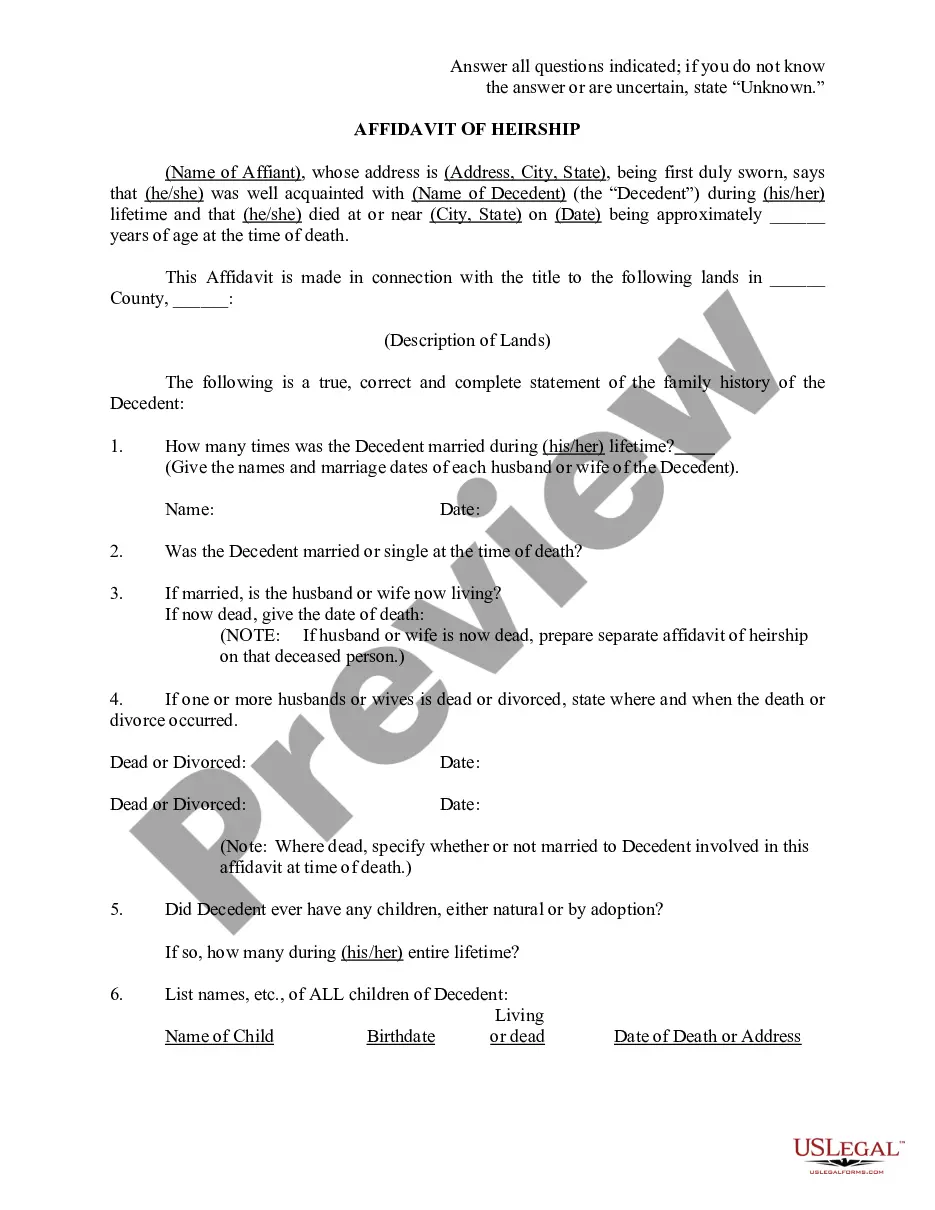
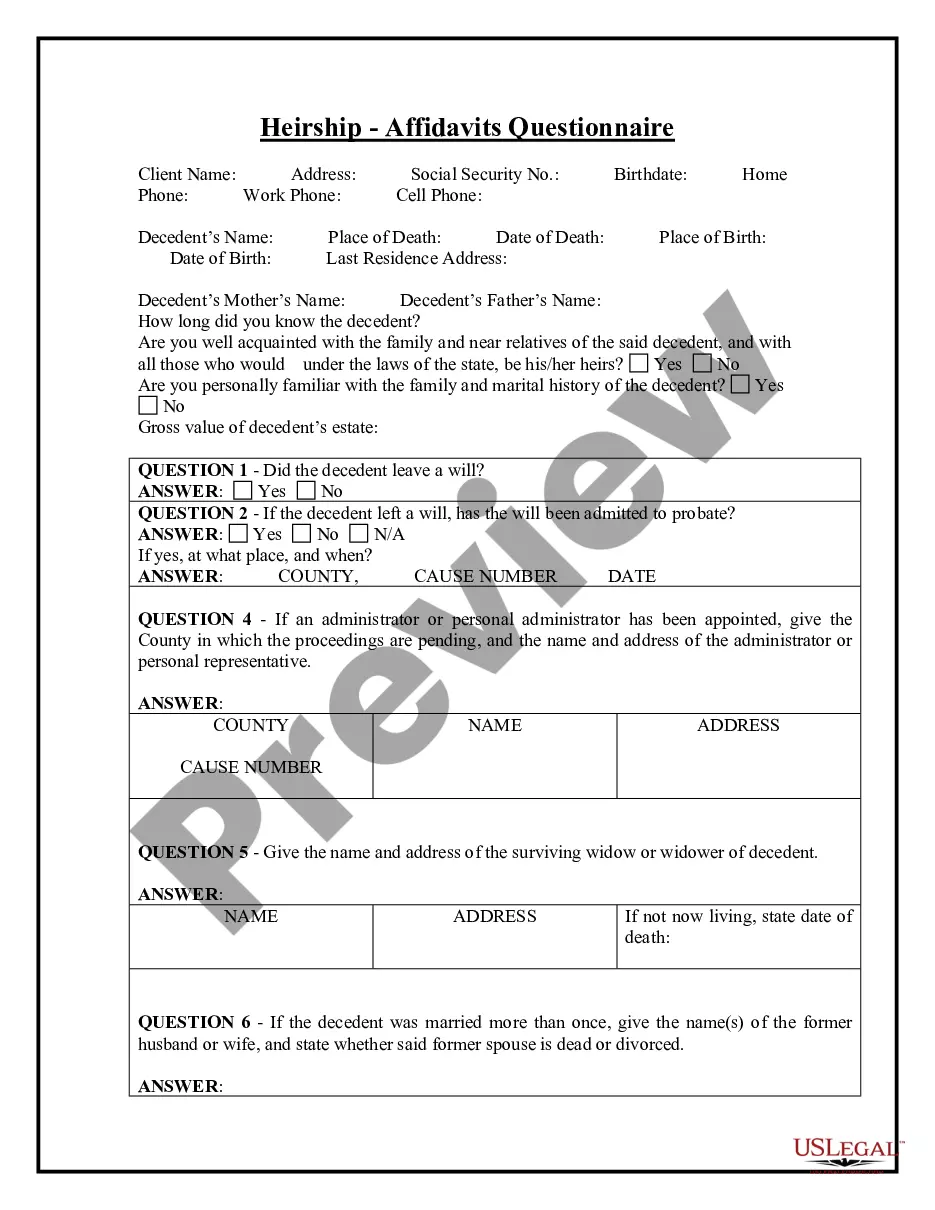
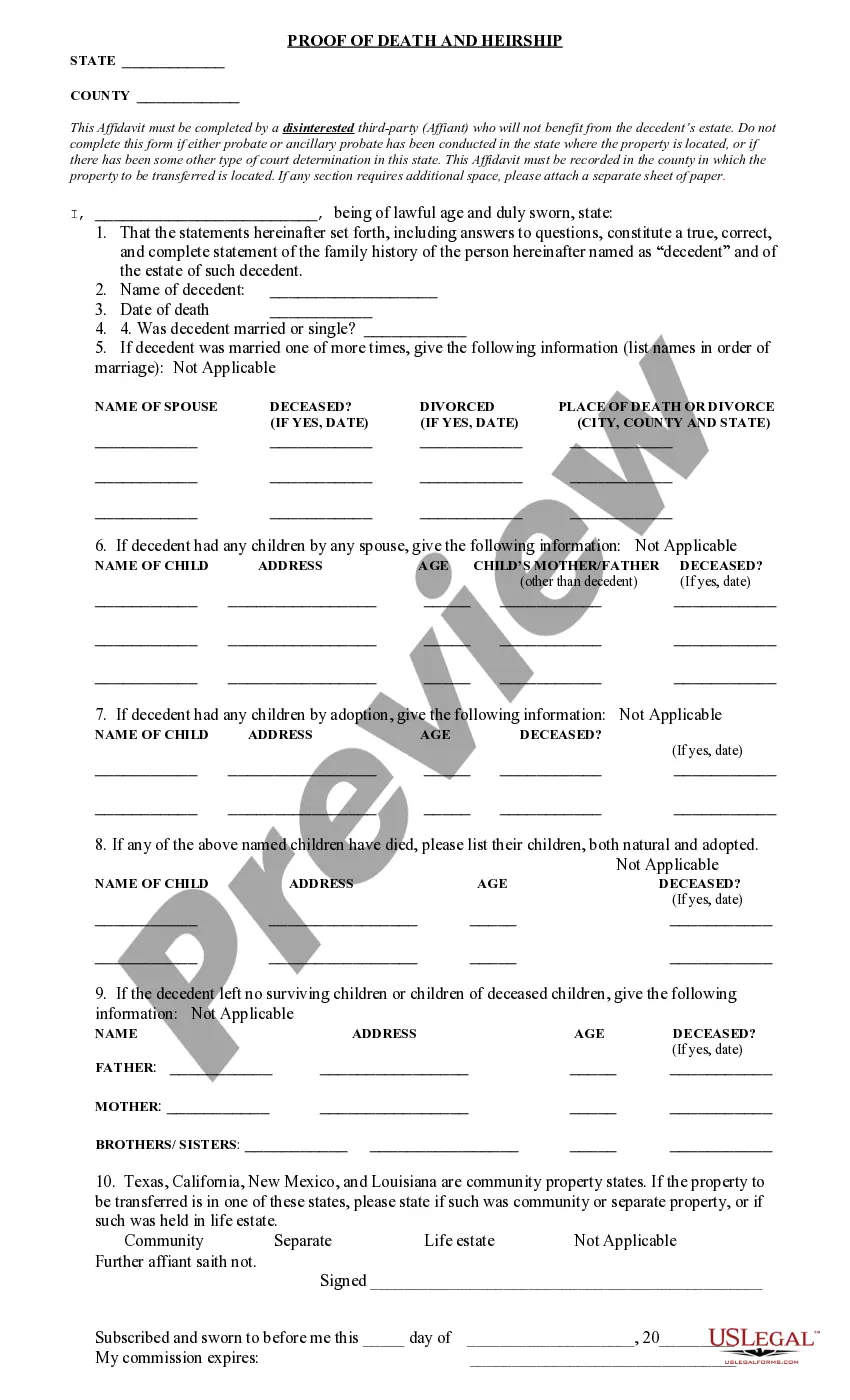
The Heirship Affidavit - Descent is a legal document that allows an individual to declare the heirs of a deceased person. This form is essential for establishing ownership of personal and real property in situations where the deceased didn't leave behind a will. Unlike other estate planning documents, the Heirship Affidavit assists in clarifying heirship, especially when property transfer is needed, ensuring that rightful heirs can claim the deceased's assets.
Key components of this form
- Affiant Information: Details about the person completing the affidavit, including name and address.
- Decedent Information: Name and address of the deceased, along with the date and place of death.
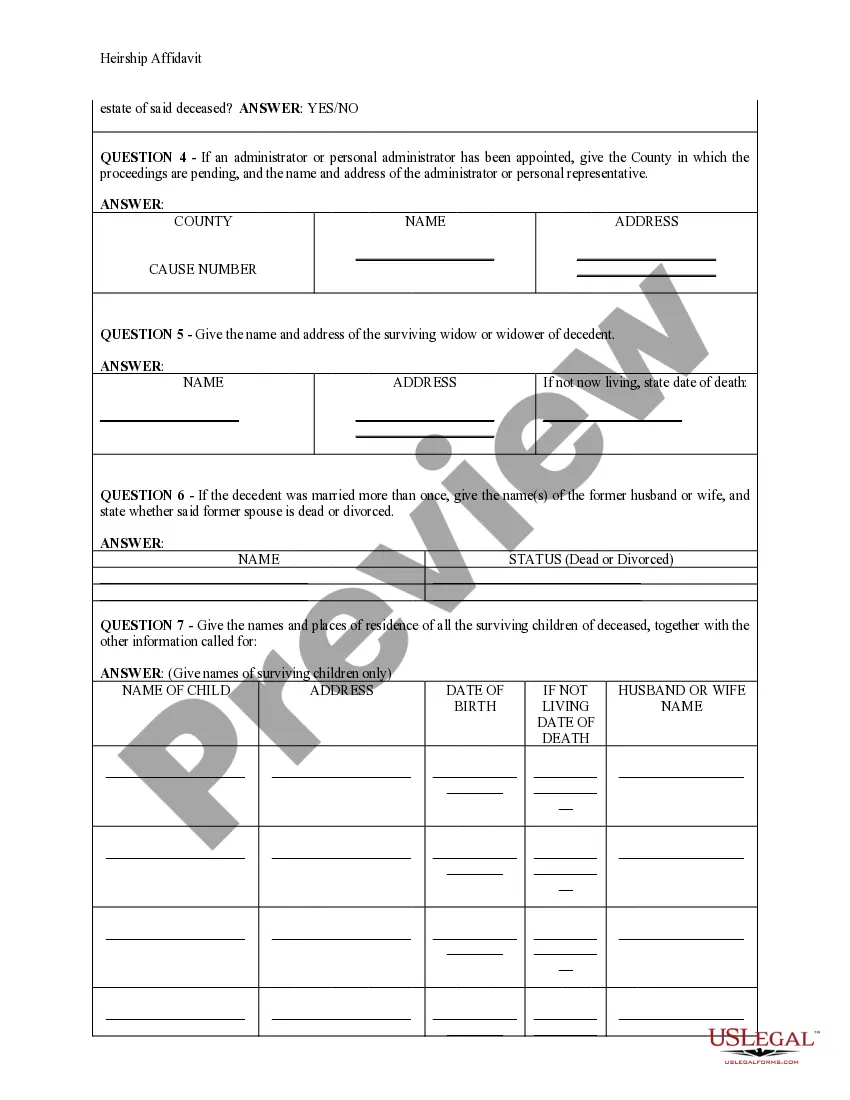
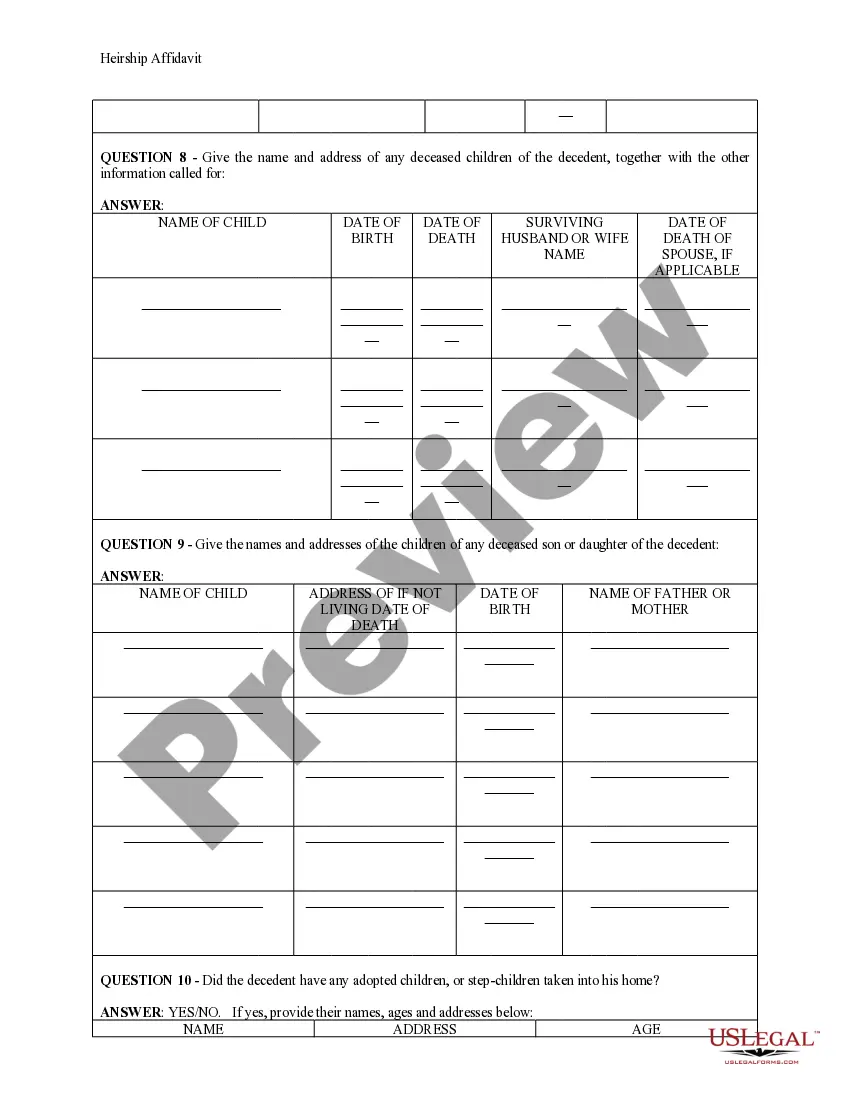
- Family History: Questions to establish the family structure, including details about surviving relatives and their status.
- Property Ownership: Questions regarding any real estate owned by the decedent.
- Affiant's Relationship: Information about the relationship of the affiant to the decedent.
Situations where this form applies
This form is used in various scenarios, such as when an individual dies without a will, and their heirs need to establish rights to their assets. It is particularly necessary when transferring property ownership, for instance, when a child wishes to sell land inherited from a parent who did not have a will. Additionally, it can be useful for probate proceedings when establishing the heirs of a deceased estate.
Who should use this form
- Individuals who have lost a family member and need to determine legal heirs.
- Heirs seeking to prove their relationship to the deceased for property transfer.
- Non-heirs who possess knowledge about the deceased's family and marital history.
Instructions for completing this form
- Fill in the affiant's personal information, including name and address.
- Provide details about the deceased, including their name, date, and place of death.
- Answer questions related to the existence of a will and any probate proceedings.
- List all surviving relatives and their relationship to the deceased.
- Indicate whether the deceased owned any real property and provide its details.
- Sign the affidavit in front of a notary public to verify its authenticity.
Notarization guidance
Yes, this form must be notarized to be legally valid. Having the affidavit notarized confirms the identity of the affiant and ensures the document's authenticity. US Legal Forms offers integrated online notarization, allowing you to complete this process through a secure video call, conveniently and efficiently.
Get your form ready online
Our built-in tools help you complete, sign, share, and store your documents in one place.
Make edits, fill in missing information, and update formatting in US Legal Forms—just like you would in MS Word.
Download a copy, print it, send it by email, or mail it via USPS—whatever works best for your next step.
Sign and collect signatures with our SignNow integration. Send to multiple recipients, set reminders, and more. Go Premium to unlock E-Sign.
If this form requires notarization, complete it online through a secure video call—no need to meet a notary in person or wait for an appointment.
We protect your documents and personal data by following strict security and privacy standards.

Make edits, fill in missing information, and update formatting in US Legal Forms—just like you would in MS Word.

Download a copy, print it, send it by email, or mail it via USPS—whatever works best for your next step.

Sign and collect signatures with our SignNow integration. Send to multiple recipients, set reminders, and more. Go Premium to unlock E-Sign.

If this form requires notarization, complete it online through a secure video call—no need to meet a notary in person or wait for an appointment.

We protect your documents and personal data by following strict security and privacy standards.
Mistakes to watch out for
- Failing to include all relevant relatives, which may lead to disputes later.
- Not providing accurate information regarding the decedentâs property.
- Omitting necessary signatures or failing to notarize the document.
Benefits of using this form online
- Convenient access to a professionally drafted legal document.
- Editable templates that allow for customization according to specific circumstances.
- Quick download process, saving time compared to traditional methods.
- Peace of mind knowing the form is created by licensed attorneys to meet legal standards.
Main things to remember
- The Heirship Affidavit - Descent is crucial for verifying heirs when a deceased person has no will.
- This document facilitates property transfers and helps establish legal ownership.
- Accurate, complete information is necessary to avoid disputes among potential heirs.
Looking for another form?


Form popularity
FAQ
In Michigan you can use an Affidavit if the estate does not include real property and the value of the entire estate, less liens and encumbrances, is less than $15,000. There is a 28-day waiting period.
The Illinois small estate affidavit provides a streamlined way for an heir-at-law of a decedent to gather and distribute the assets of the estate of a person who died, provided that no other petition to open an estate in probate court has been filed and that the assets of the person who died do not exceed $100,000.
To be able to file a small estate affidavit in Texas for a loved one, when no will was executed, you must be a person who would inherit under Texas intestacy law (this is generally the spouse and children, or other close relatives if there are no spouse or children).
Guadalupe County Small Estate Affidavit Checklist Individuals then fill out a form without reading the statute and without understanding Texas intestacy law. They pay a $261 filing fee and expect approval.
When you use a small estate affidavit , you have to pay the decedent's bills before paying money to anyone else. For example, the decedent might have owed money to a credit card company when they died. If you use the small estate affidavit, you must give money from the estate to pay the credit card company.
But for estates in Michigan that exceed the small estate's threshold, and for which there is either no Will, or a Will (but not a Living Trust), probate will be required before an estate can be tranferred to the decedent's heirs or beneficiaries.
In most states, however, there is the option to use a small estate affidavit when the assets of the estate are under a certain dollar amount, which varies by state. An attorney is not required to file a small estate affidavit, although it may be helpful to consult with one prior to filing the small estate affidavit.