Wisconsin Small Business Accounting Package
What is this form package?
The Wisconsin Small Business Accounting Package is a comprehensive collection of essential accounting forms tailored specifically for small businesses in Wisconsin. This package includes forms that help you track and manage financial data, ensuring your business operates smoothly. Unlike other generic forms, these templates are designed with Wisconsin's specific legal requirements in mind, making them more relevant to your business needs.
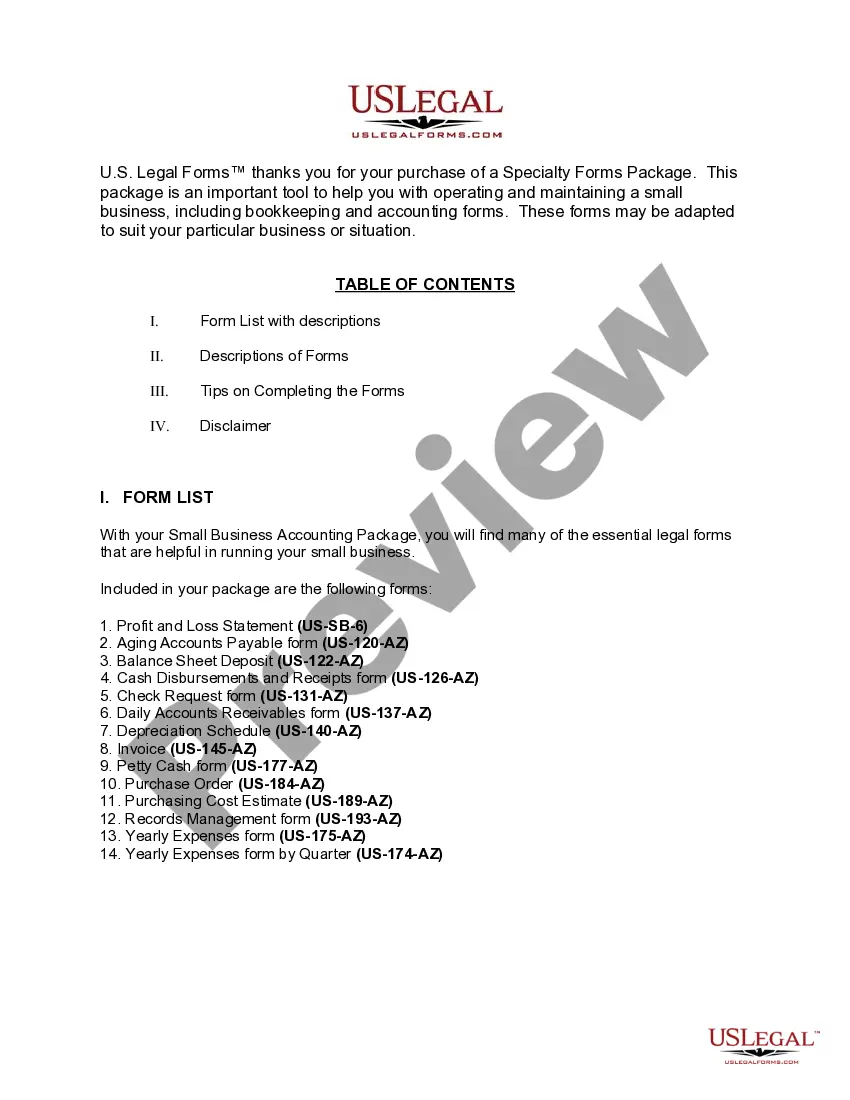
Documents contained in this package
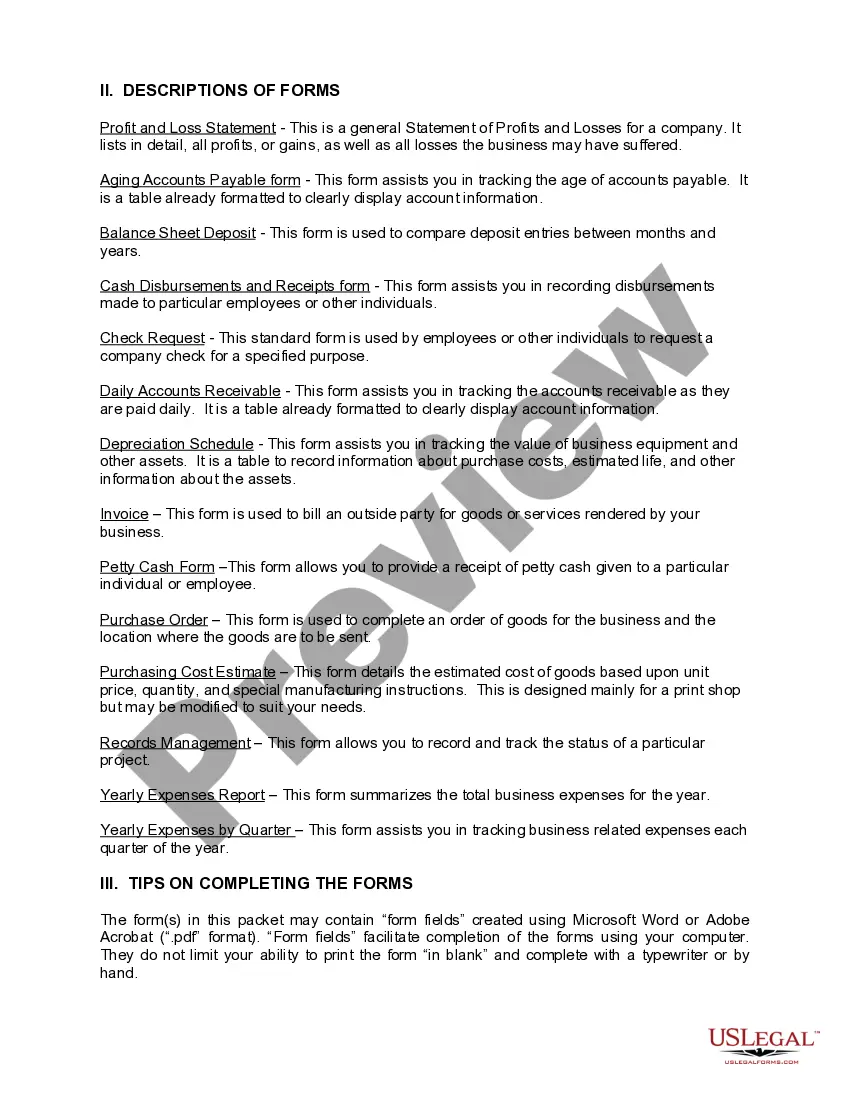
- Aging Accounts Payable
- Balance Sheet Deposits
- Cash Disbursements and Receipts
- Check Request
- Daily Accounts Receivable
- Depreciation Schedule
- Job Invoice - Short
- Yearly Expenses by Quarter
- Yearly Expenses
- Petty Cash Form
- Purchasing Cost Estimate
- Records Management
- Profit and Loss Statement
- Purchase Order for Invoice





When to use this document
This form package is ideal for small business owners who need reliable tools for financial recording and reporting. You may find it particularly useful in the following scenarios:
- When you start a new small business and need to set up basic accounting records.
- When you want to keep track of your profits and losses for the year.
- When managing your accounts payable and receivable effectively.
- When you need standardized documentation for invoices and purchase orders.
Who should use this form package
- Small business owners in Wisconsin.
- Accountants and bookkeepers managing multiple clients.
- Entrepreneurs looking to streamline their financial processes.
- Individuals new to business operations who require guidance and templates for accounting.
Steps to complete these forms
- Review included forms carefully to understand their purpose and how they relate to your business.
- Identify the relevant parties involved in your transactions and enter their details where required.
- Populate the accounting forms with accurate financial data, such as expenses, revenues, and asset values.
- Ensure all forms are signed and dated before submission or filing.
- Keep a copy of each completed form for your records and future reference.
Do documents in this package require notarization?
Notarization is not commonly needed for forms in this package. However, if your state’s laws require it, our notarization service, powered by Notarize, allows you to finalize documents online 24/7 without in-person visits.
Get your form ready online
Our built-in tools help you complete, sign, share, and store your documents in one place.
Make edits, fill in missing information, and update formatting in US Legal Forms—just like you would in MS Word.
Download a copy, print it, send it by email, or mail it via USPS—whatever works best for your next step.
Sign and collect signatures with our SignNow integration. Send to multiple recipients, set reminders, and more. Go Premium to unlock E-Sign.
If this form requires notarization, complete it online through a secure video call—no need to meet a notary in person or wait for an appointment.
We protect your documents and personal data by following strict security and privacy standards.

Make edits, fill in missing information, and update formatting in US Legal Forms—just like you would in MS Word.

Download a copy, print it, send it by email, or mail it via USPS—whatever works best for your next step.

Sign and collect signatures with our SignNow integration. Send to multiple recipients, set reminders, and more. Go Premium to unlock E-Sign.

If this form requires notarization, complete it online through a secure video call—no need to meet a notary in person or wait for an appointment.

We protect your documents and personal data by following strict security and privacy standards.
Avoid these common issues
- Providing inaccurate financial information or miscalculating figures.
- Failing to keep copies of completed forms for personal records.
- Neglecting to update forms with current data regularly.
- Overlooking specific state requirements that could affect compliance.
Advantages of online completion
- Convenience of accessing and downloading forms from anywhere at any time.
- Editability allows you to personalize forms according to your specific business needs.
- Reliability, as all forms are crafted by licensed attorneys familiar with Wisconsin laws.
- Cost savings of up to 50% compared to purchasing forms individually.
Looking for another form?





Form popularity
FAQ
The typical accounting fees for small business fall between $1,000 to $5,000, according to the poll. If you're a new business owner, don't forget to factor accounting costs into your budget. If you're a veteran owner, it might be time to re-evaluate accounting costs.
Wave: Best Free QuickBooks Alternative Like QuickBooks, Wave has integrated credit card processing and payroll that can be added for an additional fee. The bookkeeping software is always free, so you can connect your bank account and explore Wave's features to see if it's right for you.
Wave. Best for: Sole proprietors and small businesses. ZipBooks. Best for: Small businesses looking to upgrade from spreadsheets. SlickPie. Best for: Small businesses with little experience bookkeeping. GnuCash. Best for: Sole proprietors and small businesses. CloudBooks. Akaunting. Sunrise.
The average price of outsourcing your bookkeeping needs ranges from $500 to $2,500 a month depending on the number of transactions and complexity of services required. A key benefit of Outsourcing is it gives you the ability to customize the services you receive to your bookkeeping needs.
Business Bank Reconciliations. Credit Card Management. Accounts Receivable. Accounts Payable. Sales Tax. Payroll.
Wave. A top free accounting software to consider from the start of your search is Wave accounting software. ZipBooks. Akaunting. SlickPie. GnuCash. CloudBooks. Zoho Invoice. NCH Express Accounts.
Open a bank account. Track your expenses. Develop a bookkeeping system. Set up a payroll systems. Investigate import tax. Determine how you'll get paid. Establish sales tax procedures. Determine your tax obligations.
Create a New Business Account. Set Budget Aside for Tax Purposes. Always Keep Your Records Organised. Track Your Expenses. Maintain Daily Records. Leave an Audit Trail. Stay on Top of Your Accounts Receivable. Keep Tax Deadlines in Mind.
Open a bank account. Track your expenses. Develop a bookkeeping system. Set up a payroll systems. Investigate import tax. Determine how you'll get paid. Establish sales tax procedures. Determine your tax obligations.