Balance Sheet Deposits
What this document covers
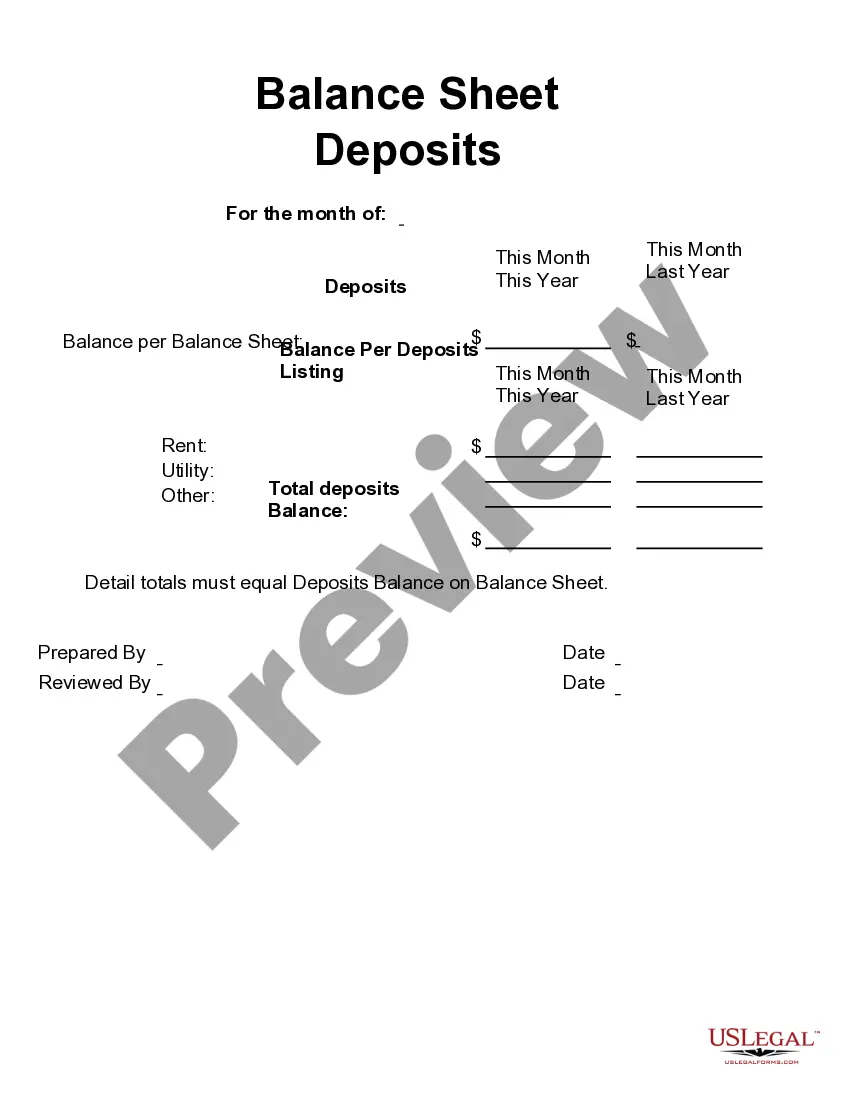
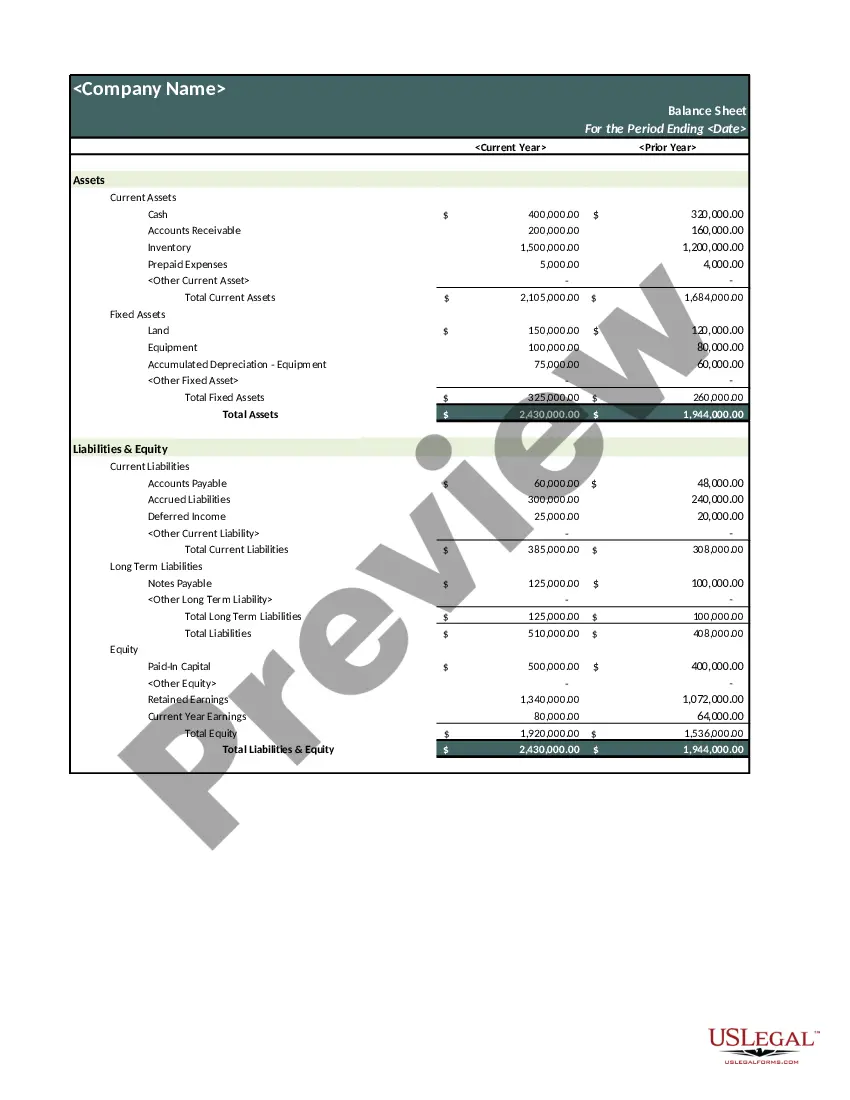
The Balance Sheet Deposits form is a key business document used to track and summarize all deposits made by a business over a specific period. This form differentiates itself from other financial forms by specifically focusing on deposits, allowing businesses to record details such as rent, utility costs, and other payments. Utilizing this form will help ensure accurate financial management and reporting.
Main sections of this form
- Month and Year: Identify the period for which the deposits are being recorded.
- Rent: Space to detail the amount of rent collected.
- Utility: Area to record any utility deposits made.
- Other: Section for listing additional deposits relevant to the business.
- Total deposits: A sum of all deposits recorded.
- Balance: The final balance after calculating total deposits.
- Prepared By: Signature block for the individual preparing the form.
- Reviewed By: Signature block for the person reviewing the form.
- Date fields: Areas to indicate preparation and review dates.
Common use cases
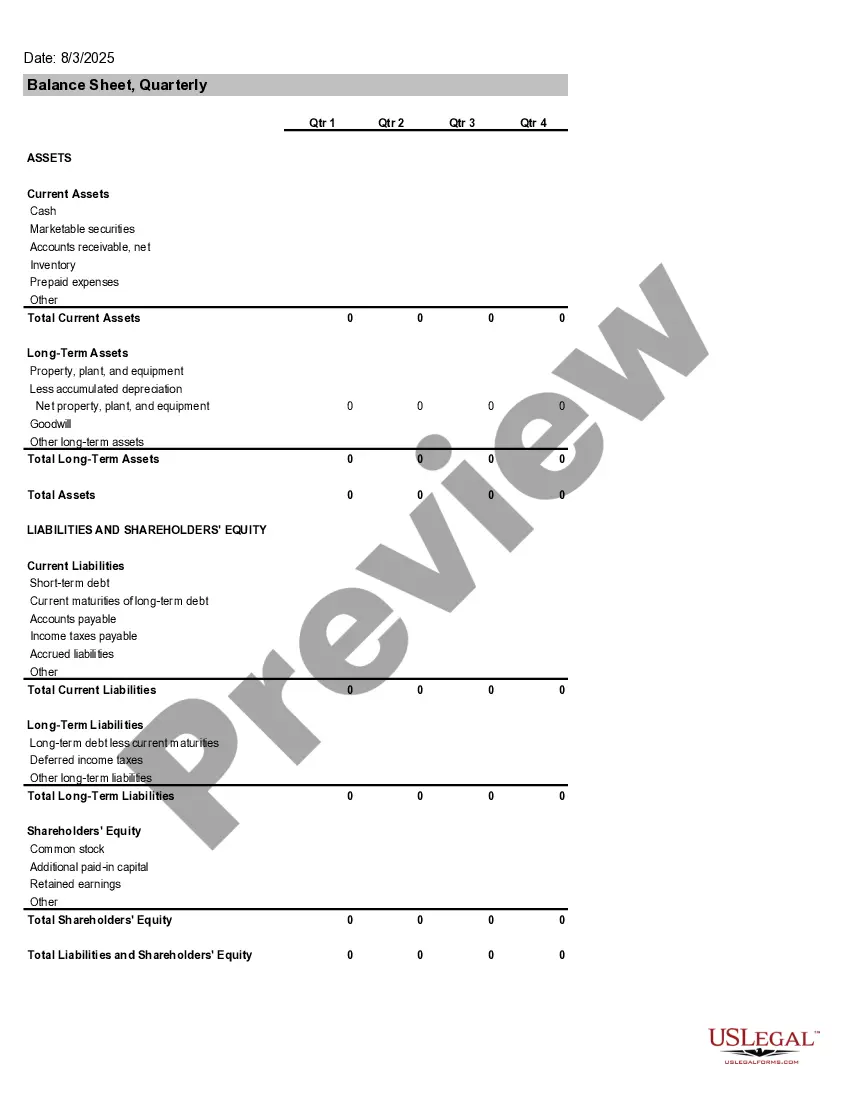
This form is particularly useful for businesses that need to maintain accurate records of deposits made during a specific month. It is essential during the financial reporting process, for audits, or when preparing financial statements. Use this form whenever you need to track the flow of funds into your business, ensuring all deposits are accounted for and reconciled with the overall balance sheet.
Intended users of this form
- Small business owners managing their financial records.
- Accountants assisting businesses in bookkeeping.
- Finance managers responsible for monthly reporting.
- Anyone tasked with tracking deposit transactions for compliance or auditing.
Completing this form step by step
- Enter the month and year at the top of the form.
- Record each deposit type in the appropriate fields (Rent, Utility, Other) with the corresponding amounts.
- Calculate the Total deposits and enter that figure in the designated area.
- Ensure that the Detail totals equal the Deposits Balance on the Balance Sheet.
- Complete the Prepared By and Reviewed By sections with names and dates.
Is notarization required?
This form does not typically require notarization unless specified by local law. It is essential to check local regulations to ensure compliance.
Get your form ready online
Our built-in tools help you complete, sign, share, and store your documents in one place.
Make edits, fill in missing information, and update formatting in US Legal Forms—just like you would in MS Word.
Download a copy, print it, send it by email, or mail it via USPS—whatever works best for your next step.
Sign and collect signatures with our SignNow integration. Send to multiple recipients, set reminders, and more. Go Premium to unlock E-Sign.
If this form requires notarization, complete it online through a secure video call—no need to meet a notary in person or wait for an appointment.
We protect your documents and personal data by following strict security and privacy standards.

Make edits, fill in missing information, and update formatting in US Legal Forms—just like you would in MS Word.

Download a copy, print it, send it by email, or mail it via USPS—whatever works best for your next step.

Sign and collect signatures with our SignNow integration. Send to multiple recipients, set reminders, and more. Go Premium to unlock E-Sign.

If this form requires notarization, complete it online through a secure video call—no need to meet a notary in person or wait for an appointment.

We protect your documents and personal data by following strict security and privacy standards.
Common mistakes to avoid
- Failing to accurately calculate the total deposits.
- Not double-checking that all detail totals correlate with the overall balance.
- Neglecting to include all relevant deposits in the âOtherâ category.
- Omitting the dates in the Prepared and Reviewed sections.
Why complete this form online
- Convenient and quick access to the form anytime, anywhere.
- Easy to edit and customize to fit specific business needs.
- Reliable format ensures a professional appearance for presentations and audits.
Legal use & context
- This form is typically used for internal financial documentation within businesses.
- It helps businesses comply with standard accounting practices and maintain transparency in financial reporting.
- The documented deposit balances can serve as evidence during financial audits or review processes.
Summary of main points
- The Balance Sheet Deposits form is essential for tracking business deposits.
- Accuracy in completing this form ensures reliable financial reporting.
- Utilizing this form can help prevent common financial errors and maintain transparency.
Looking for another form?

Form popularity
FAQ
If the tenant intends to occupy the rental unit for more than one year, the security deposit should be reported as a long-term asset (or noncurrent asset) under the balance sheet classification "Other assets". The landlord that receives and holds the security deposit should report the amount as a liability.
Deposits is a current liability account in the general ledger, in which is stored the amount of funds paid by customers in advance of a product or service delivery. These funds are essentially down payments.
The deposit itself is a liability owed by the bank to the depositor. Bank deposits refer to this liability rather than to the actual funds that have been deposited. When someone opens a bank account and makes a cash deposit, he surrenders the legal title to the cash, and it becomes an asset of the bank.
Fixed Deposit is an asset . It may be classified under the group of Long Term Investments . But it can be turned to cash in a short time!
Deposits is a current liability account in the general ledger, in which is stored the amount of funds paid by customers in advance of a product or service delivery. These funds are essentially down payments.
Fixed deposits invested in banks for less than one year are current assets. Fixed deposits invested in banks for longer than one year are non-current assets. A current asset is any asset that will provide an economic benefit within one year.
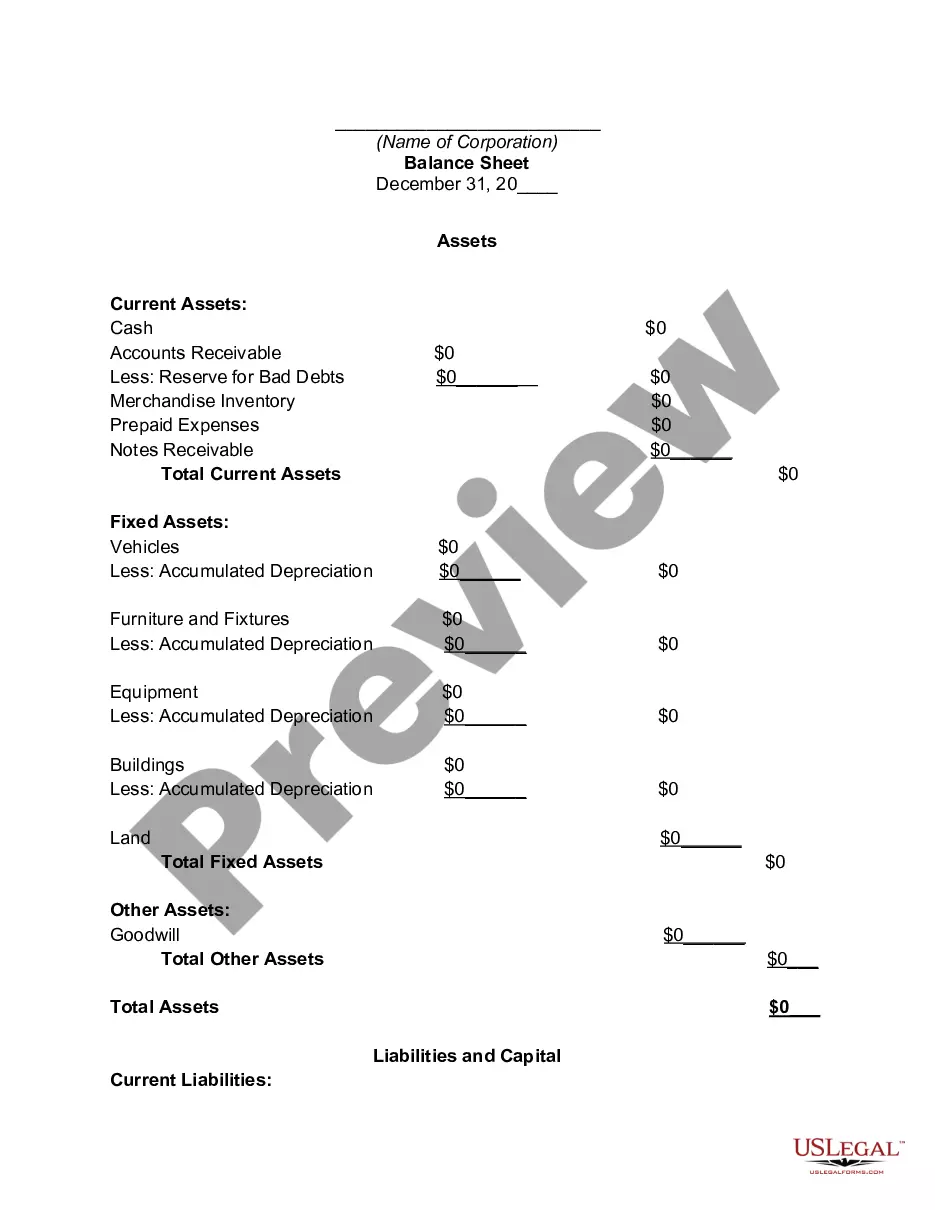
Balance Sheet: A balance sheet lists a company's assets, liabilities and shareholders equity at a specific point in time. It's usually thought of as the second most important financial statement, since it shows the liquidity and the theoretical value of the business.
In your accounting journal, debit the Cash account and credit the Customer Deposits account in the same amount. Send an invoice to the customer for the work after it has been completed. Note on the invoice the amount of the deposit previously paid and subtract it from the total amount owed.
A customer deposit is usually classified as a current liability, since the company typically provides services or goods within one year of the deposit being made. If the deposit is for a longer-term project that will not be resolved within one year, it could instead be classified as a long-term liability.