Maine Roofing Contractor Package
Overview of this form package
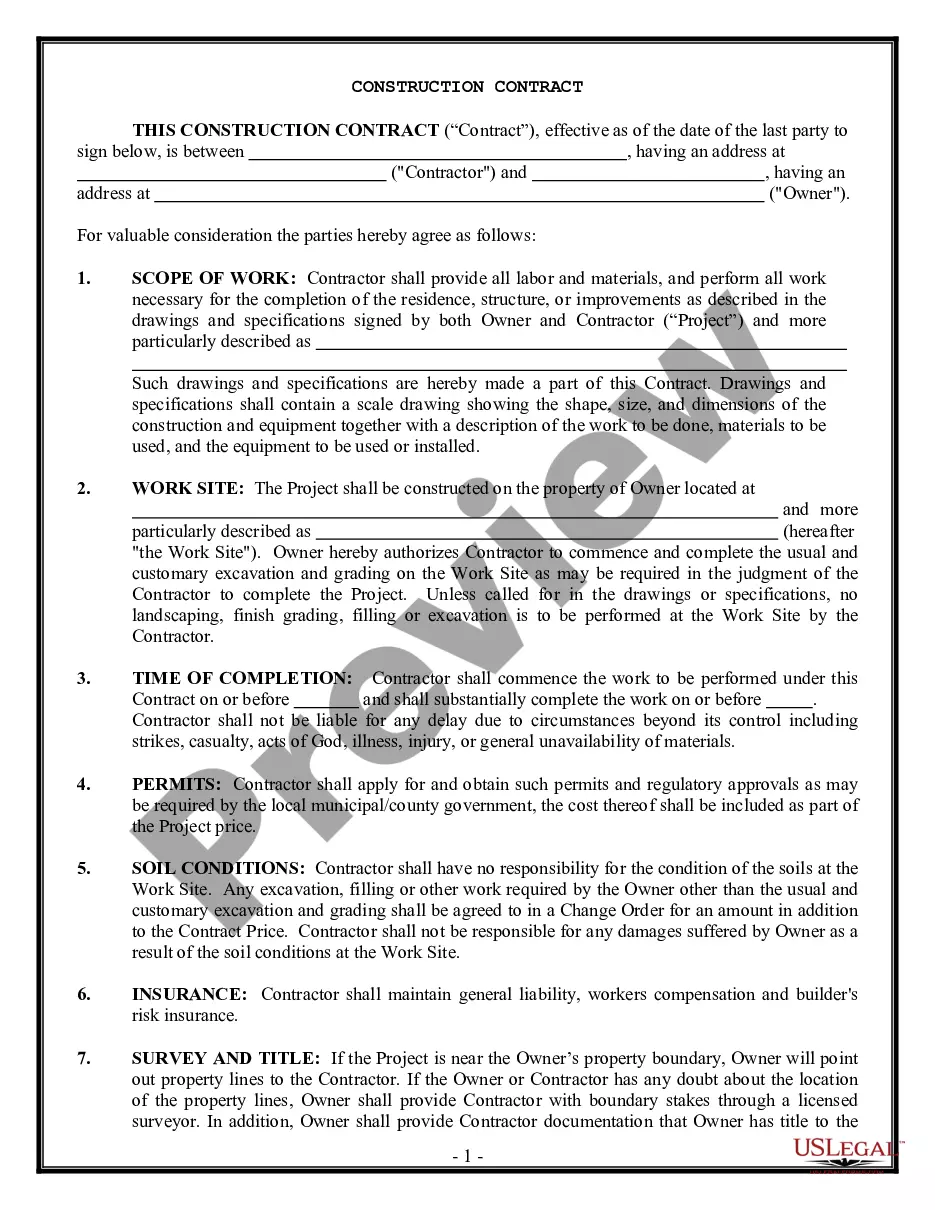
The Maine Roofing Contractor Package is a comprehensive collection of legal forms designed to address the various legal issues that may arise during roofing projects in Maine. This package includes a roofing contract that complies with state law, along with essential documents for managing bids, change orders, safety protocols, and customer feedback. Unlike generic legal form packages, this specific collection is tailored for roofing contractors, property owners, suppliers, and subcontractors, ensuring that all involved parties have the necessary tools to navigate legal matters effectively.
What’s included in this form package
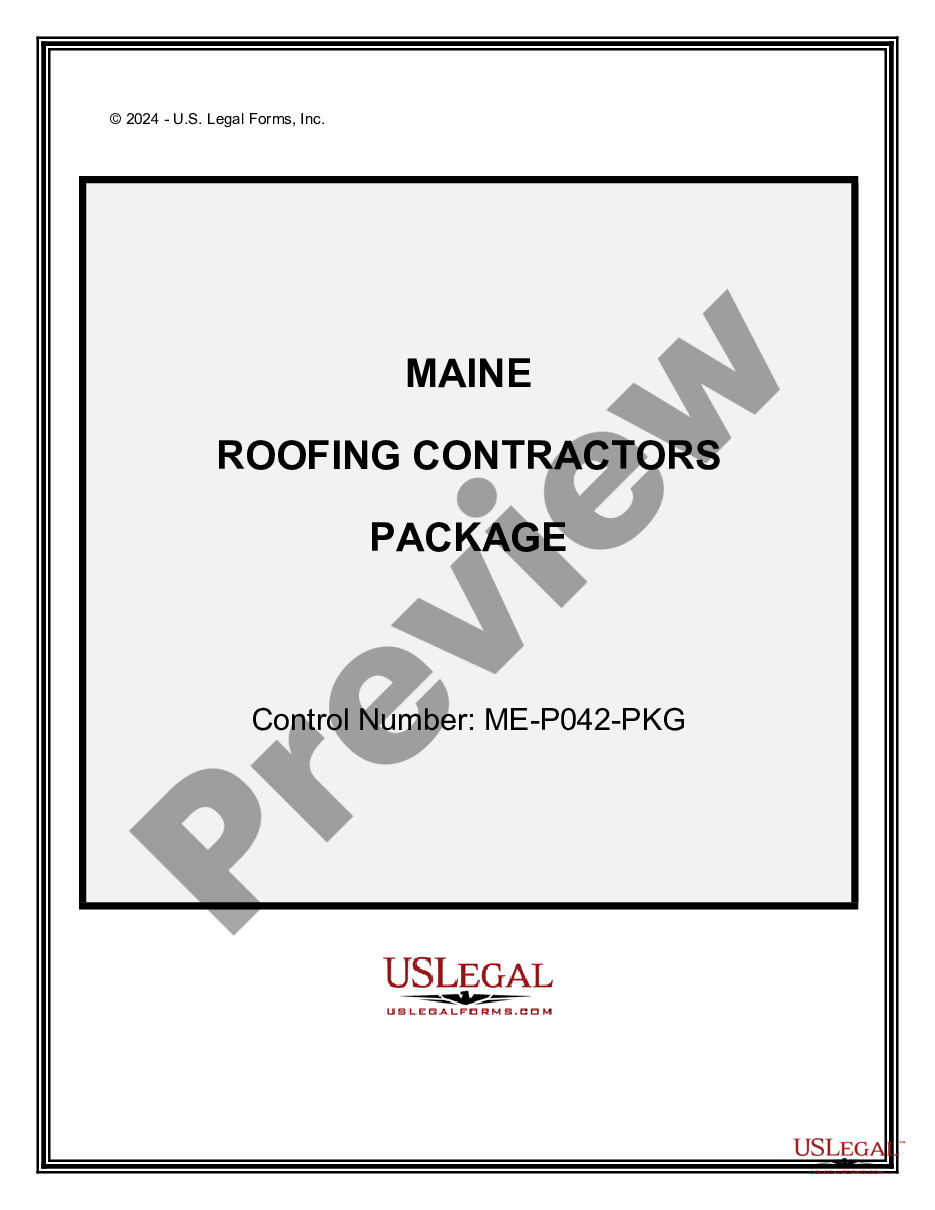
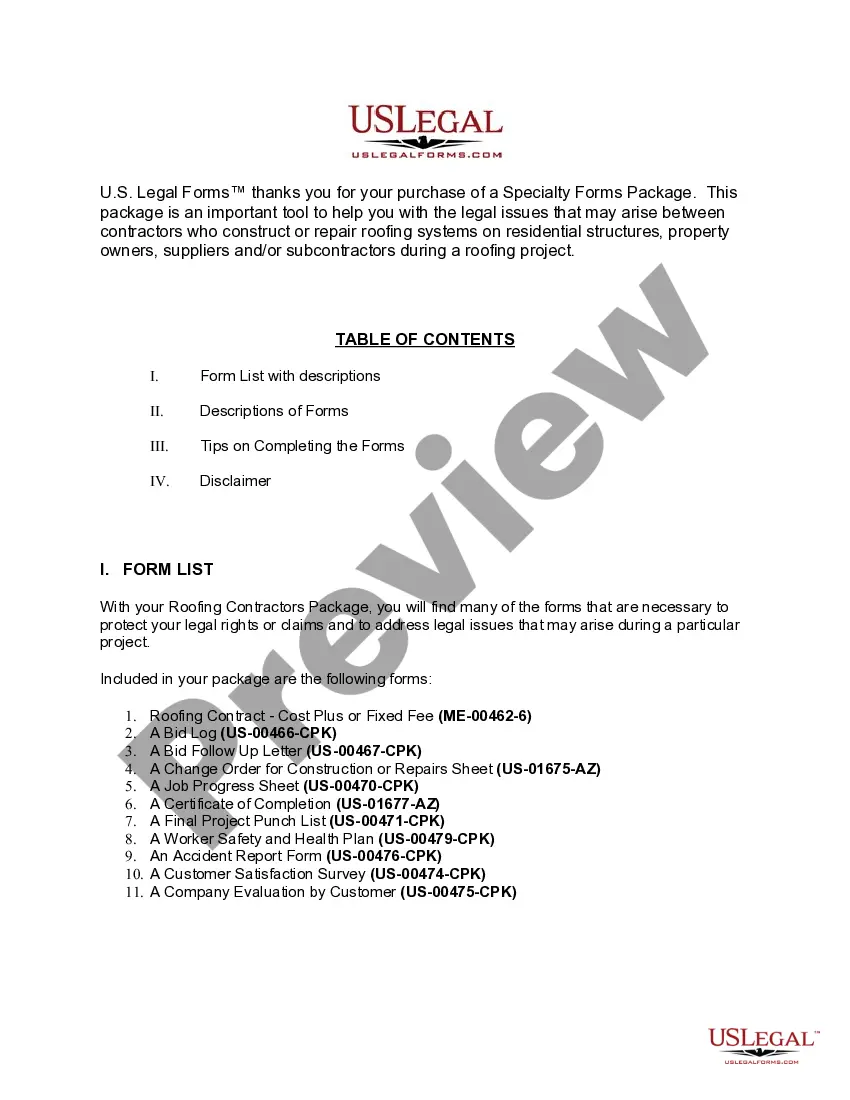
- Roofing Contract for Contractor
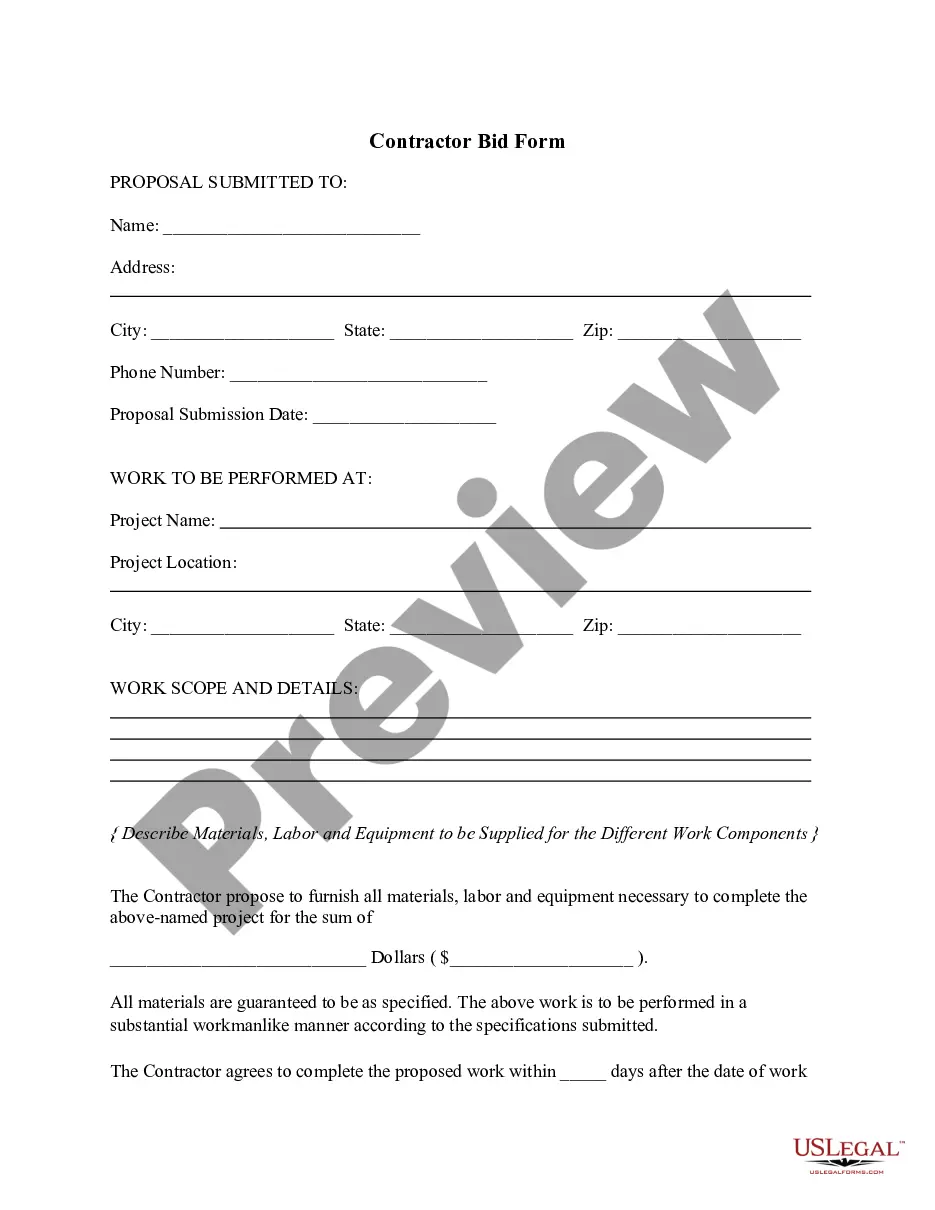
- Contractor's Bid Log
- Contractor's Bid Follow Up Letter
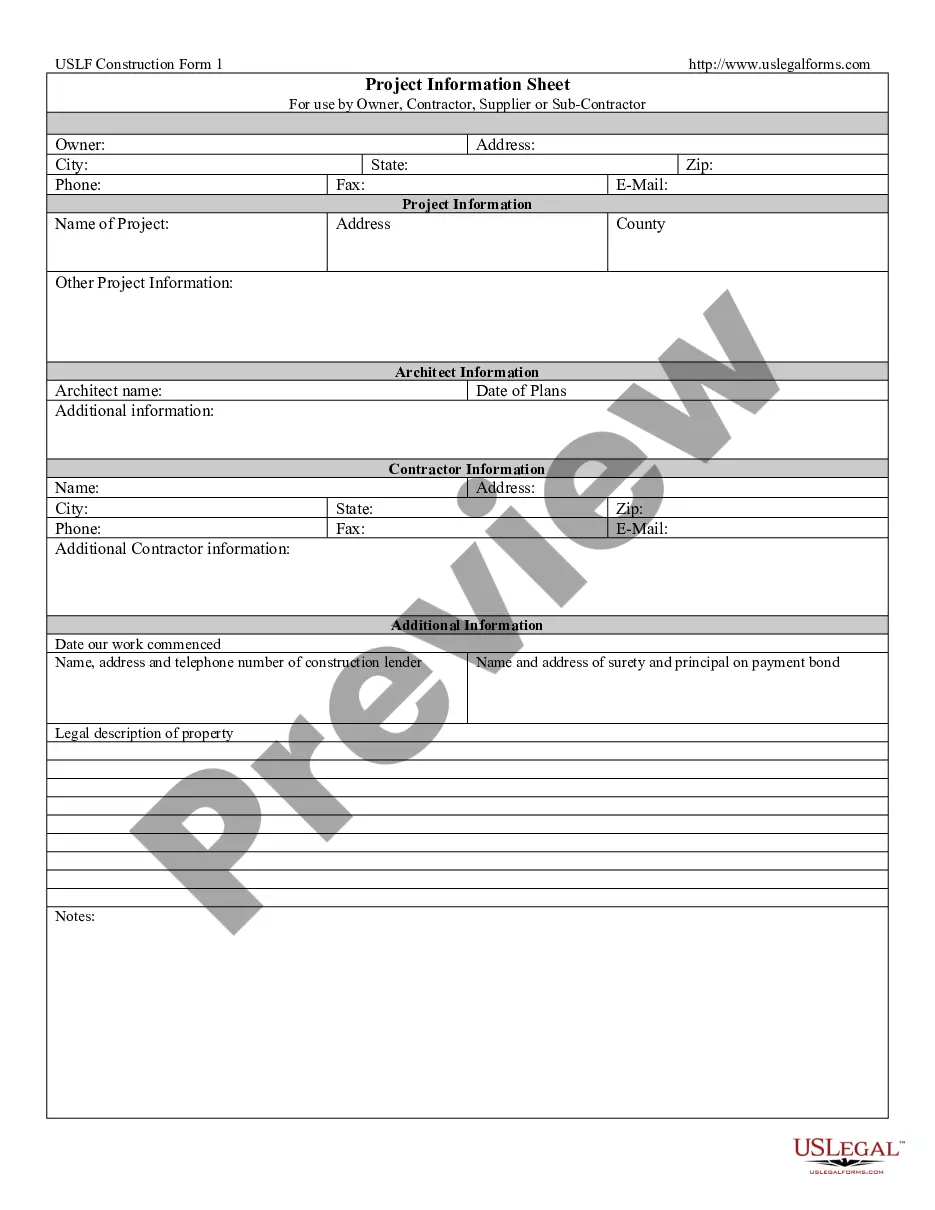
- Contractor's Job Progress Sheet
- Customer Satisfaction Survey
- Construction Company Evaluation by a Customer
- Construction Accident Report
- Construction Safety and Health Plan
- Change Order for Construction or Repairs by Contractor
- Certification of Completion by Contractor


When this form package is needed
This package is essential in several scenarios, including:
- Starting a new roofing project for new construction or repairs.
- Managing bids and following up with potential clients.
- Modifying existing contracts through change orders.
- Ensuring compliance with safety regulations on construction sites.
- Collecting feedback from customers upon project completion.
Who this form package is for
- Roofing contractors seeking to protect their legal rights and obligations.
- Property owners hiring roofing services for their homes or businesses.
- Suppliers and subcontractors involved in roofing projects.
- Legal professionals needing standardized documents for their clients.
How to prepare this document
- Review all included forms to understand their purpose and requirements.
- Identify the parties involved in the roofing project, including contractors and property owners.
- Enter relevant details, such as project scope, costs, and timelines into the Maine Roofing Contract.
- Utilize the Bid Log and Change Order Sheet to track updates and modifications to project bids.
- Complete Safety and Health Plan forms to ensure compliance with OSHA regulations.
Do documents in this package require notarization?
Most forms in this package do not require notarization. However, local laws or specific situations may demand it. Our online notarization service, powered by Notarize, lets you complete the process through a verified video call, available anytime.
Get your form ready online
Our built-in tools help you complete, sign, share, and store your documents in one place.
Make edits, fill in missing information, and update formatting in US Legal Forms—just like you would in MS Word.
Download a copy, print it, send it by email, or mail it via USPS—whatever works best for your next step.
Sign and collect signatures with our SignNow integration. Send to multiple recipients, set reminders, and more. Go Premium to unlock E-Sign.
If this form requires notarization, complete it online through a secure video call—no need to meet a notary in person or wait for an appointment.
We protect your documents and personal data by following strict security and privacy standards.

Make edits, fill in missing information, and update formatting in US Legal Forms—just like you would in MS Word.

Download a copy, print it, send it by email, or mail it via USPS—whatever works best for your next step.

Sign and collect signatures with our SignNow integration. Send to multiple recipients, set reminders, and more. Go Premium to unlock E-Sign.

If this form requires notarization, complete it online through a secure video call—no need to meet a notary in person or wait for an appointment.

We protect your documents and personal data by following strict security and privacy standards.
Avoid these common issues
- Failing to include all parties' signatures on the Roofing Contract.
- Not updating the Bid Log promptly, which can cause confusion over bid status.
- Ignoring local safety regulations when filling out the Worker Safety and Health Plan.
- Omitting critical details in the Change Order Sheet.
Benefits of completing this package online
- Convenience: Download and complete forms from anywhere, anytime.
- Editability: Modify forms to match specific project needs without starting from scratch.
- Cost-effective: Save more than 50 percent compared to purchasing forms individually.
- Reliability: Forms are drafted by licensed attorneys, minimizing legal risks.
Looking for another form?



Form popularity
FAQ
You can always negotiate with your contractor on the price of a successful project before signing a contract. Discuss your budget with your roofing contractor. Agree that any unexpected project expenses will be presented in writing to help you remain within your budget.
There are two primary types of roofing insurance that all roofing contractors should have, general liability and workers' compensation. General Liability: General liability insurance provides coverage if the actions of you or your employees lead to property damage on a client's site or injury to a non-worker.
How is labor factored into your roof estimate? Every line item in your estimate has labor factored into it. How many layers will be torn off. How your contractor will protect your property. Installation method. If rotten decking needs to be replaced. Roof system components. Pipe boots and flashing. Your warranty.
Do your homework. Understand the size and complexity of your roof and know the exact materials you want to have installed before talking to contractors. Shop Around. Time it right. Use your insurance. Do some of the work yourself. Consider an overlay, but carefully.
Roofing businesses pay a median premium of about $300 per month, or $3,590 per year, for general liability insurance. This policy provides protection against third-party injuries, third-party property damage, and advertising injuries.
In most cases a reputable roofing company with ask for at least one third to one half up front, which isn't unreasonable, but can be a sizable amount.
Architectural shingles: $5 to $10 per square foot; 40-year warranty; costs $7,500 to $15,000. Metal roof: $5 to $15 per square foot; 50-year warranty; costs $7,500 to $22,500. Removal of old asphalt shingles: $1 to $4 per square foot; costs $1,500 to $6,000 more.
Get local referrals. Look for manufacturer designations. Research Better Business Bureau (BBB) ratings. Get an extensive warranty. Be concerned about safety. Check for proper licensing and insurance. Pay your deductible. Handle your own claim.
You can always negotiate with your contractor on the price of a successful project before signing a contract. Discuss your budget with your roofing contractor. Agree that any unexpected project expenses will be presented in writing to help you remain within your budget.