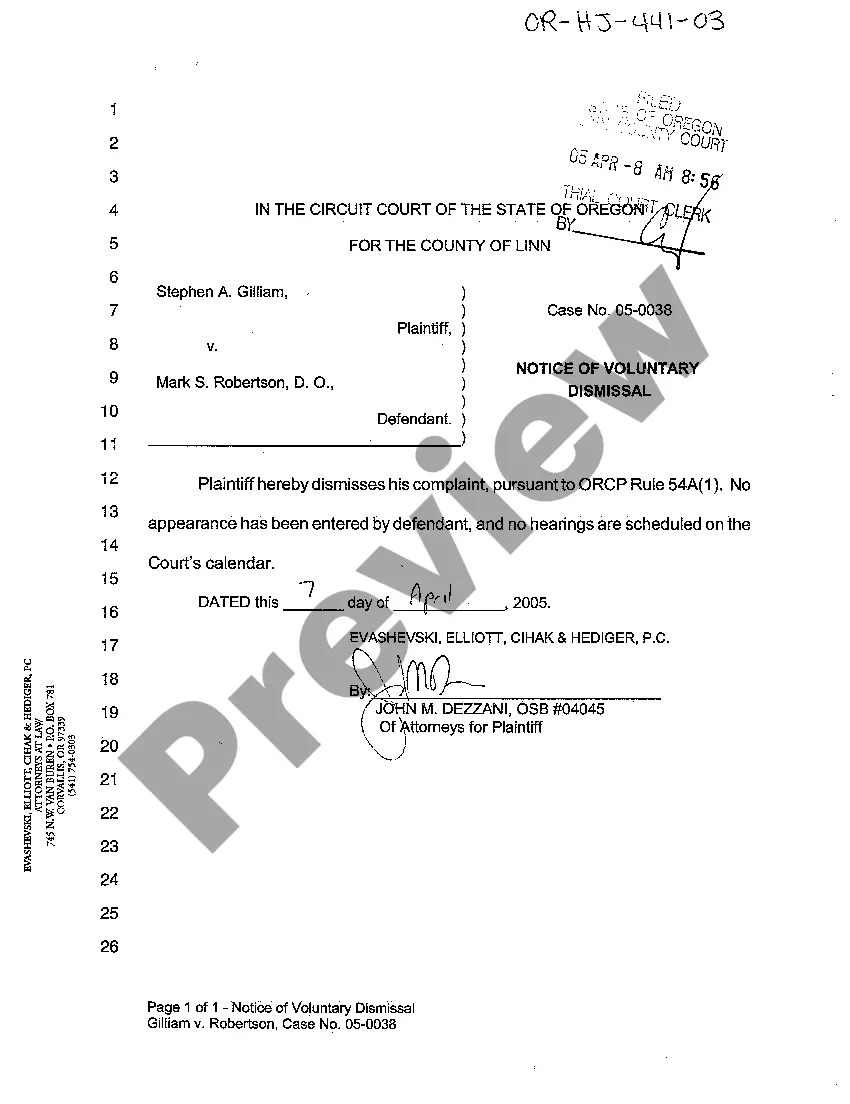
Maine Roofing Contract for Contractor
What this document covers
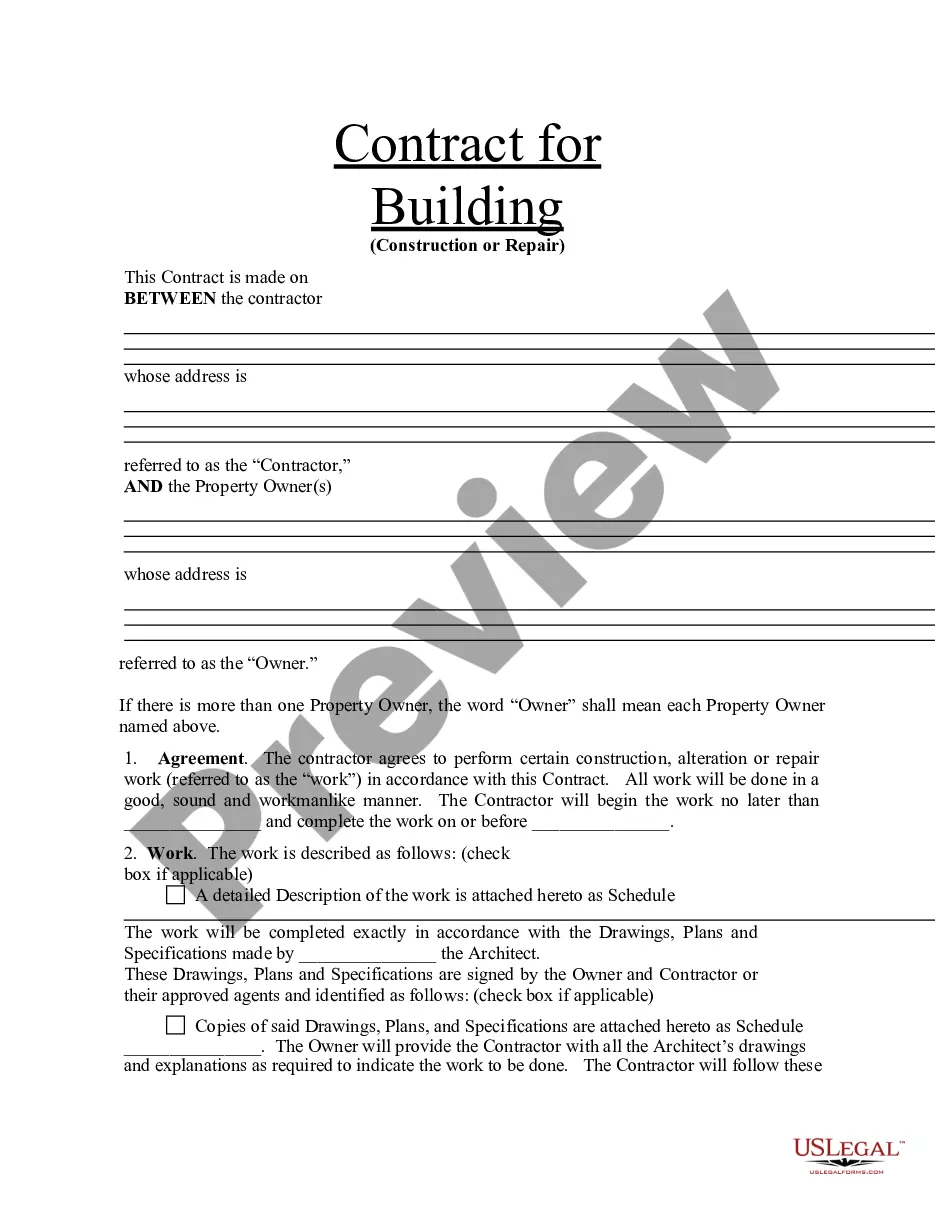
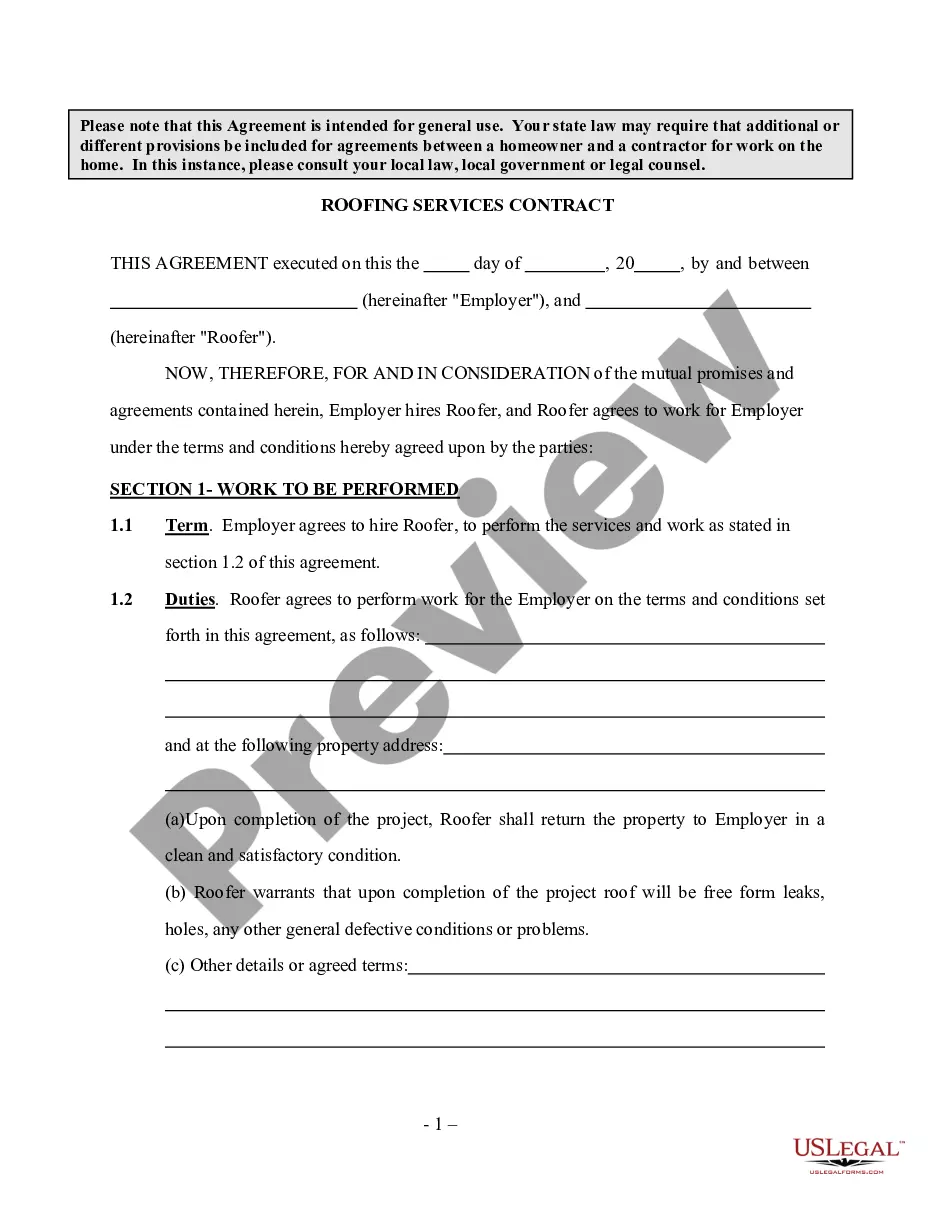
The Roofing Contract for Contractor is a legally binding document that outlines the terms and conditions between roofing contractors and property owners. This form is particularly useful for establishing clear expectations regarding payment structures, project scope, and responsibilities. It is tailored to meet the specific laws of the State of Maine, making it suitable for local projects.
What’s included in this form
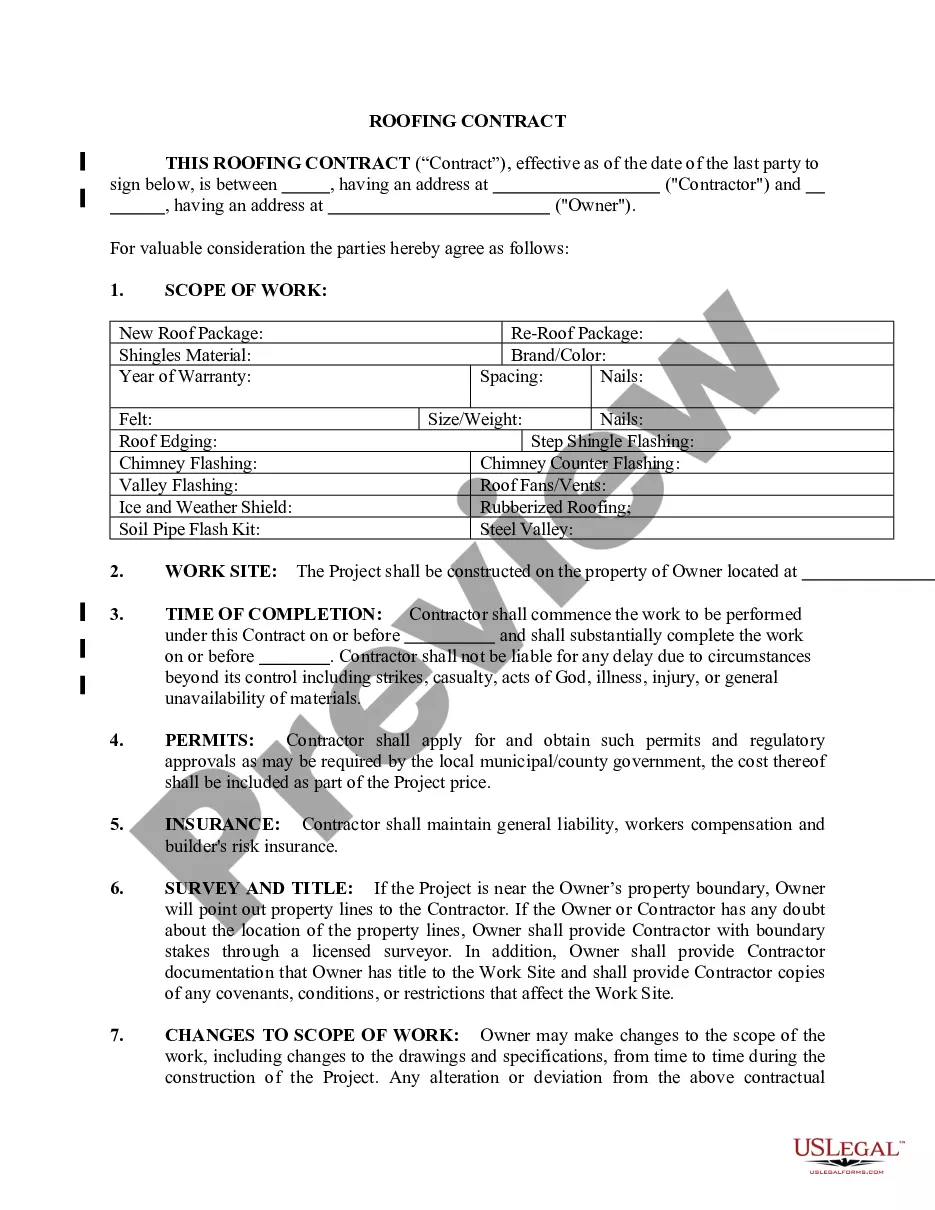
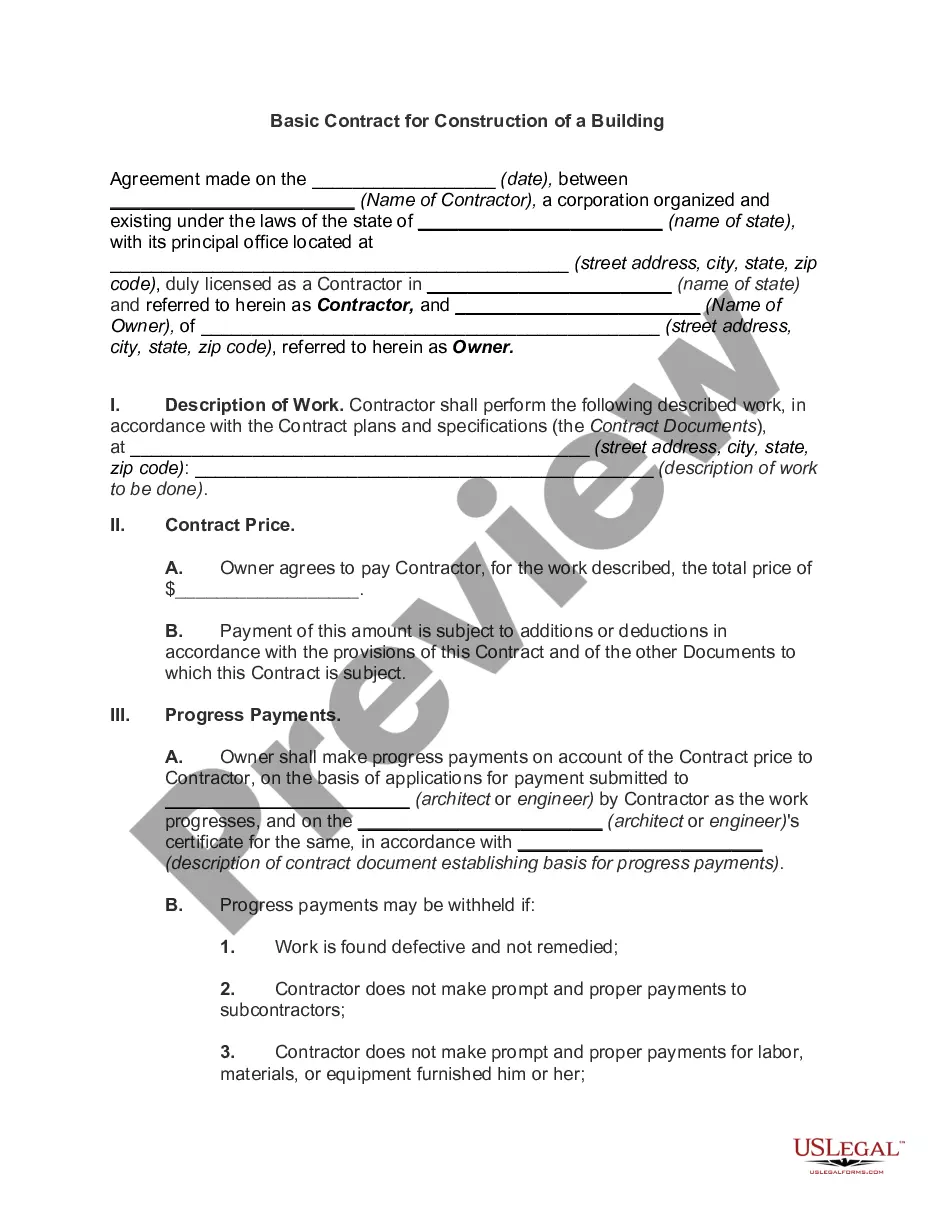
- Permits: Requirement for the contractor to apply for and obtain necessary local permits.
- Insurance: Obligations regarding general liability and workers' compensation insurance.
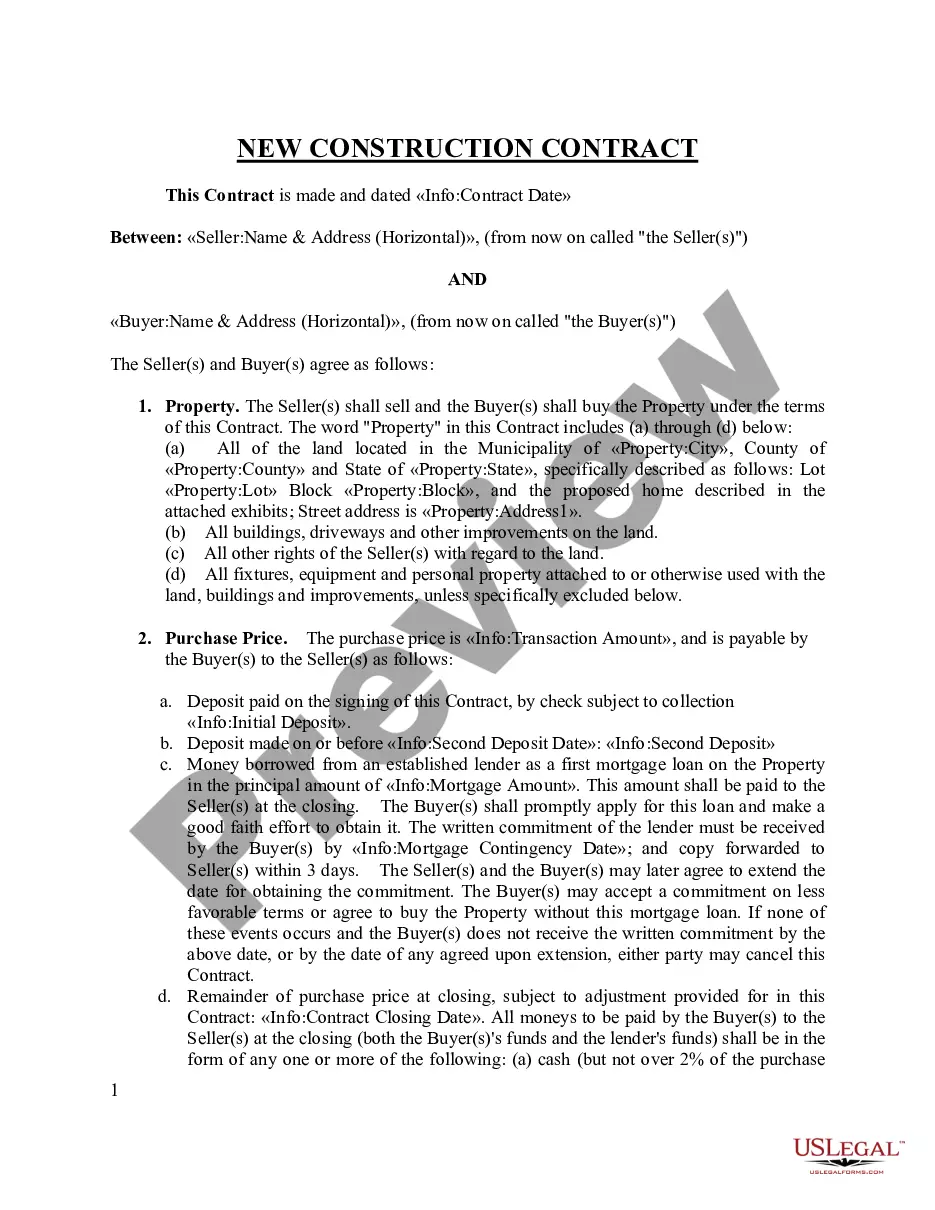
- Survey and Title: Conditions for establishing property lines and ownership documentation.
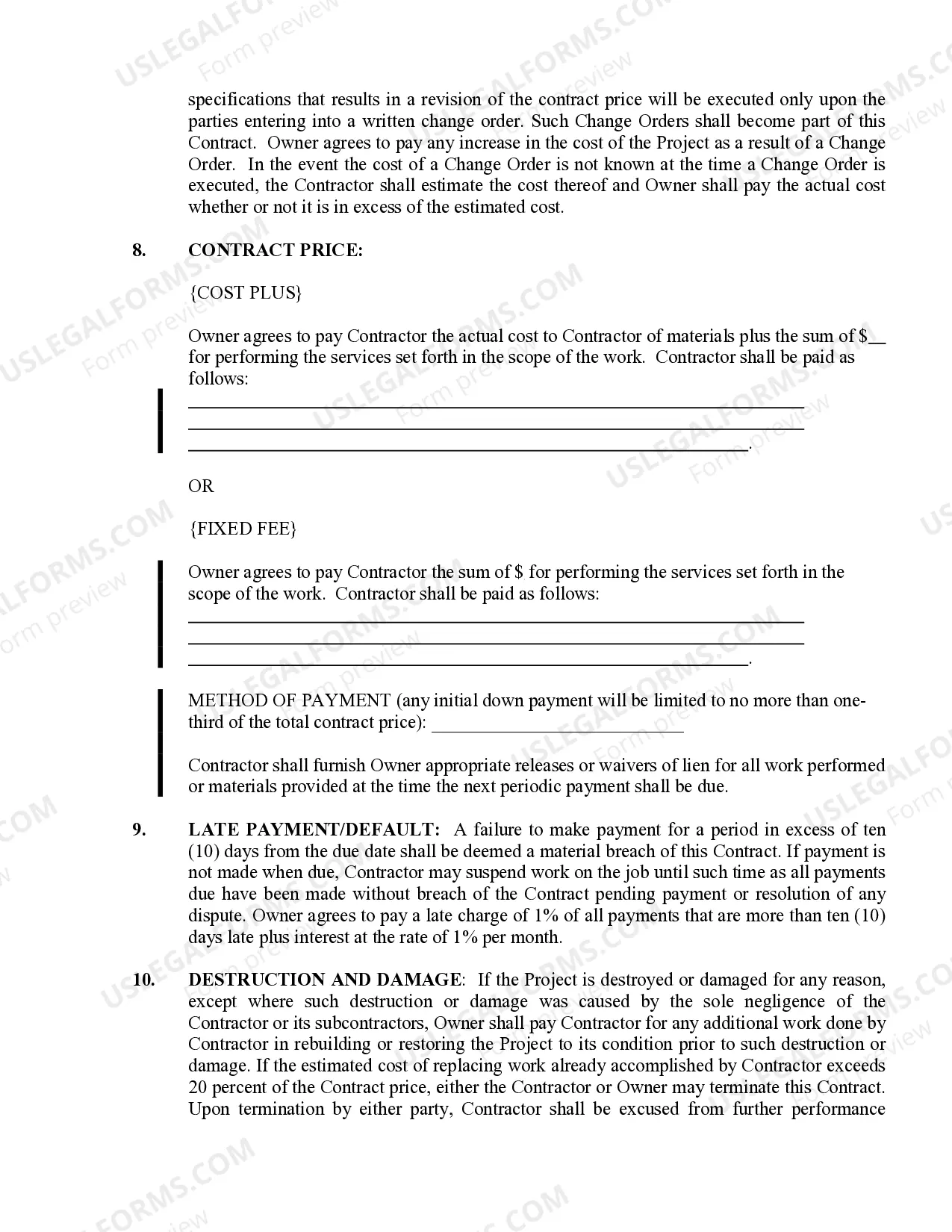
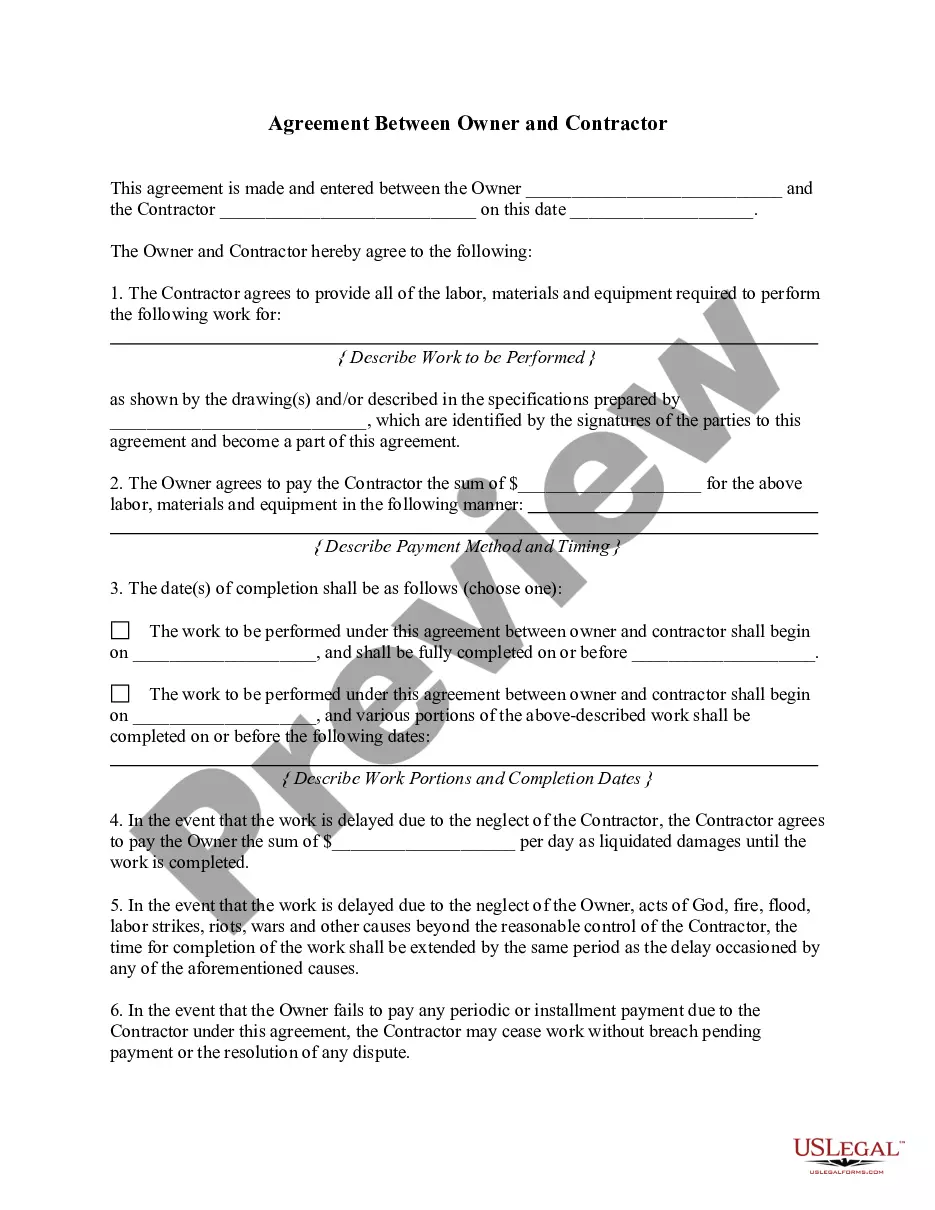
- Late Payment Clause: Terms addressing payment delays and associated penalties.
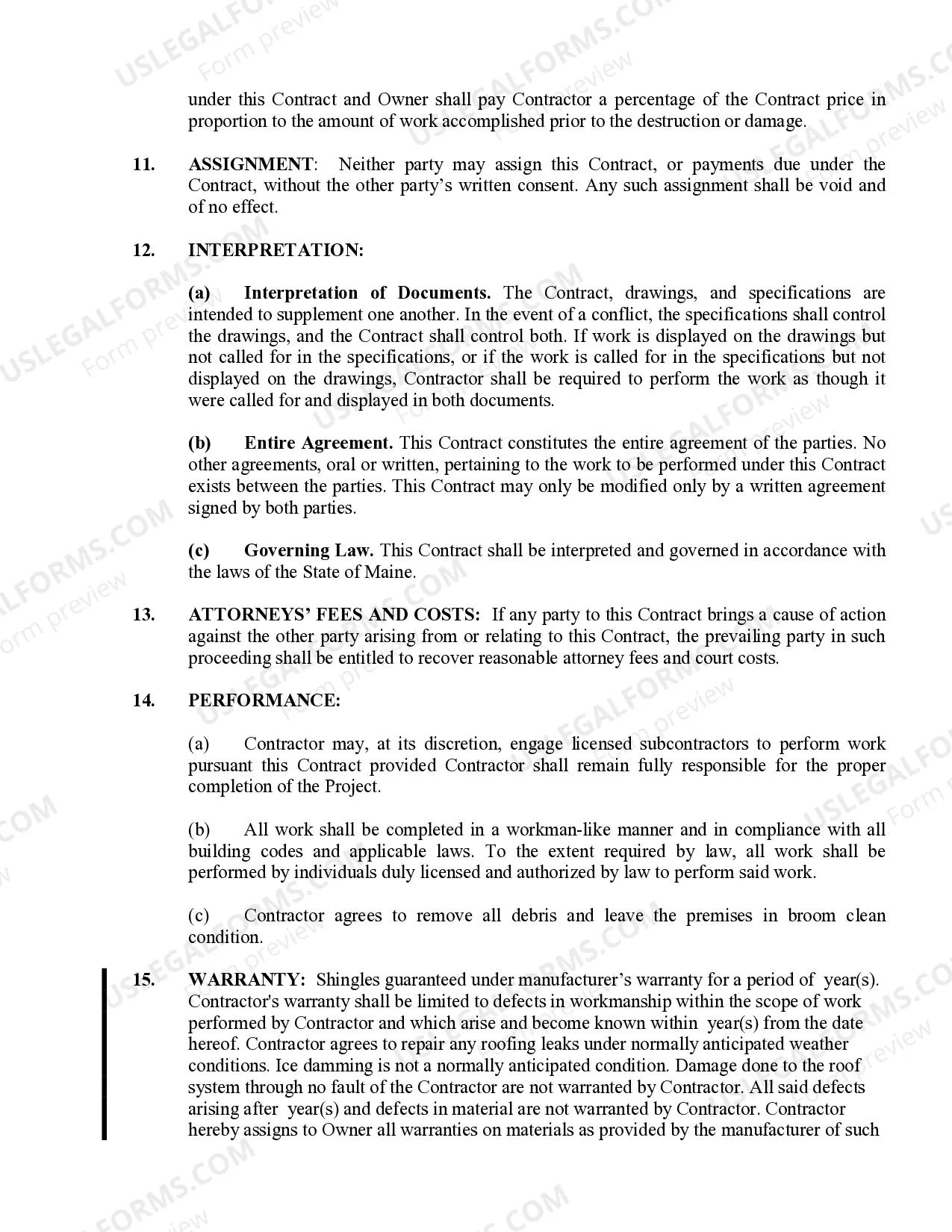
- Destruction and Damage: Provisions for handling project damage and termination rights.
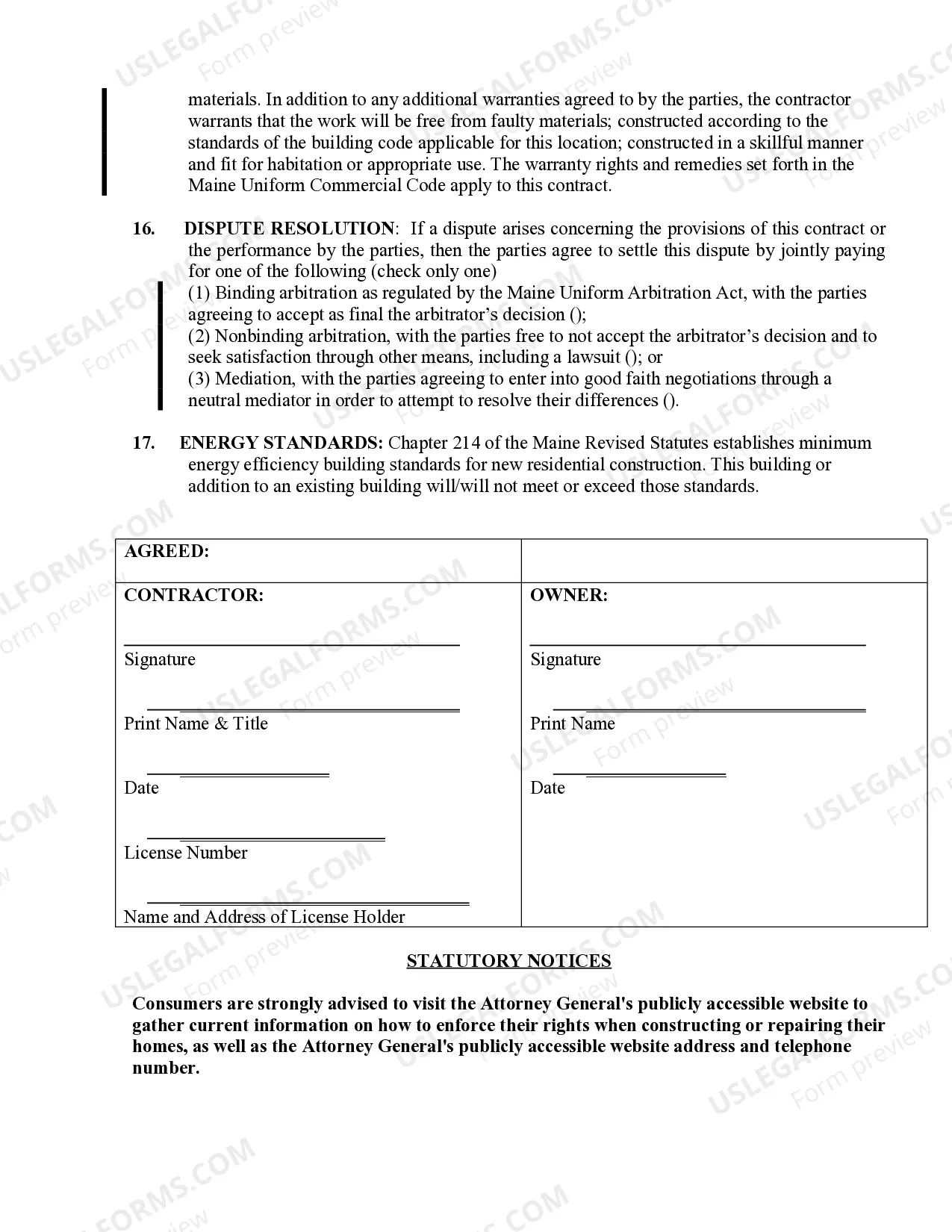
- Dispute Resolution: Options for arbitrating disputes arising under the contract.


Situations where this form applies
This form should be used when entering a contractual agreement for roofing work on a residential or commercial property. It is applicable whenever a contractor will be engaged to perform roofing services, especially under a fixed fee or cost-plus payment arrangement. This contract also addresses specific legal requirements in Maine, ensuring compliance with local regulations.
Who should use this form
- Property owners seeking roofing services for their residential or commercial properties.
- Roofing contractors who need a solid, legally compliant agreement to outline project terms and responsibilities.
- Anyone involved in a roofing project where clarity and legal protections are essential.
Steps to complete this form
- Identify the parties: Clearly state the names and contact information of the contractor and property owner.
- Specify the project details: Include the scope of work, project timeline, and payment arrangement.
- Review and sign: Both parties should read and agree to the terms before signing and dating the contract.
- Obtain necessary permits: Ensure the contractor will apply for any required permits for the project.
- Keep a copy: Retain a signed copy of the contract for personal records and reference during the roofing project.
Is notarization required?
Notarization is not commonly needed for this form. However, certain documents or local rules may make it necessary. Our notarization service, powered by Notarize, allows you to finalize it securely online anytime, day or night.
Get your form ready online
Our built-in tools help you complete, sign, share, and store your documents in one place.
Make edits, fill in missing information, and update formatting in US Legal Forms—just like you would in MS Word.
Download a copy, print it, send it by email, or mail it via USPS—whatever works best for your next step.
Sign and collect signatures with our SignNow integration. Send to multiple recipients, set reminders, and more. Go Premium to unlock E-Sign.
If this form requires notarization, complete it online through a secure video call—no need to meet a notary in person or wait for an appointment.
We protect your documents and personal data by following strict security and privacy standards.

Make edits, fill in missing information, and update formatting in US Legal Forms—just like you would in MS Word.

Download a copy, print it, send it by email, or mail it via USPS—whatever works best for your next step.

Sign and collect signatures with our SignNow integration. Send to multiple recipients, set reminders, and more. Go Premium to unlock E-Sign.

If this form requires notarization, complete it online through a secure video call—no need to meet a notary in person or wait for an appointment.

We protect your documents and personal data by following strict security and privacy standards.
Common mistakes
- Failing to specify the payment terms clearly, which can lead to disputes later on.
- Not including clauses related to project delays or damages, which are crucial for protecting both parties.
- Neglecting to initial any changes made to the contract after the initial agreement.
Why complete this form online
- Convenience: Downloadable format allows for immediate access and use.
- Editability: Customize the form to fit specific project needs before finalizing it.
- Reliability: Templates drafted by licensed attorneys ensure that the contract complies with legal standards.
Legal use & context
- This contract is enforceable in the State of Maine if executed properly.
- Clearly outlining terms reduces the risk of disputes during the project.
- Having a signed contract helps ensure both parties fulfill their obligations.
Quick recap
- A Roofing Contract for Contractor establishes clear terms for roofing services.
- Use this form to ensure compliance with Maine state laws.
- Complete all sections accurately to avoid misunderstandings or disputes.
Looking for another form?
Form popularity
FAQ
Unlike other states, Maine doesn't require general contractors to be licensedonly plumbers, electricians, and contractors who do specialty work. Check out the full list of who needs to be licensed here. Instead, general contractors need to apply for Maine business licenses.
A general contractor is responsible for providing all of the material, labor, equipment (such as engineering vehicles and tools) and services necessary for the construction of the project. A general contractor often hires specialized subcontractors to perform all or portions of the construction work.
To become a general contractor in Maine, according to the Office of the Maine Attorney General, one must simply apply for and obtain a business license, as well as include a written contract for all construction and home improvement projects over $3,000.
Begin with the Date and the Address of the Other Party. Start with the Basic Details of the Planned Work. Include Special Stipulations. State Whether There Will be a Further Agreement. Create an Area for Signatures. Sign and Date the Contract Letter.
#1: Review Your Bid. #2: Review Complete Plans. #3: Review All Specifications. #4: Visit the Job Site. #5: Review the Job Schedule. #6: Complete a Project Checklist. #7: Verify Project Funding. #8: Read Complete Contract.
Residential contractors build and renovate homes or manage such projects from start to finish. The residential contractor typically secures permits, supervises labor and enlists specialized subcontractors such as plumbers and electricians.
Generally speaking, a general contractor is someone who manages a team of subcontractors to help do various types of construction projects in your home. A custom home builder, however, is specialized in building custom homes and is able to complete this specific type of project start to finish on their own.
Contract Types Overview. Express and Implied Contracts. Unilateral and Bilateral Contracts. Unconscionable Contracts. Adhesion Contracts. Aleatory Contracts. Option Contracts. Fixed Price Contracts.
Identifying/Contact Information. Title and Description of the Project. Projected Timeline and Completion Date. Cost Estimate and Payment Schedule. Stop Work Clause and Stop Payment Clause. Act of God Clause. Change Order Agreement. Warranty.