Iowa Aging Parent Package
Overview of this form package
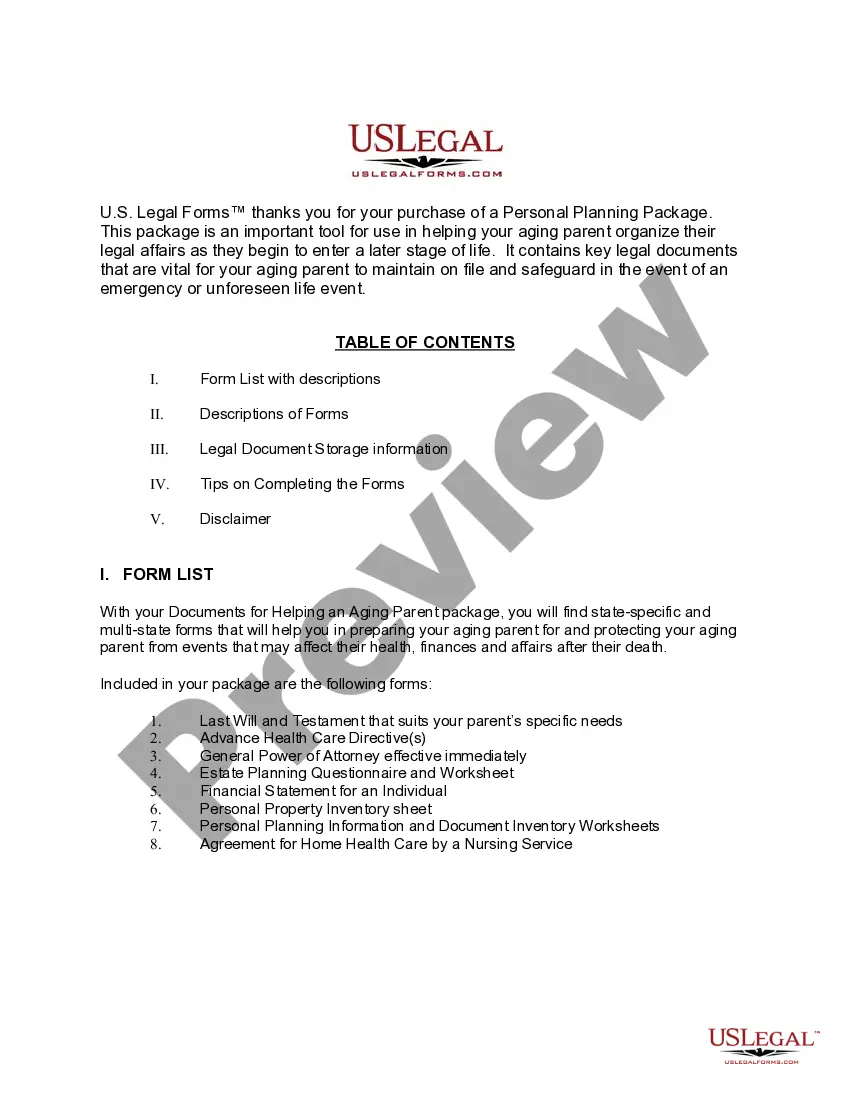
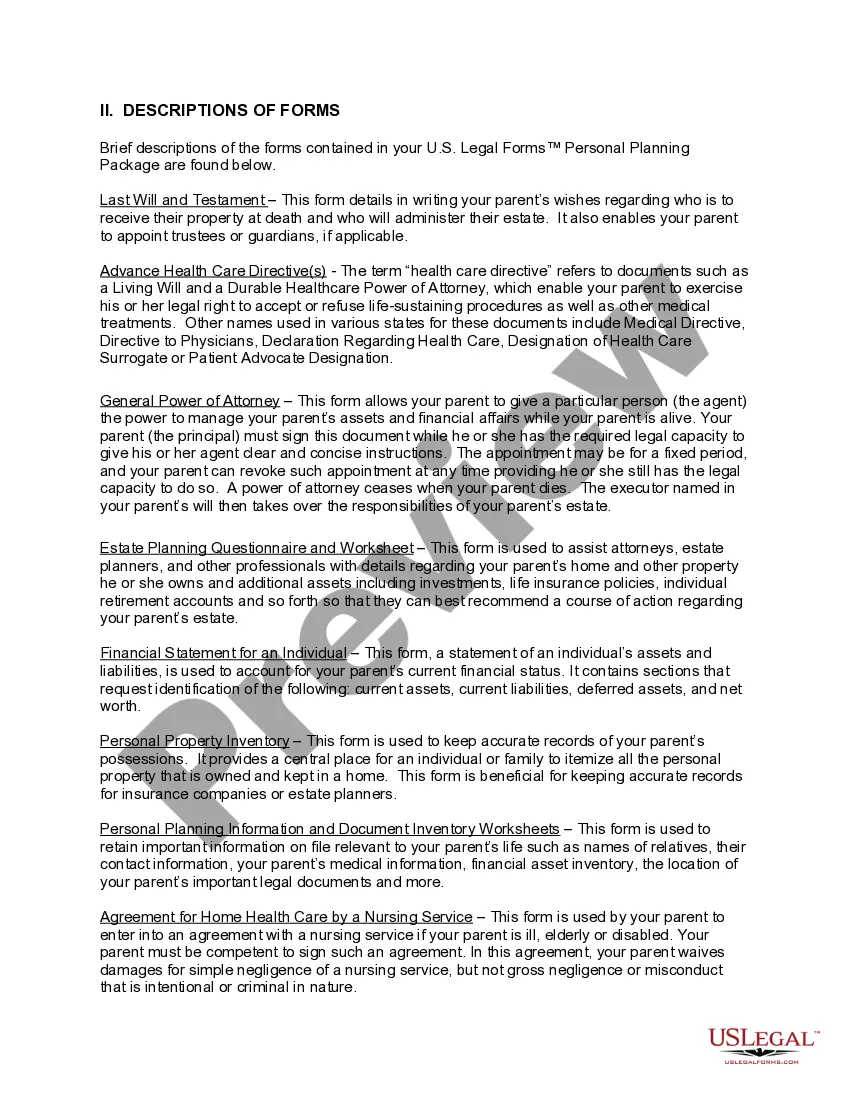
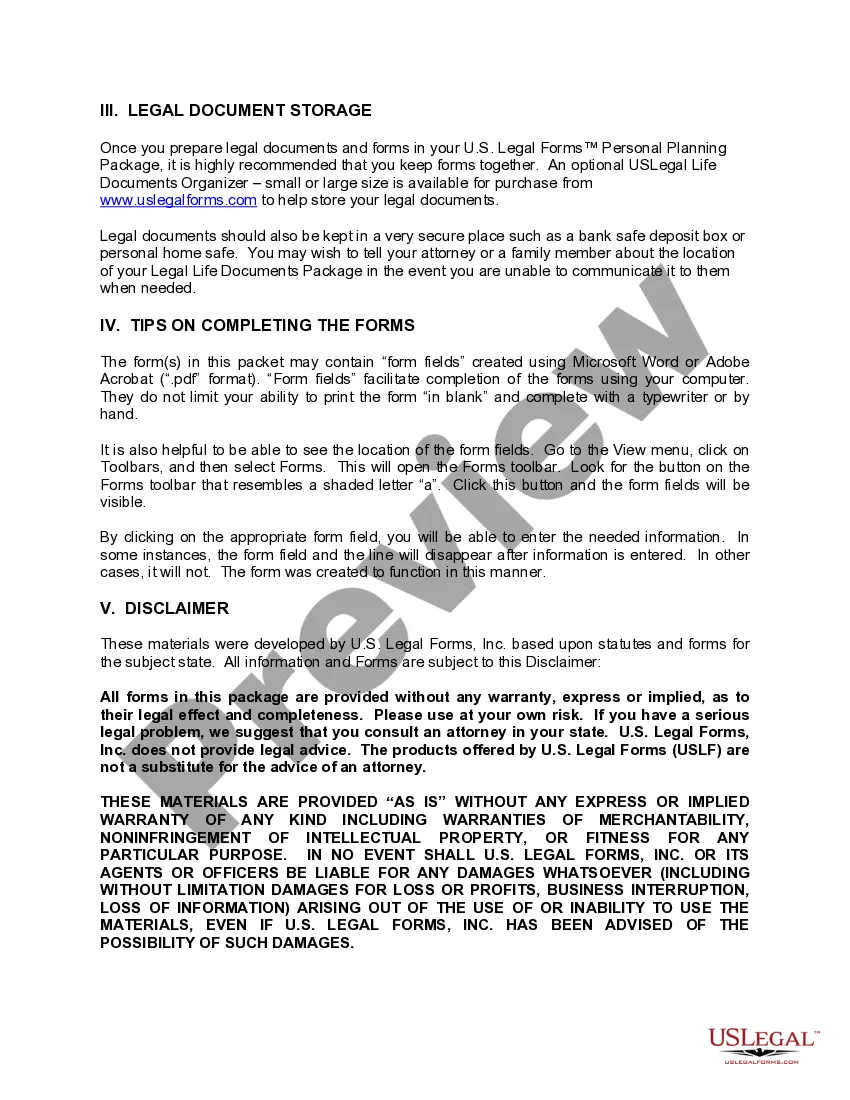
The Iowa Aging Parent Package is designed to help families manage the legal affairs of their aging parents. This package includes vital documents that prepare and protect your parentâs health, finances, and affairs. Unlike other legal form packages, this one is specifically tailored to address the unique needs of aging individuals in Iowa, ensuring they have essential legal protections in place as they enter later stages of life.
Documents contained in this package
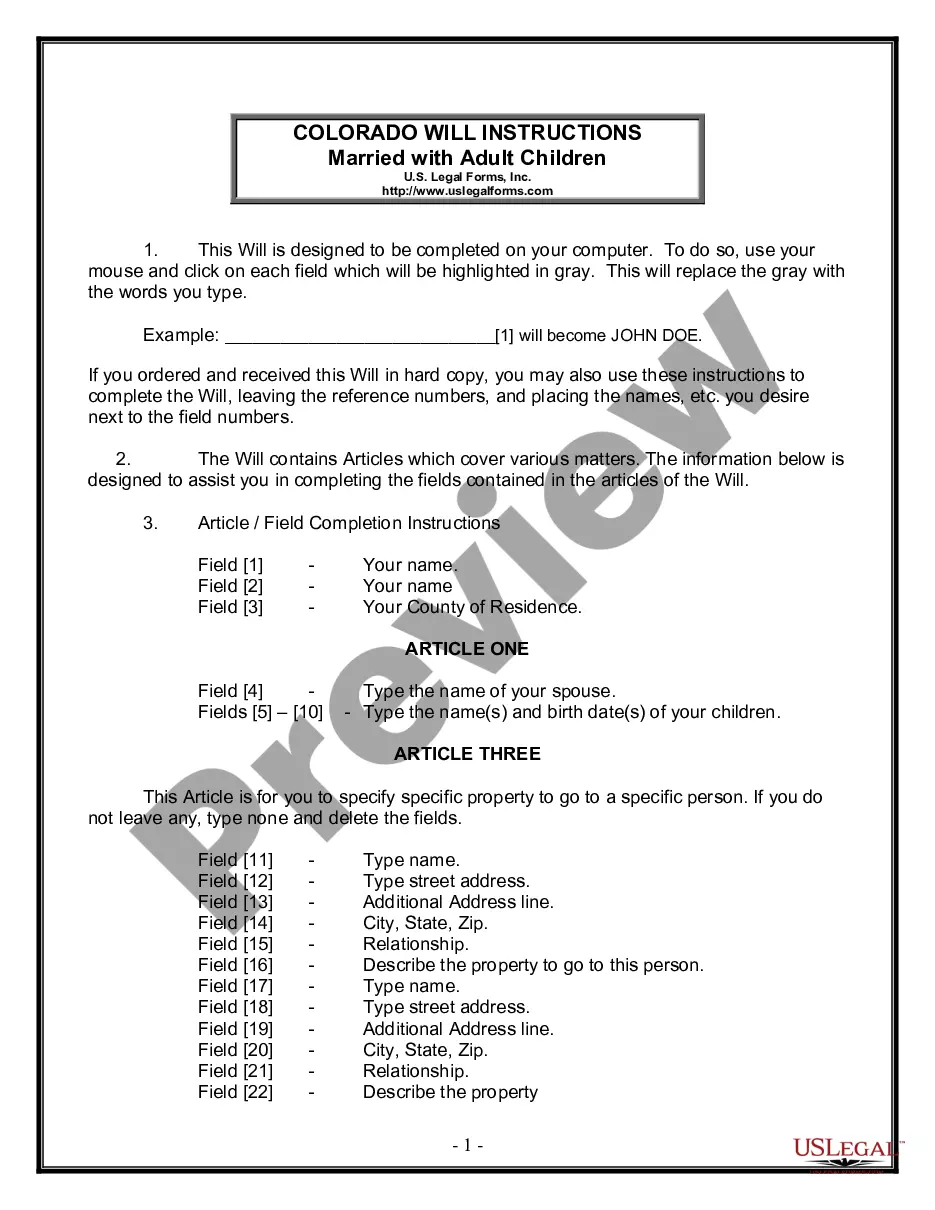
- Last Will and Testament
- General Durable Power of Attorney for Property and Finances or Financial Effective Immediately
- Durable Power of Attorney for Health Care
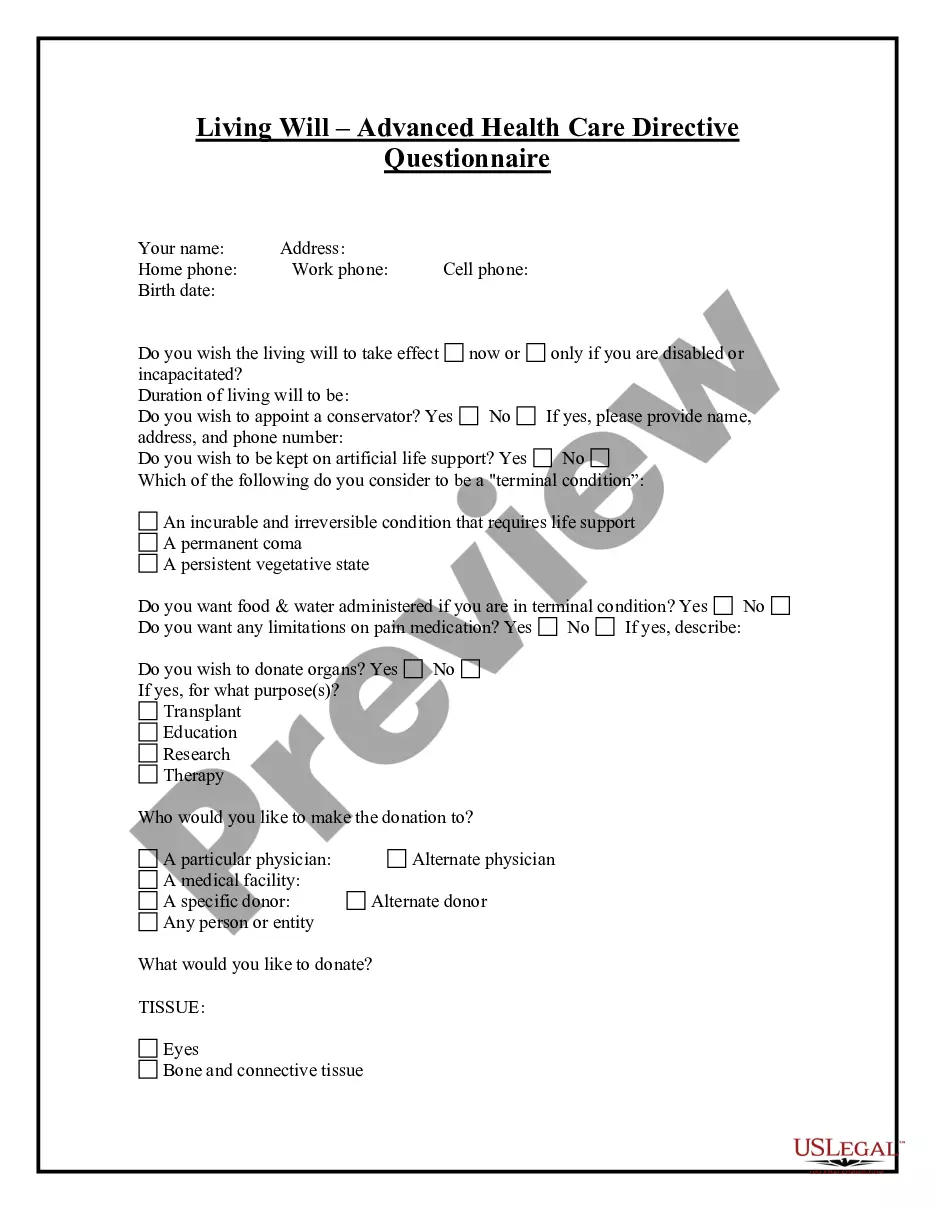
- Statutory Equivalent of Living Will or Declaration - Statutory Declaration relating to use of life sustaining procedures
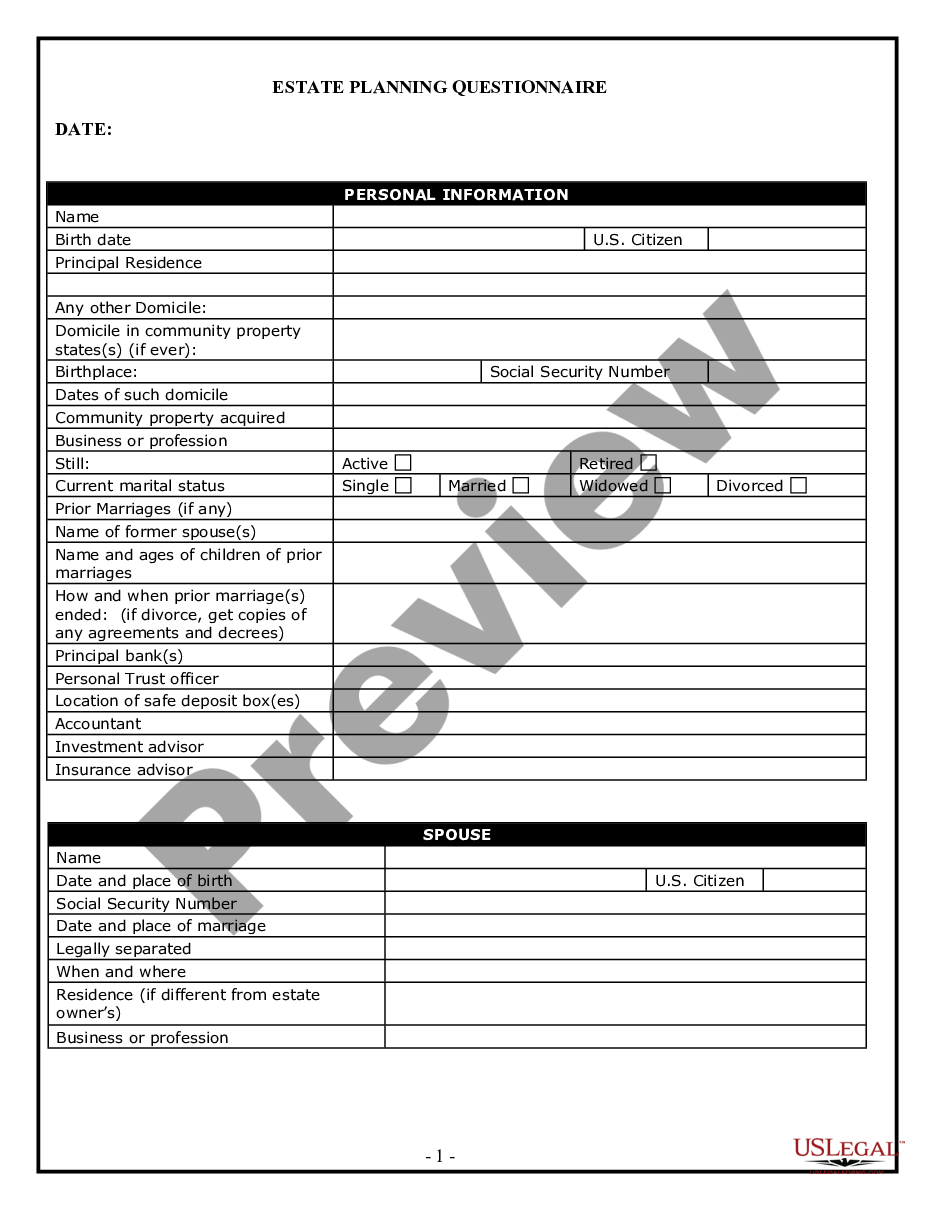
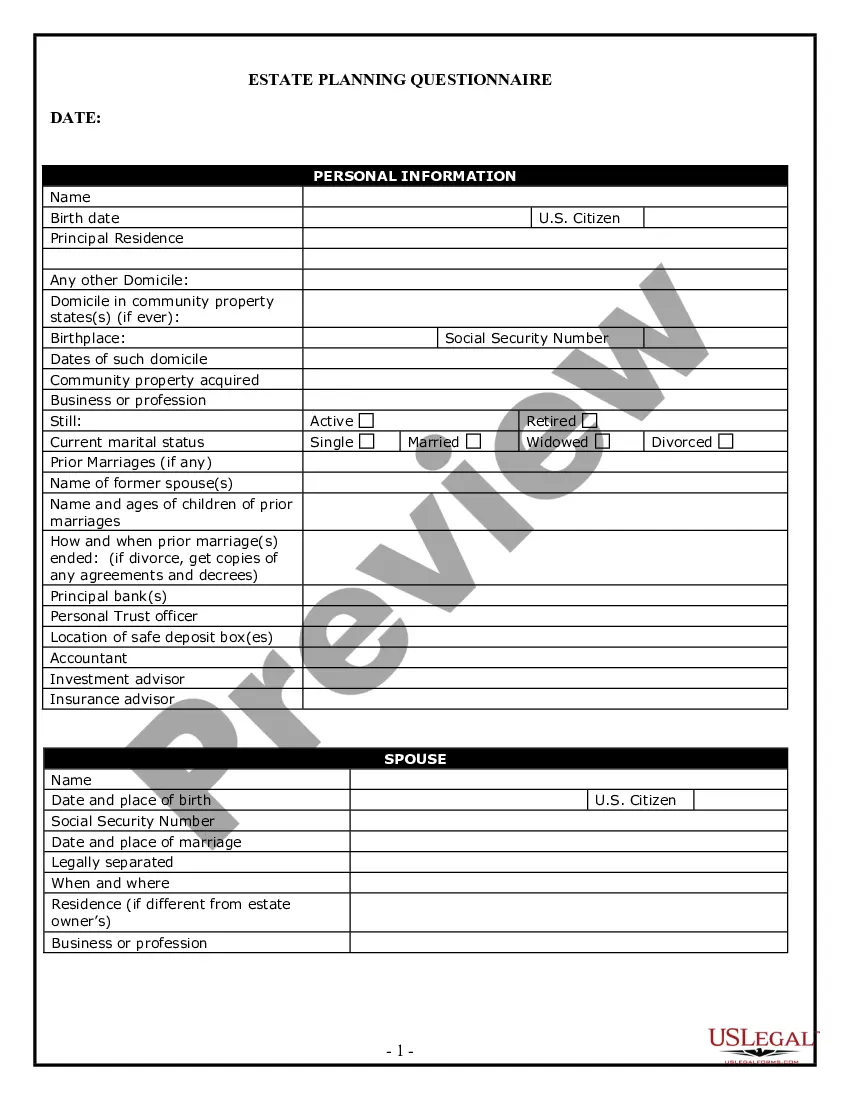
- Estate Planning Questionnaire and Worksheets
- Personal Care Agreement for Home Healthcare by a Nursing Service
- Personal Property Inventory
- Financial Statement Form - Husband and Wife Joint
- Personal Planning Information and Document Inventory Worksheets - A Legal Life Document



Common use cases
This package is essential when your aging parent needs to set up or update their legal documents to reflect their current wishes. Use this form package in situations such as:
- When your parent wants to create or revise their Last Will and Testament.
- When they need to establish health care directives to make medical decisions in advance.
- When they require a Power of Attorney to handle financial matters.
- When organizing their personal property and financial statements for estate planning.
- When engaging in home health care services.
Intended users of this form package
- Adult children managing the affairs of their aging parents.
- Caregivers responsible for an elderly individualâs care and legal documents.
- Individuals seeking to safeguard their own legal rights as they age.
- Family members involved in estate planning for elderly relatives.
How to complete these forms
- Review the included forms to determine which documents are necessary.
- Complete the personal information sections in each form accurately.
- Consult with your parent to confirm their wishes and intentions.
- Obtain any required signatures, ensuring your parent has the legal capacity to sign.
- Store the completed documents safely and inform trusted family members of their location.
Do documents in this package require notarization?
Forms in this package typically do not require notarization unless required by local law. It's essential to review each formâs instructions to ensure compliance with any specific notarization requirements.
Get your form ready online
Our built-in tools help you complete, sign, share, and store your documents in one place.
Make edits, fill in missing information, and update formatting in US Legal Forms—just like you would in MS Word.
Download a copy, print it, send it by email, or mail it via USPS—whatever works best for your next step.
Sign and collect signatures with our SignNow integration. Send to multiple recipients, set reminders, and more. Go Premium to unlock E-Sign.
If this form requires notarization, complete it online through a secure video call—no need to meet a notary in person or wait for an appointment.
We protect your documents and personal data by following strict security and privacy standards.

Make edits, fill in missing information, and update formatting in US Legal Forms—just like you would in MS Word.

Download a copy, print it, send it by email, or mail it via USPS—whatever works best for your next step.

Sign and collect signatures with our SignNow integration. Send to multiple recipients, set reminders, and more. Go Premium to unlock E-Sign.

If this form requires notarization, complete it online through a secure video call—no need to meet a notary in person or wait for an appointment.

We protect your documents and personal data by following strict security and privacy standards.
Common mistakes to avoid
- Not discussing the documents with your parent before completion.
- Failing to update existing documents when circumstances change.
- Not keeping a backup copy of completed forms in a safe location.
- Overlooking the need for witness signatures where required.
Why complete this package online
- Convenience of accessing and completing the forms from home.
- Editability allows for revisions before finalizing the documents.
- Reliability of attorney-drafted forms tailored for specific needs.
- Time-saving compared to hiring an attorney for basic documents.
Legal use & context
- The forms provided are designed to be legally binding within the state of Iowa.
- Each document serves specific purposes to protect your parent's health and finances.
- Using these forms improperly or without proper legal advice could render them ineffective.
Summary of main points
- This package is essential for protecting the legal interests of aging parents.
- Includes vital documents that cover health care, financial decisions, and estate planning.
- Complete and store these documents properly for future use and accessibility.
Looking for another form?





Form popularity
FAQ
Many government programs allow family members of veterans and people with disabilities to get paid for caring for them.Long-Term Care Insurance allows family members to be paid as caregivers. But some policies won't pay family members who live with the person they're caring for.
Persons may file a complaint online at: https://IBPLicense.iowa.gov/. Click on "General Public", then on "File a Complaint", or. Persons calling in with a specific complaint will be asked if they wish to file a written complaint.
The PFL Act allows you to take time off work to care for a family member. It also stipulates that you will receive a certain percentage of your salary while caring for your loved ones. This percentage varies, but California provides up to 60 70% of your pay up to a maximum amount of $1,300 per week.
The mission of the Iowa Department on Aging is to develop a comprehensive, coordinated and cost-effective system of long-term living and community supports that help individuals maintain health and independence in their homes and communities.
Medicaid does not cover assisted living in Iowa, however, they offer waiver programs, referred to as Home and Community Based Services (HCBS).
Does Medicare Pay for Caregivers? Your Guide to At-Home Healthcare. Medicare typically doesn't pay for in-home caregivers for personal care or housekeeping if that's the only care you need. Medicare may pay for short-term caregivers if you also need medical care to recover from surgery, an illness, or an injury.
This waiver allows family members to receive payment for caregiving services provided in the home. The Iowa Home and Community Based Services (HCBS) Elderly Medicaid waiver provides services and support to help the elderly who are medically qualified for nursing home care.
Caregivers must apply as an individual CDAC provider. Get in touch with your local Iowa Area Agency on Aging to find out more about case management services.. If your loved one is a veteran, apply for the Iowa Veteran-Directed Home and Community Based Services program if eligible.
Under federal law, the Department is responsible for the planning, policy development, administration, coordination, priority setting, and evaluation of all state activities related to the objectives of these acts along with administering dozens of other associated activities.