Washington Plumbing Contract for Contractor
What is this form?
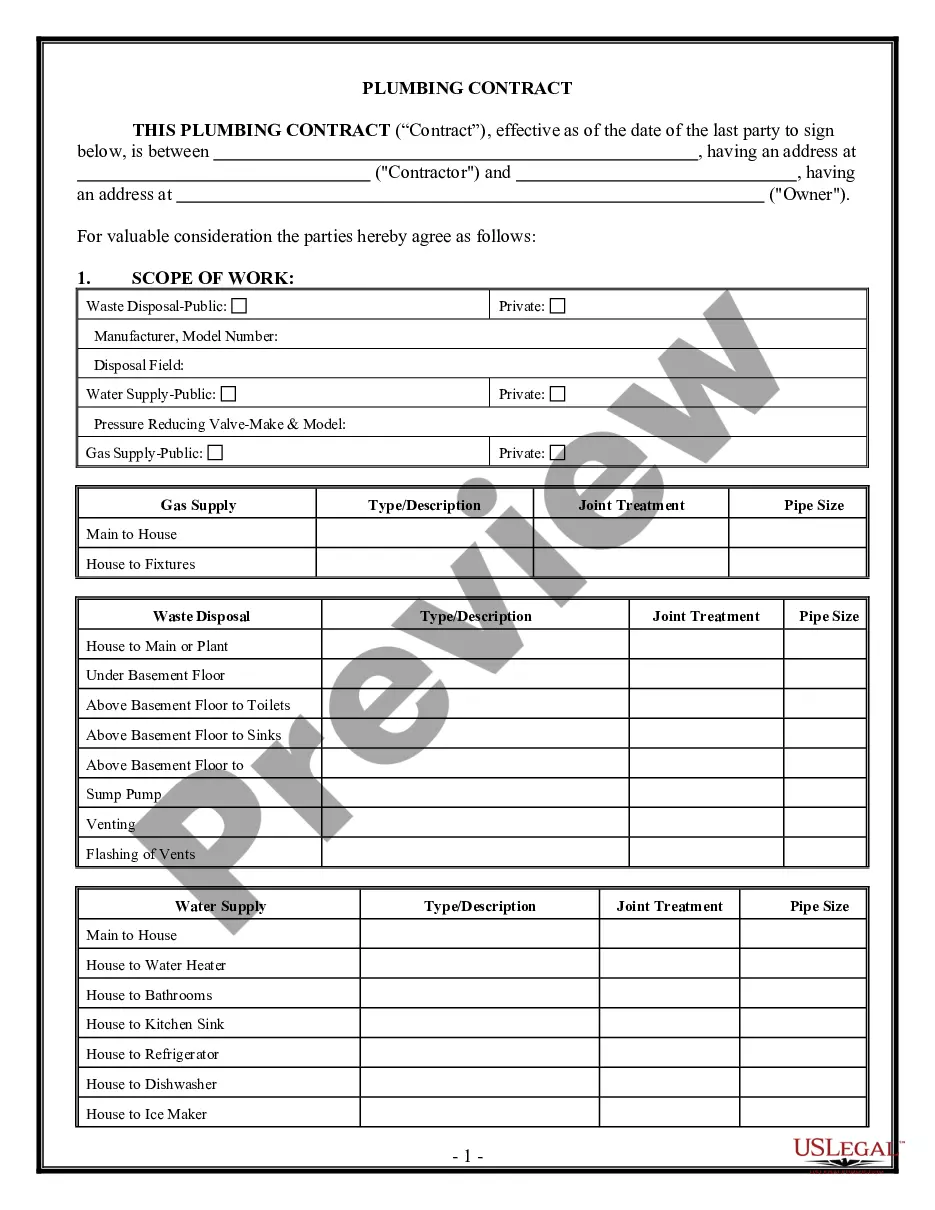
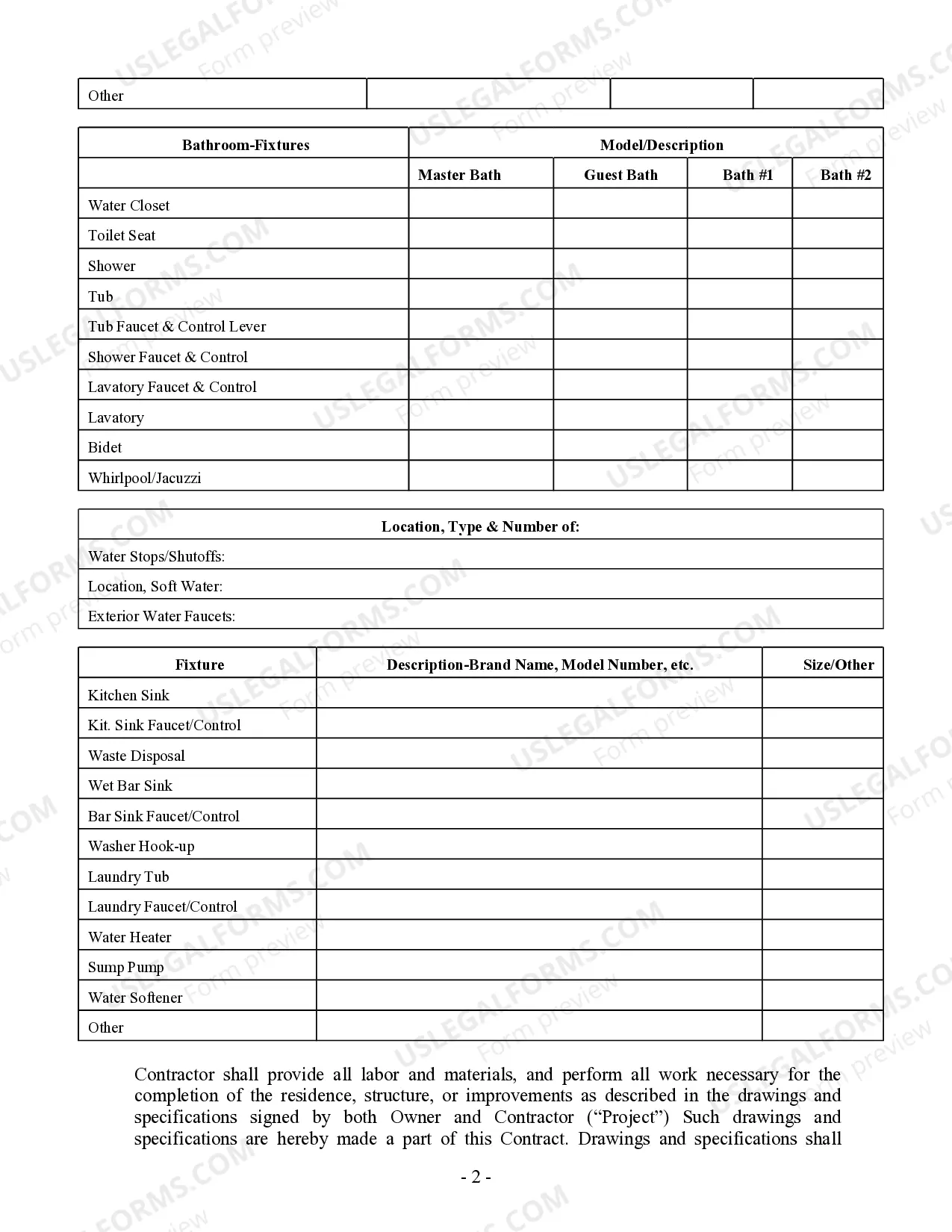
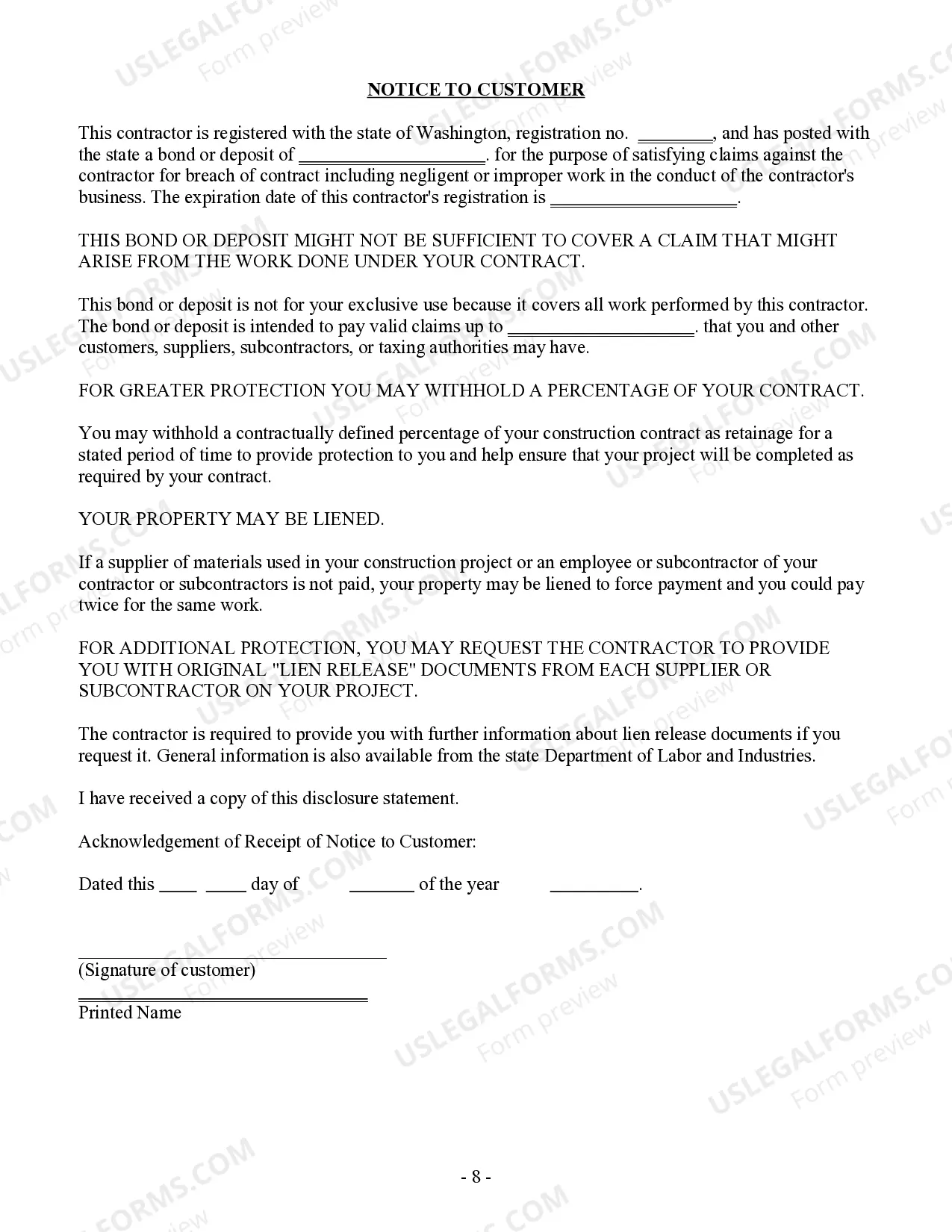
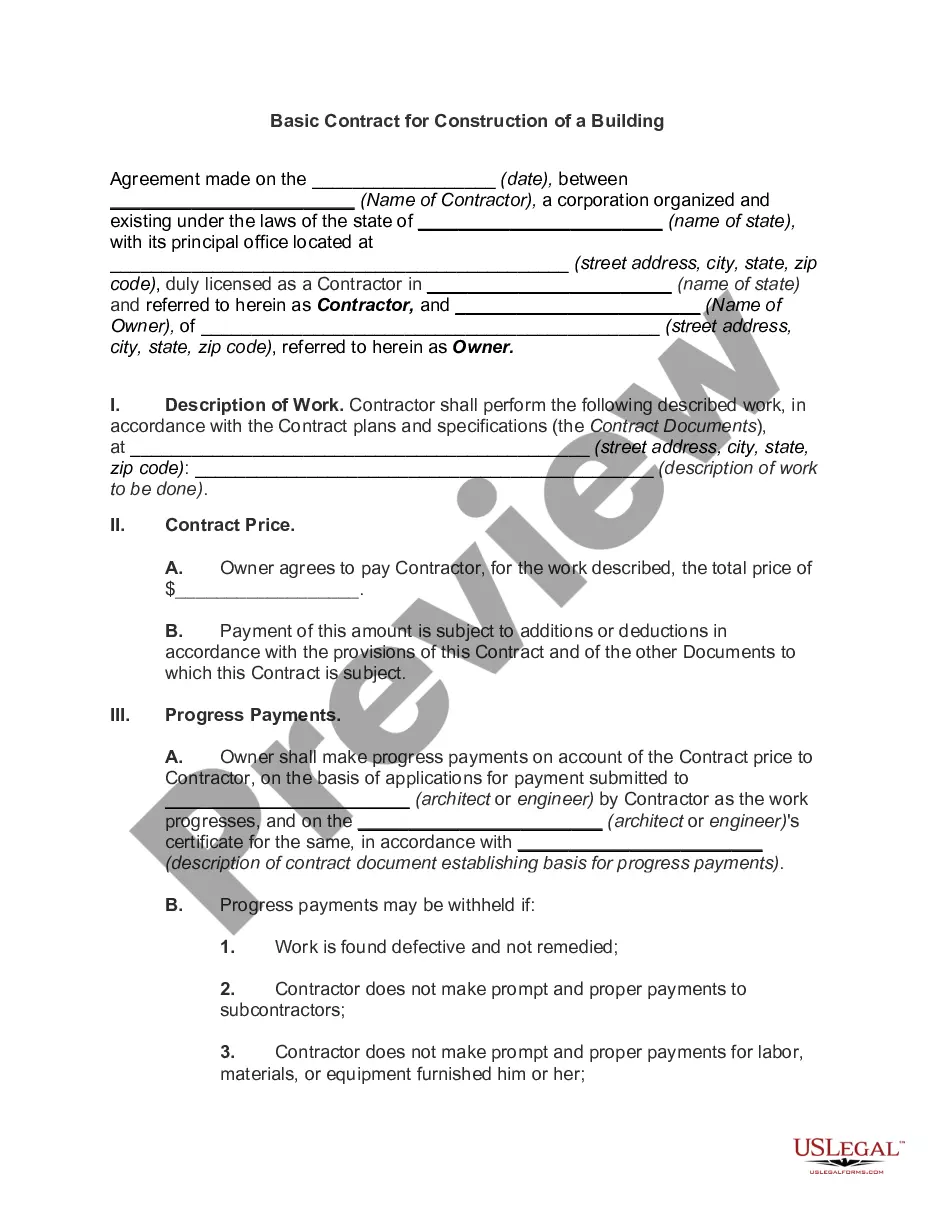
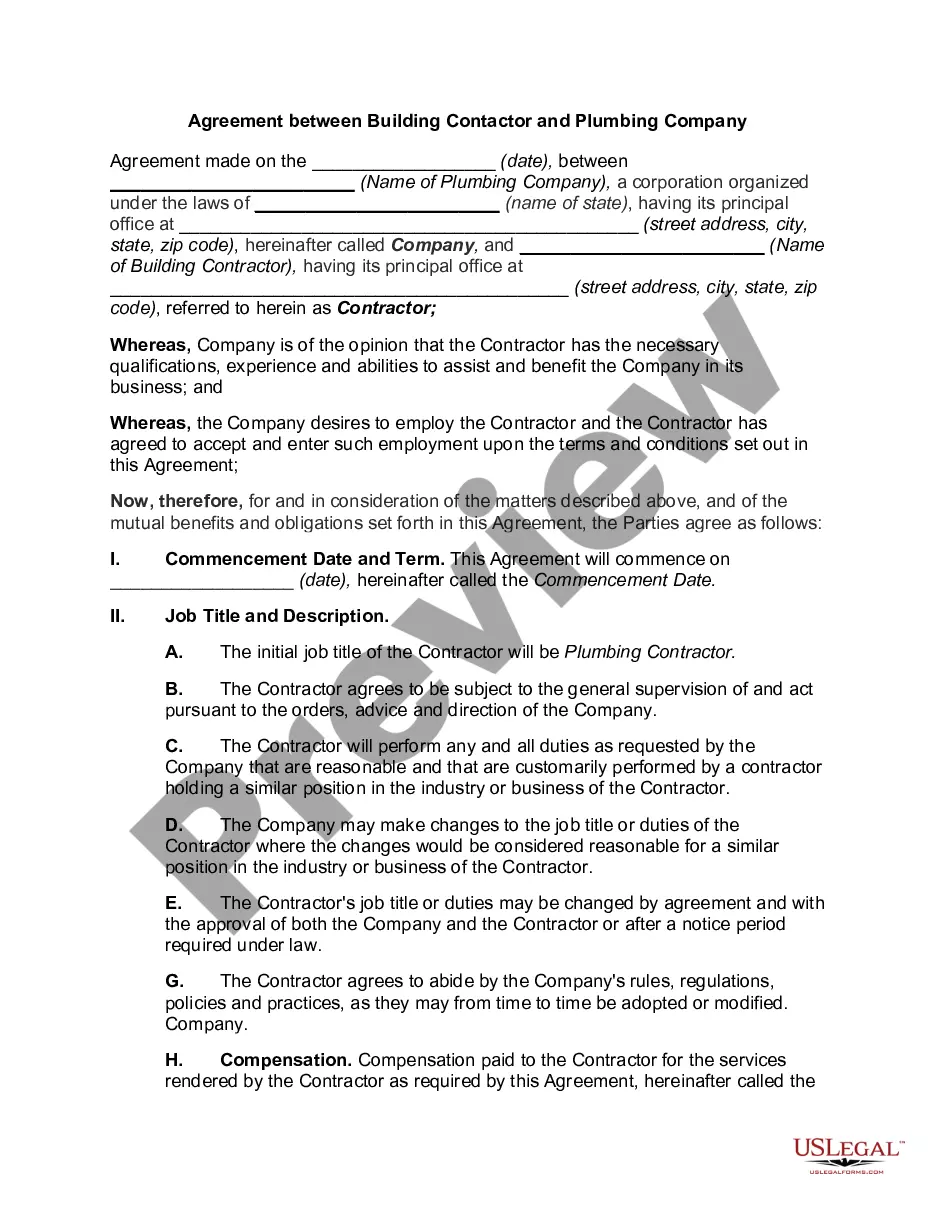
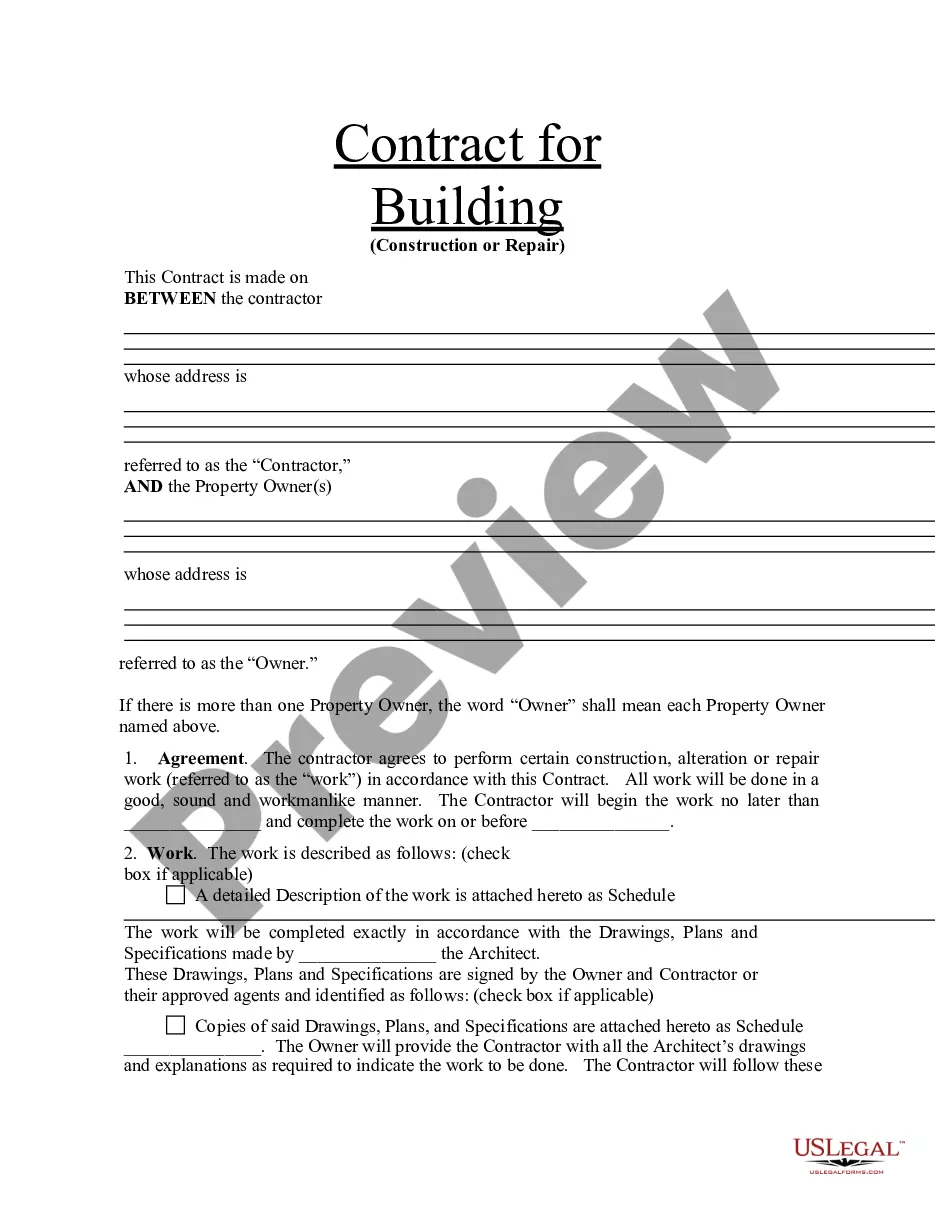
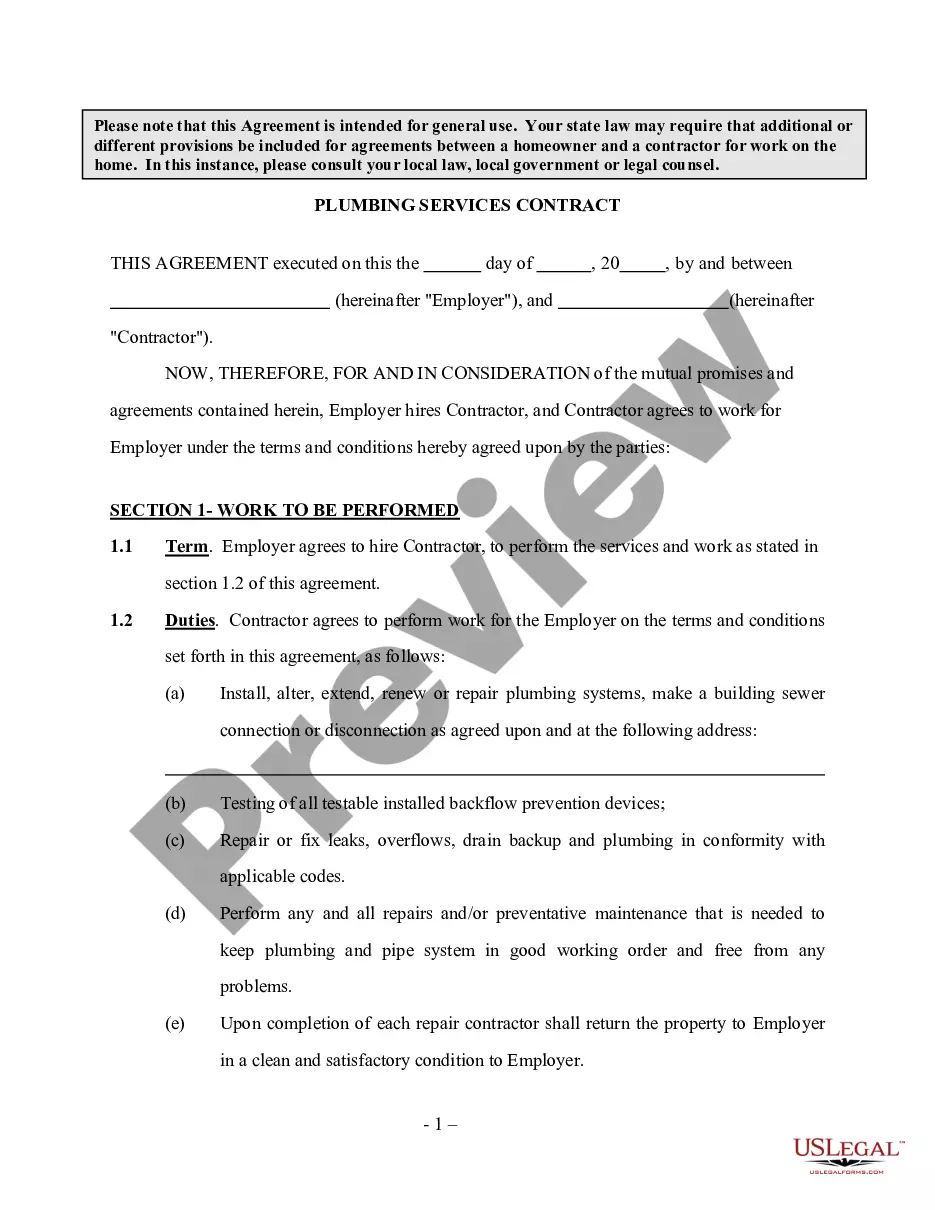
The Plumbing Contract for Contractor is a legal document used between plumbing contractors and property owners. It outlines the terms of a project, including payment arrangements, change orders, and responsibilities related to work site conditions. This contract is specifically tailored to meet the legal requirements of the State of Washington, making it distinct from other contracts that may not address specific state laws or local regulations.
Main sections of this form
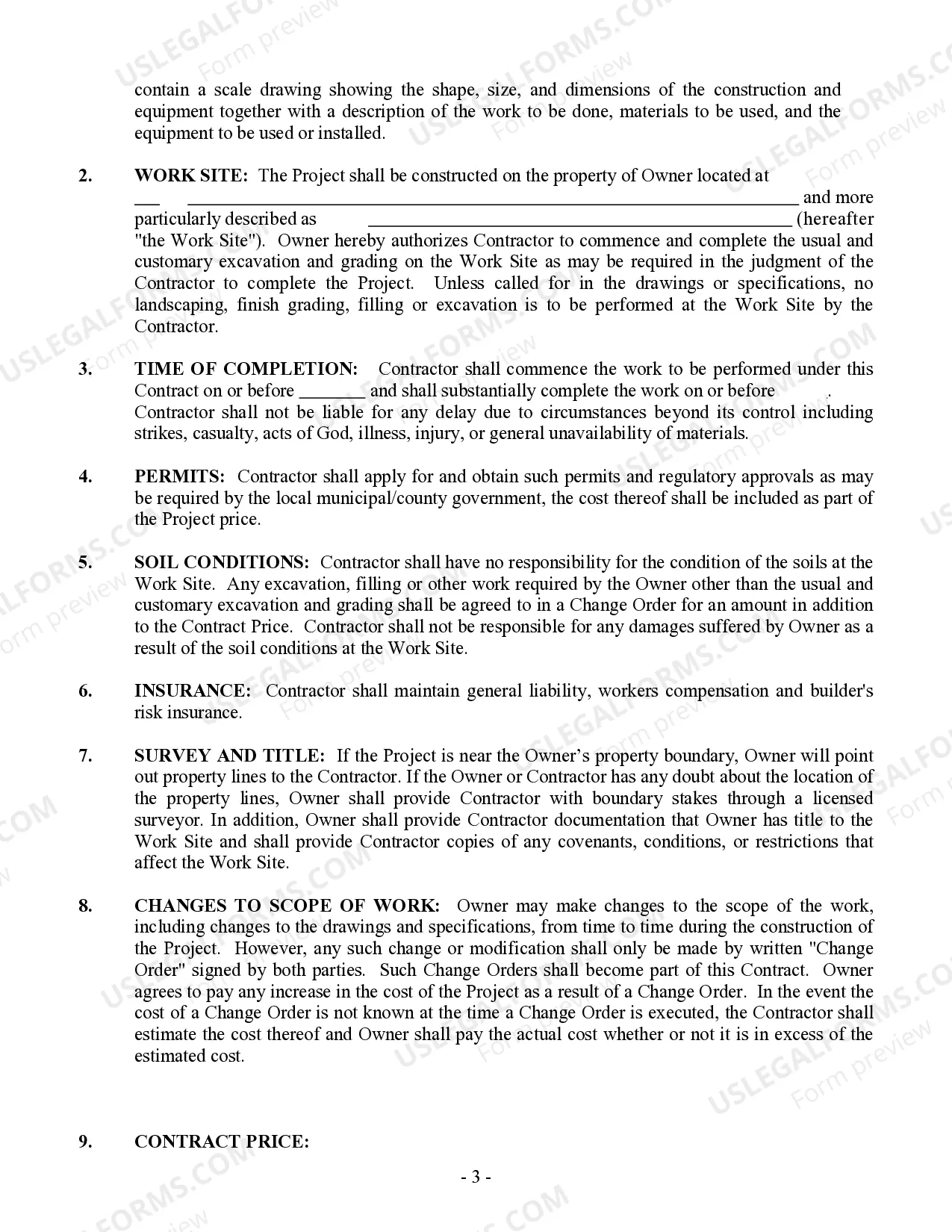
- Work site details, including the specific property location.
- Contractor's obligations to obtain necessary permits.
- Clarifications on soil conditions and their implications for the contractor's responsibilities.
- Insurance requirements, including liability and workers compensation.
- Change order provisions for modifying the scope of work.
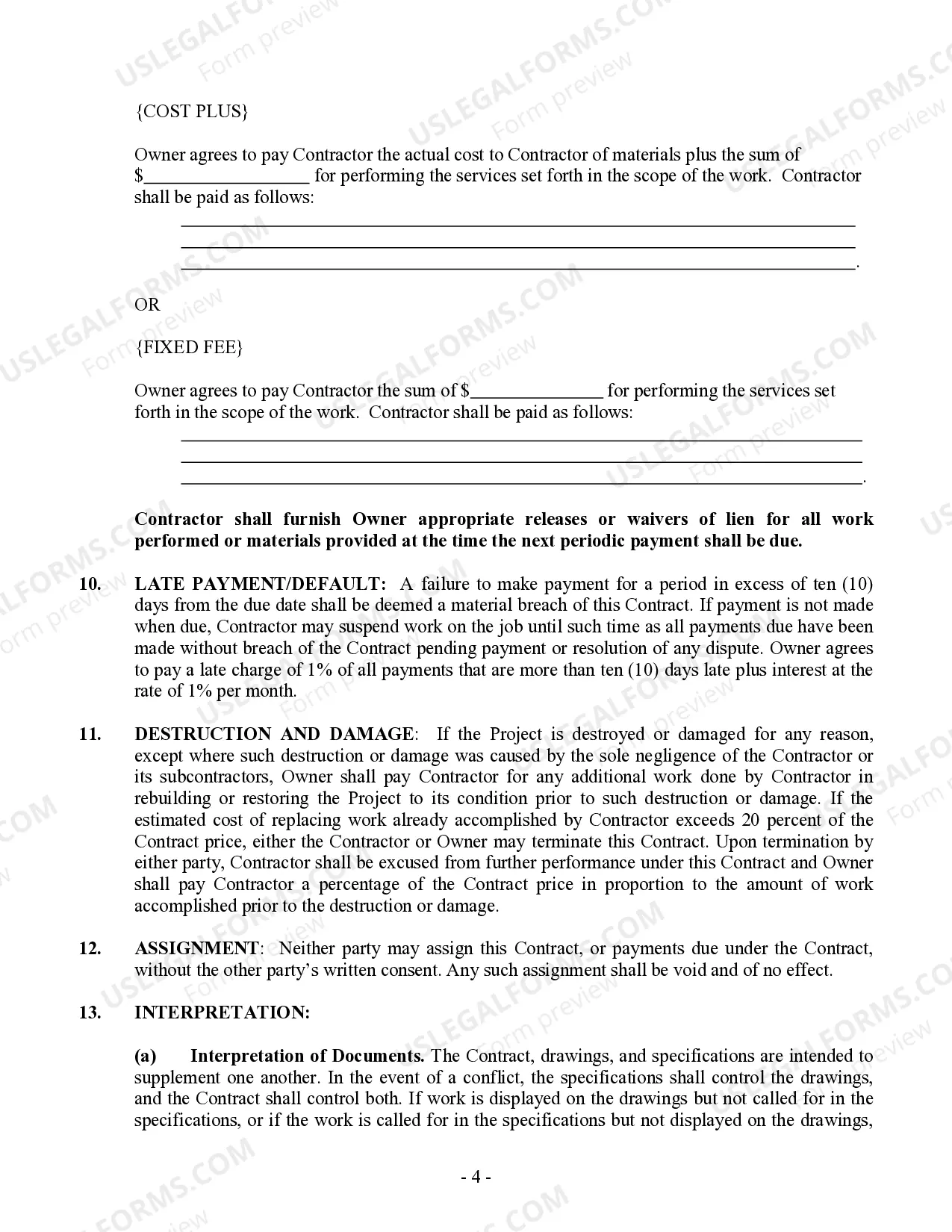
- Late payment terms and associated penalties.
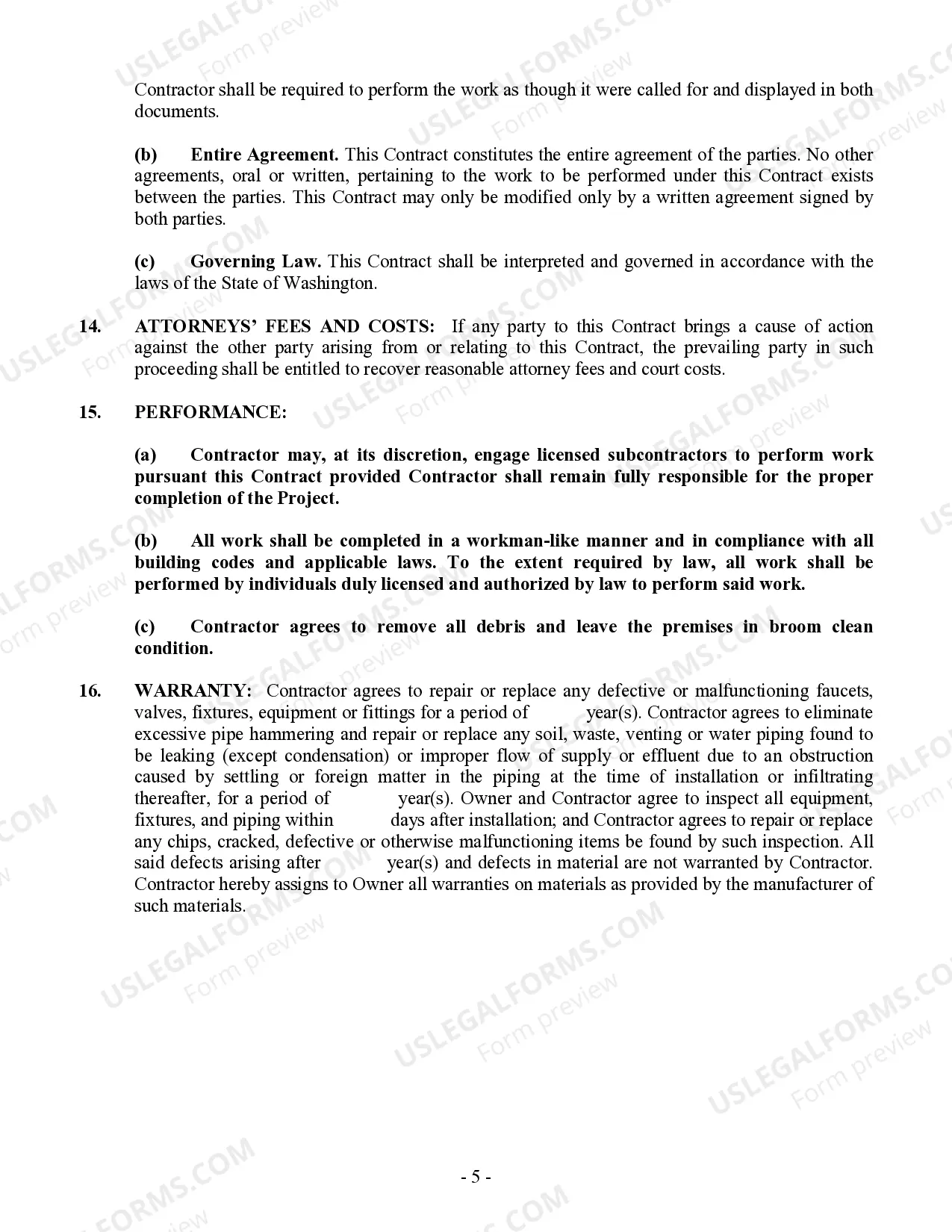
- Termination clauses in case of project destruction or damage.

When to use this form
This form should be used when a property owner engages a plumbing contractor for construction or renovation projects. It is particularly useful in situations where the cost structure is not fixed and can vary based on project changes. Use this contract to clearly outline expectations, necessary permits, and liability issues before beginning a plumbing project.
Who needs this form
This Plumbing Contract for Contractor is suitable for:
- Property owners hiring plumbing contractors for construction or remodeling projects.
- Plumbing contractors looking to formalize agreements with property owners.
- Individuals or entities operating within the jurisdiction of Washington State.
Steps to complete this form
- Identify the contracting parties: the property owner and the plumbing contractor.
- Specify the work site by providing the complete address of the project location.
- Enter payment details, indicating whether the contract is cost-plus or fixed fee.
- Outline any required permits and regulatory approvals that the contractor must obtain.
- Detail any change order processes for modifications to the scope of work.
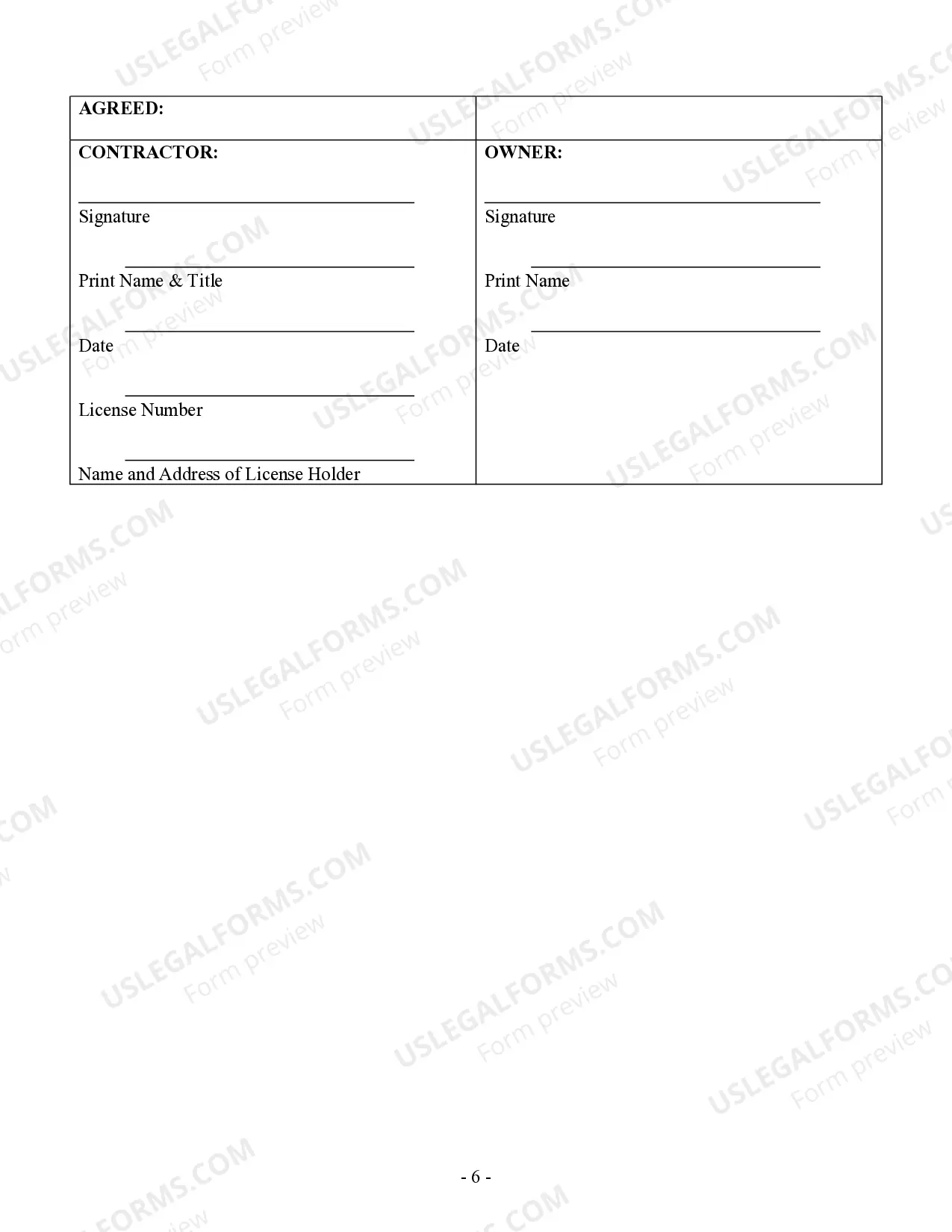
- Both parties should sign and date the agreement to finalize the contract.
Does this document require notarization?
This form does not typically require notarization unless specified by local law. It is advisable to check local regulations to ensure compliance with any additional requirements.
Get your form ready online
Our built-in tools help you complete, sign, share, and store your documents in one place.
Make edits, fill in missing information, and update formatting in US Legal Forms—just like you would in MS Word.
Download a copy, print it, send it by email, or mail it via USPS—whatever works best for your next step.
Sign and collect signatures with our SignNow integration. Send to multiple recipients, set reminders, and more. Go Premium to unlock E-Sign.
If this form requires notarization, complete it online through a secure video call—no need to meet a notary in person or wait for an appointment.
We protect your documents and personal data by following strict security and privacy standards.

Make edits, fill in missing information, and update formatting in US Legal Forms—just like you would in MS Word.

Download a copy, print it, send it by email, or mail it via USPS—whatever works best for your next step.

Sign and collect signatures with our SignNow integration. Send to multiple recipients, set reminders, and more. Go Premium to unlock E-Sign.

If this form requires notarization, complete it online through a secure video call—no need to meet a notary in person or wait for an appointment.

We protect your documents and personal data by following strict security and privacy standards.
Mistakes to watch out for
- Failing to specify the work site clearly, which may lead to confusion over responsibilities.
- Not including change order clauses, which can complicate additional project scope changes.
- Ignoring insurance requirements, which could expose parties to liability risks.
Why use this form online
- Convenience of downloading and printing the form at your convenience.
- Editability allows for customization to meet specific project needs.
- Reliability of having a legally compliant document prepared by licensed attorneys.
Main things to remember
- The Plumbing Contract for Contractor is essential for legally defining the relationship between contractors and property owners in plumbing projects.
- Including clear terms for payment, insurance, and change orders helps prevent misunderstandings.
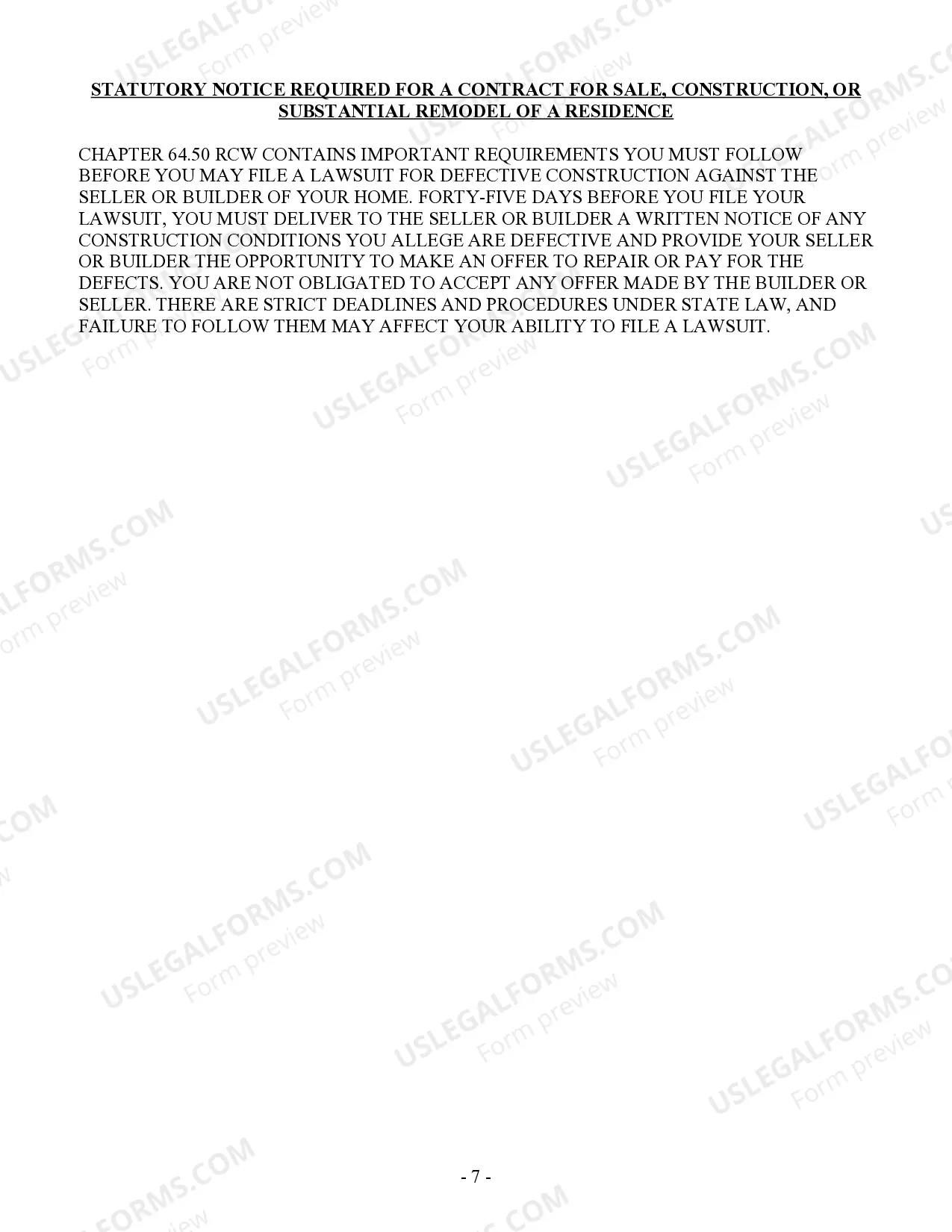
- This form is specifically tailored to meet Washington state legal requirements, ensuring enforceability.
Looking for another form?
Form popularity
FAQ
Independent contractors must register with the Department of Revenue unless they: Make less than $12,000 a year before expenses; Do not make retail sales; Are not required to pay or collect any taxes administered by the Department of Revenue.
Avoid companies that require an upfront deposit of more than 10 percent. Try to include language in the contract that holds back a percentage of the total price, called a retainage, until you're sure the work was done well. A 10 percent retainage is common for residential remodeling work.
General contractors can perform most types of construction work.However, contractors working with plumbing, electrical, elevators, mobile home installation, boilers, and asbestos have additional requirements for education, examination, and licensing.
A plumber is the person that you are most likely to deal with. A plumbing contractor deals almost exclusively with new constructions, remodeling, and renovation, handling the plumbing tasks that involve the home's water supply, septic system, etc.
Step 1: Write Down the Names of the Client and the Professional. Step 2: Write Down the Scope of the Work. Step 3: Specify the Payment Terms and the Other Terms and Conditions. Step 4: Make Room for the Contract Acceptance.