Employee Evaluation Form for CEO
What is this form?
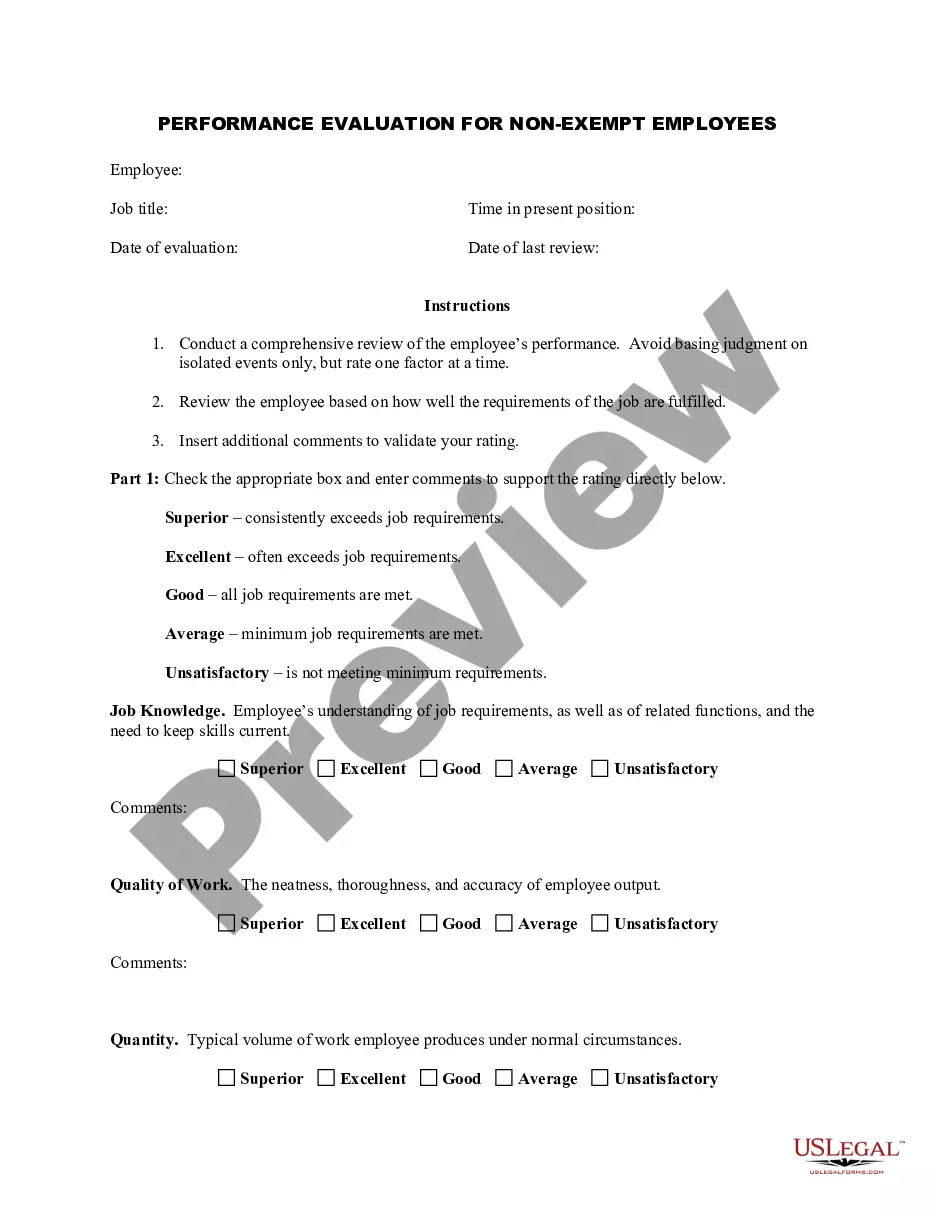
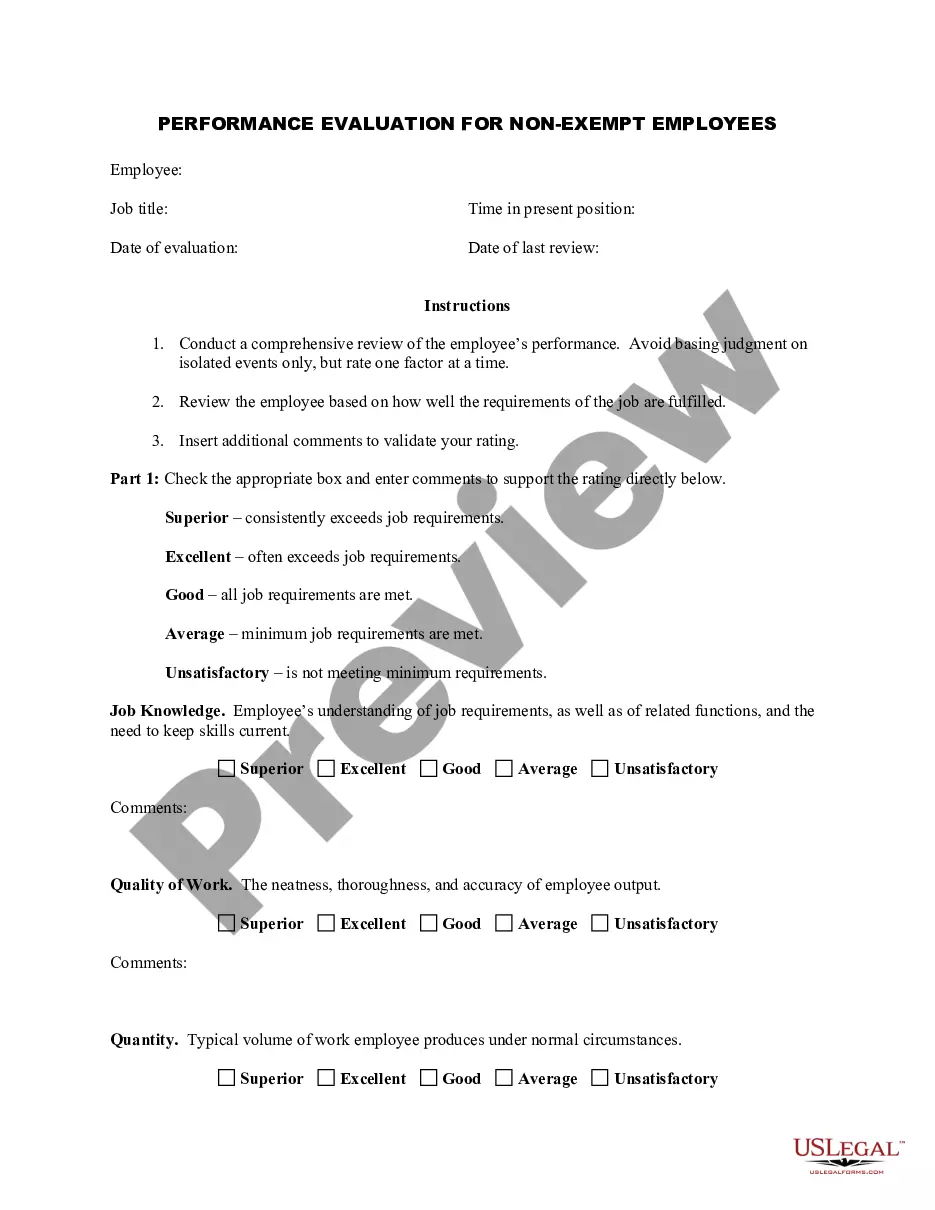
The Employee Evaluation Form for CEO is a structured tool used to assess the performance of a Chief Executive Officer (CEO) within an organization. Unlike general employee evaluation forms, this specific form focuses on the unique responsibilities and expectations associated with the CEO position, making it tailored for high-level executive review. This form helps organizations ensure accountability and provides a formal mechanism for feedback on executive performance.
Form components explained
- Employee Information: Collects details such as job title and time in position.
- Evaluation Date: Specifies the date of the current evaluation.
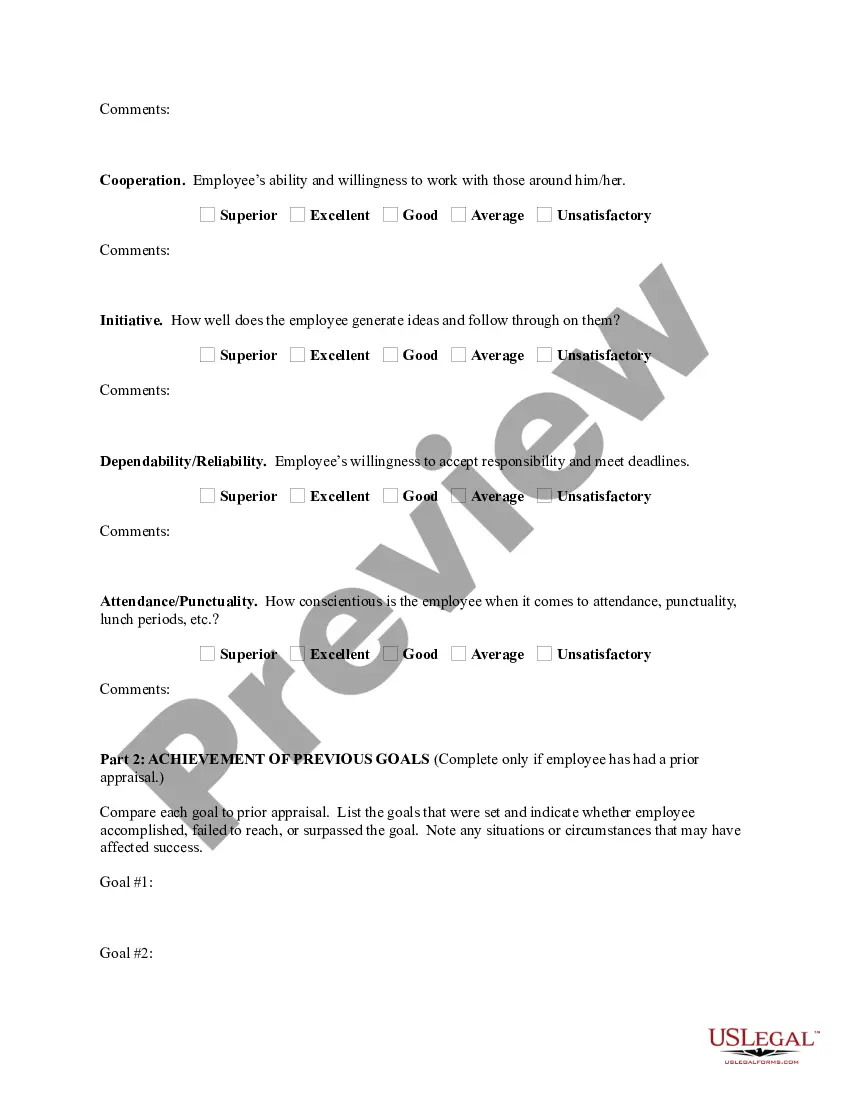
- Sections for Rating: Assess various aspects such as job knowledge, quality of work, quantity of work, cooperation, initiative, dependability, and attendance.
- Comments: Provides space for evaluators to include supporting comments for ratings given.
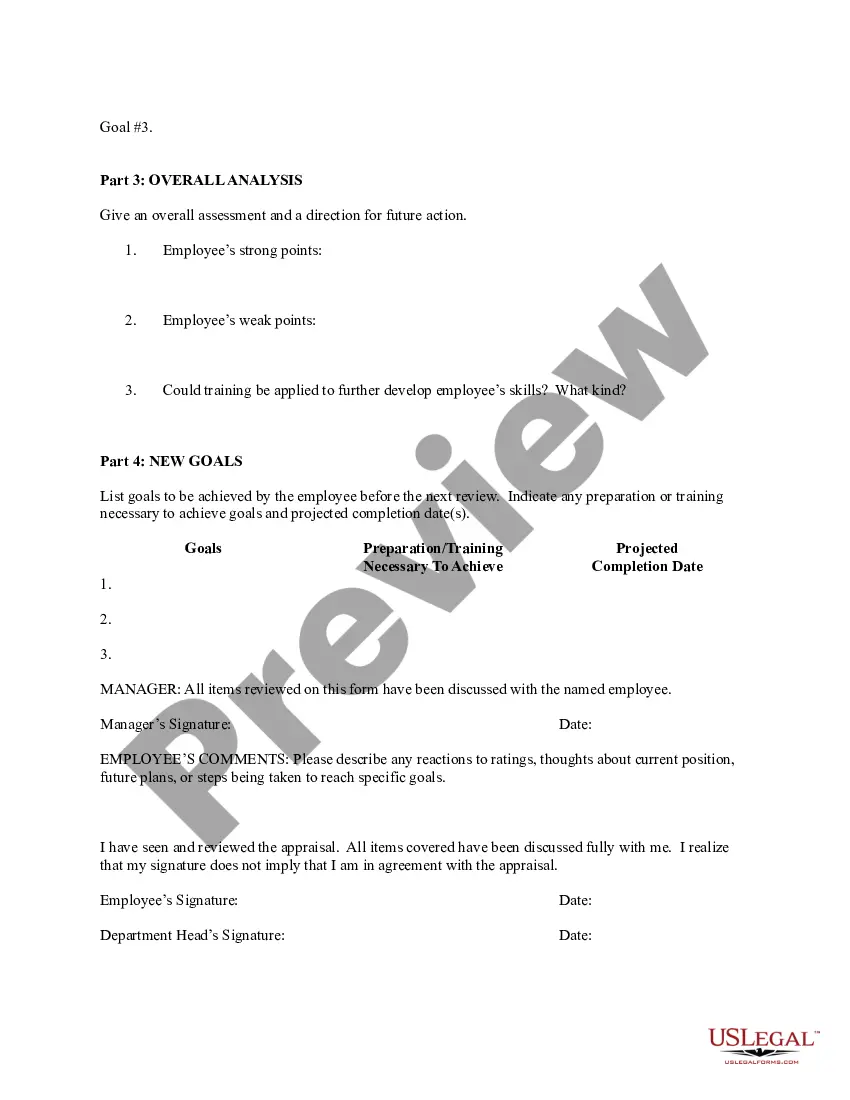
- Goal Setting: Includes sections for past achievements and new goals to be set for the employee.
Common use cases
This form should be used during the performance review cycle for a CEO, typically conducted annually or semi-annually. It is essential when organizations are looking to evaluate executive leadership, assess their contributions to the company, and identify areas for improvement or development. Additionally, it can be used during contract negotiations or when setting future objectives.
Who should use this form
- Executive boards and hiring committees responsible for evaluating CEO performance.
- Senior management tasked with conducting performance reviews of executive leadership.
- Human resources departments involved in the administration of executive assessments.
How to complete this form
- Gather employee information: Fill in the CEO's name, title, and time in the position.
- Set the evaluation date: Clearly state when the evaluation is being conducted.
- Rate the CEO on each key competency: Use the provided scale to assess job knowledge, quality of work, and other relevant factors.
- Provide supporting comments: Justify each rating with specific examples or observations to enhance the evaluation's transparency.
- Set new goals: Document any objectives for the upcoming review period to guide future performance expectations.
Notarization requirements for this form
This form does not typically require notarization unless specified by local law. Always verify with local regulations to ensure compliance with any specific requirements.
Get your form ready online
Our built-in tools help you complete, sign, share, and store your documents in one place.
Make edits, fill in missing information, and update formatting in US Legal Forms—just like you would in MS Word.
Download a copy, print it, send it by email, or mail it via USPS—whatever works best for your next step.
Sign and collect signatures with our SignNow integration. Send to multiple recipients, set reminders, and more. Go Premium to unlock E-Sign.
If this form requires notarization, complete it online through a secure video call—no need to meet a notary in person or wait for an appointment.
We protect your documents and personal data by following strict security and privacy standards.

Make edits, fill in missing information, and update formatting in US Legal Forms—just like you would in MS Word.

Download a copy, print it, send it by email, or mail it via USPS—whatever works best for your next step.

Sign and collect signatures with our SignNow integration. Send to multiple recipients, set reminders, and more. Go Premium to unlock E-Sign.

If this form requires notarization, complete it online through a secure video call—no need to meet a notary in person or wait for an appointment.

We protect your documents and personal data by following strict security and privacy standards.
Mistakes to watch out for
- Failing to provide specific examples to support ratings.
- Incomplete evaluations where all sections are not addressed.
- Allowing bias to influence the assessment rather than focusing on factual performance metrics.
Advantages of online completion
- Easy accessibility: The form can be filled out and saved electronically, allowing for convenient updates and submissions.
- Editability: Changes can be made quickly to reflect the most current performance data.
- Secure storage: Online forms typically offer secure storage solutions, ensuring data protection and compliance with privacy regulations.
Looking for another form?


Form popularity
FAQ
The goal of an evaluation is to evaluate professional performance, not the person. Boards introduce a high risk of bias and prejudice when they attempt to judge the executive as a person, particularly given their limited exposure to the executive.
Communication. Collaboration and teamwork. Problem-solving. Quality and accuracy of work. Attendance, punctuality and reliability. The ability to accomplish goals and meet deadlines.
Level of execution. Quality of work. Level of creativity. Amount of consistent improvement. Customer and peer feedback. Sales revenue generated. Responsiveness to feedback. Ability to take ownership.
Great executive directors are goal driven and possess a high degree of motivation and energy. They are doers. They have a record of productivity. Passion for the Organization's Mission. They are driven by the importance of the organization's mission.
In general terms, a managing director will outrank an executive director. That is because they have more direct responsibility to the daily operations of the company. The executive director is responsible for specific programs or services that are assigned to the by the Board of Directors or the managing director.
A self-evaluation. Reports submitted to the board. Information collected from staff, clients, customers, funders, partner organizations, volunteers or other stakeholders (such as through surveys or anonymous feedback) Intermittent of continuous observation of the executive leader by board members.
Assessments should include a review of what the executive director achieved, how objectives were achieved, and whether the director modeled the core values of the organization. The board should form the criteria for evaluating the executive director around the needs and goals of the organization.
Develop a policy on performance evaluation. Design an evaluation tool. Rely on core documents. Ask for a self-evaluation beforehand. Observe the CEO in action. Measure the CEO's professional development activities. Invite dialogue. Complete a written evaluation.
Set Performance Standards. Set Specific Goals. Take Notes Throughout the Year. Be Prepared. Be Honest and Specific with Criticism. Don't Compare Employees. Evaluate the Performance, Not the Personality. Have a Conversation.