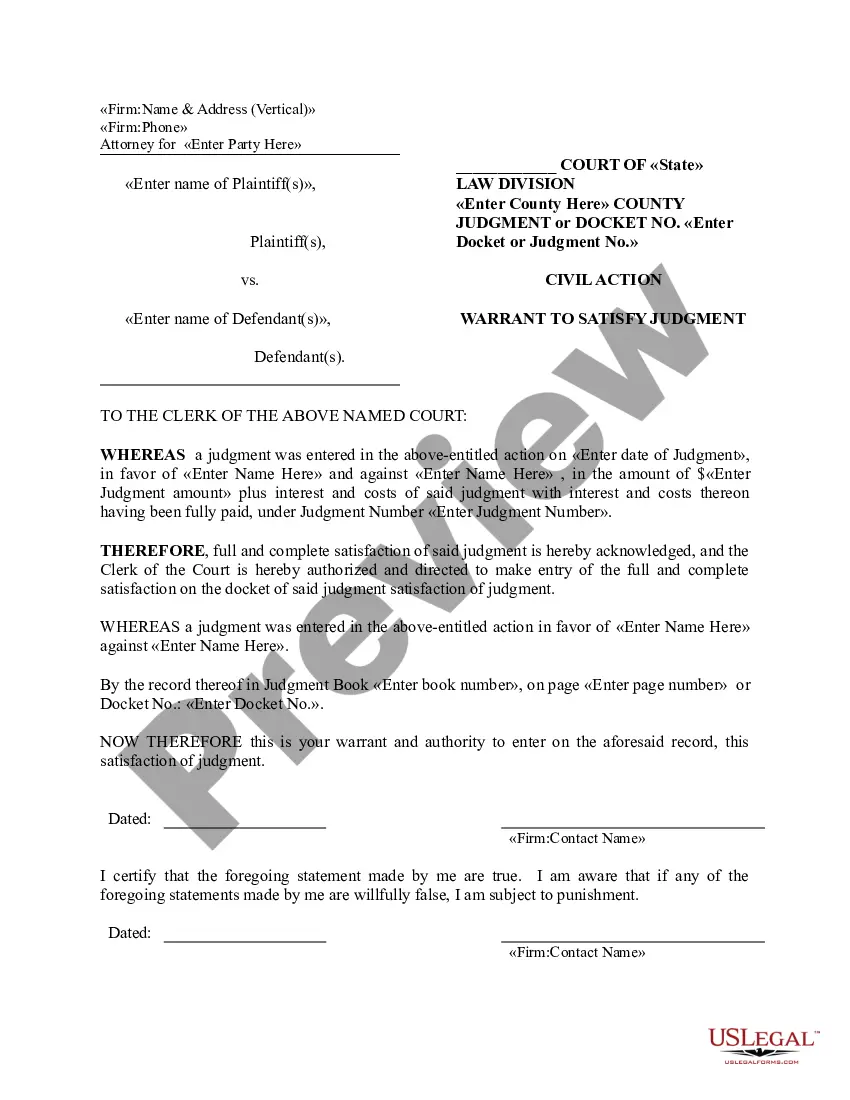
Personal Property Inventory
Understanding this form
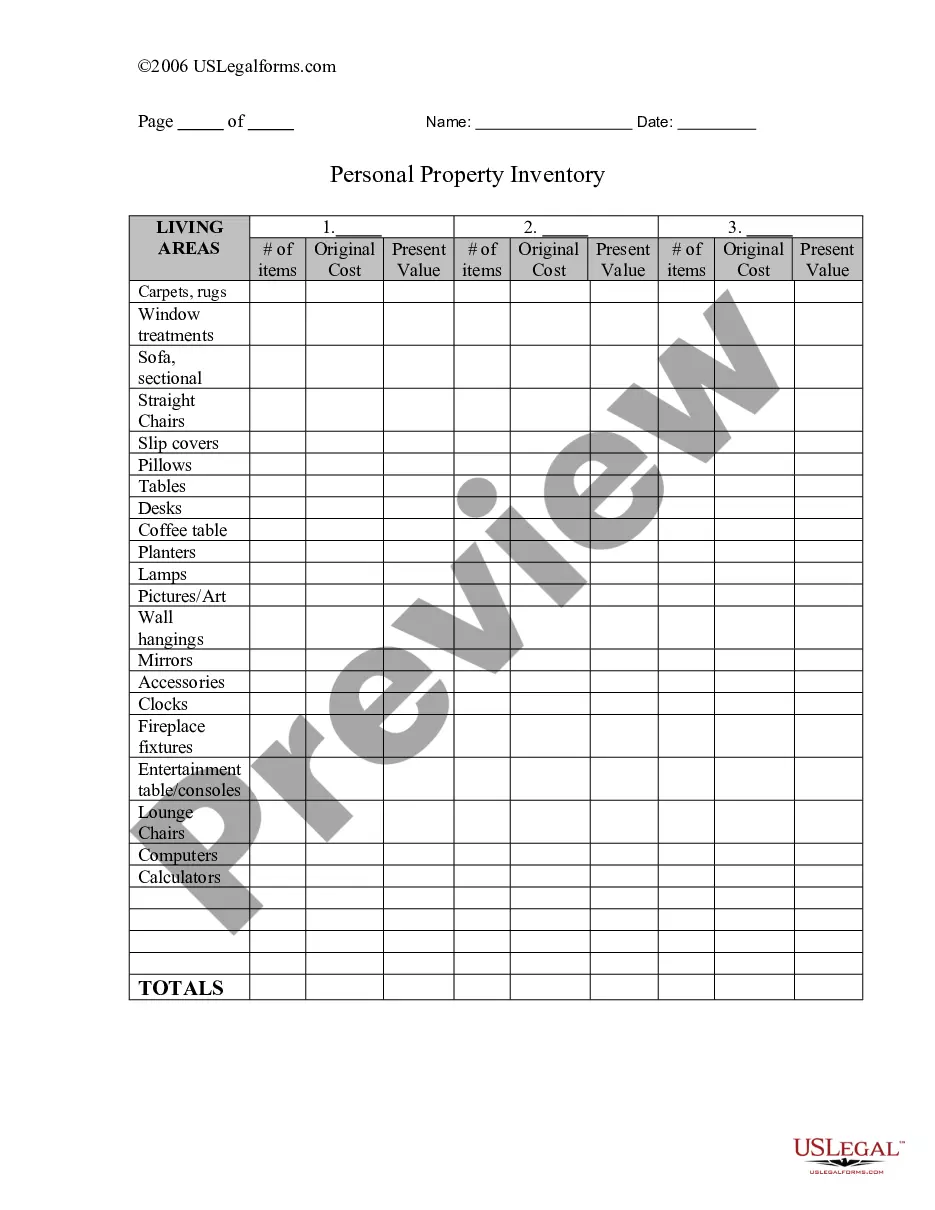
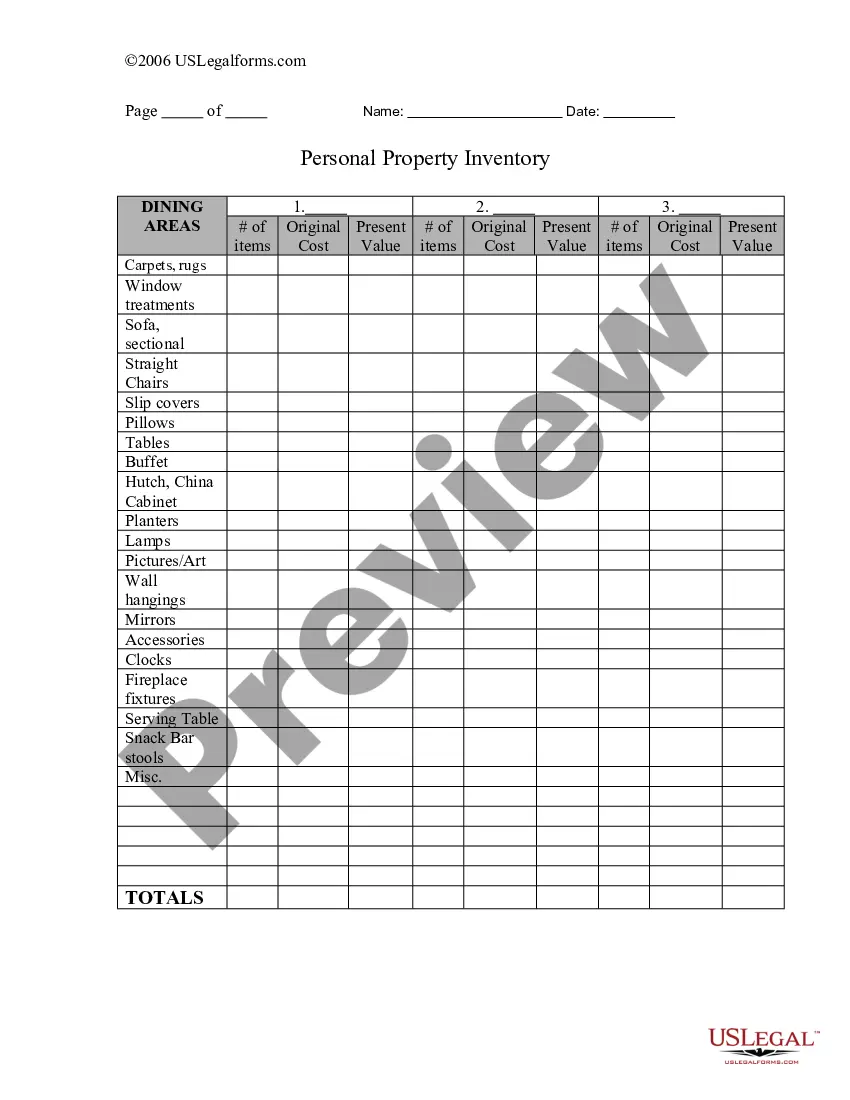
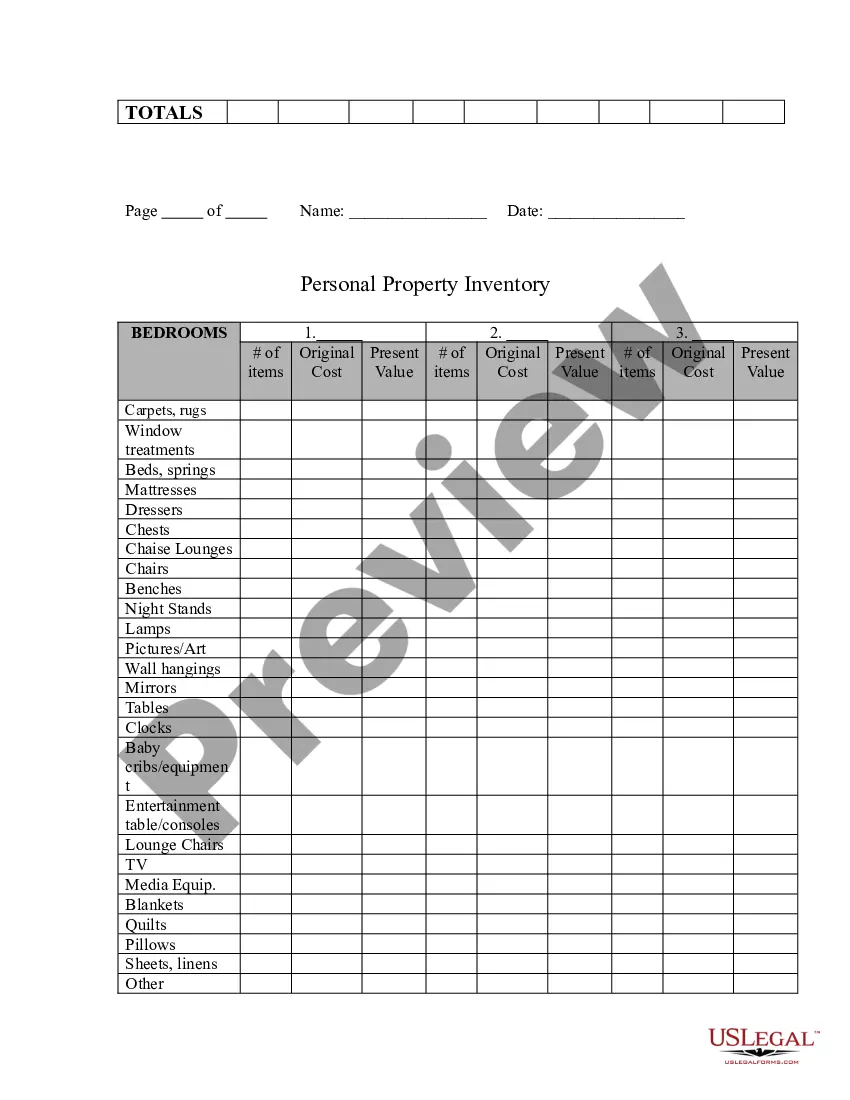
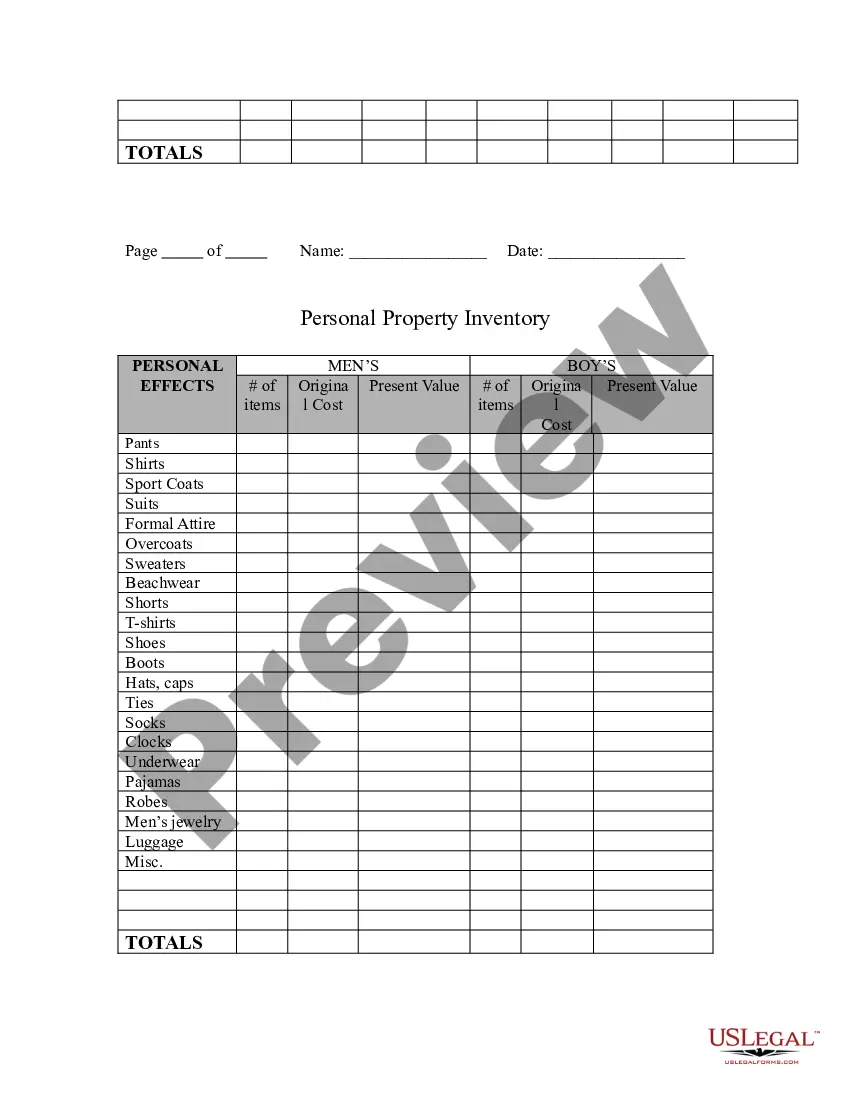
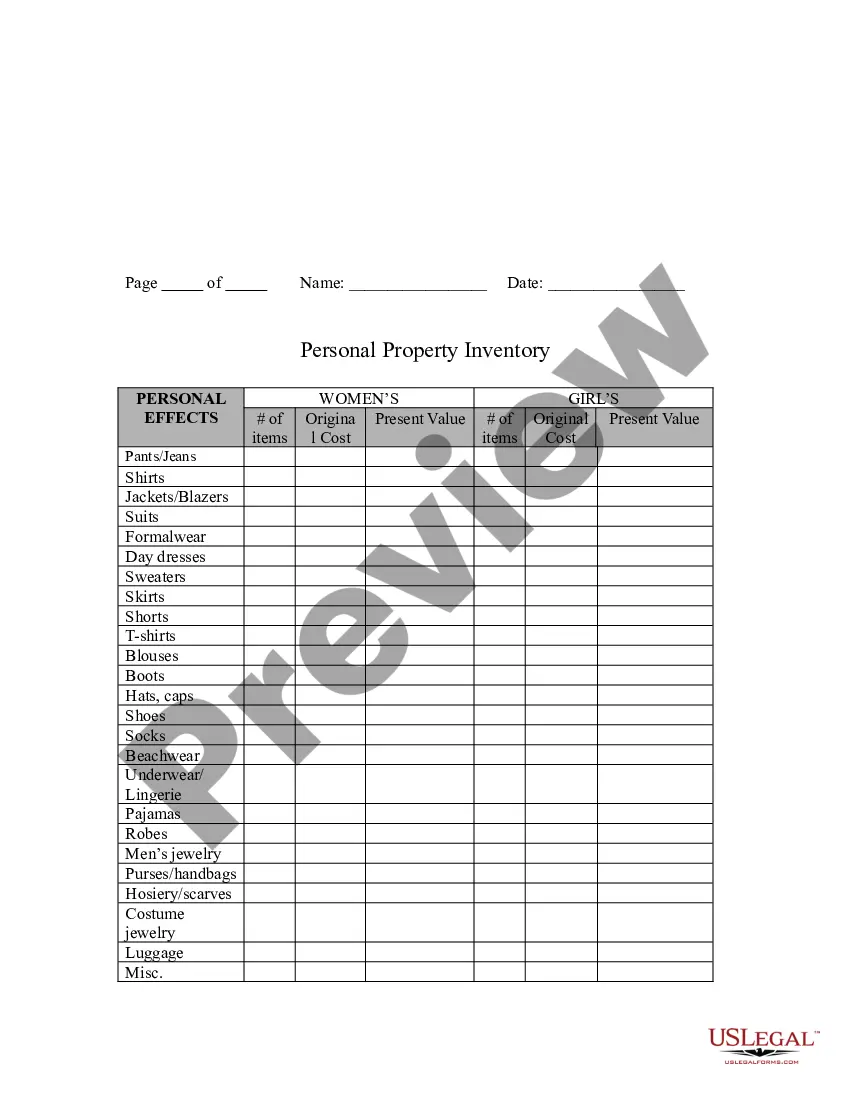
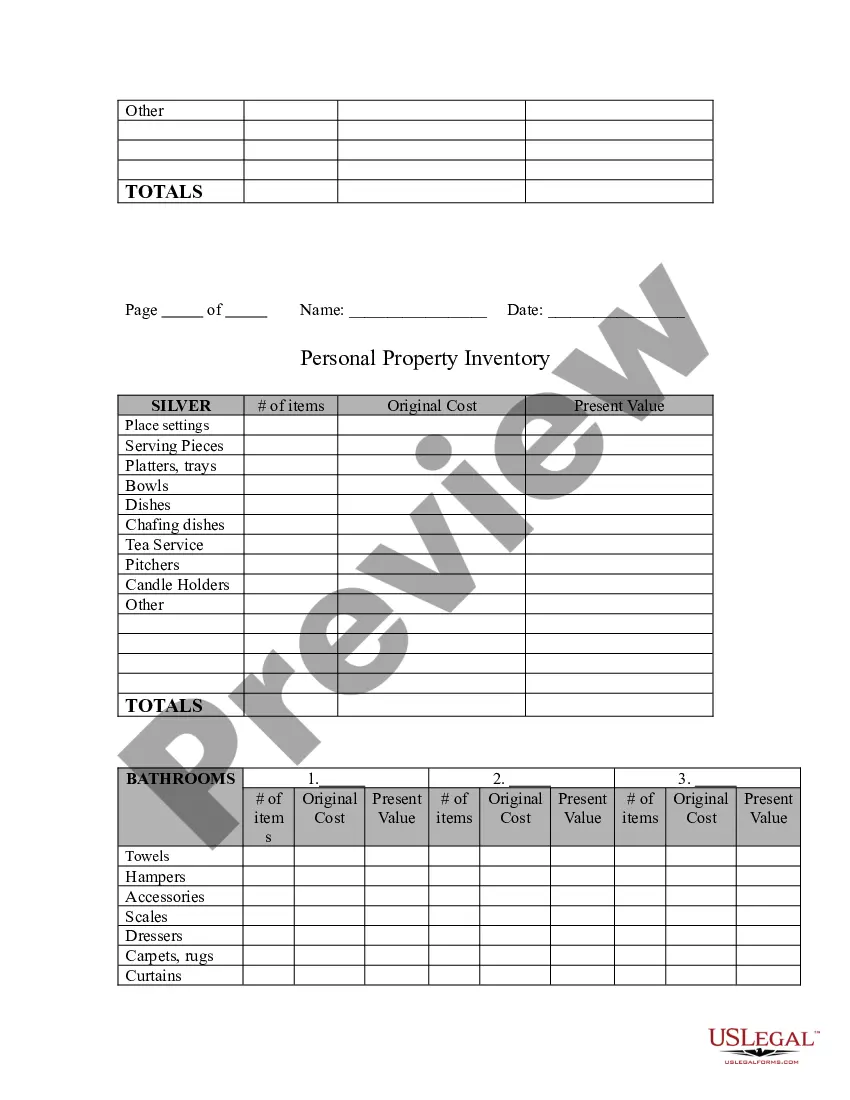
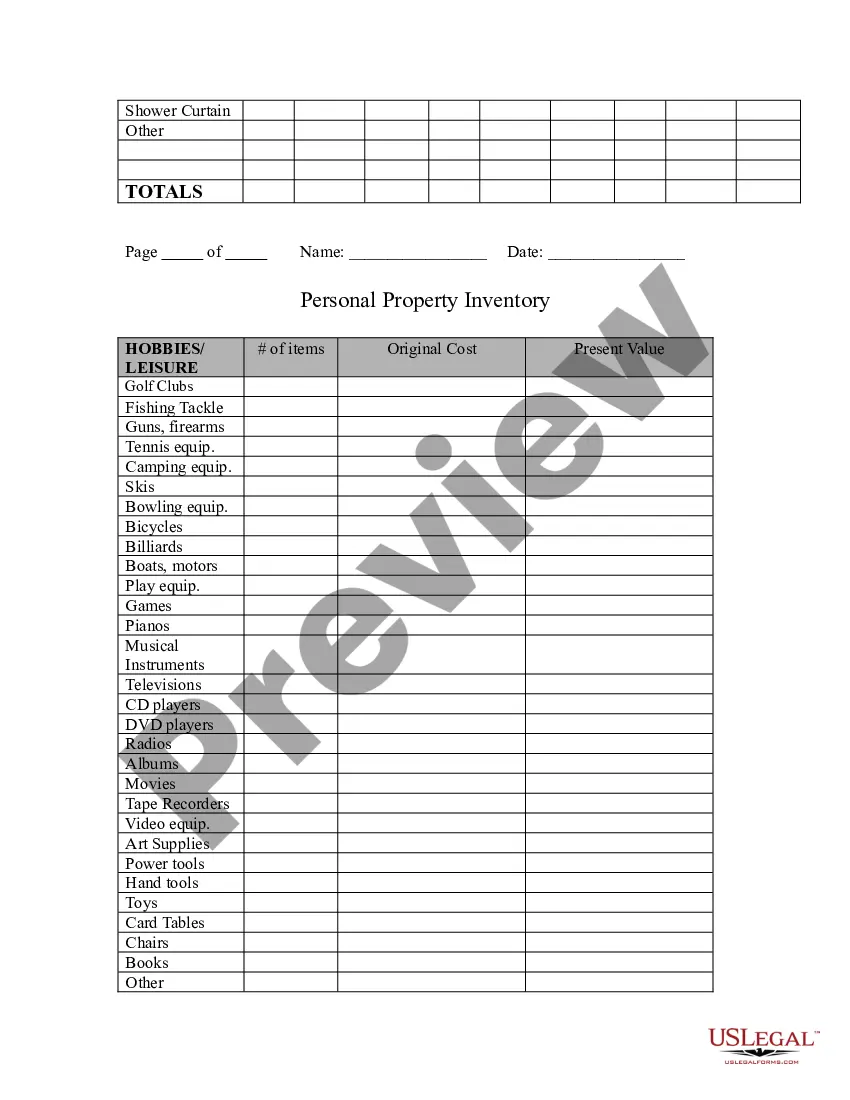
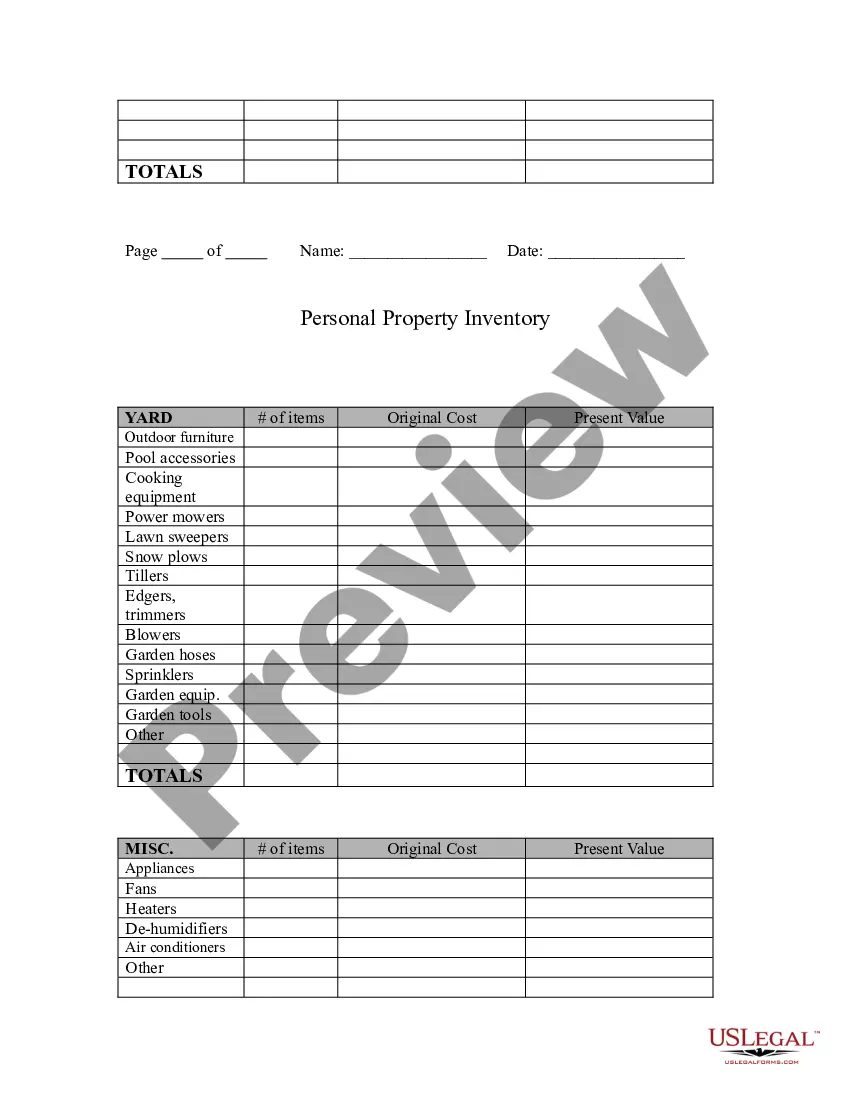
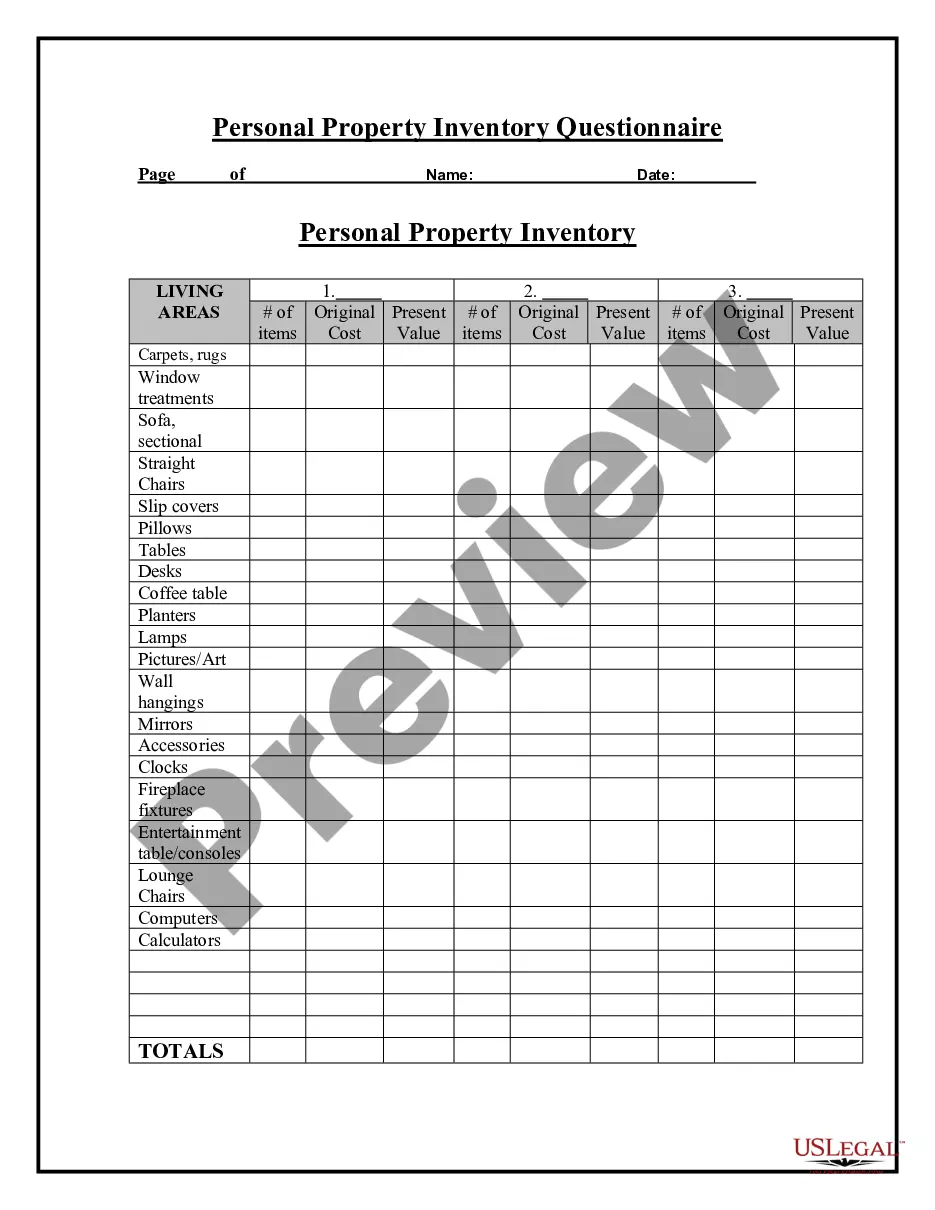
The Personal Property Inventory form is a detailed document designed for individuals or families to systematically list and quantify their personal property. By itemizing items, their original costs, and current values, this form serves as a vital tool for record-keeping purposes, particularly for insurance claims or future estate planning. Unlike other property documents that may only cover real estate, this inventory focuses exclusively on personal property, ensuring comprehensive coverage of all possessions within the home.
What’s included in this form
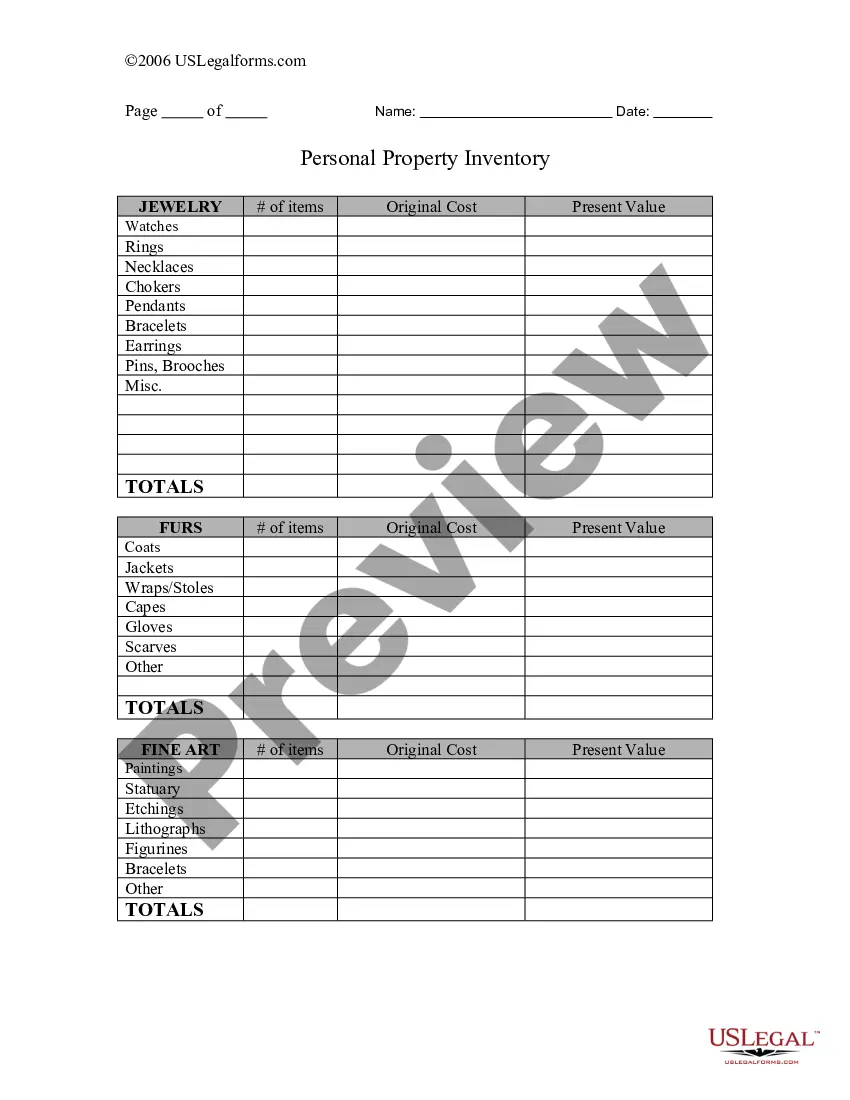
- Section for personal effects: includes clothing, furs, and accessories.
- Fine art section: allows for the listing of paintings, figurines, and other artwork.
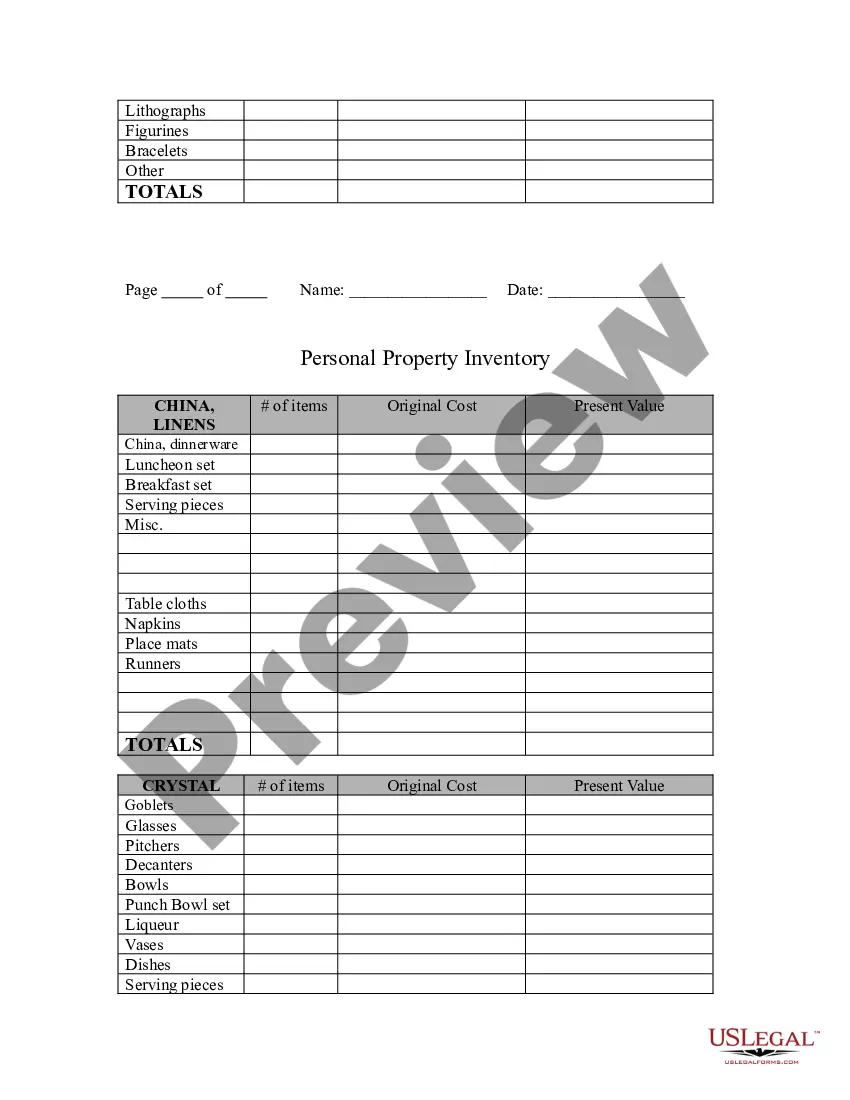
- Crystal items: covers goblets, glasses, and decorative pieces.
- Miscellaneous items section: includes appliances and household goods.
- Field for recording original costs and current values for each item.

Common use cases
This form is particularly useful in several scenarios, such as when purchasing insurance to ensure all valuable items are adequately covered, planning an estate to facilitate the distribution of assets, or during a move to keep track of all belongings. It can also be helpful in case of theft or disaster, providing a detailed record for claims processes with insurance companies.
Who needs this form
- Homeowners or renters who want to document their possessions.
- Individuals planning an estate or organizing inheritance matters.
- Families seeking to maintain accurate records for insurance purposes.
- Anyone wanting a clear overview of personal property for financial tracking.
Steps to complete this form
- Start by gathering information about all personal property in your home.
- List each item in the appropriate category, such as personal effects, fine art, or miscellaneous.
- Record both the original cost and the current value for each item listed.
- Double-check for accuracy to ensure all items are included.
- Save your completed inventory securely for future reference, especially for insurance and estate purposes.
Notarization guidance
This form does not typically require notarization unless specified by local law. However, providing notarized documentation may lend additional credibility and security, especially in legal contexts like estate planning.
Get your form ready online
Our built-in tools help you complete, sign, share, and store your documents in one place.
Make edits, fill in missing information, and update formatting in US Legal Forms—just like you would in MS Word.
Download a copy, print it, send it by email, or mail it via USPS—whatever works best for your next step.
Sign and collect signatures with our SignNow integration. Send to multiple recipients, set reminders, and more. Go Premium to unlock E-Sign.
If this form requires notarization, complete it online through a secure video call—no need to meet a notary in person or wait for an appointment.
We protect your documents and personal data by following strict security and privacy standards.

Make edits, fill in missing information, and update formatting in US Legal Forms—just like you would in MS Word.

Download a copy, print it, send it by email, or mail it via USPS—whatever works best for your next step.

Sign and collect signatures with our SignNow integration. Send to multiple recipients, set reminders, and more. Go Premium to unlock E-Sign.

If this form requires notarization, complete it online through a secure video call—no need to meet a notary in person or wait for an appointment.

We protect your documents and personal data by following strict security and privacy standards.
Avoid these common issues
- Failing to list every item or category of personal property.
- Not updating item values regularly to reflect current market conditions.
- Forgetting to keep a backup of the inventory for safekeeping.
- Overlooking smaller items that may hold significant personal or monetary value.
Benefits of completing this form online
- Convenience of downloading and filling out at your own pace.
- Editability allows for easy updates to the inventory as items change.
- Access to professionally drafted templates for accuracy and reliability.
- Time-saving process, avoiding the need for in-person consultations with legal professionals.
Looking for another form?
Form popularity
FAQ
Take pictures. Capture important individual items as well as entire rooms, closets or drawers. Take video. Use an app.
To calculate the actual cash value, or ACV, of an item, take the replacement cash value, or RCV, which is the cost to purchase the item now, and multiply it by the depreciation rate, or DPR, as a percentage, and the age of the item. Then, subtract that value from the RCV. ACV=RCV - (RCVDPRAGE).
Pick your software and storage methods. Scribbling on a napkin or taking a few snapshots is OK, but many better options exist, some of which cost nothing. List your possessions. Take photos and video. Don't forget important paperwork. List valuables separately. Keep copies away from home.
A home inventory can speed up a homeowners insurance claim process. It can help ensure that you make a claim for all of your belongings if there's a fire, tornado or other damage. If you forget what you own, you won't get reimbursed for what you lost.
A household inventory is an itemized list of your personal belongings. It provides a method of knowing exactly what personal property you own. An accurate household inventory is a necessity whether you are a homeowner or a renter.
Take pictures. Capture important individual items as well as entire rooms, closets or drawers. Take video. Walk through your house or apartment recording and describing the contents. Use an app.
A good home inventory includes a detailed list of your possessions, including receipts, descriptions, and photos of your home contents. o Start with new purchases and add older items later. o Group your possessions into logical categories, e.g., by hobby, by room in your home, etc. Be specific.
It includes land and buildings, for example. Personal property typically includes furniture, fixtures, tools, vehicles, and machinery and equipment. All of these items can be moved.