Vermont Landscaping Contractor Package
Overview of this form package
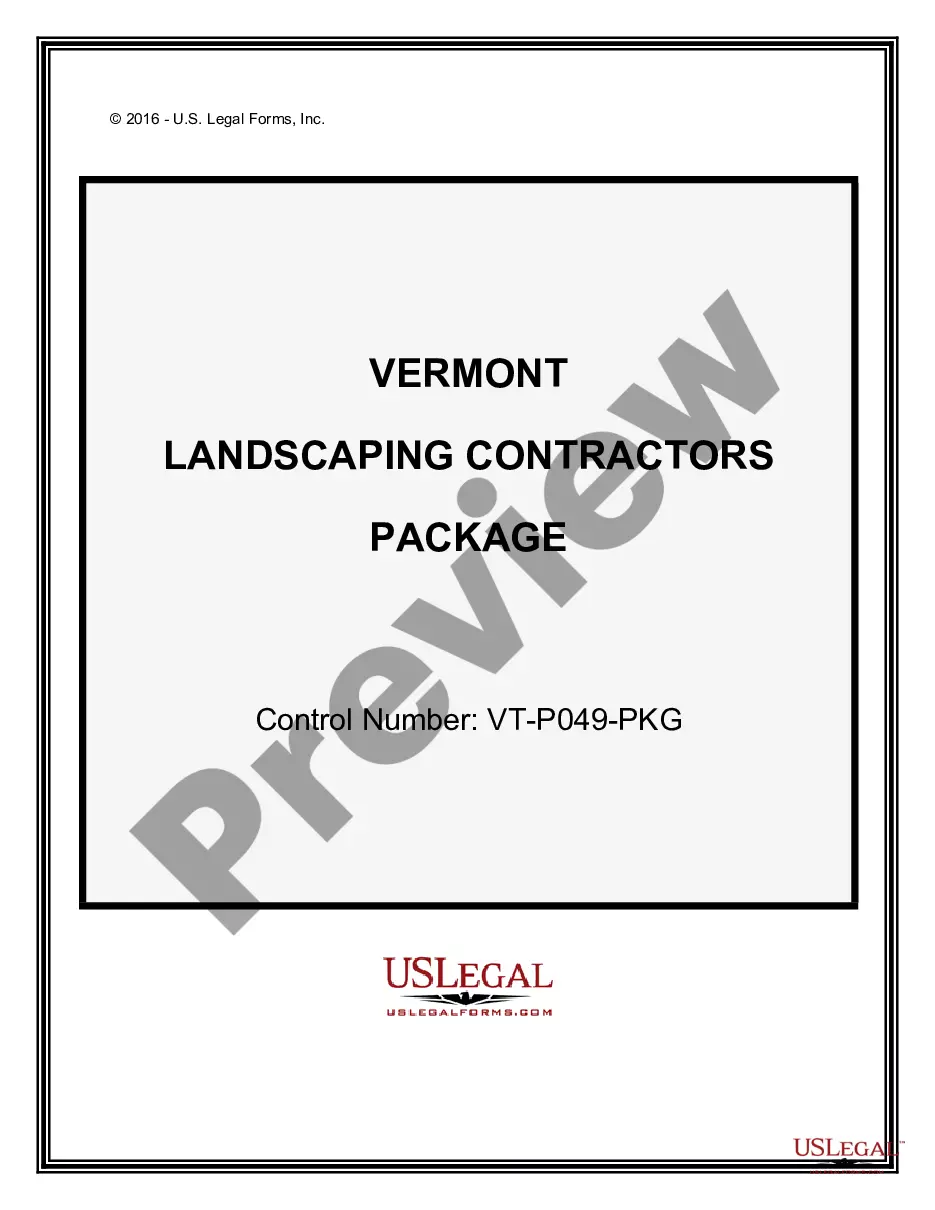
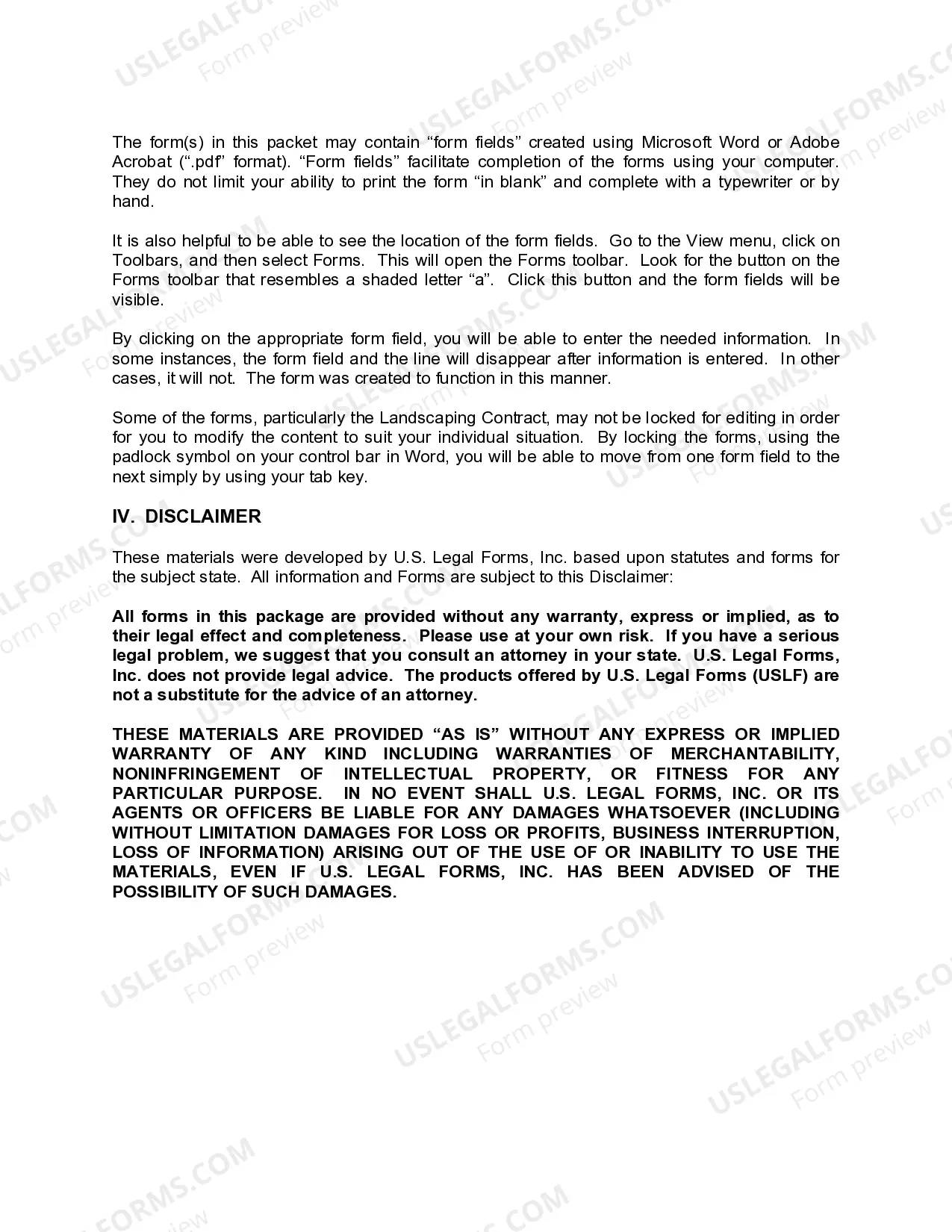
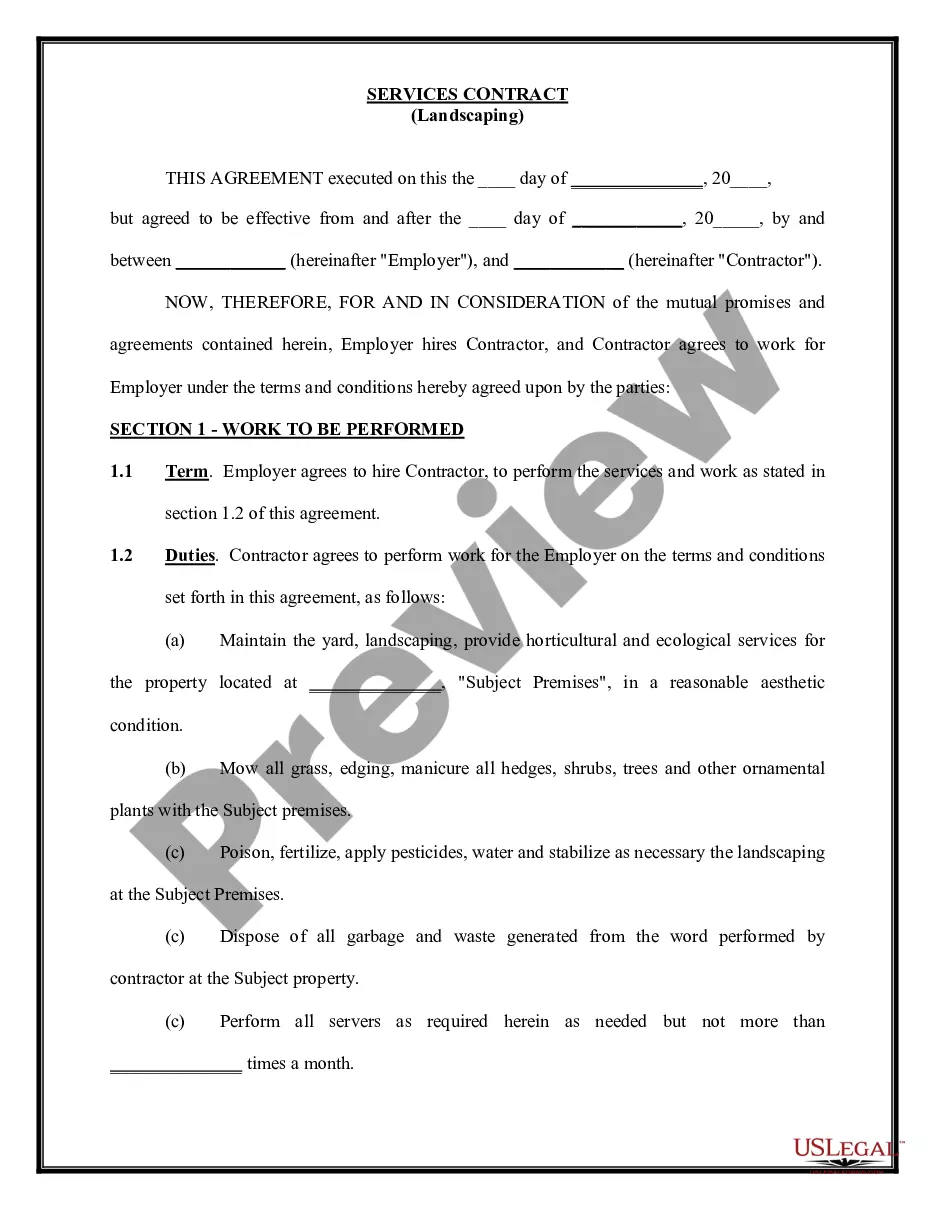
The Vermont Landscaping Contractor Package includes essential legal documents specifically designed for landscaping contractors. This package helps contractors assert their legal rights and address important issues related to residential landscaping projects. Key to this package is a landscaping contract that adheres to Vermont state law, ensuring compliance and protection for contractors and their clients. By acquiring this package, users will save over fifty percent compared to purchasing each form separately.
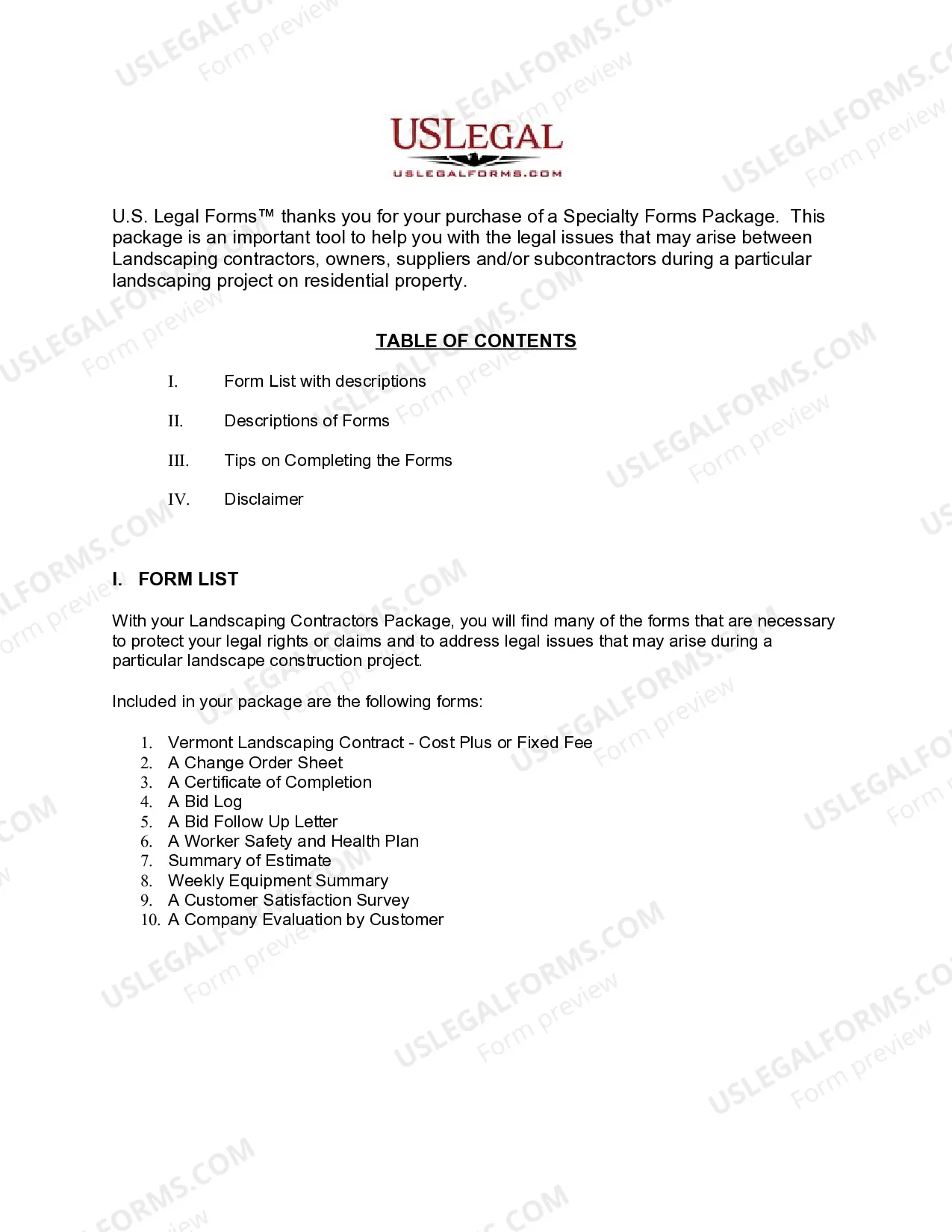
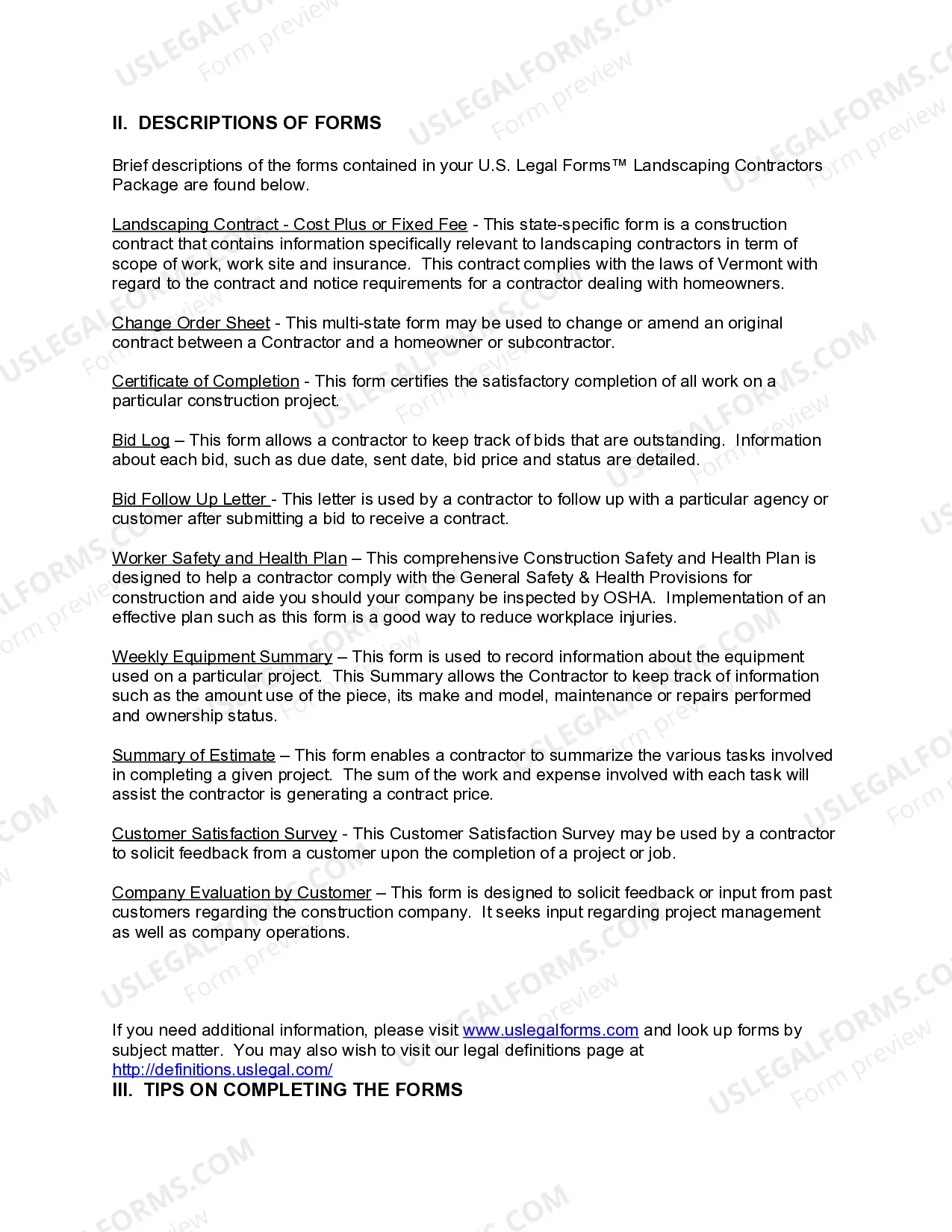
What’s included in this form package
- Landscape Contract for Contractor
- Contractor's Weekly Equipment Summary
- Contractor's Bid Log
- Contractor's Bid Follow Up Letter
- Contractor's Summary of an Estimate
- Customer Satisfaction Survey
- Construction Company Evaluation by a Customer
- Construction Safety and Health Plan
- Change Order for Construction or Repairs by Contractor
- Certification of Completion by Contractor
When to use this document
This form package is useful in various scenarios, including:
- When starting a landscaping project and needing a legally binding contract.
- When changes to the project scope arise, requiring a formal amendment through a change order.
- To document project completion and gather customer feedback upon project conclusion.
- When tracking equipment usage and safety compliance during landscaping operations.
Who this form package is for
- Landscaping contractors operating in Vermont.
- Subcontractors working under landscaping contractors.
- Homeowners engaging landscaping services who wish to formalize agreements.
- Anyone managing residential landscaping projects requiring legal documentation.
Steps to complete these forms
- Review the forms included in the package to understand their purpose.
- Identify the parties involved, including contractors and clients.
- Fill out the landscaping contract by entering relevant project details and specifications.
- Use the change order sheet to document any amendments to the original contract.
- Obtain necessary signatures, and if applicable, keep a record of all communications related to bids and customer feedback.
Do forms in this package need to be notarized?
Forms in this package usually don’t need notarization, but certain jurisdictions or signing circumstances may require it. US Legal Forms provides a secure online notarization option powered by Notarize, accessible 24/7 from anywhere.
Get your form ready online
Our built-in tools help you complete, sign, share, and store your documents in one place.
Make edits, fill in missing information, and update formatting in US Legal Forms—just like you would in MS Word.
Download a copy, print it, send it by email, or mail it via USPS—whatever works best for your next step.
Sign and collect signatures with our SignNow integration. Send to multiple recipients, set reminders, and more. Go Premium to unlock E-Sign.
If this form requires notarization, complete it online through a secure video call—no need to meet a notary in person or wait for an appointment.
We protect your documents and personal data by following strict security and privacy standards.

Make edits, fill in missing information, and update formatting in US Legal Forms—just like you would in MS Word.

Download a copy, print it, send it by email, or mail it via USPS—whatever works best for your next step.

Sign and collect signatures with our SignNow integration. Send to multiple recipients, set reminders, and more. Go Premium to unlock E-Sign.

If this form requires notarization, complete it online through a secure video call—no need to meet a notary in person or wait for an appointment.

We protect your documents and personal data by following strict security and privacy standards.
Common mistakes
- Failing to specify project details in the landscaping contract, which can lead to misunderstandings.
- Not documenting changes through the change order sheet, which can complicate legal claims.
- Neglecting to gather customer feedback using the satisfaction survey.
- Inadequate record-keeping using the bid log, which may result in missed opportunities.
Why use this package online
- Convenience of immediate access: Download and print from anywhere.
- Editability: Customize forms to fit specific project needs easily.
- Compliance assurance: Each form is drafted to adhere to Vermont legal standards.
- Cost savings: Purchasing the package is significantly cheaper than buying forms individually.
Legal use & context
- The forms provided in this package help establish clear agreements between contractors and clients.
- Using these forms can help mitigate disputes by providing documented evidence of terms and conditions.
- Contracts and agreements are enforceable under state law when properly filled out and signed.
What to keep in mind
- This form package provides essential legal documents for landscaping contractors in Vermont.
- It includes a variety of forms, from contracts to safety plans and customer feedback tools.
- Using these forms helps ensure legal compliance and effective project management.
Looking for another form?
Form popularity
FAQ
Line. Line is used to carry the eye through a landscape and to create physical flow and connectivity. Vertical lines carry the eye skyward and are useful in expanding small spaces. Mass. In design, mass is a measure of visual size. Form. Form refers to the shapes of objects in a landscape.
Landscape plans include natural elements like flowers, trees, and grass as well as man-made elements such as lawn furniture, fountains, and sheds. Landscape designs may also include overlays for irrigation and lighting.
It takes time, money, perseverance and sometimes a lot of luck. One of the frustrations I hear from landscape start-ups is that money always seems to be going out faster than it's coming in.The good news is you can start a landscape business for little money if you're willing and able to start small enough.
The profit picture for landscape contractors and their equipment dealers looked pretty similar in 2014. Landscape contractors, however, are more likely to be generating net profits in excess of 10%. It's pretty safe to say that anyone in business would like to make more money.
That said, most landscaping businesses will require a larger investment. The average start-up cost is between $15,000 and $20,000 if you're starting from scratch. There are ways to lower these start-up costs, though. Buying used rather than new equipment can cut down significantly on your expenses.
PayScale reports the average salary for a landscape manager is $44,525. The average salary for an account manager in the landscape industry is $50,103. Meanwhile, a small business owner/operator makes an average of $59,243, according to PayScale data. Salaries range from $25,302 to $147,577.
Develop a base plan. Conduct a site inventory and analysis. Assess your family's needs. Locate the use areas. Develop the use areas. Develop the planting plan.
SIMPLICITY. Elements that do not provide improvement or impact on the design can be omitted. VARIETY. Shape, size and form selections should be diverse in order to create visual interest. BALANCE. Everything that is placed in a design will carry a certain visual weight with it. EMPHASIS. SEQUENCE. SCALE / PROPORTION. UNITY.
Know your yard. Who will be using your yard? Think about themes. Create and link spaces. Make your plants work for you. Structure your plantings. Highlight important points. Pay attention to detail.