Maine Aging Parent Package
About this form package
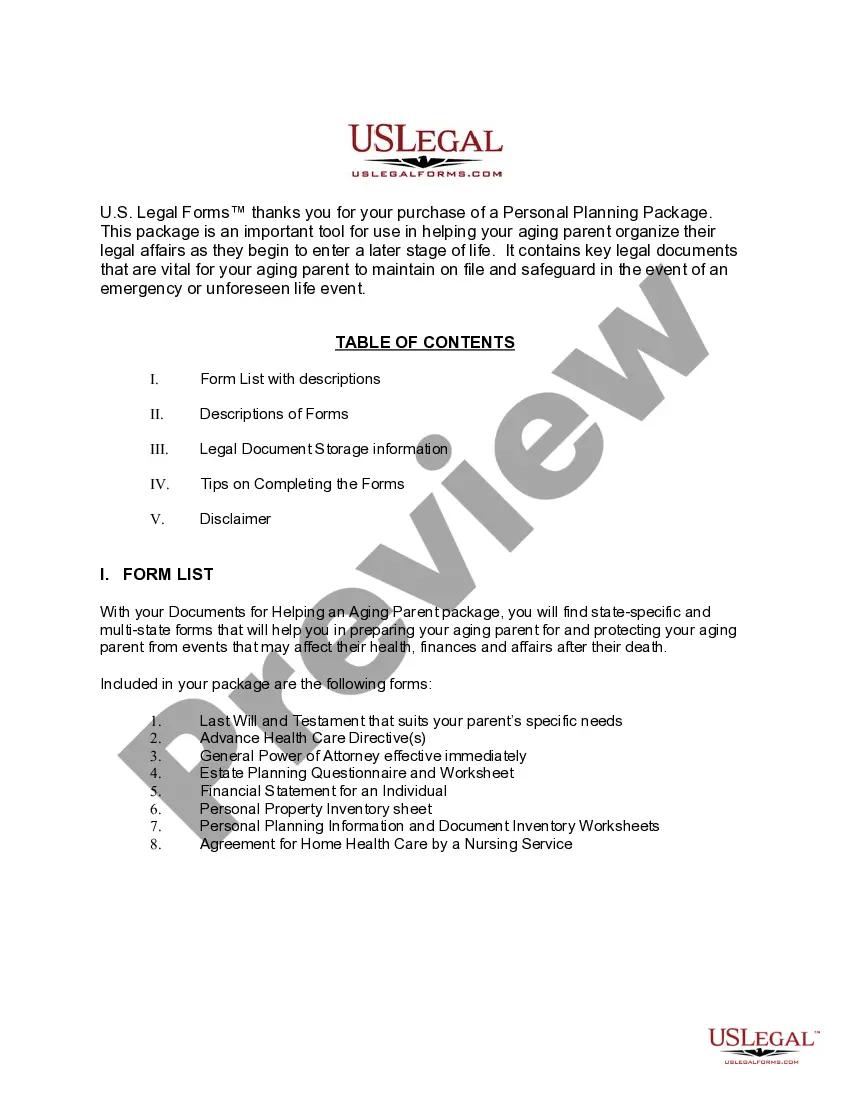
The Maine Aging Parent Package is designed to assist you in organizing the legal affairs of an aging parent. This comprehensive form package includes both state-specific and multi-state documents, making it ideal for ensuring that your parentâs health care, finances, and affairs are well-managed as they enter a later stage of life. By utilizing this package, you can prepare your parent to protect their interests and safeguard important information, which can prove vital during emergencies or unforeseen events.
Forms included in this package
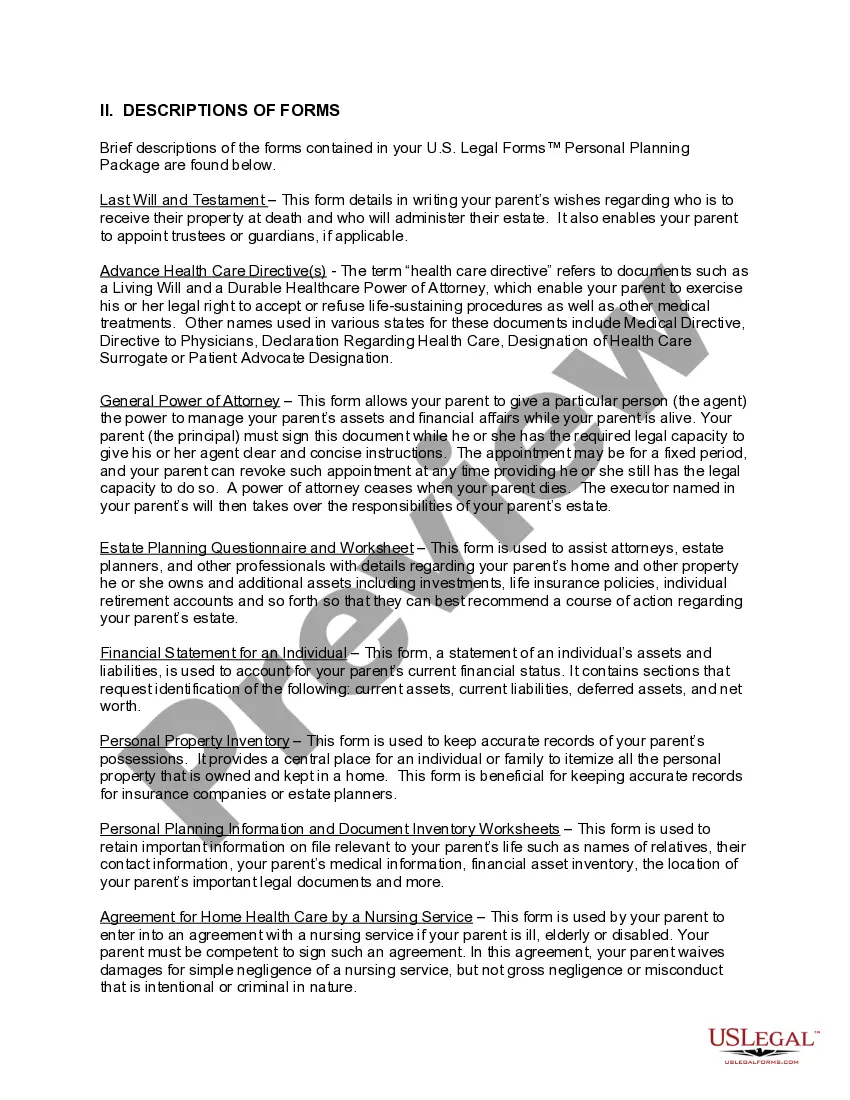
- Last Will and Testament
- General Durable Power of Attorney for Property and Finances or Financial Effective Immediately
- Statutory Advanced Health Care Directive
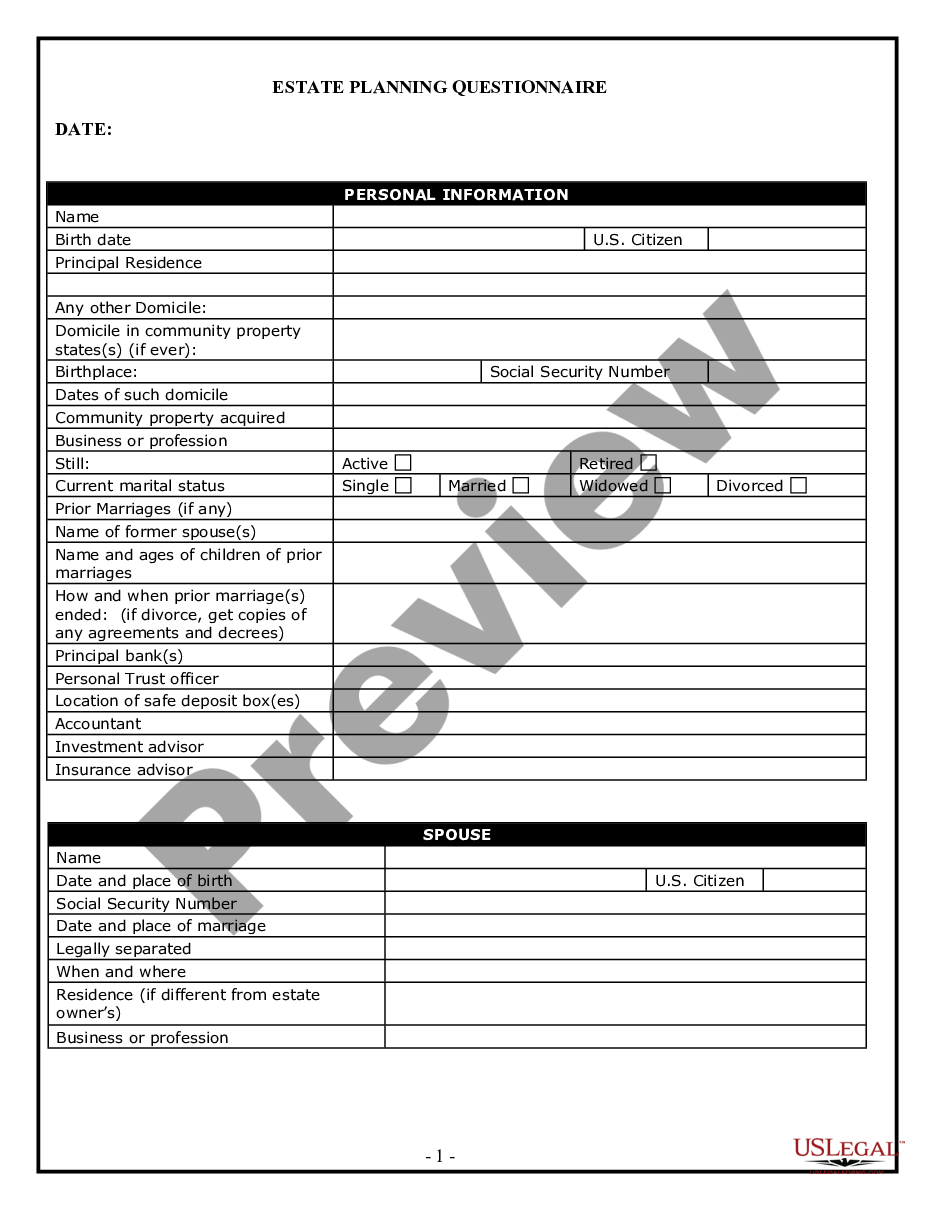
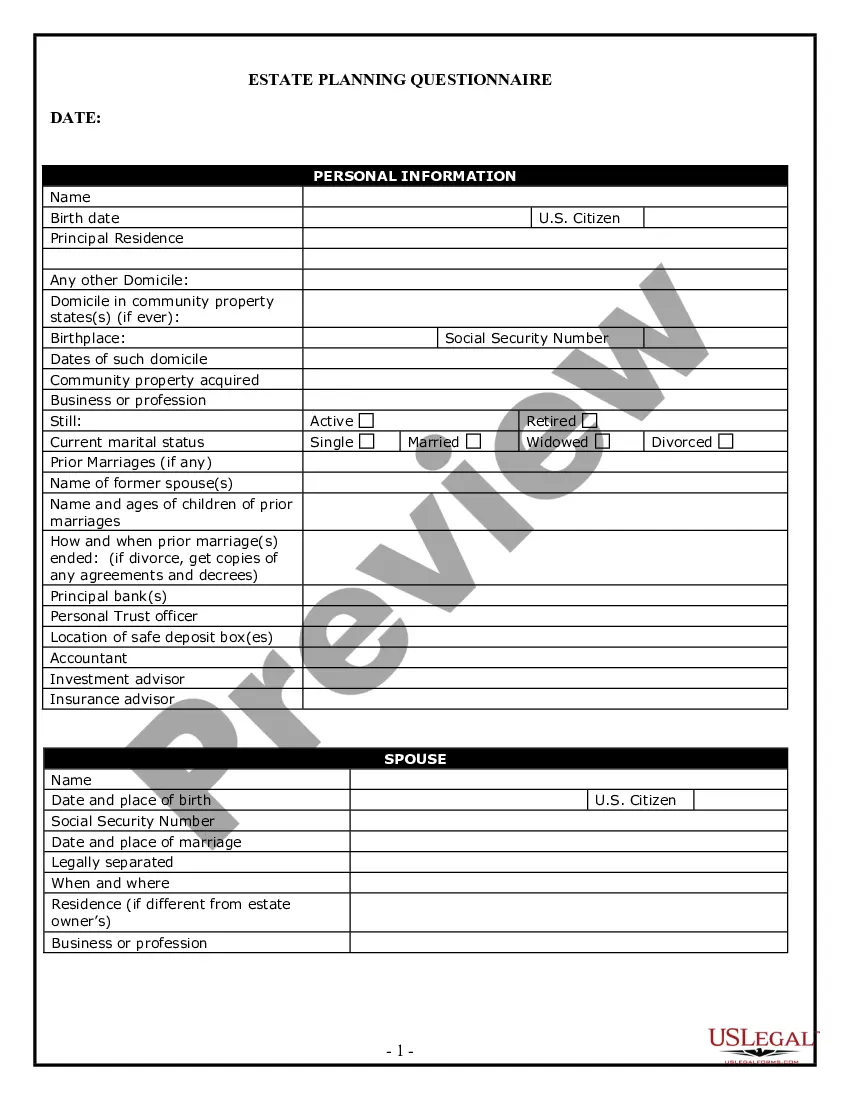
- Estate Planning Questionnaire and Worksheets
- Personal Care Agreement for Home Healthcare by a Nursing Service
- Personal Property Inventory
- Financial Statement Form - Husband and Wife Joint
- Personal Planning Information and Document Inventory Worksheets - A Legal Life Document


When to use this form package
This form package is beneficial in several situations, including:
- When planning for your parentâs health care preferences and decisions.
- When assigning a trusted individual to manage financial responsibilities and legal matters.
- In the face of potential medical emergencies or crisis situations.
- During estate planning to prepare for the equitable distribution of assets after death.
Who this form package is for
- Adult children seeking to assist their aging parents in organizing their legal documents.
- Guardians or caregivers of elderly individuals needing to manage health care and finances.
- Anyone responsible for safeguarding the legal and financial affairs of an aging loved one.
Completing these forms step by step
- Review all included forms to understand their purpose and requirements.
- Gather the necessary personal information for your aging parent, such as health conditions and preferences.
- Complete each form accurately, ensuring all required information is provided.
- Enter dates and signatures as needed, following instructions specific to each document.
- Store the completed documents in a secure location, and inform relevant family members of their whereabouts.
Do forms in this package need to be notarized?
Forms in this package typically do not require notarization unless required by local law. It is advisable to verify specific requirements for each form to ensure compliance with legal standards.
Get your form ready online
Our built-in tools help you complete, sign, share, and store your documents in one place.
Make edits, fill in missing information, and update formatting in US Legal Forms—just like you would in MS Word.
Download a copy, print it, send it by email, or mail it via USPS—whatever works best for your next step.
Sign and collect signatures with our SignNow integration. Send to multiple recipients, set reminders, and more. Go Premium to unlock E-Sign.
If this form requires notarization, complete it online through a secure video call—no need to meet a notary in person or wait for an appointment.
We protect your documents and personal data by following strict security and privacy standards.

Make edits, fill in missing information, and update formatting in US Legal Forms—just like you would in MS Word.

Download a copy, print it, send it by email, or mail it via USPS—whatever works best for your next step.

Sign and collect signatures with our SignNow integration. Send to multiple recipients, set reminders, and more. Go Premium to unlock E-Sign.

If this form requires notarization, complete it online through a secure video call—no need to meet a notary in person or wait for an appointment.

We protect your documents and personal data by following strict security and privacy standards.
Mistakes to watch out for
- Failing to update forms as circumstances change.
- Not signing or dating documents correctly, which can render them invalid.
- Overlooking the need for specific witness signatures or notarization on certain forms.
Benefits of completing this package online
- Convenient access to legally drafted documents tailored for Maine.
- Editable forms that allow for easy customization to fit your parent's specific needs.
- Cost savings of up to 40% compared to purchasing each form separately.
Legal use & context
- Documents must be completed accurately to be enforceable in legal contexts.
- Certain forms may require witnesses or additional documentation based on specific circumstances.
- Consulting with an attorney can help ensure the legality and appropriateness of each form.
Key takeaways
- The Maine Aging Parent Package provides essential legal documents to protect your aging parent's interests.
- It is crucial to complete and store these documents properly to ensure they are available in emergencies.
- Updating the forms regularly is necessary to reflect changes in your parent's life or health status.
Looking for another form?



Form popularity
FAQ
The first and most common Medicaid option is Medicaid Waivers.With this option, the care recipient can choose to receive care from a family member, such as an adult child, and Medicaid will compensate the adult child for providing care for the elderly parent.
Assess your parent's needs. Think about your own needs and abilities. Include your parent in the process. Understand the financial situation. Take care of home safety basics. Make sure communication is simple and accessible. Explore available aging care options. 5 Important Legal Documents for Caregivers.
When parents are old, daughters become more responsible than sons. This is because before marriage they care of their own parents and after marriage they take care of their family. Hence the essence of responsibility never dies in daughters. Daughters are more understanding and tolerant when compared to sons.
It found that women were much more likely to provide care for elderly parents than men were. Seven percent of the women in the sample assisted with parents' personal needs, compared to 3.6 percent of men; 20 percent of women helped parents with chores, errands, and transportation, compared to 16 percent of men.
Help them downsize. If your parents are finding their current home unaffordable because of its size, it may make sense for them to downsize. Guide them through a relocation. Ask them to move in. Create a budget for them. Help with maintenance or repairs.
The cost to care for a parent in your home can vary depending on their needs. You can expect to pay between $15 and $25 per hour for home care personnel and $300+ per day for round the clock care (live-in) Some people utilize housekeepers and/or family members to bring the cost down.
Talk With Your Siblings. If you have siblings, have an official talk with them about your parents or loved ones who need extra care. Connect With Friends and Neighbors. Plan Regular Visits. Use Technology To Keep In Touch. Enlist Help.
In the U.S., requiring that children care for their elderly parents is a state by state issue.Other states don't require an obligation from the children of older adults. Currently, 27 states have filial responsibility laws. However, in Wisconsin, children are not legally liable for their elderly parents' care.
Women are more likely than men to be providing primary care to an aging parent (13% vs. 7%). And those who are not married (15%) are more likely than those who are married (7%) to provide most of the care to a parent.