Amendment to Employee Matters Agreement
Overview of this form
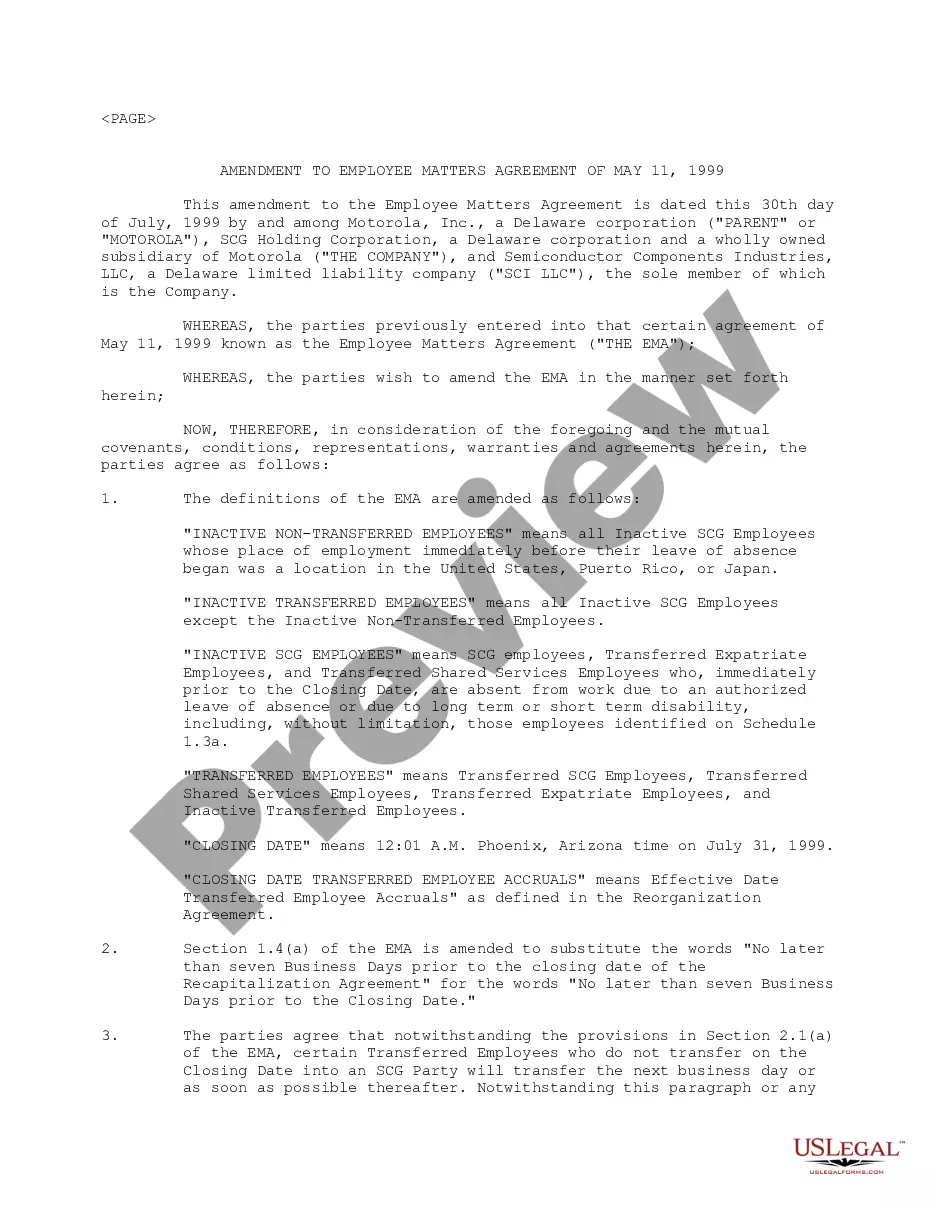
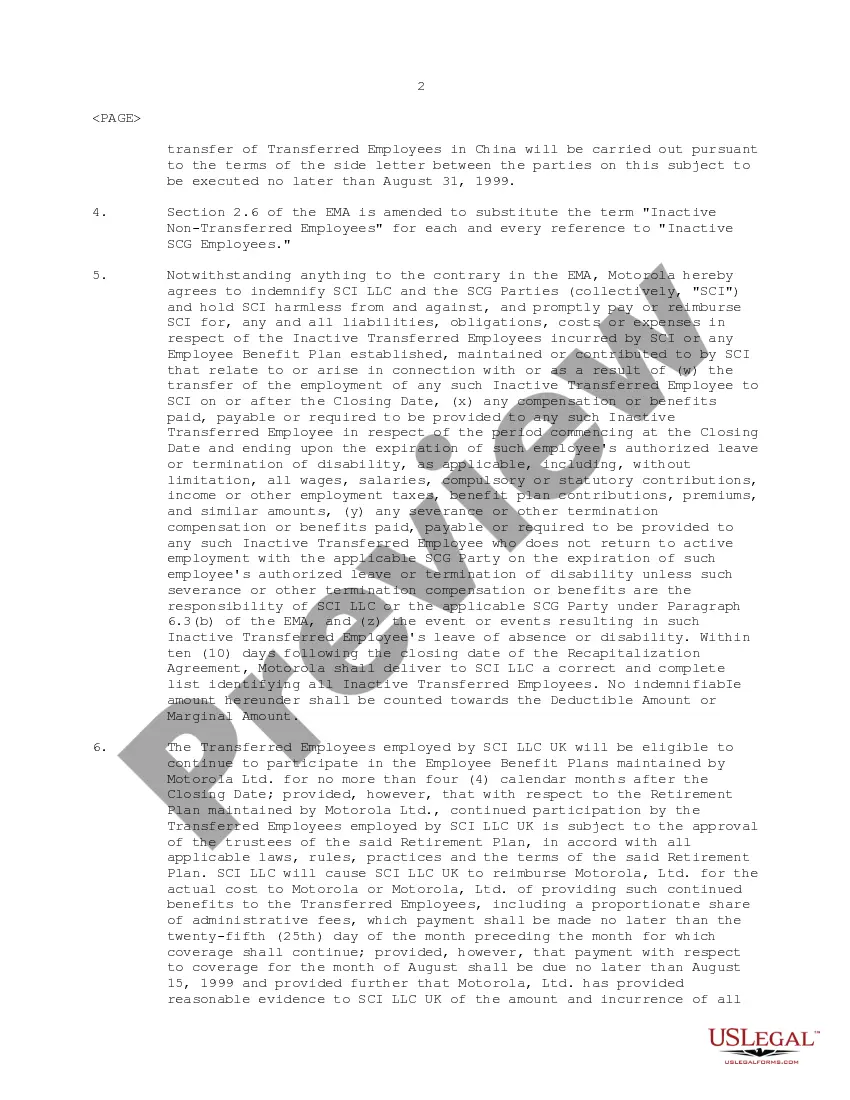
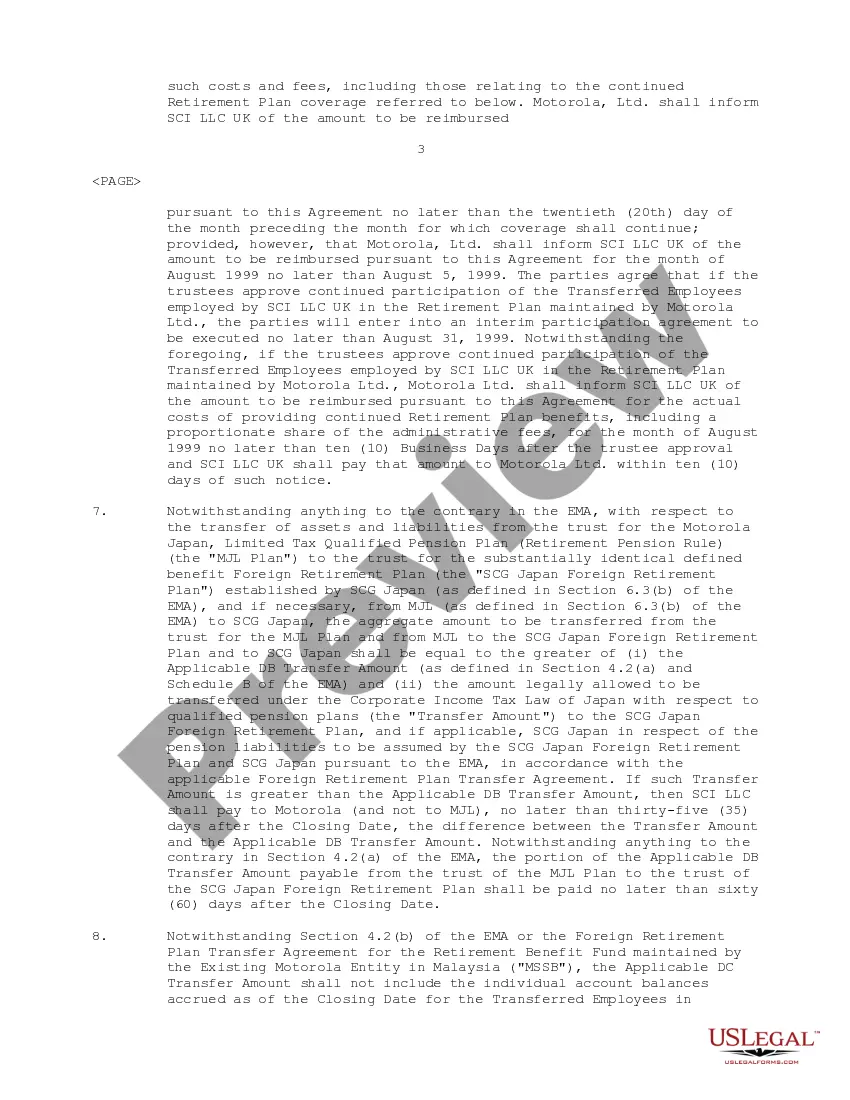
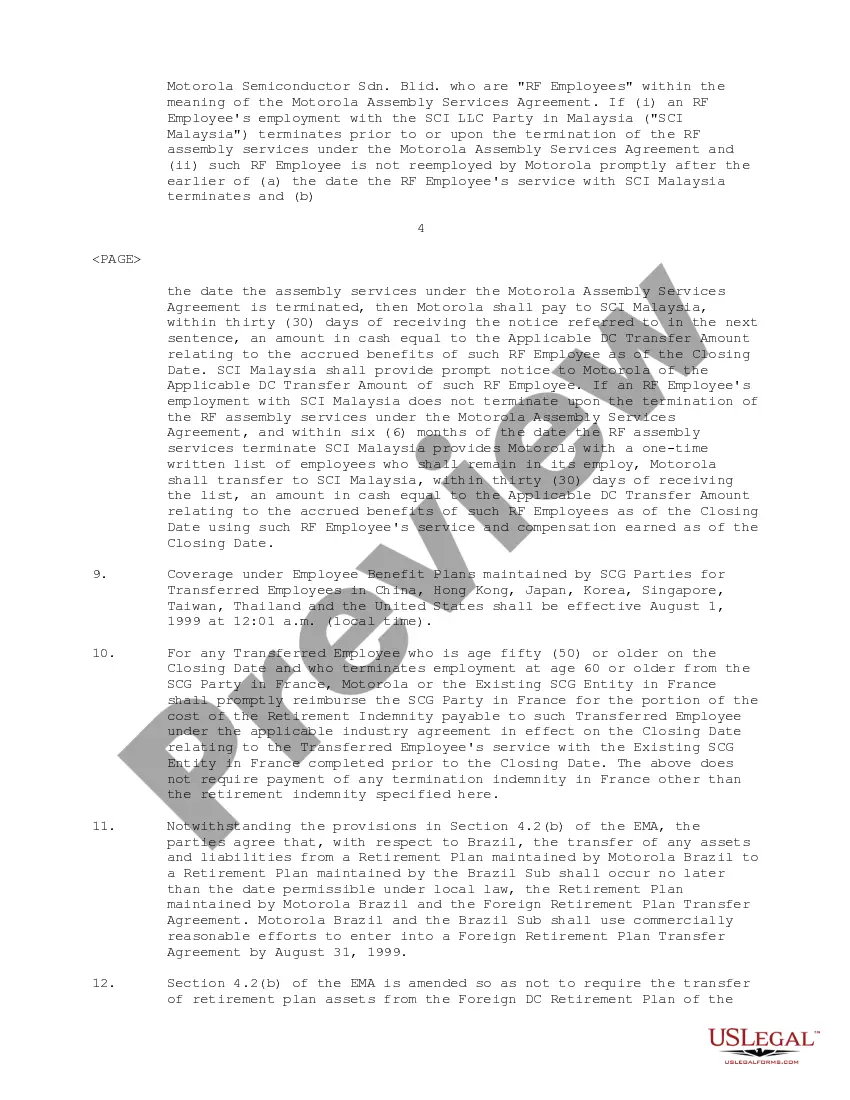
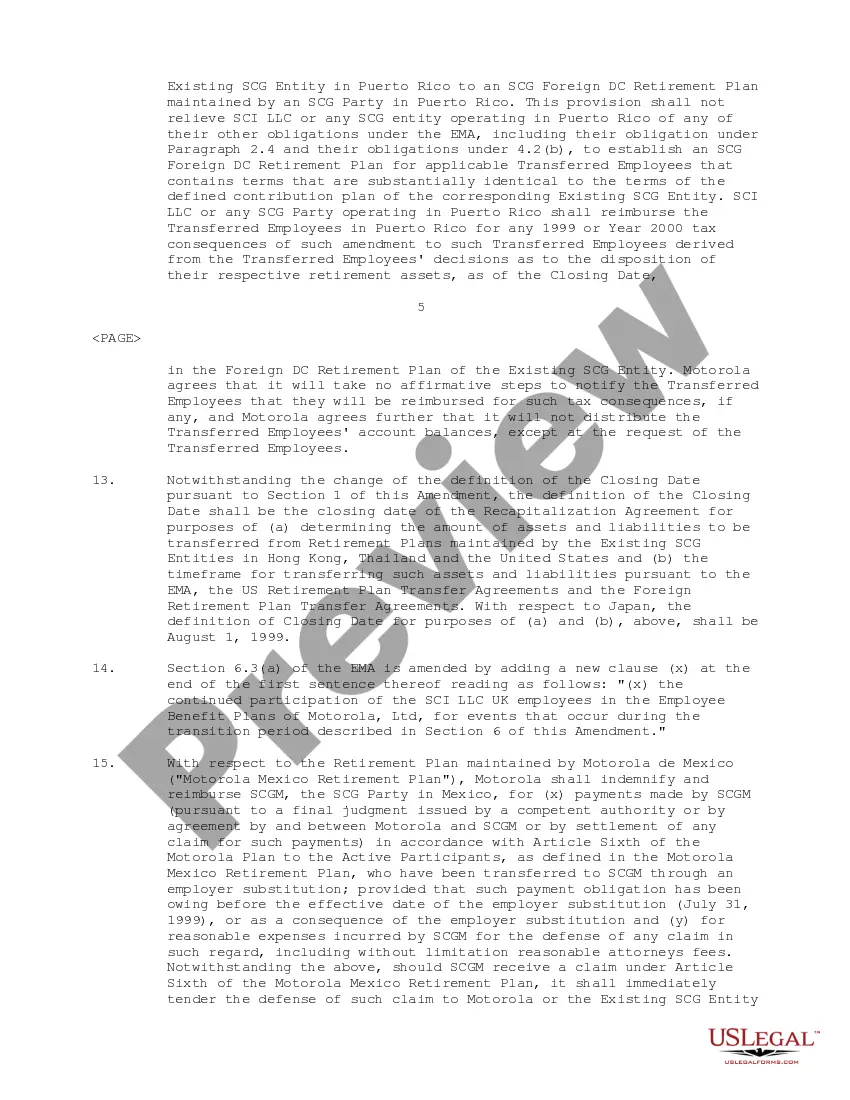
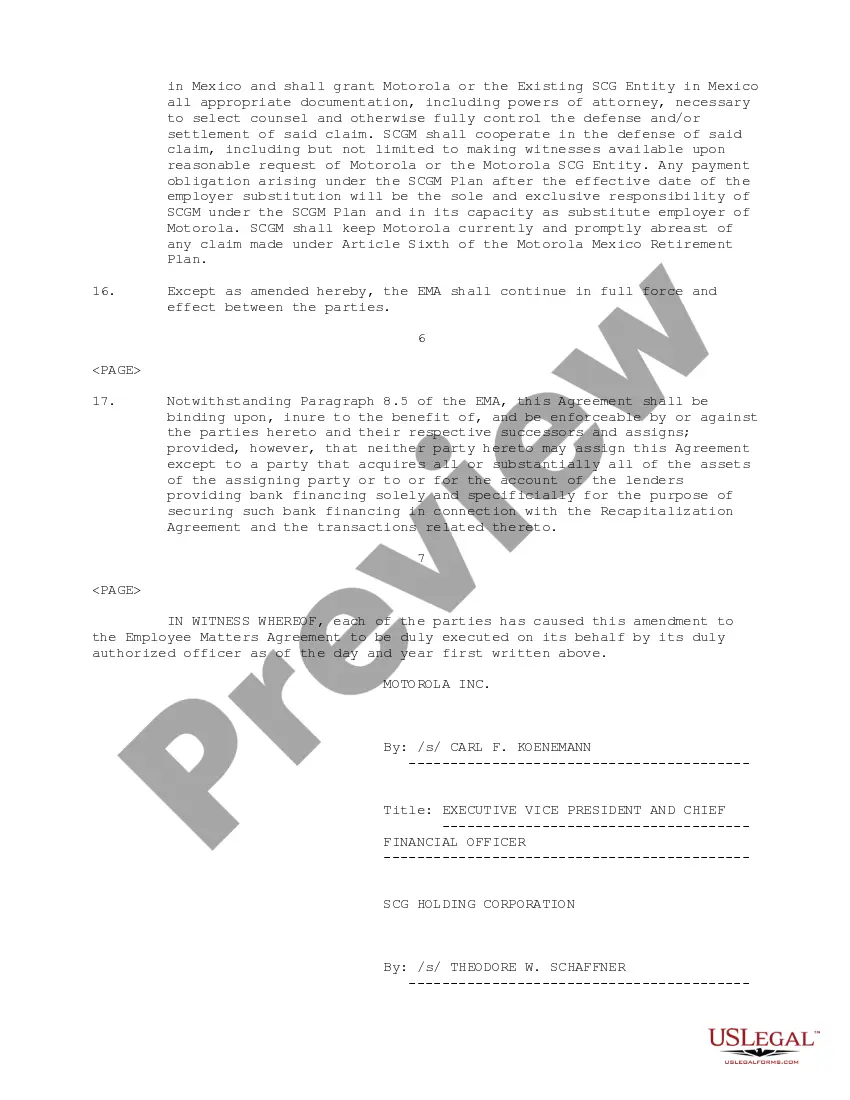
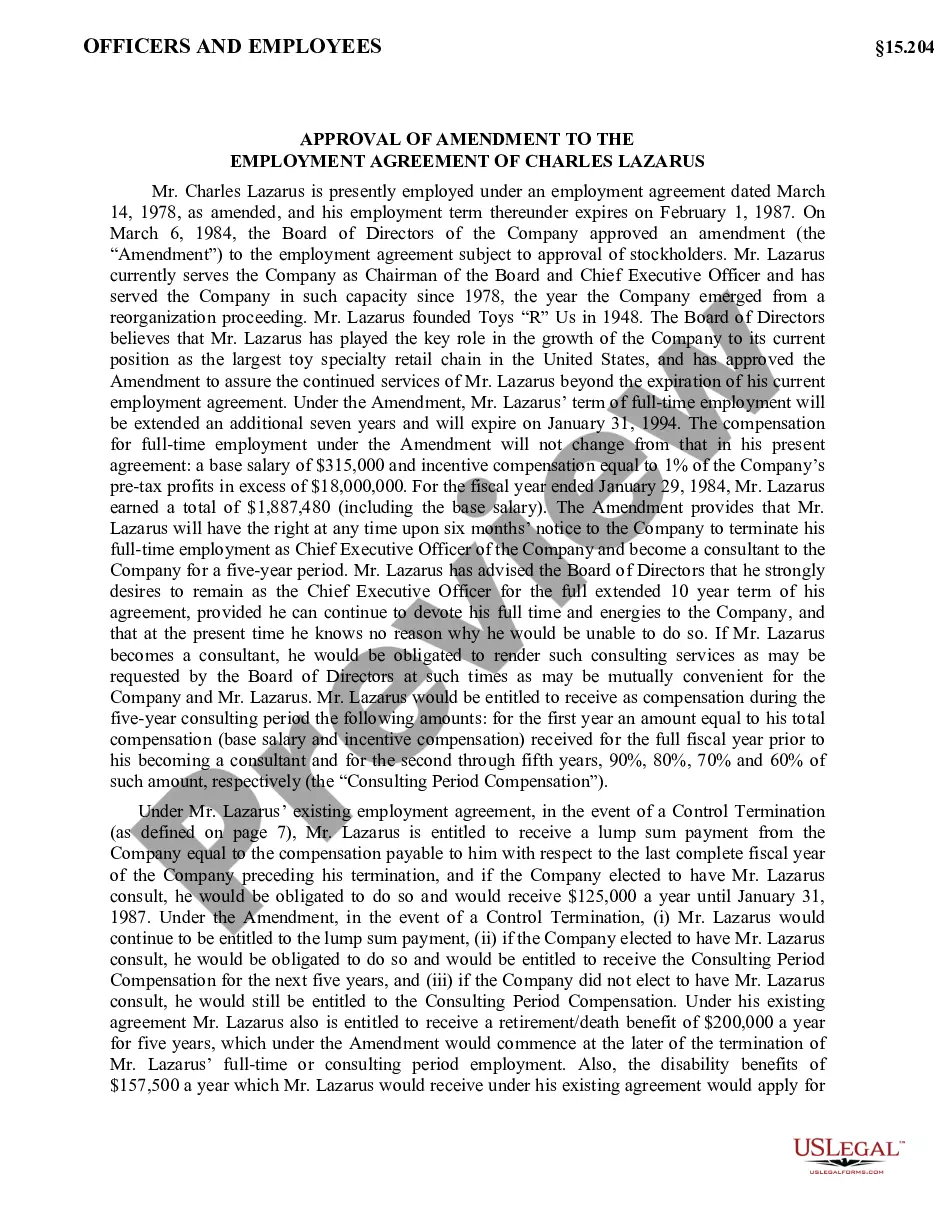
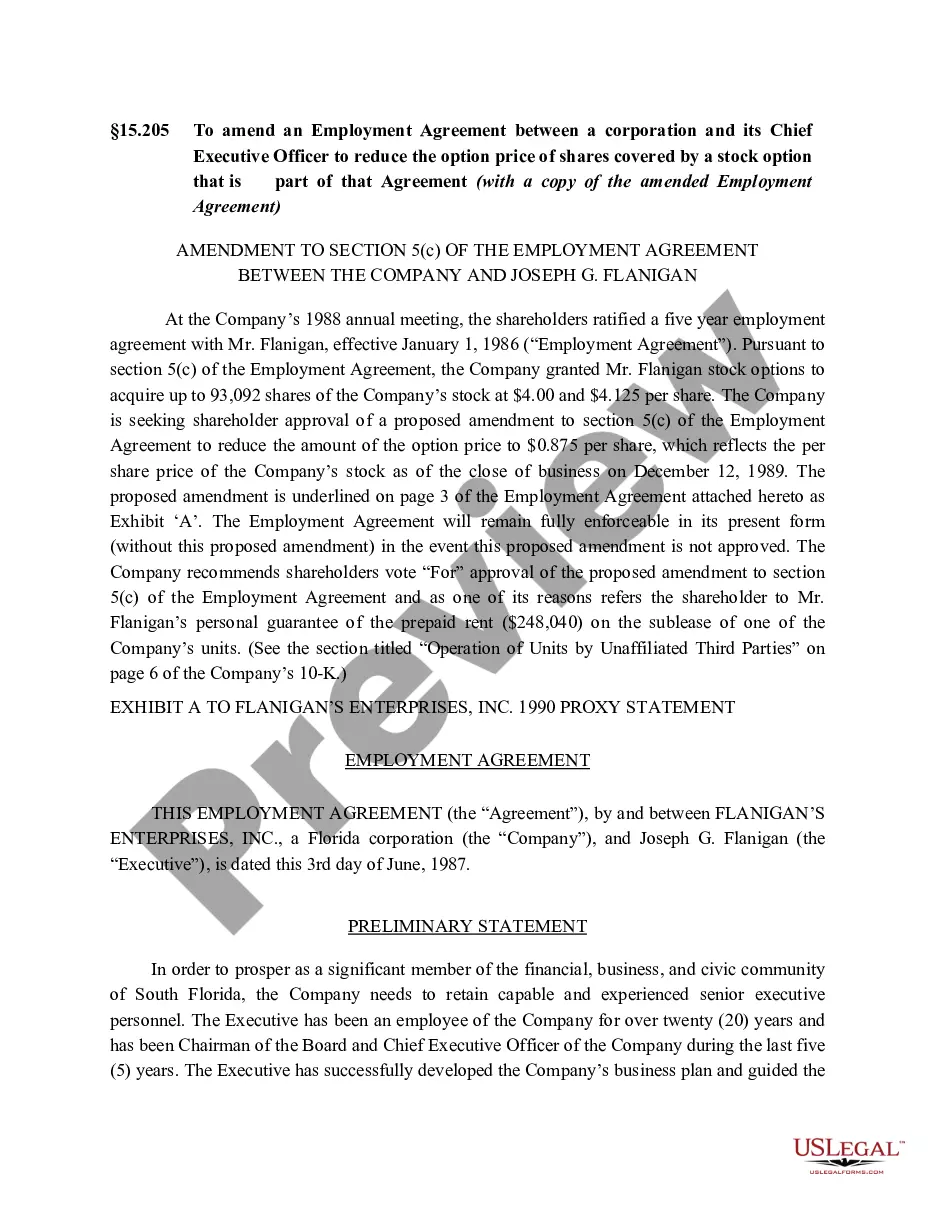
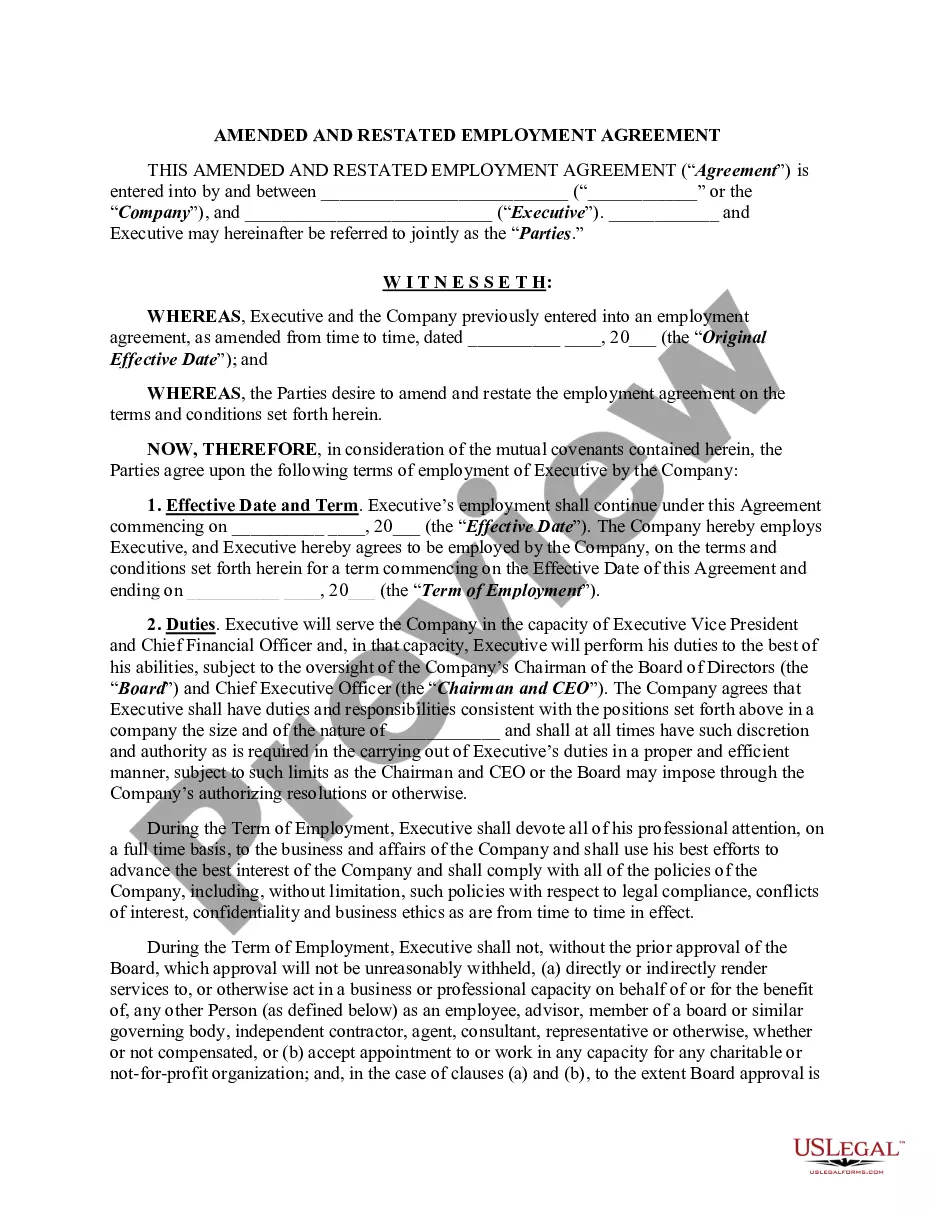
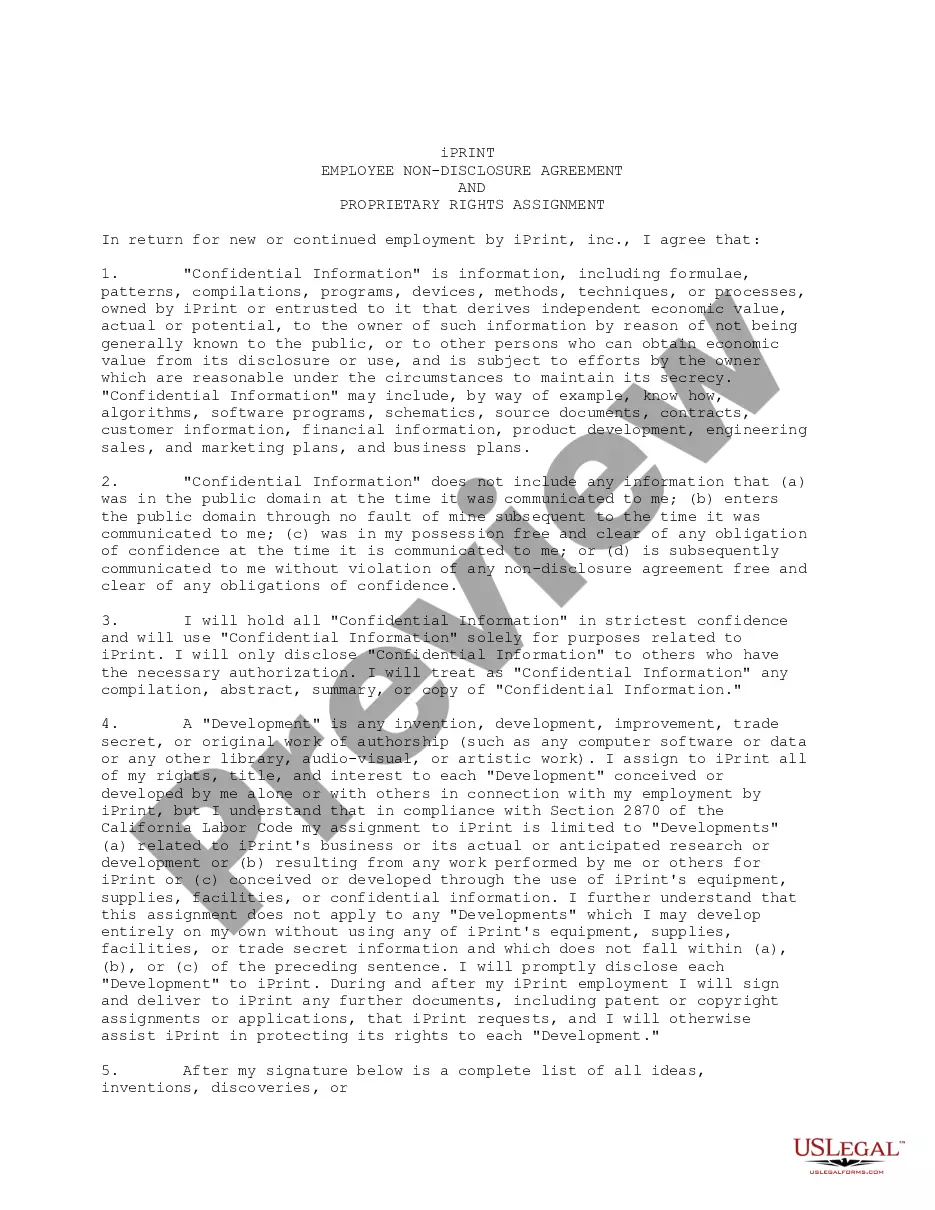
The Amendment to Employee Matters Agreement is a legal document used to make changes to an existing Employee Matters Agreement between companies, specifically Motorola, Inc., SCG Holding Corporation, and Semiconductor Components Industries, LLC. This form updates the terms and conditions of employment as they pertain to various employee classifications and benefits, ensuring both compliance with legal obligations and clarity in employer-employee relationships.
Key components of this form
- Definitions: Clarifies terms related to employee classifications, including inactive and transferred employees.
- Amendments: Updates specific sections, such as timeline adjustments and employee transfer details.
- Indemnification: Specifies Motorola's responsibilities concerning certain liabilities related to transferred employees.
- Employee Benefits: Details eligibility for continued participation in benefit plans post-transfer among international employees.
- Closing Date: Defines the official date relevant for the amendments and transfers.
When to use this form
This amendment is needed when there is a requirement to change the terms of an existing Employee Matters Agreement, particularly in situations involving employee transfers, reorganization, or adjustments to employee benefits as part of company restructuring. It is especially relevant when specifics regarding employee classifications or obligations are updated.
Who needs this form
- Employers looking to amend existing employment agreements.
- Legal professionals drafting agreements for corporate restructuring.
- Human resources departments managing employee transitions due to corporate changes.
- Companies involved in mergers or acquisitions affecting employee terms.
Completing this form step by step
- Identify the parties involved: Clearly state the names and entities of the parties amending the agreement.
- Clarify key definitions: Update any terms related to employee classifications as necessary, using the specified definitions in the amendment.
- Specify the Closing Date: Clearly outline the relevant date for the amendment and any actions that depend on this date.
- Detail indemnification clauses: Include specific obligations of the indemnifying party as outlined in the amendment.
- Sign and date: Ensure that authorized representatives of all parties sign the amendment to make it legally binding.
Is notarization required?
In most cases, this form does not require notarization. However, some jurisdictions or signing circumstances might. US Legal Forms offers online notarization powered by Notarize, accessible 24/7 for a quick, remote process.
Get your form ready online
Our built-in tools help you complete, sign, share, and store your documents in one place.
Make edits, fill in missing information, and update formatting in US Legal Forms—just like you would in MS Word.
Download a copy, print it, send it by email, or mail it via USPS—whatever works best for your next step.
Sign and collect signatures with our SignNow integration. Send to multiple recipients, set reminders, and more. Go Premium to unlock E-Sign.
If this form requires notarization, complete it online through a secure video call—no need to meet a notary in person or wait for an appointment.
We protect your documents and personal data by following strict security and privacy standards.

Make edits, fill in missing information, and update formatting in US Legal Forms—just like you would in MS Word.

Download a copy, print it, send it by email, or mail it via USPS—whatever works best for your next step.

Sign and collect signatures with our SignNow integration. Send to multiple recipients, set reminders, and more. Go Premium to unlock E-Sign.

If this form requires notarization, complete it online through a secure video call—no need to meet a notary in person or wait for an appointment.

We protect your documents and personal data by following strict security and privacy standards.
Typical mistakes to avoid
- Failing to properly define key terms, which can lead to ambiguity in the agreement.
- Not updating the Closing Date correctly, potentially causing legal confusion.
- Omitting signatures from all parties, which can invalidate the amendment.
- Neglecting to ensure the amendment complies with state-specific employment laws.
Why complete this form online
- Convenience: Easily download the form anytime, reducing delays in processing amendments.
- Editability: Customizable templates allow users to modify the content to fit their specific situation.
- Reliable: Templates are drafted by licensed attorneys, ensuring legal accuracy.
Looking for another form?

Form popularity
FAQ
An amendment is a formal or official change made to a law, contract, constitution, or other legal document. It is based on the verb to amend, which means to change for better. Amendments can add, remove, or update parts of these agreements.Only the legislative branch is involved in the amendment process.
The definition of an amendment is a change, addition, or rephrasing of something, most often with the intention of improvement. An example of an amendment are the changes made to the U.S. Constitution. The act of changing for the better; improvement.
The Tenth Amendment's simple languageThe powers not delegated to the United States by the Constitution, nor prohibited by it to the States, are reserved to the States respectively, or to the peopleemphasizes that the inclusion of a bill of rights does not change the fundamental character of the national government.
Amendment, in government and law, an addition or alteration made to a constitution, statute, or legislative bill or resolution. Amendments can be made to existing constitutions and statutes and are also commonly made to bills in the course of their passage through a legislature.
Under the NLRA, employees have the right to engage in speech and expression related to working conditions which could include discussing compensation and benefits, supporting social or political causes such as fair wages, among other issues. Some state laws also protect such speech.
The Constitution provides that an amendment may be proposed either by the Congress with a two-thirds majority vote in both the House of Representatives and the Senate or by a constitutional convention called for by two-thirds of the State legislatures.
Employees in the public sector do have a protected right to free speech; however, this right is limited. The First Amendment only protects government employees when they are speaking as a private citizen.
Employees of private employers are subject to the private employer's rules, and the First Amendment offers no protection.These types of speech are protected by the National Labor Relations Act and, for example, Title VII of the Civil Rights Act of 1964, rather than the First Amendment.
While the First Amendment protects free speech rights for public employees in public sectors, it doesn't do so in all instances. For example, government employees are only protected by this amendment when speaking as private citizens.