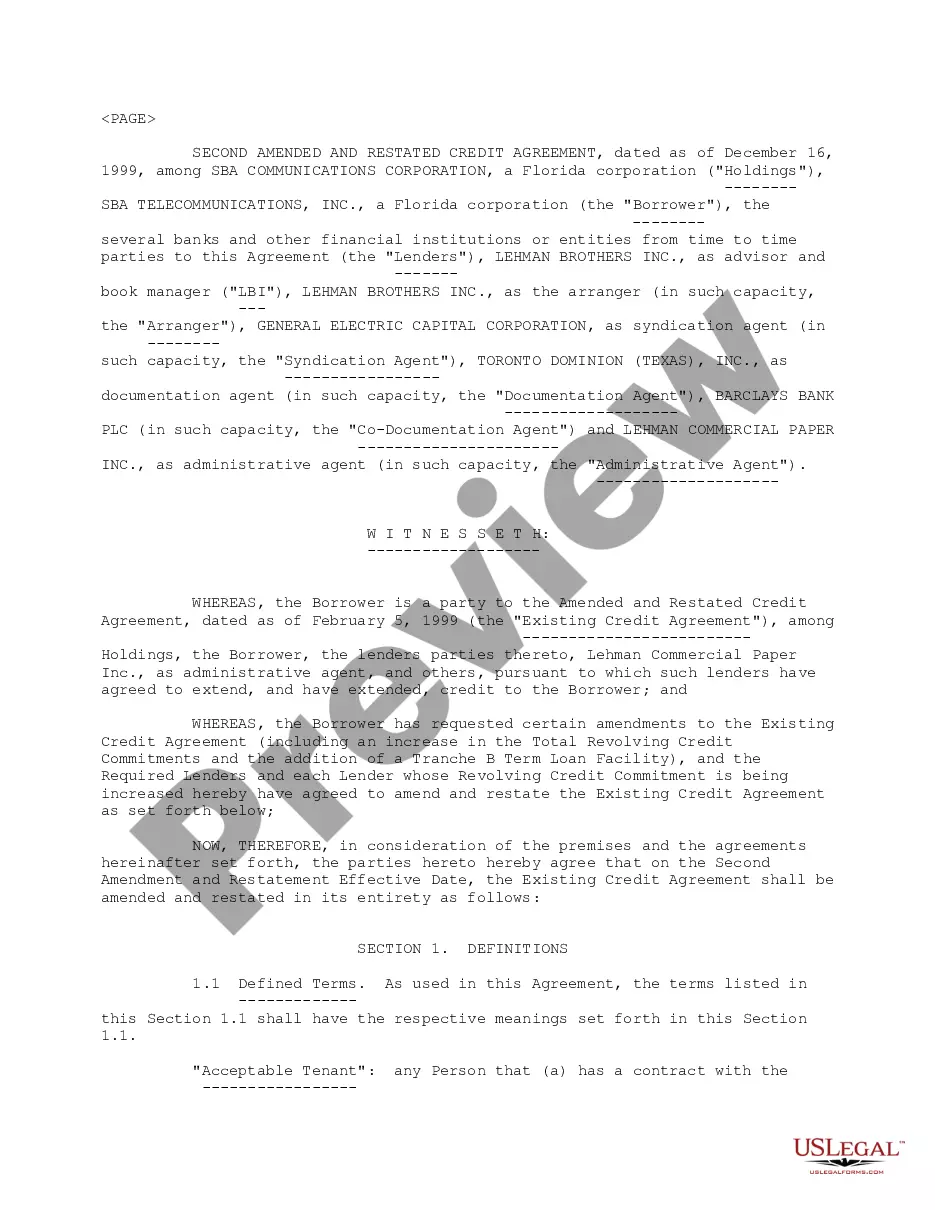
Fourth Amendment to Amended Restated Credit Agreement between Raytel Medical Corp, Bank Boston, N.A. and Banque Paribas
About this form
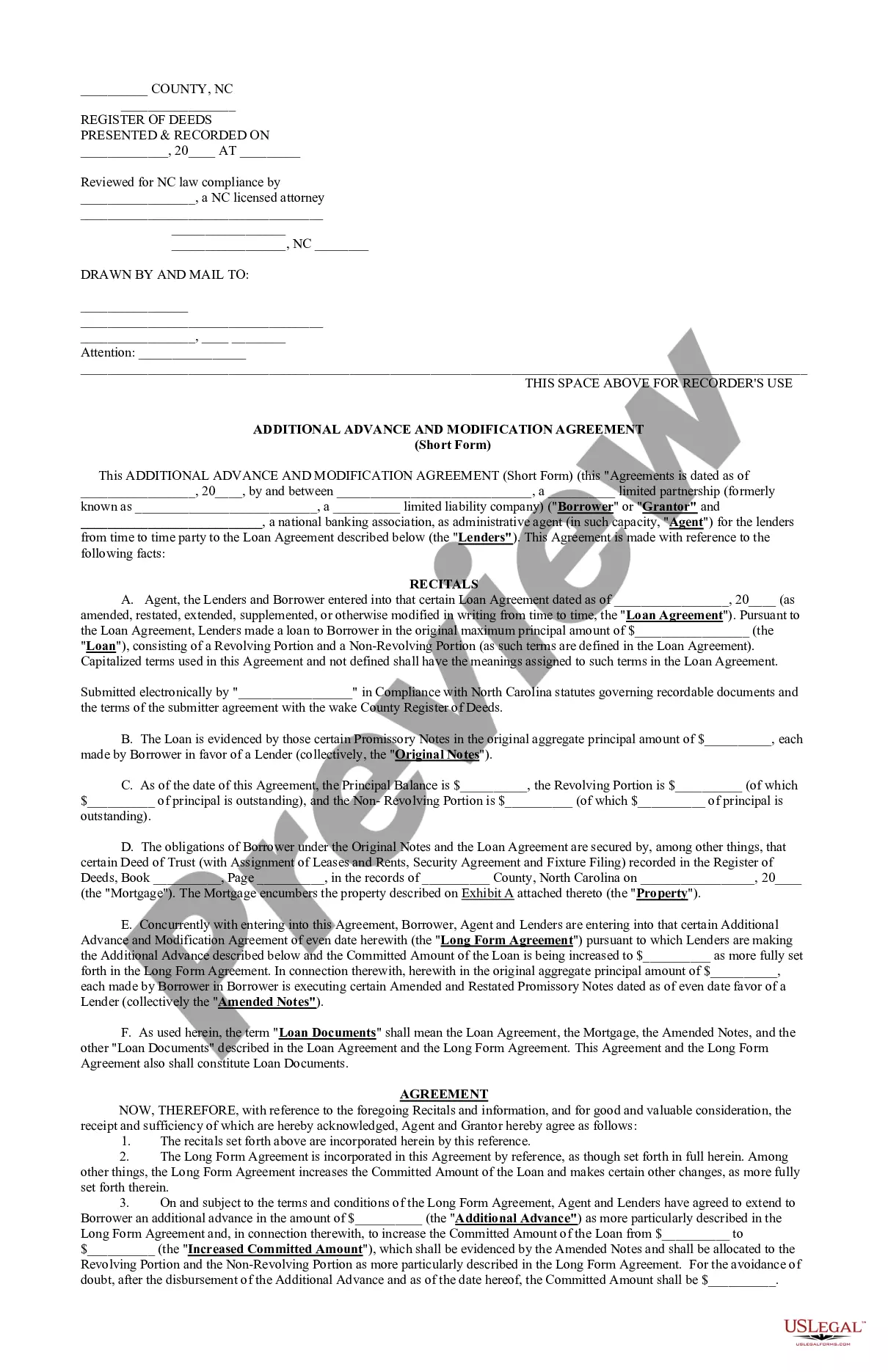
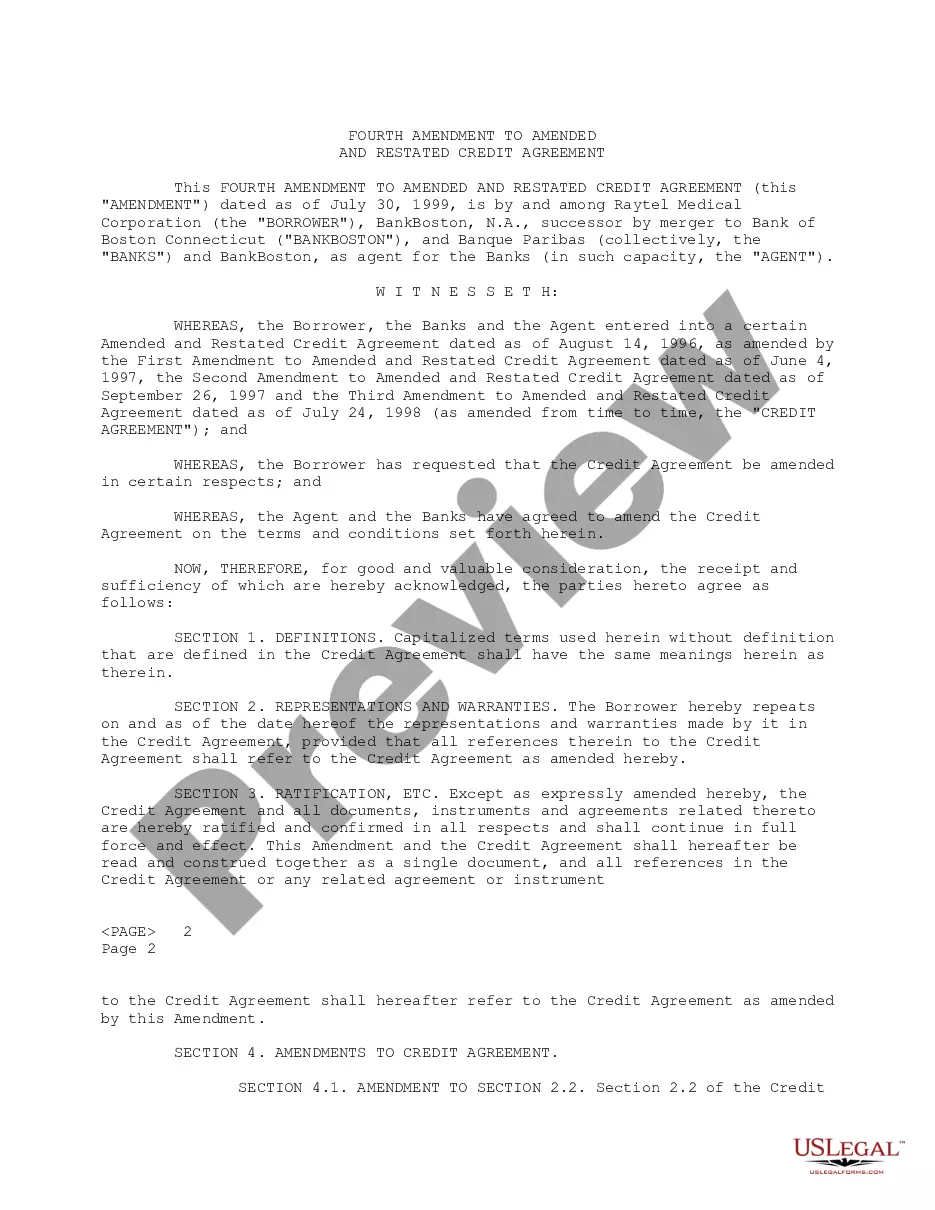
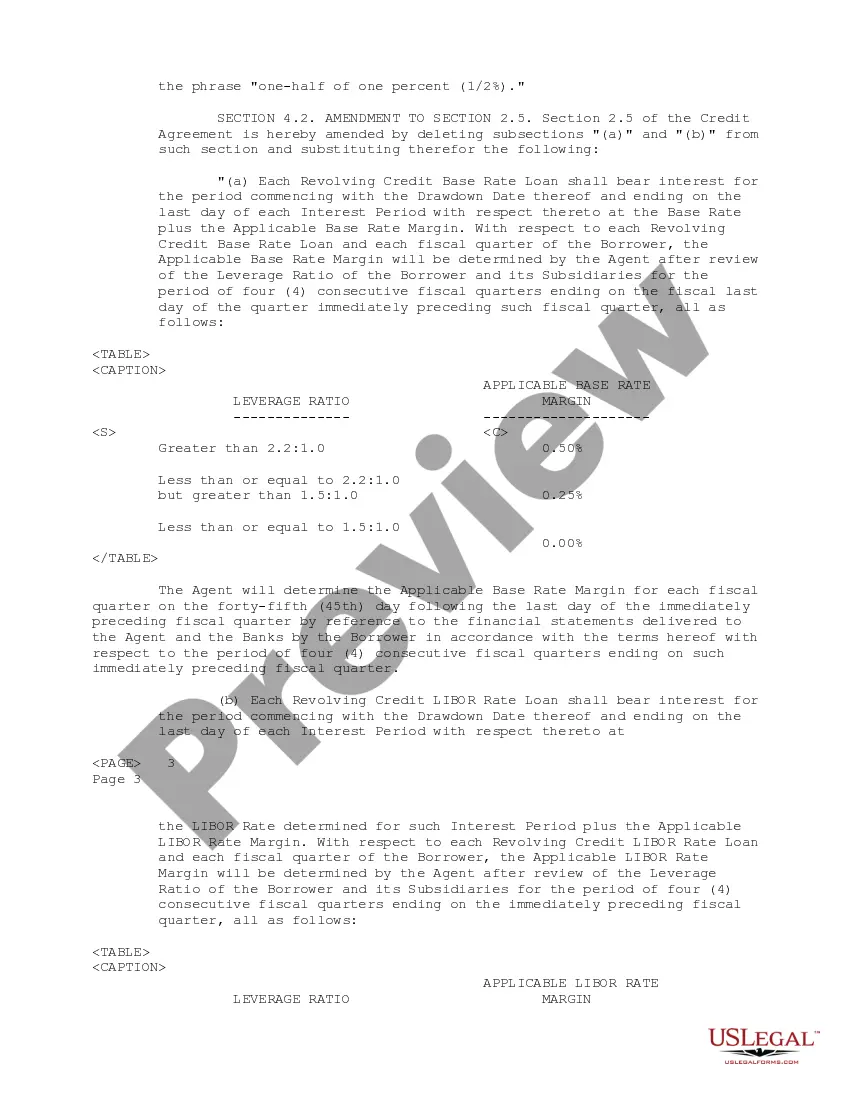
The Fourth Amendment to Amended Restated Credit Agreement is a legal document that modifies a previous credit agreement between Raytel Medical Corporation and its banks, namely BankBoston and Banque Paribas. This form is essential for making necessary amendments to the financial terms, obligations, and rights outlined in the original agreement, providing clarity and updating critical financial conditions. It is distinct from other amendments as it specifically addresses historical agreements and reflects the changing financial landscape for the involved parties.
Main sections of this form
- Definitions: Provides definitions of key terms used throughout the amendment.
- Representations and Warranties: Reiterates the borrower's assurances made under the original credit agreement.
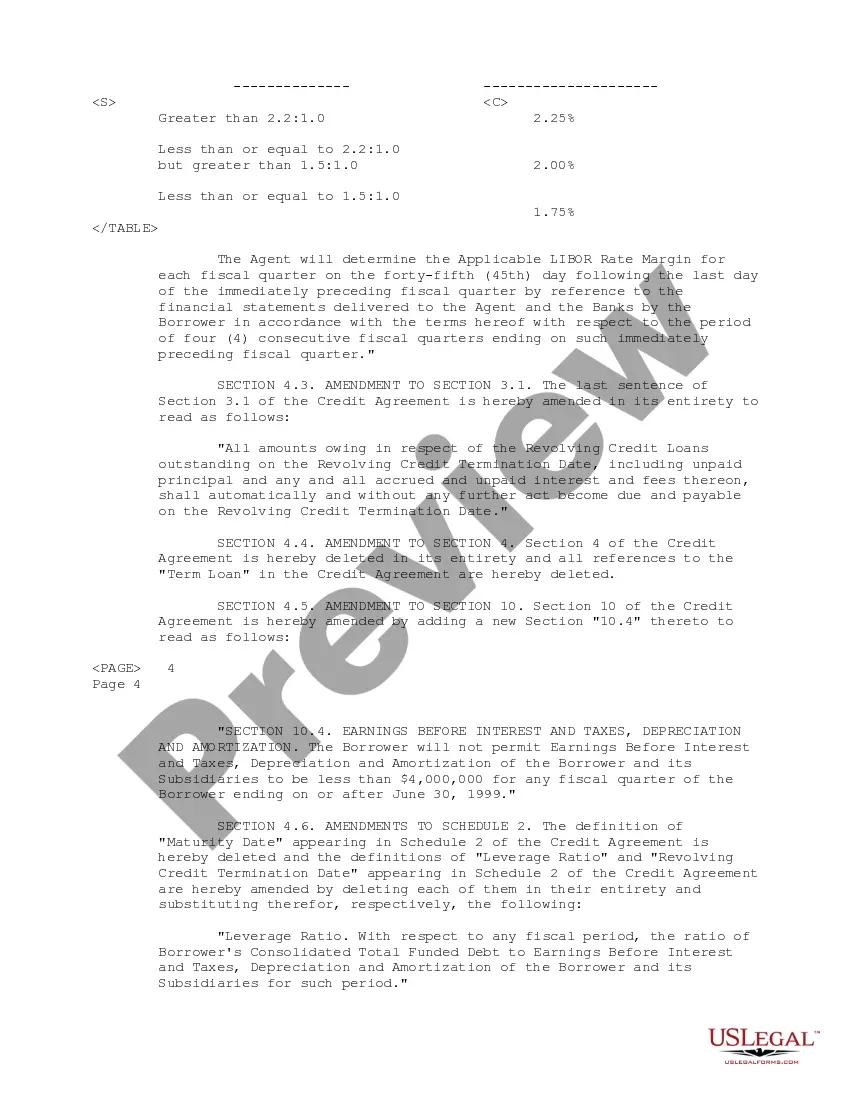
- Amendments: Details specific changes to sections of the original credit agreement, including modifications to interest rates and repayment terms.
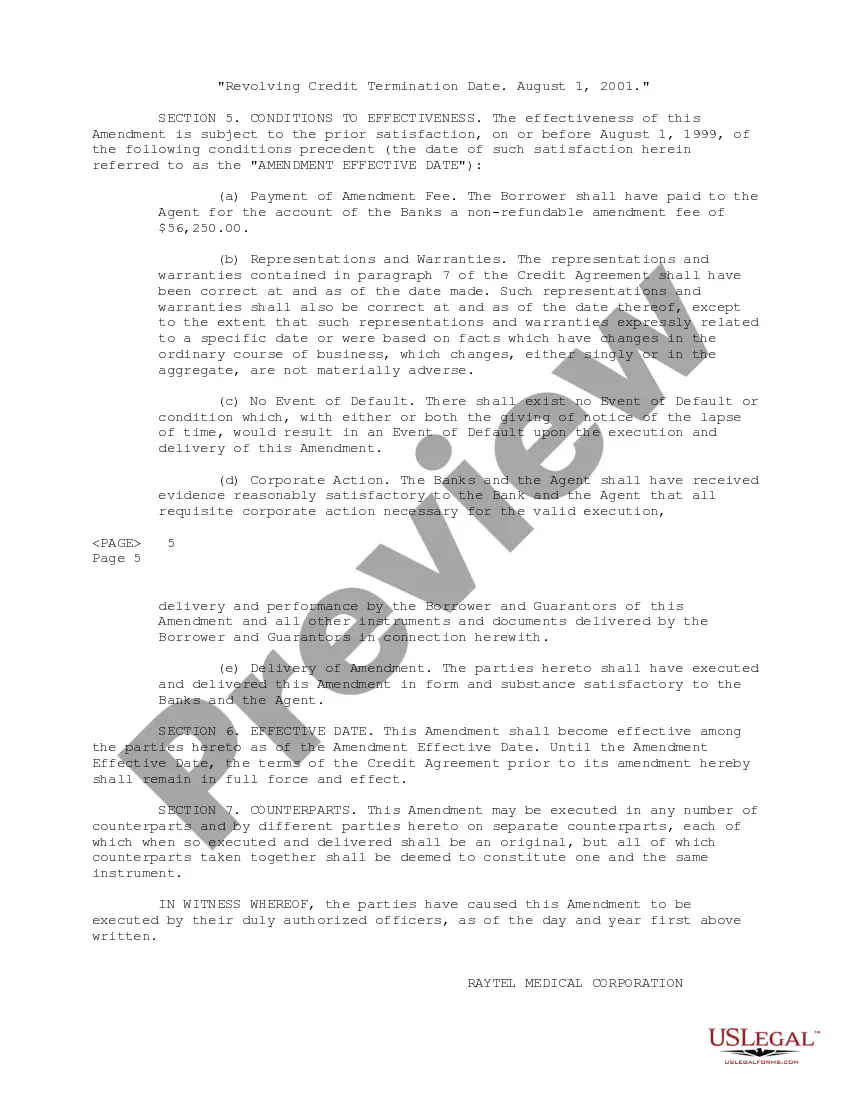
- Conditions to Effectiveness: Lists prerequisites that must be met for the amendment to take effect, such as fees and corporate approvals.
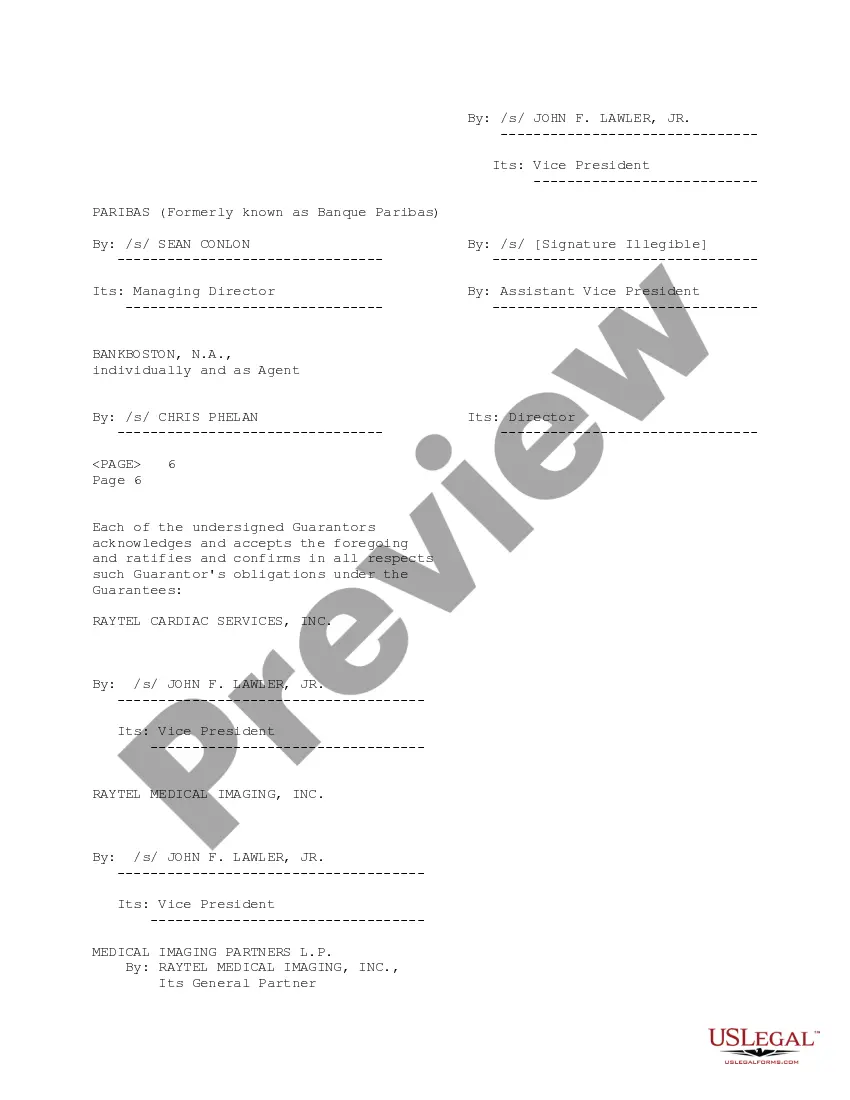
- Signatures: Includes space for the authorized representatives of all parties to sign, confirming their acceptance of the amendment.
When to use this document
This form is used when parties to a credit agreement need to amend specific terms due to changes in financial circumstances, market conditions, or borrower performance metrics. It is particularly relevant if the borrower has requested changes to interest rates or repayment schedules, or when there are structural changes to the borrowerâs financial obligations.
Intended users of this form
- Businesses that hold an existing credit agreement and wish to amend its terms.
- Financial institutions acting as lenders who need to document changes to loan conditions.
- Legal representatives or attorneys who manage financial documents on behalf of their clients.
How to complete this form
- Identify the parties involved: Clearly state the names and roles of all parties (borrower, banks, and agent).
- Select the effective date: Specify the date when the amendments to the credit agreement will take effect.
- Detail the amendments: Clearly outline the specific sections being amended, including any changes to interest rates and terms.
- List any conditions: Provide any conditions that need to be satisfied for this amendment to become effective.
- Obtain signatures: Ensure all parties sign and date the document, confirming their approval of the amendments.
Does this form need to be notarized?
This form does not typically require notarization unless specified by local law. However, some parties may choose to notarize it for added security and to establish proof of the amendments made.
Get your form ready online
Our built-in tools help you complete, sign, share, and store your documents in one place.
Make edits, fill in missing information, and update formatting in US Legal Forms—just like you would in MS Word.
Download a copy, print it, send it by email, or mail it via USPS—whatever works best for your next step.
Sign and collect signatures with our SignNow integration. Send to multiple recipients, set reminders, and more. Go Premium to unlock E-Sign.
If this form requires notarization, complete it online through a secure video call—no need to meet a notary in person or wait for an appointment.
We protect your documents and personal data by following strict security and privacy standards.

Make edits, fill in missing information, and update formatting in US Legal Forms—just like you would in MS Word.

Download a copy, print it, send it by email, or mail it via USPS—whatever works best for your next step.

Sign and collect signatures with our SignNow integration. Send to multiple recipients, set reminders, and more. Go Premium to unlock E-Sign.

If this form requires notarization, complete it online through a secure video call—no need to meet a notary in person or wait for an appointment.

We protect your documents and personal data by following strict security and privacy standards.
Common mistakes to avoid
- Failing to include the effective date for the amendment.
- Not having all required parties sign the document.
- Omitting important sections that have been amended or altered.
Advantages of online completion
- Convenience of downloading the form for immediate use.
- Editability allows for quick modifications before finalizing.
- Reliable templates crafted by licensed attorneys ensure legal compliance.
Looking for another form?

Form popularity
FAQ
The Fourth Amendment has two basic clauses. One focuses on the reasonableness of a search and seizure; the other, on warrants. One view is that the two clauses are distinct, while another view is that the second clause helps explain the first.
An arrest is found to violate the Fourth Amendment because it was not supported by probable cause or a valid warrant. Any evidence obtained through that unlawful arrest, such as a confession, will be kept out of the case.
The Fourth Amendment (Amendment IV) to the United States Constitution prohibits unreasonable searches and seizures and requires any search warrant to be judicially sanctioned and supported by probable cause. It is part of the Bill of Rights.
The Fourth Amendment only protects against searches and seizures conducted by the government or pursuant to governmental direction. Surveillance and investigatory actions taken by strictly private persons, such as private investigators, suspicious spouses, or nosey neighbors, aren't governed by the Fourth Amendment.
The Fourth Amendment to the U.S. Constitution protects personal privacy, and every citizen's right to be free from unreasonable government intrusion into their persons, homes, businesses, and property -- whether through police stops of citizens on the street, arrests, or searches of homes and businesses.
The Third and Fourth Amendments are intended to protect citizens' rights to the ownership and use of their property without government intrusion.The Fourth Amendment protects people against unreasonable searches and seizures by government officials.
The Fourth Amendment to the U.S. Constitution places limits on the power of the police to make arrests, search people and their property, and seize objects and contraband (such as illegal drugs or weapons). These limits are the bedrock of search-and-seizure law.
The Constitution, through the Fourth Amendment, protects people from unreasonable searches and seizures by the government. The Fourth Amendment, however, is not a guarantee against all searches and seizures, but only those that are deemed unreasonable under the law.
The right of the people to be secure in their persons, houses, papers, and effects, against unreasonable searches and seizures, shall not be violated, and no Warrants shall issue, but upon probable cause, supported by Oath or affirmation, and particularly describing the place to be searched, and the persons or things