Employee and Rights Agreement
About this form
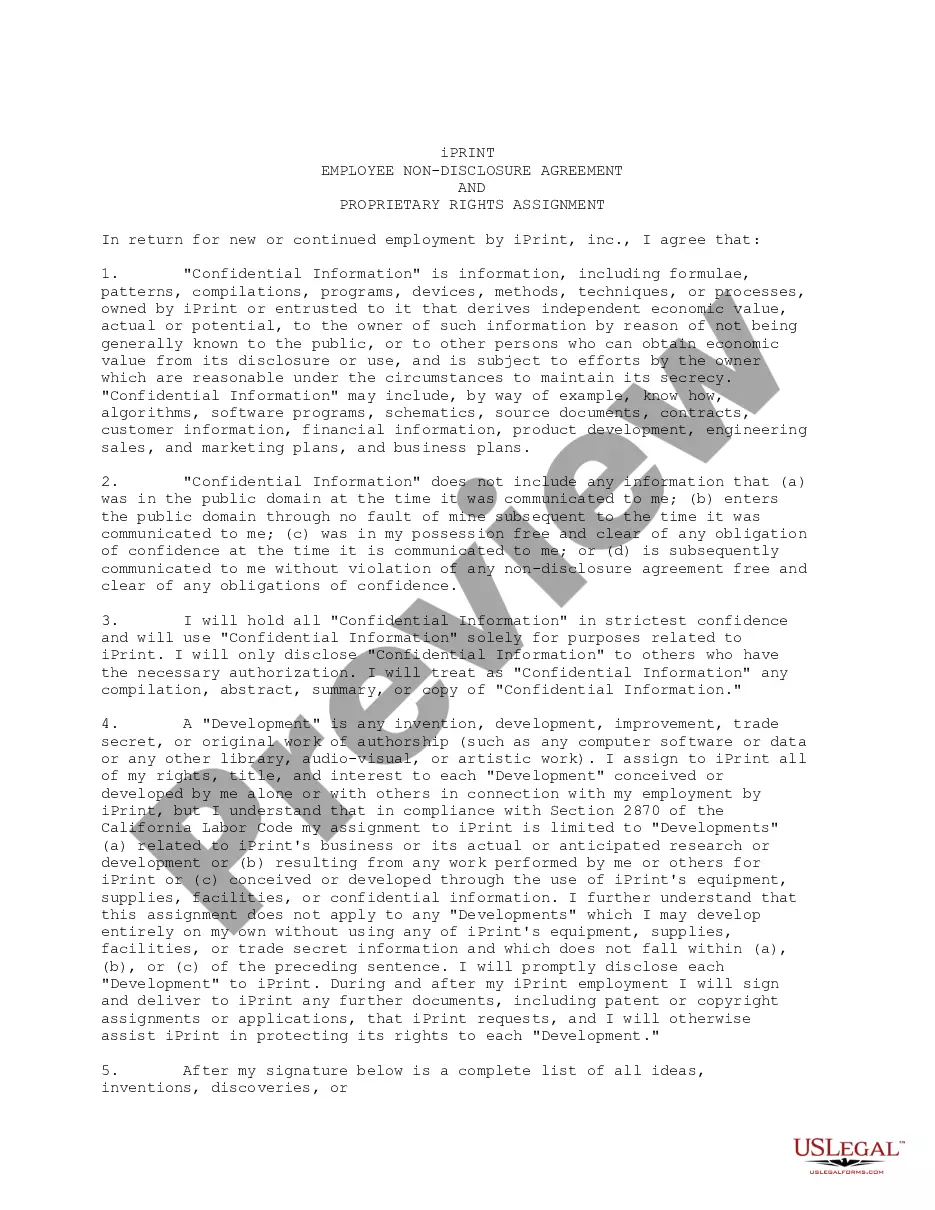
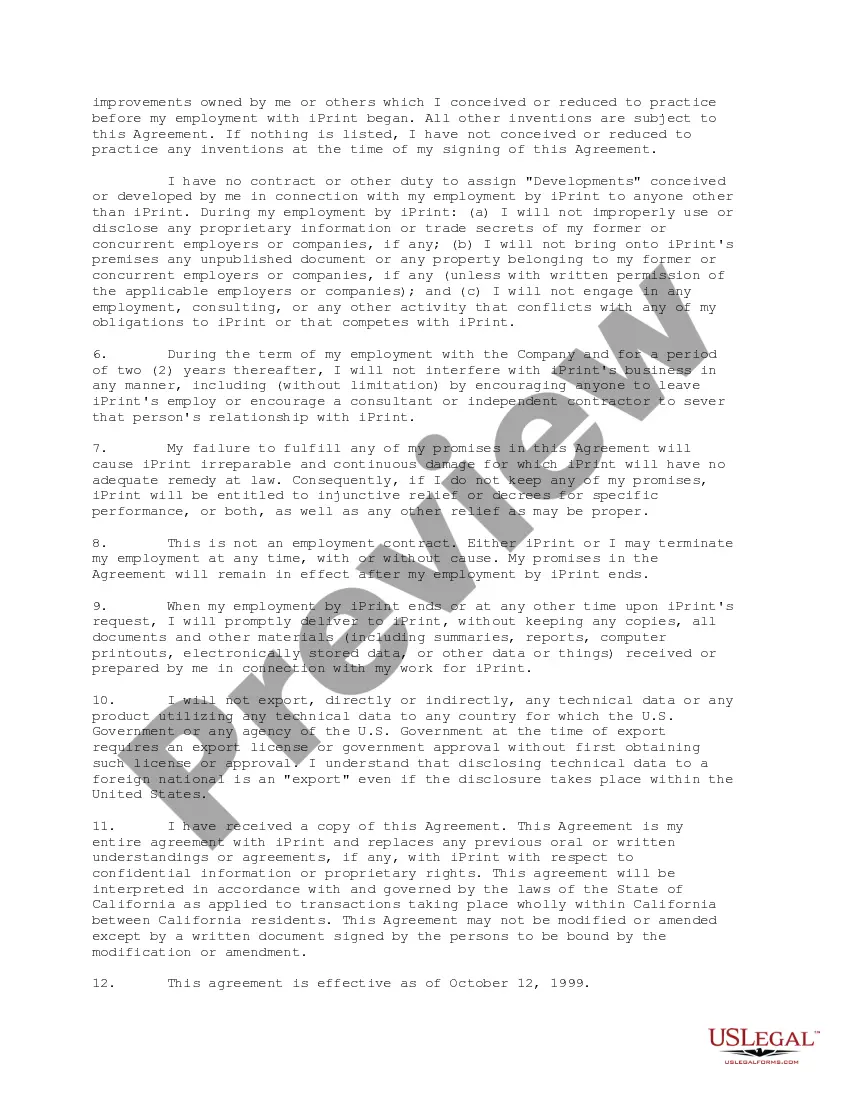
The Employee Non-Disclosure Agreement and Proprietary Rights Assignment serves to protect confidential information and proprietary rights between an employer and an employee. This document clearly outlines the responsibilities of the employee in maintaining confidentiality regarding sensitive company information and the ownership rights concerning developments created during employment. Unlike general non-disclosure agreements, this form specifically includes provisions related to proprietary rights and inventions, making it essential for safeguarding a company's intellectual property and competitive edge in the market.
Form components explained
- Definition of Confidential Information, including examples of what is considered proprietary.
- Responsibilities regarding the protection of confidential information and limitations on its use.
- Assignment of rights to developments created by the employee during their employment.
- Disclosure obligations regarding previous inventions or developments prior to employment.
- Prohibitions on engaging in conflicting activities during and after employment.
- Consequences of breaching the agreement, including injunctive relief.
Situations where this form applies
This form should be used when an employee is hired or continues employment with a company that handles sensitive information, intellectual property, or innovative developments. It is particularly important for roles that involve access to proprietary technology, trade secrets, or research and development initiatives. Utilizing this form helps ensure that both parties clearly understand their obligations to protect confidential information and the ownership of any inventions or improvements made during the course of employment.
Who this form is for
This form is intended for:
- Employers seeking to protect their proprietary information and intellectual property.
- Employees who will have access to confidential company information or conduct work leading to potential innovations.
- Businesses in sectors where trade secrets and intellectual property are crucial for competitive advantage, such as technology, manufacturing, and pharmaceuticals.
Steps to complete this form
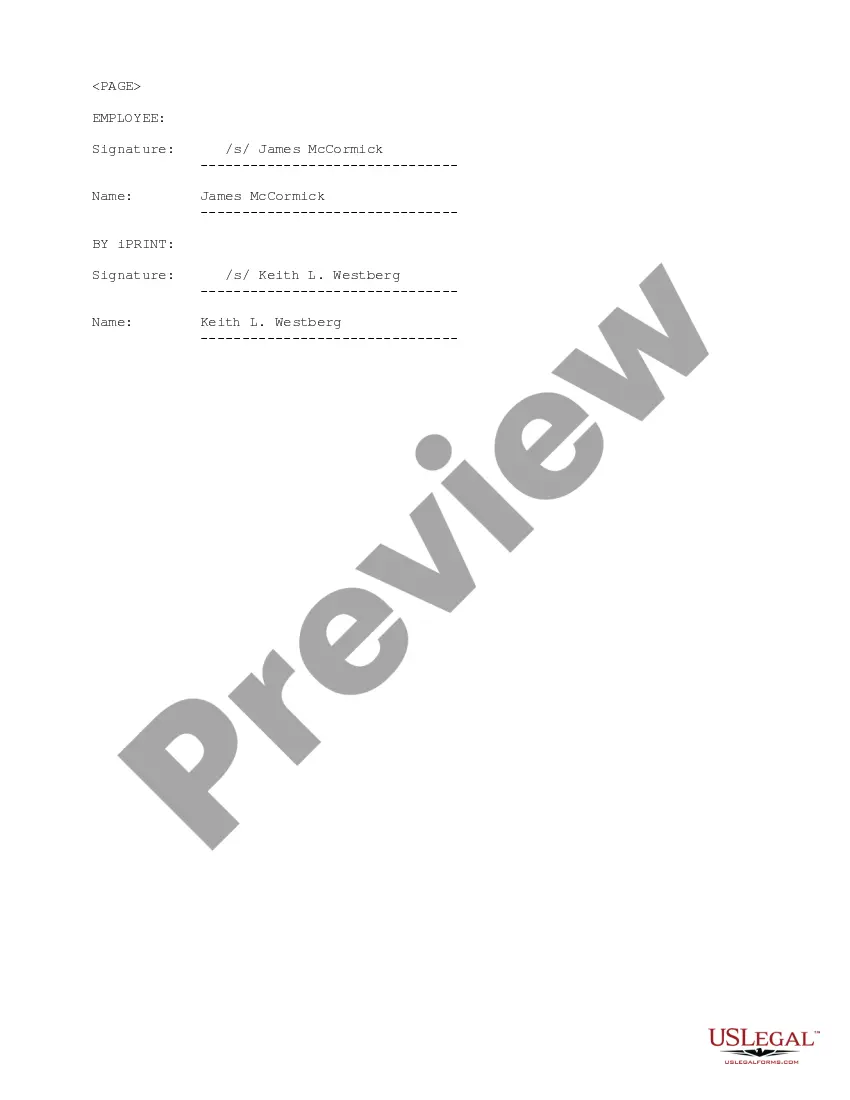
- Fill in the names of the parties involvedâiPrint, Inc. and the employee (James McCormick).
- Specify the date of the agreement.
- Review and understand the definitions provided for Confidential Information and Developments.
- Identify and list any inventions or developments the employee conceived before employment.
- Sign and date the agreement to indicate understanding and acceptance of the terms.
Does this form need to be notarized?
This form does not typically require notarization unless specified by local law. However, it is advisable to check any specific regulations that might apply in your jurisdiction to ensure compliance.
Get your form ready online
Our built-in tools help you complete, sign, share, and store your documents in one place.
Make edits, fill in missing information, and update formatting in US Legal Forms—just like you would in MS Word.
Download a copy, print it, send it by email, or mail it via USPS—whatever works best for your next step.
Sign and collect signatures with our SignNow integration. Send to multiple recipients, set reminders, and more. Go Premium to unlock E-Sign.
If this form requires notarization, complete it online through a secure video call—no need to meet a notary in person or wait for an appointment.
We protect your documents and personal data by following strict security and privacy standards.

Make edits, fill in missing information, and update formatting in US Legal Forms—just like you would in MS Word.

Download a copy, print it, send it by email, or mail it via USPS—whatever works best for your next step.

Sign and collect signatures with our SignNow integration. Send to multiple recipients, set reminders, and more. Go Premium to unlock E-Sign.

If this form requires notarization, complete it online through a secure video call—no need to meet a notary in person or wait for an appointment.

We protect your documents and personal data by following strict security and privacy standards.
Mistakes to watch out for
- Not thoroughly understanding the definitions of Confidential Information.
- Failing to disclose previous inventions before signing the agreement.
- Overlooking the non-compete provisions and their implications for future employment.
- Not keeping a copy of the signed agreement for personal records.
Why use this form online
- Convenient access to legally vetted templates from licensed attorneys.
- Ability to customize the agreement according to specific business needs.
- Easy downloading for immediate use and distribution.
- Secure storage options for important legal documents.
- This agreement is enforceable as long as it is reasonable in scope and duration.
- Employees must be aware of their obligations not to disclose confidential information.
- The agreement should clearly outline the terms to avoid ambiguity that could lead to disputes.
Summary of main points
- Protects a company's confidential information and proprietary rights.
- Requires that developments made during employment are assigned to the employer.
- Non-solicitation clauses help maintain business integrity after employment ends.
Looking for another form?


Form popularity
FAQ
Employees can void any non-competes that require a court outside of California to decide disputes. In other words, the company cannot enforce an employee's non-compete agreement in a state that allows these agreements. Employees are able to void contracts with illegal non-compete terms.
Job information. Compensation and benefits. Time off, sick days, and vacation policy. Employee classification. The schedule and employment period. Confidentiality agreement. A technology privacy policy. Termination terms and conditions.
In California, Employment contracts are legally binding agreements that create the employer-employee relationship. An employment contract can either be created by writing, verbal agreement, or because of implied circumstances.
There is no statutory obligation to have the Contract of Employment or the written statement of particulars signed. Once the applicant has accepted the job, there is a legally binding contract of employment between the employer and the applicant. The law does not require witnesses or a signature to make it valid.
This is an agreement (usually written although it may be verbal) between you and your employer about the terms and conditions of your employment. It is a legal document that will usually include the following details: Your duties and responsibilities in the role.
A typical breach in employment contract cases occurs when an employer fails to pay the employee at the time or in the amount that is stated in the contract. This type of breach not only allows the employee out of the contract, but may also give the employee cause to sue the employer for damages.
Right to a safe workplace free of dangerous conditions, toxic substances, and other potential safety hazards; Right to be free from retaliation for filing a claim or complaint against an employer (these are sometimes called "whistleblower" rights); and. Right to fair wages for work performed.
The terms employment contract and at-will employment agreement are often used interchangeably; however, they are not the same legal document.Some employers require employees to sign a written agreement stating that they are employed at-will.
Employers and employees may want a written employment agreement to govern employment. Employment agreements cover matters such as wages, bonuses, and hours of work. Employment agreements are contracts. Courts enforce employment contracts if they are breached.