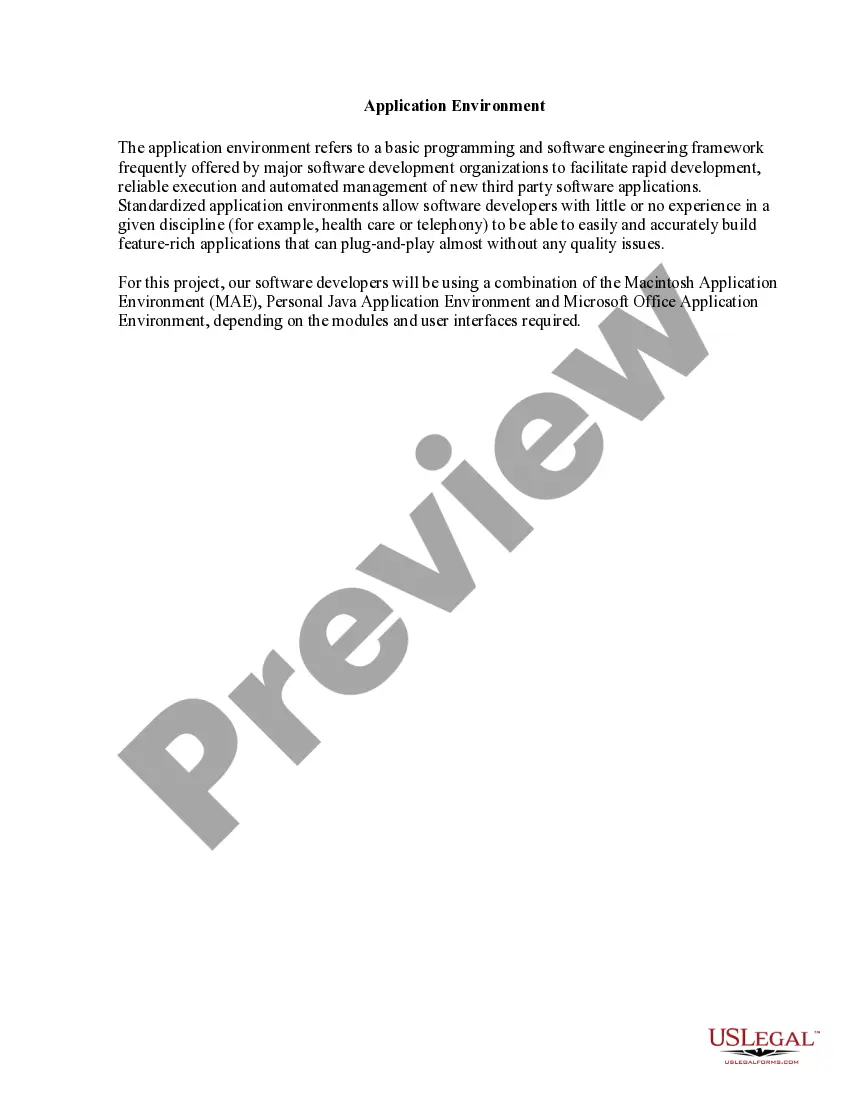
Application Environment
Overview of this form
The Application Environment form outlines a structured framework utilized in software development. It serves to streamline the creation, execution, and management of software applications, particularly for those with limited programming experience. By utilizing standardized application environments, developers can focus on building applications without the hassle of quality control issues typically associated with varying levels of expertise.
Key parts of this document
- Description of the application environment and its role in software development.
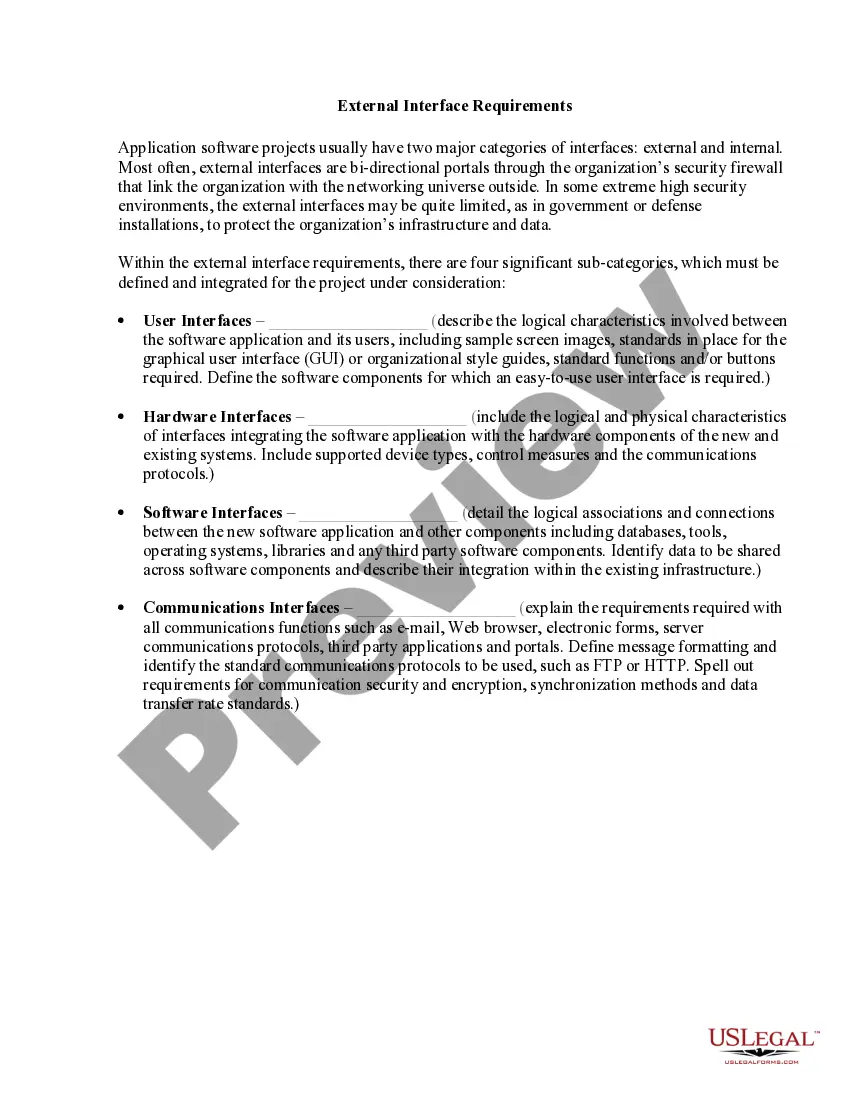
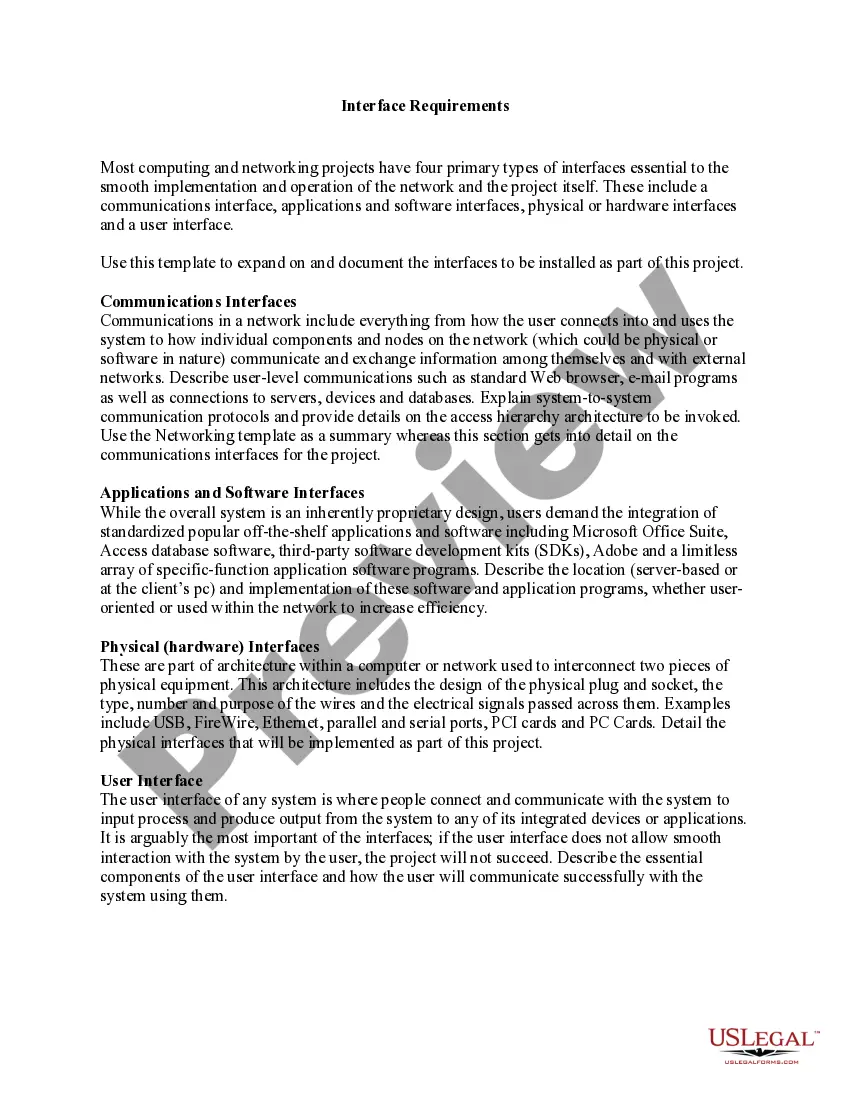
- Framework requirements for Macintosh, Personal Java, and Microsoft Office application environments.
- Guidelines on selecting the right environment based on user needs and module specifications.
When this form is needed
This form is essential when developing software applications, particularly when a developer is new to a specific domain such as healthcare or telephony. It is useful in situations requiring quick application deployment and management, ensuring developers have a clear understanding of the operating environment they will be using.
Who should use this form
- Software developers seeking structured frameworks for application development.
- Teams working in industries such as healthcare or telephony looking to optimize software production.
- Organizations that require standardized environments for managing third-party applications.
Completing this form step by step
- Identify the specific application environment needed for your project.
- Determine the modules and user interfaces required for your application.
- Fill in the necessary details regarding each environment selected.
- Review all selections to ensure compatibility and functionality.
- Finalize and save the form for use by your development team.
Notarization guidance
Notarization is not commonly needed for this form. However, certain documents or local rules may make it necessary. Our notarization service, powered by Notarize, allows you to finalize it securely online anytime, day or night.
Get your form ready online
Our built-in tools help you complete, sign, share, and store your documents in one place.
Make edits, fill in missing information, and update formatting in US Legal Forms—just like you would in MS Word.
Download a copy, print it, send it by email, or mail it via USPS—whatever works best for your next step.
Sign and collect signatures with our SignNow integration. Send to multiple recipients, set reminders, and more. Go Premium to unlock E-Sign.
If this form requires notarization, complete it online through a secure video call—no need to meet a notary in person or wait for an appointment.
We protect your documents and personal data by following strict security and privacy standards.

Make edits, fill in missing information, and update formatting in US Legal Forms—just like you would in MS Word.

Download a copy, print it, send it by email, or mail it via USPS—whatever works best for your next step.

Sign and collect signatures with our SignNow integration. Send to multiple recipients, set reminders, and more. Go Premium to unlock E-Sign.

If this form requires notarization, complete it online through a secure video call—no need to meet a notary in person or wait for an appointment.

We protect your documents and personal data by following strict security and privacy standards.
Avoid these common issues
- Failing to select the appropriate application environment for the intended use.
- Overlooking module specifications that may limit application functionality.
- Inadequately reviewing the completed form before implementation, leading to compatibility issues.
Advantages of online completion
- Access to professionally drafted forms ensures reliability in application development.
- Easy download and editability allow for quick adaptations as project needs evolve.
- Streamlined access to various application environments simplifies decision-making.
Looking for another form?




Form popularity
FAQ
The term ?IT environment? refers to the infrastructure, hardware, software, and systems that a business relies on every day in the course of using information technology (IT). Some of the commonly used resources in an IT environment include computers, internet access, peripheral devices, etc.
An integrated development environment must be compatible with the programming language that is used for the application or website being produced. An example of an IDE is Microsoft Visual Studio, which uses Microsoft software development platforms and is the recommended choice for .
In software, web and mobile application development, the development environment is a workspace with a set of processes and programming tools used to develop the source code for an application or software product. Development environments enable developers to create and innovate without breaking something in a live
Just as the local environment is for the individual developer to program and debug locally, the "development" environment is the shared location for all developers to check their code against all the changes in that release.
Generally, app environments can be divided into three main categories, with each their own unique purpose and functionalities: the development environment, the staging or testing environment and the production environment.
A local development environment is a suite of software applications that you store locally, meaning they live on your computer or device. This allows you to work on developing software or websites without a hosting service or an internet connection.
A Development Environment; A Beta Environment; and. A Production Environment.
Local vs. Server Web Development: Benefits and Drawbacks. While local web development leverages existing device environments to design and deploy new site content, server web development uses remote server stacks for this purpose.