Maine Estate Planning Questionnaire and Worksheets
Understanding this form
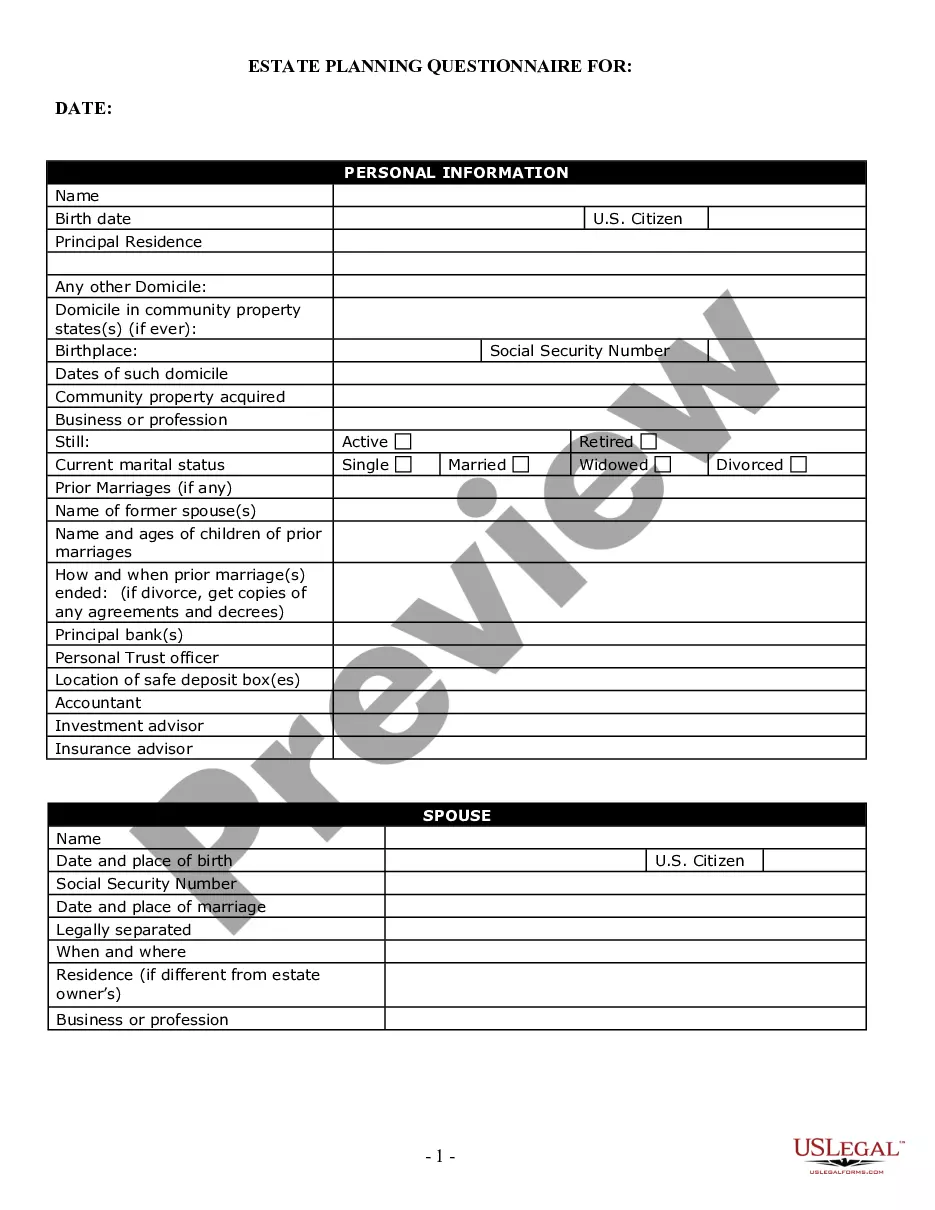
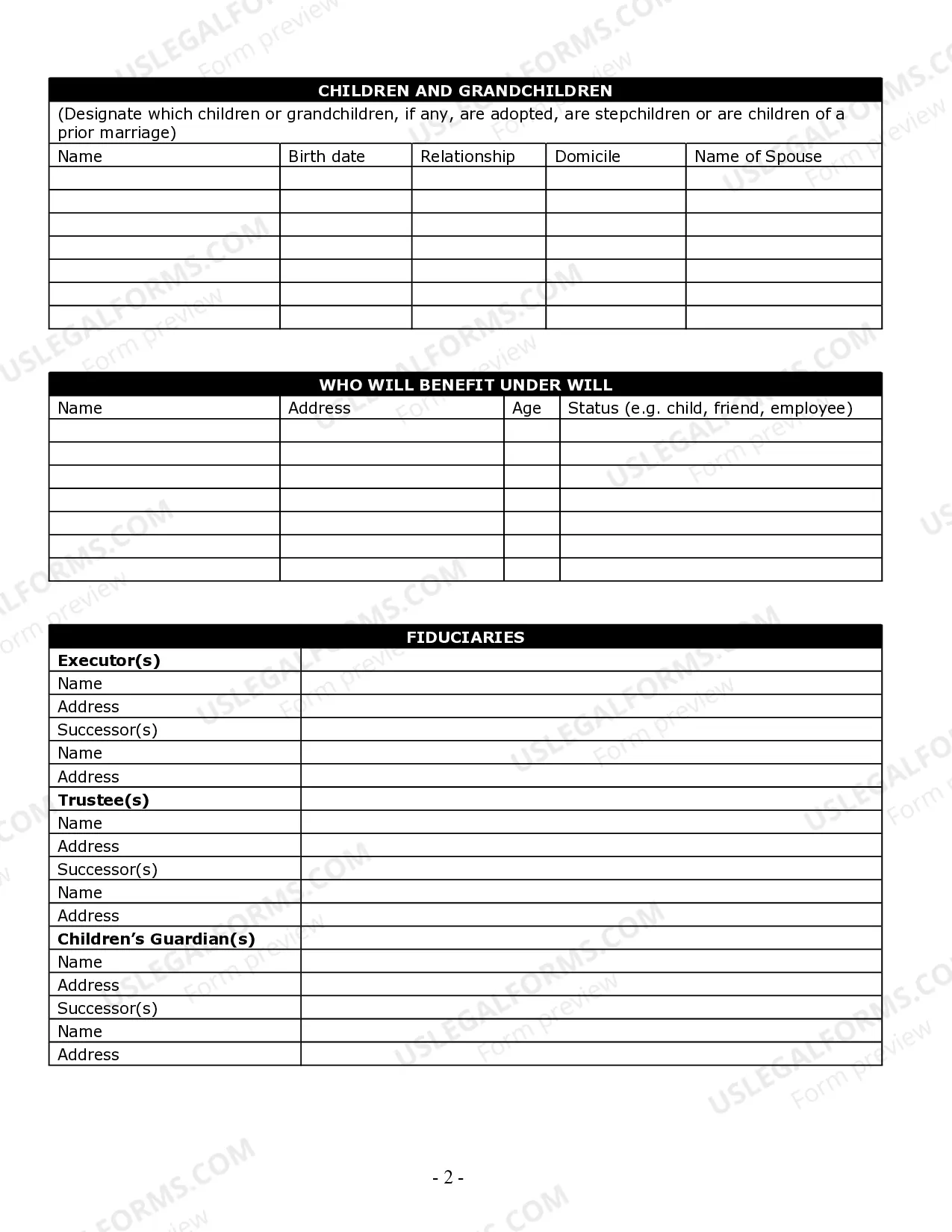
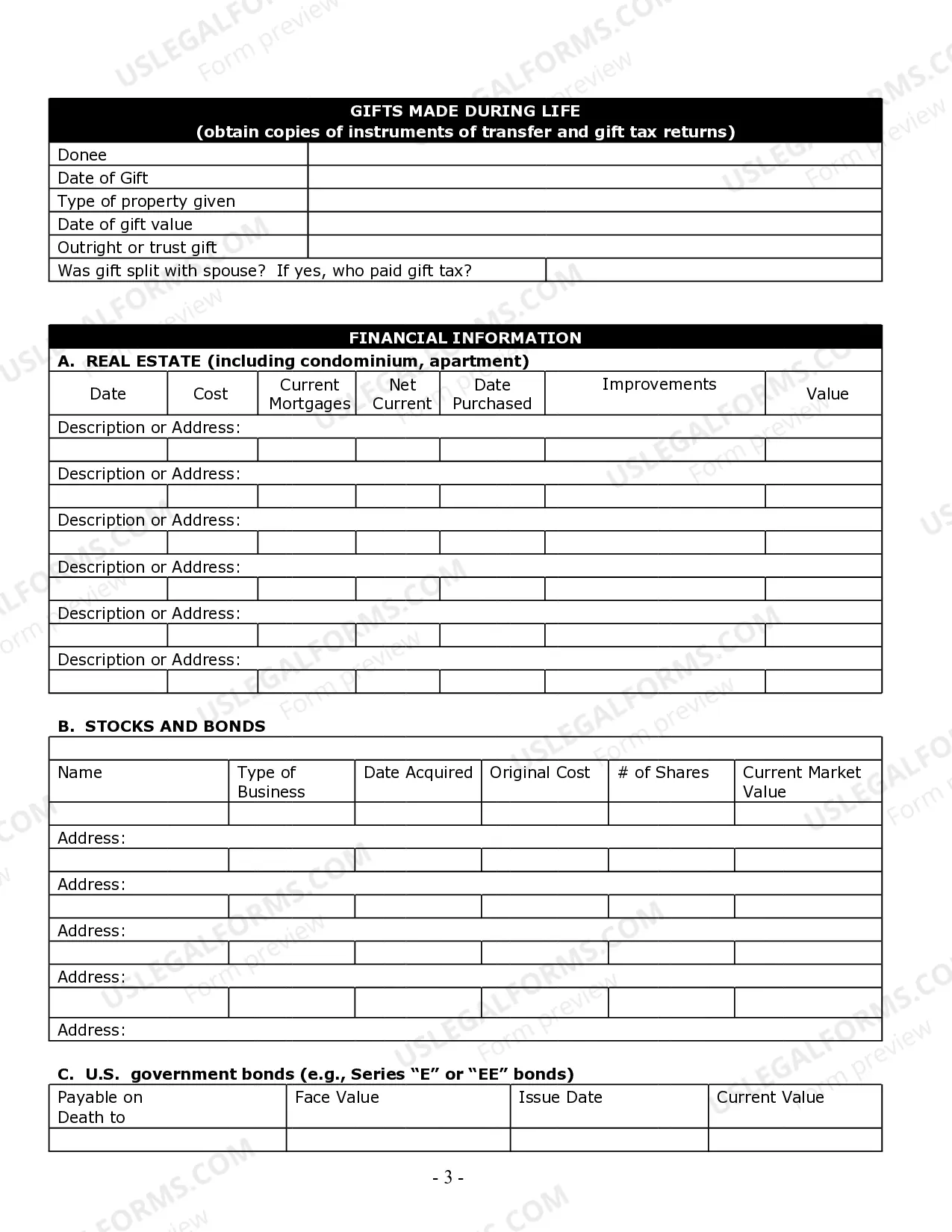
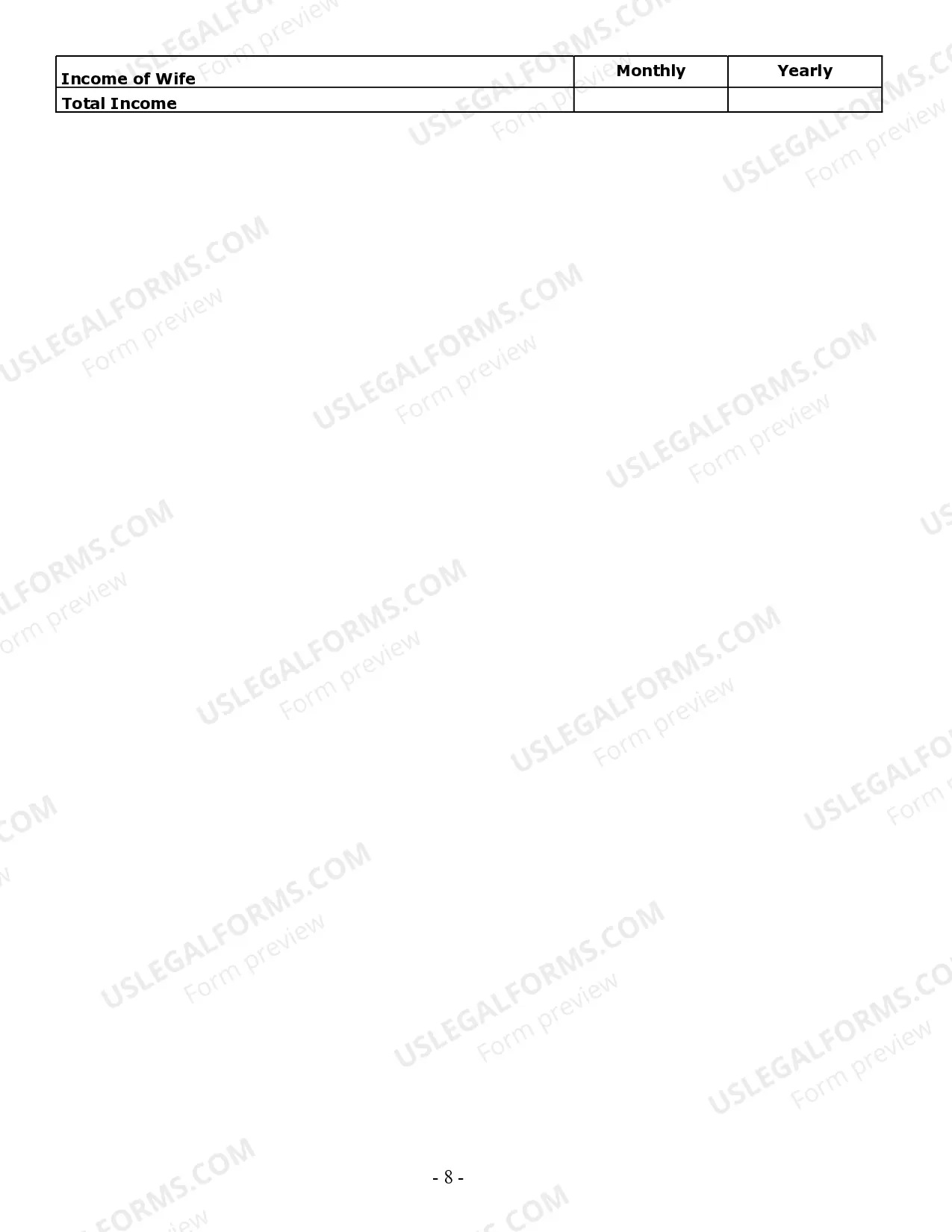
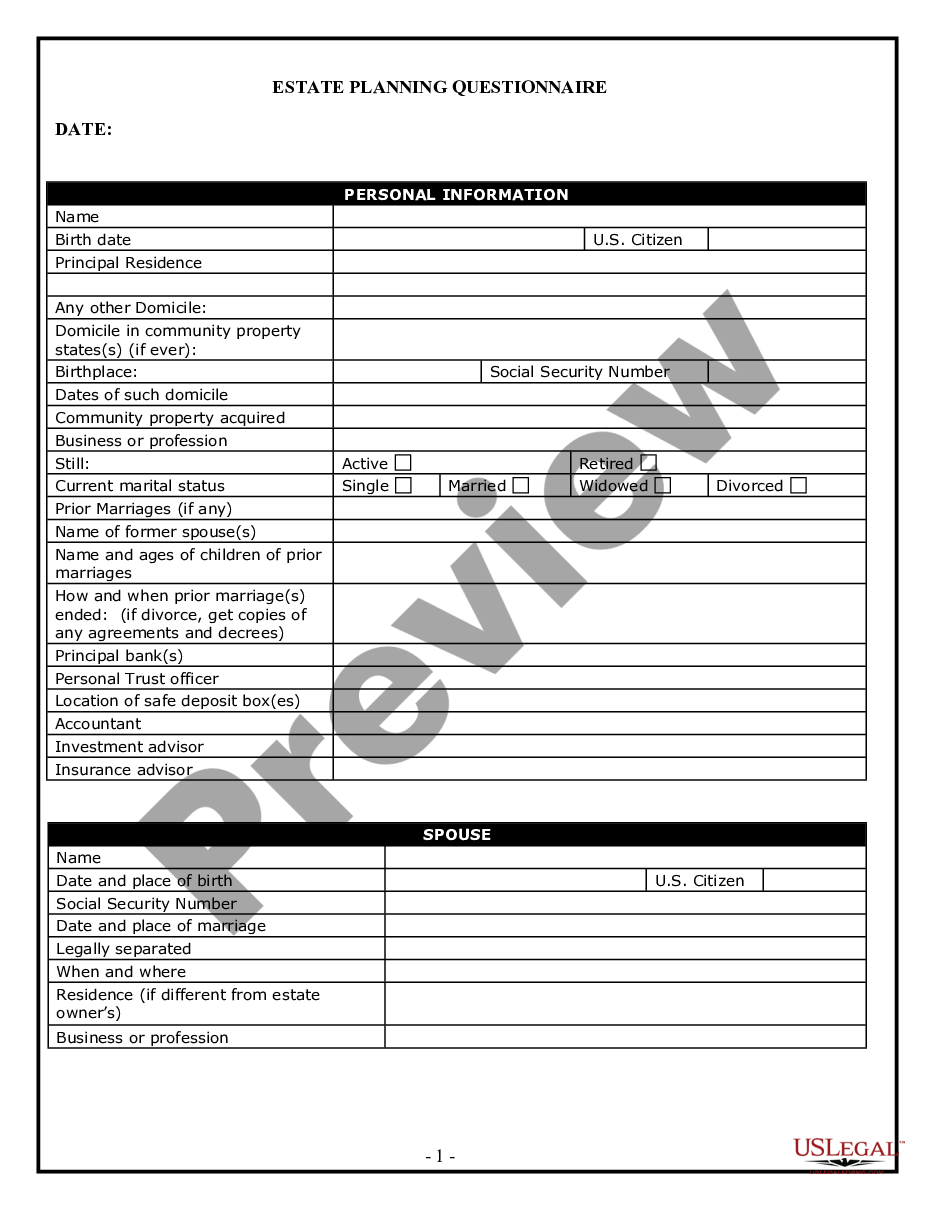
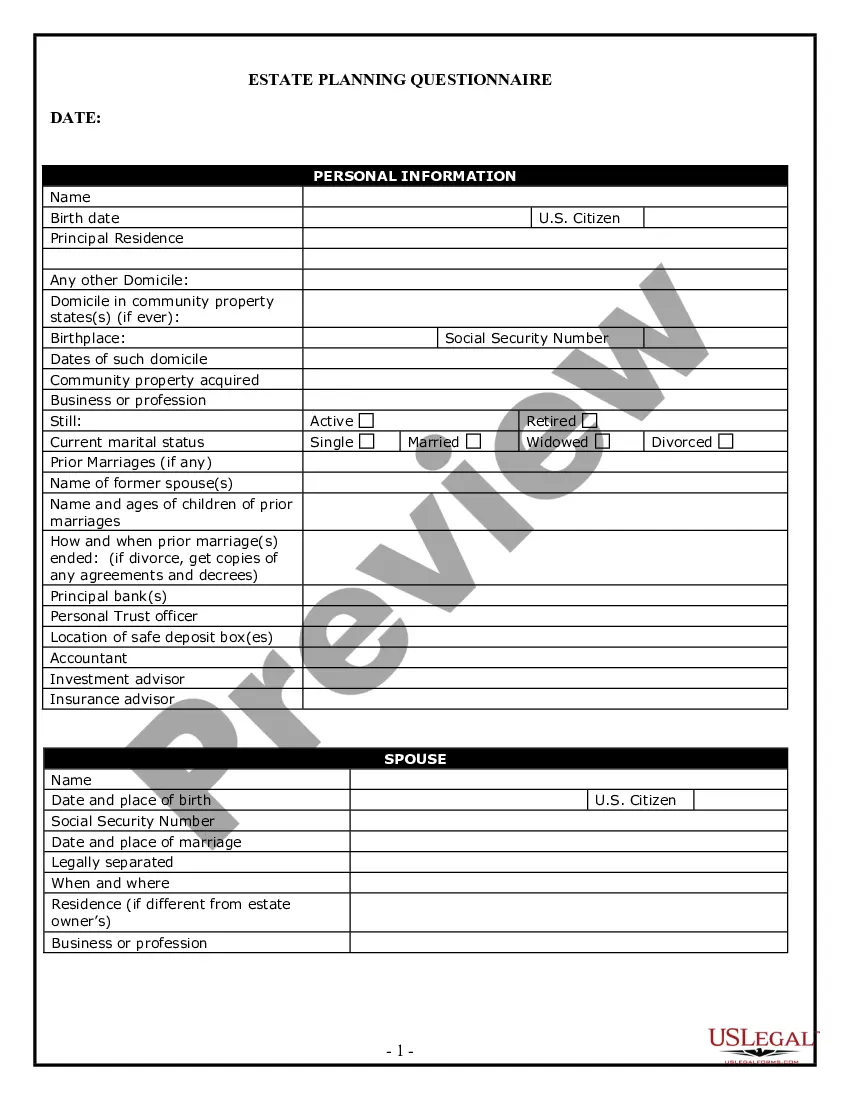
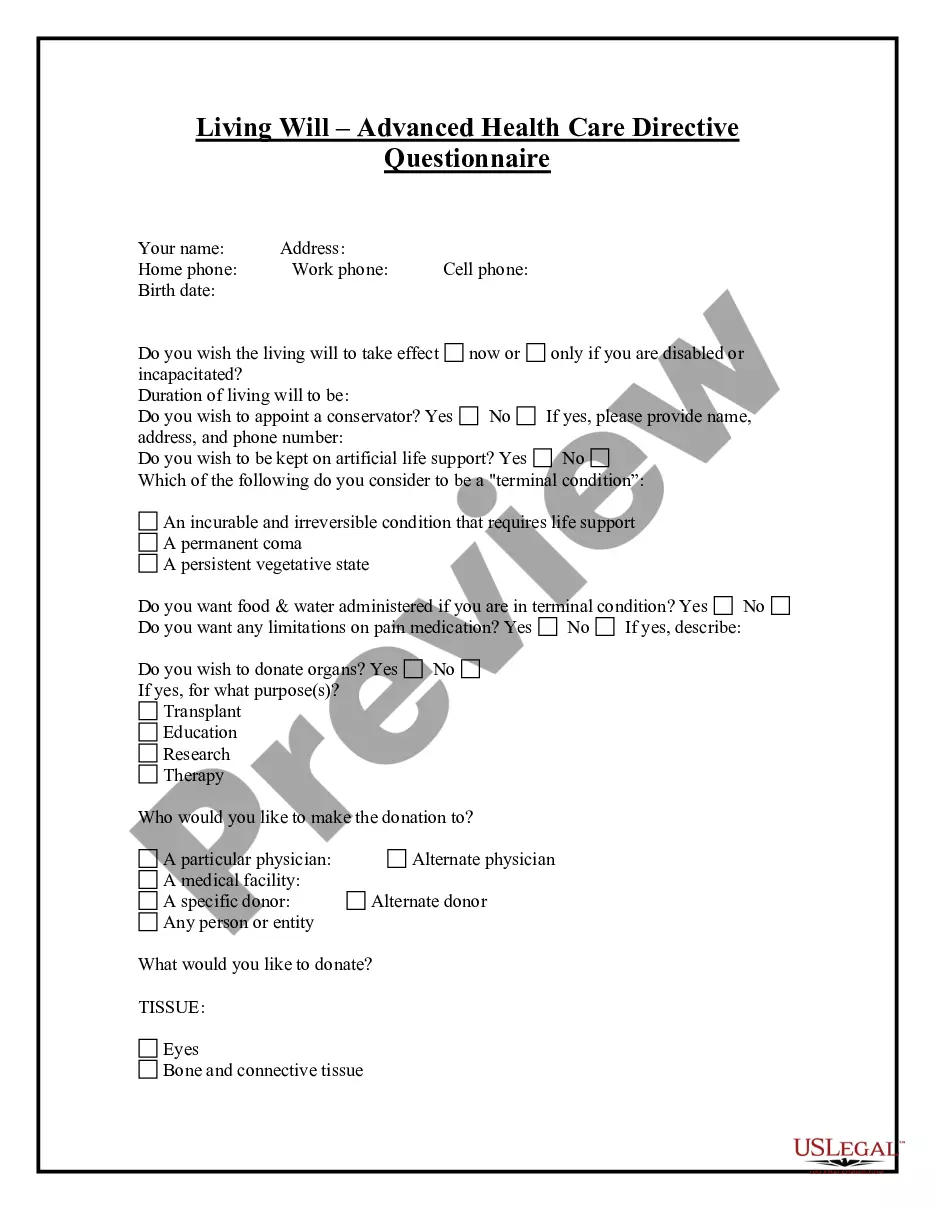
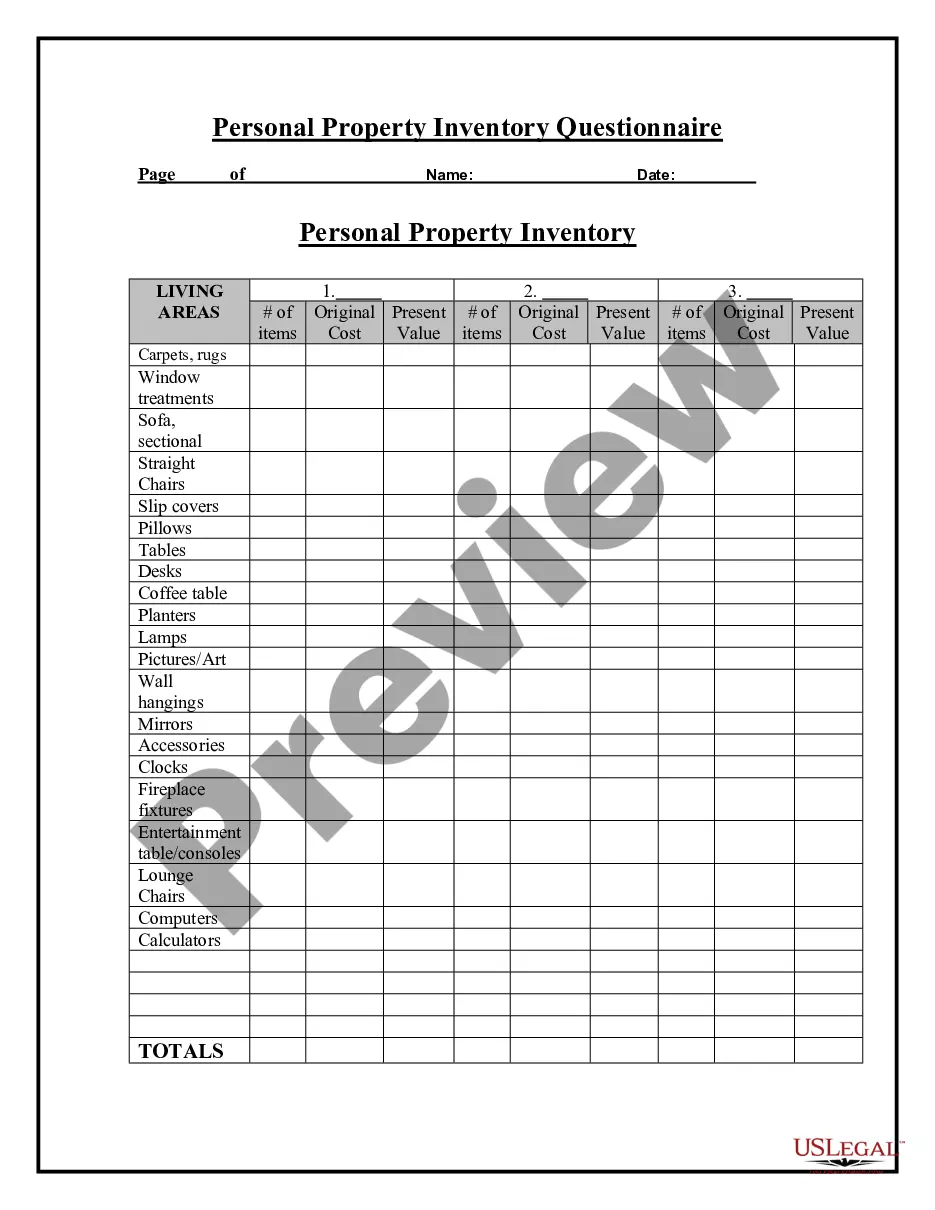
The Estate Planning Questionnaire and Worksheets is a structured form designed to gather essential personal and financial information for estate planning. This form distinguishes itself from other estate planning documents by providing a comprehensive set of questions that aid individuals in evaluating their financial situation. It is suitable for client interviews or for personal use to prepare for estate planning discussions.
Key parts of this document
- Personal information section to capture details about yourself and family members.
- Financial information fields for assets, liabilities, and income.
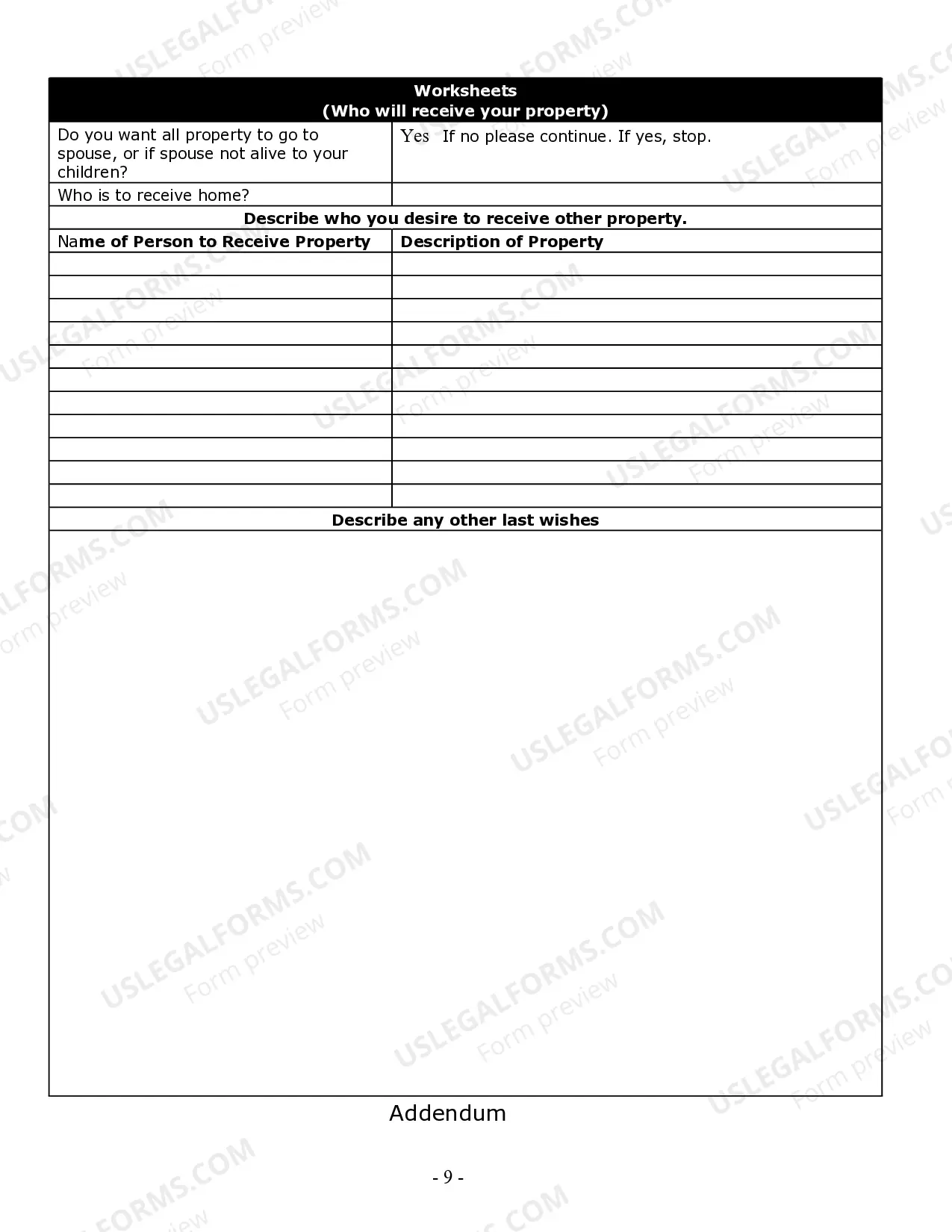
- Questions regarding specific wishes or desires for distributing assets.
- Worksheets for organizing information relevant to your estate.
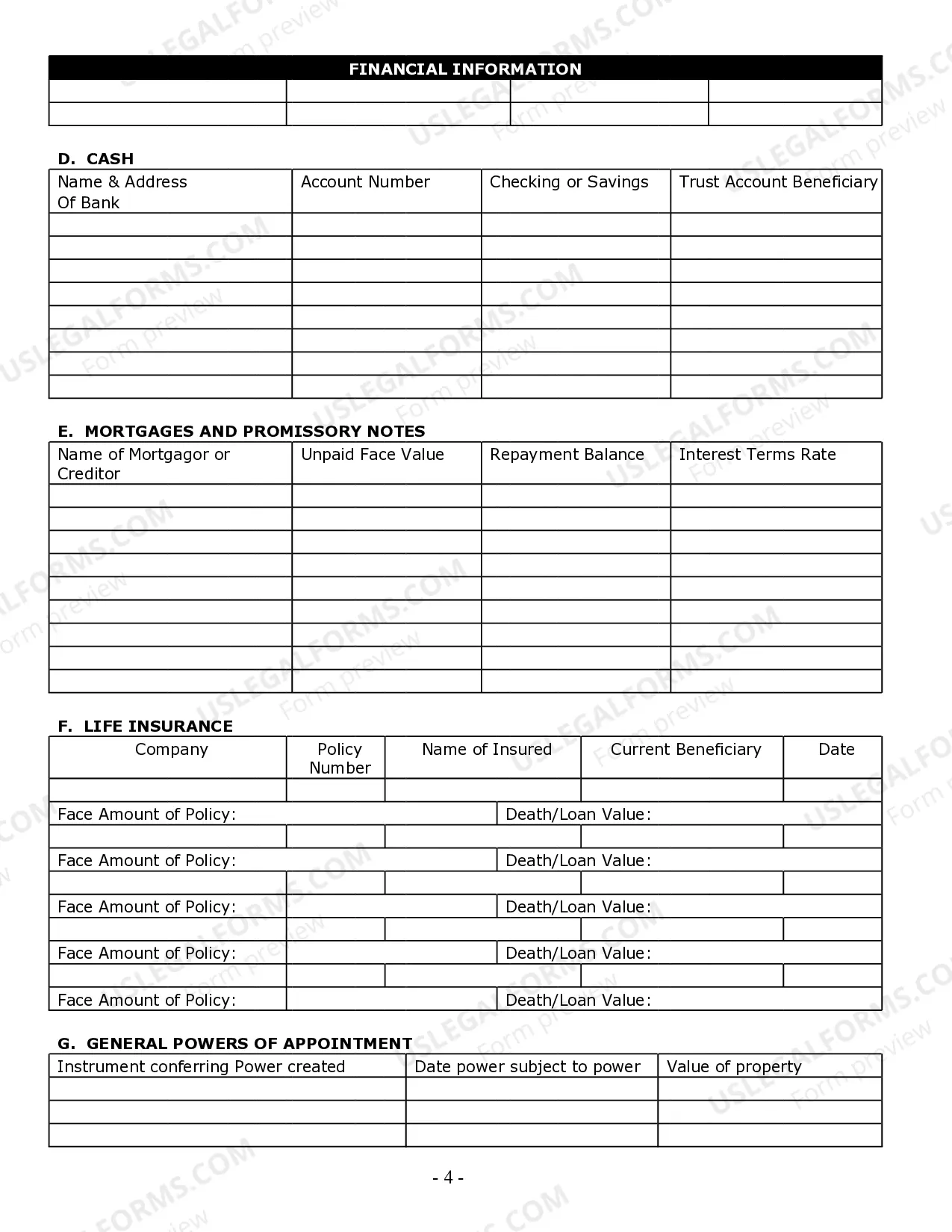
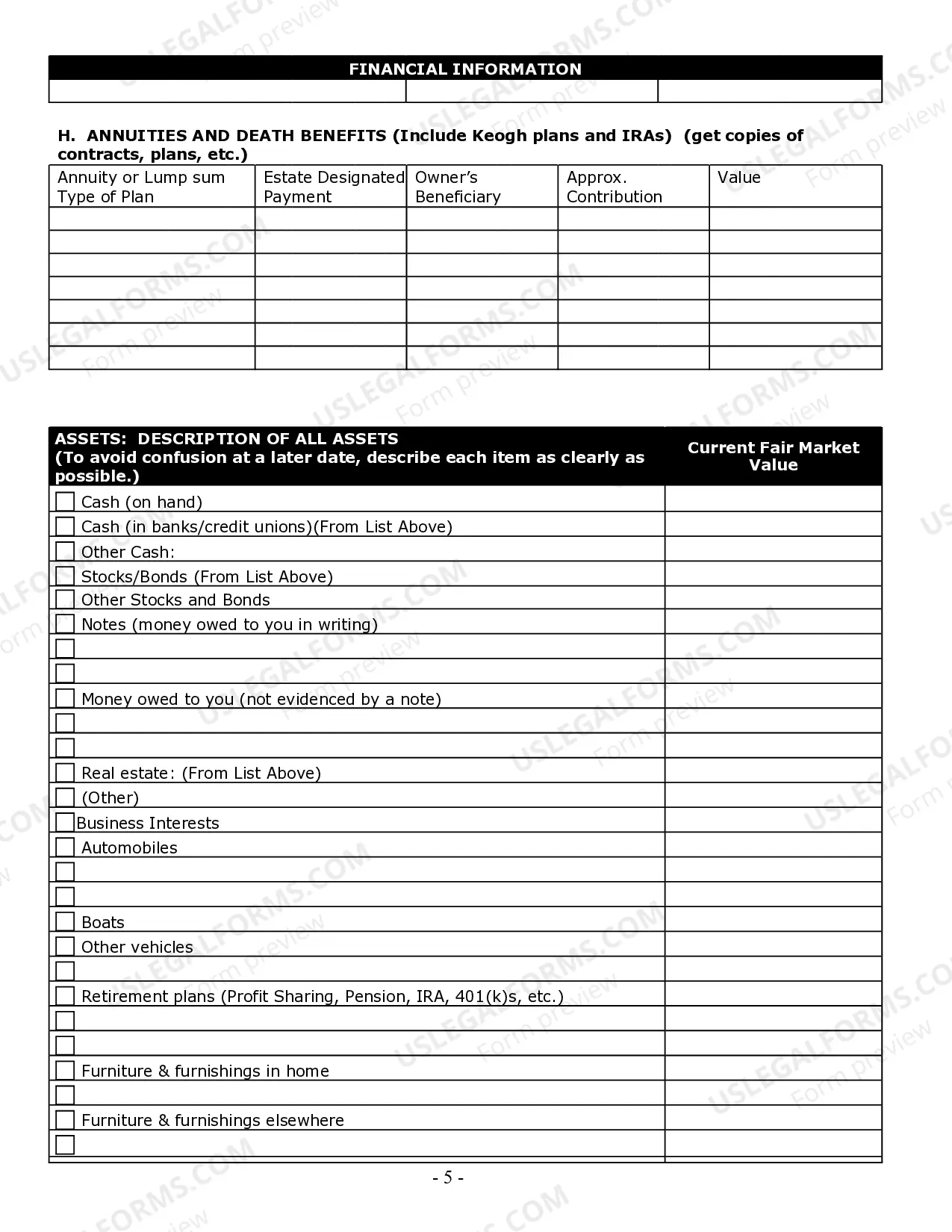
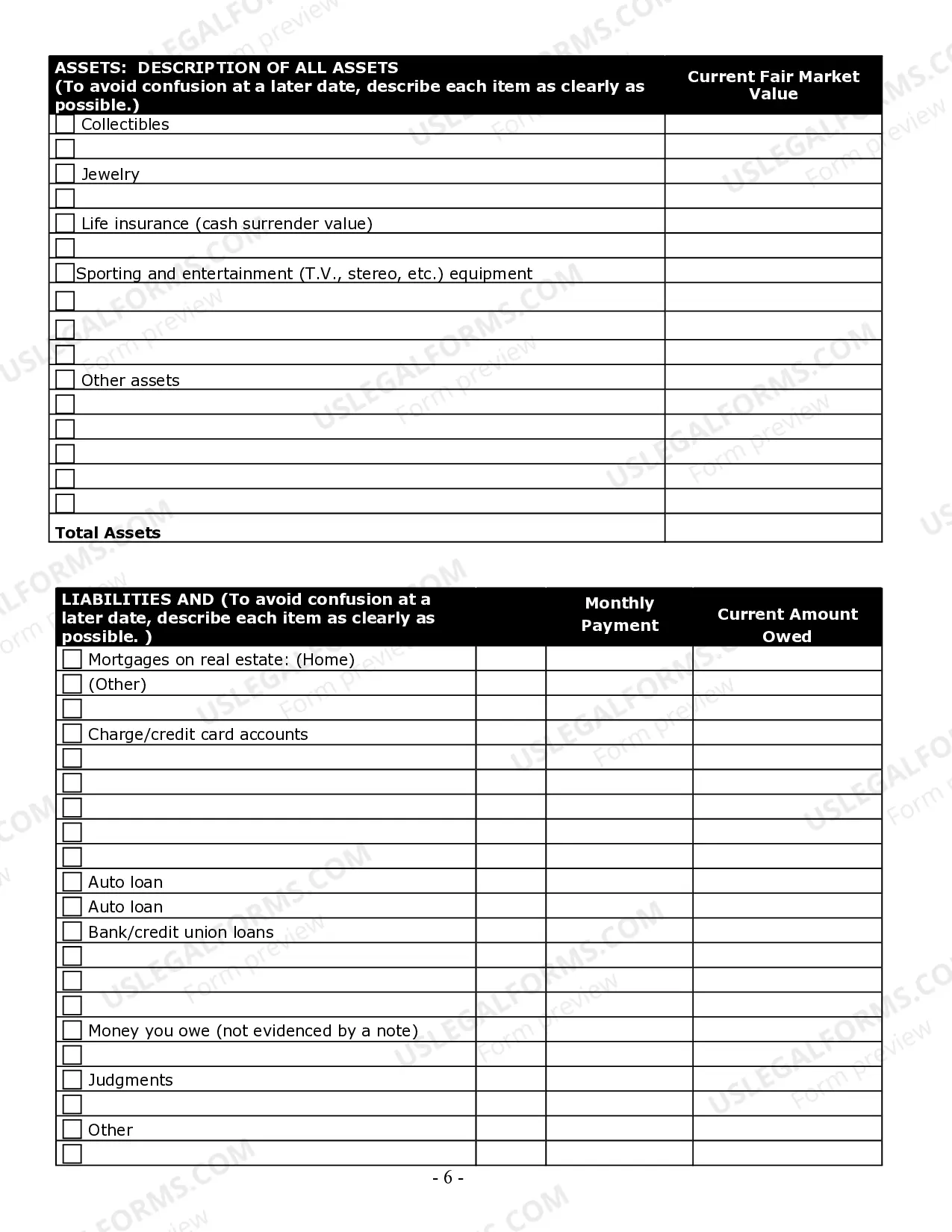
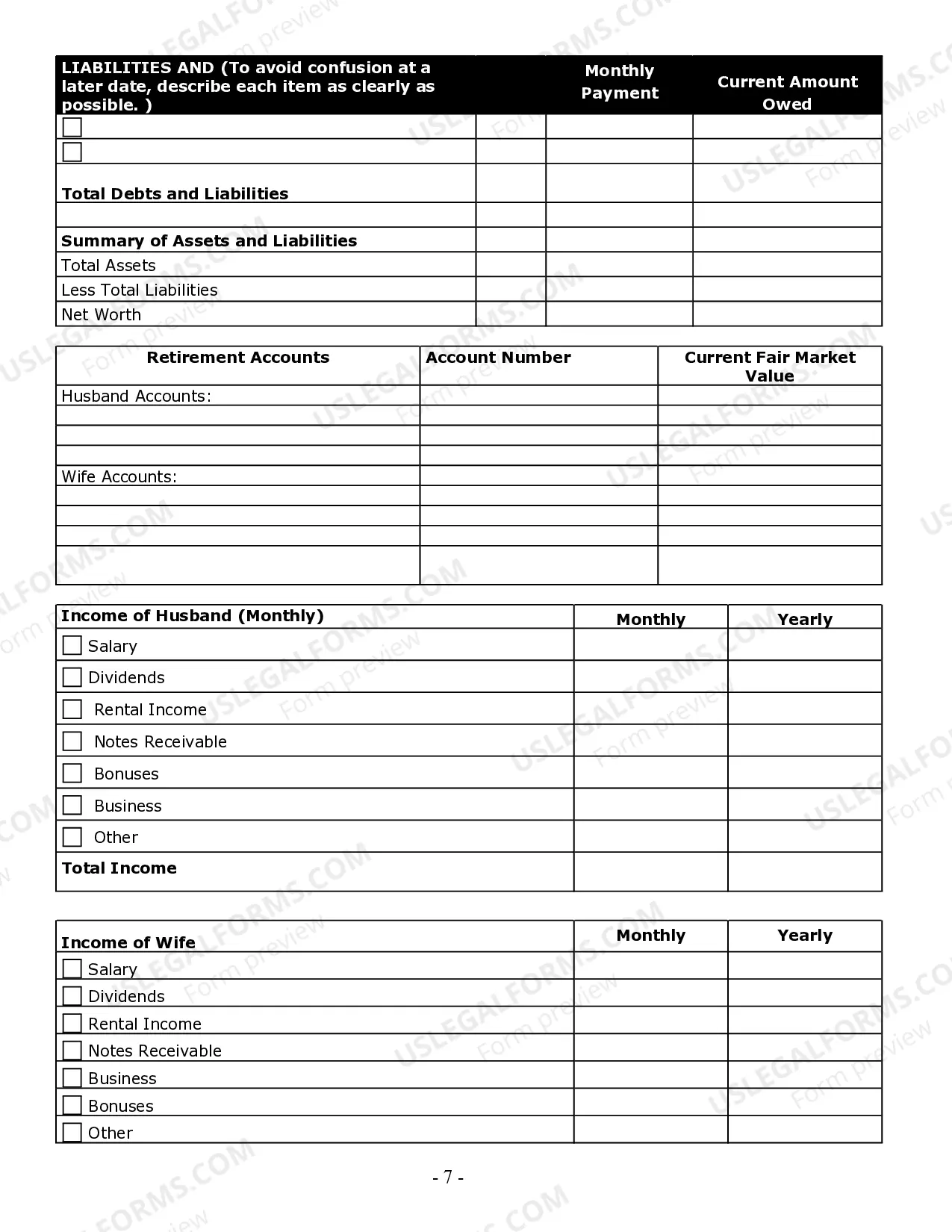


When to use this form
This form is useful when preparing for estate planning, whether you are conducting an interview with a legal professional or assessing your own estate needs. It can help clarify your financial situation and guide discussions on how to distribute your assets according to your wishes.
Who this form is for
- Individuals looking to create a comprehensive estate plan.
- Clients preparing to meet with an attorney about assets and estate distribution.
- Anyone evaluating their overall financial situation for future planning.
- Survivors or heirs needing clarity on estate matters.
Instructions for completing this form
- Start by entering your personal details, including your name and contact information.
- Fill in the financial information section with details of your assets, debts, and income sources.
- Answer questions regarding your wishes for asset distribution clearly and thoroughly.
- Review all entries for accuracy and completeness before printing or submitting.
Notarization guidance
This form usually doesn’t need to be notarized. However, local laws or specific transactions may require it. Our online notarization service, powered by Notarize, lets you complete it remotely through a secure video session, available 24/7.
Get your form ready online
Our built-in tools help you complete, sign, share, and store your documents in one place.
Make edits, fill in missing information, and update formatting in US Legal Forms—just like you would in MS Word.
Download a copy, print it, send it by email, or mail it via USPS—whatever works best for your next step.
Sign and collect signatures with our SignNow integration. Send to multiple recipients, set reminders, and more. Go Premium to unlock E-Sign.
If this form requires notarization, complete it online through a secure video call—no need to meet a notary in person or wait for an appointment.
We protect your documents and personal data by following strict security and privacy standards.

Make edits, fill in missing information, and update formatting in US Legal Forms—just like you would in MS Word.

Download a copy, print it, send it by email, or mail it via USPS—whatever works best for your next step.

Sign and collect signatures with our SignNow integration. Send to multiple recipients, set reminders, and more. Go Premium to unlock E-Sign.

If this form requires notarization, complete it online through a secure video call—no need to meet a notary in person or wait for an appointment.

We protect your documents and personal data by following strict security and privacy standards.
Common mistakes
- Leaving sections incomplete or unanswered.
- Failing to keep the information updated after significant life changes.
- Overlooking the importance of clarity in asset distribution wishes.
Benefits of completing this form online
- Convenient access to the form at any time, from anywhere.
- Easy to edit and customize to fit individual needs.
- Reliable templates drafted by licensed attorneys ensure legal compliance.
Legal use & context
- This form aids in the legal process of estate planning by ensuring comprehensive data collection.
- While this form organizes important information, consultation with legal counsel is recommended for enforceability.
- Completion of the questionnaire does not replace a formal will or estate plan but serves as a preparatory tool.
Key takeaways
- The Estate Planning Questionnaire and Worksheets is essential for organizing estate-related information.
- Proper completion of the form aids in effective estate planning sessions with legal professionals.
- Regular updates to the form ensure ongoing accuracy in estate planning.
Looking for another form?

Form popularity
FAQ
A Last Will and Testament. When it comes to estate planning, having a last will and testament is likely the first thing that will come to mind. A Document Granting Power of Attorney. An Advance Medical Directive. Revocable Living Trust.
Bank accounts. Brokerage or investment accounts. Retirement accounts and pension plans. A life insurance policy.
More Than a Last Will. Itemize Your Inventory. Follow with Non-Physical Assets. Assemble a List of Debts. Make a Memberships List. Make Copies of Your Lists. Review Your Retirement Account. Update Your Insurance.
Fill out your attorney's intake questionnaire. Gather your financial documents. Bring copies of your current estate plan documents. Divorce agreements, premarital agreements, and other relevant contracts. Choose your executors and health care agents.
Creating an estate plan is a lot like getting into better shape. Step 1: Sign a will. Step 2: Name beneficiaries. Step 3: Dodge estate taxes. Step 4: Leave a letter. Step 5: Draw up a durable power of attorney. Step 6: Create an advance health care directive.
Step 1: Create a checklist of important documents (and their locations) Step 2: List the names and contact information of key associates. Step 3: Catalog your digital asset inventory. Step 4: Ensure all documents are organized and accessible.
A Last Will and Testament. When it comes to estate planning, having a last will and testament is likely the first thing that will come to mind. A Document Granting Power of Attorney. An Advance Medical Directive. Revocable Living Trust.
There are four main elements of an estate plan; these include a will, a living will and healthcare power of attorney, a financial power of attorney, and a trust.