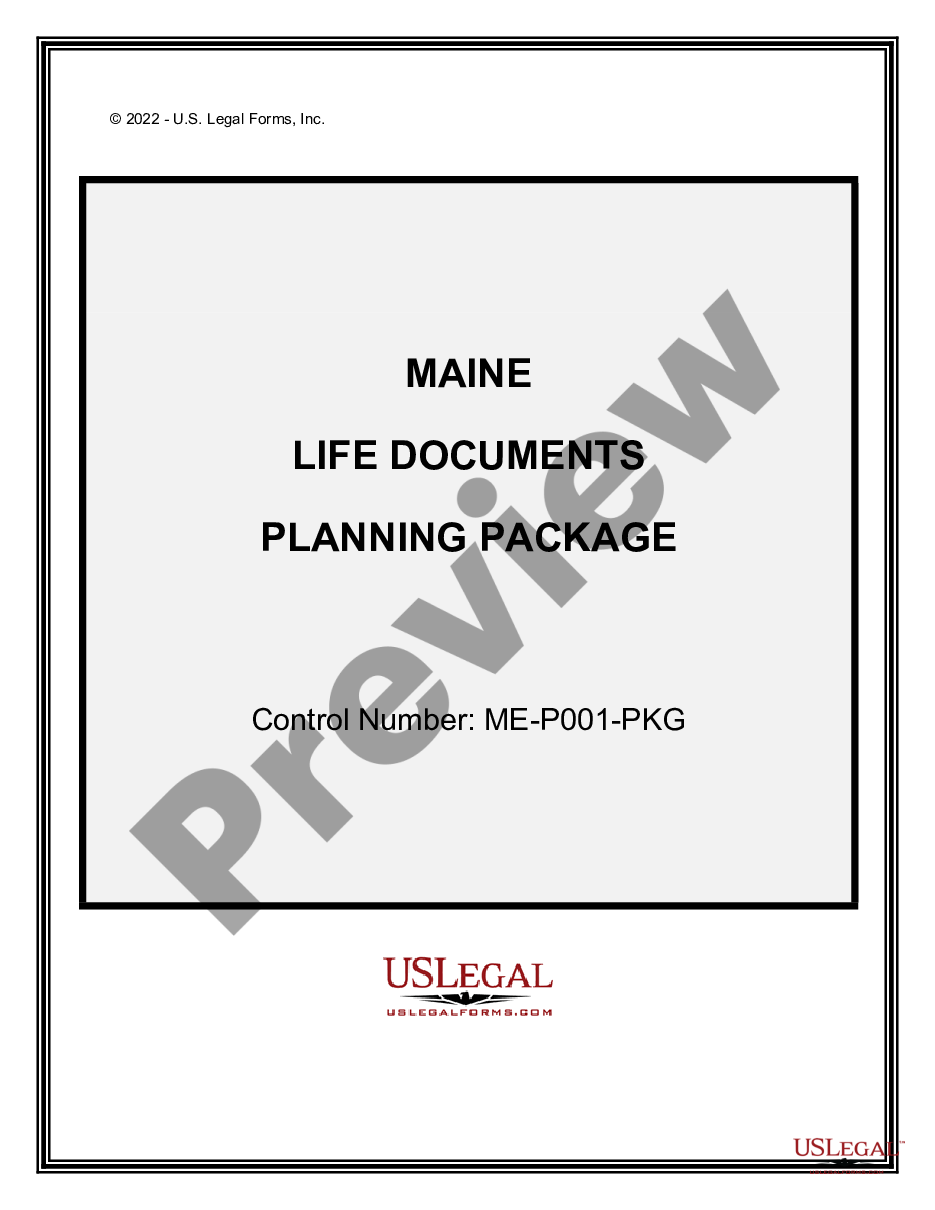
Maine Life Documents Planning Package, including Will, Power of Attorney and Living Will

What is this form package?
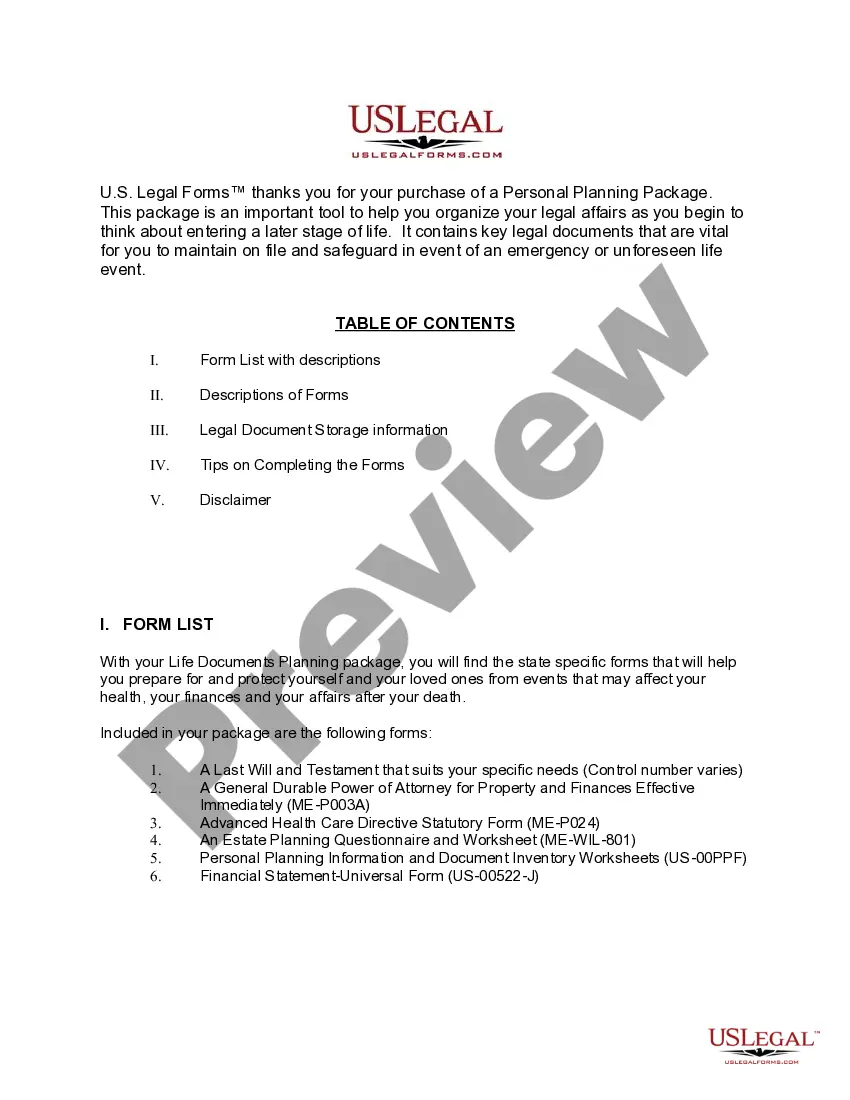
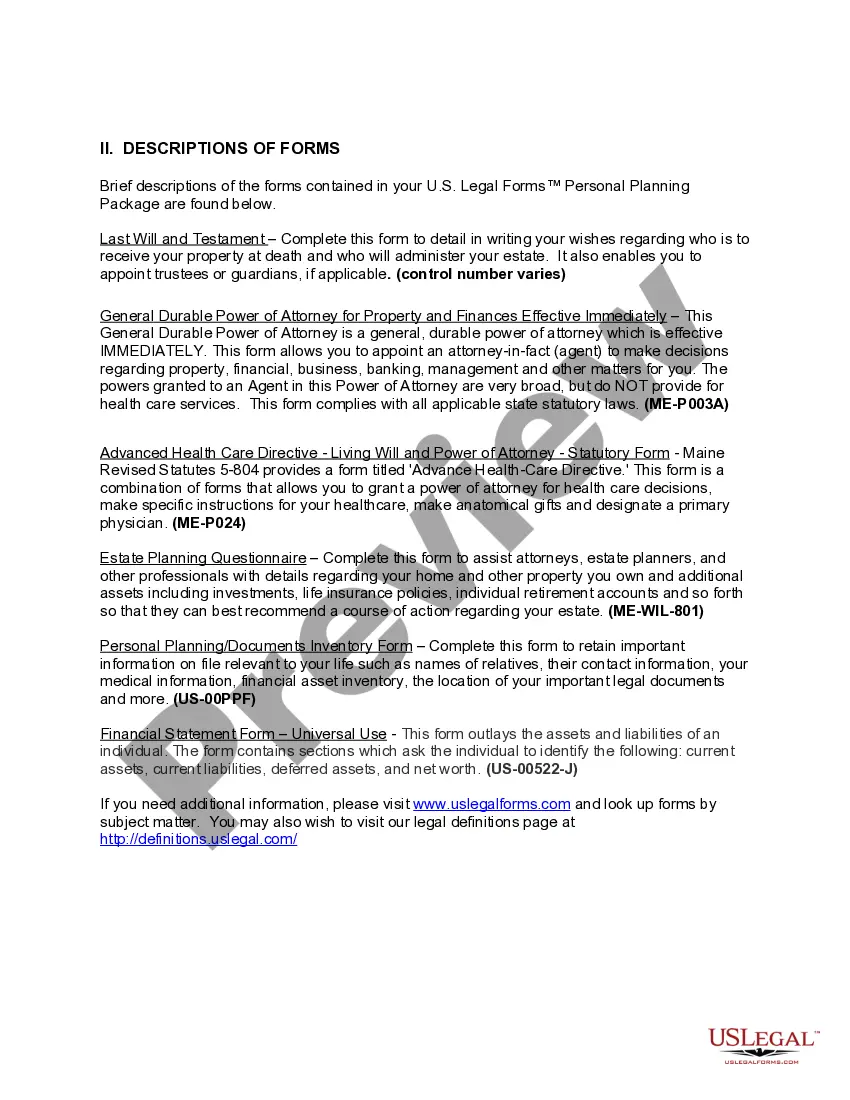
The Maine Life Documents Planning Package includes essential legal documents designed to help you plan for your future and satisfy your legal needs. This form package is specifically tailored for residents of Maine, offering state-specific forms that provide clarity and guidance regarding your health, finances, and decisions after your death. Unlike other generic form packages, this package addresses the unique legal requirements in Maine, ensuring your documents comply with local laws.
Forms included in this package
- Last Will and Testament
- General Durable Power of Attorney for Property and Finances or Financial Effective Immediately
- Statutory Advanced Health Care Directive
- Estate Planning Questionnaire and Worksheets
- Sample Letter for Request for Free Credit Report Allowed by Federal Law
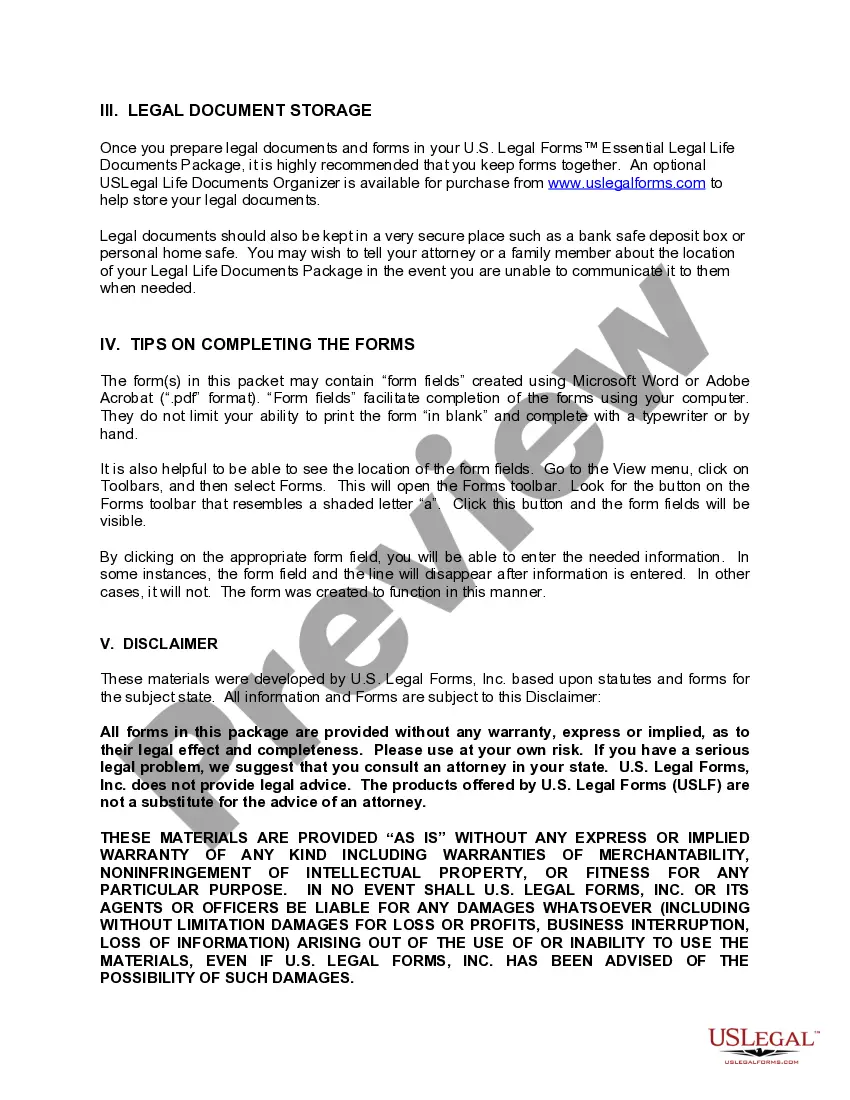
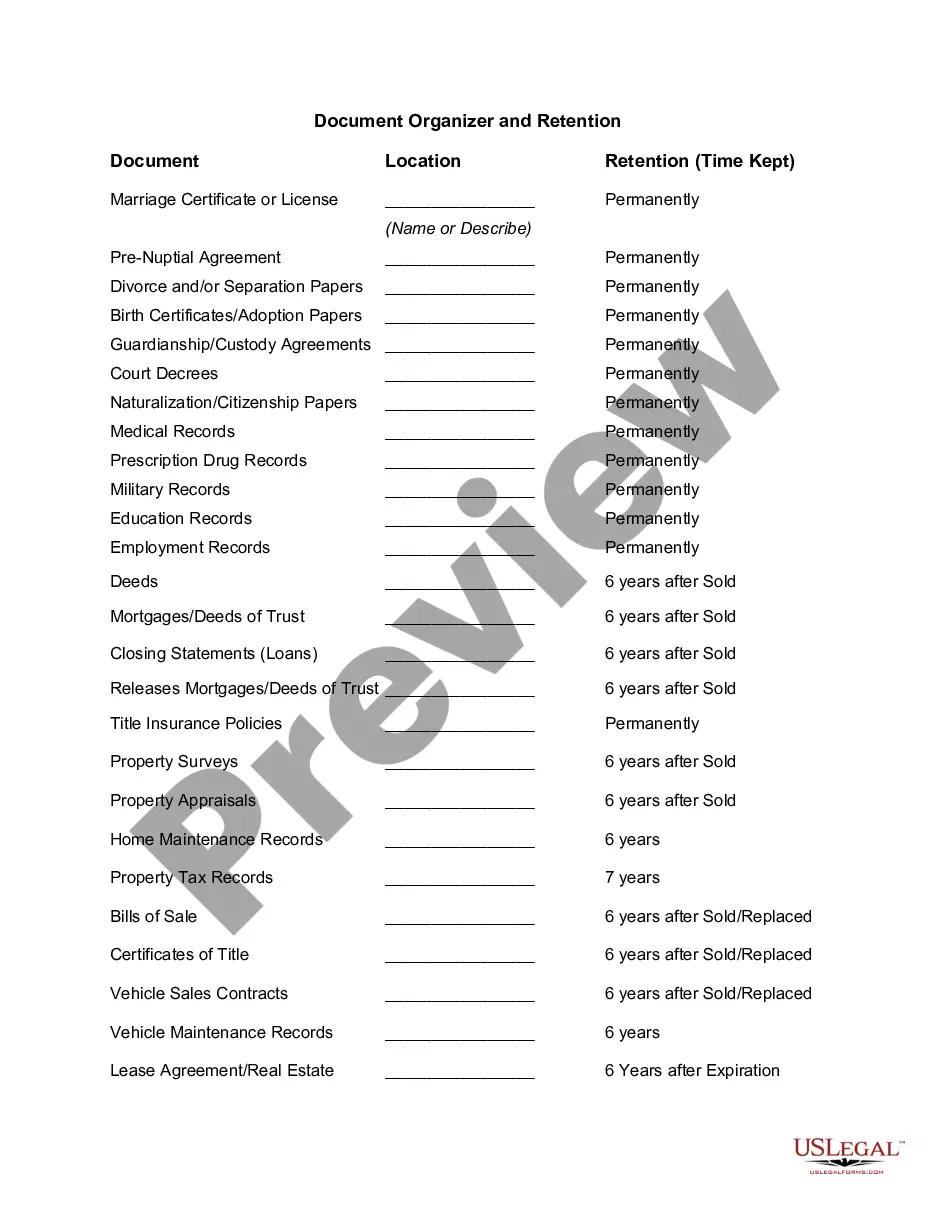
- Personal Planning Information and Document Inventory Worksheets - A Legal Life Document
- Estate Planning Questionnaire

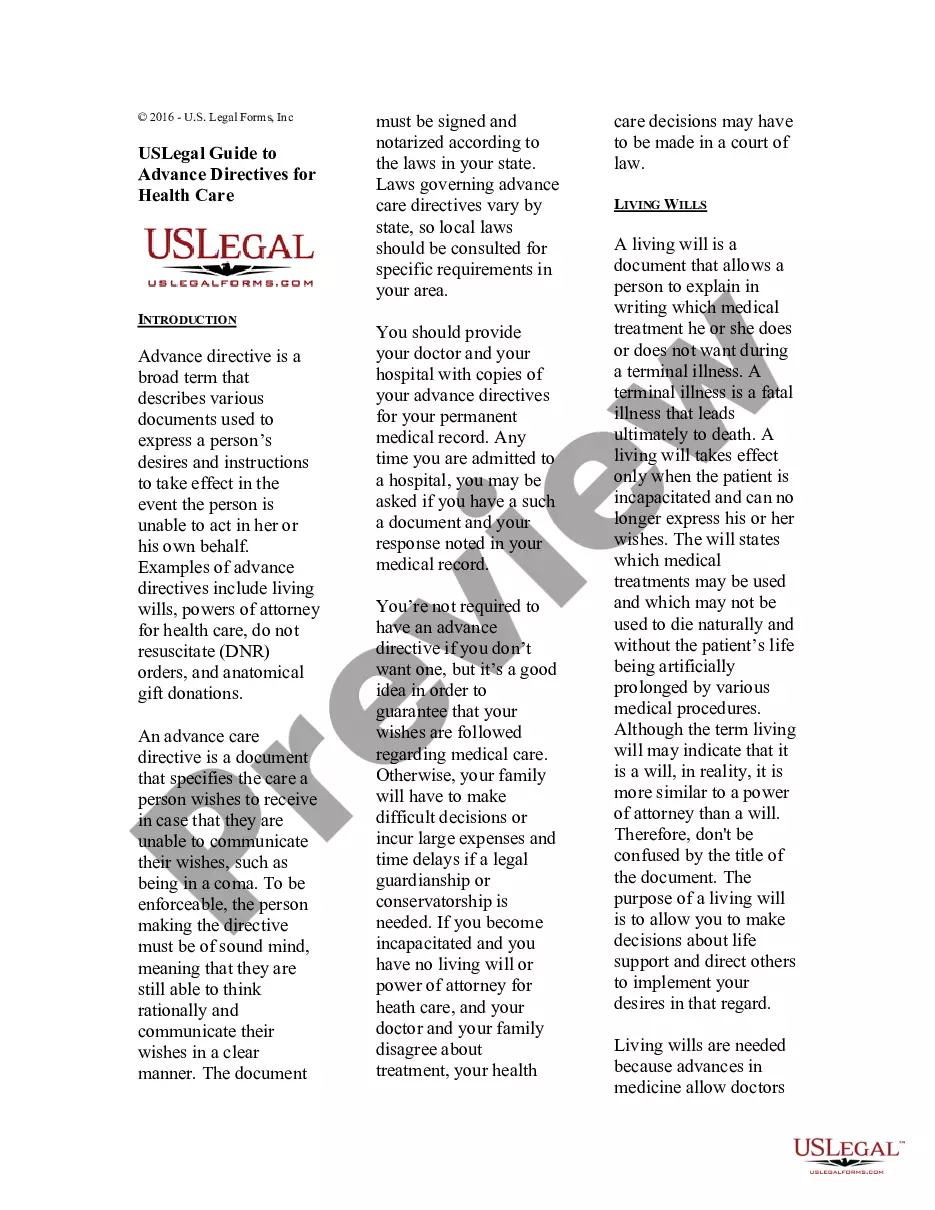
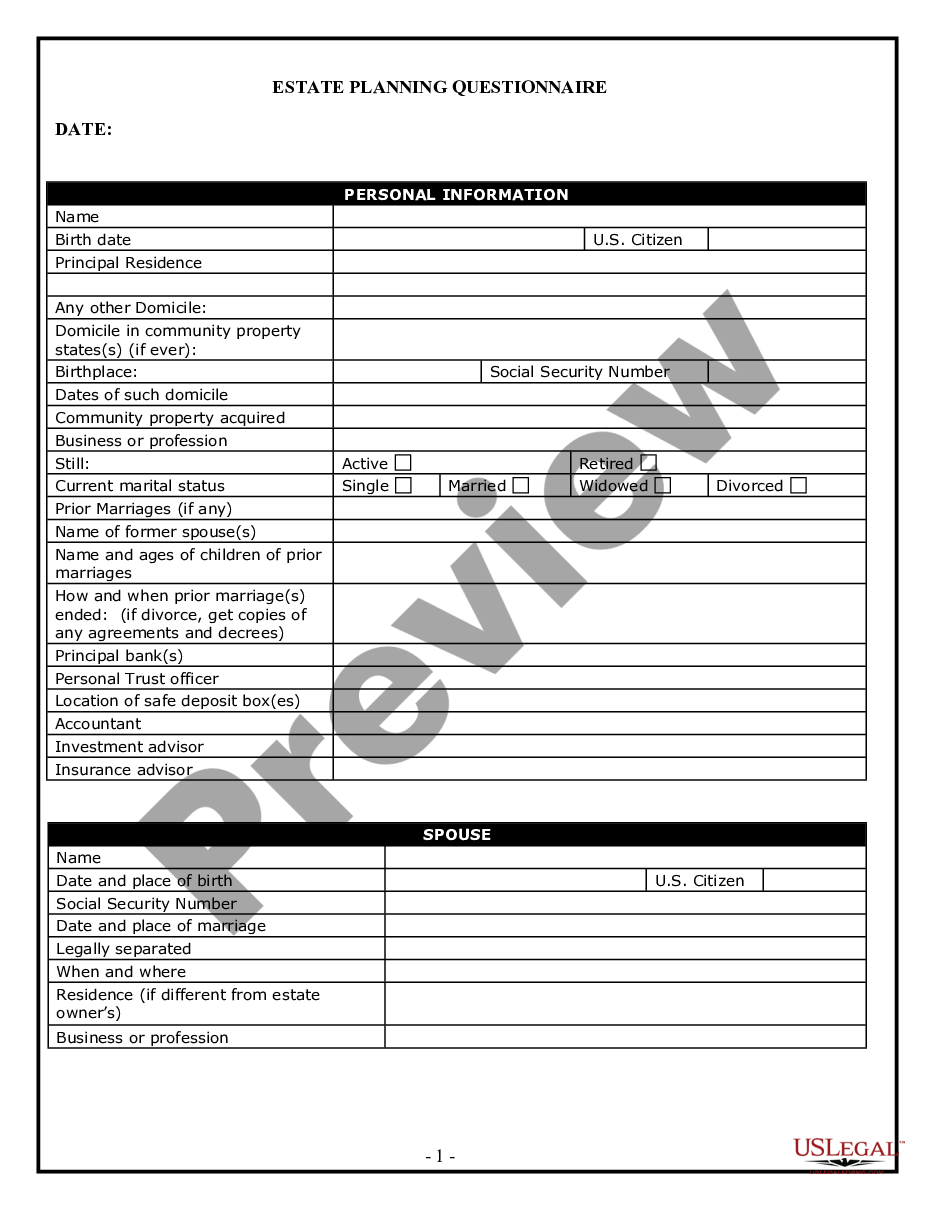
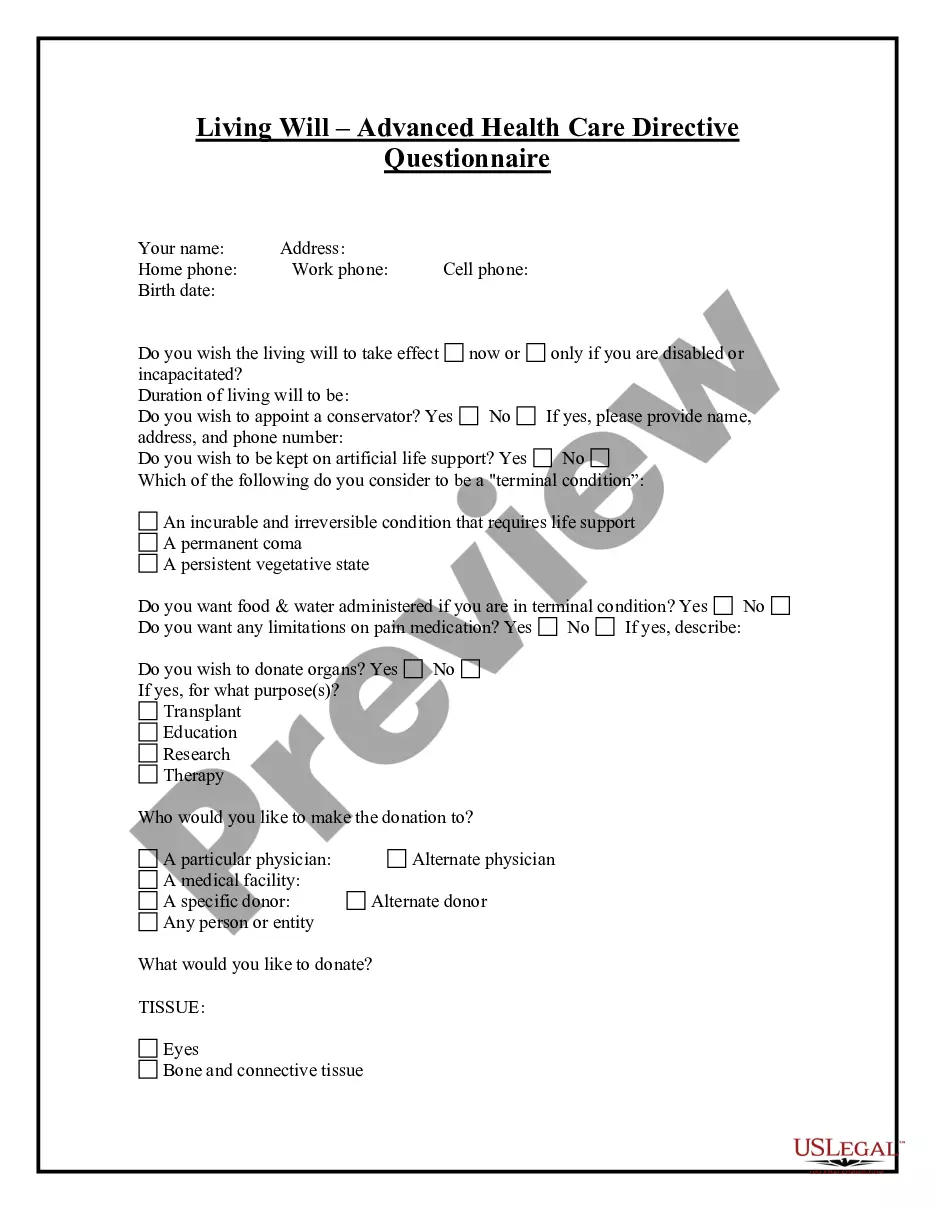
When to use this form package
This form package is ideal for various life situations, including:
- Establishing your last wishes regarding property distribution after your death.
- Designating someone to manage your financial affairs if you become incapacitated.
- Providing healthcare directives to guide medical decisions when you are unable to communicate your preferences.
- Organizing and inventorying your personal and financial information for your loved ones.
Who should use this form package
- Individuals planning their estate and wanting to ensure their wishes are honored.
- People needing to establish a power of attorney for property and financial matters.
- Individuals who wish to provide clear healthcare directives to their family and medical professionals.
- Residents of Maine looking for state-specific legal documents to manage their affairs.
Completing these forms step by step
- Review the included forms to understand what information is required.
- Fill out the Last Will, ensuring to specify your desired beneficiaries and executor.
- Complete the General Durable Power of Attorney by selecting your agent and specifying their powers.
- Detail your healthcare preferences in the Advanced Health Care Directive.
- Use the Estate Planning Questionnaire and Worksheets to gather relevant personal and financial information.
- Organize and maintain your completed documents securely for easy access.
Notarization requirements for forms in this package
Notarization is required for one or more forms in this package. US Legal Forms provides secure online notarization powered by Notarize, allowing you to complete the process through a verified video call.
Get your form ready online
Our built-in tools help you complete, sign, share, and store your documents in one place.
Make edits, fill in missing information, and update formatting in US Legal Forms—just like you would in MS Word.
Download a copy, print it, send it by email, or mail it via USPS—whatever works best for your next step.
Sign and collect signatures with our SignNow integration. Send to multiple recipients, set reminders, and more. Go Premium to unlock E-Sign.
If this form requires notarization, complete it online through a secure video call—no need to meet a notary in person or wait for an appointment.
We protect your documents and personal data by following strict security and privacy standards.

Make edits, fill in missing information, and update formatting in US Legal Forms—just like you would in MS Word.

Download a copy, print it, send it by email, or mail it via USPS—whatever works best for your next step.

Sign and collect signatures with our SignNow integration. Send to multiple recipients, set reminders, and more. Go Premium to unlock E-Sign.

If this form requires notarization, complete it online through a secure video call—no need to meet a notary in person or wait for an appointment.

We protect your documents and personal data by following strict security and privacy standards.
Common mistakes to avoid
- Failing to sign and date your documents, making them invalid.
- Not keeping copies of completed forms in a secure location.
- Not updating documents after significant life changes, such as marriage or divorce.
- Overlooking the need for notarization or witness signatures where required.
Benefits of completing this package online
- Convenience of downloading forms at your own pace.
- Edit and customize the documents based on your unique circumstances.
- Access to state-specific requirements that ensure legal compliance.
- Reliable and trusted materials drafted by licensed attorneys.
Legal use & context
- The forms in this package are designed to protect your rights and clearly express your wishes regarding estate management and healthcare.
- While these documents are comprehensive, they may not cover every unique situation; consider consulting with an attorney for complex legal matters.
- Legal enforceability depends on proper completion and adherence to state-specific laws.
What to keep in mind
- This form package contains essential Maine-specific legal documents for life planning.
- Utilize the included worksheets to help organize personal and financial information effectively.
- Regularly update your documents to reflect any changes in your situation or wishes.
- Keep the documents secure and ensure that trusted family members are aware of their location.
Looking for another form?

Form popularity
FAQ
The cost of setting up a living will varies from state to state, depending on whether it must be witnessed by a notary. Costs typically fall between $250-$500 to hire a lawyer to draft the living will, while forms can be self-completed for between $45 and $75.
Although the documents may come into play during similar circumstances, they have different purposes. In short, a living will presents decisions you've made ahead of time regarding your own end-of-life health care, and a power of attorney names the person who can make financial or health care decisions for you.
A living will is a written, legal document that spells out medical treatments you would and would not want to be used to keep you alive, as well as your preferences for other medical decisions, such as pain management or organ donation. In determining your wishes, think about your values.
A living will becomes effective when your primary physician decides that you can no longer make your own healthcare decisions. If you are ill or injured and cannot express your healthcare wishes, and your doctor certifies this fact in writing, your living will takes effect.
A living will is a document that explains whether or not you want to be kept on life support if you become terminally ill and will die shortly without life support, or fall into a persistent vegetative state.A living will becomes effective only when you cannot communicate your desires on your own.
You can give a person complete authority to make all decisions, or limit them significantly to make only specific decisions.If you want specificity, it is better to do that in your living will, which the person with a durable power of attorney cannot override.
A living will is only valid if you are unable to communicate your wishes. A health care power of attorney gives someone else (the proxy) the ability to make decisions for you regarding your health care. Unlike a living will, it applies to both end-of-life treatment as well as other areas of medical care.
The living will. Durable power of attorney for health care/Medical power of attorney. POLST (Physician Orders for Life-Sustaining Treatment) Do not resuscitate (DNR) orders. Organ and tissue donation.
An advance directive is a set of instructions someone prepares in advance of ill health that determines his healthcare wishes. A living will is one type of advance directive that becomes effective when a person is terminally ill.