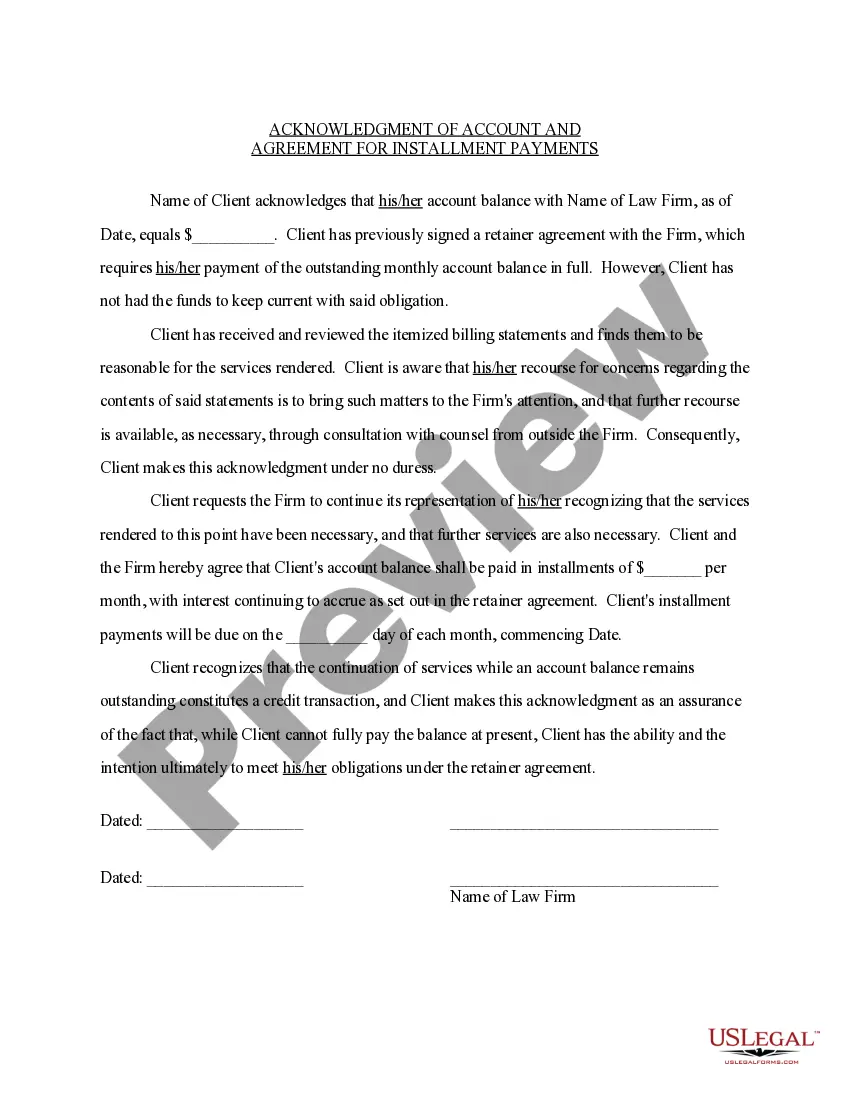
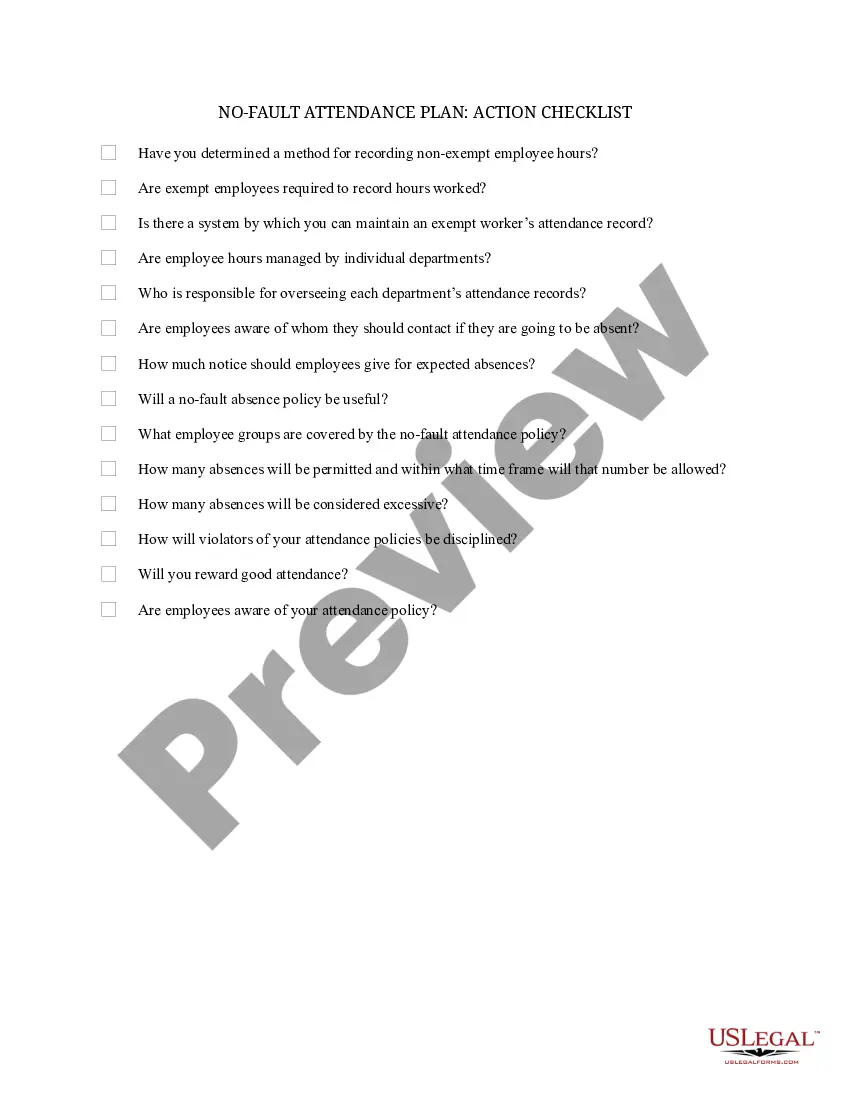
No-Fault Attendance Plan - Action Checklist
Overview of this form
The No-Fault Attendance Plan - Action Checklist is a structured document used by organizations implementing a no-fault attendance policy. This form ensures that your attendance plan addresses all critical components necessary to create an effective framework that supports employee attendance management.
Key components of this form
- Method for recording non-exempt employee hours
- Requirement for exempt employees to record hours worked
- System for maintaining attendance records of exempt employees
- Management of employee hours by individual departments
- Responsibilities for overseeing attendance records
- Clear contact for reporting absences
- Notice requirements for employees regarding expected absences
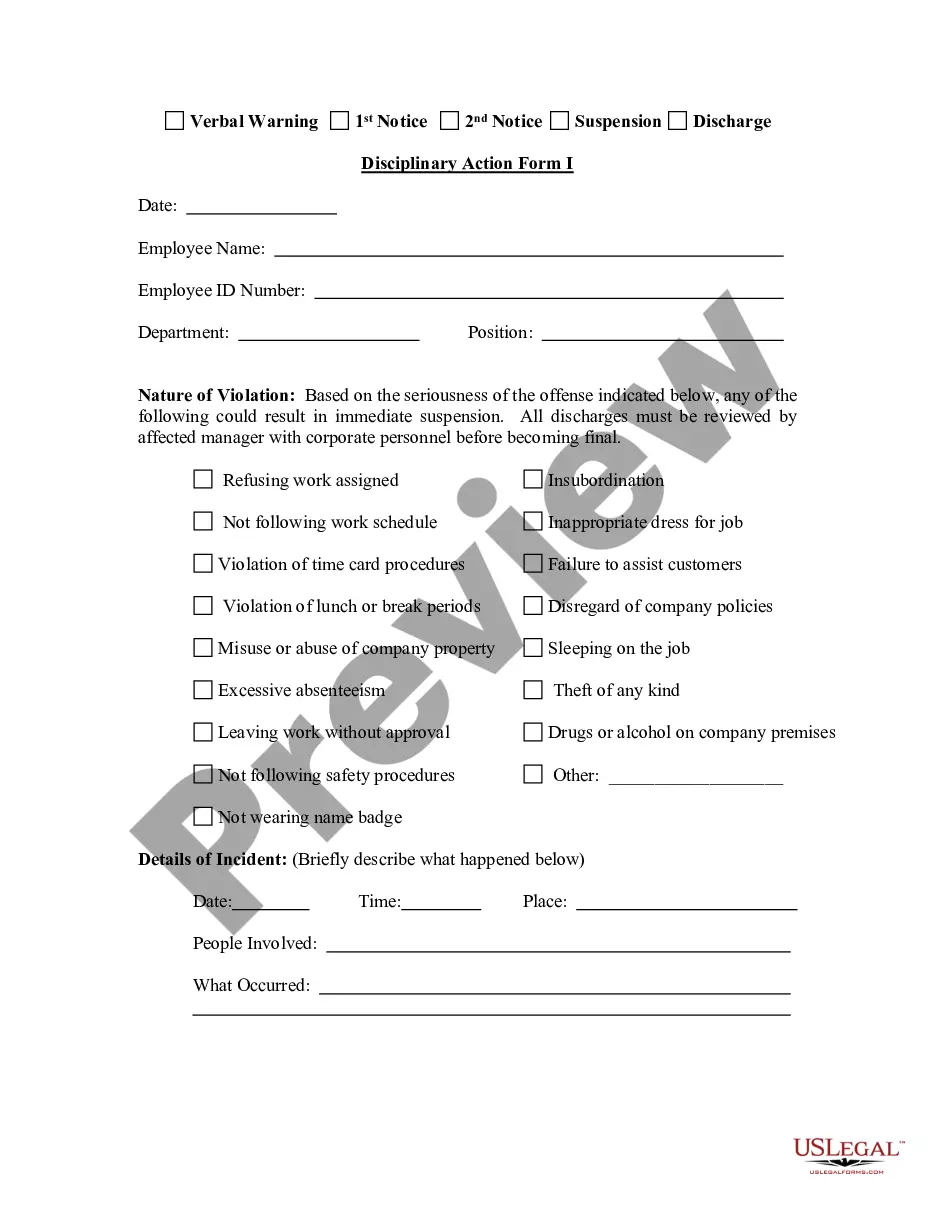
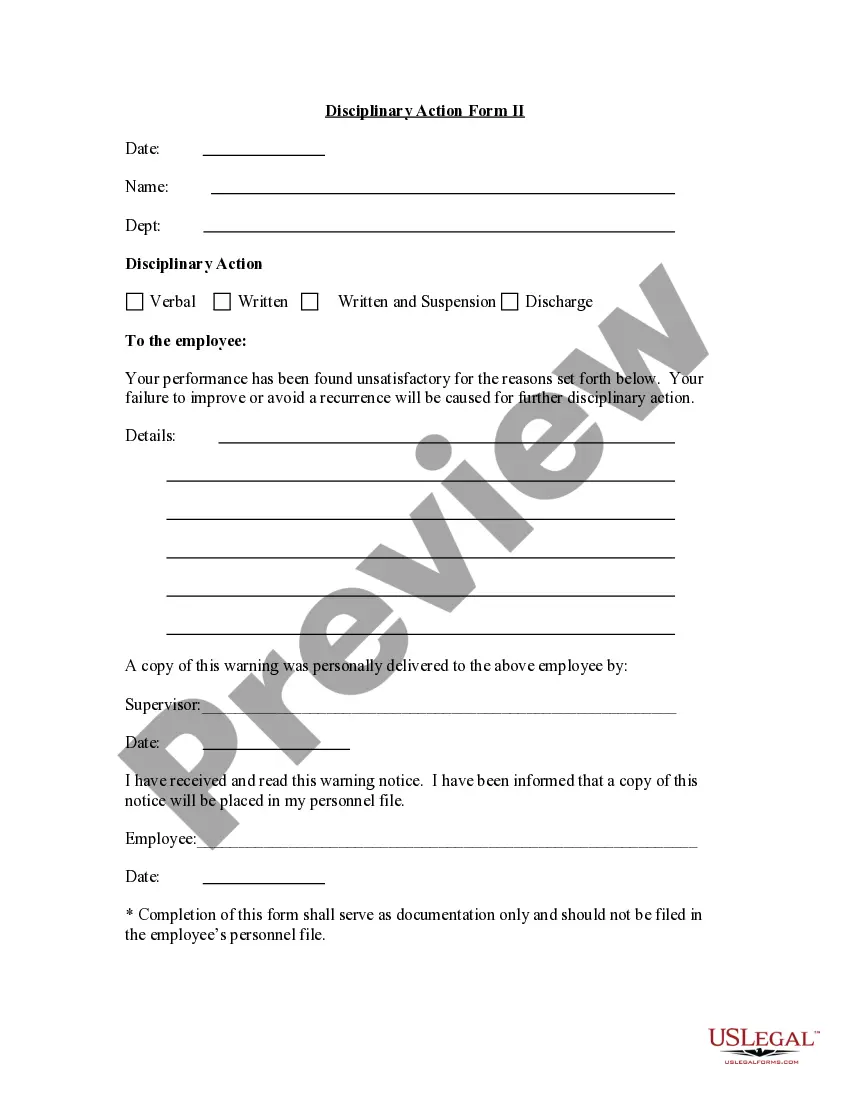
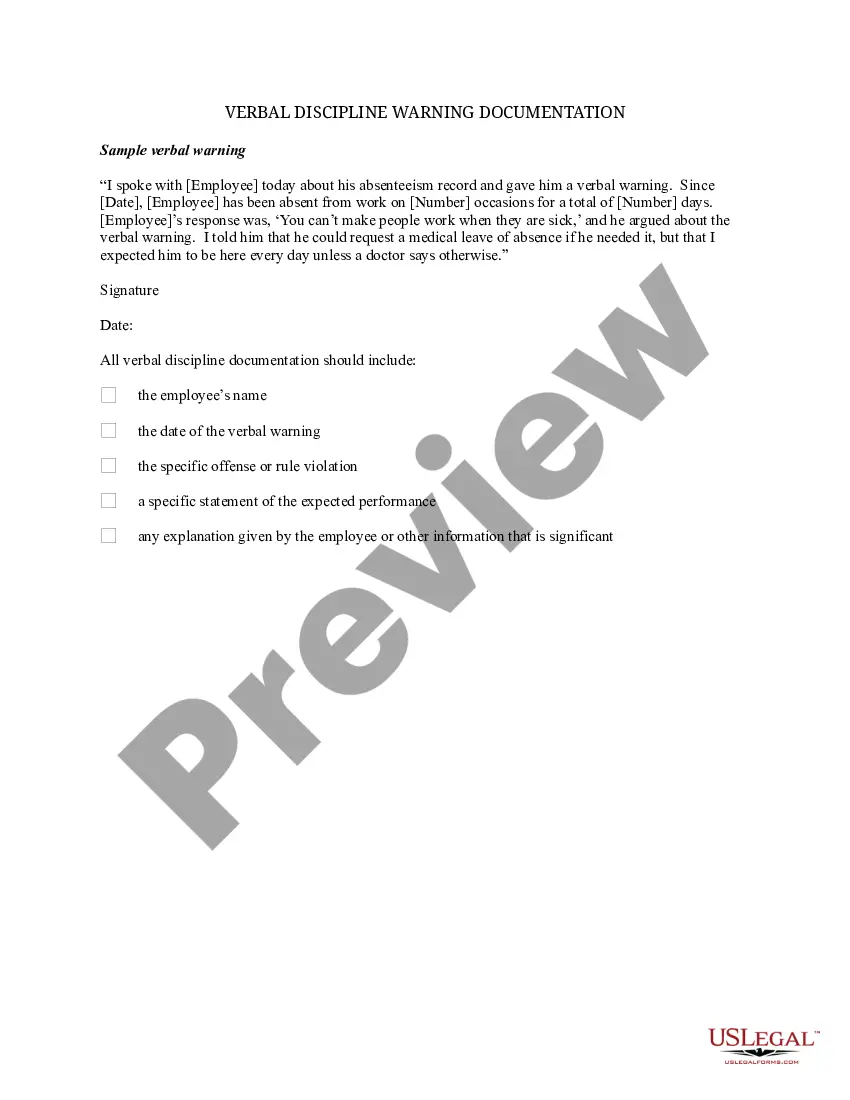
- Guidance on permitted absences and disciplinary actions
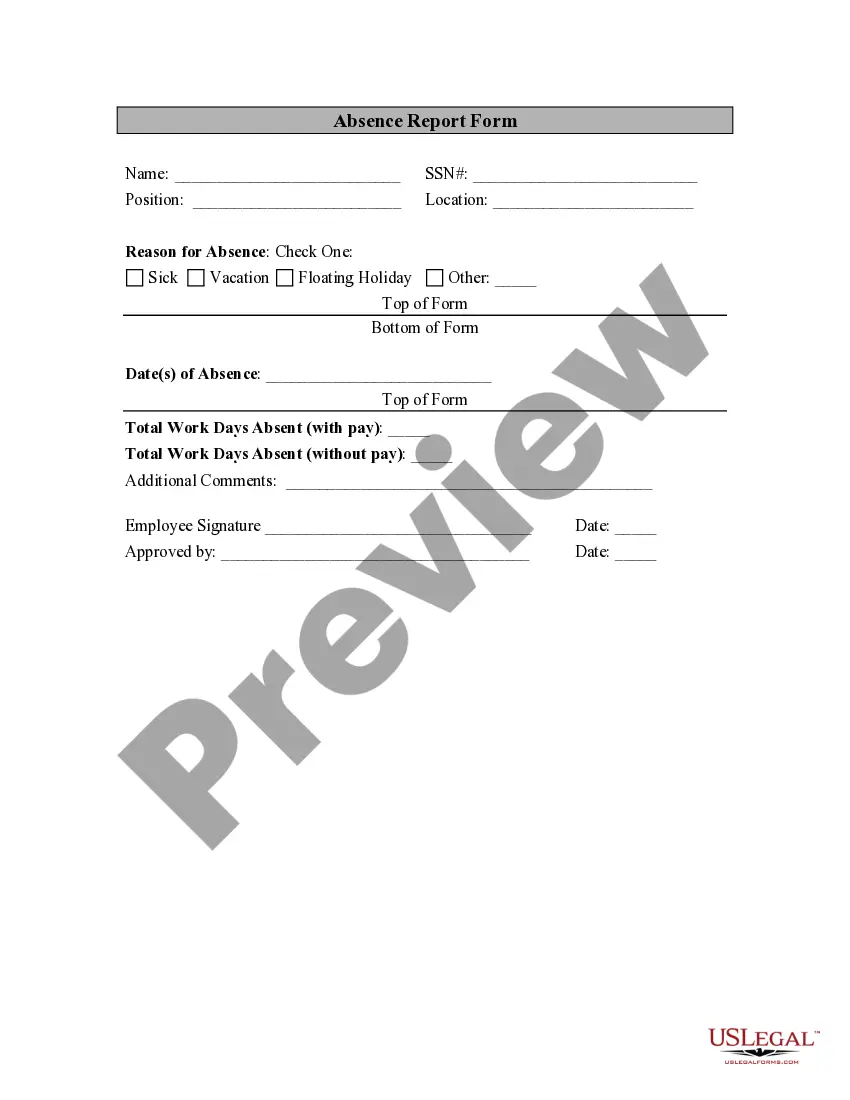
Common use cases
This form is essential for employers who have introduced a no-fault attendance plan. It's particularly useful when establishing clear procedures for attendance management, ensuring compliance with policies, and communicating expectations to employees about attendance and absences. It serves as a checklist to validate that all critical points of the policy are effectively covered.
Intended users of this form
- Human Resources professionals responsible for attendance policies
- Managers tasked with overseeing employee attendance
- Business owners implementing attendance management systems
- Employers seeking to standardize attendance reporting and management procedures
How to prepare this document
- Determine the method for recording non-exempt employee hours.
- Clarify whether exempt employees need to record their hours worked.
- Establish a system to maintain attendance records for exempt employees.
- Assign responsibilities for tracking and overseeing attendance records.
- Communicate with employees regarding whom to contact for reporting absences.
- Set clear boundaries for permitted absence numbers and the repercussions for excessive absences.
Does this form need to be notarized?
This form does not typically require notarization unless specified by local law. However, ensuring that all necessary parties review and acknowledge the checklist is advisable for compliance and clarity.
Get your form ready online
Our built-in tools help you complete, sign, share, and store your documents in one place.
Make edits, fill in missing information, and update formatting in US Legal Forms—just like you would in MS Word.
Download a copy, print it, send it by email, or mail it via USPS—whatever works best for your next step.
Sign and collect signatures with our SignNow integration. Send to multiple recipients, set reminders, and more. Go Premium to unlock E-Sign.
If this form requires notarization, complete it online through a secure video call—no need to meet a notary in person or wait for an appointment.
We protect your documents and personal data by following strict security and privacy standards.

Make edits, fill in missing information, and update formatting in US Legal Forms—just like you would in MS Word.

Download a copy, print it, send it by email, or mail it via USPS—whatever works best for your next step.

Sign and collect signatures with our SignNow integration. Send to multiple recipients, set reminders, and more. Go Premium to unlock E-Sign.

If this form requires notarization, complete it online through a secure video call—no need to meet a notary in person or wait for an appointment.

We protect your documents and personal data by following strict security and privacy standards.
Avoid these common issues
- Neglecting to inform employees about the attendance policy and who to contact in case of absences.
- Failing to outline the disciplinary actions for attendance violations clearly.
- Overlooking necessary documentation for maintaining attendance records.
Advantages of online completion
- Convenience of accessing the checklist at any time online.
- Editability allows for customization based on employer preferences.
- Reliable framework drafted by licensed attorneys ensures compliance with legal requirements.
Legal use & context
- This form facilitates the establishment of a no-fault attendance policy that can help mitigate legal disputes related to attendance issues.
- Ensures compliance with employment laws to protect both employer and employee rights.
- Encourages transparency in attendance management.
Looking for another form?
Form popularity
FAQ
Taking disciplinary action for excessive absenteeism. Verifying illness after a specified period of time. Using PTO banks to help reduce unscheduled leave. Focusing on personal recognition for employees with positive attendance records and behaviors.
Specific facts (not opinions) about the situation. The rule or policy violated. Objectives and expectations for improvement. Disciplinary action being taken. Consequences for not correcting the problem. Signatures and dates.
Regular attendance and punctuality are vital attributes for all employees. It is important for employees to attend work regularly and to arrive at work on time, because failure to do so detrimentally affects employee morale and productivity.
Make Employees Aware of Expectations. Analyse Attendance Records. Have a Clear Policy in Place. Make Employees Aware of the Consequences. Follow Up With Employees Upon Their Return. Identify Any Hidden Causes.
Create an employee attendance policy. Enforce your attendance policy consistently. Keep track of employee absences. Address unscheduled absences and no-show's immediately. Don't just treat the symptoms, discover the cause. Don't forget to reward good behavior.
Create a form that includes spots for the employee's name, description of the offense, dates of absenteeism and the actions you've taken so far to reduce the absenteeism. The standardized approach keeps the write-up professional and organized, helping you remain tactful even when the employee's behavior is frustrating.
What is a good attendance policy? A good attendance policy includes all guidelines regarding taking leave, tardiness, early outs and no shows. The policy should be detailed and list all the repercussions for poor attendance.
Make Employees Aware of Expectations. Analyse Attendance Records. Have a Clear Policy in Place. Make Employees Aware of the Consequences. Follow Up With Employees Upon Their Return. Identify Any Hidden Causes.
Starting to Write State that you or management is having a problem with that employee's attendance. Make sure you have the exact dates and times documented, and then present it to them. Express concern over the issue. Remind the employee of future expectations.