Theft Policy
About this form
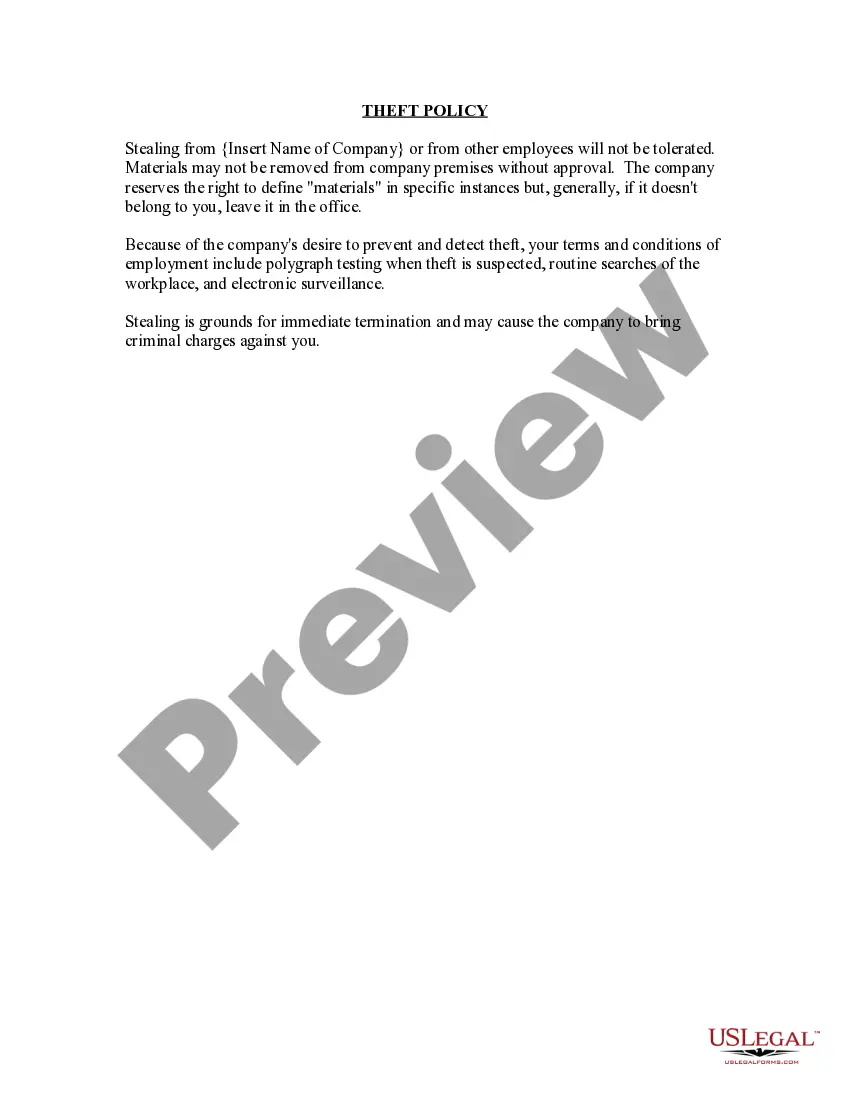
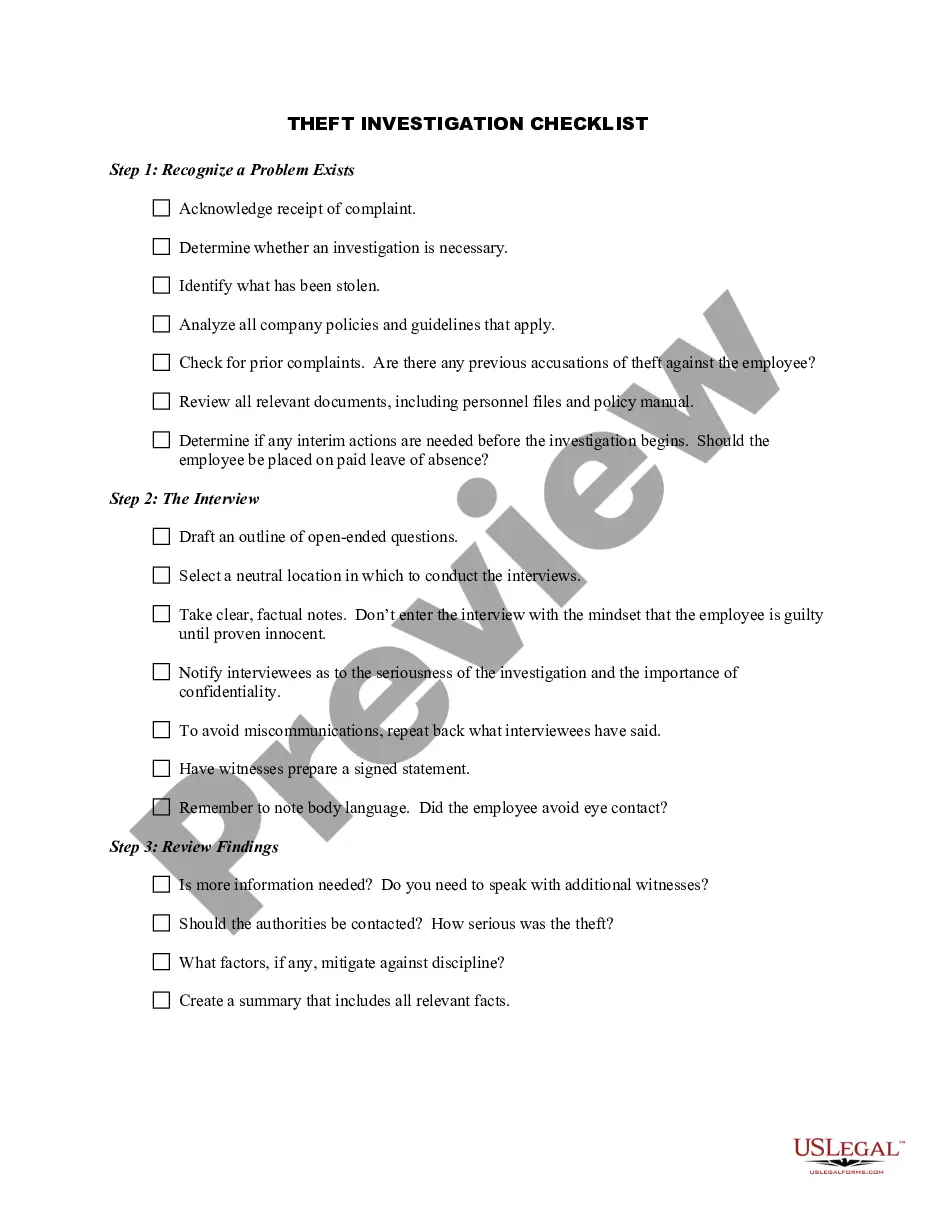
The Theft Policy is a formal document designed to inform employees that theft from the company or fellow employees is strictly prohibited. This policy outlines the consequences of theft, which may include termination and potential criminal charges. Unlike other workplace policies, the Theft Policy specifically addresses the issues related to theft, ensuring a clear understanding among all employees regarding the seriousness of this offense.
Key parts of this document
- Definition of theft and prohibited actions.
- Policy on removal of materials from the workplace.
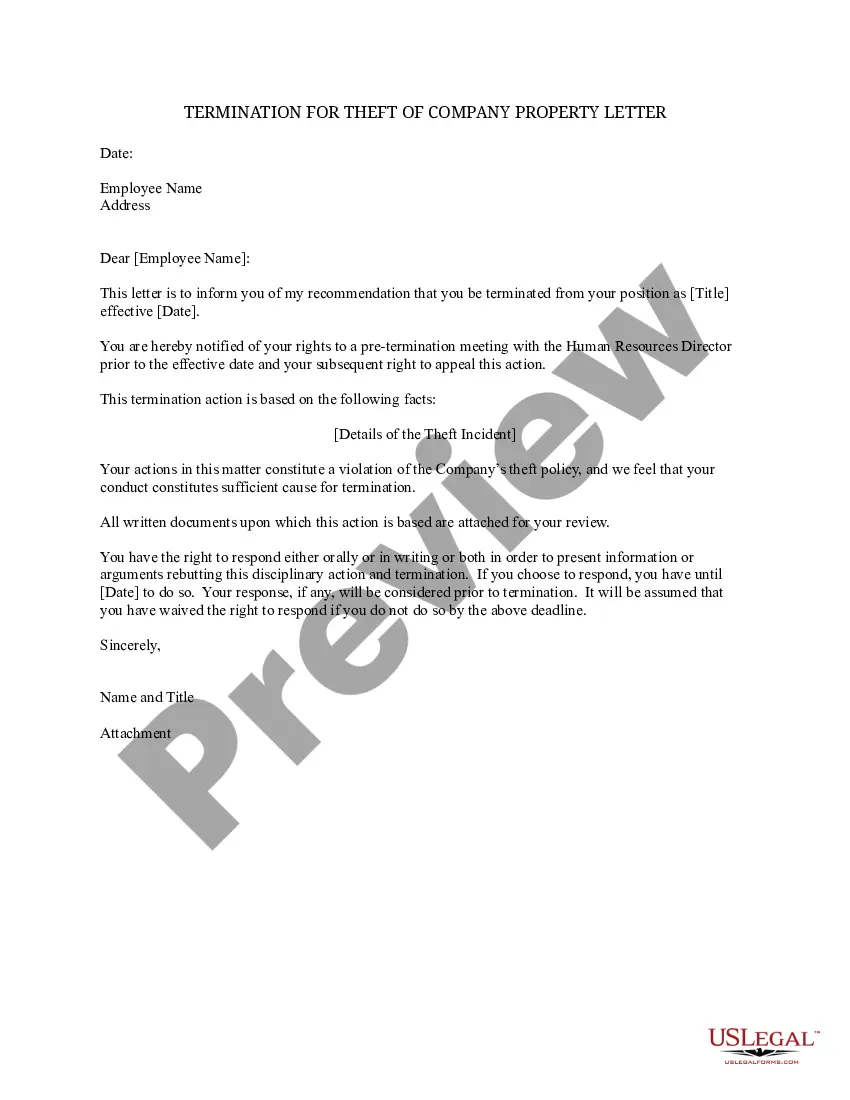
- Consequences of theft, including termination and criminal charges.
- Right to conduct polygraph testing and routine searches.
- Statement regarding electronic surveillance in the workplace.
Common use cases
This Theft Policy should be implemented in any workplace to establish clear guidelines regarding theft. It is particularly useful when hiring new employees, to remind personnel of company expectations, or when addressing specific incidents of suspected theft. Having a formal policy helps to deter theft and outlines the procedures for handling such incidents should they occur.
Who this form is for
- Employers looking to establish a deterrent against theft in the workplace.
- Human resource professionals responsible for employee policies.
- Managers aiming to maintain a transparent and secure working environment.
- Business owners wanting to protect company assets and promote ethical behavior among staff.
Completing this form step by step
- Review the draft policy carefully to ensure it aligns with company values and legal requirements.
- Personalize the policy by inserting the company's name in the specified section.
- Ensure all employees understand the policy by distributing it during onboarding or training.
- Include a section for employee acknowledgment to ensure they agree to the terms outlined.
- Keep a signed record of the policy for each employee in their personnel file.
Does this form need to be notarized?
Notarization is generally not required for this form. However, certain states or situations might demand it. You can complete notarization online through US Legal Forms, powered by Notarize, using a verified video call available anytime.
Get your form ready online
Our built-in tools help you complete, sign, share, and store your documents in one place.
Make edits, fill in missing information, and update formatting in US Legal Forms—just like you would in MS Word.
Download a copy, print it, send it by email, or mail it via USPS—whatever works best for your next step.
Sign and collect signatures with our SignNow integration. Send to multiple recipients, set reminders, and more. Go Premium to unlock E-Sign.
If this form requires notarization, complete it online through a secure video call—no need to meet a notary in person or wait for an appointment.
We protect your documents and personal data by following strict security and privacy standards.

Make edits, fill in missing information, and update formatting in US Legal Forms—just like you would in MS Word.

Download a copy, print it, send it by email, or mail it via USPS—whatever works best for your next step.

Sign and collect signatures with our SignNow integration. Send to multiple recipients, set reminders, and more. Go Premium to unlock E-Sign.

If this form requires notarization, complete it online through a secure video call—no need to meet a notary in person or wait for an appointment.

We protect your documents and personal data by following strict security and privacy standards.
Common mistakes to avoid
- Failing to clearly define what constitutes theft.
- Not providing adequate employee training on the policy.
- Overlooking regular updates to the policy to reflect changes in laws or company structure.
- Not ensuring all employees read and acknowledge the policy.
Why complete this form online
- Convenience of downloading and editing the form to suit specific needs.
- Access to professionally drafted content that ensures legal compliance.
- Immediate availability for use in your workplace, saving time and effort.
Legal use & context
- The theft policy serves as a legal safeguard for the company when addressing theft-related issues.
- Having a formal policy can aid in legal defense against theft by demonstrating proactive measures.
Main things to remember
- The Theft Policy is essential for maintaining workplace integrity.
- Clear communication of the policy can deter employees from engaging in theft.
- Implementation helps protect company assets and builds a culture of accountability.
Looking for another form?
Form popularity
FAQ
Theft is a felony of the first degree if the value of the stolen property or services is $300,000 or more. The punishment for a first-degree felony is a fine of not more than $10,000, imprisonment ranging from five to 99 years, or both.
Petty theft vs. grand theft. Robbery. Robbery is a theft that involves using violence, intimidation, or threats to obtain property. Armed robbery. When a gun, knife, or other weapon is used during a theft it is called an armed robbery. Embezzlement. Fraud. Shoplifting. Receiving stolen property. Writing bad checks.
Theft is defined by section 1 of the 1968 Act as dishonestly appropriating property belonging to another with the intention of permanently depriving the other of it.
Theft is the taking of another person's property or services or scrap money without that person's permission or consent with the intent to deprive the rightful owner of it.In some jurisdictions, theft is considered to be synonymous with larceny; in others, theft has replaced larceny.