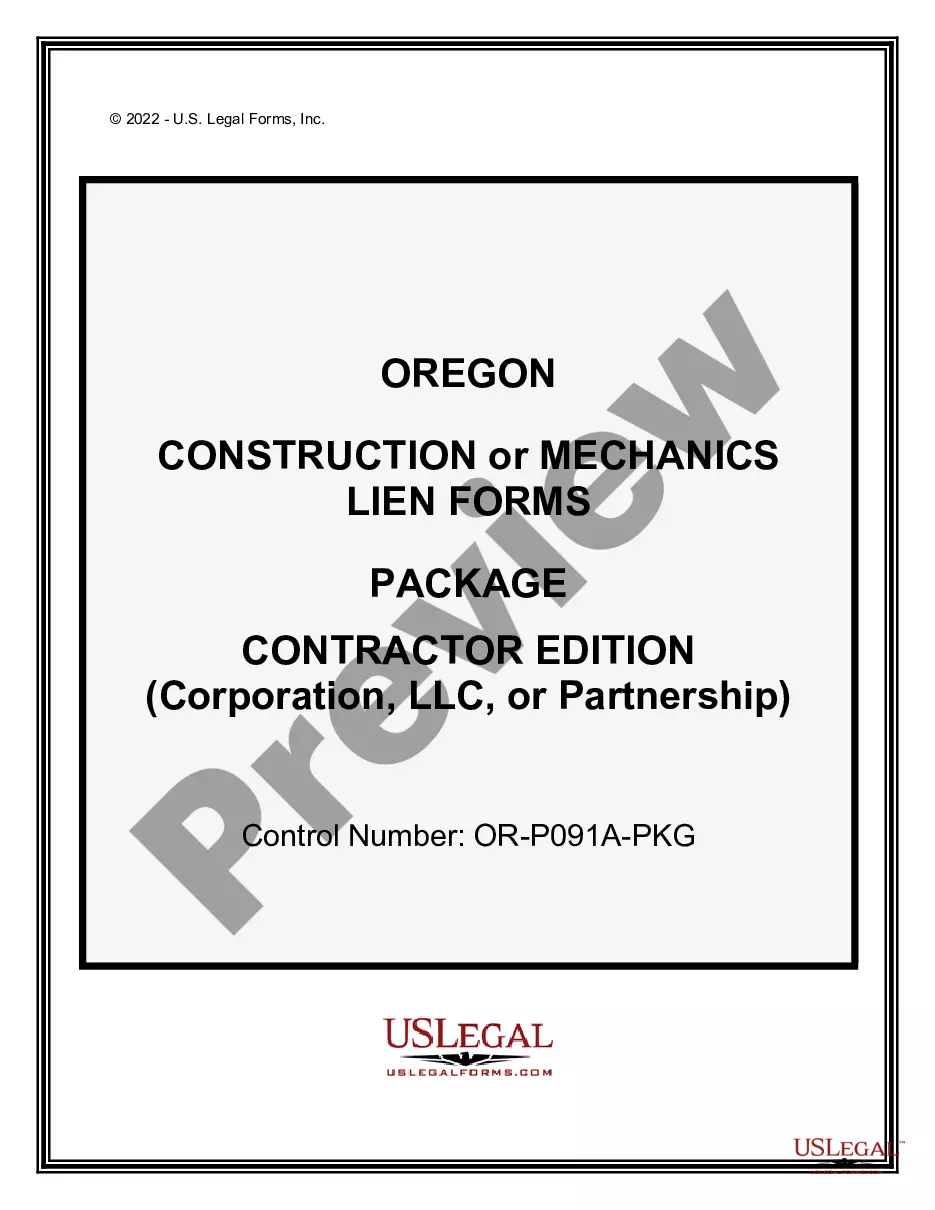
Oregon Construction or Mechanics Lien Package - Corporation
About this form package
The Oregon Construction or Mechanics Lien Package - Corporation is designed to help corporations or limited liability companies recover money owed for labor, materials, or services used to improve real property. This package is distinct from others as it focuses specifically on the needs and legal rights of corporate entities regarding mechanics liens in Oregon.
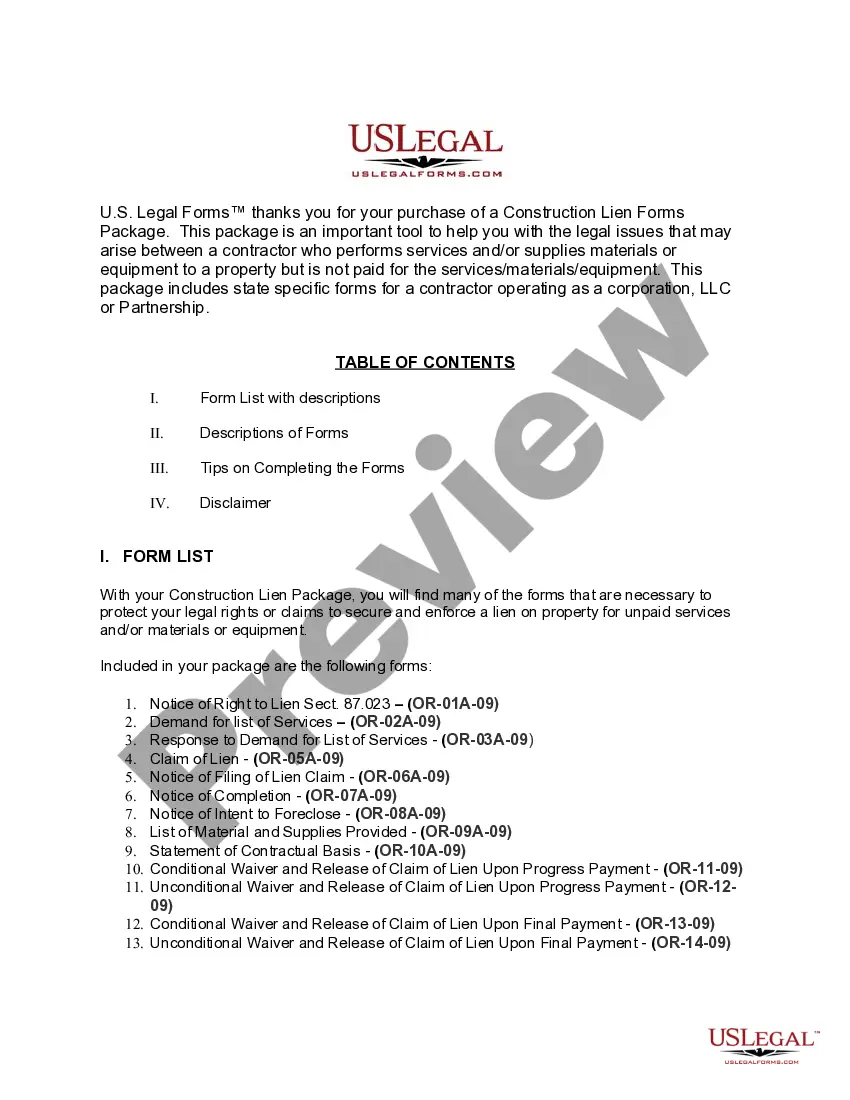
Forms you’ll find in this package
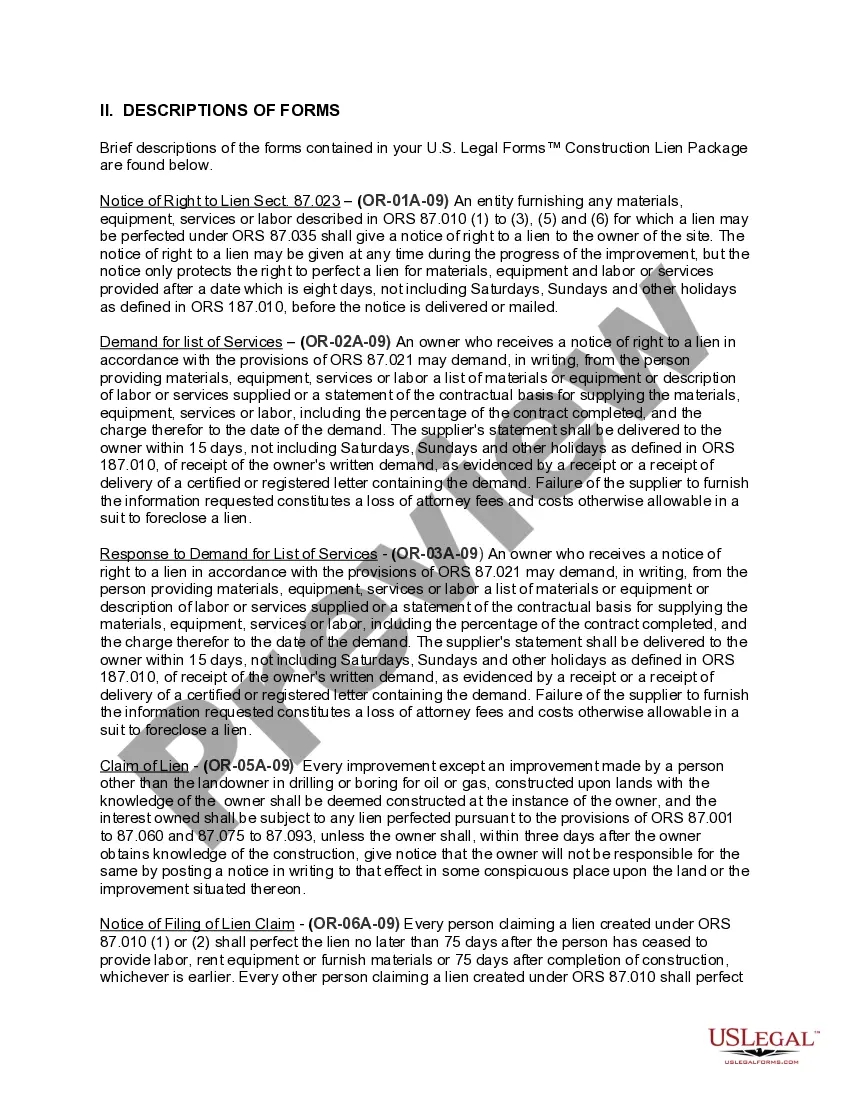
- Notice of Right to Lien Sect. 87.023 - Corporation
- Demand for list of Services by Corporation
- Response to Demand for List of Services by Corporation
- Claim of Lien by Corporation
- Notice of Filing of Lien Claim by Corporation
- Notice of Completion by Corporation
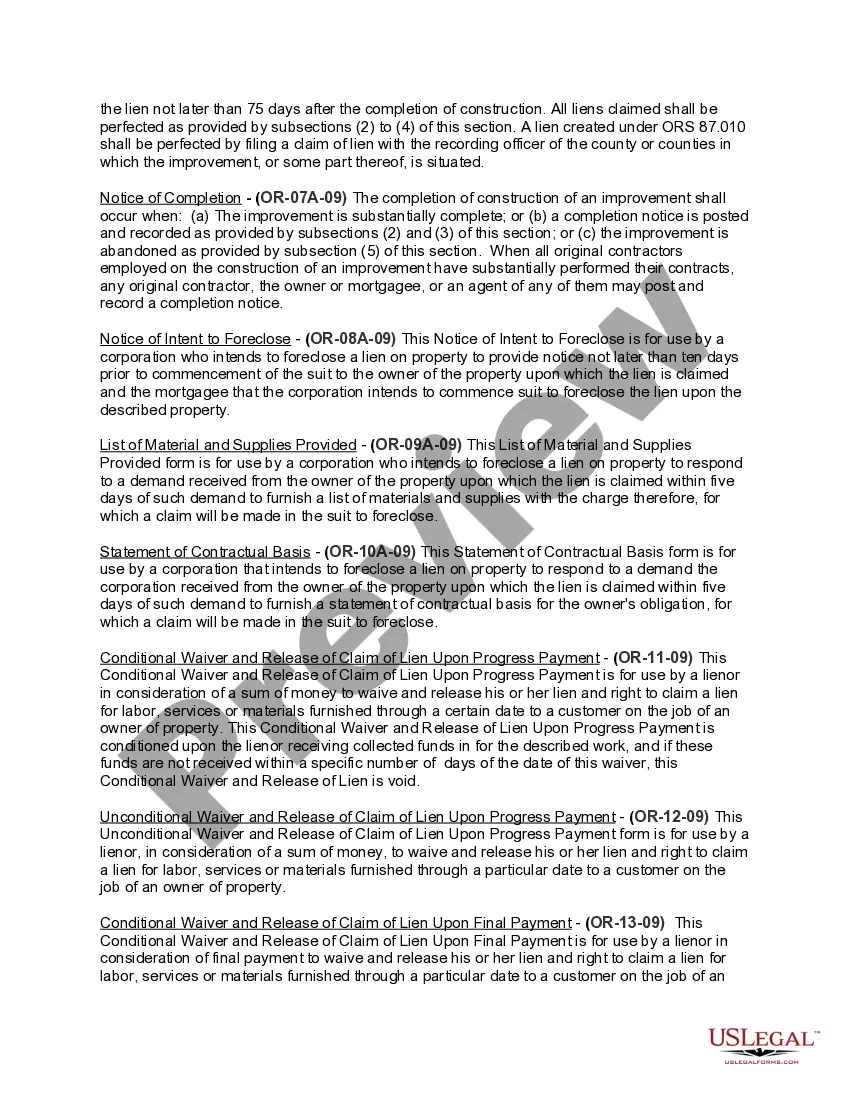
- Notice of Intent to Foreclose - Corporation
- List of Material and Supplies Provided - Corporation
- Statement of Contractual Basis - Corporation
- Conditional Waiver and Release of Claim of Lien Upon Progress Payment
- Unconditional Waiver and Release of Claim of Lien Upon Progress Payment
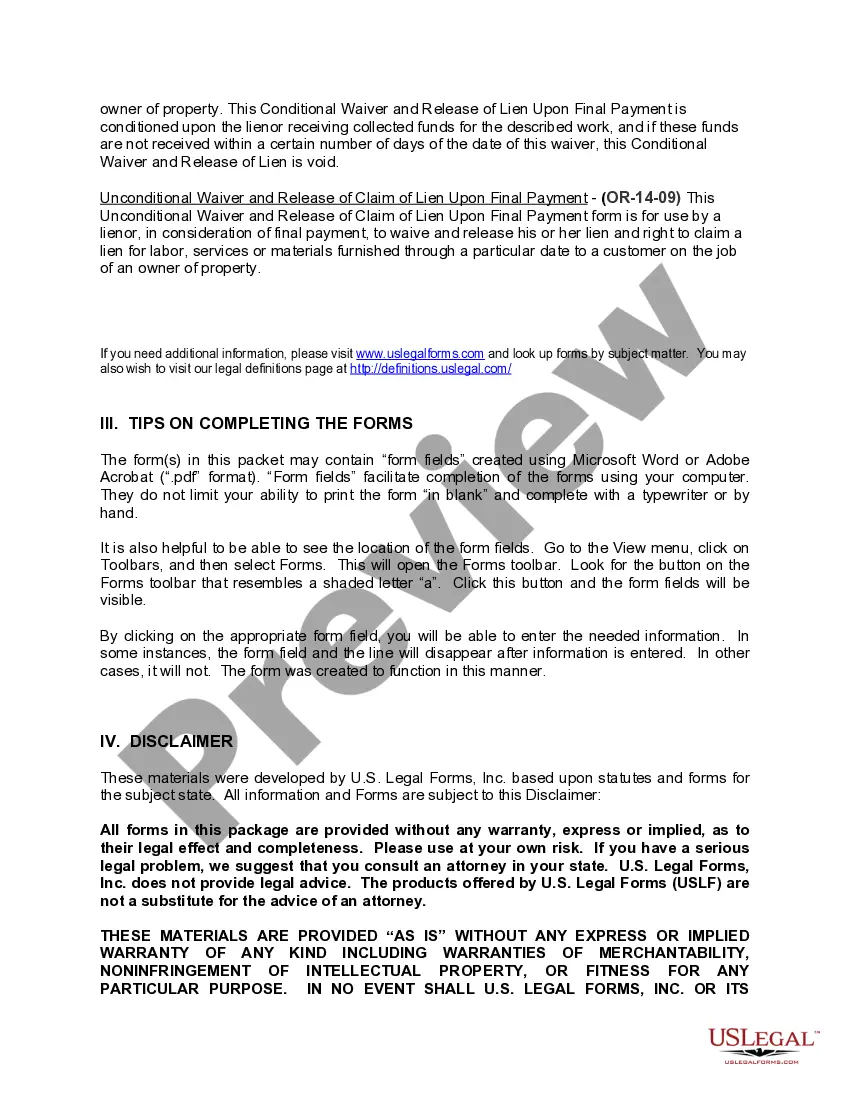
- Conditional Waiver and Release of Claim of Lien Upon Final Payment
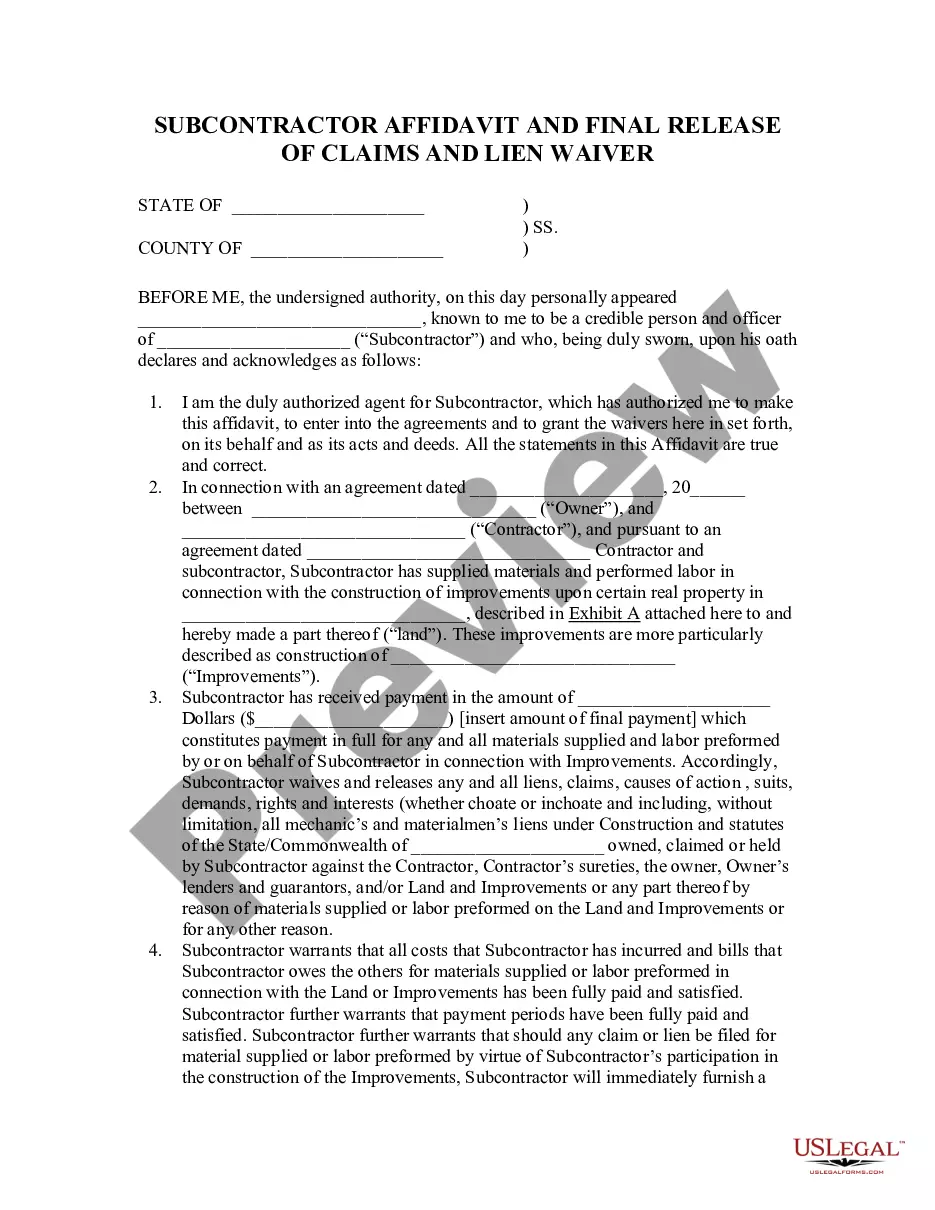
- Unconditional Waiver and Release of Claim of Lien Upon Final Payment

When this form package is needed
This package is necessary when a corporation or limited liability company has provided services or materials for a construction project and has not been compensated. It helps secure a legal claim against the property, ensuring the corporation is able to recover outstanding payments.
Who needs this form package
- Corporations involved in construction projects
- Limited liability companies providing labor or materials
- Partnerships engaged in improvements on real property
- Companies needing to assert their rights to collect payment through a mechanics lien
How to prepare this document
- Review the included forms to understand the types of documents available.
- Identify the parties involved, including the corporation and property owner.
- Complete each form accurately, entering required information in the designated fields.
- Sign the completed forms as necessary, adhering to any specific requirements.
- File the appropriate forms with the county recorderâs office as required by Oregon law.
Notarization details for included forms
Forms in this package typically do not require notarization unless required by local law. Ensure to check specific form requirements to confirm.
Get your form ready online
Our built-in tools help you complete, sign, share, and store your documents in one place.
Make edits, fill in missing information, and update formatting in US Legal Forms—just like you would in MS Word.
Download a copy, print it, send it by email, or mail it via USPS—whatever works best for your next step.
Sign and collect signatures with our SignNow integration. Send to multiple recipients, set reminders, and more. Go Premium to unlock E-Sign.
If this form requires notarization, complete it online through a secure video call—no need to meet a notary in person or wait for an appointment.
We protect your documents and personal data by following strict security and privacy standards.

Make edits, fill in missing information, and update formatting in US Legal Forms—just like you would in MS Word.

Download a copy, print it, send it by email, or mail it via USPS—whatever works best for your next step.

Sign and collect signatures with our SignNow integration. Send to multiple recipients, set reminders, and more. Go Premium to unlock E-Sign.

If this form requires notarization, complete it online through a secure video call—no need to meet a notary in person or wait for an appointment.

We protect your documents and personal data by following strict security and privacy standards.
Typical mistakes to avoid
- Failing to file the claim of lien within the required time frame of 75 days.
- Not including all required information on the forms.
- Neglecting to properly notify the property owner of the lien.
- Inaccurately completing waiver forms, leading to potential loss of lien rights.
Why use this package online
- Convenient access to all necessary forms for mechanics lien procedures.
- Editable forms that allow for tailored legal documents to meet specific needs.
- Reliable guidance based on current Oregon laws, enhancing compliance and accuracy.
Legal use & context
- Filing a mechanics lien legally protects your right to payment for services provided.
- Oregon law requires timely filing and notification to enforce lien rights.
- Understanding and correctly utilizing these forms can prevent financial losses for corporations.
Quick recap
- The Oregon Construction or Mechanics Lien Package - Corporation is essential for corporate entities seeking to secure payments.
- Timely and accurate completion of forms is critical in the lien process.
- Adhering to Oregonâs specific requirements ensures legal enforceability.
Looking for another form?
Form popularity
FAQ
Get free mechanics lien form A construction mechanics lien is claimed against real estate property, and the lien must be filed in the appropriate office in order to be valid.Additionally, construction liens have strict timing and notice requirements. Machinery mechanics liens are possessory liens.
Placing the Lien With a direct contractor, the notice is part of her contract with you. If the bills go unpaid, the contractor or sub sends you a notice along with her claim of lien. She then files the lien with the county within 90 days of the project being finished or your acceptance of the work.
Avoid harassing the people that owe you money. Keep phone calls short. Write letters. Get a collection agency to write demand letters. Offer to settle for less than is due. Hire a collection agency. Small claims court. File a lawsuit.
A mortgage creates a lien on your property that gives the lender the right to foreclose and sell the home to satisfy the debt. A deed of trust (sometimes called a trust deed) is also a document that gives the lender the right to sell the property to satisfy the debt should you fail to pay back the loan.
A contractor's lien (often known as a mechanic's lien, or a construction lien) is a claim made by contractors or subcontractors who have performed work on a property, and have not yet been paid.After all, contractors would rather work out a deal than go through the hassle of filing a lien against your property.
Filing a construction lien on residential projects requires filing a Notice of Unpaid Balance and Right to File Lien within 90 days of the last day of service. The homeowner must also get a copy of that notice within 10 days of its filing.
When your efforts to collect a bill from a business that owes you money have been unsuccessful, you can place a lien on the assets of the business. As a lienholder, you gain legal rights to the company's property and the authority to sell the property and use the proceeds to repay what is owed to you.
In the state of Oregon, a lien must be filed within 75 days after the last day of performing labor or providing materials or within 75 days after the completion of construction.
With the judgment in hand, a judgment creditor can place a judgment lien on your real estate and occasionally on personal property depending on the state in which you live.