Oregon Response to Demand for List of Services by Corporation
What is this form?
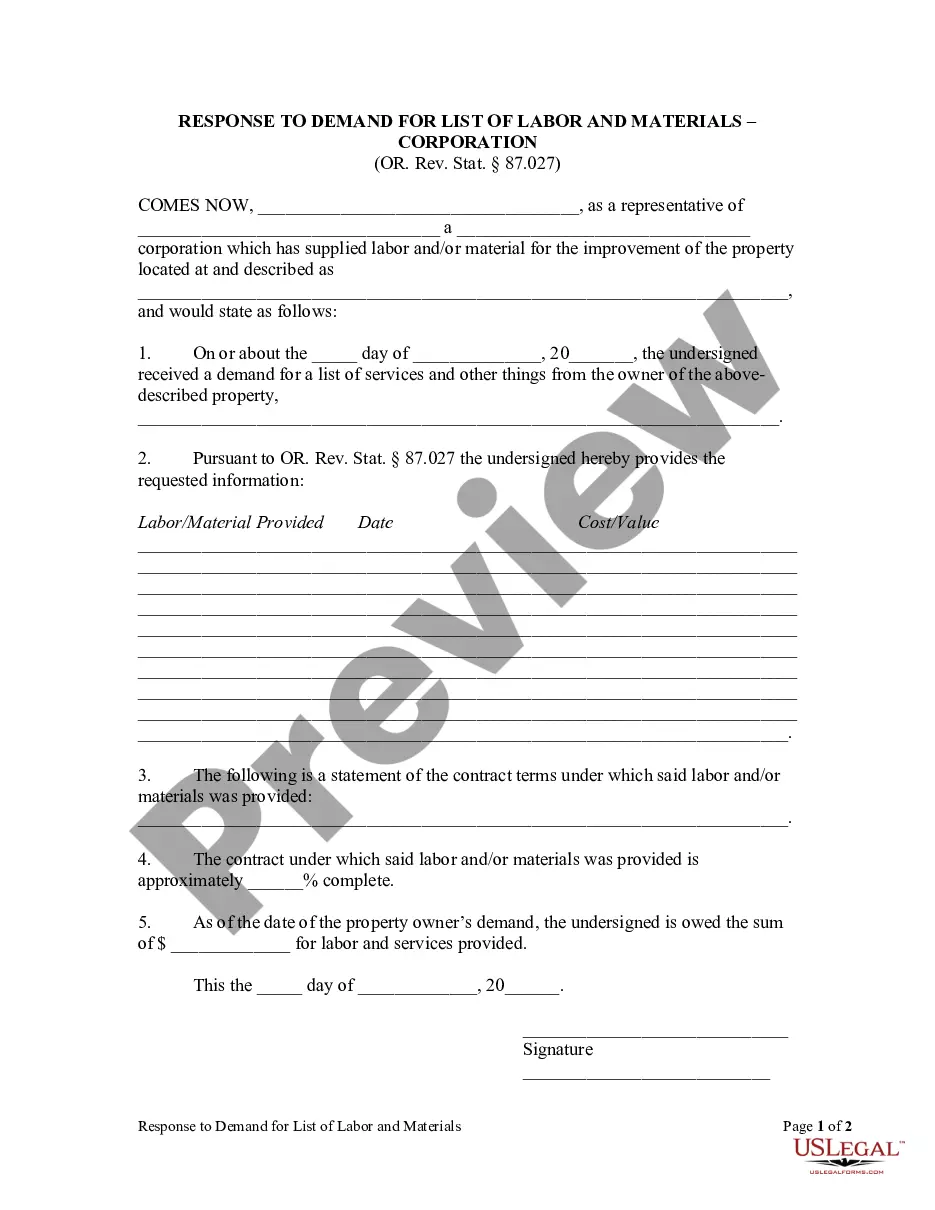
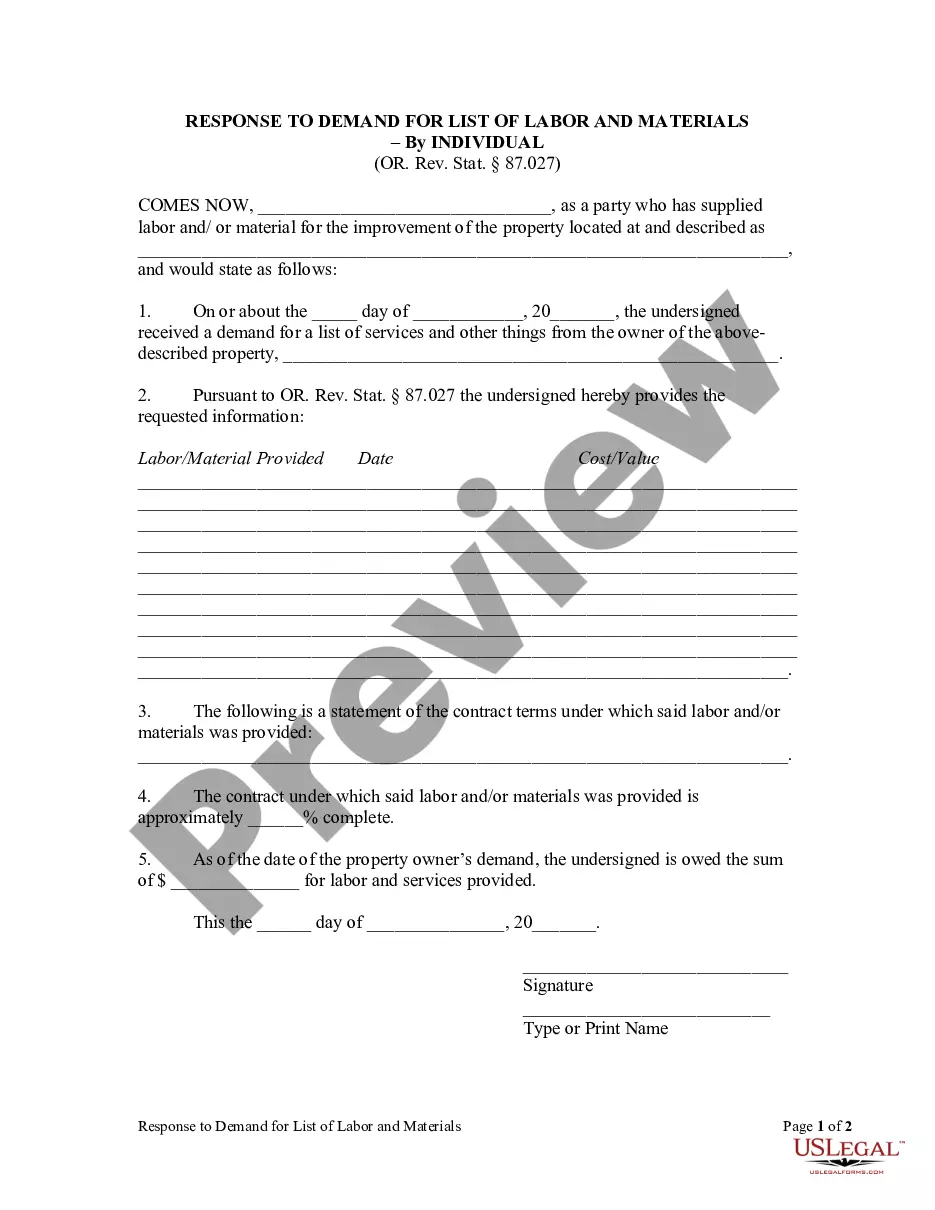
The Response to Demand for List of Services by Corporation is a legal document that allows a supplier of labor or materials to respond to a formal request from a property owner. This form fulfills the requirements set forth by the Oregon Revised Statutes, specifically ORS 87.027, by providing a detailed account of the services or materials supplied, along with their contractual basis. This form is important for maintaining transparency and ensuring compliance with lien laws, differentiating it from other general contractor forms.
Form components explained
- Identification of the representative and the corporation supplying services.
- Date the demand for services was received.
- Detailed list of labor and materials provided, including dates and costs.
- Statement of the contract terms under which services were supplied.
- Percentage of contract completion at the time of the demand.
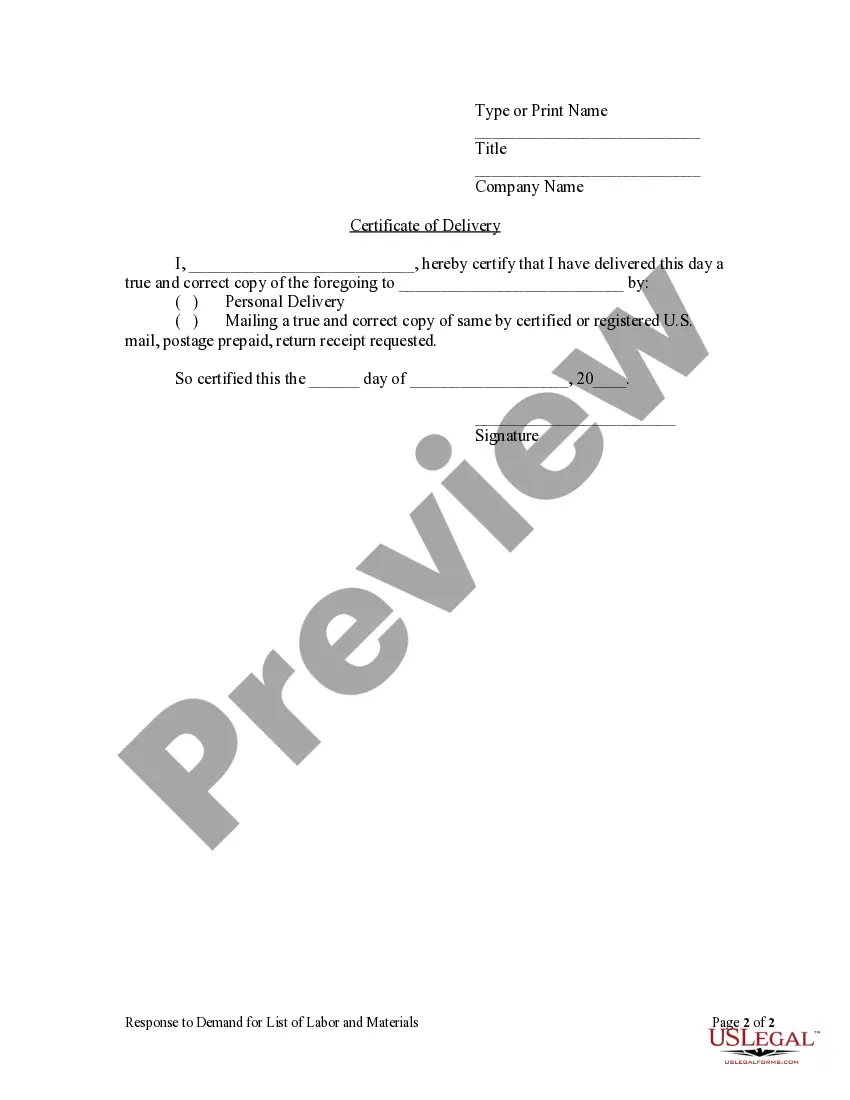
- Signature and certification of delivery to confirm the response was sent.
When to use this form
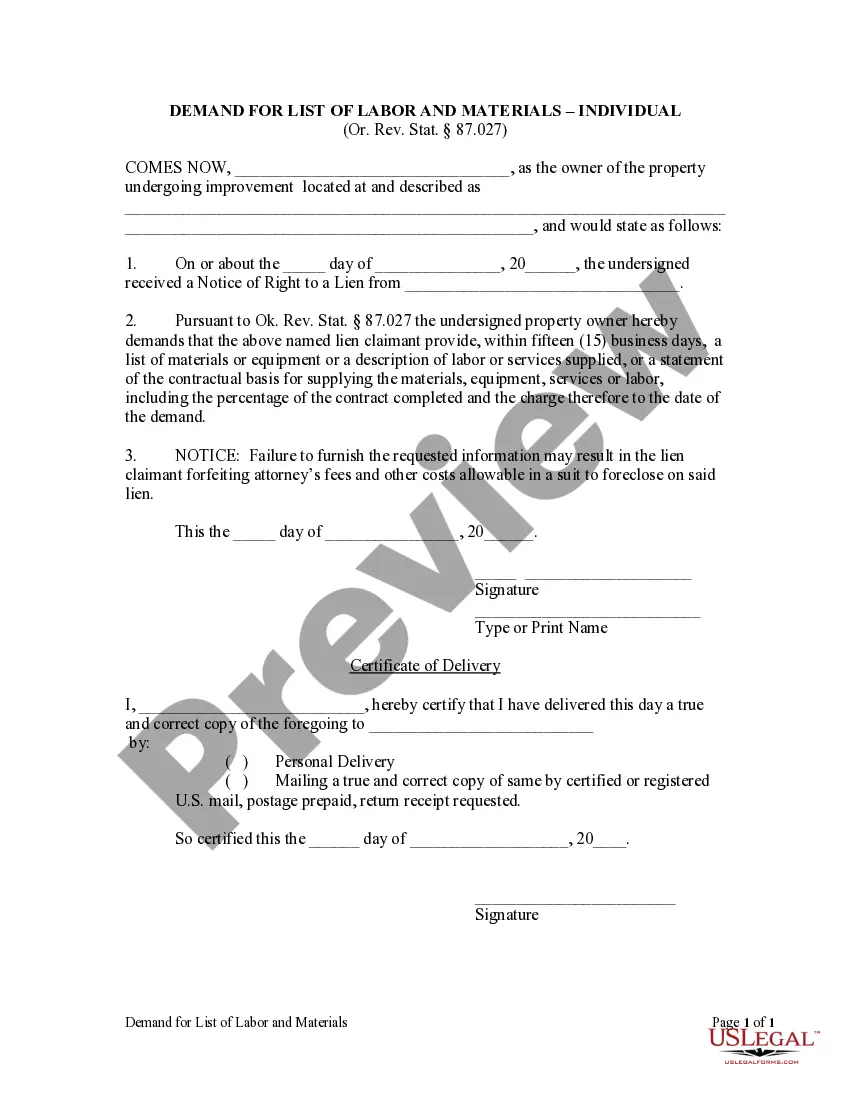
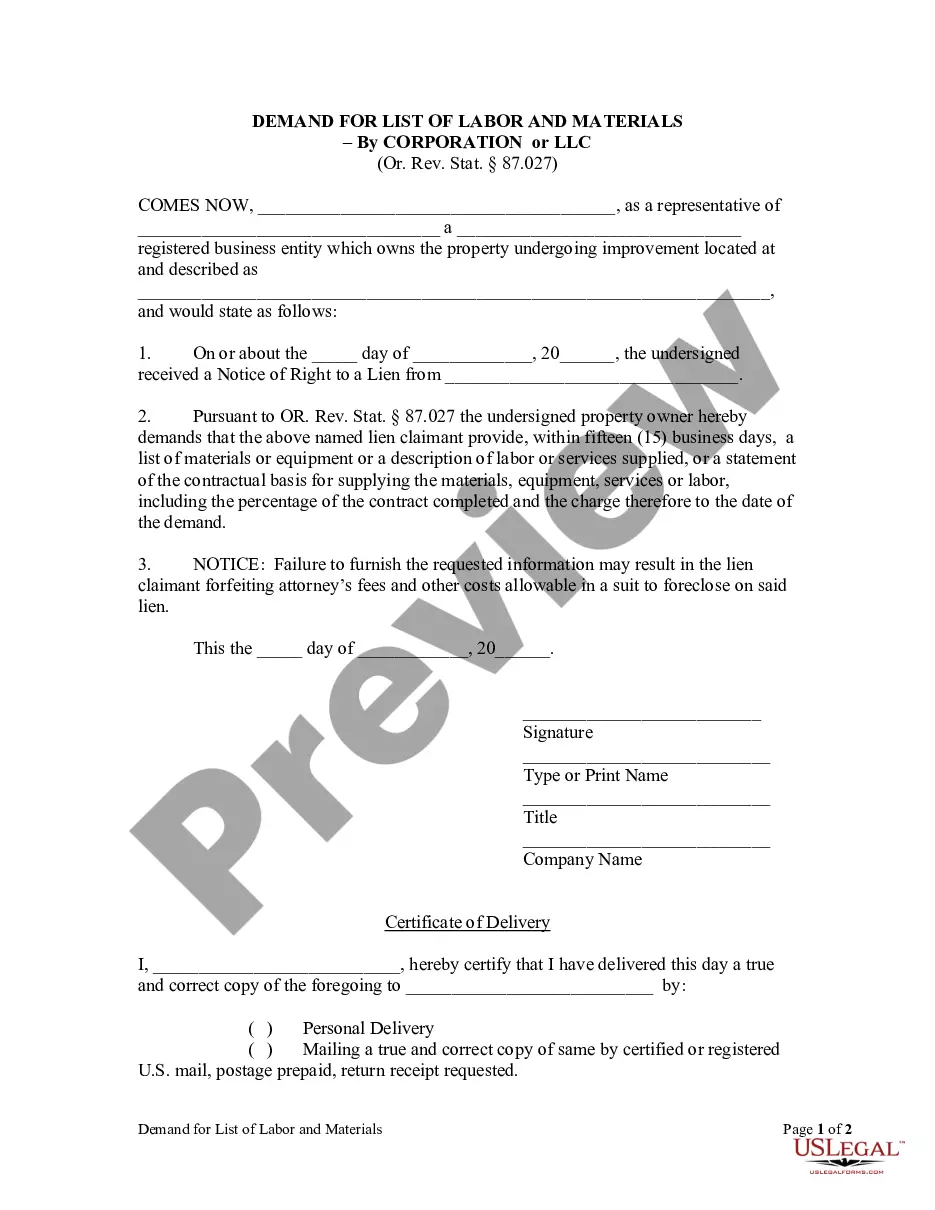
This form should be used when a property owner submits a formal demand for a list of services or materials supplied to a property. If you have received a notice of right to a lien and want to ensure compliance with the request, this form is necessary. It protects your rights as a supplier by documenting the work provided and the amount owed, thereby supporting your case in any potential lien disputes.
Who this form is for
- Contractors or suppliers who have provided labor or materials to a property.
- Corporations that have received a written demand from property owners.
- Legal representatives acting on behalf of a corporation in response to such demands.
Instructions for completing this form
- Identify the representative and the corporation supplying the services.
- Enter the date the written demand for services was received.
- List all labor and materials provided, including dates and costs associated.
- Specify the contract terms under which the labor and materials were supplied.
- Indicate the percentage of completion of the contract as of the demand date.
- Sign the document and complete the certification of delivery section.
Does this form need to be notarized?
This form does not typically require notarization unless specified by local law. However, ensure that the completed form is delivered according to the regulations to maintain its validity.
Get your form ready online
Our built-in tools help you complete, sign, share, and store your documents in one place.
Make edits, fill in missing information, and update formatting in US Legal Forms—just like you would in MS Word.
Download a copy, print it, send it by email, or mail it via USPS—whatever works best for your next step.
Sign and collect signatures with our SignNow integration. Send to multiple recipients, set reminders, and more. Go Premium to unlock E-Sign.
If this form requires notarization, complete it online through a secure video call—no need to meet a notary in person or wait for an appointment.
We protect your documents and personal data by following strict security and privacy standards.

Make edits, fill in missing information, and update formatting in US Legal Forms—just like you would in MS Word.

Download a copy, print it, send it by email, or mail it via USPS—whatever works best for your next step.

Sign and collect signatures with our SignNow integration. Send to multiple recipients, set reminders, and more. Go Premium to unlock E-Sign.

If this form requires notarization, complete it online through a secure video call—no need to meet a notary in person or wait for an appointment.

We protect your documents and personal data by following strict security and privacy standards.
Common mistakes
- Failing to provide a complete list of services or materials supplied.
- Not specifying the contract terms accurately.
- Omitting the signature or date on the response.
- Not delivering the response within the required time frame.
Advantages of online completion
- Immediate access to a professionally drafted legal document.
- Editable format allows for easy customization to fit specific needs.
- Provides peace of mind by ensuring compliance with legal requirements.
Key takeaways
- The Response to Demand for List of Services by Corporation is essential for complying with demands under Oregon law.
- Timely completion and accurate information can protect your rights and interests in any ensuing legal matters.
- Understanding the key components and process significantly eases the filing experience.
Looking for another form?
Form popularity
FAQ
The different types of corporations and business structures. When it comes to types of corporations, there are typically four that are brought up: S corps, C corps, non-profit corporations, and LLCs.
A corporation makes your business a distinct entity. In other words, it separates your business assets from your personal assets.That is just fine; one person or multiple people can own a corporation. In most cases, if you are considering incorporating your small business, you will want to investigate S corporations.
Choose a Corporate Name. File Articles of Incorporation. Appoint a Registered Agent. Prepare Corporate Bylaws. Appoint Initial Directors and Hold First Board Meeting. File an Annual Report. Obtain an EIN.
C corporation (C corp) S corporation (S corp) Limited liability company (LLC)
Choose a corporate name. File your Articles of Incorporation. Appoint a registered agent. Start a corporate records book. Prepare corporate bylaws. Appoint initial directors. Hold first Board of Directors meeting. Issue stock to shareholders.
Tax Form 8832, Entity Classification Election, is a form certain businesses can use (which we will get to later) to elect or change how they are classified for federal tax purposes. Businesses receive a default tax classification, which can result in paying more business taxes than necessary.
Types of Corporations. Four main types of corporations are designated as C, S, limited liability companies, and nonprofit organizations.
Is an S Corp or LLC better? That is a bit of a misguided question. An LLC is a legal entity only and must choose to pay tax either as an S Corp, C Corp, Partnership, or Sole Proprietorship. Therefore, for tax purposes, an LLC can be an S Corp, so there is really no difference.
Choose a Business Name. Check Availability of Name. Register a DBA Name. Appoint Directors. File Your Articles of Incorporation. Write Your Corporate Bylaws. Draft a Shareholders' Agreement. Hold Initial Board of Directors Meeting.