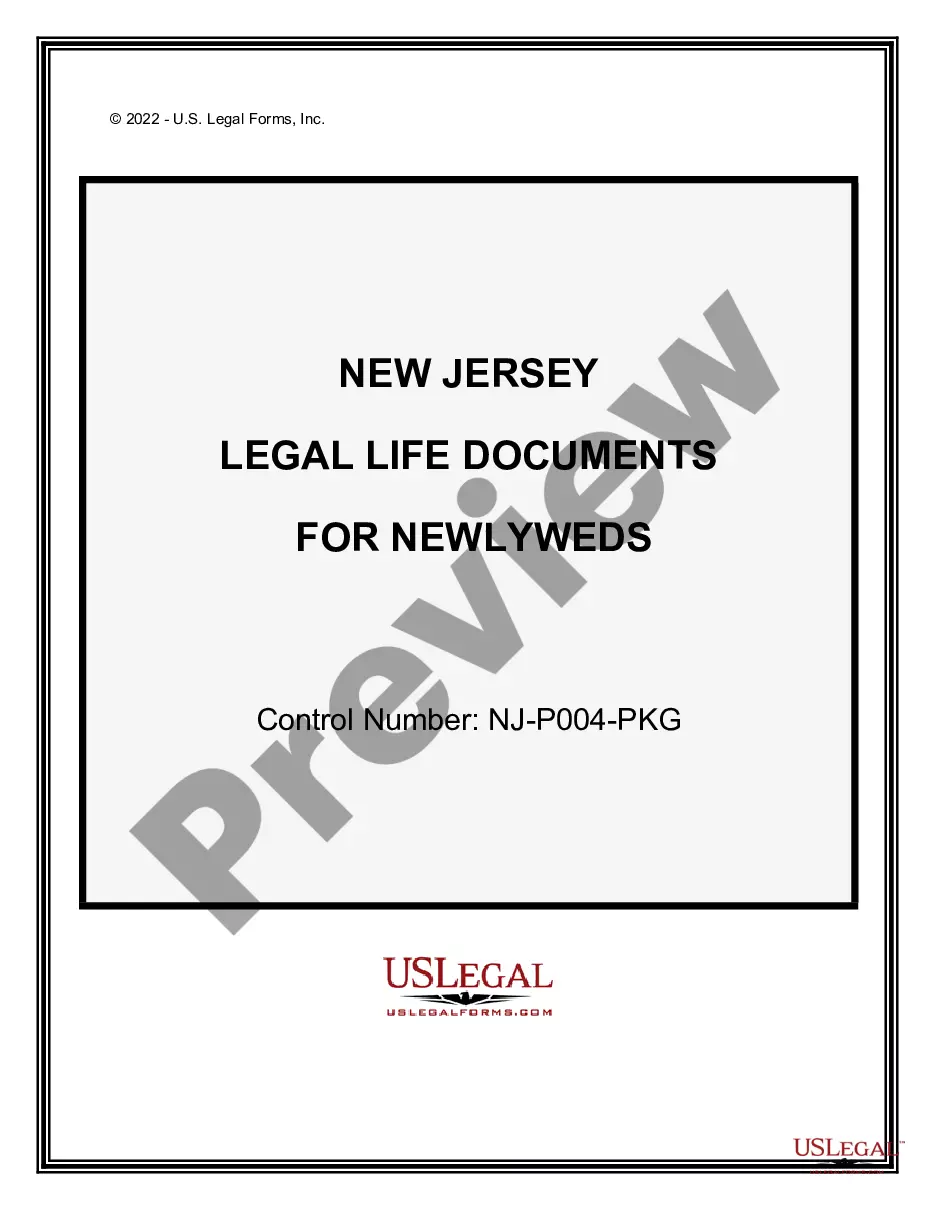
New Jersey Essential Legal Life Documents for Newlyweds
Overview of this form package
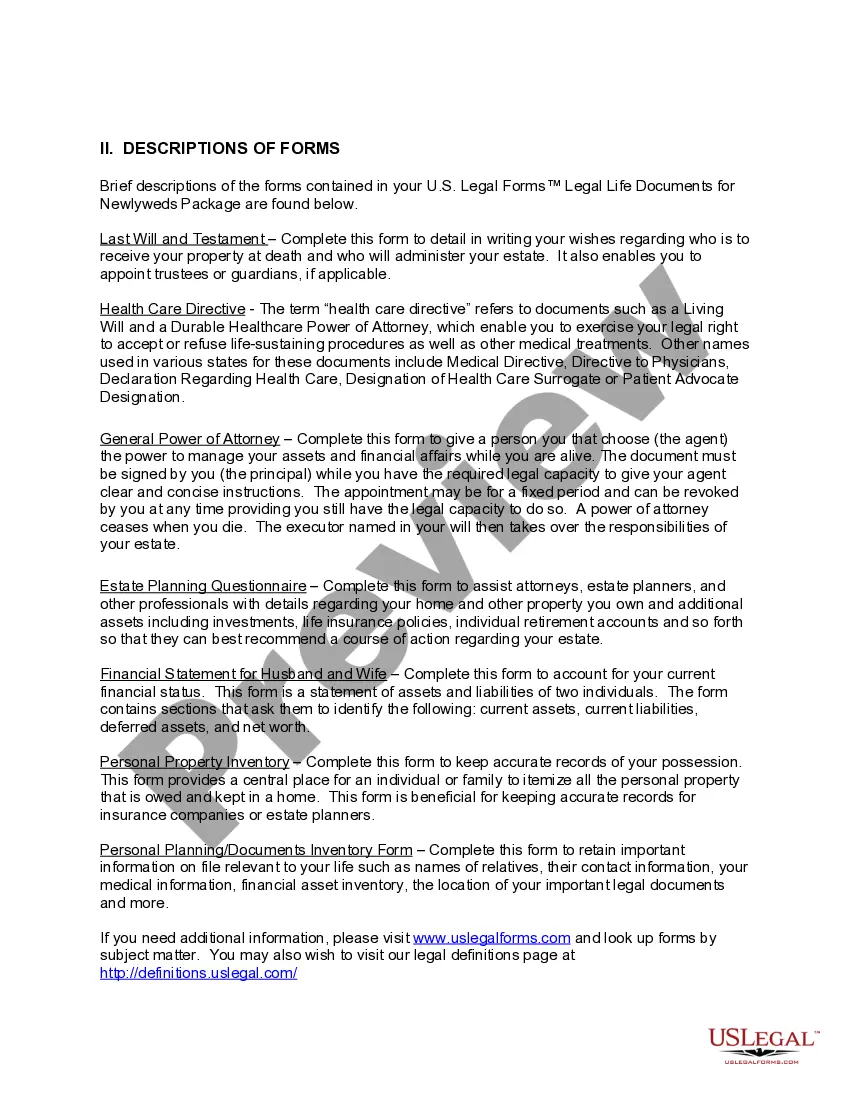
The New Jersey Essential Legal Life Documents for Newlyweds package provides essential legal forms specifically designed for newly married couples in New Jersey. This package includes a tailored Last Will and Testament, a Health Care Directive, a General Power of Attorney, and other important documents to help you organize your affairs as you embark on this new chapter in your life together. This package simplifies the legal preparation process and offers significant savings compared to purchasing documents individually.
What’s included in this form package
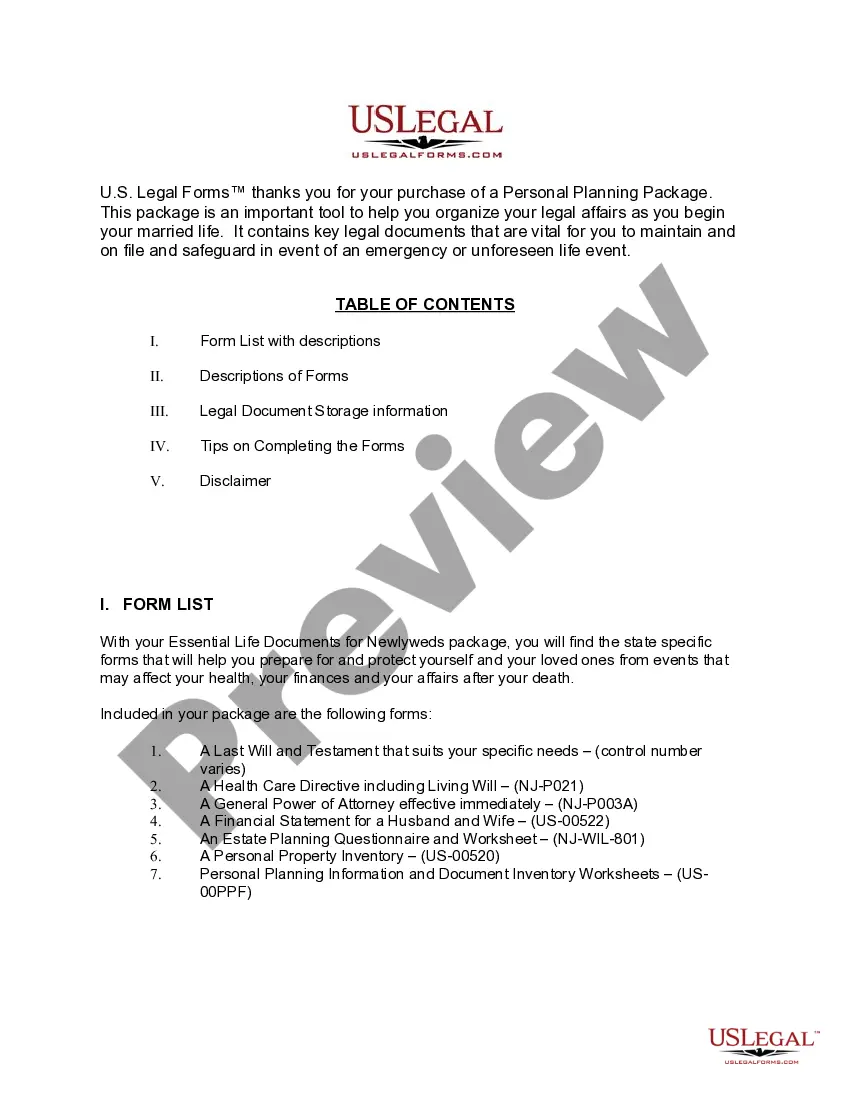
- General Durable Power of Attorney for Property and Finances or Financial Effective Immediately
- Health Care Directive including Living Will
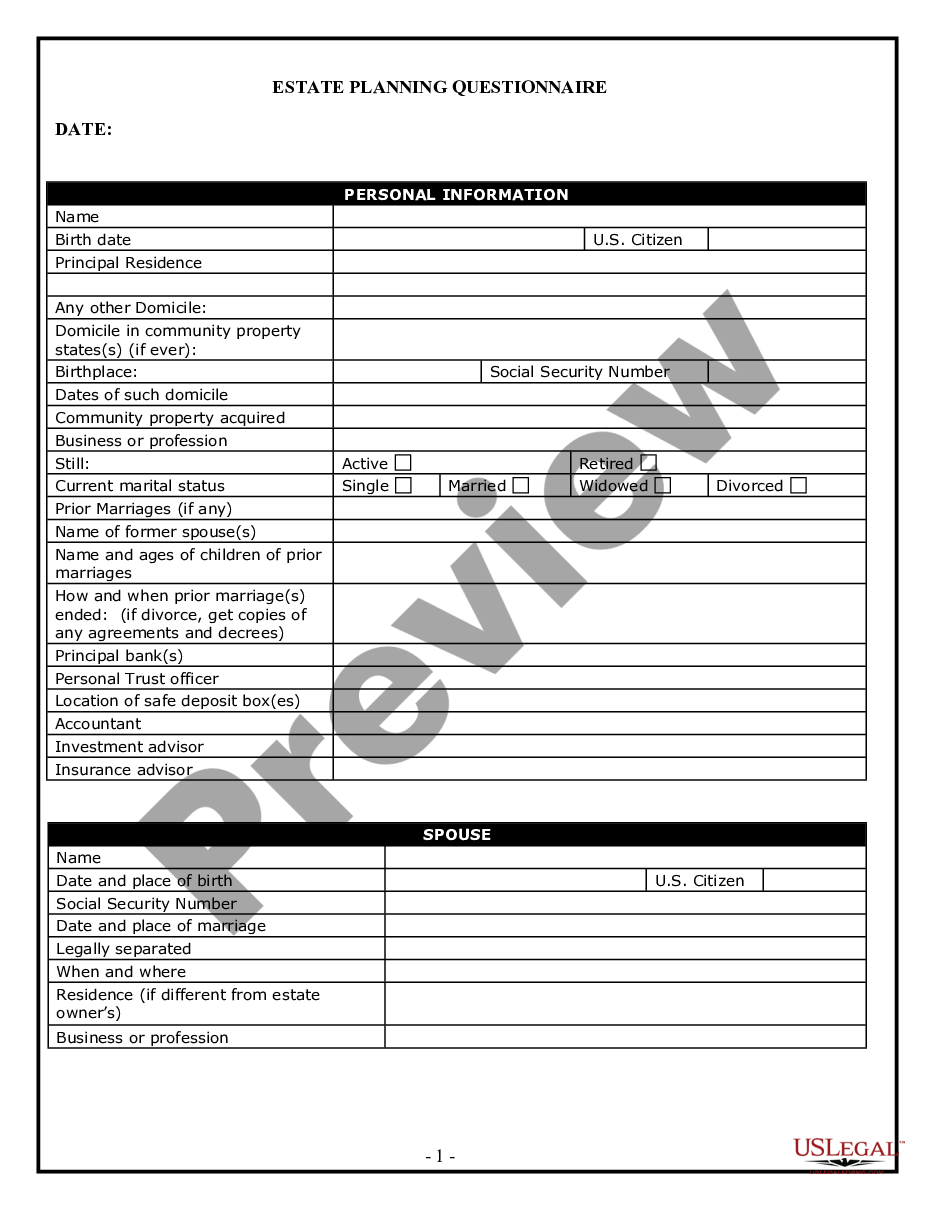
- Estate Planning Questionnaire and Worksheets
- Personal Property Inventory
- Financial Statement Form - Husband and Wife Joint
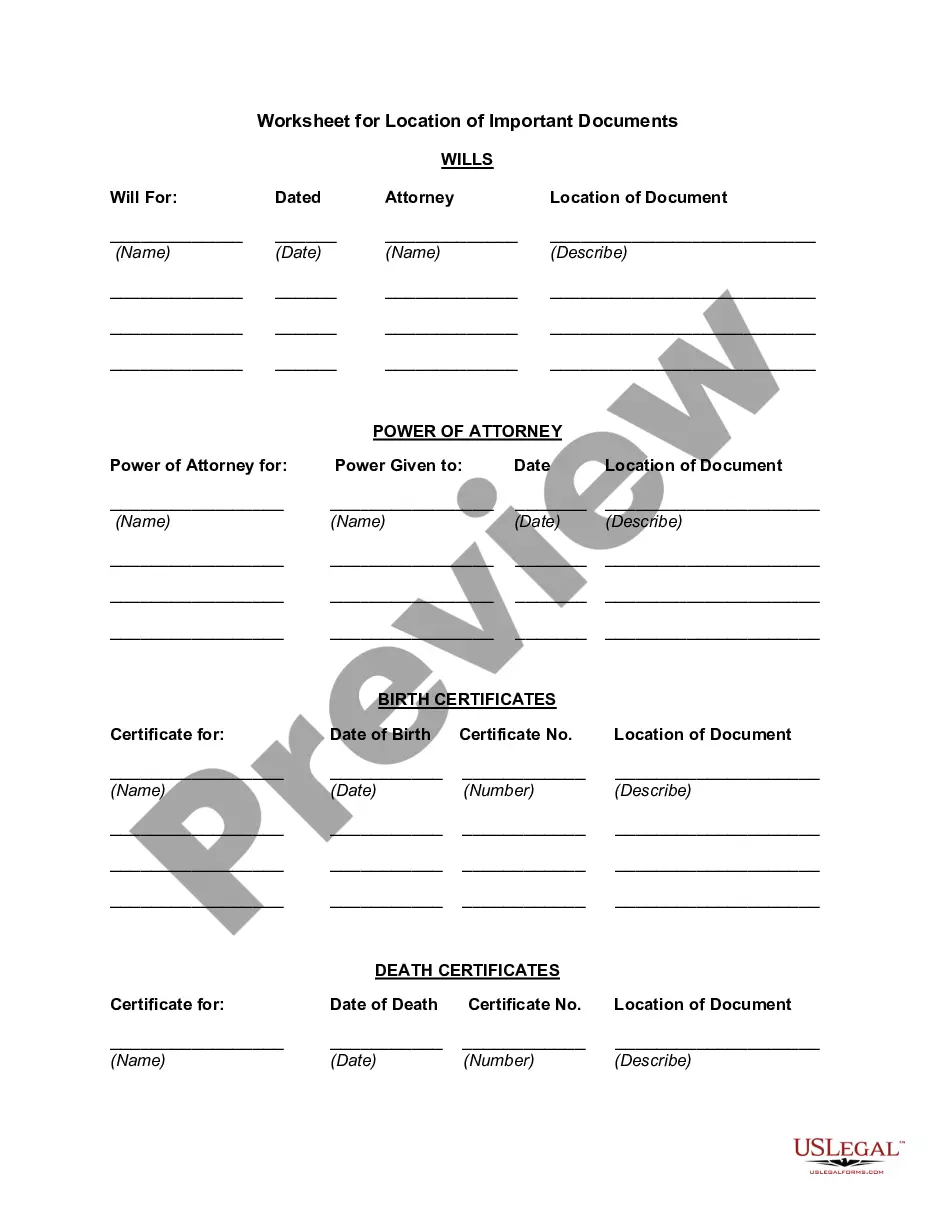
- Personal Planning Information and Document Inventory Worksheets - A Legal Life Document
When to use this document
This package is ideal for newly married couples who want to ensure their legal documents are in order. You may need this package when:
- You want to establish how your assets are managed in the event of your death.
- You need to make decisions regarding health care and medical treatments.
- You require a legal representative to manage your financial affairs.
- You seek to have all your essential legal documents readily available and organized.
Who should use this form package
- Newlyweds in New Jersey looking to establish their legal rights and responsibilities.
- Couples who have recently married and want to plan for their future together.
- Those who need comprehensive documentation regarding their health care and estate planning.
- Any spouse wanting to ensure their beloved ones are taken care of legally.
Instructions for completing these forms
- Review the included forms to understand their purpose and requirements.
- Complete the Estate Planning Questionnaire to provide essential information for your Will and other documents.
- Fill out the Financial Statement for both spouses to accurately reflect your financial status.
- Sign the documents in accordance with New Jersey law, ensuring all necessary witnesses or notarization is done if required.
- Store your completed forms in a secure location, such as a safe or a bank deposit box.
Do forms in this package need to be notarized?
Some forms in this package need notarization to be legally binding. Our online notarization service, powered by Notarize, lets you verify and sign documents remotely through an encrypted video session, available 24/7.
Get your form ready online
Our built-in tools help you complete, sign, share, and store your documents in one place.
Make edits, fill in missing information, and update formatting in US Legal Forms—just like you would in MS Word.
Download a copy, print it, send it by email, or mail it via USPS—whatever works best for your next step.
Sign and collect signatures with our SignNow integration. Send to multiple recipients, set reminders, and more. Go Premium to unlock E-Sign.
If this form requires notarization, complete it online through a secure video call—no need to meet a notary in person or wait for an appointment.
We protect your documents and personal data by following strict security and privacy standards.

Make edits, fill in missing information, and update formatting in US Legal Forms—just like you would in MS Word.

Download a copy, print it, send it by email, or mail it via USPS—whatever works best for your next step.

Sign and collect signatures with our SignNow integration. Send to multiple recipients, set reminders, and more. Go Premium to unlock E-Sign.

If this form requires notarization, complete it online through a secure video call—no need to meet a notary in person or wait for an appointment.

We protect your documents and personal data by following strict security and privacy standards.
Avoid these common issues
- Failing to discuss the contents of the documents with your spouse.
- Not keeping an updated inventory of personal property and financial assets.
- Neglecting to sign the documents correctly or failing to have witnesses when needed.
- Forgetting to store the documents in an accessible yet secure location.
Benefits of completing this package online
- Convenience of downloading and completing forms at your own pace.
- Editability allows you to make changes easily before finalizing your documents.
- Reliability of forms prepared by licensed attorneys to meet New Jersey legal standards.
- Cost-effective option compared to hiring a legal professional for each document.
Main things to remember
- This form package is essential for newlyweds in New Jersey to organize their legal lives.
- It includes vital documents such as a Will, Health Care Directive, and Power of Attorney.
- Properly completed forms help protect your health, finances, and loved ones.
- Utilizing an online platform for completion is both convenient and reliable.
Looking for another form?
Form popularity
FAQ
Yes, the Domestic Partnership Act allows local employers to require the employee to pay for the coverage of his or her domestic partner. In other words, If an employee wants his partner to be covered, he may have to pay for that coverage. 10. Does the Act only apply to insurance carriers domiciled in New Jersey?
Living will and health-care proxy. These are two different forms, but they serve similar purposes. Will. Durable power of attorney. Estate plan. Home or renter's insurance. Brokerage statements. Credit report. A financial manifesto for couples.
1Partnership affidavit (as defined by the employer/insurer)2Municipal domestic partnership registration.3State domestic partnership registration.4State civil union license.5State marriage license.6Marriage licenses issued in other countries.
Will. Revocable Trust. Financial Power of Attorney. Durable Power of Attorney for Healthcare.
Your Marital Rights right to receive marriage or family rate on health, car and/or liability insurance. right to inherit spouse's property upon death. right to sue for spouse's wrongful death or loss of consortium, and. right to receive spouse's Social Security, pension, worker's compensation, or disability
Guardianship Documents. Health Care Power of Attorney. Financial Power of Attorney. Living Will. Last Will and Testament. U.S. Legal Services Can Help!
Under the Domestic Partnership Act, a domestic partnership is established when both persons have a common residence and are jointly responsible for each other's common welfare as evidenced by joint financial arrangements or joint ownership of real or personal property.
Today, only a very small handful of states still offer some kind of common law status, and New Jersey is NOT one of them. The state legislature actually outlawed the formation of common law marriages in 1939."
Joint wills are usually created by married couples. They often state that: After one spouse has died, all the couple's property will be left to the surviving spouse; and. After the surviving spouse dies, the remaining property will be left to the couple's children.