North Dakota Subcontractors Package
Overview of this form package
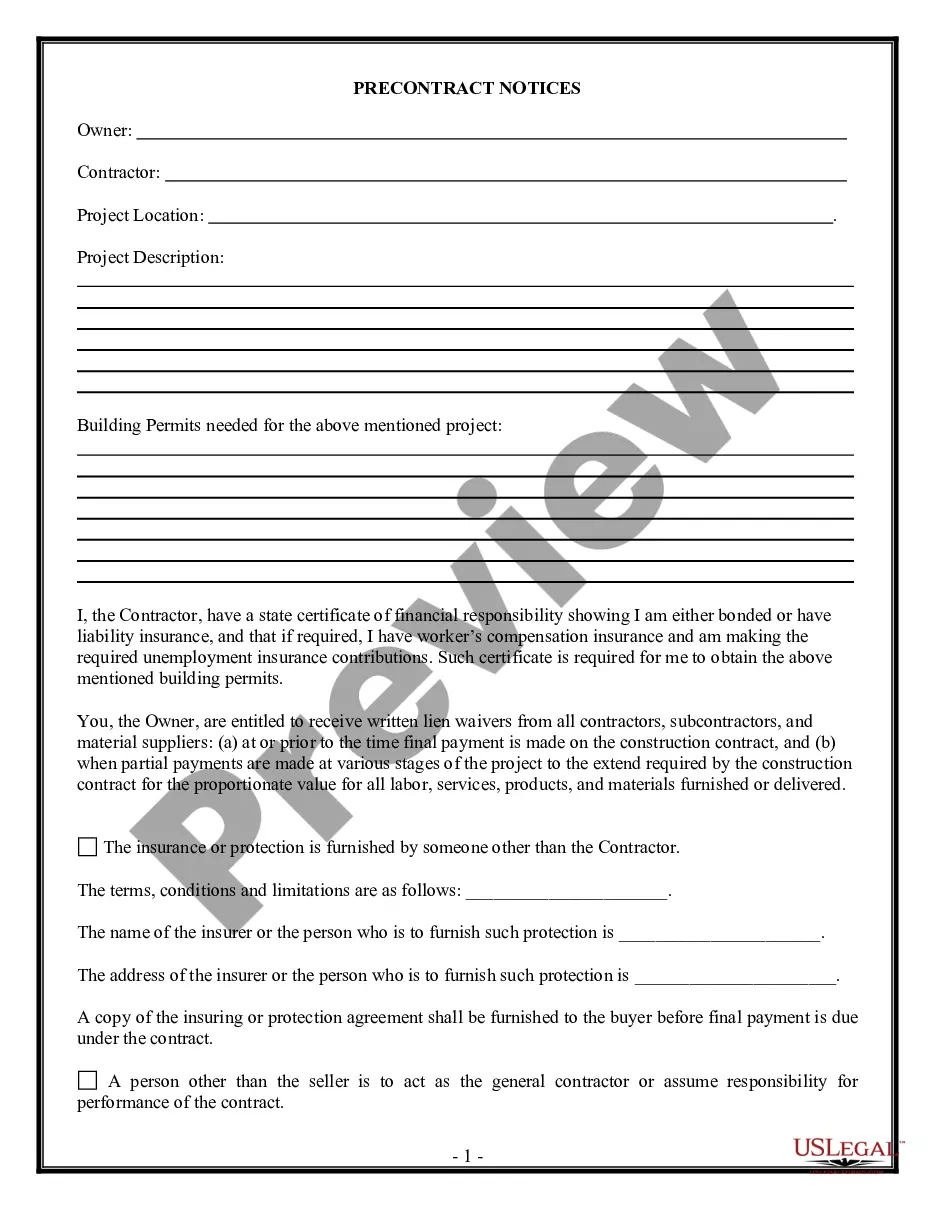
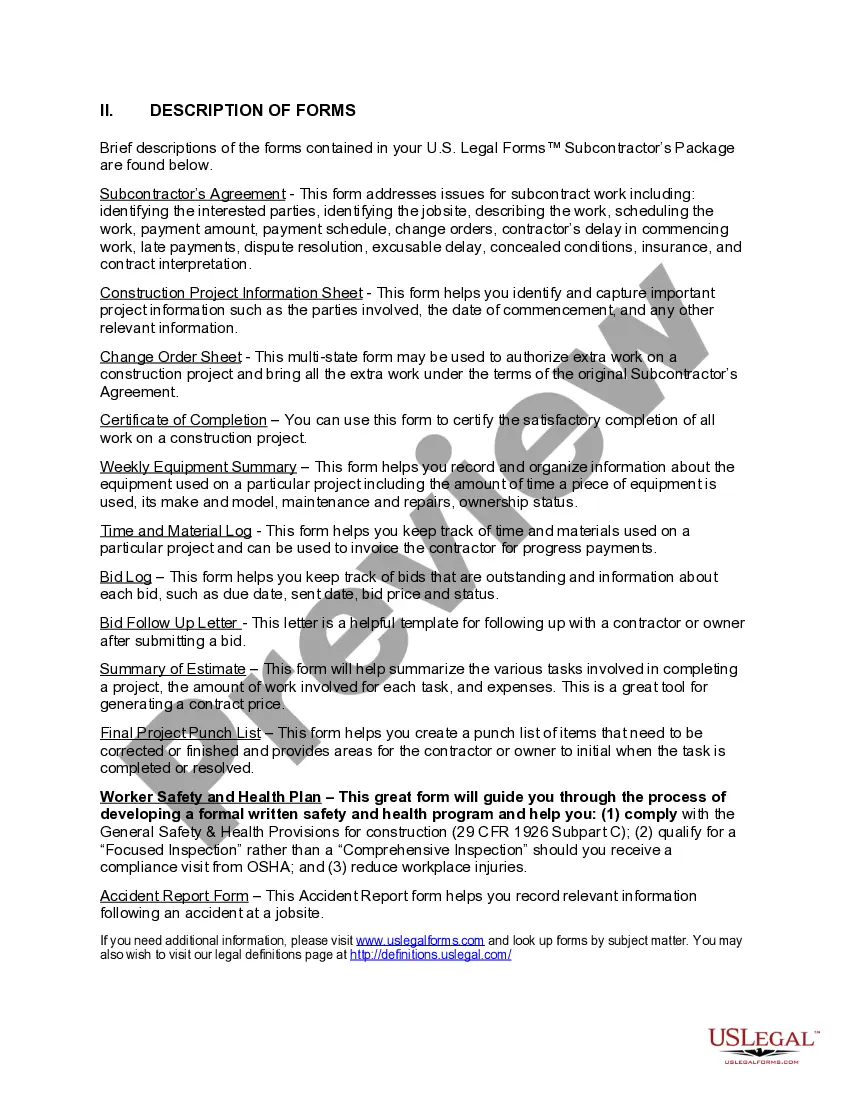
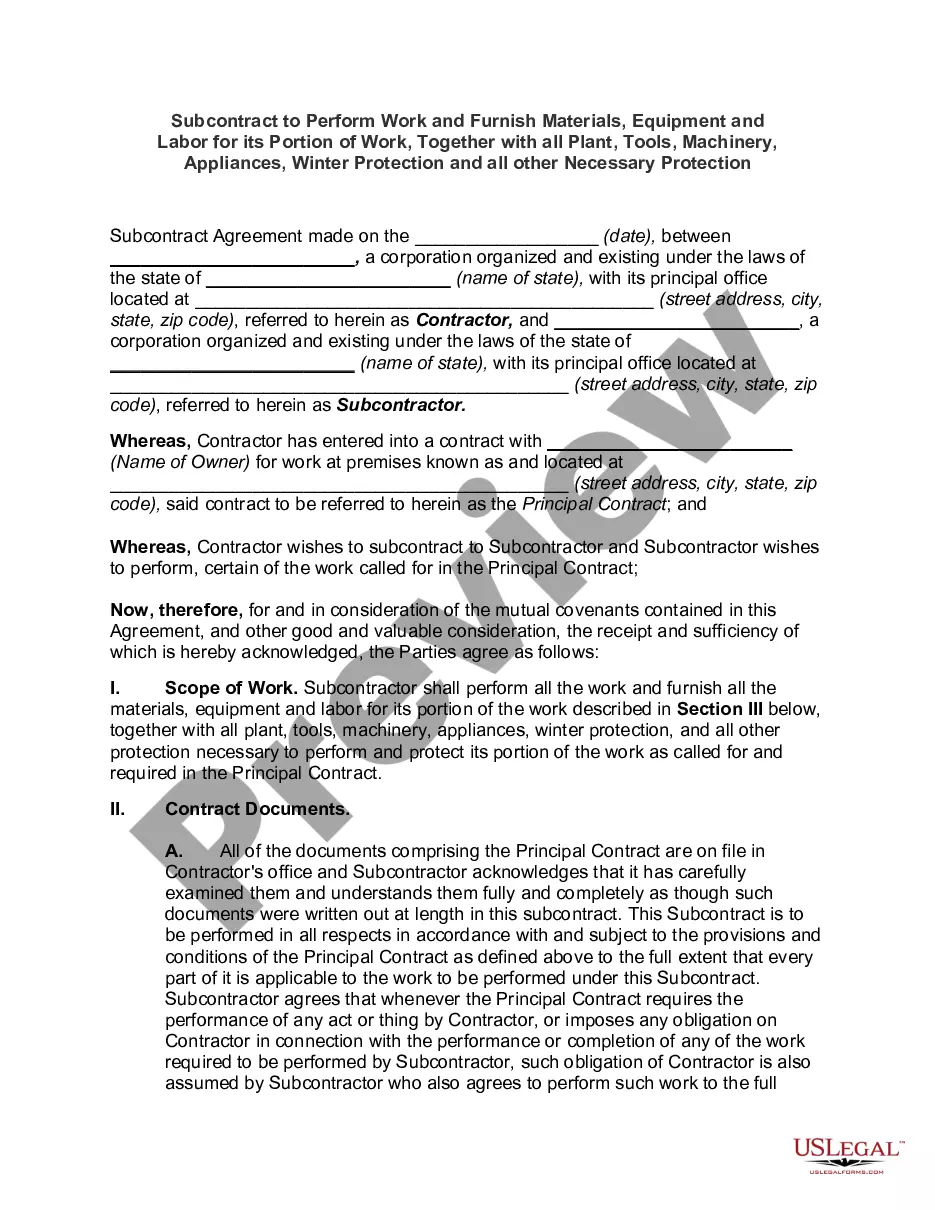
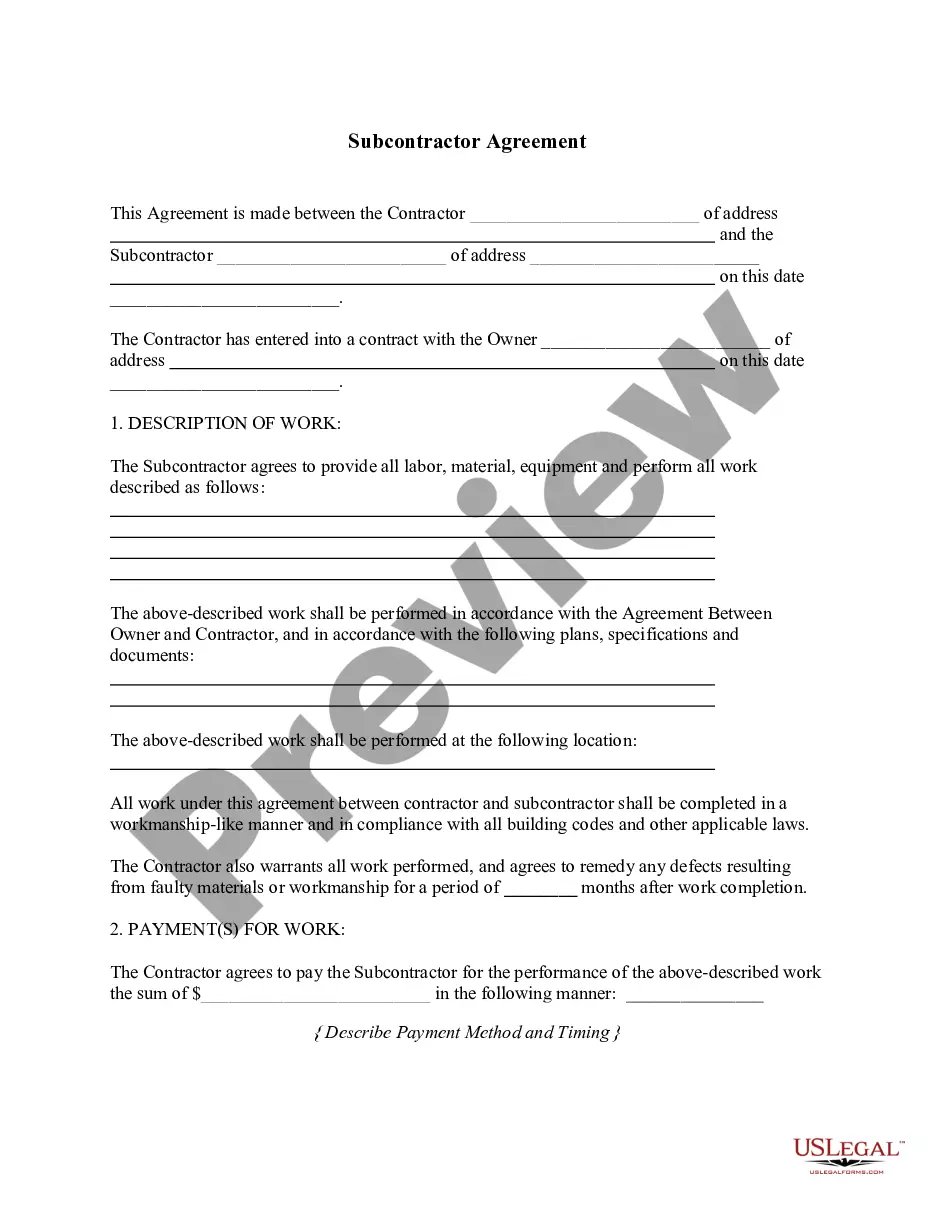
The North Dakota Subcontractors Package is a comprehensive collection of essential legal documents designed specifically for subcontractors involved in construction projects in North Dakota. This package includes a subcontractor's agreement that adheres to state law, ensuring that subcontractors can effectively manage their responsibilities and protect their legal rights while working on various projects.
Forms you’ll find in this package
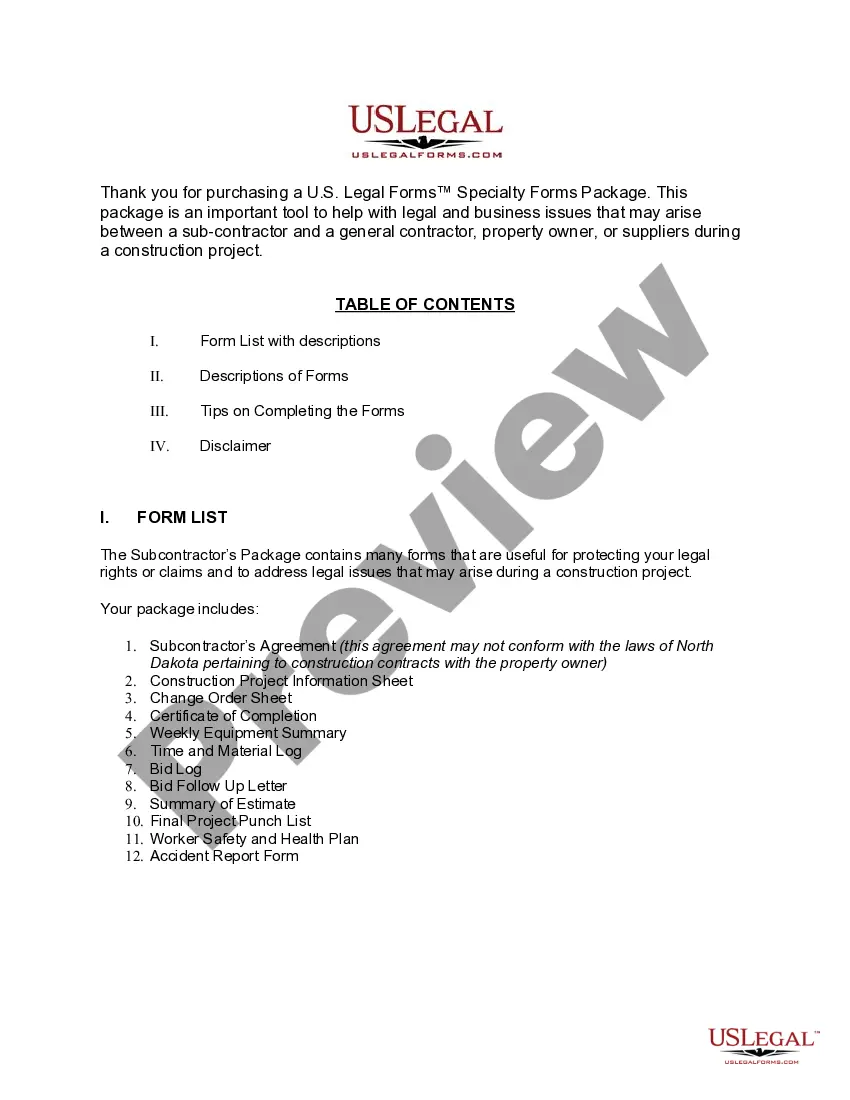
- Subcontractor's Agreement
- Contractor's Weekly Equipment Summary
- Contractor's Time and Materials Log
- Contractor's Bid Log
- Contractor's Bid Follow Up Letter
- Contractor's Summary of an Estimate
- Contractor's Final Punch List
- Construction Accident Report
- Construction Safety and Health Plan
- Change Order for Construction or Repairs by Contractor
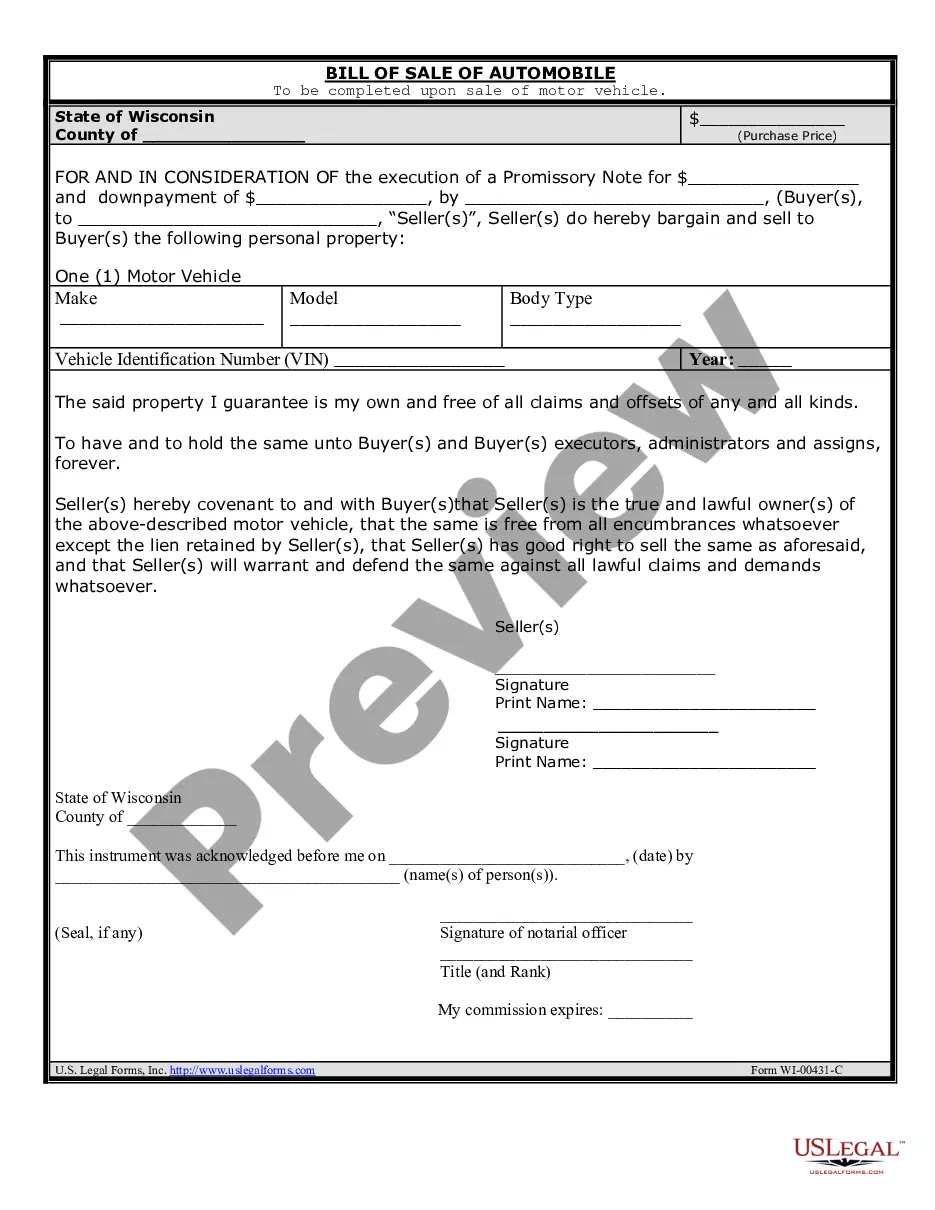
- Certification of Completion by Contractor
- Construction Project Information Sheet
Common use cases
This form package is particularly useful in scenarios such as:
- Starting a new construction project and needing to formalize agreements with contractors.
- Managing additional work requests through change orders during an ongoing project.
- Documenting project progress and equipment usage for better financial tracking.
- Ensuring compliance with safety regulations and procedures on job sites.
- Finalizing project deliverables with a certificate of completion and punch list.
Who this form package is for
- Subcontractors working in North Dakota who need structured agreements and documentation.
- Construction professionals looking to manage project details and compliance effectively.
- Individuals or companies entering into subcontracts for construction work.
- Project managers seeking reliable forms to enhance project organization and communication.
Steps to complete these forms
- Review all included forms to understand their purpose and requirements.
- Identify the parties involved and fill in the necessary details, such as names and addresses.
- Enter key project dates, including the commencement and completion timelines.
- Utilize the Change Order Sheet to document any modifications or additional work requests.
- Ensure all forms are signed and dated as required before submission or filing.
Do forms in this package need to be notarized?
Forms in this package typically do not require notarization unless required by local law. However, ensure that all parties are informed of any specific requirements related to notarization that may apply to their project or agreements.
Get your form ready online
Our built-in tools help you complete, sign, share, and store your documents in one place.
Make edits, fill in missing information, and update formatting in US Legal Forms—just like you would in MS Word.
Download a copy, print it, send it by email, or mail it via USPS—whatever works best for your next step.
Sign and collect signatures with our SignNow integration. Send to multiple recipients, set reminders, and more. Go Premium to unlock E-Sign.
If this form requires notarization, complete it online through a secure video call—no need to meet a notary in person or wait for an appointment.
We protect your documents and personal data by following strict security and privacy standards.

Make edits, fill in missing information, and update formatting in US Legal Forms—just like you would in MS Word.

Download a copy, print it, send it by email, or mail it via USPS—whatever works best for your next step.

Sign and collect signatures with our SignNow integration. Send to multiple recipients, set reminders, and more. Go Premium to unlock E-Sign.

If this form requires notarization, complete it online through a secure video call—no need to meet a notary in person or wait for an appointment.

We protect your documents and personal data by following strict security and privacy standards.
Mistakes to watch out for
- Failing to update the Change Order Sheet when additional work is requested.
- Neglecting to obtain all relevant signatures on contracts and completion certificates.
- Overlooking safety regulations outlined in the Worker Safety and Health Plan.
- Using outdated forms or improperly filled-out logs that lack necessary details.
Why use this package online
- Convenient access to all necessary forms anytime and anywhere.
- Edit and customize forms easily to fit the specific needs of each project.
- Save time and reduce costs compared to purchasing forms individually.
- Receive documents that comply with North Dakota state laws, ensuring legal protection.
Legal use & context
- All forms are designed to help subcontractors maintain proper documentation and protect their rights.
- While these forms are compliant with North Dakota laws, it is advisable to consult an attorney for specific legal advice based on individual circumstances.
- Improper use or modification of these forms may lead to legal complications, so itâs important to fill them out accurately.
Key takeaways
- The North Dakota Subcontractors Package offers essential legal documents for subcontractors.
- Using this package ensures compliance with state laws and helps manage construction projects effectively.
- Accurate completion of forms within this package is crucial for legal protection.
Looking for another form?
Form popularity
FAQ
For example, some subcontractors simply keep track of how many hours they work and are then paid weekly or biweekly. They may also be paid in installments. For example, if a contractor is working on a large job, the customer or employer may pay in four equal installments over the course of the job.
Step 1: Send Preliminary Notice on All Projects. Step 2: Set a Deadline to Send a Notice of Intent to Lien, and Stick to It! Step 3: File a Mechanics Lien. Step 4: Use Technology to Make Lien Rights Easy and Effective.
The disadvantages contractors doing this work lie in costs: The hourly expenses are high, and the professionals are independent in that they don't report to supervisors inside the company. These factors make it challenging to control the costs of these subcontracts.
What is a Subcontractor? A subcontractor is a type of contractor. Subcontractors also work on a contractual basis, and they also offer a particular set of skills which they perform for customers. The key point about subcontractors is that they form agreements with the contractor, not with the customer.
Even though subcontractors are typically cost more than self-performing in-house, it is still more cost-effective in most cases. Subcontractors do not get benefits, office space or equipment. Hiring contractors also relieves you of having to pay employee taxes and a full-time salary.
Usually, anything that subcontractors would be liable for, general contractors may also be liable for (with the caveat that if the contractor has to pay for damages, the subcontractor who is legally responsible will often reimburse the general contractor).
Prequalify Your Subs. Before you take pricing or solicit bids from subcontractors you need to make sure they are capable of completing the work, both physically and financially. Know the Signs. Craft a Plan. Put It in a Contract. Protect Yourself. Termination of Contract.
When clients hire you to work on a specific project or on a freelance basis, you are usually considered a contractor. You provide the labor, services, and sometimes whatever equipment is needed to get the project done.Subcontractors are companies or individual people that you hire to help you complete a project.
Independent contractors and subcontractors are both considered self-employed by the IRS. Both are responsible for making quarterly tax payments including self-employment tax.Additionally, you're free to hire subcontractors even if you're a subcontractor yourself.