Cash Receipts Journal
What this document covers
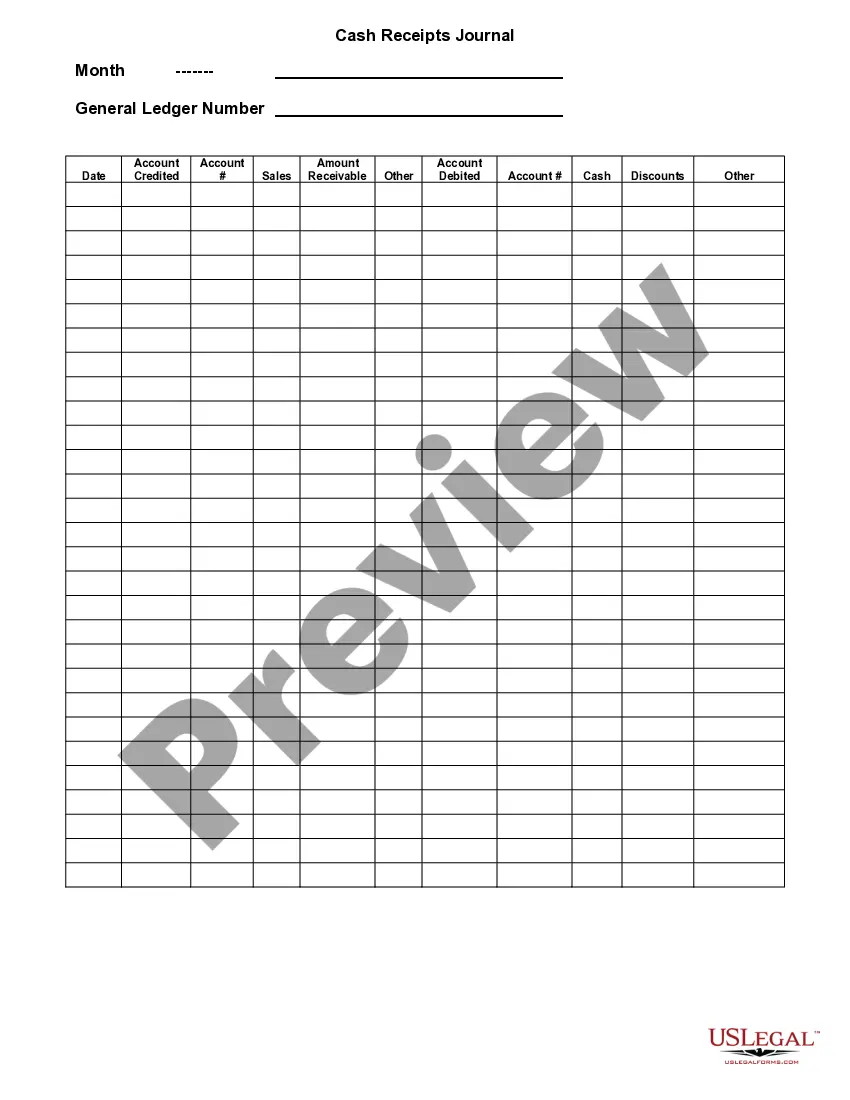
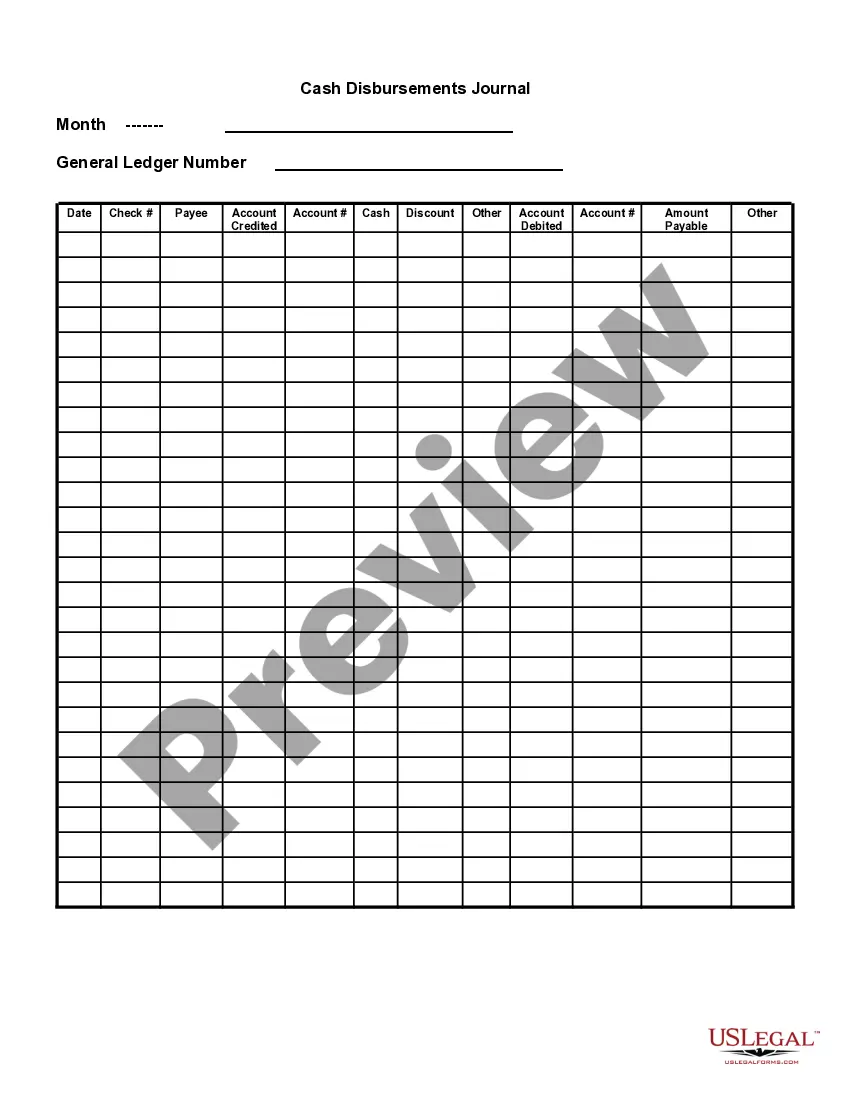
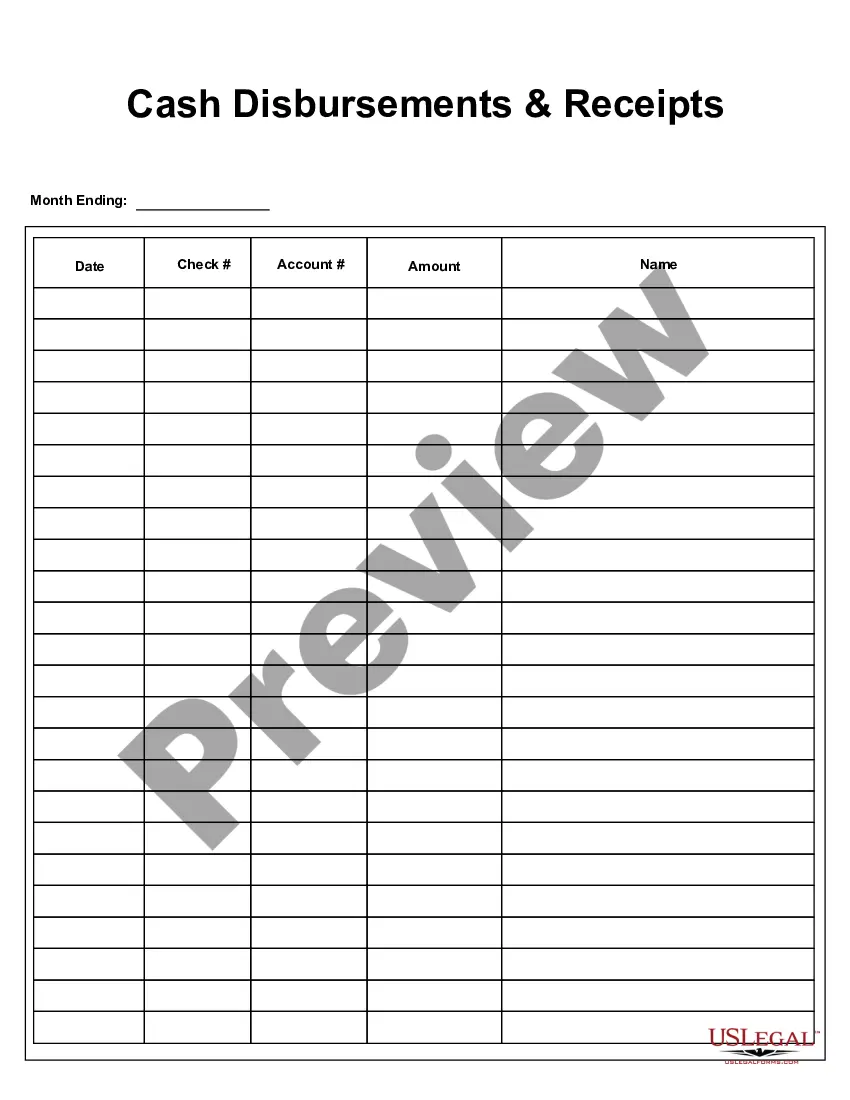
The Cash Receipts Journal is a financial record used to document cash inflows to a business. This form helps you track the cash received from various accounts during a specified month. It is an essential tool for organizing financial transactions and complements the Cash Disbursements Journal, which records cash outflows.
Key components of this form
- Month: Specify the month for which you are recording cash receipts.
- General Ledger Number: Enter the unique identifier for the related account in your general ledger.
- Date: Indicate the date of each cash receipt.
- Account Credited: List the account that receives the cash.
- Account Sales: Record the nature of sales related to the receipts.
- Amount Receivable: Enter the monetary value of the cash receipt.
- Other Accounts: Specify any additional accounts impacted by the transaction.
- Account Debited: Identify the account that is charged or debited.
- Cash Discounts: Note any cash discounts applied to the receipts.
When this form is needed
This form is useful during the monthly financial close of your business. Use it when you receive cash payments from customers or other sources and need to document these transactions accurately. It is particularly beneficial for small business owners and accountants managing cash flow records.
Who can use this document
- Small business owners looking to manage cash receipts efficiently.
- Accountants and bookkeepers responsible for financial record-keeping.
- Any organization that needs to track cash inflow for financial reporting purposes.
How to prepare this document
- Identify the month for which cash receipts are being recorded.
- Enter the general ledger number associated with the cash transaction.
- Record the date of each cash receipt.
- Fill in the account credited with the cash received.
- Document the amount receivable and any cash discounts if applicable.
- Review all entries for accuracy before finalizing.
Is notarization required?
This form does not typically require notarization to be legally valid. However, some jurisdictions or document types may still require it. US Legal Forms provides secure online notarization powered by Notarize, available 24/7 for added convenience.
Get your form ready online
Our built-in tools help you complete, sign, share, and store your documents in one place.
Make edits, fill in missing information, and update formatting in US Legal Forms—just like you would in MS Word.
Download a copy, print it, send it by email, or mail it via USPS—whatever works best for your next step.
Sign and collect signatures with our SignNow integration. Send to multiple recipients, set reminders, and more. Go Premium to unlock E-Sign.
If this form requires notarization, complete it online through a secure video call—no need to meet a notary in person or wait for an appointment.
We protect your documents and personal data by following strict security and privacy standards.

Make edits, fill in missing information, and update formatting in US Legal Forms—just like you would in MS Word.

Download a copy, print it, send it by email, or mail it via USPS—whatever works best for your next step.

Sign and collect signatures with our SignNow integration. Send to multiple recipients, set reminders, and more. Go Premium to unlock E-Sign.

If this form requires notarization, complete it online through a secure video call—no need to meet a notary in person or wait for an appointment.

We protect your documents and personal data by following strict security and privacy standards.
Typical mistakes to avoid
- Failing to include the correct date for each transaction.
- Not accurately matching the cash receipt amounts with accounts.
- Neglecting to document cash discounts, which can lead to incorrect financial reporting.
Advantages of online completion
- Convenience of accessing and filling out the form from anywhere.
- Editability allows for accurate record-keeping without pen and paper errors.
- Reliability of obtaining forms drafted by licensed attorneys ensures compliance with legal standards.
What to keep in mind
- The Cash Receipts Journal is essential for tracking all cash inflows in your business.
- Accurate entry and recording are vital for maintaining financial clarity.
- This form supports better cash flow management when used diligently.
Looking for another form?

Form popularity
FAQ
The cash payments journal is used to record the cash disbursements made by check, including payments on account, payments for cash merchandise purchase, payments for various expenses, and other loan payments.In the journal shown in the below example, the other credit column is for Other Accounts.
Create the sales entry Record your cash sales in your sales journal as a credit and in your cash receipts journal as a debit. Keep in mind that your entries will vary if you offer store credit or if customers use a combination of payment methods (e.g., part cash and credit).
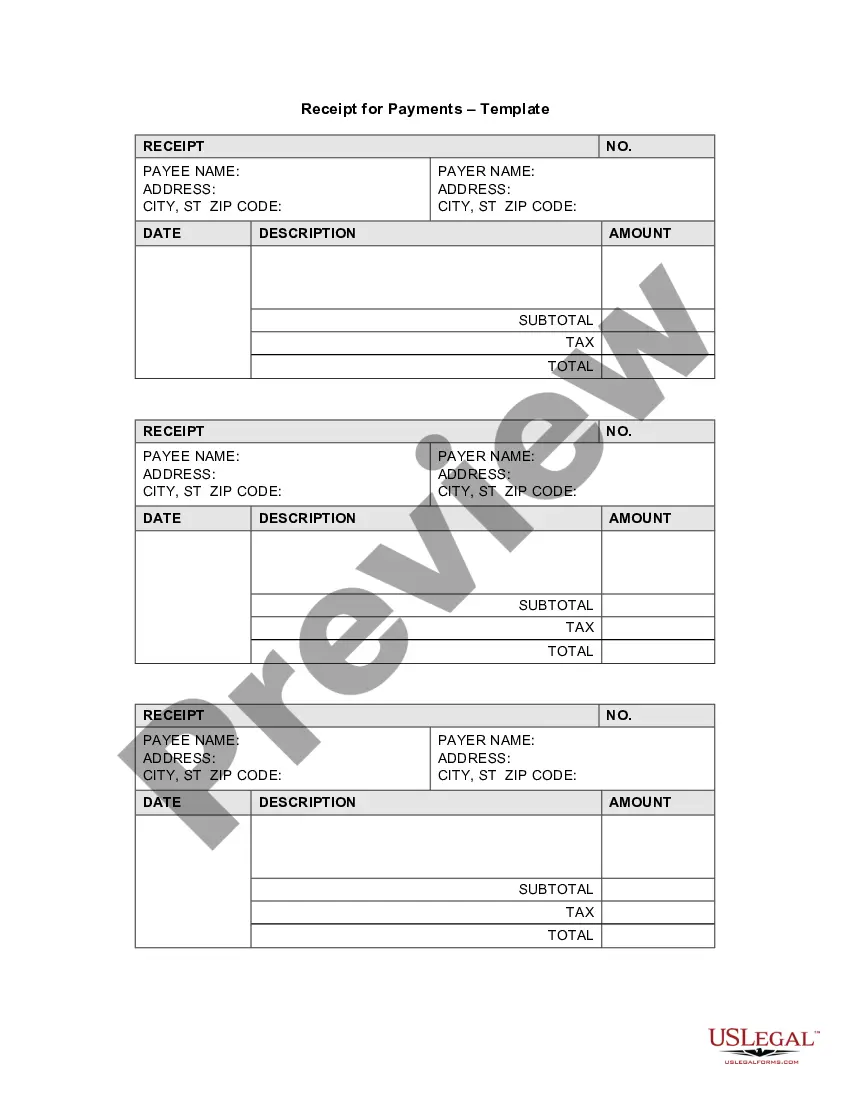
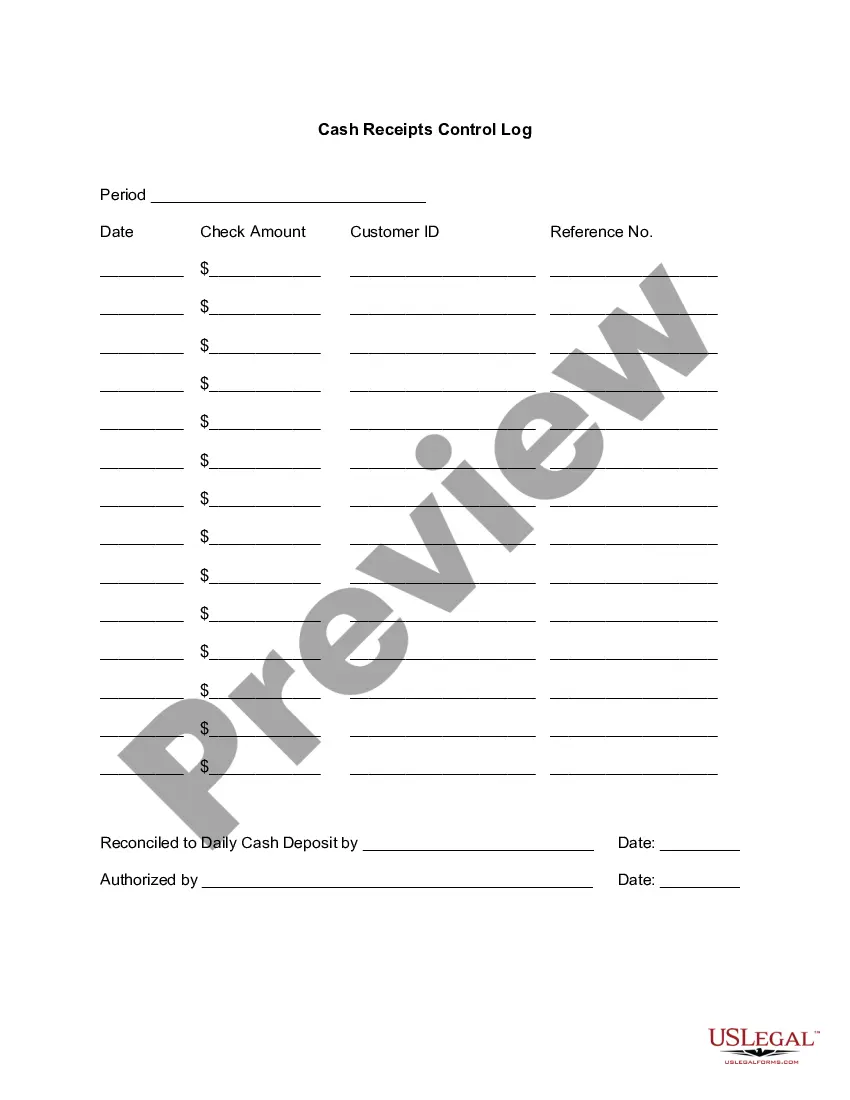
The date of the transaction. A unique number that identifies the document. The name of the payer. The amount of cash received. The payment method (such as by cash or check) The signature of the receiving person.
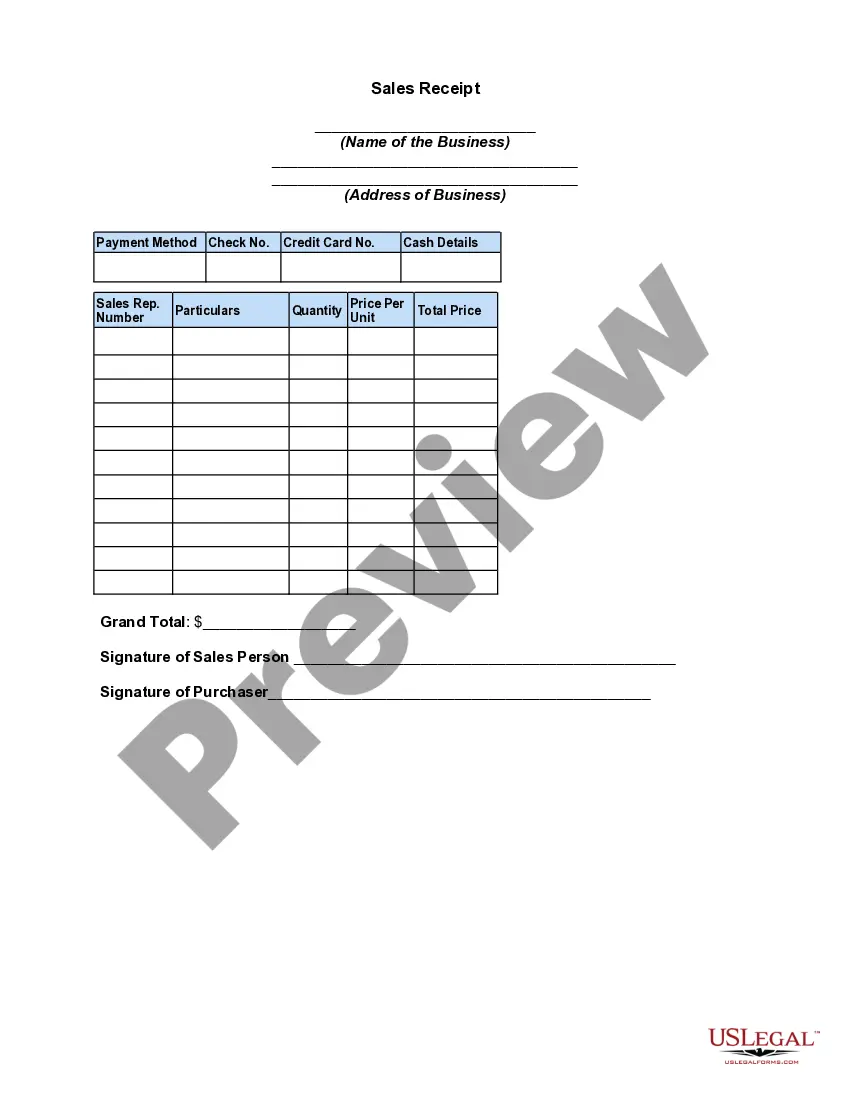
All receipts must include, but are not limited to, the following information: the date received, the dollar amount, a receipt number, name of the person paying for the transaction, description of the service or product, name of the department or area collecting the funds, and signature of the cash handler.
It should be written on company letterhead, state the customer's name and payment amount. Write that it is paid. On the printed or hand-written receipt, write the words Paid in Full in large letters that cover a good portion of the receipt. Sign your name on the receipt as well to make the receipt a binding receipt.
The four main special journals are the sales journal, purchases journal, cash disbursements journal, and cash receipts journal.
The date when you received the payments. The name of the customer who gave the payment. The payment amount. The purpose of the payment. The name of the person who received the payment.
Specify the amount that was received. Specify the date of payment. If necessary, indicate the method of payment: cash, check, wire transfer, etc. Specify the reason for the payment. Mention related invoice number and date (optional)
The cash receipts journal is used to record all transactions involving the receipt of cash, including such transactions as cash sales, the receipt of a bank loan, the receipt of a payment on account, and the sale of other assets such as marketable securities.