California Assignment of Deed of Trust
Overview of this form
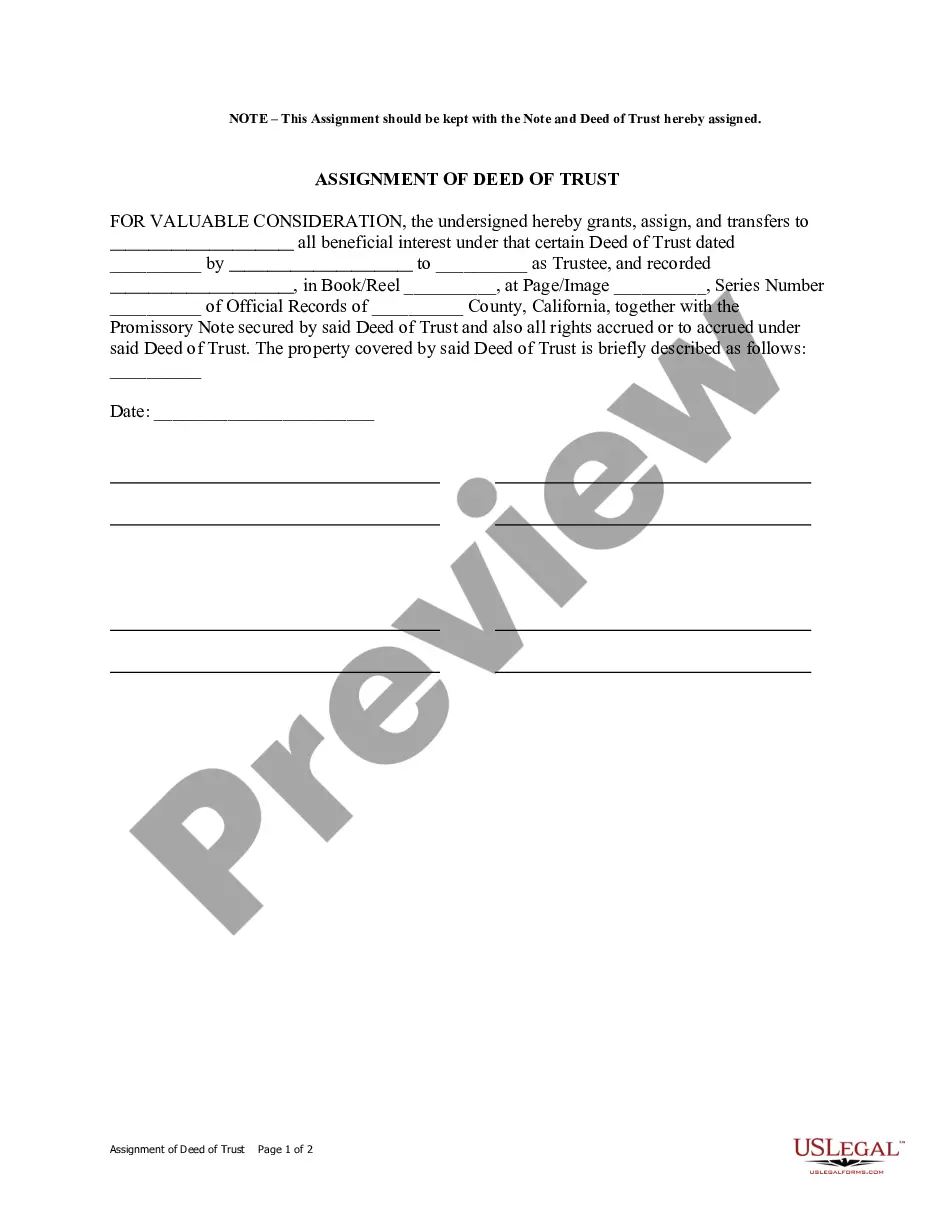
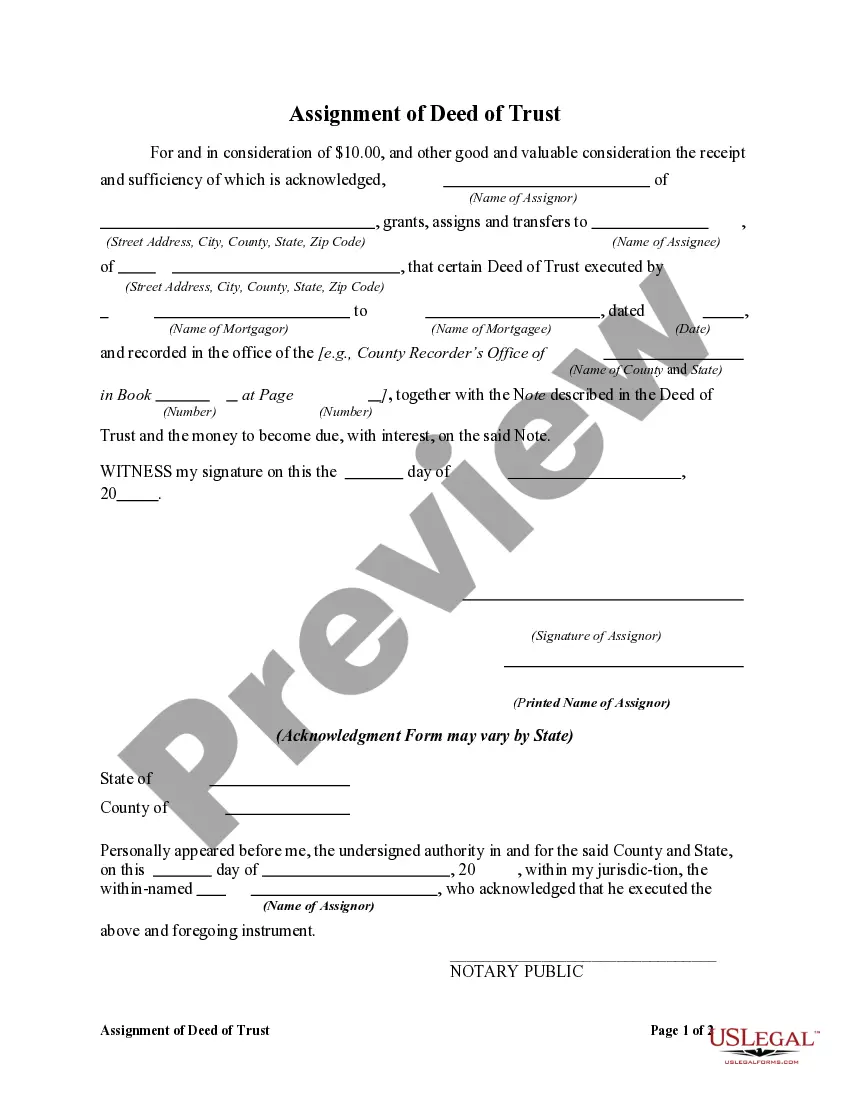
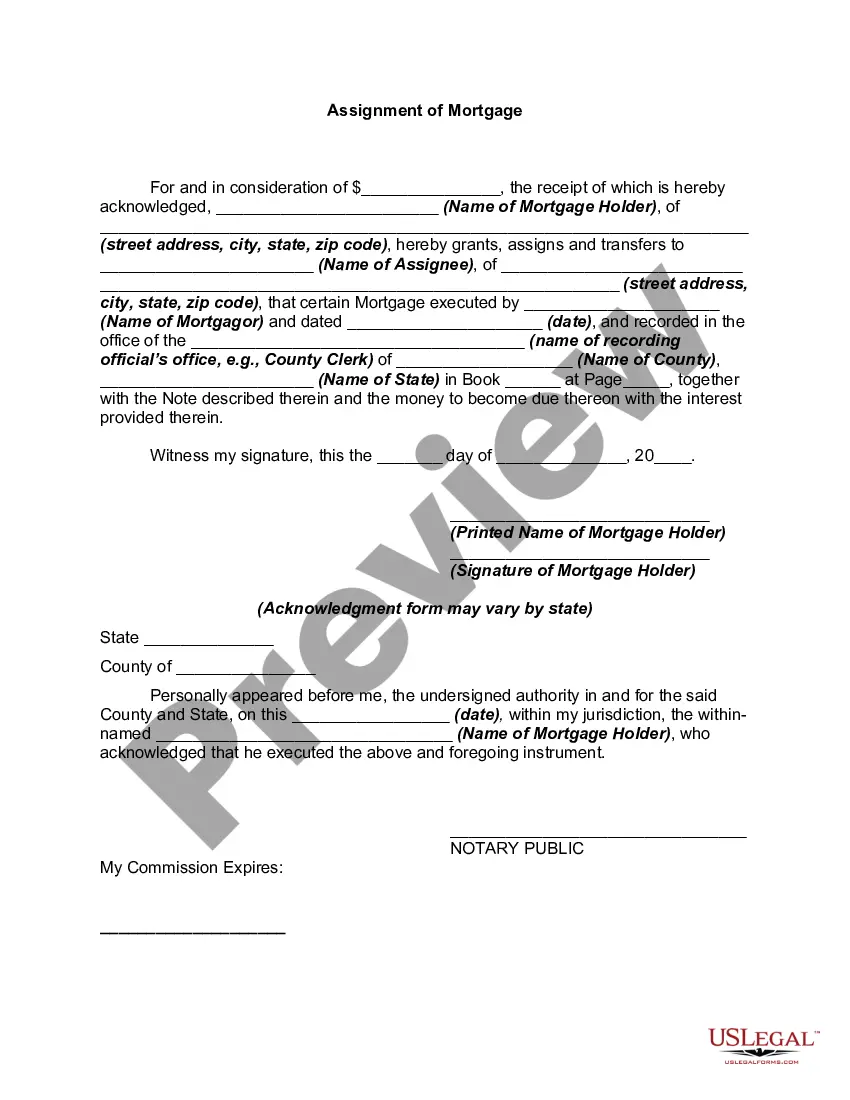
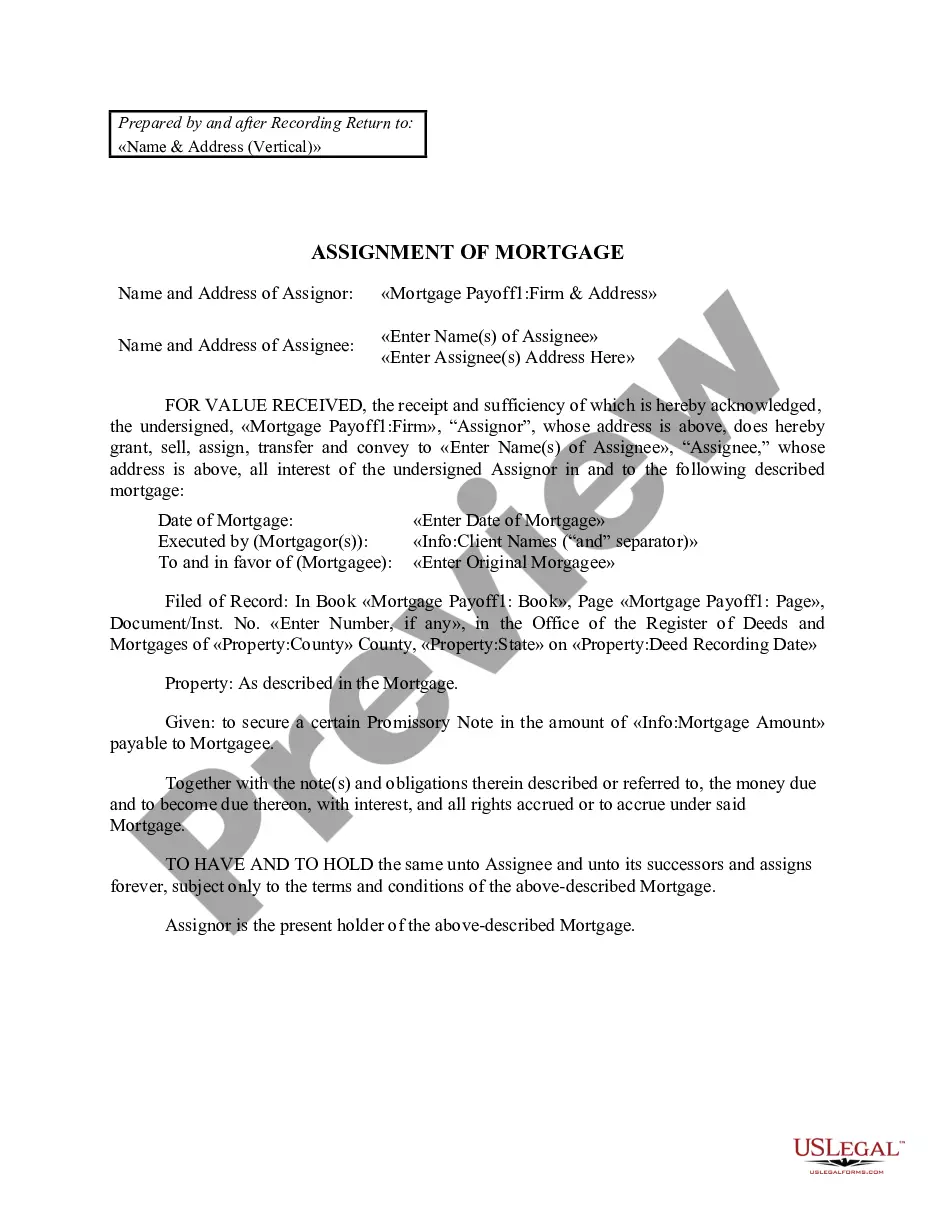
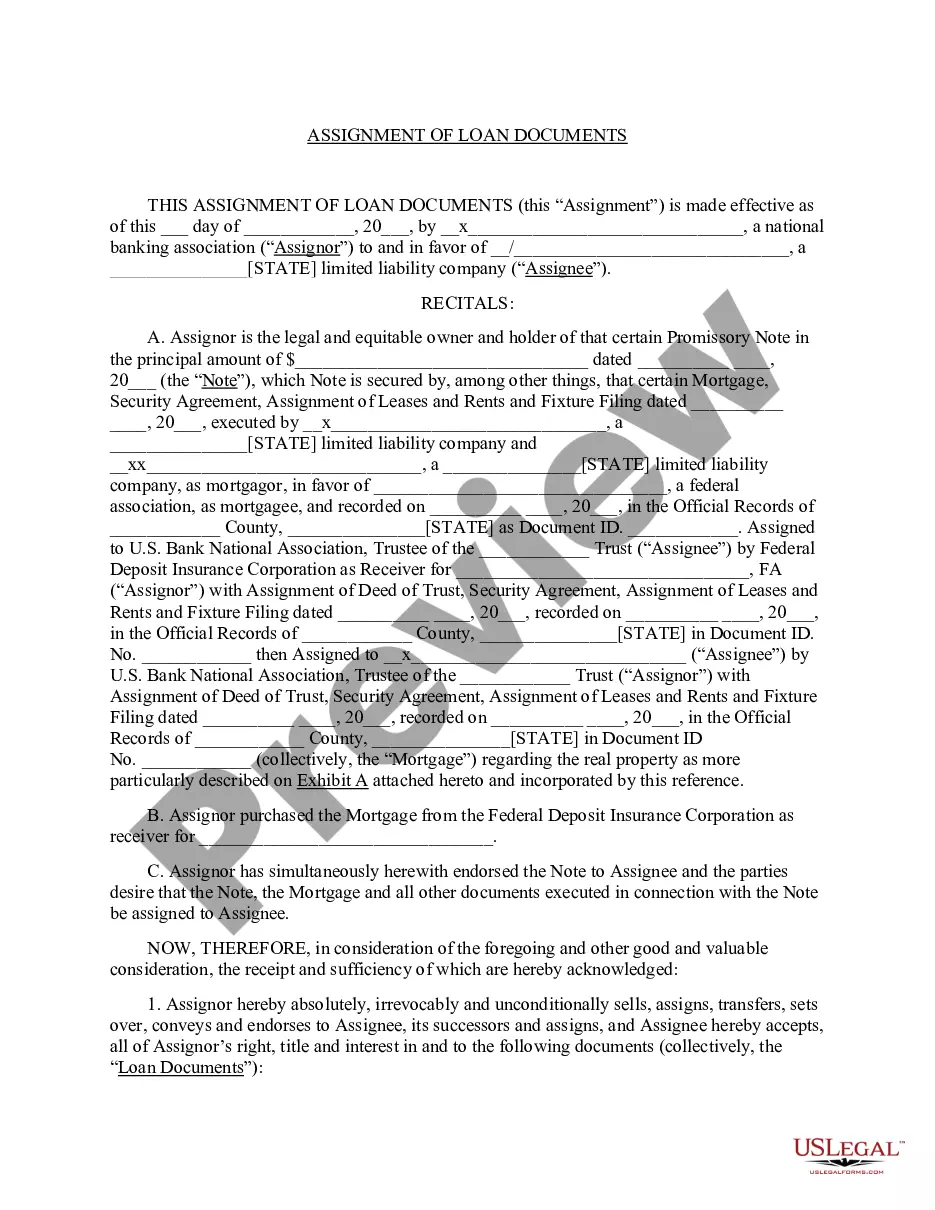
The Assignment of Deed of Trust is a legal document used to transfer the beneficial interest in a deed of trust from one party to another. This form is essential in real estate transactions when a lender sells the loan associated with a property. Unlike similar forms, it focuses specifically on the assignment aspect, ensuring that the new lender assumes the rights and obligations of the original beneficiary under the deed of trust.
Form components explained
- Granting clause: States the transfer of beneficial interest in the deed of trust.
- Date: The date the assignment is executed.
- Identification of parties: Names of the original lender, new lender, and trustee.
- Description of property: A brief description of the property covered by the deed of trust.
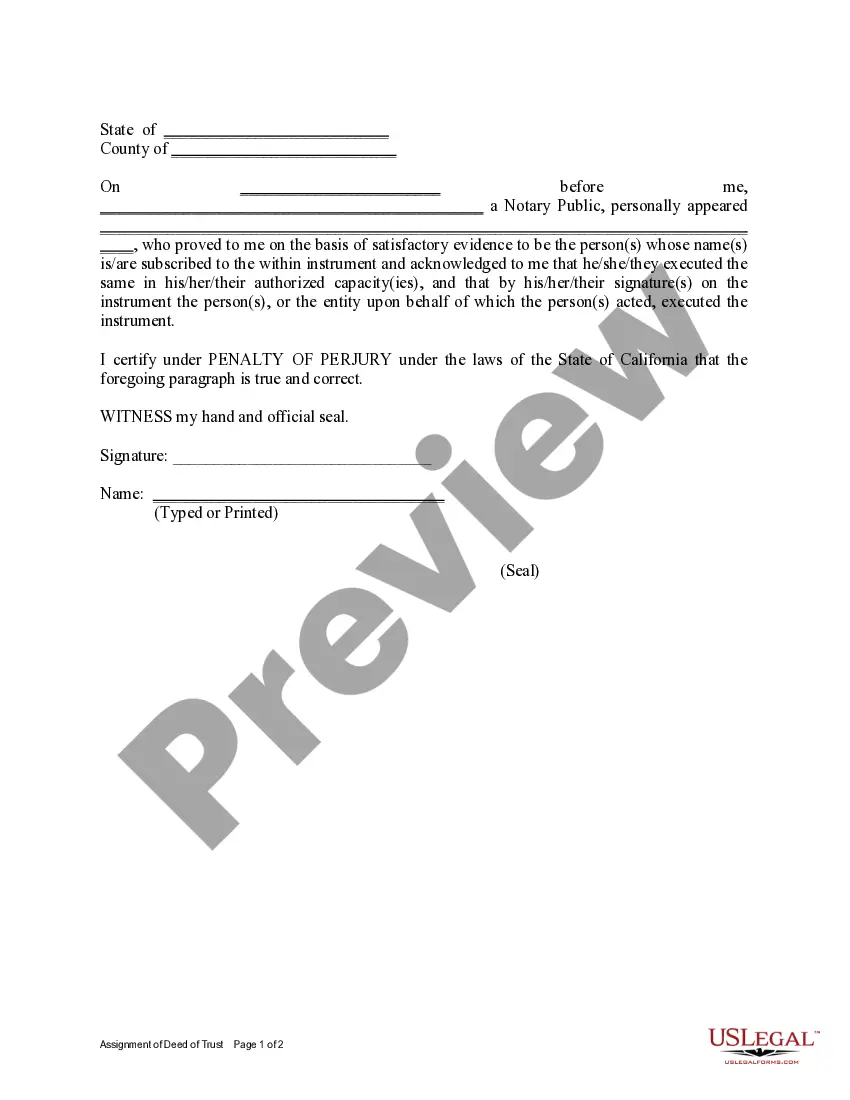
- Notary section: Verification of signatures by a notary public.

When this form is needed
This form should be used when a lender wants to assign a deed of trust to another lender. Common scenarios include the sale of a mortgage loan, when a financial institution restructures its investment portfolio, or when lenders change. It is crucial in these transactions to document the transfer to ensure the new lender has the legal rights associated with the deed of trust.
Who needs this form
This form is intended for:
- Financial institutions transferring ownership of a loan.
- Lenders and borrowers involved in real estate transactions.
- Trustees managing property deeds.
Steps to complete this form
- Identify the parties involved: Fill in the names of the original lender, new lender, and trustee.
- Specify the property: Provide a brief description of the property under the deed of trust.
- Enter the date: Include the date when the assignment is executed.
- Notary acknowledgment: Ensure the document is signed in front of a notary public for verification.
- Keep the assignment: Store this document with the original note and deed of trust for reference.
Notarization guidance
Yes, this form must be notarized to be legally valid. A notary public verifies the identities of the signers and ensures the signing process complies with legal requirements. US Legal Forms provides integrated online notarization, allowing you to finalize the assignment securely via video call, anytime and anywhere.
Get your form ready online
Our built-in tools help you complete, sign, share, and store your documents in one place.
Make edits, fill in missing information, and update formatting in US Legal Forms—just like you would in MS Word.
Download a copy, print it, send it by email, or mail it via USPS—whatever works best for your next step.
Sign and collect signatures with our SignNow integration. Send to multiple recipients, set reminders, and more. Go Premium to unlock E-Sign.
If this form requires notarization, complete it online through a secure video call—no need to meet a notary in person or wait for an appointment.
We protect your documents and personal data by following strict security and privacy standards.

Make edits, fill in missing information, and update formatting in US Legal Forms—just like you would in MS Word.

Download a copy, print it, send it by email, or mail it via USPS—whatever works best for your next step.

Sign and collect signatures with our SignNow integration. Send to multiple recipients, set reminders, and more. Go Premium to unlock E-Sign.

If this form requires notarization, complete it online through a secure video call—no need to meet a notary in person or wait for an appointment.

We protect your documents and personal data by following strict security and privacy standards.
Common mistakes to avoid
- Failing to provide a complete description of the property.
- Omitting the necessary signatures or dates.
- Not having the form notarized when required.
- Not keeping the assignment with the original deed of trust and promissory note.
Why complete this form online
- Convenience: Access and complete the form anytime, from anywhere.
- Editability: Customize the form according to your specific transaction needs.
- Reliability: Ensure your form is prepared according to legal standards, drafted by licensed attorneys.
Looking for another form?
Form popularity
FAQ
Assignment of Note and Deed of Trust means an assignment of all of the Participating Lending Institution's right, title, and interest in a Note and Deed of Trust, in substantially the form provided in the applicable Lender's Manual.
When your mortgage lender decides he wants to sell your mortgage loan to another lender, your mortgage lender will sign an assignment of deed of trust in favor of the new lender. This assignment gives the new lender the same lien on your property that your original lender had under the mortgage loan.
In real estate law, "assignment" is simply the transfer of a deed of trust from one party to another. This usually happens when the beneficiary of a trust deed sells their loan to another lender.
The deed of trust authorizes your lender to foreclose and sell your home if you don't make your mortgage payments on time. California lenders can choose to use either a mortgage or a deed of trust, and most use a deed of trust because foreclosure is easier under the deed of trust then under a mortgage.
A deed of trust with assignment of rents acts as extra security for the lender. It gives the lender the right to collect any rents that the property generates if you don't make your loan payments.
An assignment of trust deed is necessary if a lender sells a loan secured by a trust deed. It assigns the trust deed to whoever buys the loan (such as another lender), granting them all the rights to the property. It is recorded along with the original, making it a matter of public record.
Deeds of trust and mortgages are both used in bank and private loans for creating liens on real estate?that is, establishing a property as collateral for a loan.
When is a Deed of Trust Invalid? There are two main reasons a deed of trust may be considered invalid: (1) lack of required formalities in executing the deed of trust, or (2) there is some fact outside execution that makes the deed of trust invalid.