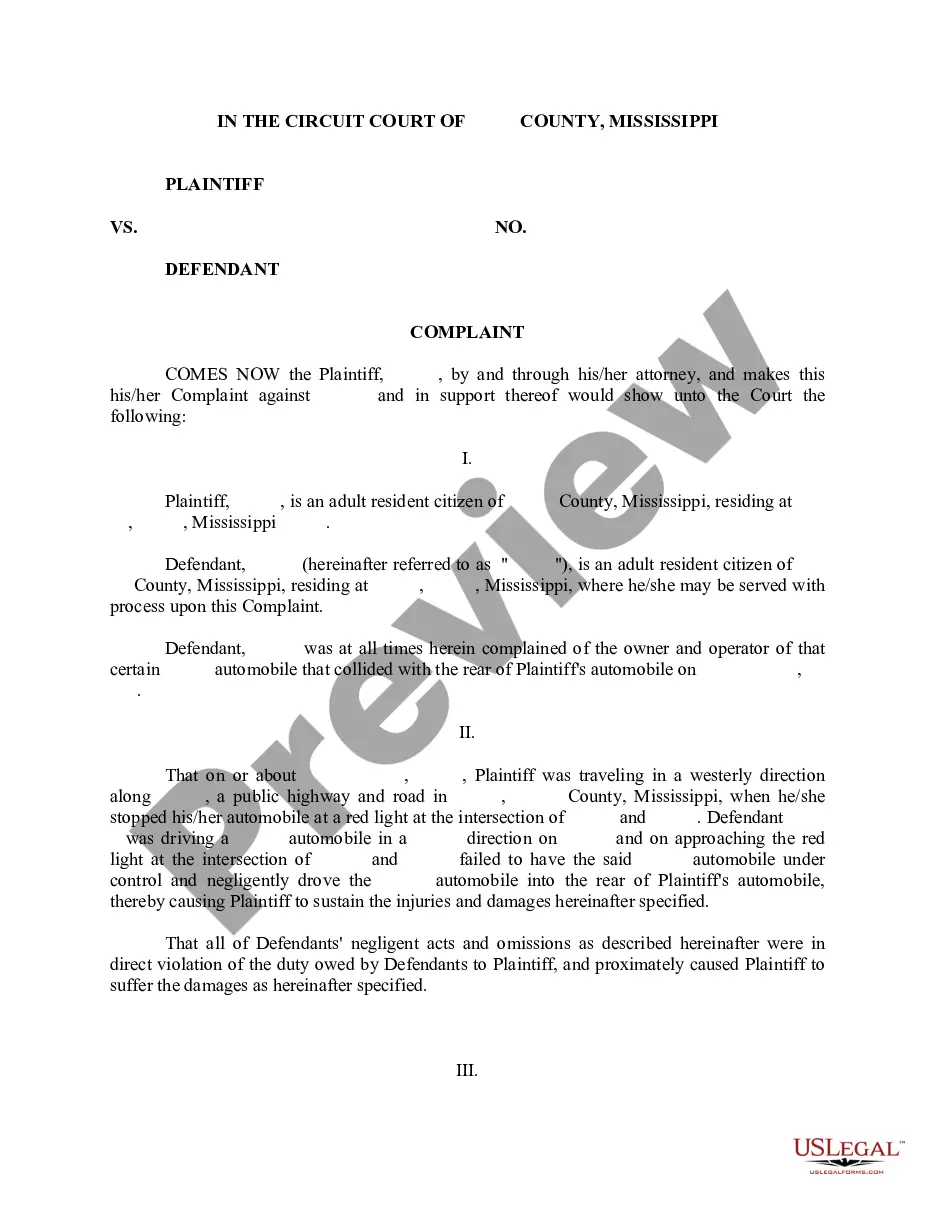
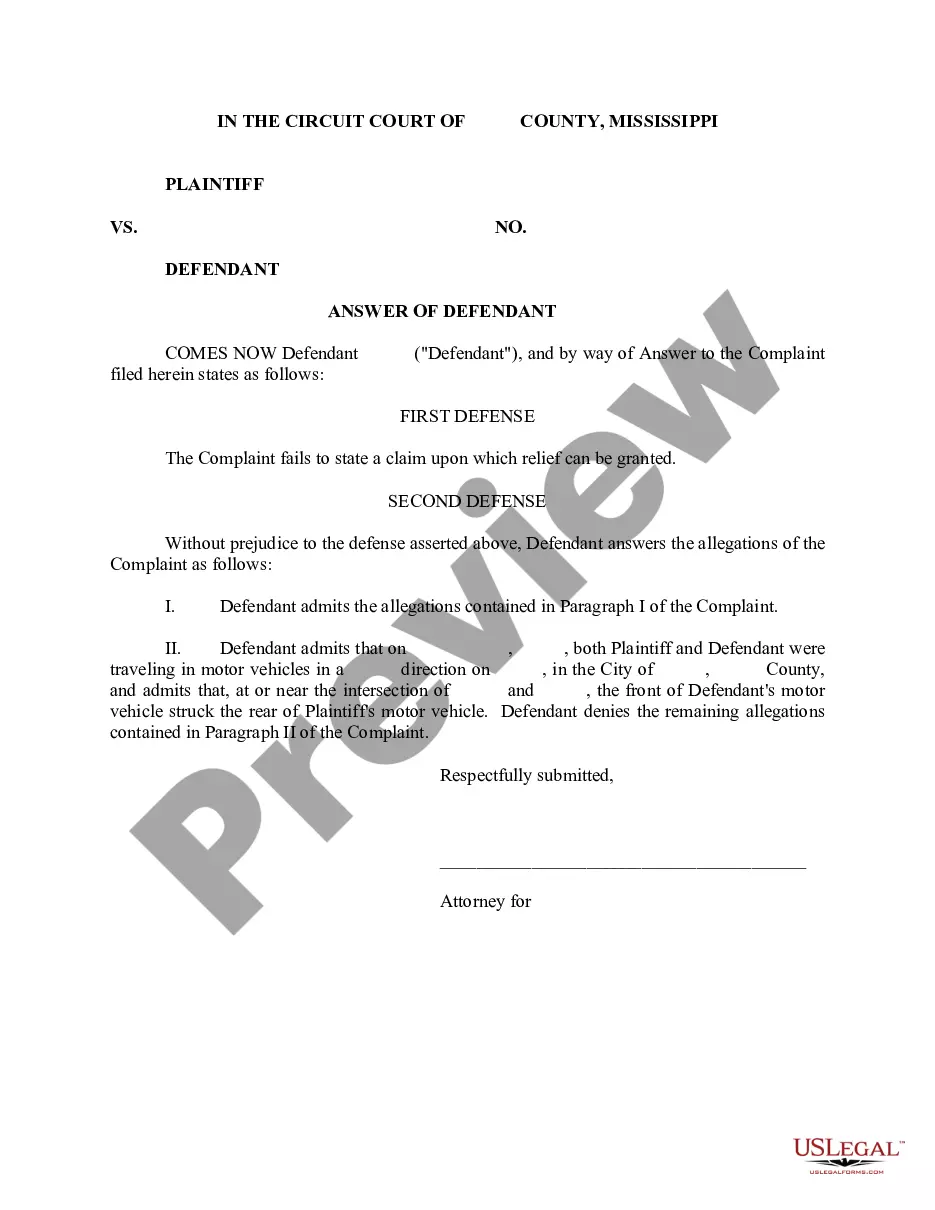
North Dakota Marital Domestic Separation and Property Settlement Agreement for persons with No Children, No Joint Property or Debts where Divorce Action Filed
Understanding this form
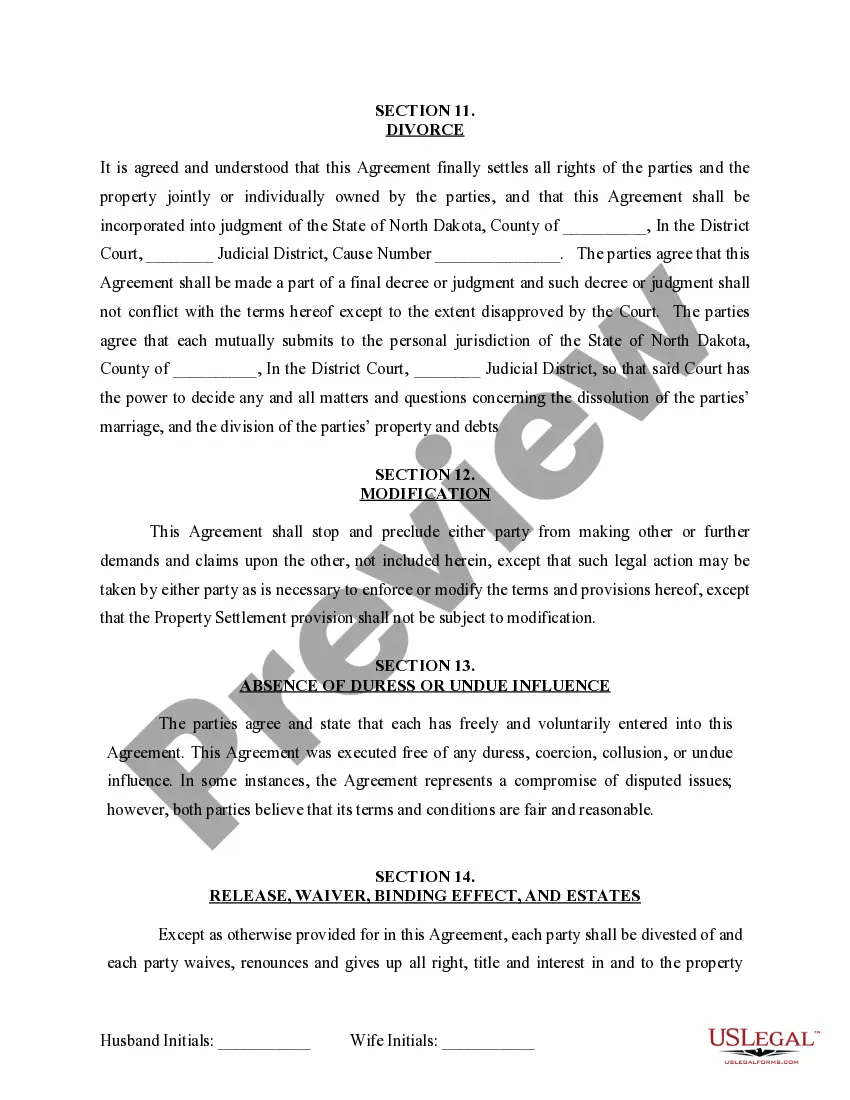
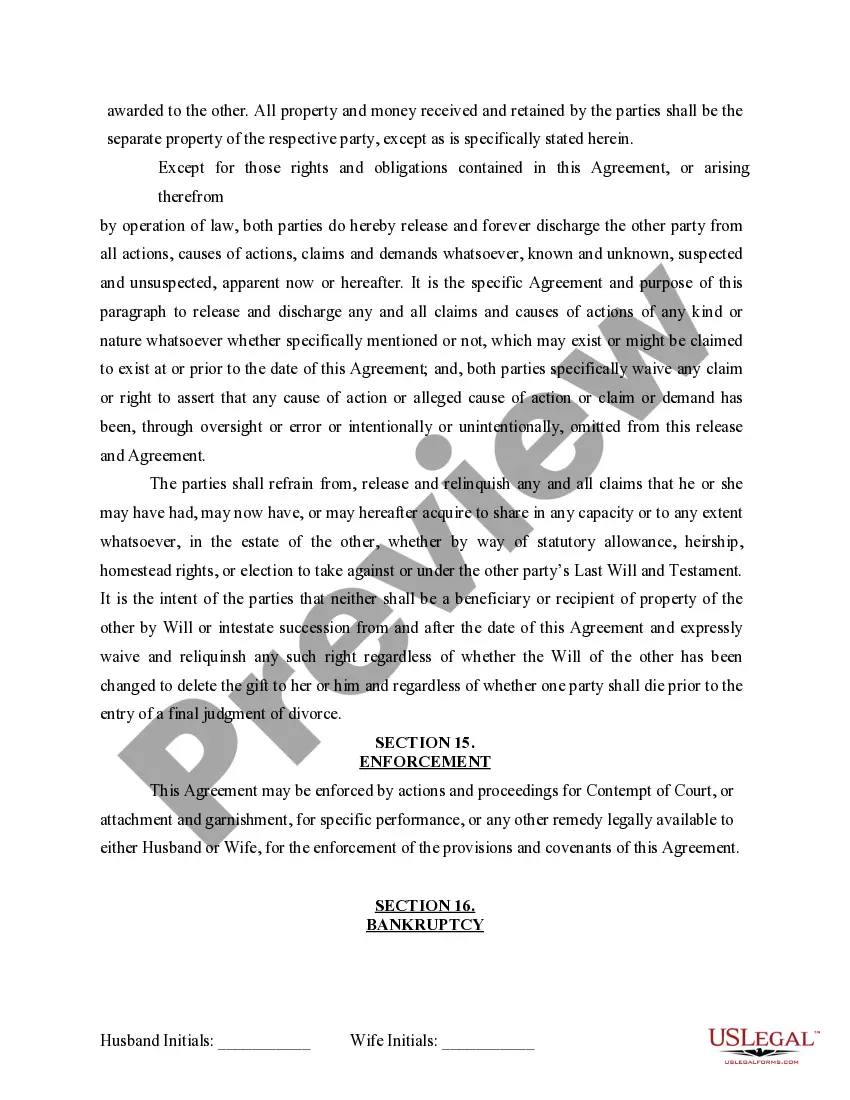
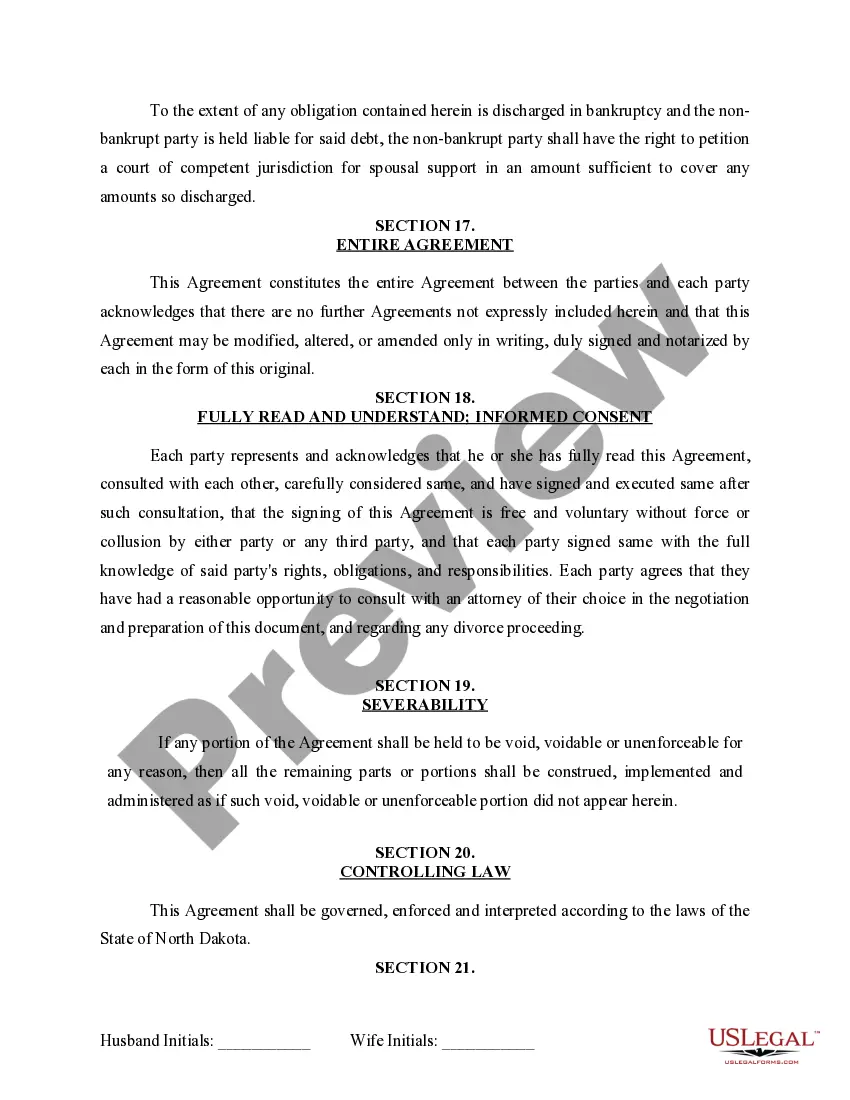
The Marital Domestic Separation and Property Settlement Agreement for persons with No Children is a legal document designed for couples seeking to formalize their separation before proceeding with a divorce. This agreement is specifically tailored for married individuals who do not have children, joint property, or joint debts. It outlines the division of assets and responsibilities, ensuring both parties have a clear understanding of their rights and obligations as they end their marriage.
What’s included in this form
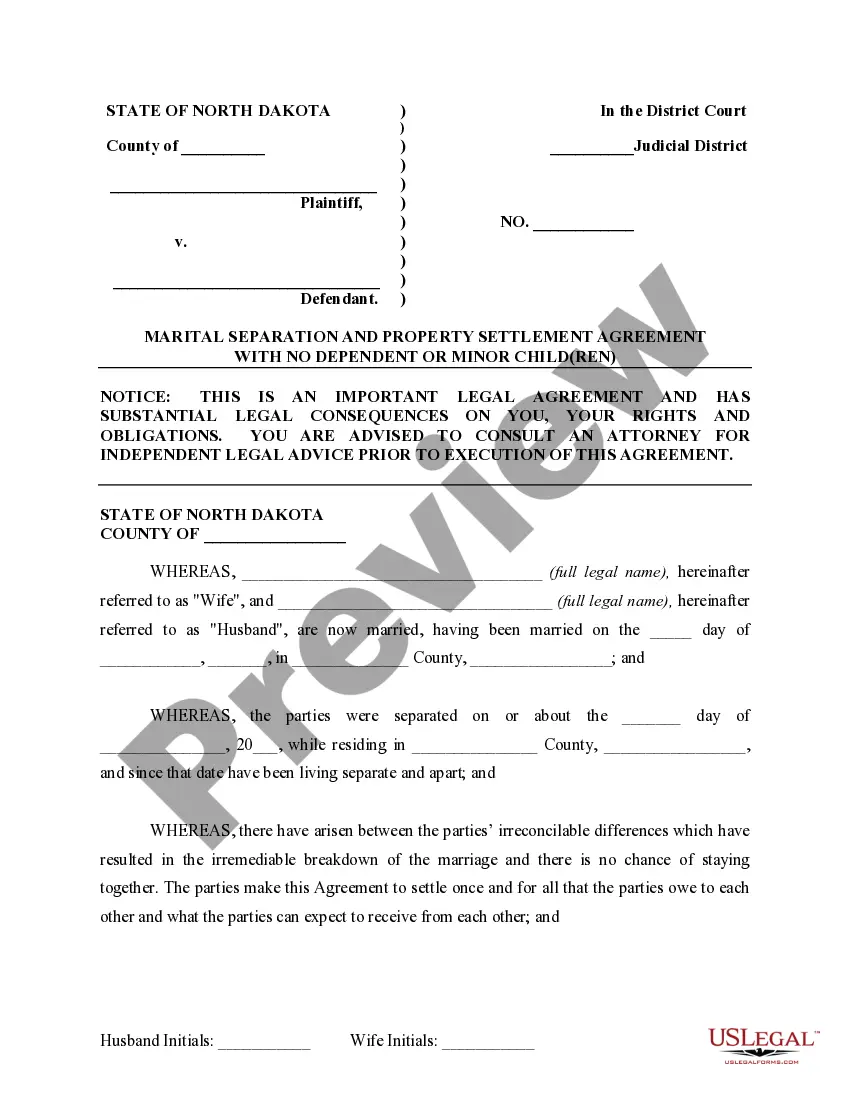
- Separation relinquishment: Outlines that both parties will live separately and freely manage their affairs.
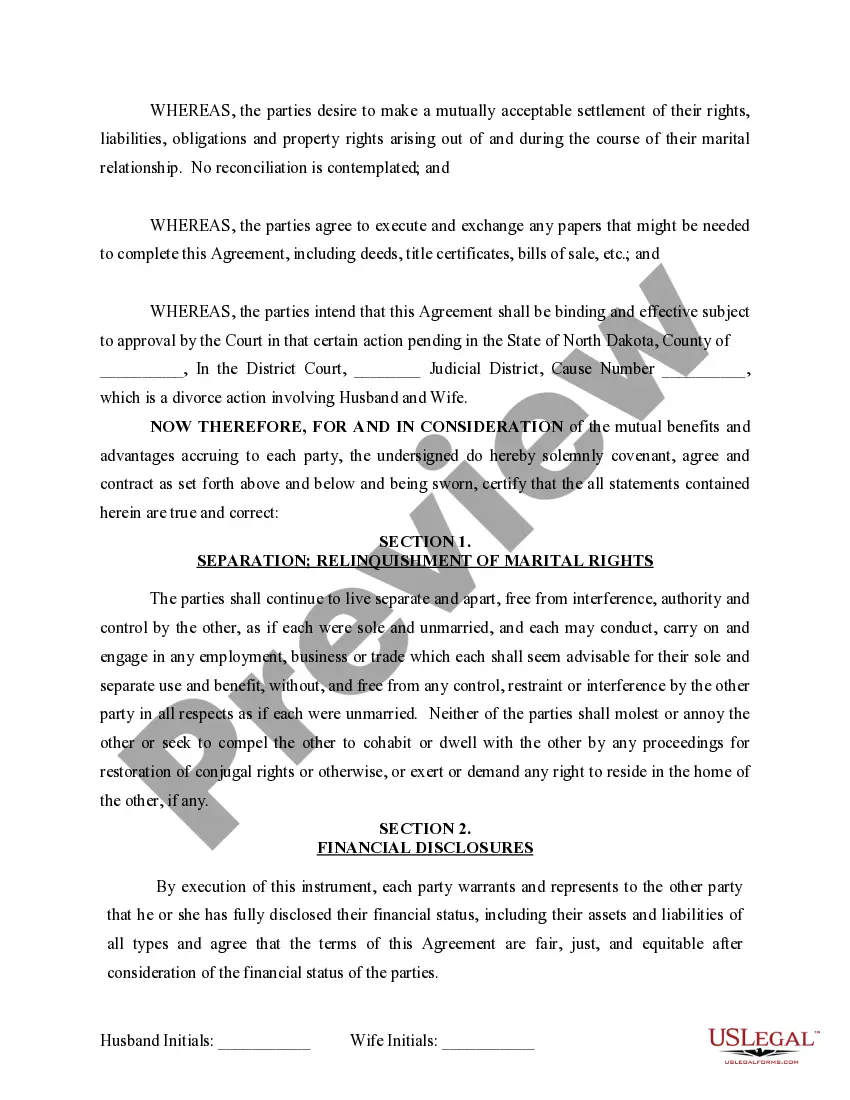
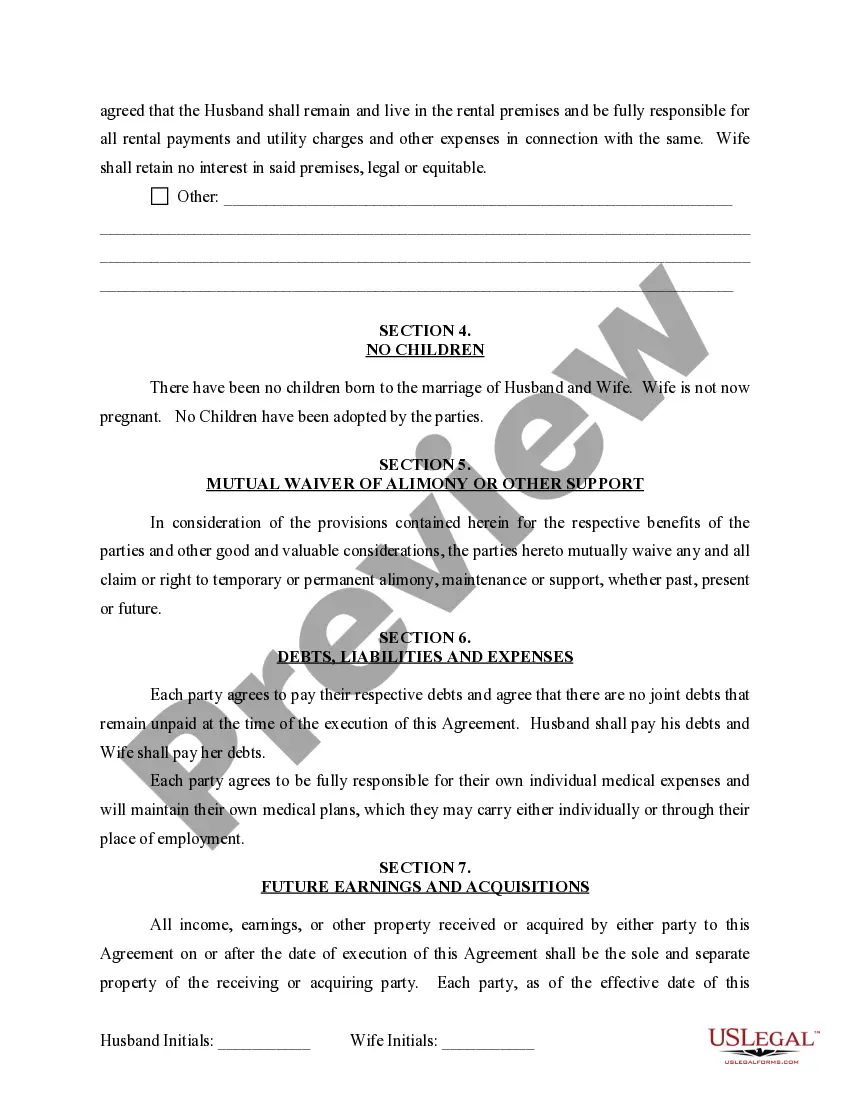
- Financial disclosures: Requires each party to disclose their financial status, including assets and liabilities.
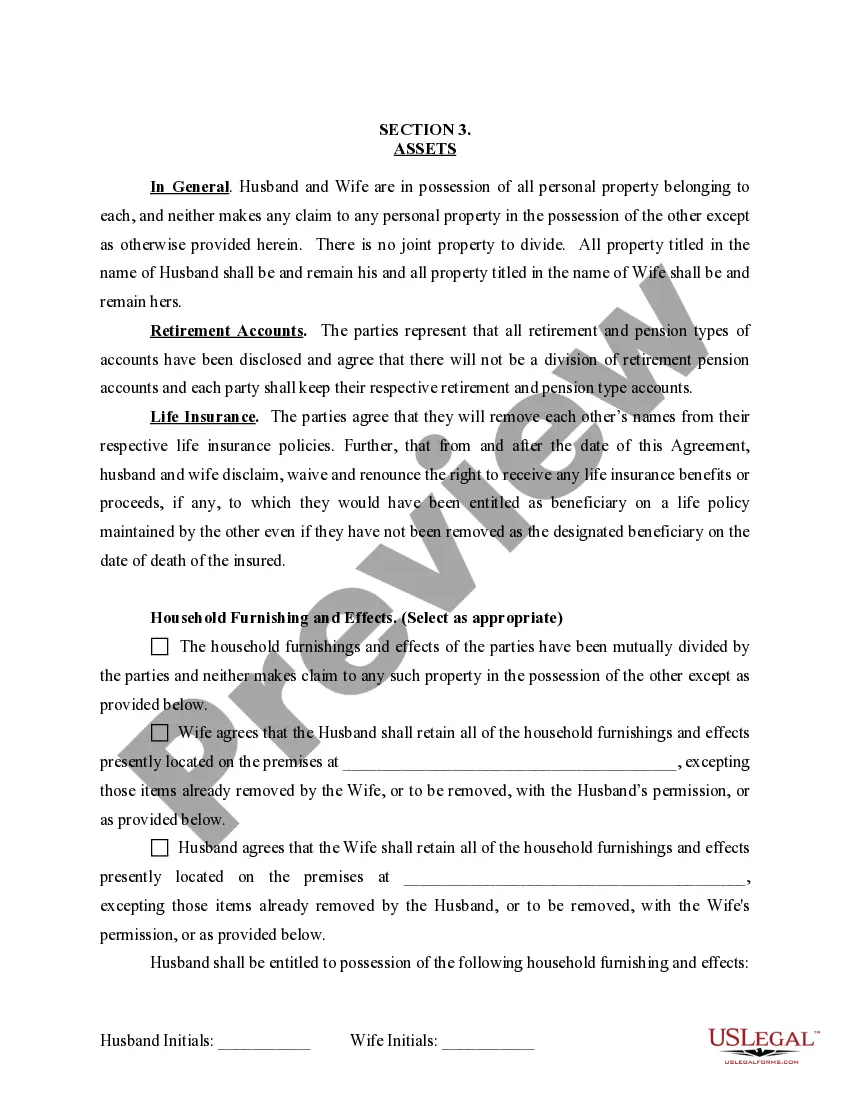
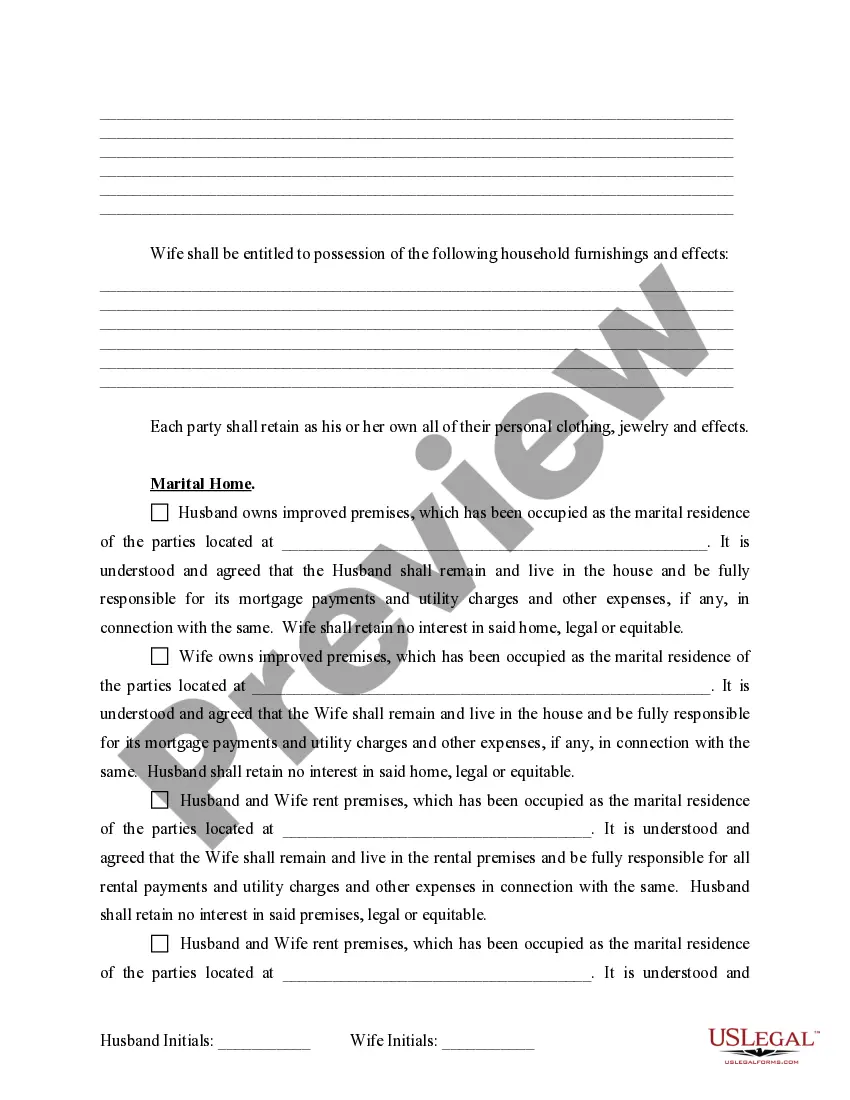
- Assets division: Clearly states that each spouse retains ownership of their respective property without joint claims.
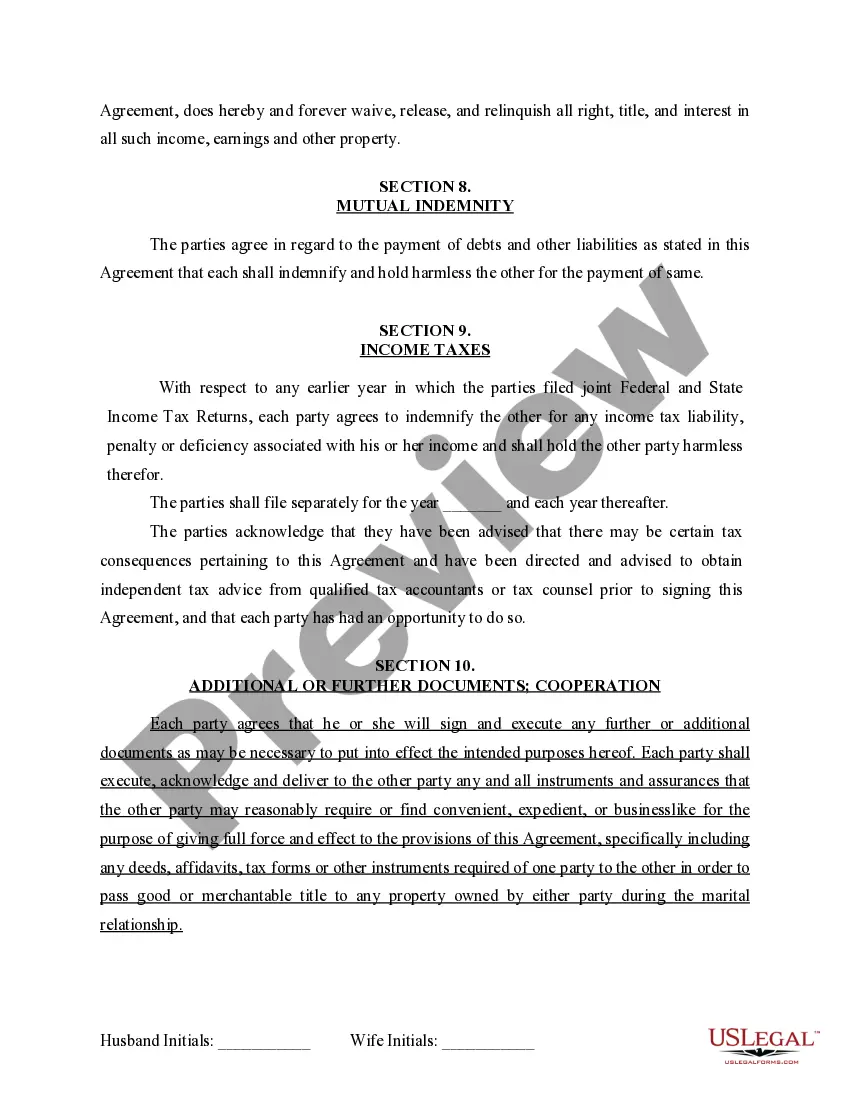
- Debts liability: Specifies that each party will be responsible for their own debts and expenses.
- Legal enforceability: Establishes that the agreement is binding and will be incorporated into the divorce proceedings.
- No children clause: Confirms that there are no children from the marriage, simplifying the separation process.


When to use this form
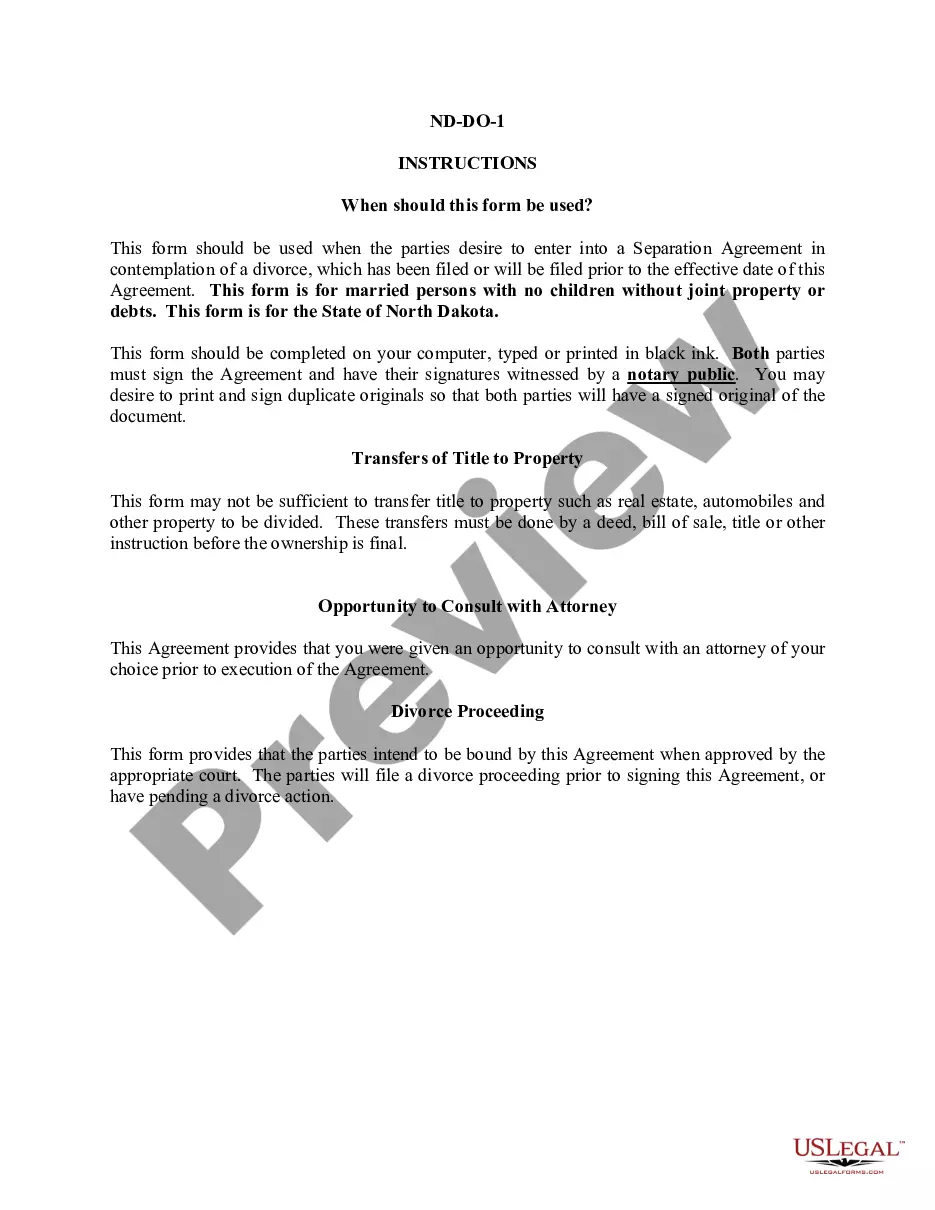
This form should be utilized when spouses decide to separate and file for divorce without the complexities of child custody or joint property. It is ideal for couples who have reached a mutual agreement on how to handle their assets and debts. Using this form can streamline the divorce process by ensuring that all financial matters are settled prior to court approval.
Who this form is for
- Married couples without children.
- Individuals seeking to finalize the division of assets and debts before divorce.
- Couples who have managed to reach an amicable agreement on their separation terms.
How to complete this form
- Identify the parties: Include the full names of both spouses in the agreement.
- Specify the effective date: Indicate the date the separation begins and any relevant divorce filing dates.
- Detail asset division: Clearly outline the property each party will retain and include specific itemization if necessary.
- Review financial disclosures: Ensure both parties fully disclose their financial information and liabilities.
- Sign and notarize: Both parties must sign the agreement and have their signatures witnessed by a notary public for verification.
Is notarization required?
This form needs to be notarized to ensure legal validity. US Legal Forms provides secure online notarization powered by Notarize, allowing you to complete the process through a verified video call, available anytime.
Get your form ready online
Our built-in tools help you complete, sign, share, and store your documents in one place.
Make edits, fill in missing information, and update formatting in US Legal Forms—just like you would in MS Word.
Download a copy, print it, send it by email, or mail it via USPS—whatever works best for your next step.
Sign and collect signatures with our SignNow integration. Send to multiple recipients, set reminders, and more. Go Premium to unlock E-Sign.
If this form requires notarization, complete it online through a secure video call—no need to meet a notary in person or wait for an appointment.
We protect your documents and personal data by following strict security and privacy standards.

Make edits, fill in missing information, and update formatting in US Legal Forms—just like you would in MS Word.

Download a copy, print it, send it by email, or mail it via USPS—whatever works best for your next step.

Sign and collect signatures with our SignNow integration. Send to multiple recipients, set reminders, and more. Go Premium to unlock E-Sign.

If this form requires notarization, complete it online through a secure video call—no need to meet a notary in person or wait for an appointment.

We protect your documents and personal data by following strict security and privacy standards.
Typical mistakes to avoid
- Failing to fully disclose financial assets and liabilities.
- Not having the agreement notarized, which is required for legal validity.
- Overlooking the itemization of property and assets, leading to disputes later.
- Not specifying future liabilities or debts that may arise post-agreement.
Benefits of using this form online
- Convenience of accessing and completing the form at any time from any device.
- Editability allows couples to customize the agreement to their specific needs.
- Reliable templates drafted by licensed attorneys ensure legal compliance and accuracy.
Looking for another form?



Form popularity
FAQ
Rights to Property after Separation: When You're Married and Getting a Divorce. The benefit of getting married is that, in the event of a divorce or separation, you are entitled to a share of the property.The right to stay in your home unless a court order excludes it.
At divorce, community property is generally divided equally between the spouses, while each spouse keeps his or her separate property. Equitable distribution. In all other states, assets and earnings accumulated during marriage are divided equitably (fairly), but not necessarily equally.
Though the term non-marital property often refers to any personal or real property owned prior to, and brought into the marriage, it can also refer to things such as inheritances and gifts made to only one spouse.
Upon divorce, each spouse is entitled to an equitable distribution, which is not necessarily 50 percent (but often is).Therefore, if a spouse is unemployed due to a disability that prevents him or her from working, a court may allocate more than 50 percent of an asset to that spouse.
In those situations where one of the spouses in a gray divorce is still working, the non-working spouse is virtually guaranteed to be entitled to a spousal maintenance award unless the income from the assets being divided is so significant that the recipient spouse can meet his or her reasonable needs without financial
Rights to Property after Separation: When You're Married and Getting a Divorce. The benefit of getting married is that, in the event of a divorce or separation, you are entitled to a share of the property.The right to stay in your home unless a court order excludes it.
Don't publicize it. Tell someone you are getting a divorce or separation, and suddenly everyone has something to say. Don't move out. Don't maintain the status quo. Don't date just to date. Don't delay the inevitable.
If you're in the process of filing for divorce, you may be entitled to, or obligated to pay, temporary alimony while legally separated. In many instances, one spouse may be entitled to temporary support during the legal separation to pay for essential monthly expenses such as housing, food and other necessities.
Marital Settlement Agreements, reached between the parties in writing and signed by the parties, become legally binding when approved by the court at the time of the final court hearing.Once approved by the court, such post judgment stipulations do become legally binding and enforceable between the parties.