Mortgage Demand Letter
Understanding this form
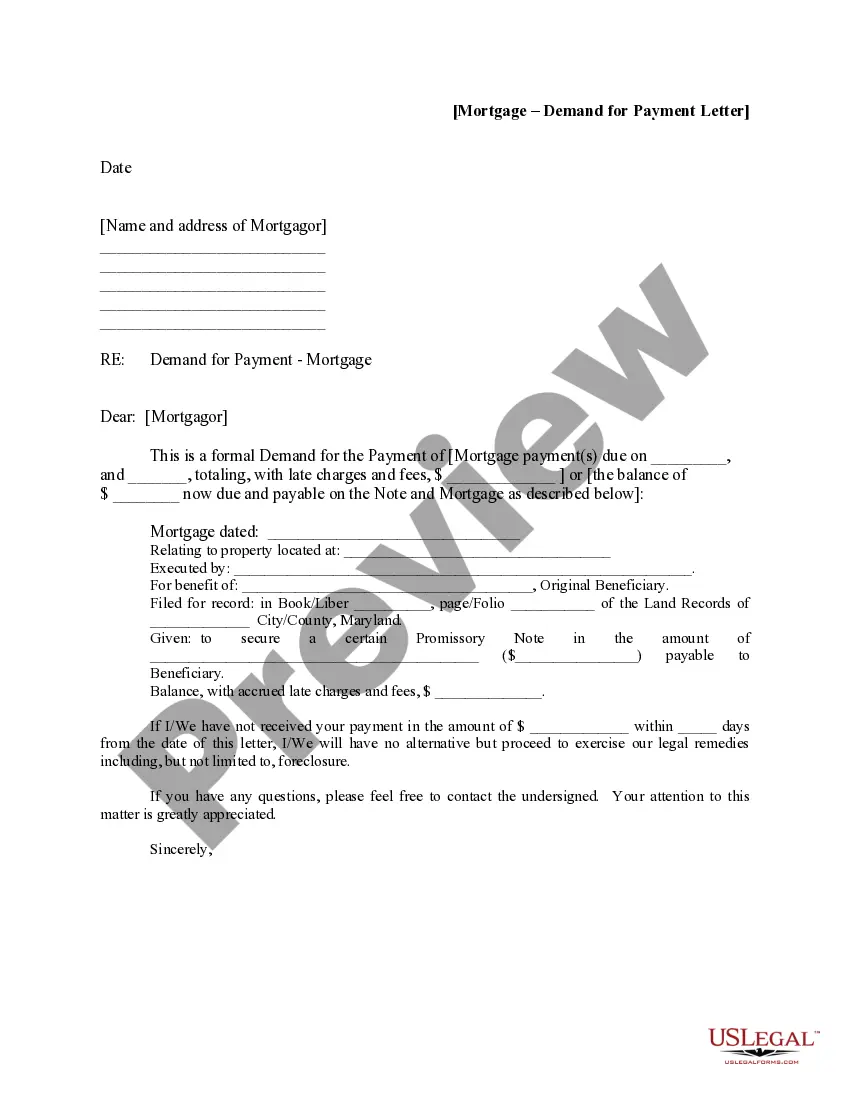
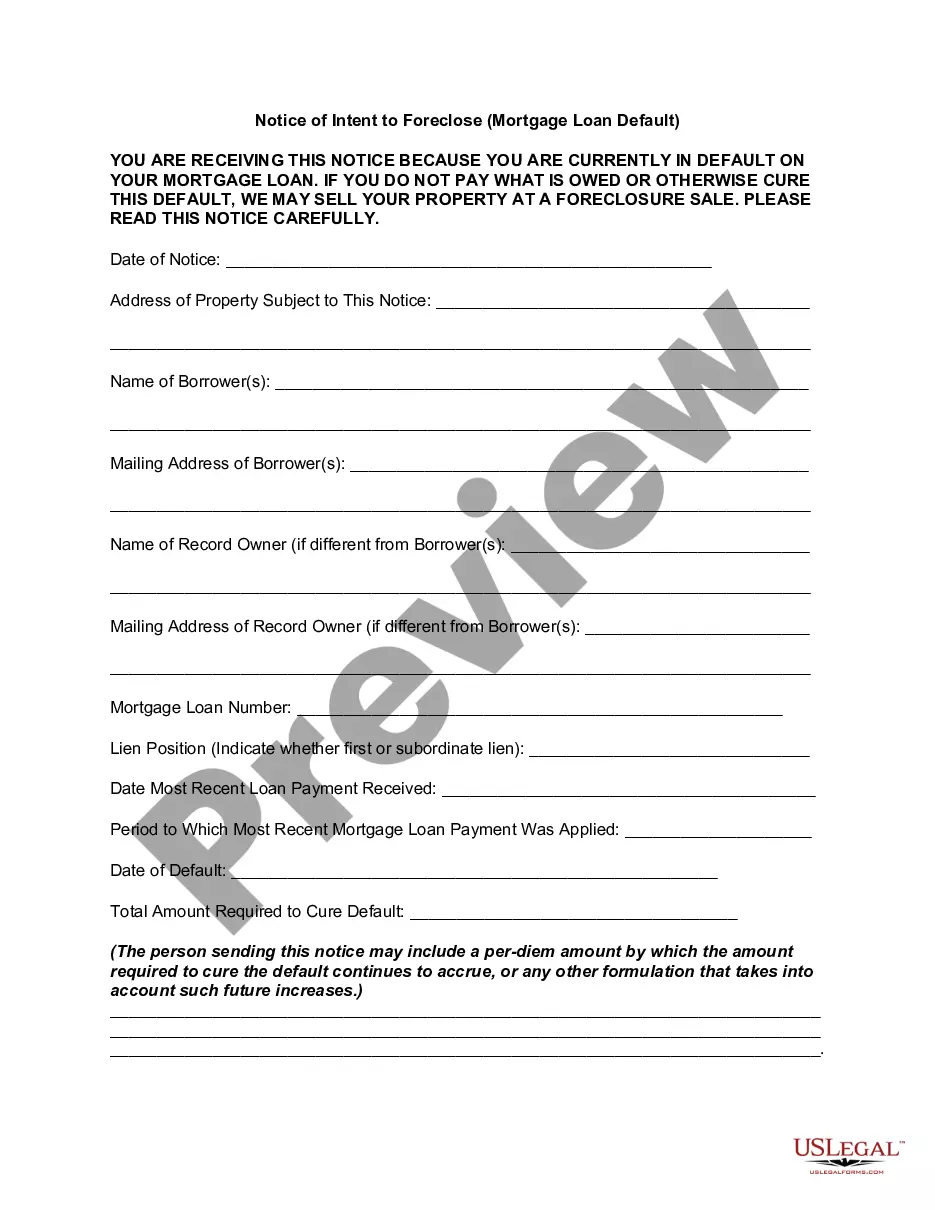
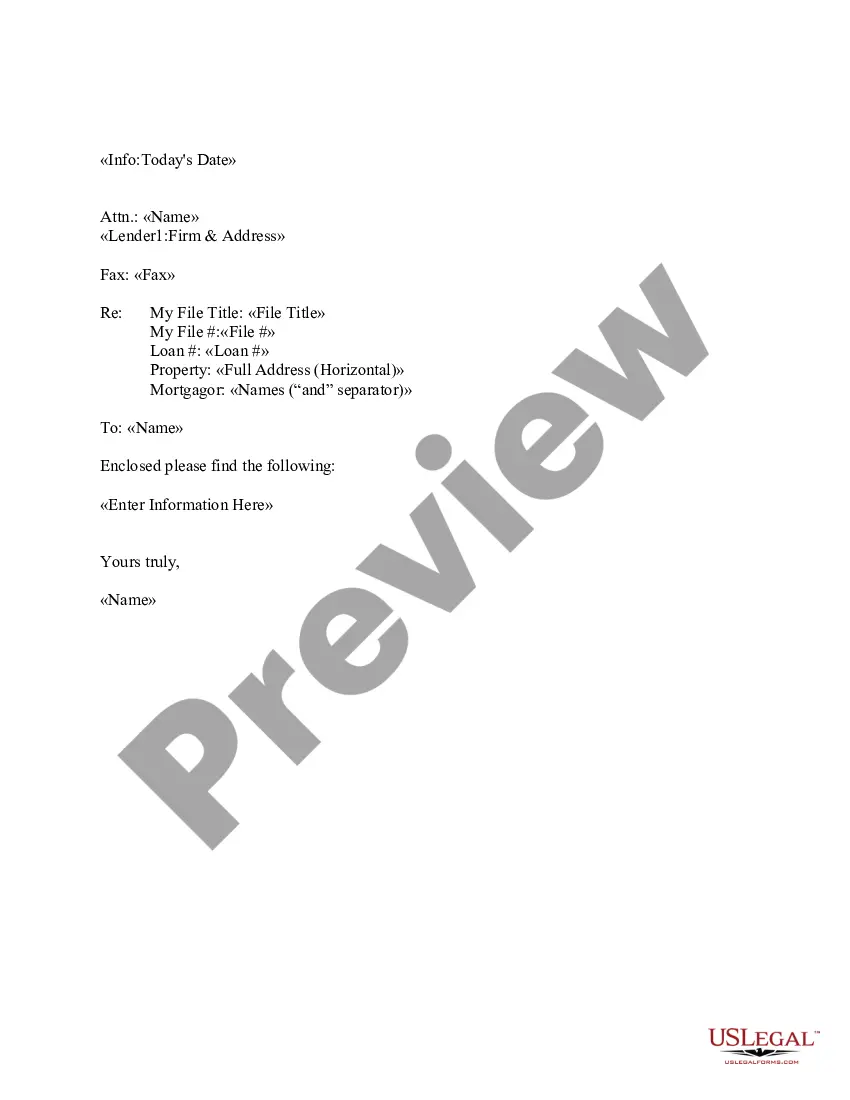
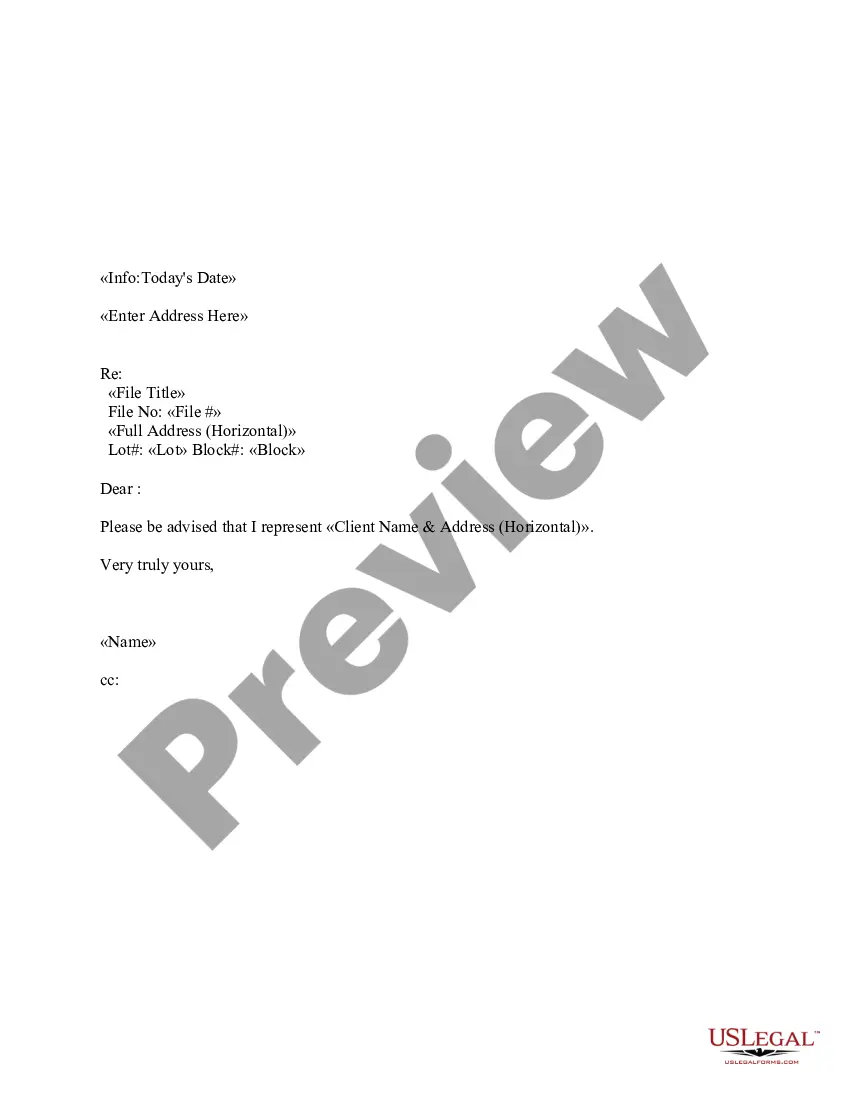
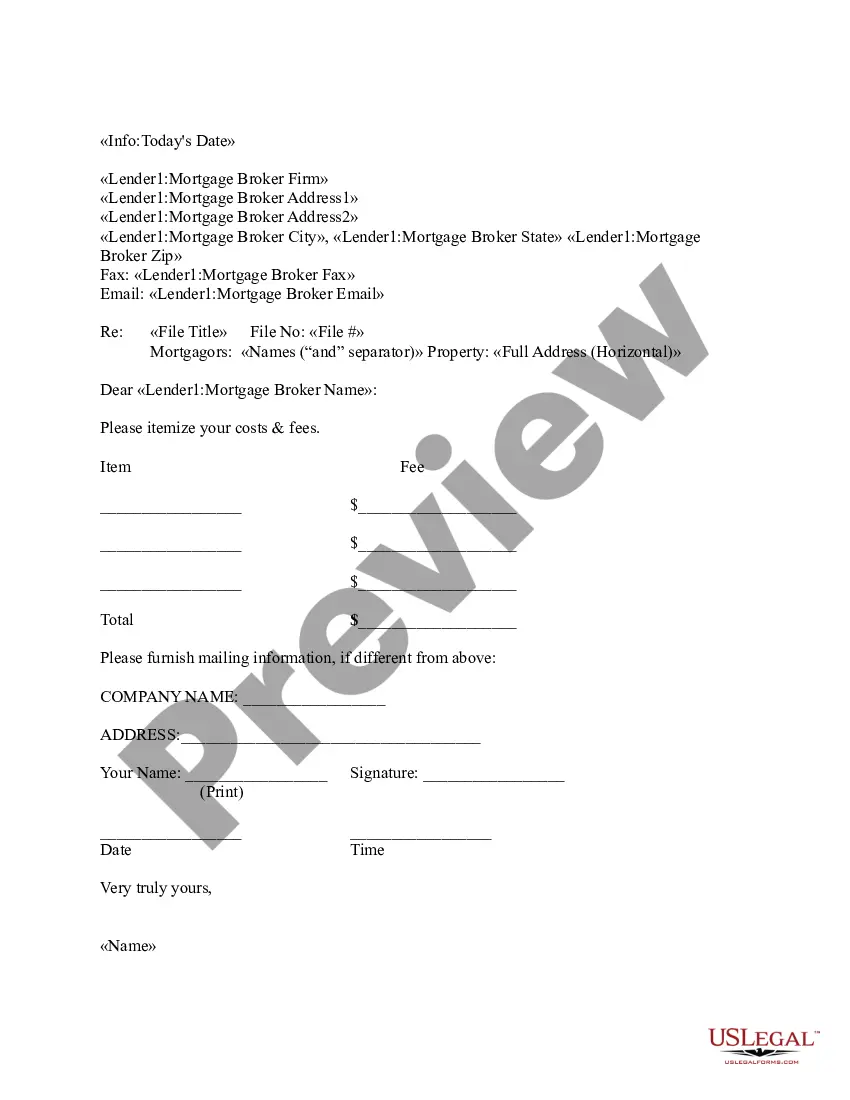
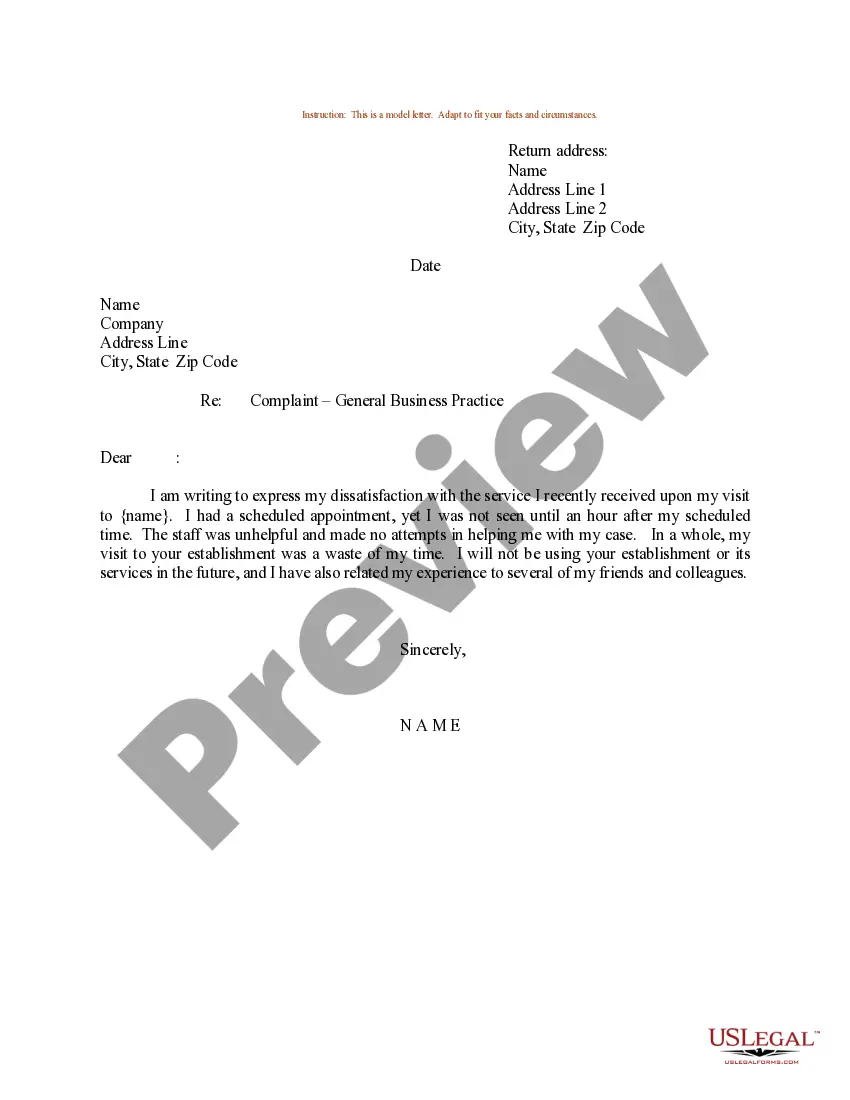
The Mortgage Demand Letter is a legal document that formally requests the payment of overdue mortgage payments or the full balance of a mortgage. This letter serves as a notification to the mortgagor about outstanding payments and the potential consequences of non-payment, such as foreclosure. Unlike general collection letters, this specific demand emphasizes the legal obligation tied to mortgage agreements.
Form components explained
- Date of the letter
- Name and address of the mortgagor
- Details of the mortgage payment(s) due
- Total amount owed, including late fees
- Description of the mortgage and property involved
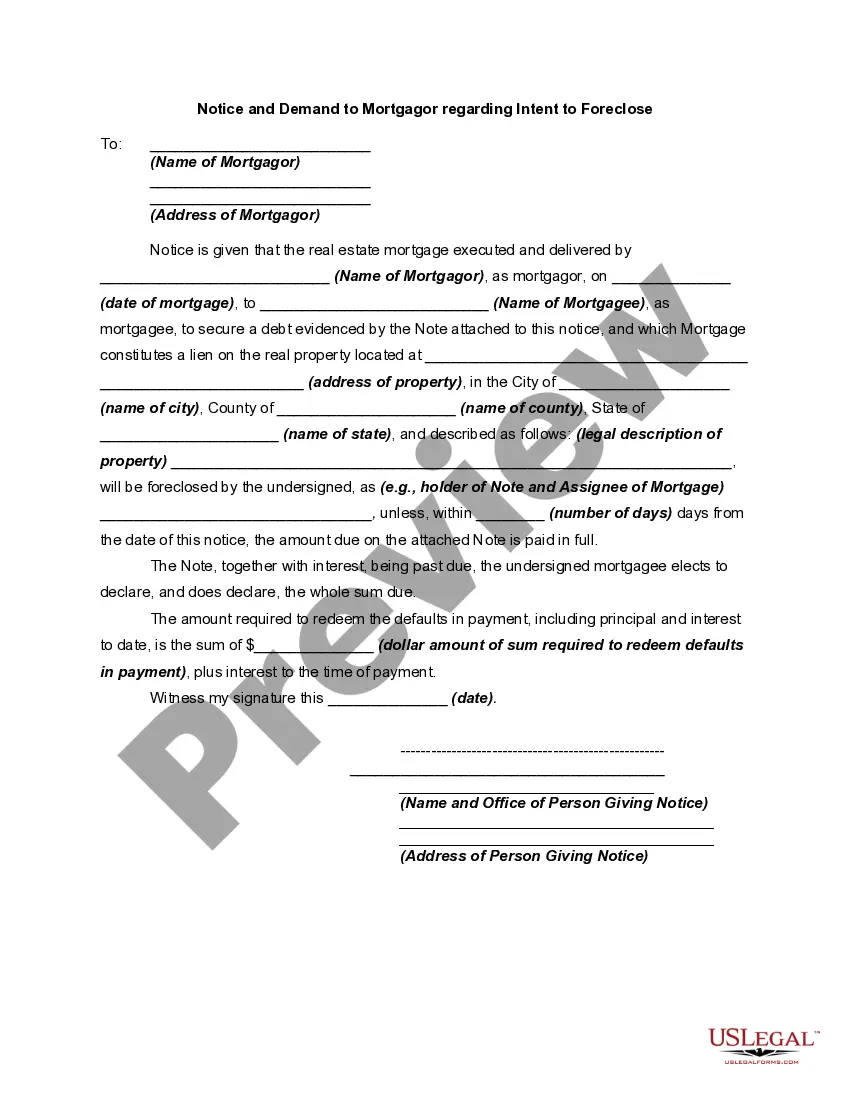
- Consequences of non-payment, including possible foreclosure
- Contact information for further inquiries
Common use cases
This form is commonly used when a mortgage borrower has failed to make their required payments. It is essential in initiating the collection process, especially when the lender is considering or preparing to take legal action, such as foreclosure. This letter should be sent after multiple reminders or when a borrower has significantly delayed payment.
Who this form is for
- Lenders or mortgage holders needing to collect overdue payments
- Attorneys representing lenders in mortgage disputes
- Financial institutions managing mortgage accounts
- Real estate professionals involved in mortgage agreements
How to prepare this document
- Enter the date of the letter at the top.
- Fill in the full name and address of the mortgagor.
- Specify the mortgage payment(s) due and the total amount owed, including any late charges.
- Provide details of the mortgage, including the original date and the property address.
- Sign the letter and include your contact information for any questions from the mortgagor.
Is notarization required?
This form does not typically require notarization to be legally valid. However, some jurisdictions or document types may still require it. US Legal Forms provides secure online notarization powered by Notarize, available 24/7 for added convenience.
Get your form ready online
Our built-in tools help you complete, sign, share, and store your documents in one place.
Make edits, fill in missing information, and update formatting in US Legal Forms—just like you would in MS Word.
Download a copy, print it, send it by email, or mail it via USPS—whatever works best for your next step.
Sign and collect signatures with our SignNow integration. Send to multiple recipients, set reminders, and more. Go Premium to unlock E-Sign.
If this form requires notarization, complete it online through a secure video call—no need to meet a notary in person or wait for an appointment.
We protect your documents and personal data by following strict security and privacy standards.

Make edits, fill in missing information, and update formatting in US Legal Forms—just like you would in MS Word.

Download a copy, print it, send it by email, or mail it via USPS—whatever works best for your next step.

Sign and collect signatures with our SignNow integration. Send to multiple recipients, set reminders, and more. Go Premium to unlock E-Sign.

If this form requires notarization, complete it online through a secure video call—no need to meet a notary in person or wait for an appointment.

We protect your documents and personal data by following strict security and privacy standards.
Mistakes to watch out for
- Failing to include all required payment details, such as total amount due and payment due dates.
- Not specifying the potential consequences of non-payment, such as foreclosure.
- Leaving out the date or inaccurate information about the property or mortgage.
Benefits of completing this form online
- Access legal templates quickly and conveniently from anywhere.
- Edit the form easily to fit your specific needs.
- Ensure a professional standard in legal correspondence.
Summary of main points
- The Mortgage Demand Letter is vital for lenders to enforce payment obligations.
- Accuracy is key for all details, including amounts owed and property information.
- This document can initiate legal processes if payments remain outstanding.
Looking for another form?
Form popularity
FAQ
Full names of parties (borrower and lender) Repayment amount (principal and interest) Payment plan. Consequences of non-payment (default and collection) Notarization (if necessary) Other common details.
If two mortgage payments are missed, the bank or lender may issue the homeowner a so called Demand Letter.The Demand letter is a much more formal notice that if the loan is not paid and is brought current in a very short period of time, that the lender will proceed with filing the foreclosure at the local court.
No, a demand letter is not necessary prior to filing a superior court limited/unlimited jurisdiction lawsuit in California.
LETTER OF DEMAND BACKGROUND A demand generally amounts to a request for payment or a request to perform in terms of a legal obligation. A letter of demand is generally an initial step in the litigation process. In certain instances, a letter of demand is necessary to place the debtor in mora.
Involved parties information (the claimant and recipient's information) The date when the debt was incurred. If there is a dispute, the date when there was improper charging should be included.
Type your letter. Concisely review the main facts. Be polite. Write with your goal in mind. Ask for exactly what you want. Set a deadline. End the letter by stating you will promptly pursue legal remedies if the other party does not meet your demand. Make and keep copies.
Although an attorney often writes the demand letter, you can also do it yourself in several cases:If you have a fairly simple legal issue and you want to go through the process yourself, without an attorney. If you want to clarify your thoughts on what happened and what you want.
Full names of parties (borrower and lender) Repayment amount (principal and interest) Payment plan. Consequences of non-payment (default and collection) Notarization (if necessary) Other common details.