Ohio Complex Will with Credit Shelter Marital Trust for Large Estates
Understanding this form
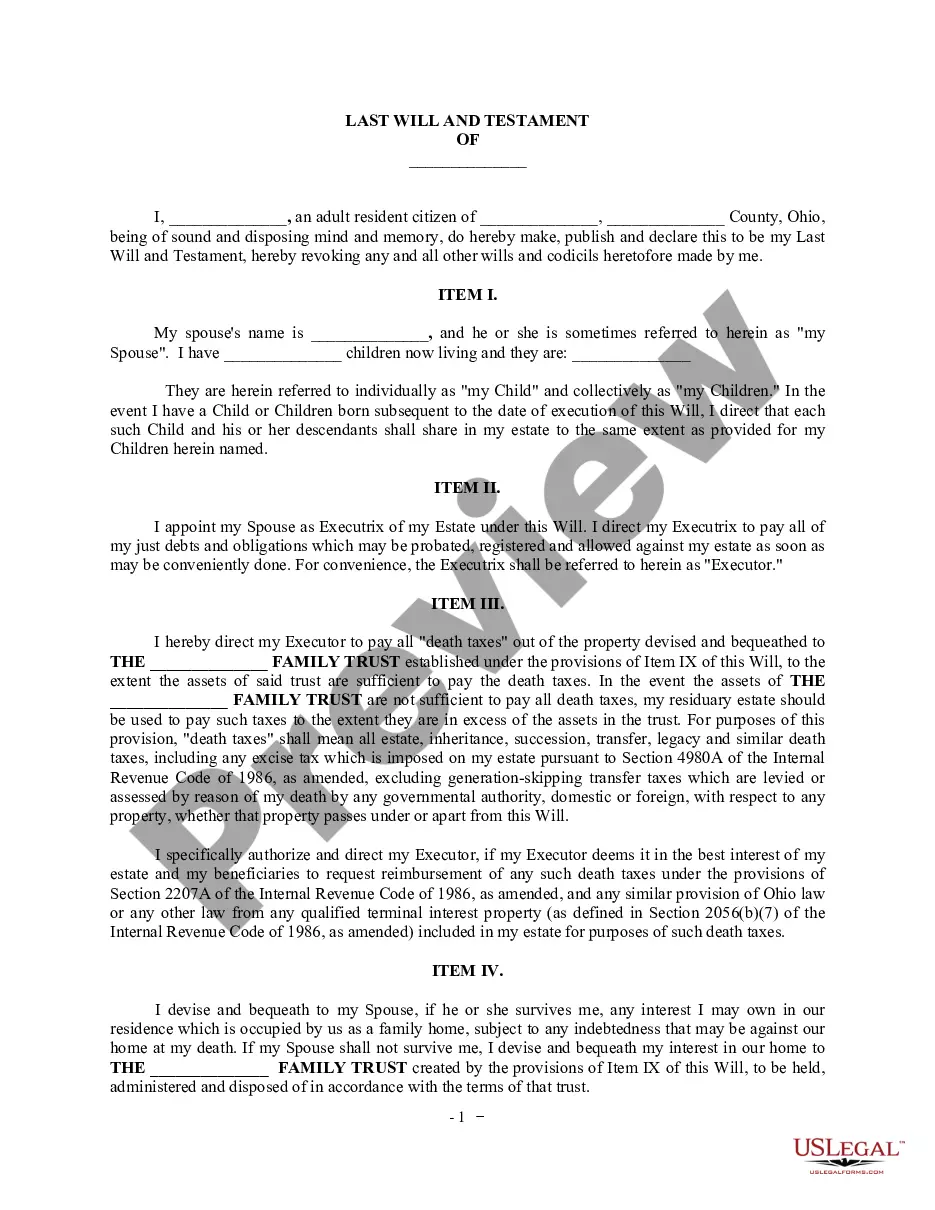
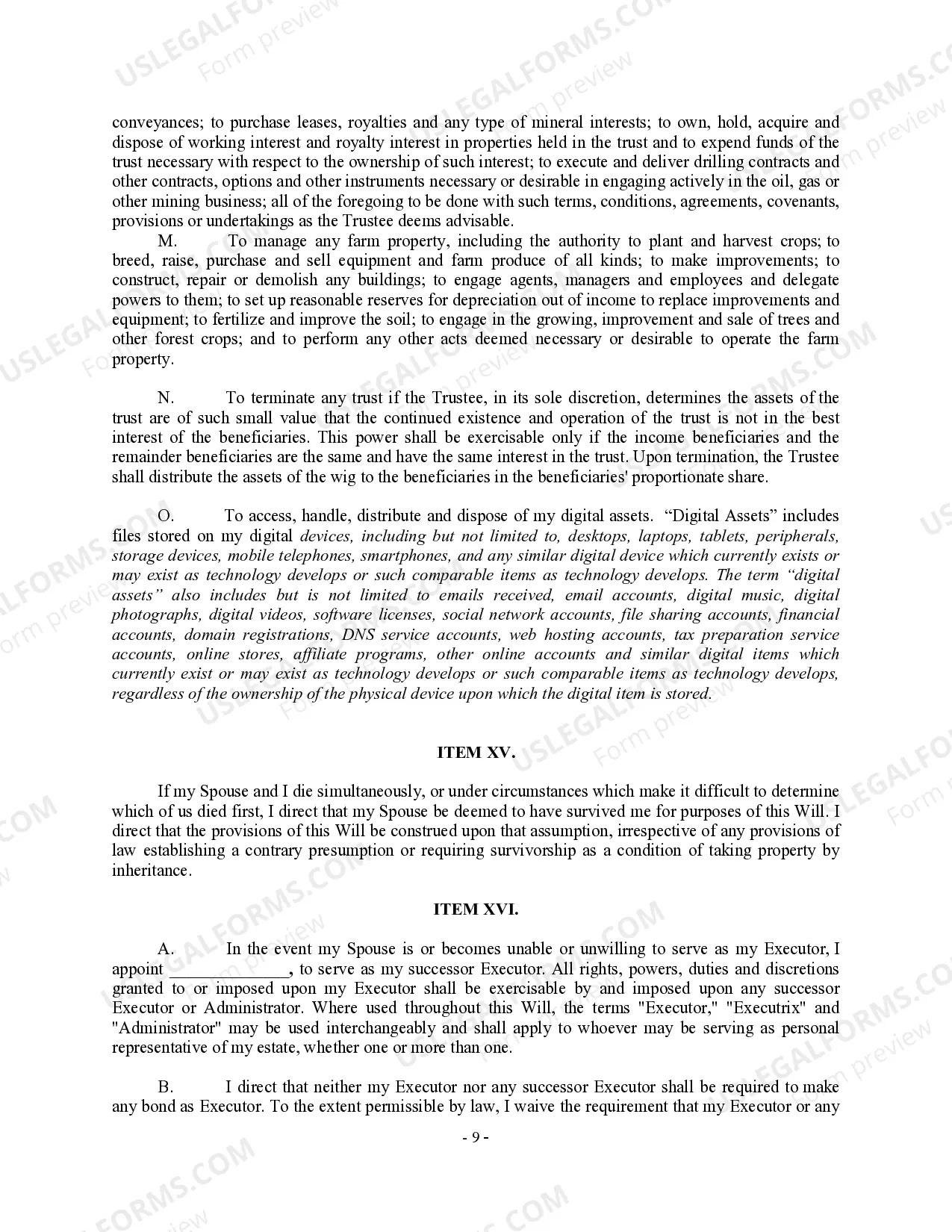
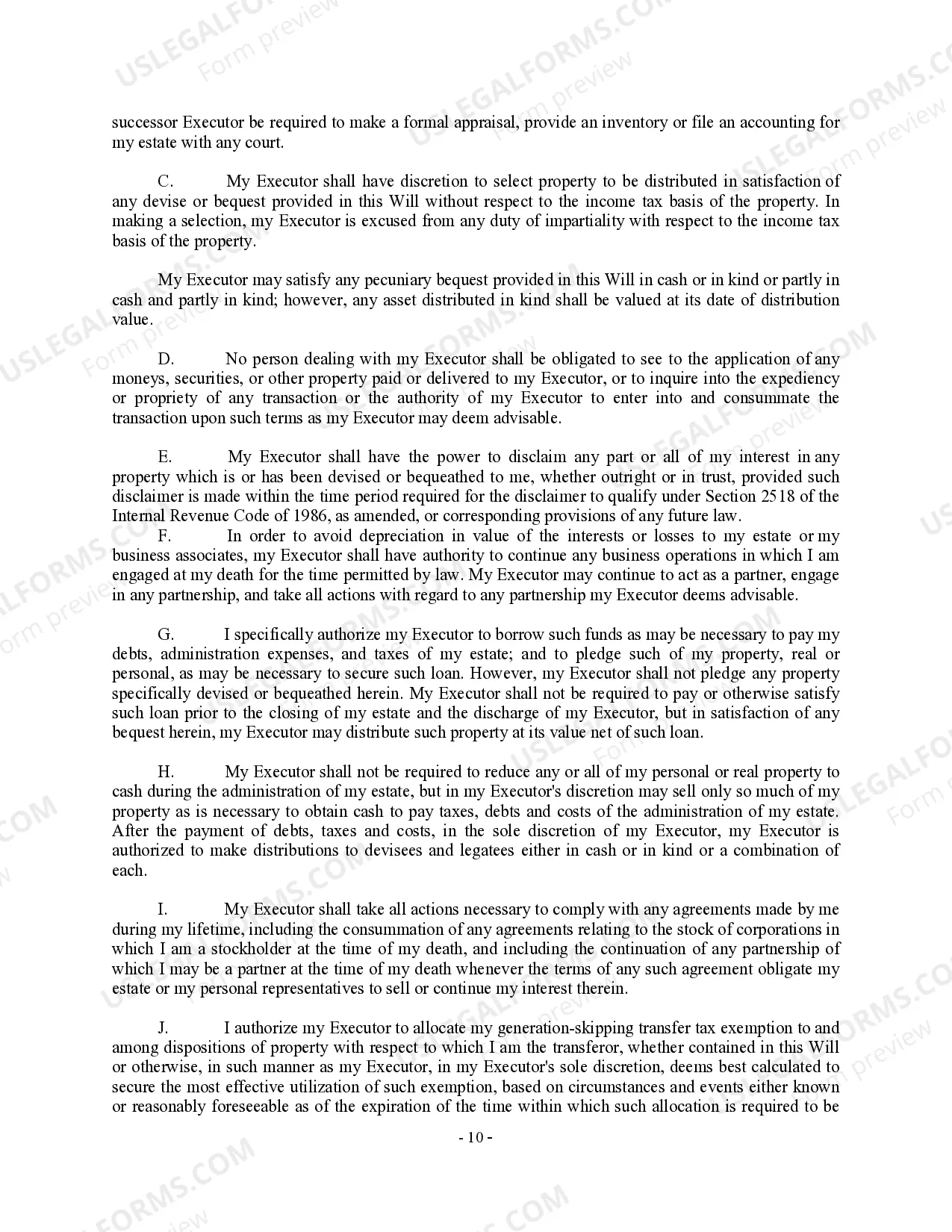
The Complex Will with Credit Shelter Marital Trust for Large Estates is a tailored legal document designed for couples seeking to optimize estate tax benefits. This will structure allows a significant portion of the estate to pass free of federal estate taxes by utilizing a marital trust. Unlike simpler wills, this complex will specifically addresses high net-worth estates, ensuring that both spouses can maximize their tax-exempt inheritance for their children and beneficiaries.
Key parts of this document
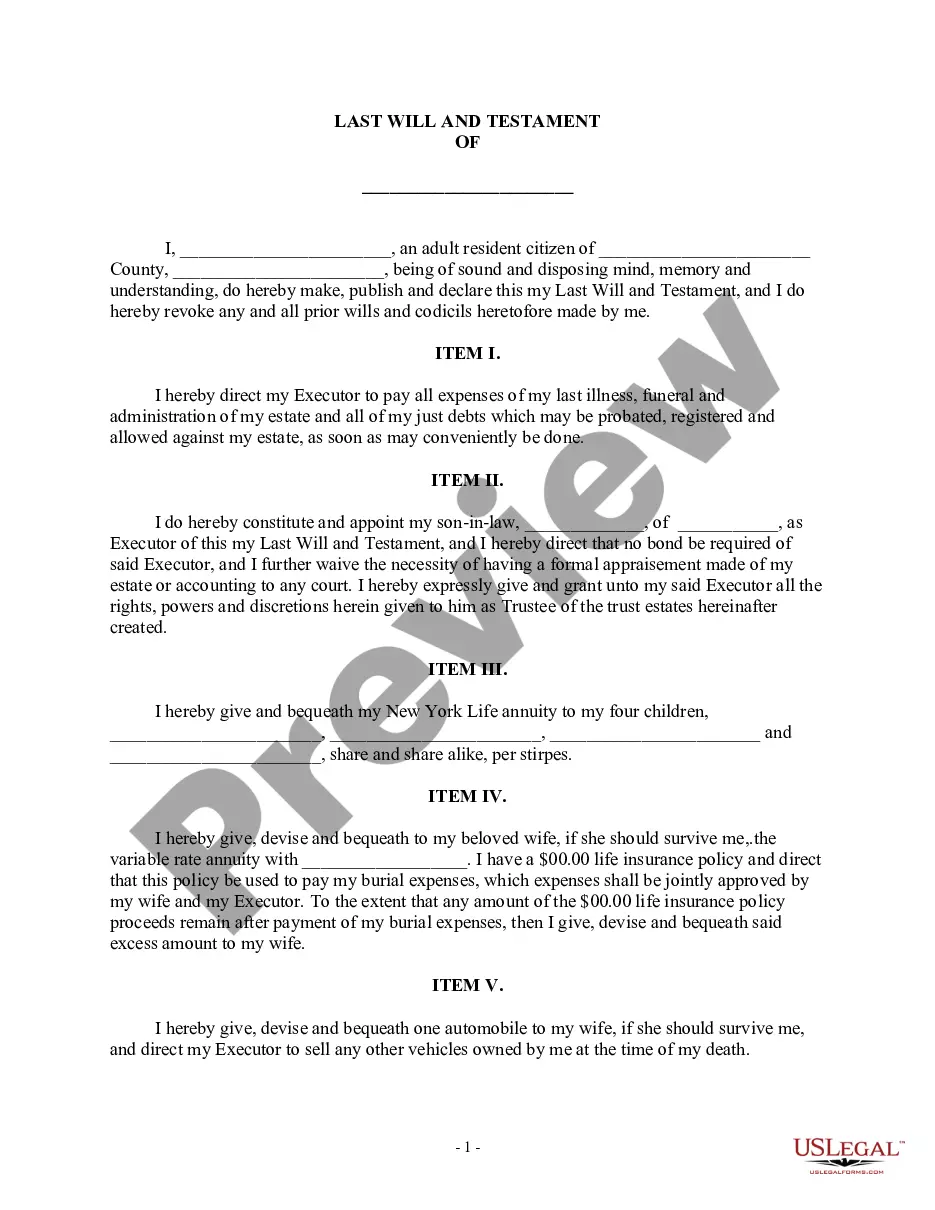
- Identification of the testator and spouse, including their residency details.
- Appointment of an executor responsible for estate management.
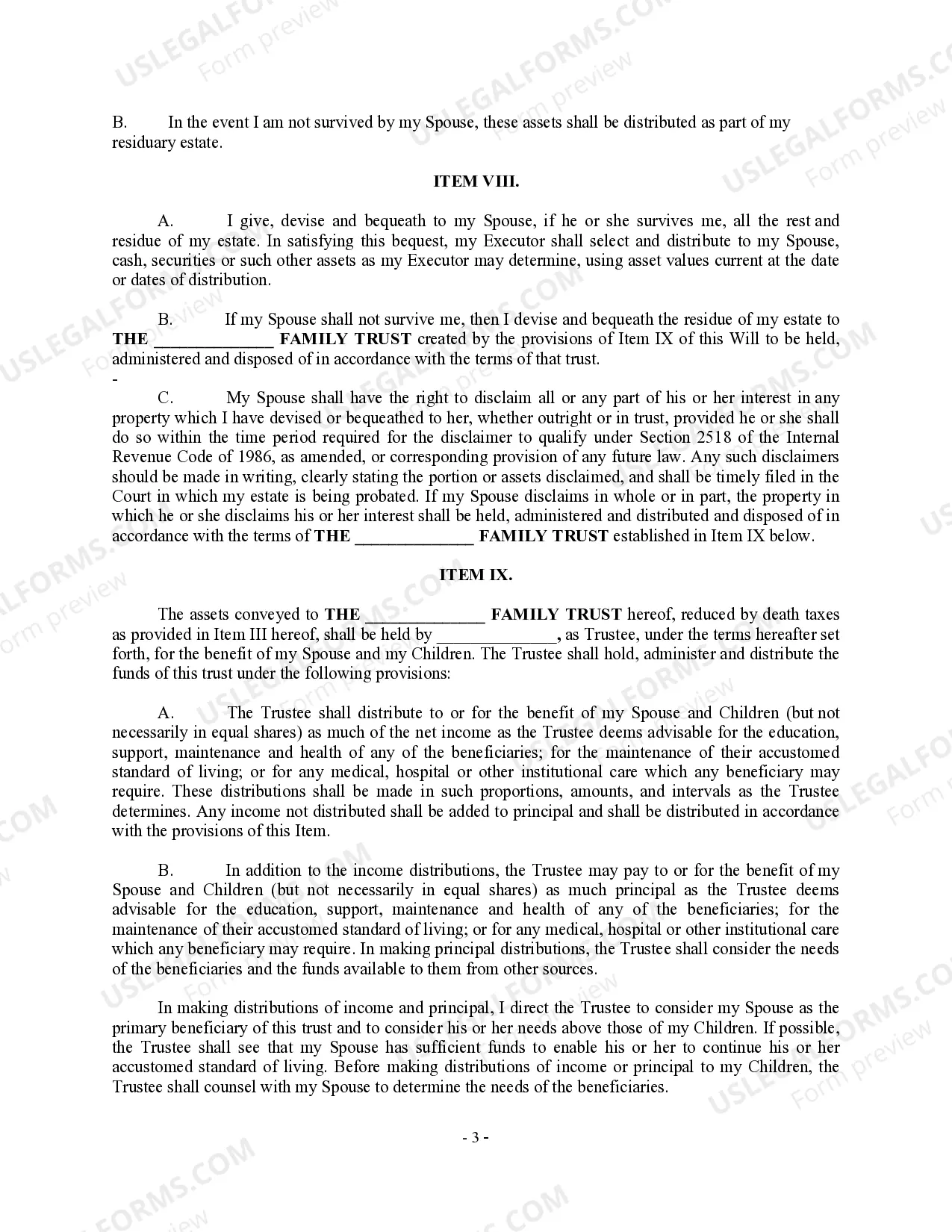
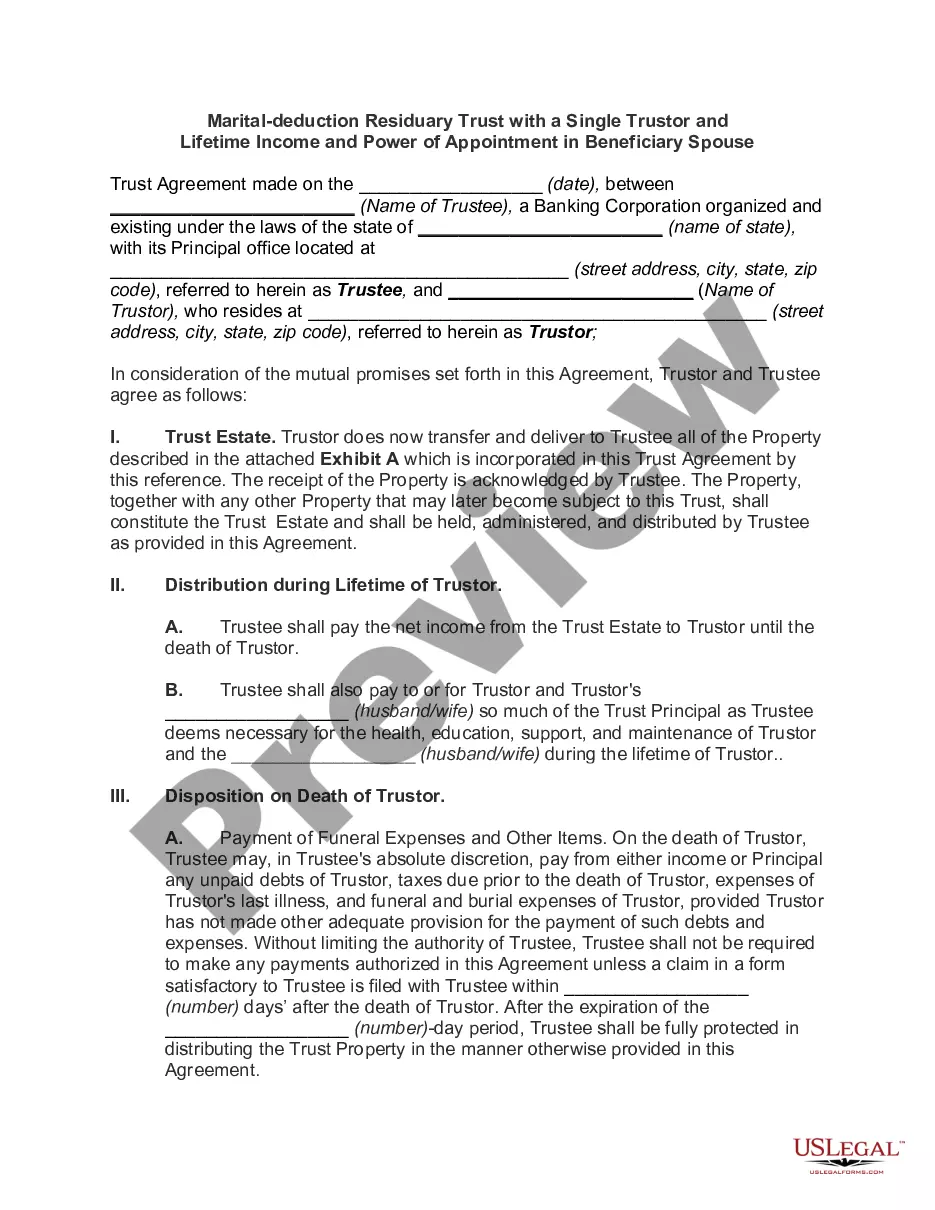
- Provisions for the creation of a marital trust to preserve estate tax exemptions.
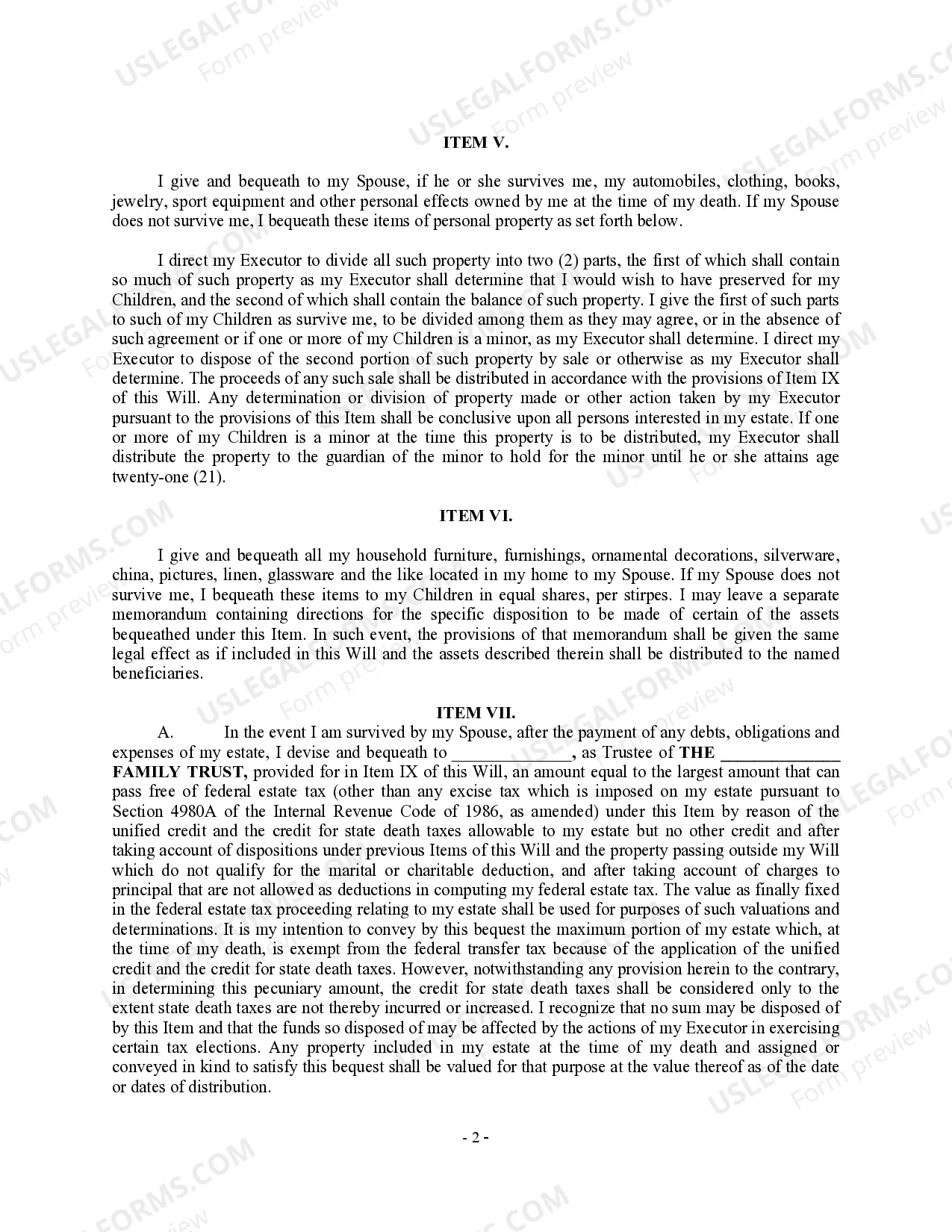
- Specific directives for personal property distribution, including household items and vehicles.
- Details on handling death taxes and their payment responsibilities.
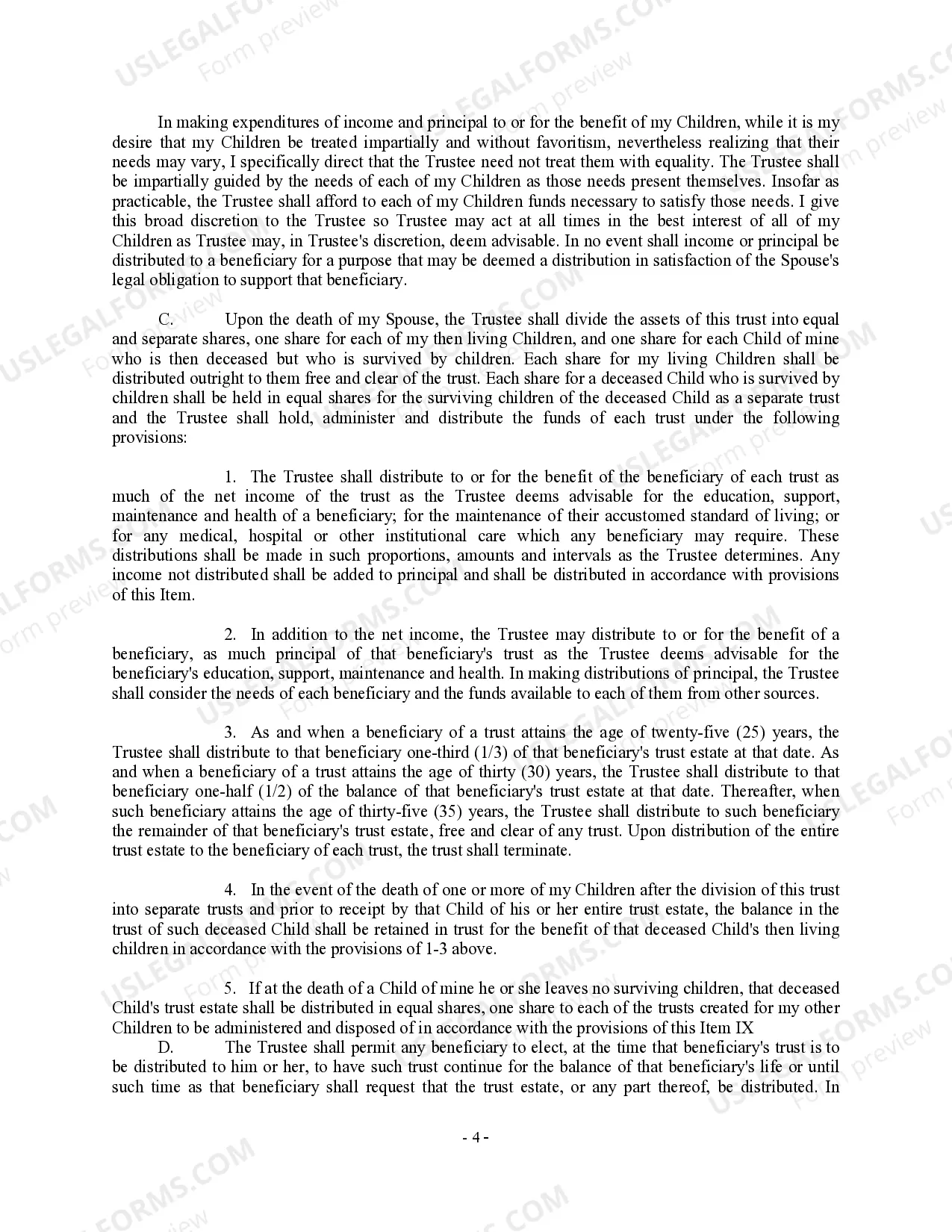
- Instructions for managing trust assets for the benefit of the surviving spouse and children.




When to use this document
This form is suitable for couples with substantial assets who want to ensure that their estate is distributed efficiently while minimizing estate taxes. Use this complex will if you aim to establish a credit shelter trust, which allows a significant part of the estate to bypass federal estate taxation upon one spouse's death, thus preserving wealth for heirs.
Intended users of this form
- Married couples with significant joint assets or properties.
- Individuals seeking to minimize estate taxes for their heirs.
- Those who desire controlled distributions of their estate through trusts.
- Parents who want to ensure financial instructions are clear for their children.
How to complete this form
- Identify yourself as the testator by entering your full name and residence details.
- Appoint your spouse as the executor or designate an alternative executor if necessary.
- Specify your joint children and direct how assets will be distributed to them.
- Complete the sections about the establishment of the marital trust, detailing tax exemptions and distribution strategies.
- Sign and date the will in the presence of witnesses and complete witness information as required.
Is notarization required?
Notarization is required for this form to take effect. Our online notarization service, powered by Notarize, lets you verify and sign documents remotely through an encrypted video session, available 24/7.
Get your form ready online
Our built-in tools help you complete, sign, share, and store your documents in one place.
Make edits, fill in missing information, and update formatting in US Legal Forms—just like you would in MS Word.
Download a copy, print it, send it by email, or mail it via USPS—whatever works best for your next step.
Sign and collect signatures with our SignNow integration. Send to multiple recipients, set reminders, and more. Go Premium to unlock E-Sign.
If this form requires notarization, complete it online through a secure video call—no need to meet a notary in person or wait for an appointment.
We protect your documents and personal data by following strict security and privacy standards.

Make edits, fill in missing information, and update formatting in US Legal Forms—just like you would in MS Word.

Download a copy, print it, send it by email, or mail it via USPS—whatever works best for your next step.

Sign and collect signatures with our SignNow integration. Send to multiple recipients, set reminders, and more. Go Premium to unlock E-Sign.

If this form requires notarization, complete it online through a secure video call—no need to meet a notary in person or wait for an appointment.

We protect your documents and personal data by following strict security and privacy standards.
Avoid these common issues
- Failing to properly witness the will in accordance with state laws.
- Not specifying alternate beneficiaries or trusts in case the primary ones predecease the testator.
- Overlooking updates needed in response to changes in law or family status.
Benefits of completing this form online
- Convenient access to legal documents from home, eliminating the need for courthouse visits.
- Edit and customize the form to fit personal circumstances easily.
- Secure document storage and retrieval options available.
- Cost-effective solution compared to hiring an attorney for document preparation.
What to keep in mind
- This complex will is essential for couples with large estates wanting to minimize tax exposures.
- Establishing a credit shelter trust can preserve wealth for future generations.
- Properly completing and witnessing the will helps ensure its legality and effectiveness.
Looking for another form?



Form popularity
FAQ
First, in a standard credit shelter trust, there is no step-up in basis at the death of the surviving spouse.Second, the credit shelter trust is a separate taxpayer and requires its own tax return, Form 1041.
You can be trustee of your own living trust. If you are married, your spouse can be trustee with you. Most married couples who own assets together, especially those who have been married for some time, are usually co-trustees.
An estate trust is a type of marital deduction trust requiring that when the surviving spouse dies, all remaining trust principal must go into his/her estate. This means the surviving spouse gets to choose the final beneficiaries, by will or within a living trust.
Unlike with a QTIP trust, the surviving spouse typically has complete control over a marital trust, including use of the trust assets and final say on designating who the final beneficiaries are. A QTIP trust offers more control to the grantor but less control to the surviving spouse compared to marital trust.
Trust B is irrevocable, the surviving spouse cannot change its terms. When one spouse dies the survivor must hire a lawyer or an accountant to determine how to best divide the couple's assets between the deceased spouse's irrevocable trust and the surviving spouse's revocable trust.
The trust qualifies for the marital deduction. In a QTIP trust, the surviving spouse must receive all income generated by the trust property for life, paid at least annually.After the surviving spouse's death, the property passes to the remainder beneficiaries of the trust, who usually are the children of the couple.
A marital trust starts as a revocable living trust. A surviving spouse can be its trustee.
Yes, the surviving spouse may serve as trustee of the credit shelter trust.All of the assets in the credit shelter trust, including any appreciation in value during the surviving spouse's lifetime, pass free of estate tax to the beneficiaries.
The "A Trust" is also commonly referred to as the "Marital Trust," "QTIP Trust," or "Marital Deduction Trust." The "B Trust" is also commonly referred to as the "Bypass Trust," "Credit Shelter Trust," or "Family Trust."