Amendment of Easement (Communications System)
About this form
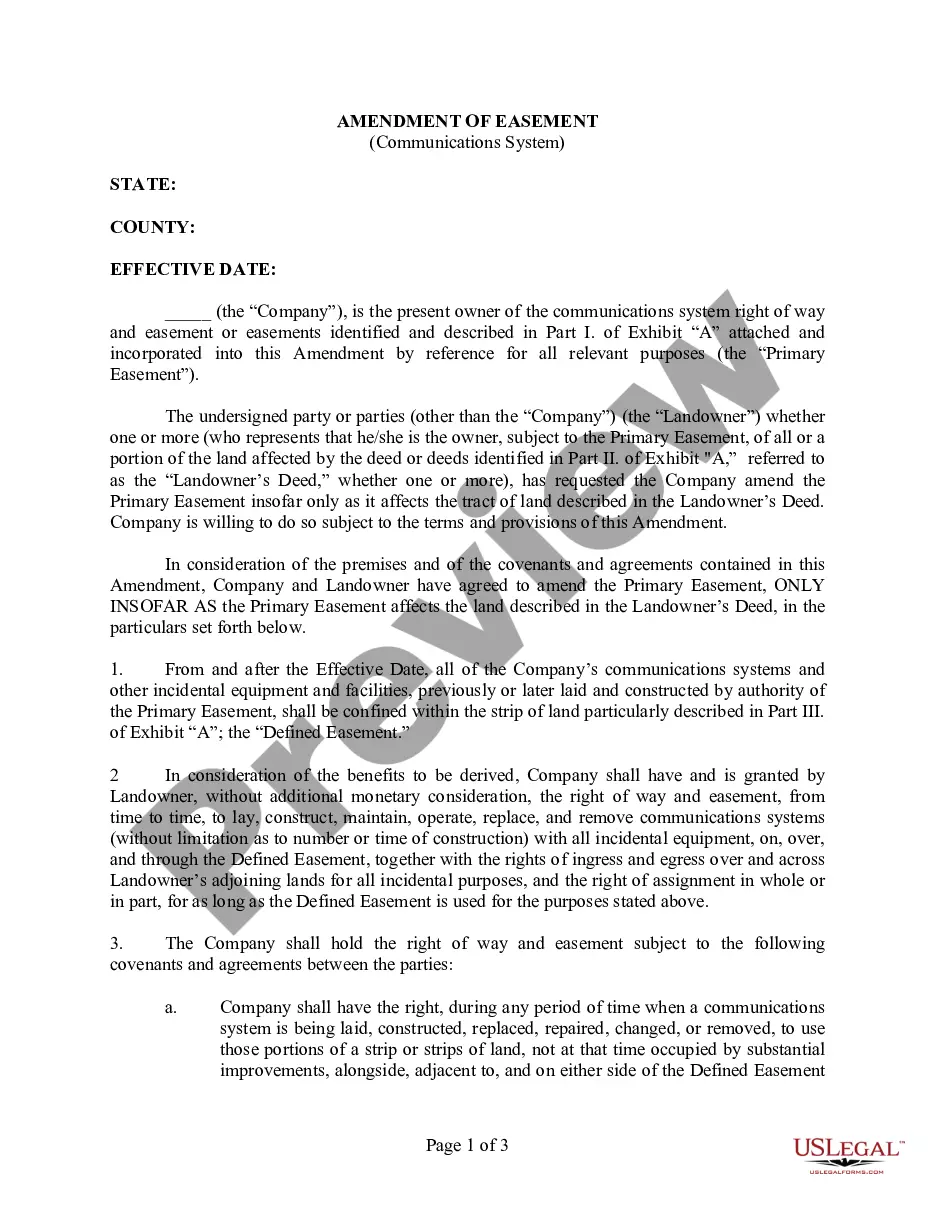
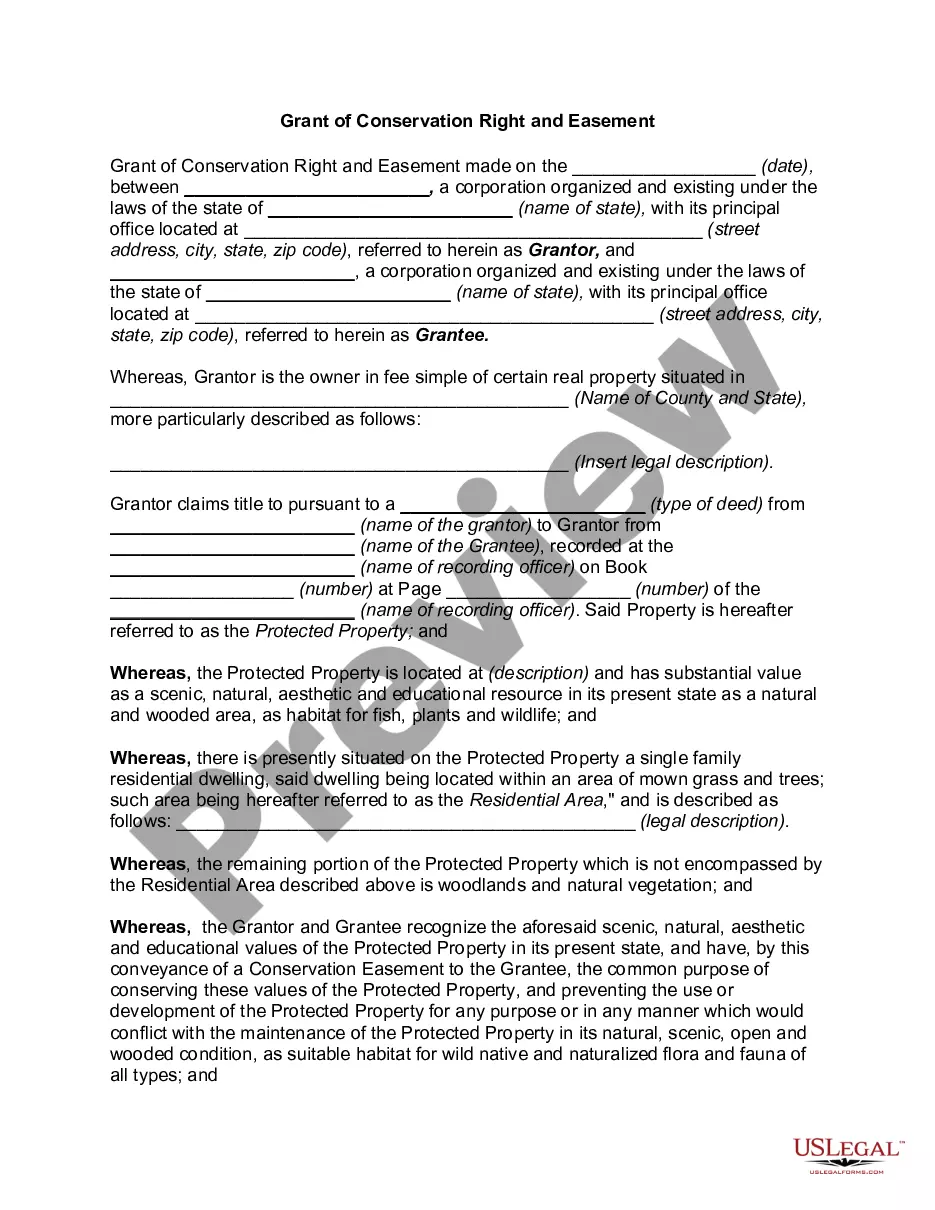
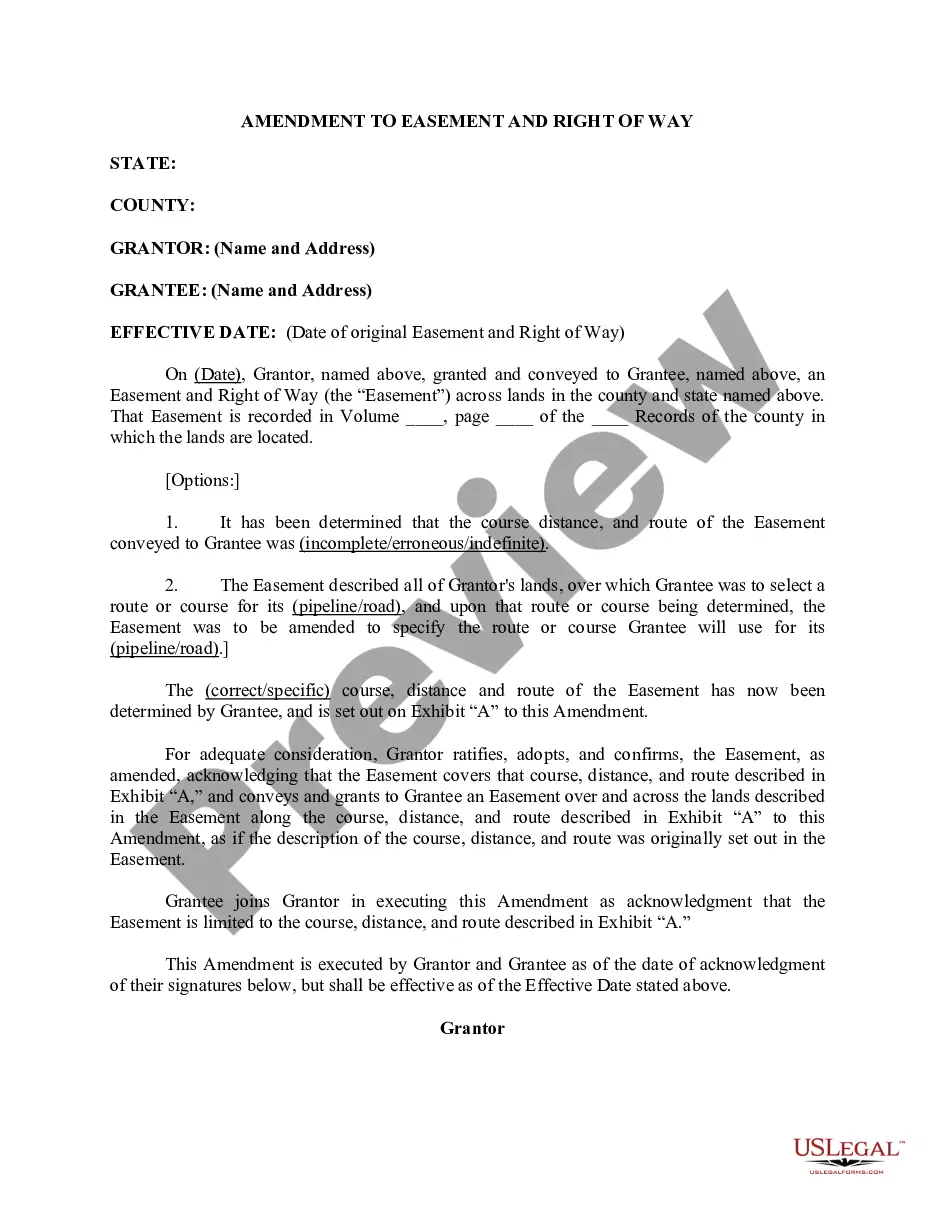
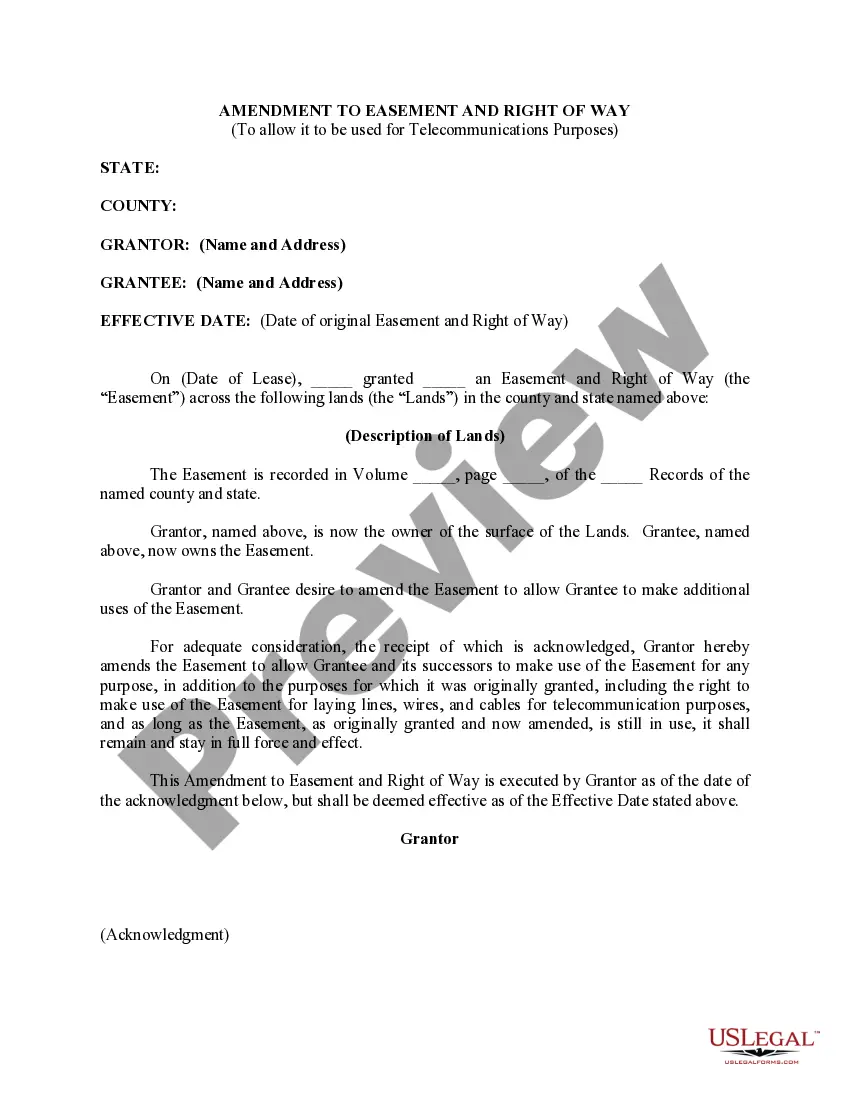
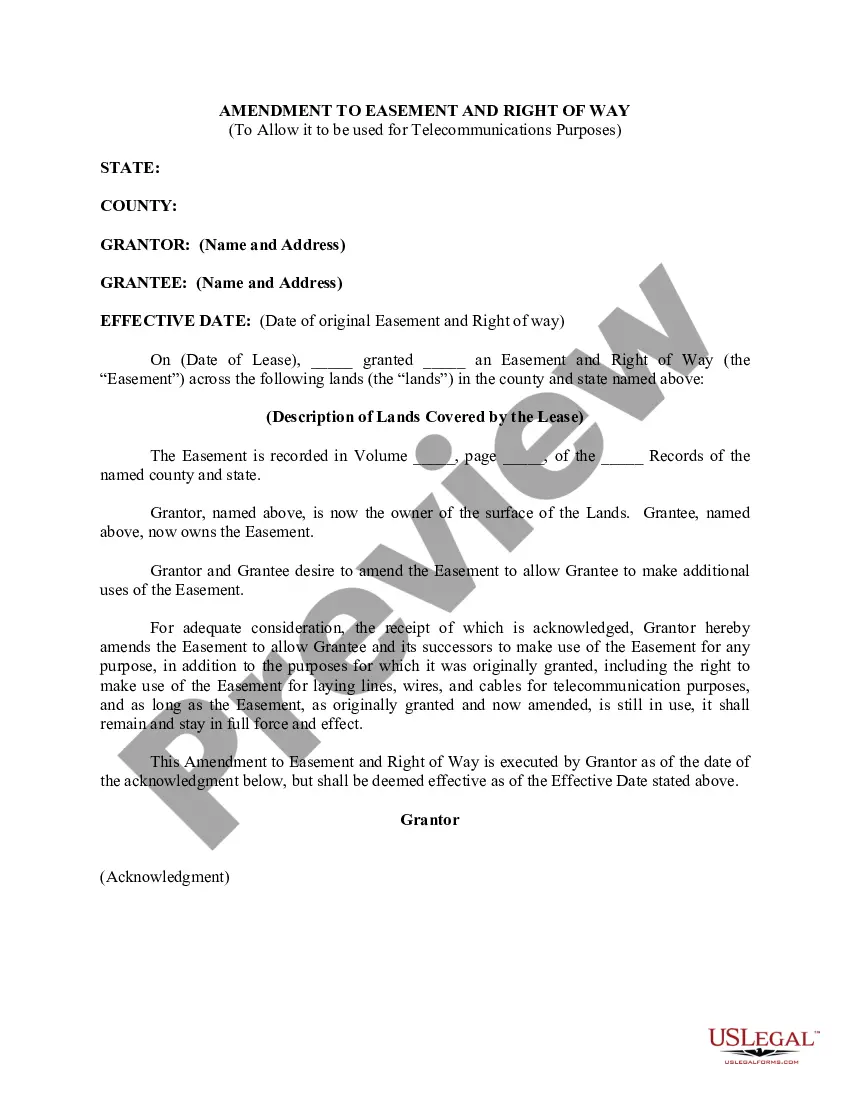
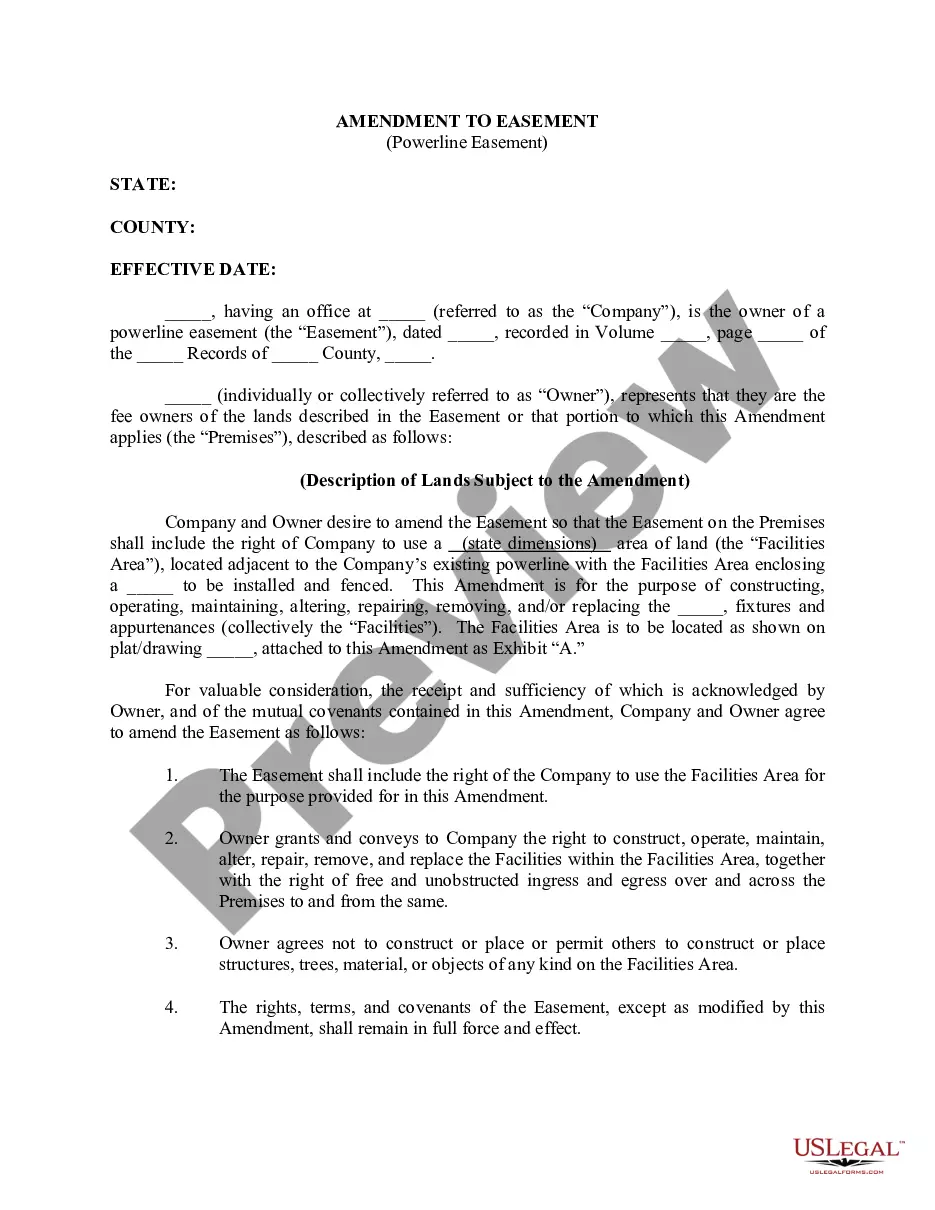
The Amendment of Easement for Communications System is a legal document used to modify an existing easement that pertains to the installation, maintenance, and operation of communications systems on a landowner's property. Unlike a standard easement, this amendment focuses specifically on adjusting the terms relating to how and where communication infrastructure can be managed, ensuring both the landowner's and the company's rights are preserved.
Main sections of this form
- Identification of the parties involved: the Company (owner of the communications system) and the Landowner (property owner).
- Effective Date: date upon which the amendment goes into effect.
- Description of the Primary Easement and Defined Easement, outlining the specific areas affected.
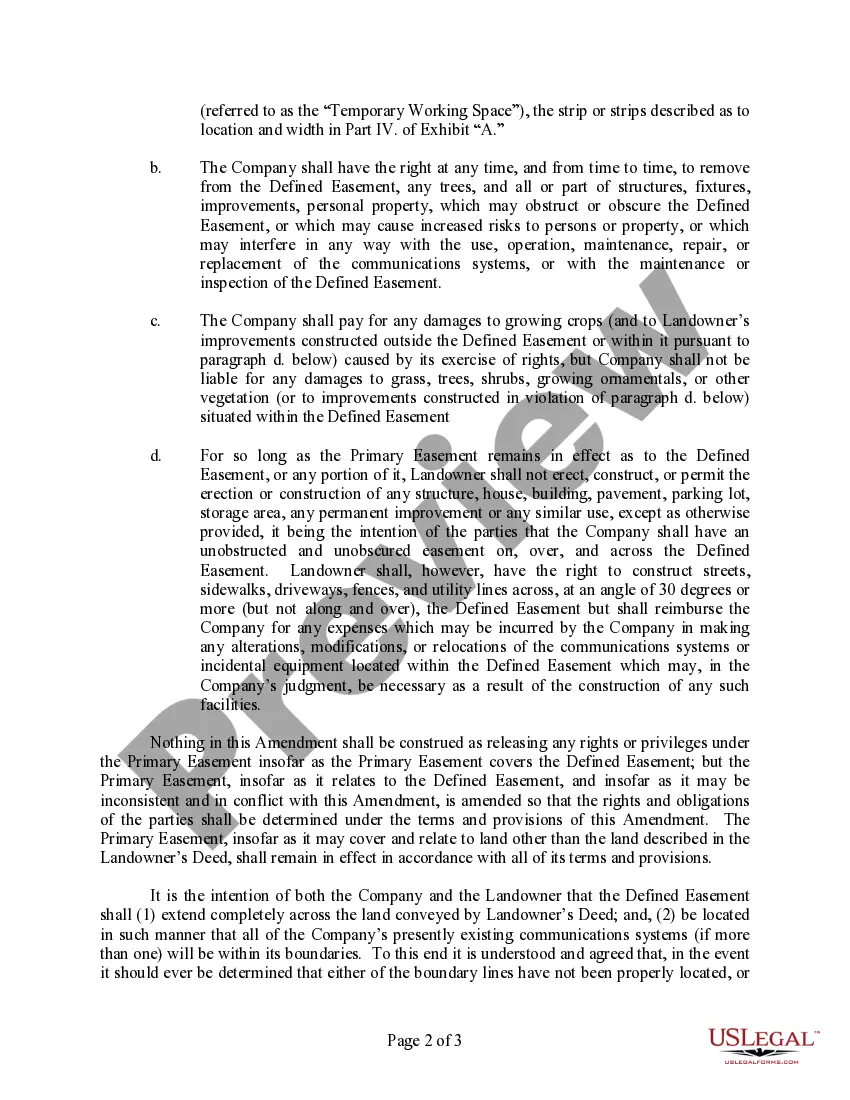
- Rights granted to the Company for installation and maintenance of systems within the Defined Easement.
- Covenants and responsibilities of both parties, including rights for temporary working space and removal of obstructions.
- Stipulations regarding damages to crops and property and the conditions surrounding construction near the easement.
When to use this form
This form is applicable when a landowner and a communications company need to modify an existing easement to clearly define the rights and obligations concerning the installation and maintenance of communication systems. Situations may include expanding the easement for additional equipment, clarifying operational boundaries, or specifying conditions regarding property use that may impact the easement.
Who this form is for
- Landowners who have an existing easement agreement with a communications company.
- Communications companies looking to amend the terms of their easement to suit operational changes.
- Property developers requiring clarity or modifications to easements in their project proposals.
- Attorneys or legal representatives assisting clients with easement adjustments.
How to prepare this document
- Identify the parties: clearly state the names of the Company and the Landowner.
- Enter the effective date: specify when the amendment will take effect.
- Detail the areas affected by the easement: provide a clear description of the primary and defined easement locations.
- Specify rights and responsibilities: outline any granted rights and obligations concerning installation and maintenance activities.
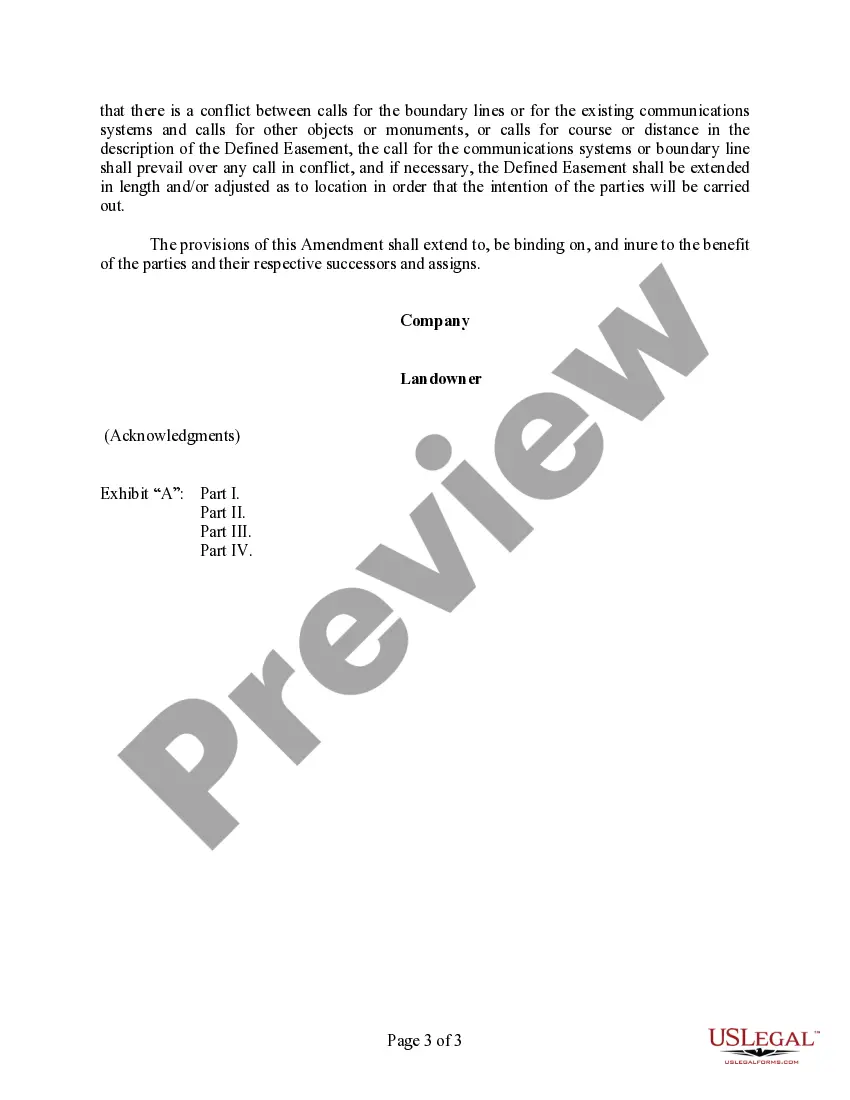
- Obtain signatures: ensure both parties sign and date the amendment to validate the agreement.
Does this form need to be notarized?
This form does not typically require notarization unless specified by local law. However, having the document notarized can enhance its legal standing and may be advisable in certain jurisdictions, ensuring the identity of the signatories is verified.
Get your form ready online
Our built-in tools help you complete, sign, share, and store your documents in one place.
Make edits, fill in missing information, and update formatting in US Legal Forms—just like you would in MS Word.
Download a copy, print it, send it by email, or mail it via USPS—whatever works best for your next step.
Sign and collect signatures with our SignNow integration. Send to multiple recipients, set reminders, and more. Go Premium to unlock E-Sign.
If this form requires notarization, complete it online through a secure video call—no need to meet a notary in person or wait for an appointment.
We protect your documents and personal data by following strict security and privacy standards.

Make edits, fill in missing information, and update formatting in US Legal Forms—just like you would in MS Word.

Download a copy, print it, send it by email, or mail it via USPS—whatever works best for your next step.

Sign and collect signatures with our SignNow integration. Send to multiple recipients, set reminders, and more. Go Premium to unlock E-Sign.

If this form requires notarization, complete it online through a secure video call—no need to meet a notary in person or wait for an appointment.

We protect your documents and personal data by following strict security and privacy standards.
Typical mistakes to avoid
- Failing to clearly define the areas related to the easement can lead to disputes.
- Not specifying the effective date can cause confusion about when the changes take place.
- Omitting necessary signatures from both parties can render the document void.
- Neglecting to address potential future changes or expansions of the communications system.
Why complete this form online
- Convenient downloadable format that can be accessed anytime.
- Editability: users can customize the document to suit their specific requirements.
- Reliability of professionally drafted content crafted by licensed attorneys.
- Time-saving: quickly fill out and prepare the form without legal delays.
Legal use & context
- This amendment helps clarify the rights regarding communications systems on private property.
- Ensures that both the Company and the Landowner are aware of their responsibilities and limitations.
- Enhances legal clarity and can prevent disputes by documenting agreed-upon terms.
What to keep in mind
- The Amendment of Easement (Communications System) is essential for modifying existing easements.
- Accurate completion includes detailing all parties and defining easement areas clearly.
- Using this form online offers convenience and ensures legal compliance.
Looking for another form?


Form popularity
FAQ
An easement is a right which the owner or occupier of certain land possesses, as such, for the beneficial enjoyment of that land, to do and continue to do something, or to prevent and continue to prevent something being done, in or upon, or in respect of certain other land not his own. Kinds/ Types of Easement -
The short answer is NO. It may be considered trespass.
If an authority has an easement registered over your land, they have the right to access the easement to maintain or repair the easement land or their equipment on the land.
Types of Easements An easement may be classified as either an easement appurtenant or an easement in gross. Easement Appurtenant. An easement appurtenant is an easement that benefits one parcel of land, known as the dominant tenement, to the detriment of another parcel of land, known as the servient tenement.
When one of the owners of either the dominant estate which an easement benefits or the servient estate over which the easement runs becomes the owner of both properties, then there is a unity of the two titles, and since an owner does not need an easement over the owner's own property, according to Florida law, the
Quiet the Title. Allow the Purpose for the Easement to Expire. Abandon the Easement. Stop Using a Prescriptive Easement. Destroy the Reason for the Easement. Merge the Dominant and Servient Properties. Execute a Release Agreement.
Quiet the Title. Allow the Purpose for the Easement to Expire. Abandon the Easement. Stop Using a Prescriptive Easement. Destroy the Reason for the Easement. Merge the Dominant and Servient Properties. Execute a Release Agreement.
Simply put, an easement is a legal right given to cross or use another person's land for a specific purpose.Easements are more commonly granted to utility companies, such as telephone or electrical companies to run cable and power lines.
You can terminate an easement by release. A release is a surrender of a right or interest, such as an easement. Only the person holding the right can release it, such as the owner of the dominant estate in an easement appurtenant or the holder of an easement in gross.