Missing Witness (revised 2014)
What is this form?
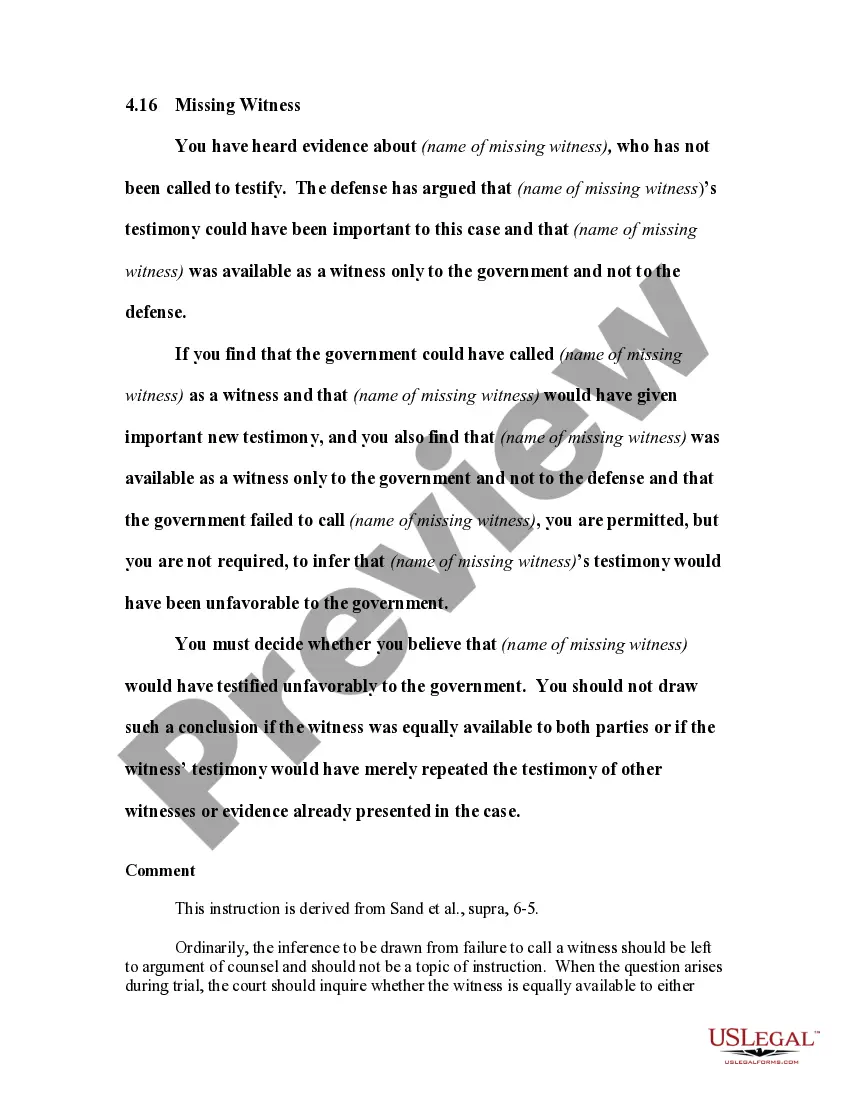
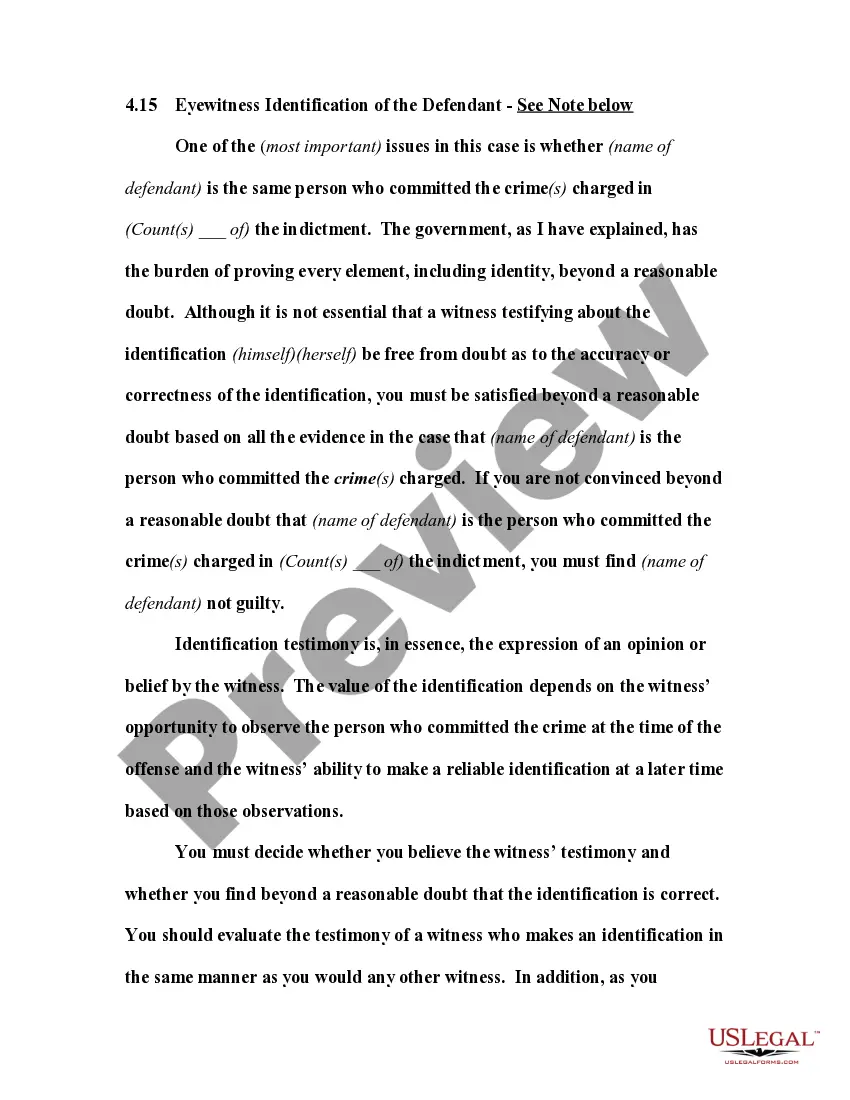
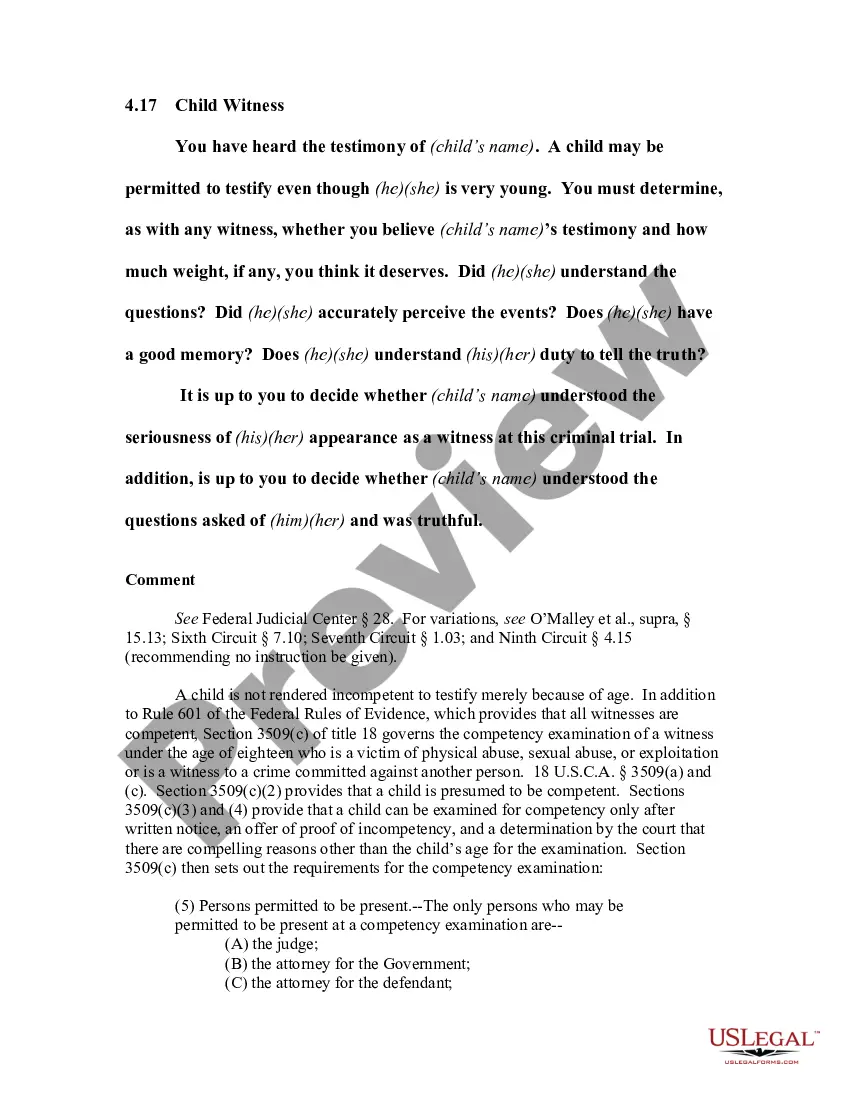
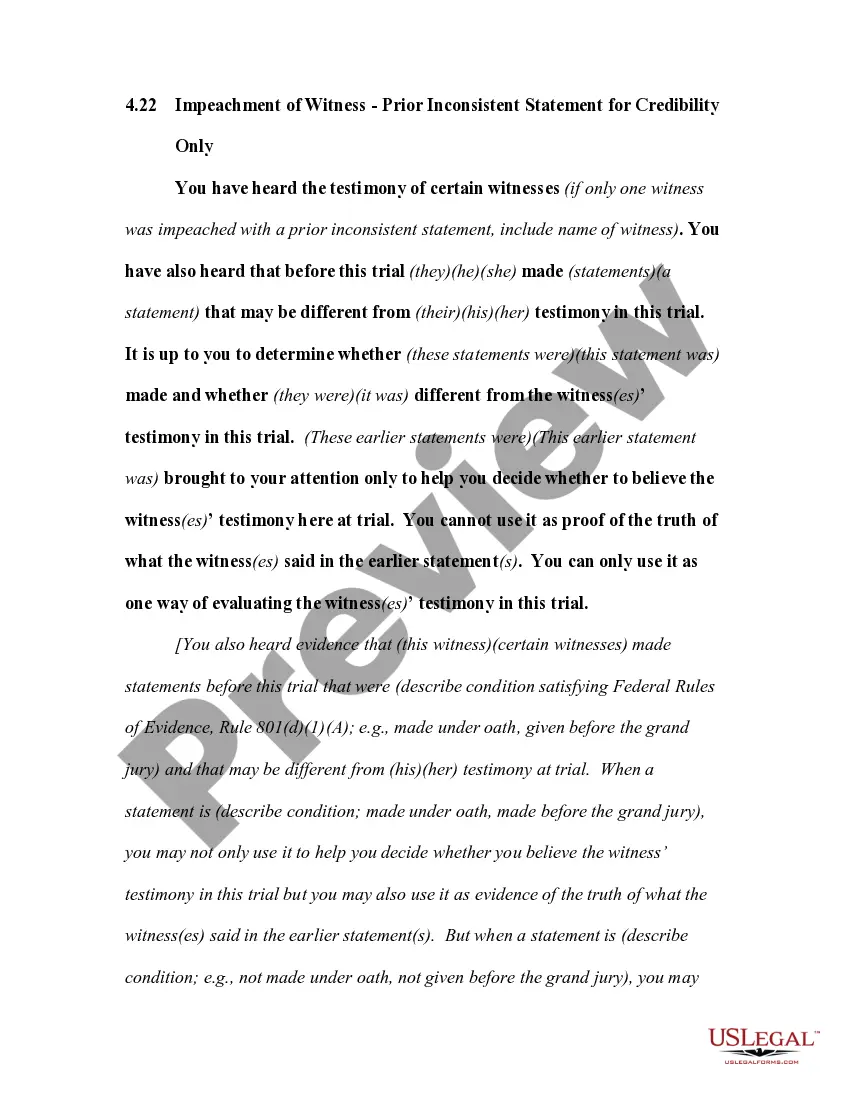
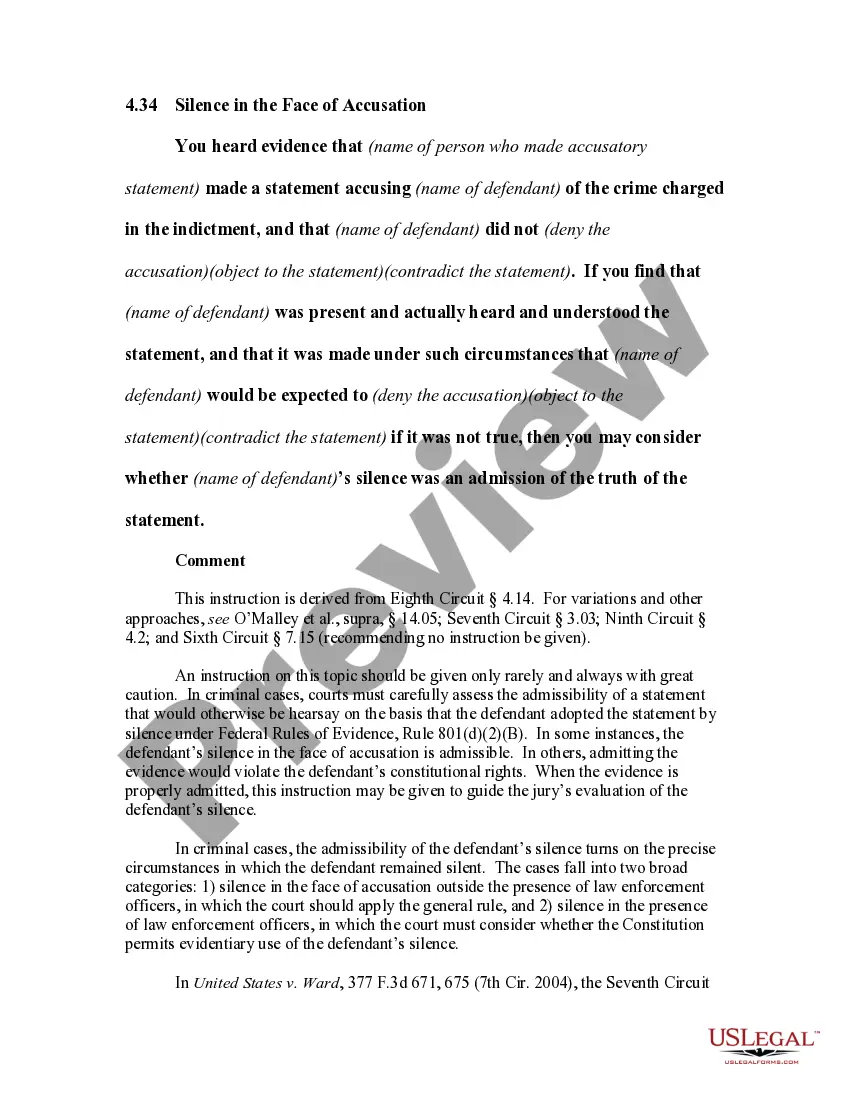
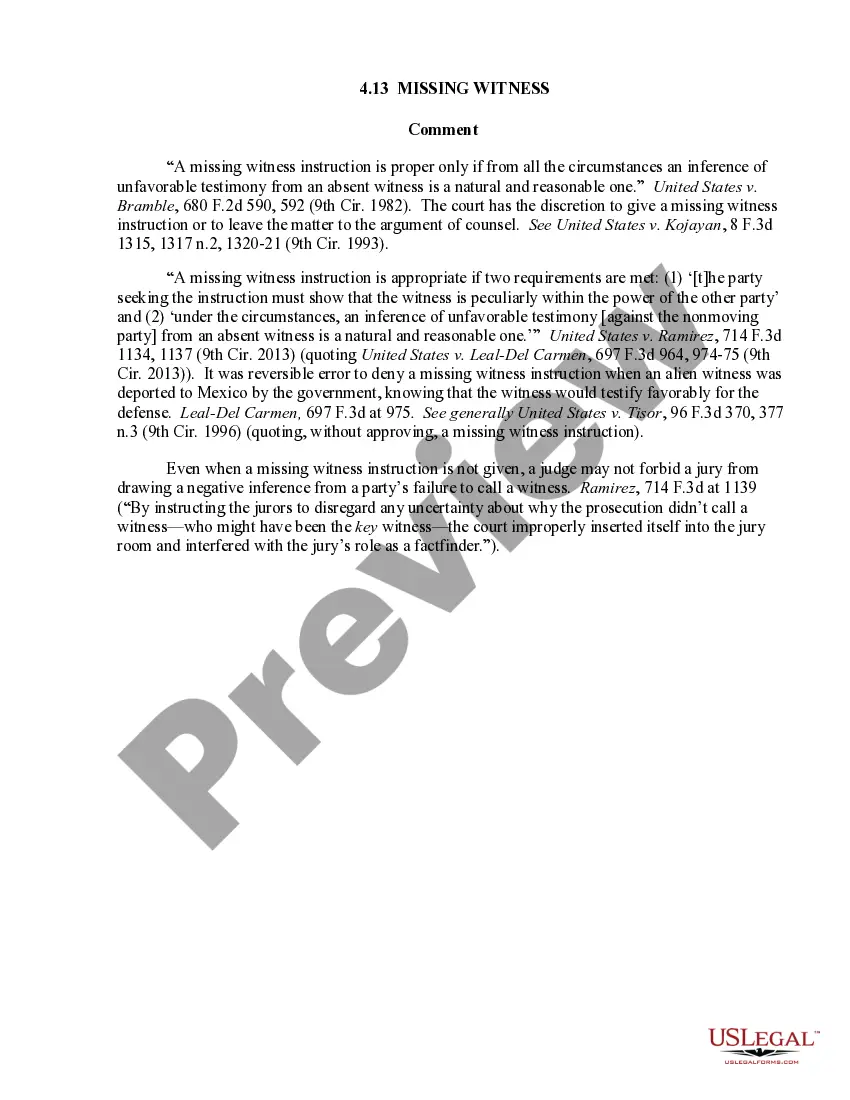
The Missing Witness instruction is a legal guideline that allows a jury to draw implications from a missing witness's absence. This instruction can be invoked when the government has failed to call a witness who is only available to them, suggesting that the witness's testimony could have been unfavorable to the government. Unlike other instructions, this one is specific to situations where one party's failure to present testimony could be interpreted as detrimental to their case.
What’s included in this form
- Identification of the missing witness, including name and relevance to the case.
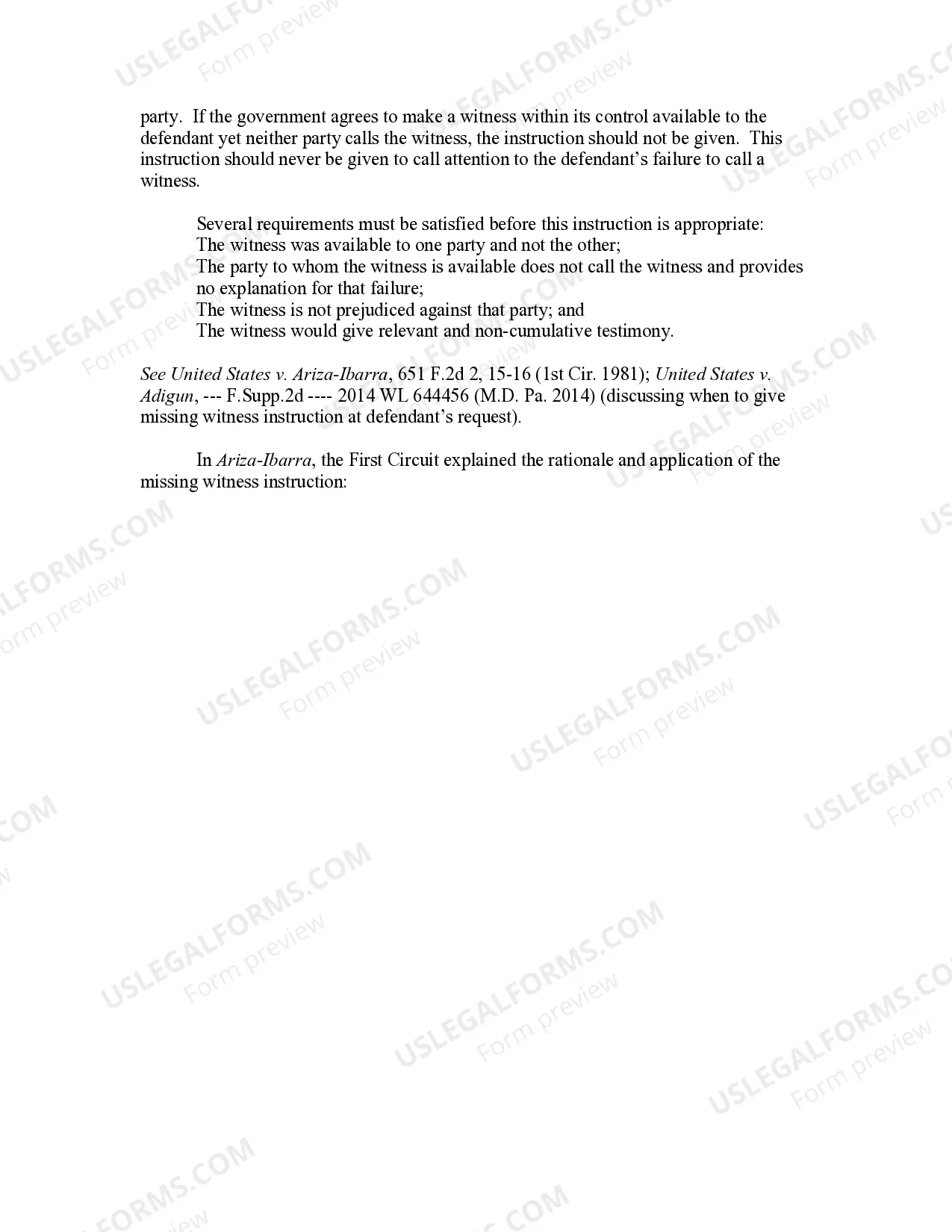
- Criteria for allowing the inference that the missing witness's testimony would be unfavorable to the government.
- Directions on determining the availability of the witness to either party.
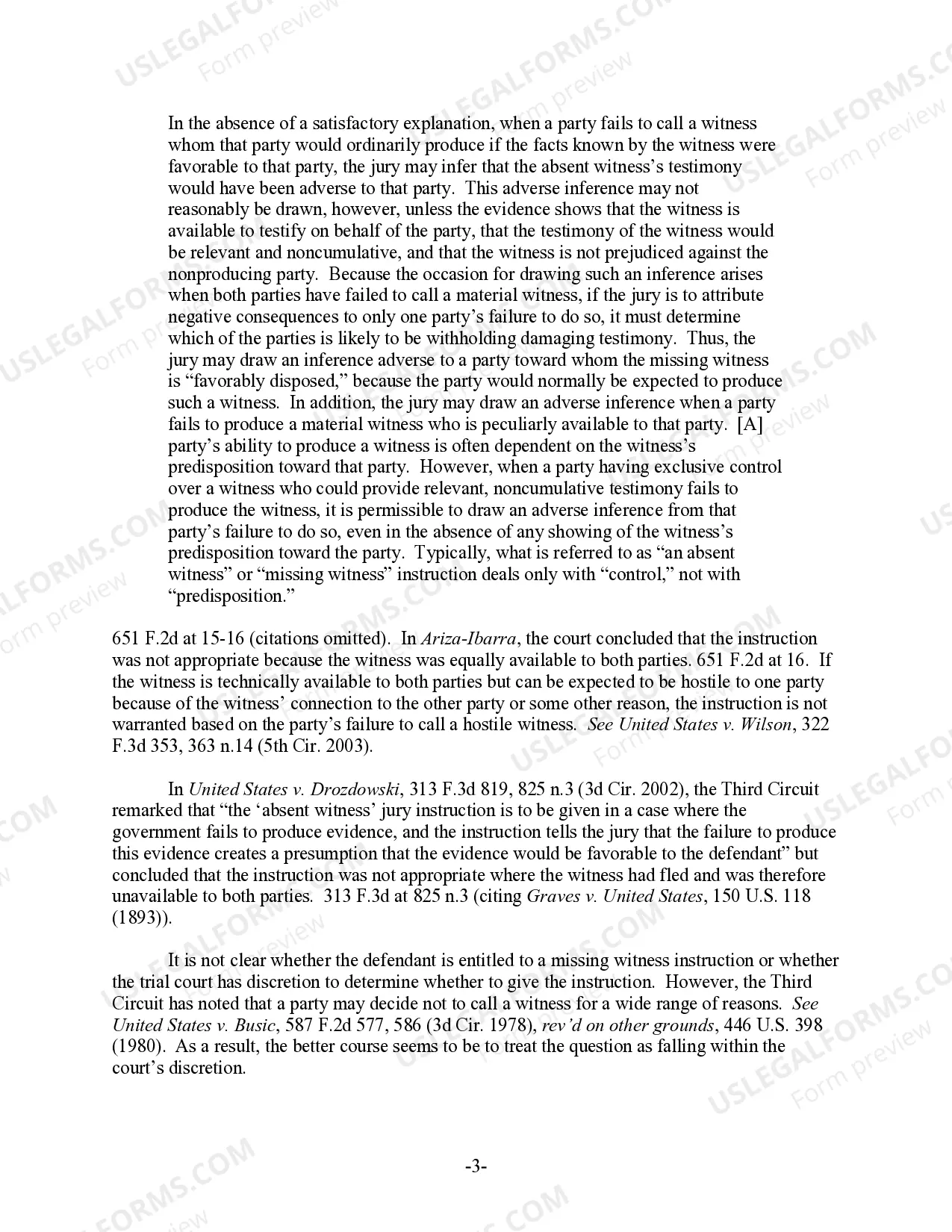
- Conditions under which the jury may draw adverse inferences from the absence of the witness.

Situations where this form applies
This instruction is used in criminal trials when there is a notable absence of a witness that one party claims would have provided important testimony. It is appropriate when the witness is available only to one side, and that side chooses not to call them, raising questions about the integrity of their case. This instruction helps juries consider the implications of such absences appropriately.
Who needs this form
This instruction is intended for:
- Judges who need to instruct juries about the potential implications of missing witnesses.
- Prosecutors who may seek to explain the absence of a witness in their case.
- Defense attorneys who want to argue the absence of a key government witness impacts the case's fairness.
Completing this form step by step
- Identify the missing witness's name and relevance to the ongoing case.
- Determine which party had exclusive control over the witness and did not call them.
- Assess the witnessâs availability to both parties prior to trial.
- Evaluate whether the absence of the witness's testimony would provide non-cumulative and relevant information.
- Prepare to explain the implications of the missing testimony during jury instructions.
Does this document require notarization?
Notarization is generally not required for this form. However, certain states or situations might demand it. You can complete notarization online through US Legal Forms, powered by Notarize, using a verified video call available anytime.
Get your form ready online
Our built-in tools help you complete, sign, share, and store your documents in one place.
Make edits, fill in missing information, and update formatting in US Legal Forms—just like you would in MS Word.
Download a copy, print it, send it by email, or mail it via USPS—whatever works best for your next step.
Sign and collect signatures with our SignNow integration. Send to multiple recipients, set reminders, and more. Go Premium to unlock E-Sign.
If this form requires notarization, complete it online through a secure video call—no need to meet a notary in person or wait for an appointment.
We protect your documents and personal data by following strict security and privacy standards.

Make edits, fill in missing information, and update formatting in US Legal Forms—just like you would in MS Word.

Download a copy, print it, send it by email, or mail it via USPS—whatever works best for your next step.

Sign and collect signatures with our SignNow integration. Send to multiple recipients, set reminders, and more. Go Premium to unlock E-Sign.

If this form requires notarization, complete it online through a secure video call—no need to meet a notary in person or wait for an appointment.

We protect your documents and personal data by following strict security and privacy standards.
Common mistakes
- Failing to confirm the availability of the witness to both parties before invoking the instruction.
- Assuming all missing witness situations warrant this instruction without assessing their relevance.
- Neglecting to provide a satisfactory explanation for the witness's absence, leading to misunderstandings for the jury.
Benefits of using this form online
- Convenient access to legal guidance tailored for courtroom settings.
- Editable templates that can be customized for specific legal scenarios.
- Reliable resources created by licensed attorneys for accurate legal representation.
Legal use & context
- This instruction serves to provide clarity on the impact of a missing witness, potentially guiding jury deliberations.
- The missing witness instruction supports the principle that parties should present available evidence to support their claims.
- Understanding when and how to apply this instruction can significantly affect trial outcomes and jury perceptions.
Main things to remember
- The Missing Witness form provides essential guidance during trials involving absent witnesses.
- Jurors may draw inferences about the government's case based on the witness's absence.
- Understanding when to use this instruction is critical for legal professionals in trial settings.
Looking for another form?

Form popularity
FAQ
Section 240 - "Unavailable as a witness" (a) Except as otherwise provided in subdivision (b), "unavailable as a witness" means that the declarant is any of the following: (1) Exempted or precluded on the ground of privilege from testifying concerning the matter to which his or her statement is relevant.
The 'missing witness' instruction allows a jury to draw an unfavorable inference when a party fails to call a witness who would normally be expected to support that party's version of events (People v Savinon, 100 NY2d 192, 196 2003).
?The 'missing-witness' rule?which dates back to 1893 Supreme Court case Graves v. United States?allows one party to obtain an adverse inference against the other for failure to produce a witness under that party's control with material information.
In some instances, it is not convenient for a witness to be present in court to give evidence, generally because they live or work some distance away from the court, or some other good reason.
6 There are five situations in which the witness will be considered unavailable - when the witness has a valid privilege not to testify, refuses to testify, claims lack of memory, is dead or unable to testify due to illness, or is absent and the proponent of his statement has been unable to secure his attendance.
Maryland Law on Missing Witness Rule Inferences if a party has it peculiarly within his power to produce witnesses whose testimony would elucidate a transaction, the fact that he does not do it creates a presumption that the testimony, if produced, would be unfavorable.
Victims of crime, and other people who have knowledge about the commission of a crime, are often required to testify at a trial or at other court proceedings. The federal criminal justice system cannot function without the participation of victims and witnesses.
If a judge finds that a witness is unavailable, the proponent of the witness may read prior testimony from the witness against the same defendant as long as the defendant was then present and given an opportunity to cross-examine the witness with an interest and motive similar to which he has at the hearing.