Child Witness
Overview of this form
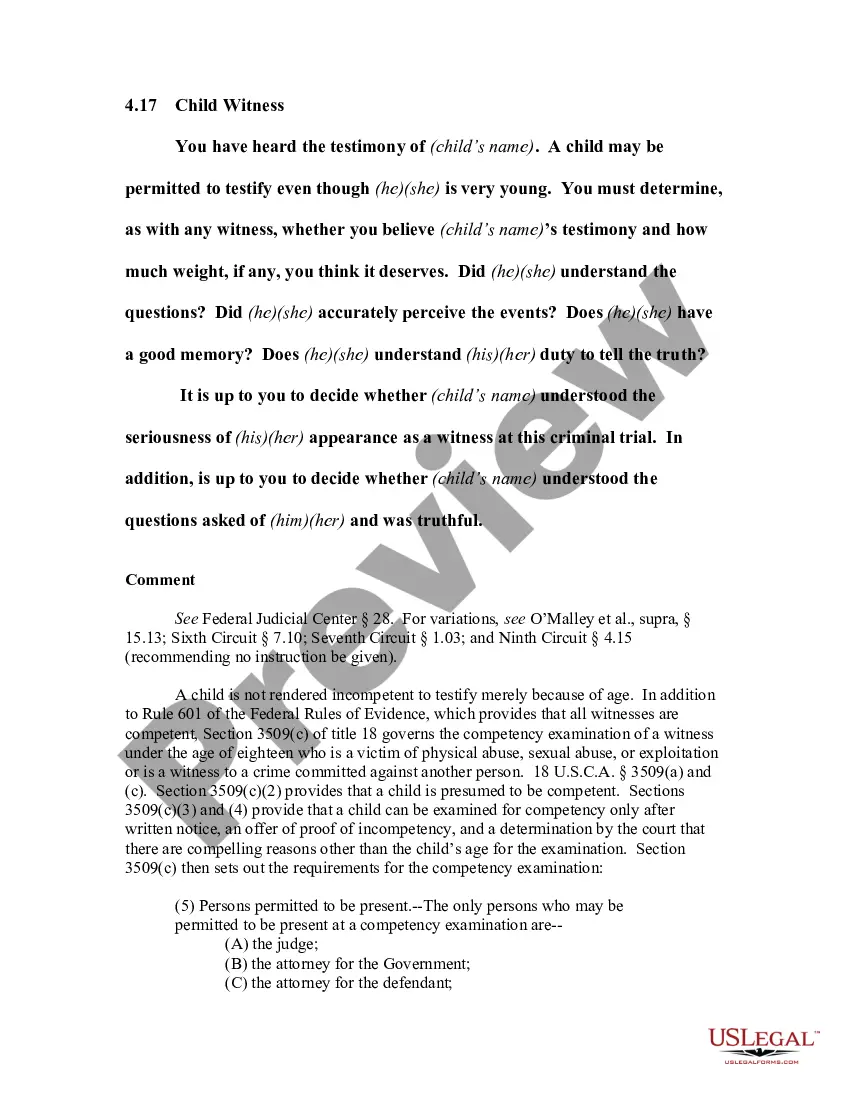
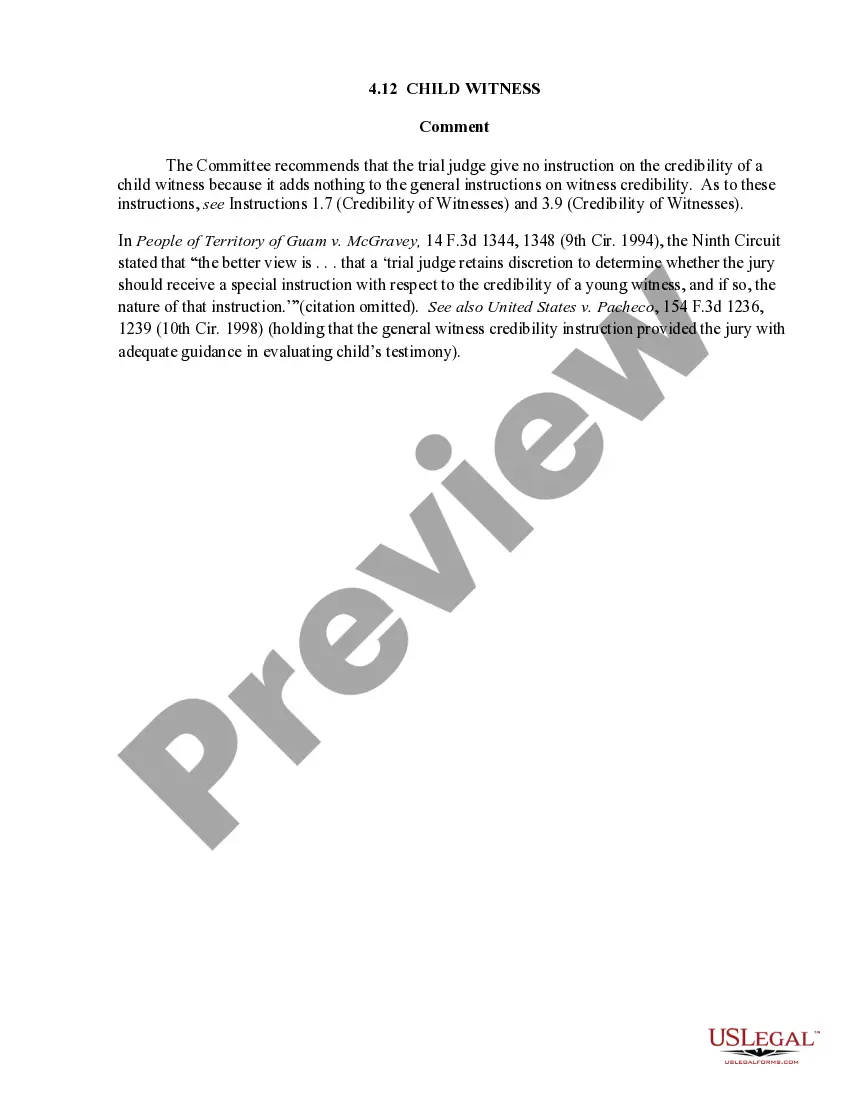
The Child Witness form provides guidelines for assessing the competency of a child to testify in a legal setting. This form addresses how jurors should evaluate a child's testimony, including considerations of their understanding of questions and ability to perceive events accurately. It emphasizes that a child is not deemed incompetent solely due to age, thus distinguishing it from other witness competency assessments.
Key components of this form
- Guidance for jurors on evaluating a child's testimony.
- Criteria for determining a child's understanding and memory capacity.
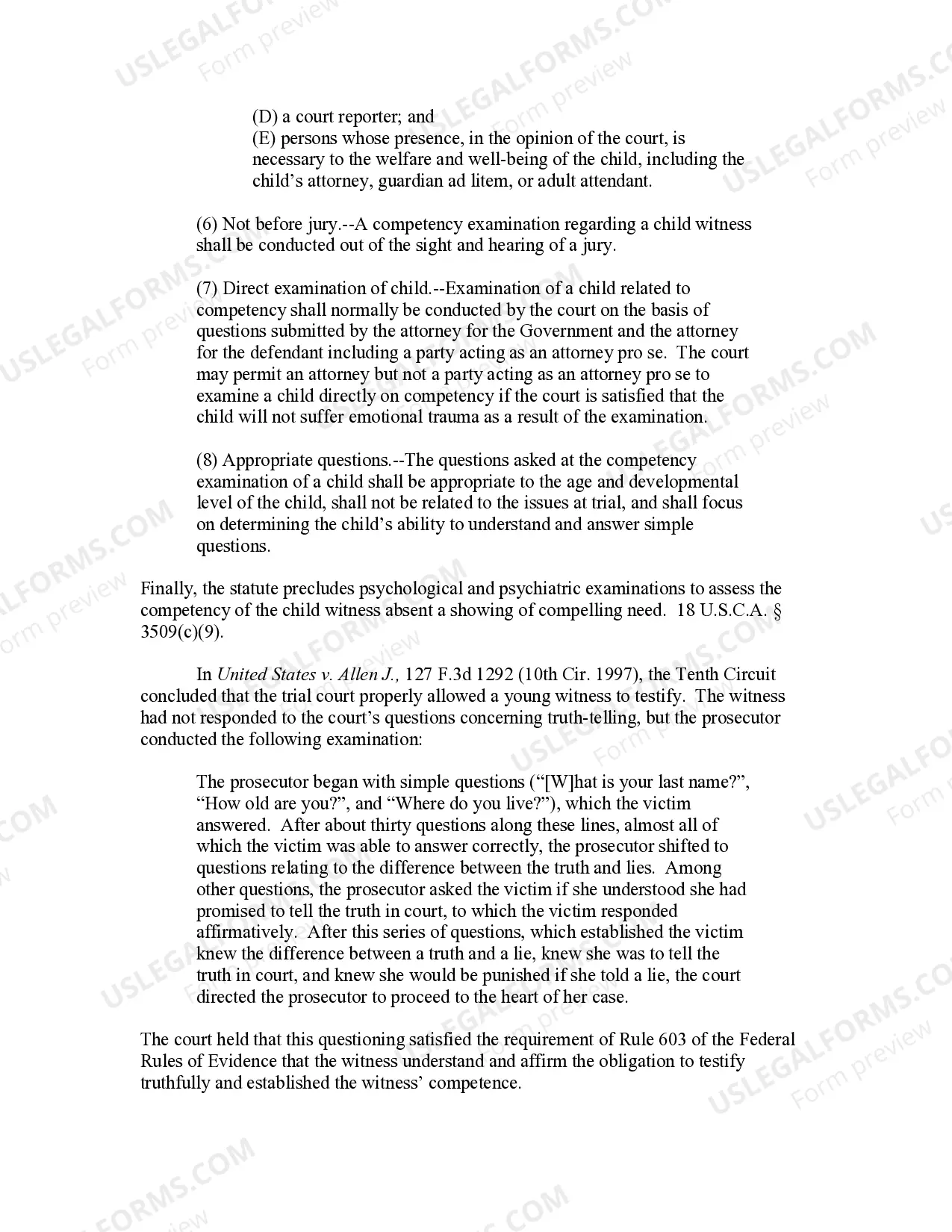
- Outline of legal statutes governing child witness competency.
- Requirements for competency examinations of child witnesses.
- Instructions for appropriate questioning and assessment methods.

When this form is needed
This form is essential in court cases where a child is called to testify as a witness, especially in cases involving physical or sexual abuse. It is important when determining the child's ability to provide credible testimony and the jury's responsibility to assess the child's credibility during a trial.
Who needs this form
- Judges presiding over trials involving child witnesses.
- Jury members tasked with evaluating the credibility of child testimony.
- Attorneys representing parties in cases involving child witnesses.
- Legal professionals seeking to understand the guidelines for child witness competency.
How to prepare this document
- Identify the child's name and confirm their presence in the courtroom.
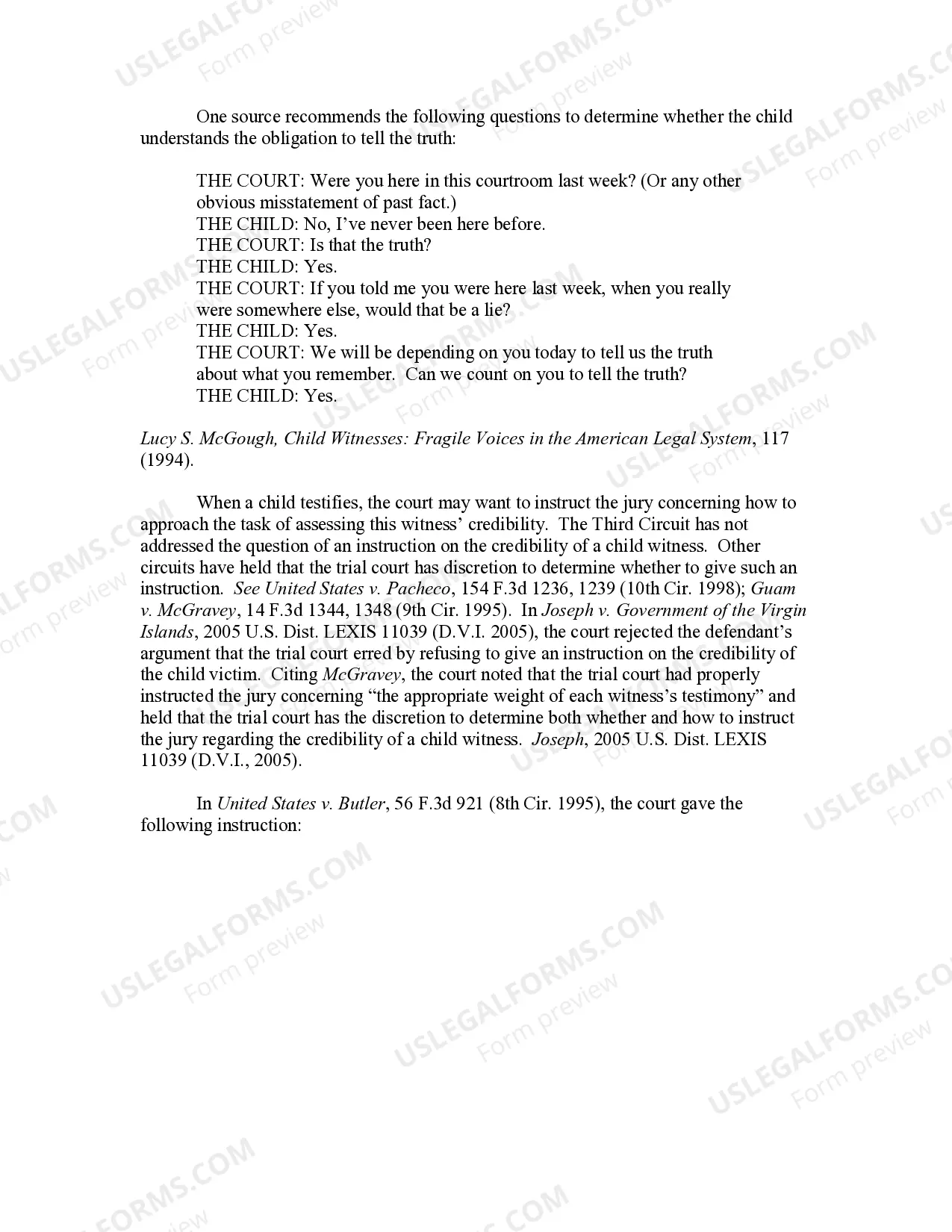
- Evaluate the child's understanding of the obligation to tell the truth.
- Determine the child's ability to accurately recall events related to the case.
- Assess whether the child understands the questions asked by the court.
- Conclude whether the child is competent to testify based on the established criteria.
Does this form need to be notarized?
This form usually doesn’t need to be notarized. However, local laws or specific transactions may require it. Our online notarization service, powered by Notarize, lets you complete it remotely through a secure video session, available 24/7.
Get your form ready online
Our built-in tools help you complete, sign, share, and store your documents in one place.
Make edits, fill in missing information, and update formatting in US Legal Forms—just like you would in MS Word.
Download a copy, print it, send it by email, or mail it via USPS—whatever works best for your next step.
Sign and collect signatures with our SignNow integration. Send to multiple recipients, set reminders, and more. Go Premium to unlock E-Sign.
If this form requires notarization, complete it online through a secure video call—no need to meet a notary in person or wait for an appointment.
We protect your documents and personal data by following strict security and privacy standards.

Make edits, fill in missing information, and update formatting in US Legal Forms—just like you would in MS Word.

Download a copy, print it, send it by email, or mail it via USPS—whatever works best for your next step.

Sign and collect signatures with our SignNow integration. Send to multiple recipients, set reminders, and more. Go Premium to unlock E-Sign.

If this form requires notarization, complete it online through a secure video call—no need to meet a notary in person or wait for an appointment.

We protect your documents and personal data by following strict security and privacy standards.
Common mistakes
- Failing to adequately assess the child's understanding of truth-telling.
- Overlooking the nuances of a child's testimony due to their age.
- Relying too heavily on the child's demeanor rather than on their verbal responses.
Benefits of completing this form online
- Easy access to legal criteria developed by licensed attorneys.
- Convenience of completing forms at your own pace without the need for physical appointments.
- Ability to save and edit forms as needed to ensure accuracy and completeness.
Legal use & context
- Establishes the procedural framework for using child testimony in court.
- Helps ensure that child witnesses are treated fairly and assessments are consistent with legal standards.
- Informs jurors and legal professionals about the specific considerations necessary for evaluating child credibility.
Looking for another form?


Form popularity
FAQ
California does not have a minimum age requirement in order for a child to be permitted to testify in court. Instead, judges are given discretion to determine whether a child is competent to testify.
In a nutshell, yes, children who are witnesses to, or are victims of crimes can be ordered to testify in criminal cases. While it might seem unfair for a court to require a child to testify, the U.S. Constitution sometimes demands it.
In the descriptions, the age of the eyewitness who provided crucial testimony varied. Across three experiments, potential jurors judged children to be less credible eyewitnesses than adults. Eyewitness age did not, however, determine the degree of guilt attributed to the defendant.
4. Definitions.? (a) A ?child witness? is any person who at the time of giving testimony is below the age of eighteen (18) years.
Typically, police begin a forensic interview by asking witnesses, including children, to freely recall everything they remember about the event. During this stage of the interview, even young children can be just as accurate as adults, but they often miss many details.
Children attend criminal courts to give evidence both as victims and as witnesses, and it is widely accepted that this can be a very stressful experience for children, particularly those who have been victimized.
Testimony is a kind of evidence, and it is often the only evidence that a judge has when deciding a case. When you are under oath in court and you are testifying to the judge, what you say is considered to be truthful unless it is somehow challenged (?rebutted?) by the other party.
Can a Minor Be Subpoenaed to Testify? In a nutshell, yes, children who are witnesses to, or are victims of crimes can be ordered to testify in criminal cases. While it might seem unfair for a court to require a child to testify, the U.S. Constitution sometimes demands it.